预制菜

Search documents
遇见小面破发:新消费网红退潮启示录
Sou Hu Cai Jing· 2025-12-15 10:09
Core Viewpoint - The recent debut of "Yujian Xiaomian," the first Chinese noodle restaurant to go public, faced a significant drop in stock price, reflecting broader challenges in the restaurant sector and the new consumption landscape [1][4]. Company Overview - Yujian Xiaomian, founded in 2014 by three graduates from South China University of Technology, quickly gained popularity for its authentic Chongqing noodles, achieving a remarkable turnover rate of 33.8 times per store in 2015 [5][6]. - The brand's growth was heavily supported by capital investments, leading to rapid expansion from a single store to 374 locations by 2025, including a presence in Hong Kong [7][8]. Financial Performance - The company reported a compound annual growth rate (CAGR) of 66.2% in revenue from 2022 to 2024, with revenue increasing from 418 million yuan to 1.154 billion yuan [9]. - Despite impressive revenue growth, the company faced profitability challenges, with net profits projected to fluctuate from -35.973 million yuan in 2022 to 60.7 million yuan in 2024, indicating a net profit margin decline [19][20]. Market Challenges - The restaurant industry is experiencing intense competition, with brands lowering prices to attract customers, leading to a decrease in average transaction value from 36.1 yuan to 32 yuan [15][16]. - The rise of food delivery services has increased consumer choices, further squeezing Yujian Xiaomian's market position [16][18]. - The brand's reliance on standardized production methods has resulted in a loss of unique flavor, which has become a concern among consumers [10][11][13]. Industry Trends - The new consumption sector is undergoing a valuation restructuring, shifting from speculative investments to a focus on actual performance and profitability [19][24]. - Successful brands in the market, such as Haidilao and Banu, have built competitive advantages through high-quality products and services, contrasting with Yujian Xiaomian's struggle to differentiate itself [20][21]. Strategic Recommendations - To overcome current challenges, Yujian Xiaomian should focus on enhancing product quality and customer experience, potentially by introducing premium offerings that cater to evolving consumer preferences [23][24]. - The brand needs to shift its strategy from low-cost competition to providing unique, high-quality dining experiences that meet consumer demands for authenticity and health [23].

午评:沪指跌0.46% 摩尔线程股价再创新高
Zheng Quan Shi Bao Wang· 2025-12-11 03:48
转自:证券时报 人民财讯12月11日电,A股三大指数早盘小幅高开震荡,截至午间收盘,沪指跌0.46%,深证成指跌 0.18%,创业板指涨0.3%。盘面上,商业航天概念走强,通光线缆、中钢洛耐20%涨停,银河电子、再 升科技等多股涨停;风电设备板块走高,金风科技涨停;零售板块走低,茂业商业跌近9%;此外,可 控核聚变、特高压、电网设备、超导概念等涨幅居前;房地产、预制菜、乳业、服装家纺、网红经济等 板块跌幅居前。摩尔线程涨超16%,市值超4000亿元再创新高。全市场半日成交额超1.1万亿元,较昨 日放量超200亿元,超4200只个股下跌。 ...
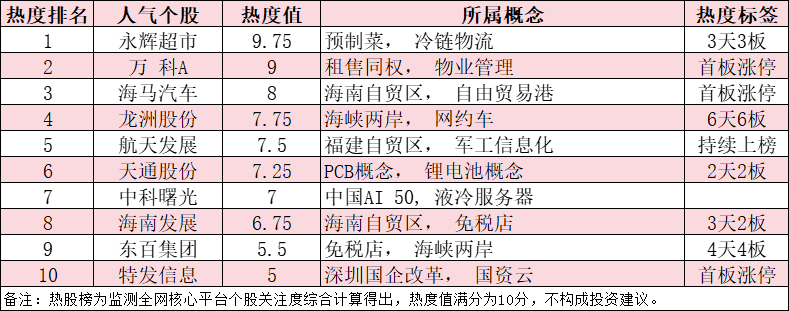
今日十大热股:永辉超市3天3板领涨热股榜,万科A首板涨停获资金追捧,龙洲股份6天6板创连涨新高
Jin Rong Jie· 2025-12-11 02:09
Core Viewpoint - The A-share market showed a mixed performance on December 10, with the Shanghai Composite Index declining by 0.23% while the Shenzhen Component Index increased by 0.29, indicating a divergence in market sentiment [1] Market Performance - The total trading volume in the Shanghai and Shenzhen markets was 1.78 trillion yuan, a decrease of approximately 125.4 billion yuan compared to the previous trading day [1] - A total of 2,341 stocks rose while 2,658 stocks fell, with declining stocks slightly outnumbering rising ones [1] Popular Stocks - The top ten popular stocks included Yonghui Supermarket, Vanke A, Haima Automobile, Longzhou Co., Aerospace Development, Tiantong Co., Zhongke Shuguang, Hainan Development, Dongbai Group, and Tefa Information [1][2] Stock Analysis - Yonghui Supermarket is undergoing transformation by adopting the "Pang Donglai" model amid ongoing operational pressures, supported by innovative retail policies and significant buying from well-known funds [3] - Vanke A benefits from low-interest loans from its major shareholder, enhancing its debt structure and business development, with active market participation reflected in a net purchase of 1.47 billion yuan [3] - Haima Automobile is positively impacted by the implementation of policies related to the Hainan Free Trade Port, with significant advancements in its new energy vehicle segment [3] - Longzhou Co. is driven by multiple catalysts, including hydrogen energy policies and government compensation for land acquisition, contributing to its profitability [3] - Aerospace Development is involved in low-orbit satellite projects, benefiting from dual policy and industry catalysts [4] - Tiantong Co. is positioned in several hot market areas, including PCB and lithium batteries, with successful production of lithium niobate chips [4] - Zhongke Shuguang is gaining attention due to its major asset restructuring and alignment with AI and liquid cooling server trends [4] - Hainan Development and Dongbai Group are influenced by favorable policies related to the Hainan Free Trade Port, while Tefa Information benefits from trends in AI computing and digital infrastructure [5]




烤冷面三十年:走向预制,冷面消失
虎嗅APP· 2025-12-11 00:09
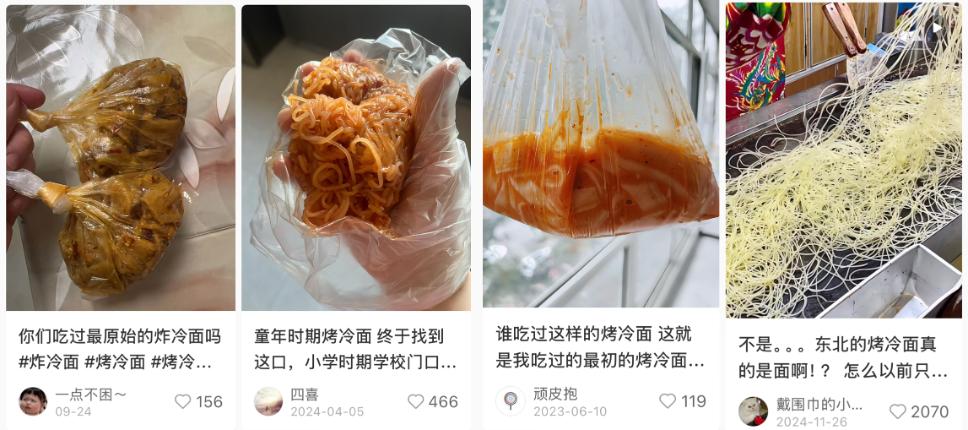
Core Viewpoint - The article explores the evolution and cultural significance of "Kao Leng Mian" (grilled cold noodles) in China, highlighting its transformation from a regional delicacy to a standardized street food across the country, while reflecting on the nostalgia associated with its original form [4][5][27]. Group 1: Historical Context and Origin - Kao Leng Mian is believed to have originated in 1996 in Mishan City, Heilongjiang Province, with its definition recognized as a street food from this region [13][15]. - The dish has undergone significant changes over the years, with the original form being replaced by a standardized version that includes a flat noodle wrapped with various toppings [16][23]. Group 2: Evolution of Preparation and Consumption - The original ingredients and preparation methods have been largely forgotten, with a shift towards a more commercialized and simplified version that is easier to mass-produce [16][26]. - The modern version of Kao Leng Mian typically includes a flat noodle, egg, and various sauces, making it less region-specific and more accessible across different cities [25][26]. Group 3: Cultural Significance and Nostalgia - The article emphasizes the emotional connection many individuals have with the original Kao Leng Mian, representing a collective memory of childhood and simpler times [27][29]. - Despite the commercialization and standardization of the dish, there remains a strong sentiment among consumers for the traditional version, which is often reminisced about in social media discussions [27][29].

遇见小面:上市首日破发30%,靠“预制”撑不起野心
Sou Hu Cai Jing· 2025-12-10 14:09
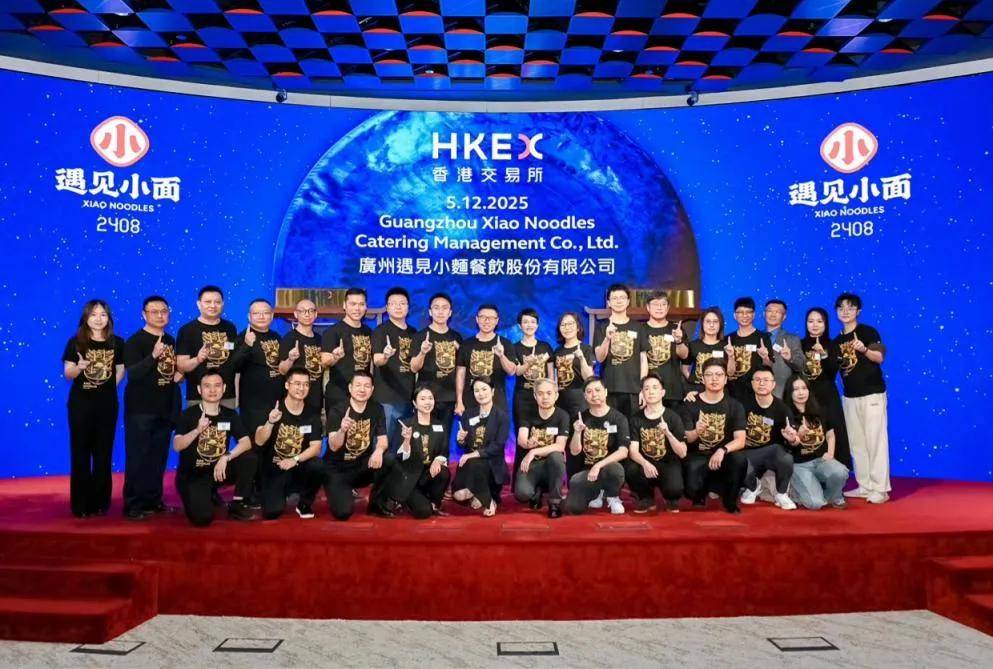
Core Viewpoint - The company "Yujian Xiaomian," known as the "first stock of Chinese noodle shops," faced a significant drop in stock price on its debut, falling nearly 30% despite impressive revenue growth and rapid store expansion, indicating that the capital market is becoming more cautious about purely "scale stories" [2][5]. Group 1: Financial Performance and Expansion - Revenue increased from 418 million yuan in 2022 to 1.154 billion yuan in 2024, representing a nearly threefold growth over three years with a compound annual growth rate of 66.2% [2]. - The number of stores grew from 170 to 417 by mid-2025, with a net increase of 108 stores in 2024 alone, supported by fundraising efforts aimed at expanding the restaurant network by 150 to 230 new stores in the next three years [3][4]. - Despite the growth in revenue and store count, the average daily sales per store declined from approximately 14,000 yuan in 2023 to 11,800 yuan in the first half of 2025, a decrease of 15.66% [4]. Group 2: Challenges in Business Model - The company has experienced a decline in customer spending, with the average transaction price dropping from 36.2 yuan in 2022 to 31.8 yuan in the first half of 2025, which did not lead to an expected increase in customer traffic [5]. - The reliance on a "heavy asset" model, with over 86% of revenue coming from high-cost direct stores, has created significant financial burdens, reflected in a debt ratio that remains above the industry healthy level of 50%-70% [5]. - The growth strategy appears to be driven by scale rather than profitability, raising concerns about the sustainability of its business model in a competitive market facing consumer contraction [5]. Group 3: Franchise Strategy and Market Position - To alleviate the burden of heavy assets, the company plans to increase its franchise operations, but the effectiveness of this strategy is uncertain, as over half of its restaurants are still concentrated in Guangdong [6]. - The franchise expansion has been slow, with only a slight increase in franchise stores from 81 to 86 since 2019, representing about 18.5% of total stores [6]. - The company faces challenges in attracting customers in lower-tier cities, where the average turnover rate for franchise stores is lower than that of first-tier cities, indicating difficulties in adapting its business model to different market segments [6]. Group 4: Brand and Market Dynamics - The Chinese noodle shop sector is growing, but it suffers from a lack of strong brands, with the top five players holding less than 3% market share [13]. - Despite being the fourth largest operator in the sector, the company only holds a 0.5% market share, highlighting the fragmented nature of the industry [13]. - The company's focus on operational efficiency has not translated into strong brand loyalty or emotional connection with consumers, which is critical for long-term success in a competitive market [14].
转型预制菜反走业绩下坡路,国联水产连亏六年
Xin Lang Cai Jing· 2025-12-10 08:43
Core Viewpoint - Guolian Aquatic Products (300094.SZ) announced the sale of its wholly-owned subsidiary, Xinying Foods, to its controlling shareholder, Xinyu Guotong, for a total payment of 315 million yuan. This transaction aims to convert idle upstream assets into more liquid cash assets and refocus on the company's main business [1][14]. Group 1: Financial Performance - From 2019 to 2024, the company has accumulated a net profit loss of approximately 2.028 billion yuan, with revenue only showing a brief positive growth in 2022. In the first three quarters of this year, the net profit loss reached nearly 800 million yuan [14]. - In 2023, the company reported a revenue decline of 4.79% and a net profit loss of 532 million yuan, attributing the losses to a poor seafood consumption market and declining sales prices [21][22]. - The company's revenue from aquatic food dropped by 16.97% year-on-year, with a gross margin decrease of 17.05 percentage points to -2.89% [24]. Group 2: Subsidiary Performance - Xinying Foods, established in 2011, reported revenues of 5.0117 million yuan and a net profit of 499,400 yuan in 2024, but incurred a loss of 1.06219 million yuan in the first ten months of the year [3][16]. - The sale of Xinying Foods reflects the company's ongoing strategy to divest upstream assets, which have not provided a competitive advantage and have instead burdened operations [4][16]. Group 3: Strategic Challenges - The company has faced significant challenges in its strategic transition to prepared foods, with a lack of core competitiveness in this area. The planned fundraising projects aimed at expanding production capacity were terminated due to changes in market demand and economic conditions [22][23]. - The company has been forced to accelerate the divestment of its upstream aquaculture business, which has been unprofitable for several years, in order to focus on prepared food processing [4][17]. Group 4: Market Conditions - The overall market for prepared foods is expected to grow, with projections indicating that the market size in China could exceed 1.072 trillion yuan by 2026. However, the company has struggled to capitalize on this growth due to external market conditions and internal strategic missteps [22][24].


餐饮供应链渠道深度跟踪
2025-12-10 01:57
Summary of Conference Call Records Industry Overview - The conference call focuses on the **frozen food and seasoning supply chain** industry, particularly the performance of various companies within this sector, including **Anjijia (安井)**, **Sinian (思念)**, **Sanquan (三全)**, **Wanzai (湾仔)**, **Central Kitchen (央厨)**, and **Zhiweixiang (知味香)** [1][6][25]. Key Points and Arguments Market Performance - From **September to November**, the restaurant channel experienced a recovery, driven by seasonal festivities, brand promotions, and the flexibility of direct sales models. However, the average growth rates for seasoning and frozen products from January to November were **4.9%** and **9%**, respectively, falling short of annual expectations [1][3][5]. - In November, frozen product shipments increased by **13.3%** year-on-year, while seasoning grew by **6.5%**. Despite this, the overall growth for the year remains below targets [3]. Company Performance - **Anjijia** achieved sales of over **1 billion yuan** from January to November, with expectations to reach **1.2-1.3 billion yuan** by year-end. **Sinian** reached around **800 million yuan**, while **Sanquan** and **Wanzai** saw minimal growth of **3%** and **2%**, respectively. **Central Kitchen** faced a decline of **7%** [1][6]. - Anjijia's growth is attributed to new product categories, diversified channels, and freezer placements in community stores [7]. Channel Strategy - The company is expanding into stable and high-potential channels such as community group buying and community stores, which, despite a small share, have maintained double-digit growth for three consecutive years, with an expected growth rate of **20%-25%** this year [10][9]. - The choice to focus on community channels over snack wholesale is due to the latter's instability and reliance on low-margin products [9]. Consumer Trends - There is a growing demand for diverse and quality frozen foods, with pre-prepared items like dumplings and sausages gaining popularity. Anjijia's new products, such as meatballs and purple sweet potato glutinous rice balls, have seen significant growth, with sausages increasing by **110%** [17][18]. Pricing and Competition - The frozen food market experienced significant price fluctuations from July to October, stabilizing in November. Upcoming promotions are expected around major holidays, although the overall promotional intensity has not changed significantly compared to last year [12][13][15]. - Smaller companies in the frozen food sector are facing exit pressures due to intense price competition from well-known brands, which has led to reduced sales volumes [16]. Future Outlook - The pre-prepared food industry is expected to become more standardized and concentrated, although no dominant players are anticipated in the short term. The market is still in a maturation phase, with brands needing to strengthen their positions [25][26]. - The timing of the **2026 Spring Festival** is expected to positively impact sales in the first quarter of 2026, with a projected increase in sales contribution to **35%-40%** of the annual total [21][22]. Additional Important Insights - The company has received support from manufacturers in the form of promotional activities and product sampling, which has aided in the growth of new channels [11]. - The current retail environment is unstable, making it challenging to ensure sustained consumer loyalty, even with new product launches [20]. - The transition from traditional distribution channels to direct consumer markets is ongoing, but the company still heavily relies on distributors for approximately **90%** of its business [19].

烤冷面三十年:走向预制,冷面消失
36氪· 2025-12-10 00:33
Core Viewpoint - The article explores the evolution and cultural significance of "Kao Leng Mian" (grilled cold noodles) in Northeast China, highlighting its transformation from a local delicacy to a standardized street food across the country, while reflecting on the nostalgia associated with its original form [4][6][36]. Group 1: Historical Context and Origin - Kao Leng Mian is believed to have originated in 1996 in Mishan City, Heilongjiang Province, with local media affirming this claim [17]. - The dish has undergone significant changes over the years, with the original form being replaced by a standardized version that includes a flat noodle wrapped with egg, onion, and cilantro [12][30]. Group 2: Cultural Significance and Memory - The article emphasizes that Kao Leng Mian serves as a collective memory for many individuals, representing a shared cultural experience rather than a commercial brand [6][36]. - The nostalgia for the original version of Kao Leng Mian reflects a longing for simpler times and shared childhood experiences, particularly in the context of Northeast China's socio-economic changes [36]. Group 3: Market Dynamics and Standardization - The dish's ingredients and preparation methods have become standardized, making it widely available but also leading to a loss of uniqueness and regional identity [34]. - The prevalence of pre-packaged ingredients has diminished the potential for creating distinctive products, resulting in a business model that relies on low margins and high volume sales [34]. Group 4: Variants and Innovations - Various cooking methods and forms of Kao Leng Mian exist, including fried versions and those with different sauces, showcasing the dish's adaptability [29][22]. - The article notes that despite the evolution of the dish, the core elements remain simple and accessible, contributing to its popularity across different demographics [32].
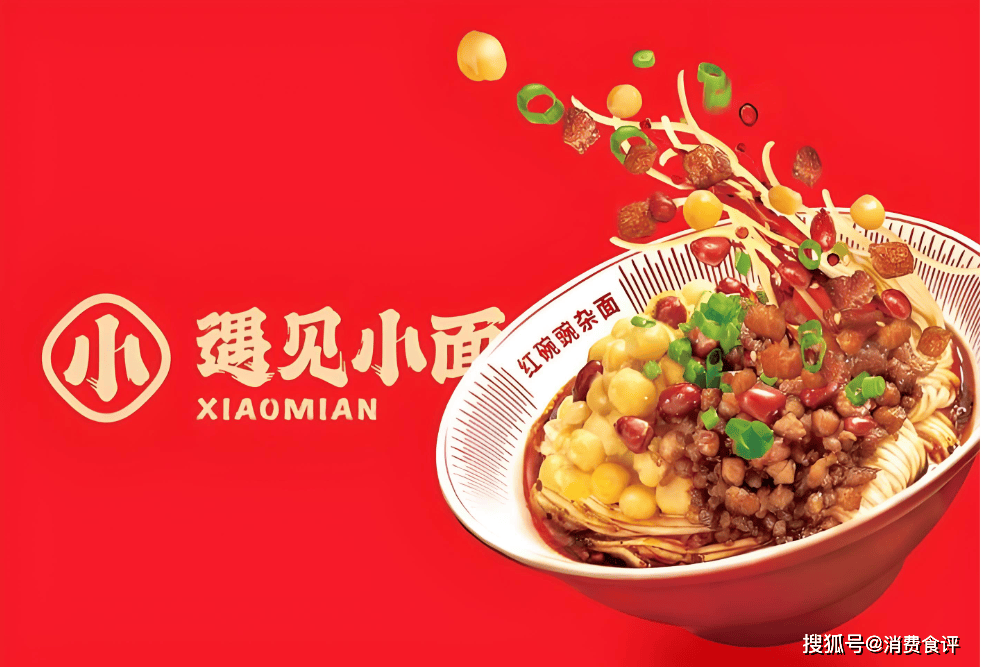
遇见小面上市首日市值蒸发近三成,高瓴等明星机构浮亏超千万
Sou Hu Cai Jing· 2025-12-09 02:54
Core Viewpoint - The IPO of "Yujian Xiaomian," a Chinese noodle restaurant chain, faced a cold reception in the capital market despite having all the elements of a "blockbuster IPO," including significant oversubscription and backing from prominent investors. The stock dropped 27.84% on its first day, raising questions about valuation bubbles and the company's ability to expand nationally [2][16][19]. Group 1: Company Overview - As of mid-2025, Yujian Xiaomian operates 465 stores, with a strong presence in Guangdong, but lacks locations in its origin market of Sichuan-Chongqing, raising concerns about its national expansion capabilities [2]. - The company has been profitable for two consecutive years, but same-store sales and average order values have been declining, attributed to price reductions aimed at enhancing customer experience [7][14]. - Yujian Xiaomian plans to open 520 to 610 new stores in the next three years, focusing on lower-tier cities and international markets, with a goal to exceed 500 stores by the end of the year [5][14]. Group 2: Market Dynamics - The restaurant industry in China has increasingly adopted a pre-prepared food model, which has sparked debates about consumer rights and the quality of dining experiences [3][19]. - The competitive landscape includes various local and international chains, with Yujian Xiaomian facing challenges from established brands in the noodle segment, particularly those offering higher-quality, freshly prepared options [7][19]. - The rise of food delivery services has created new growth opportunities for the restaurant sector, but noodle dishes face inherent challenges in maintaining quality during delivery [10][11]. Group 3: Financial Performance - Yujian Xiaomian's revenue grew from 4.18 billion RMB in 2022 to 11.54 billion RMB in 2024, with a compound annual growth rate of 66.2%. Net profit also improved significantly, reaching 607 million RMB in 2024 [14]. - On its first trading day, the company’s dynamic and static price-to-earnings ratios were 41 and 58, respectively, which are significantly higher than those of comparable restaurant stocks [17]. - Following the IPO, major investors, including Hillhouse Capital, faced substantial losses due to the stock's poor performance, highlighting the volatility in the market [18].
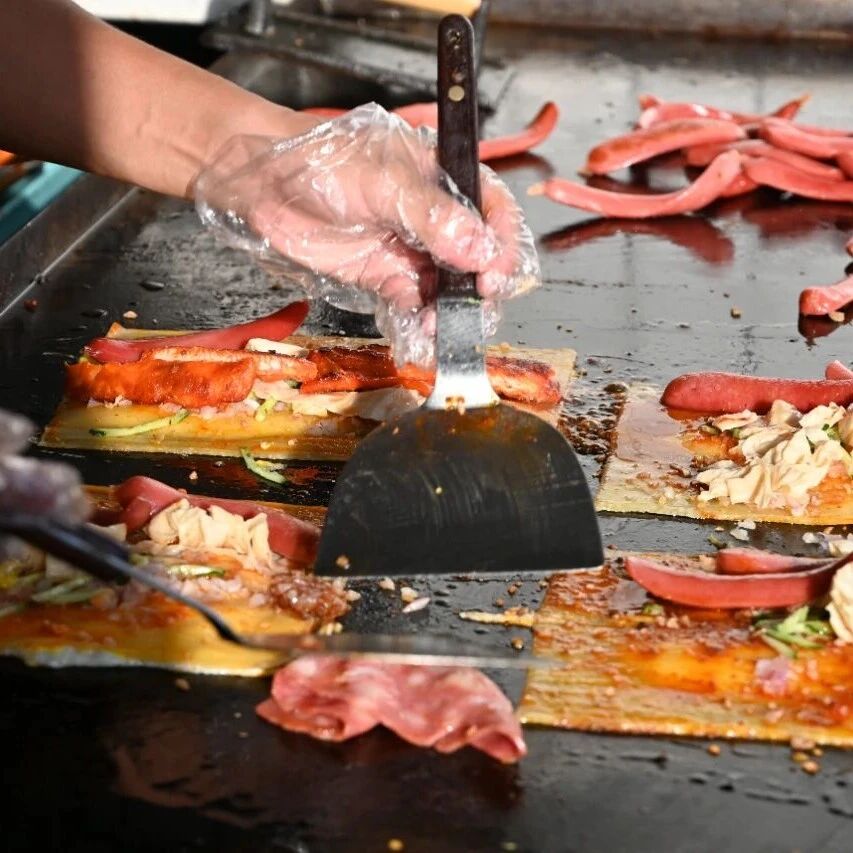
烤冷面三十年:走向预制,冷面消失
3 6 Ke· 2025-12-09 01:12
Core Viewpoint - The article explores the cultural significance and evolution of "Kao Leng Mian" (grilled cold noodles) in China, highlighting its transformation from a regional delicacy to a standardized street food across the country, while also reflecting on the nostalgia associated with its original form. Group 1: Brand and Market Presence - There are 27,667 operating Sha County snacks and 32,213 Lanzhou noodles in China, while the largest Kao Leng Mian brand, "Liao Xin," has only 194 recorded stores [1] - Kao Leng Mian has not developed into a recognizable chain brand like other regional foods, indicating a lack of commercial branding despite its popularity [1][23] - The modern version of Kao Leng Mian has become a ubiquitous part of contemporary dining, with standardized recipes and ingredients widely available [21][22] Group 2: Cultural and Historical Context - Kao Leng Mian is described as a memory community that reflects time and space rather than a commercial brand, emphasizing its cultural roots [2] - The dish originated in 1996 in Mishan City, Heilongjiang Province, and has since evolved, with various iterations emerging across different regions [9] - The nostalgia for the original version of Kao Leng Mian is prevalent among consumers, with many recalling their childhood experiences associated with the dish [24][26] Group 3: Evolution and Standardization - The original form of Kao Leng Mian was a loose cold noodle dish, which has been replaced by a standardized version that includes a flat noodle wrapped with various toppings [6][20] - The dish has undergone significant changes, with the introduction of pre-made ingredients and a simplified preparation process, making it easier to replicate [21][22] - The evolution of Kao Leng Mian reflects broader trends in the food industry, where convenience and standardization often take precedence over traditional methods [23]