
高水平对外开放

Search documents
中共武汉市委关于制定全市国民经济和社会发展第十五个五年规划的建议
Chang Jiang Ri Bao· 2025-12-22 08:49
Core Viewpoint - The "14th Five-Year Plan" period has seen significant achievements in Wuhan's development, with a focus on high-quality growth and resilience against challenges, setting the stage for the "15th Five-Year Plan" to further enhance the city's modernization and strategic position in the region [2][5]. Group 1: Achievements During the "14th Five-Year Plan" - Wuhan has experienced a remarkable economic recovery, with its GDP surpassing 2 trillion yuan, and key economic indicators maintaining leading growth rates among peer cities [2][5]. - The city has made substantial progress in establishing itself as a national center for technological innovation, with a notable increase in the number of academicians and significant breakthroughs in major independent innovations [2][5]. - Urban infrastructure and environmental quality have improved, with a successful reduction in major pollutants and the establishment of Wuhan as the world's first international wetland city with a population exceeding 10 million [2][5]. - Social welfare has been enhanced, with increased public service accessibility and a steady rise in per capita disposable income for residents [2][5]. Group 2: Strategic Opportunities and Challenges in the "15th Five-Year Plan" - The "15th Five-Year Plan" period is characterized by a critical phase for Wuhan, aiming to build five key centers and achieve significant advancements in modernization [4][5]. - The city is positioned to leverage strategic opportunities amid complex global changes, including technological revolutions and shifts in the geopolitical landscape [5][6]. - Despite the opportunities, challenges such as insufficient effective demand and the need for industrial transformation remain prominent [5][6]. Group 3: Development Goals and Principles for the "15th Five-Year Plan" - The guiding ideology for Wuhan's development emphasizes the integration of Marxist principles with Xi Jinping's thoughts, focusing on high-quality growth and comprehensive reforms [7][9]. - Key goals include achieving a GDP of over 3 trillion yuan, enhancing innovation capabilities, and establishing a modern industrial system [10][11]. - Principles such as maintaining party leadership, prioritizing people's needs, and fostering high-quality development are central to the city's strategy [9][10]. Group 4: Economic and Industrial Development Strategies - The plan emphasizes the importance of a modern industrial system, focusing on the integration of traditional industries with emerging sectors and future industries [13][14]. - Strategies include enhancing the competitiveness of existing industries, fostering new and future industries, and promoting the development of modern service sectors [15][16]. - The city aims to become a leader in the digital economy, with initiatives to integrate artificial intelligence across various sectors [16][18]. Group 5: Infrastructure and Urban Development - Urban development will focus on optimizing spatial layouts, enhancing infrastructure, and promoting sustainable urban renewal [34][35]. - The city plans to improve its transportation network, including the construction of high-speed rail and international logistics hubs [38][37]. - Efforts will be made to enhance the quality of urban management and public services, ensuring a high standard of living for residents [36][37].
李成钢会见苹果公司首席运营官
Guan Cha Zhe Wang· 2025-12-22 07:00
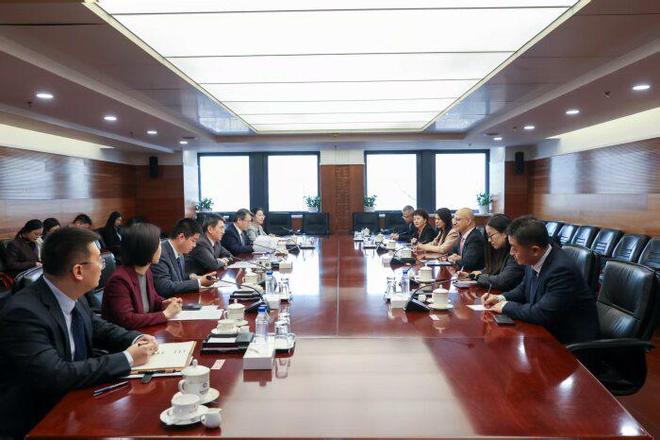
李成钢表示,苹果公司与中国市场的合作是相互成就、共同成长的过程。"十五五"时期,中国将进一步 扩大高水平对外开放,将为包括苹果公司在内的外资企业带来更大发展机遇。希望苹果公司继续保持与 中国合作伙伴的深度融合,深耕中国市场,实现共同发展。 据商务部网站消息,12月19日,商务部国际贸易谈判代表兼副部长李成钢会见美国苹果公司首席运营官 萨比赫·汗。双方就苹果公司在华业务发展等进行了交流。 萨比赫·汗表示,苹果公司高度赞赏中国供应链能力与潜力,与中国合作伙伴早已是共赢共生关系。苹 果公司将继续致力于在华长期发展,持续加大在华供应链、研发、社会公益等领域投入,坚持智能化、 绿色化、融合化发展方向,实现互利共赢。 ...


连平:推动内外循环深度融合
Sou Hu Cai Jing· 2025-12-22 01:52
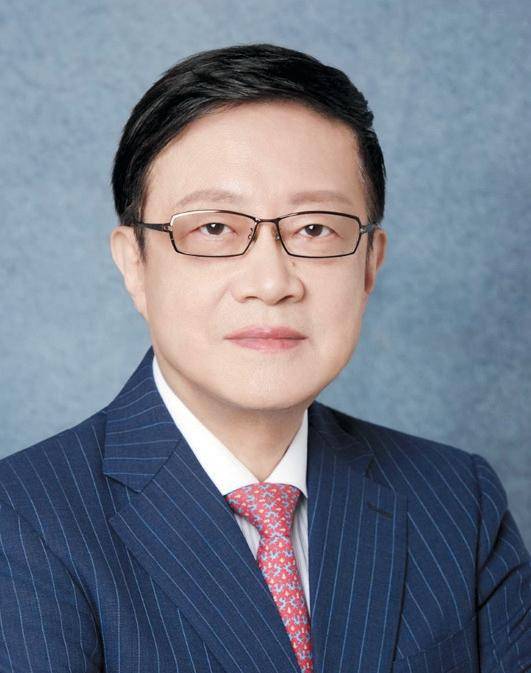
Core Viewpoint - The Chinese economy is at a historical juncture as it transitions from the "14th Five-Year Plan" to the "15th Five-Year Plan," facing both opportunities and challenges in the macroeconomic environment. The focus for 2026 is on balancing short-term recovery with long-term transformation, emphasizing sustainable consumption growth and the integration of "internal circulation" and "high-level opening up" strategies [1][3]. Group 1: Economic Environment and Policy Direction - The global economy is still searching for a recovery rhythm amid fluctuations, while China's economy shows resilience due to policy synergy [1]. - The Central Economic Work Conference has set the tone for 2026 as "seeking progress while maintaining stability, improving quality and efficiency" [1]. - The importance of balancing short-term recovery with long-term transformation is highlighted, particularly in achieving sustainable consumption growth [1]. Group 2: Internal and External Circulation - The integration of internal and external circulation is crucial for China's economic development, especially in light of global trade restructuring and the spillover effects of major economies' policies [3]. - The Central Economic Work Conference emphasizes the need to coordinate domestic and international situations and to maintain openness while promoting win-win cooperation in multiple fields [3]. - The urgency of stabilizing foreign trade and foreign investment is underscored, given the moderate slowdown of the global economy and the challenges posed by geopolitical risks [3]. Group 3: Strategic Focus for 2026 - Key areas of focus for the upcoming year include actively expanding autonomous opening up, enhancing the quality and efficiency of foreign trade, and expanding bilateral investment cooperation [4]. - Achieving synergy between internal circulation and external opening requires policy guidance and improved market mechanisms [4]. - The establishment of 22 pilot free trade zones is seen as a vital node for promoting the flow of domestic and foreign factors and goods, facilitating the integration of internal and external circulation [4].
【好评中国】封关运作,奏响中国开放最强音
Xin Lang Cai Jing· 2025-12-21 05:19
Core Viewpoint - The official launch of the Hainan Free Trade Port's full island closure on December 18 marks a significant step in China's high-level opening-up strategy and aims to reshape global trade dynamics [1][2][3] Group 1: Strategic Importance - The closure operation is a solid implementation of national strategic deployment, highlighting China's commitment to high-level openness [1] - Hainan is positioned as a crucial gateway for China's new era of opening up to the outside world, with the central government providing guidance and support since the announcement in 2018 [1][2] Group 2: Economic Impact - Since the release of the Hainan Free Trade Port construction plan five years ago, Hainan has attracted 102.5 billion yuan in foreign investment, with an average annual growth of 14.6% [2] - The average annual growth rates for goods and service trade are 31.3% and 32.3%, respectively, increasing the economic openness of Hainan to 35% [2] - By the end of 2024, nearly 1.24 million foreign-funded enterprises are expected to be established in China, with around 700,000 foreign trade enterprises having import and export performance [2] Group 3: Global Context - The closure operation reflects China's proactive stance in the face of global trade protectionism, showcasing the country's responsibility and commitment to open markets [3] - China aims to leverage its open policies to enhance international cooperation and economic development, positioning itself as a leader in global trade [3]
综述丨塞尔维亚人士看好塞中“一带一路”合作前景
Xin Hua She· 2025-12-21 01:30
Group 1 - Serbia's economic cooperation with China has achieved significant milestones, with Chinese investments being crucial for Serbia's economic and social development [1] - From 2013 to 2024, Serbia's exports to China increased from $2.2 million to $1.9 billion, an approximately 85-fold growth, while Chinese direct investment in Serbia rose from €2.22 million to €1.4 billion [1] - China has become the largest source of foreign direct investment in Serbia, with investments spanning steel, infrastructure, mining, and energy sectors [1] Group 2 - The Serbian Chamber of Commerce reported that Serbia's annual export growth rate to China has consistently exceeded 50%, with the upcoming Serbia-China Free Trade Agreement opening new avenues for Serbian goods in the Chinese market [2] - Serbia aims to transform from a raw material exporter to a country with modern industry and innovation capabilities, aligning with China's evolving open policy [2] - Cooperation is expanding into higher technology and innovation sectors, with ongoing projects in renewable energy, smart industry, and electric vehicle manufacturing [2] Group 3 - Under the strategic guidance of the leaders of both countries, practical economic cooperation between Serbia and China has flourished, contributing positively to national development and benefiting both peoples [3] - The Chinese government encourages more capable Chinese enterprises to invest in Serbia, promoting high-quality collaboration under the Belt and Road Initiative [3]
海南将成为具备全球竞争力的枢纽
Xin Lang Cai Jing· 2025-12-20 21:04
Core Viewpoint - The establishment of the Hainan Free Trade Port's full island closure operation is a key measure for building a high-standard free trade system, demonstrating China's commitment to advancing institutional openness [1][2] Group 1: Hainan Free Trade Port Operations - The Hainan Free Trade Port commenced its full island closure operation on December 18, marking a significant step in China's efforts to expand high-level openness and promote an open world economy [1] - The closure operation is expected to accelerate trade flow, promote industrial development, and attract investments in manufacturing, services, and advanced logistics, positioning Hainan as a globally competitive hub [1] Group 2: Global Supply Chain and Innovation - Free trade zones and ports have become comprehensive nodes in regional and global supply chains, serving as hubs for modern logistics, digital economy, high-value services, and sustainable development projects [1] - To maintain competitiveness and differentiation, free trade zones and ports must possess innovative capabilities, particularly in key areas such as digital customs, automation technology, and circular economy [1] Group 3: Development Advantages and Regional Cooperation - Hainan Free Trade Port boasts well-developed infrastructure, an efficient transportation system, and high-quality hotel services, providing significant development advantages [1] - Future efforts will focus on strengthening cooperation with ASEAN, South Asia, and the Middle East in maritime, aviation, and digital economy sectors, potentially establishing Hainan as an important platform for regional cooperation [1]
塞尔维亚人士看好塞中“一带一路”合作前景
Xin Lang Cai Jing· 2025-12-20 20:03
中方数据显示,2013年至2024年,塞尔维亚对华出口额由2200万美元增至19亿美元,增长约85倍;同一 时期,中国对塞直接投资额由2220万欧元增长至14亿欧元。 中国已成为塞第一大外国直接投资来源地。中企对塞投资涵盖钢铁、基础设施、矿业、能源等多个领 域。河钢斯梅戴雷沃钢厂、紫金博尔铜矿、匈塞铁路等两国合作大项目让塞经济焕发新生机,极大推动 塞现代化进程。 塞尔维亚工商会主席查代日近日接受新华社记者采访时表示,近年来塞对华出口年增长率持续超过 50%,2024年生效的塞中自贸协定为塞尔维亚商品进入中国市场打开了新通道。 (来源:内蒙古日报) 转自:内蒙古日报 □新华社记者 金丹依 塞尔维亚总统武契奇日前在南部城市尼什视察中国企业投资的汽车零部件制造厂时指出,塞中经贸合作 取得了令两国人民都感到骄傲的伟大成就,中企投资对塞经济社会发展、创造就业岗位至关重要,塞方 将继续为在塞中企运营提供全方位支持。 近年来,中塞两国经贸关系驶入快车道。中国提出的"扩大高水平对外开放""推动共建'一带一路'高质量 发展",在塞尔维亚政商学界引发积极共鸣。塞方人士认为,塞中两国基于相互尊重、互利共赢的合作 模式,不仅为两国人 ...
【好评中国】双向发力,增强发展的活力韧性
Xin Lang Cai Jing· 2025-12-20 05:46
Group 1 - The core viewpoint emphasizes the importance of a strong domestic market and high-level opening-up as strategic supports for China's modernization, highlighting the need for cooperation and mutual benefit in global engagement [1][2] - The "15th Five-Year Plan" outlines the necessity of expanding high-level opening-up to stimulate consumption and drive high-quality development, aiming for effective qualitative improvements and reasonable quantitative growth in the economy [1][2] - The plan calls for deep participation in global industrial division and cooperation, aiming to create new opportunities for the world through China's new development while ensuring alignment with global economic trends [1][2] Group 2 - The strategy includes enhancing the level of opening-up to expand the development space for Chinese modernization, advocating for proactive alignment with international high-standard trade rules and expanding market access [2] - There is a strong focus on developing service trade, digital trade, and supporting new business models like cross-border e-commerce to promote balanced import and export growth [2] - The initiative aims to create a transparent and stable institutional environment to attract foreign investment, while also strengthening cooperation with countries involved in the Belt and Road Initiative [2] Group 3 - The emphasis on boosting consumption is seen as crucial for stabilizing economic recovery and achieving high-quality development, balancing short-term growth with long-term strategic goals [3] - The plan includes measures to enhance service consumption, promote quality brands, and implement policies that directly benefit consumers, particularly in durable goods and upgraded products [3] - There is a focus on developing new consumption scenarios and fostering international consumer center cities to unlock diverse consumption potential [3]
视频丨多国人士表示海南自贸港封关为国际贸易带来新机遇 推动建设开放型世界经济
Yang Shi Xin Wen Ke Hu Duan· 2025-12-19 02:14
俄罗斯联邦委员会国际事务委员会第一副主席 杰尼索夫:中国在海南建设自由贸易港,带来优惠政策和新的贸易发展机遇。我们相信这将有利于地区乃至 全球贸易的发展与繁荣。中国是全球贸易的引领者,这体现在其始终坚持对外开放,致力于与各方伙伴展开合作,创造最便利的贸易条件。这一点已得到国 际社会的广泛肯定。 巴西圣保罗州立大学哲学与科学学院经济学教授 路易斯·安东尼奥·保利诺:海南自贸港封关运作,展现了中国坚持对外开放的决心。当一些保护主义做法损 害世界经济时,中国迎难而上,大力推进高水平对外开放,不仅为国内消费者提供了更丰富的选择,也促进了国际贸易合作。 多国人士表示,在世界经济面临的不确定性日益加剧的背景下,海南自由贸易港封关运作体现了中国坚定不移推进高水平对外开放的决心,为国际贸易带来 新机遇,将有力推动建设开放型世界经济。 加拿大西三一大学副校长 菲利普·莱尔德:海南自贸港封关运作,是中国扩大开放的标志性一步。它代表了一种高水平的制度创新,为贸易、跨境资本流 动、人员往来提供便利,为国际企业和合作伙伴提供了新机遇。习主席强调,发展更高层次的开放型经济,以扩大开放带动创新、推动改革、促进发展,这 不仅体现在政策中,更 ...

宣昌能出席二十国集团财政和央行副手会
Jin Rong Shi Bao· 2025-12-19 01:27
Core Viewpoint - The G20 meeting in Washington D.C. focused on enhancing the role of financial channels and macro policy coordination to promote global economic growth, with China emphasizing its support for multilateralism and the need for domestic policy adjustments in deficit countries [1][2]. Group 1: G20 Meeting Highlights - The G20 meeting took place on December 15-16, with discussions on the 2026 financial channel work arrangements and key topics [1]. - Chinese Vice Governor of the People's Bank of China, Xuan Changneng, represented China and highlighted the importance of multilateralism and macro policy coordination [1]. Group 2: China's Position and Proposals - China supports modernizing regulations to improve the business environment while maintaining essential financial regulatory standards like Basel III [1]. - The country is actively implementing the G20 Cross-Border Payment Roadmap to enhance cross-border payment efficiency and reduce transaction costs, adhering to international anti-money laundering standards [1]. - China plans to deepen reforms and expand high-level opening-up, focusing on domestic demand and building a strong domestic market to unleash service consumption potential [1]. Group 3: Monetary Policy and Economic Outlook - The People's Bank of China will continue to implement a moderately accommodative monetary policy to create a favorable monetary and financial environment for stable economic growth and high-quality development [1].