AI技术

Search documents
跨境电商如何穿越周期与不确定性? 请看网经社2025年度盘点
Sou Hu Cai Jing· 2026-02-12 07:22
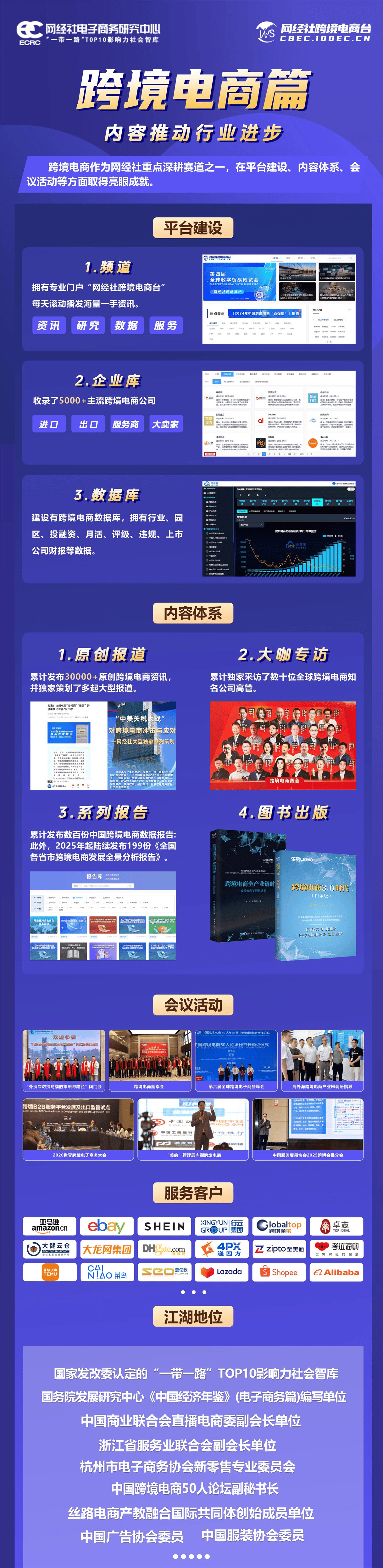
2025年,中美贸易战的起伏、全球财税监管的趋严、AI技术的深度渗透,共同重塑着跨境电商行业格局。作为"一带一路TOP10影响力社会智库"、"中国跨 境电商50人论坛"副秘书长、"丝路电商产教融合国际共同体"创始单位,网经社立足行业前沿,以数据为核心、以服务为支撑,在跨境电商领域开展了全方 位、多层次的研究与赋能工作,用专业力量陪伴行业穿越周期、稳健前行。 作为深耕数字经济18年的专业机构,网经社在2025年不仅记录了跨境电商行业的每一处脉动,更以"媒体+智库"的双重身份深度参与了行业生态的构建与治 理。对此,网经社及旗下跨境电商台对这一年在跨境电商所做的努力和成就进行了全面回顾。 3.数据库 建设有跨境电商数据库,拥有行业、园 区、投融资、月活、评级、违规、上市 公司财报等数据。 1.原创报道 累计发布30000+原创跨境电商资讯, 并独家策划了多起大型报道。 a c 3. 系列报告 跨境电商圆桌会 第六届全球跨境电子商务峰会 題因之以強出發端與公現 01 合发展及出口 2020世界跨境电子商务大会 美的"管理层内训跨境电商 中国服务贸易协会2025跨博会推介会 服务客户 XINGYUN|行g CP@I I ...

港股异动 | 阜博集团(03738)午后涨近15% 公司受益版权确权与资产化需求提升
智通财经网· 2026-02-12 06:29
智通财经APP获悉,阜博集团(03738)午后涨近15%,截至发稿,涨12.2%,报5.7港元,成交额7.58亿港 元。 公开资料显示,阜博集团作为全球领先的数字内容资产保护与交易的平台及服务提供商,依托AI技术 构建版权保护、价值连接与服务协同一体化生态,目前已为红果短剧提供独家版权技术服务。根据阜博 25Q3业绩交流会披露,前红果微短剧每月上新数千部,阜博日均处理违规侵权数据超过600万条,其中 超95%能实现下架。券商分析认为,字节Seedance 2.0为AI视频生成的工业化应用提供条件,红果平台 短剧26年1月月活3亿,阜博绑定超级入口有望持续受益短剧技术门槛降低带来的业务增量。 消息面上,豆包官方午间发布消息称,豆包视频生成模型Seedance 2.0今天正式接入豆包App、电脑端和 网页版。打开豆包App对话框,选择新增的"Seedance 2.0"入口,输入相关提示词,即可生成5秒或10秒 视频。目前,豆包Seedance2.0暂不支持上传真人图片作为主体参考。值得一提的是,阜博集团近日宣 布与星路科技达成战略合作,双方将依托各自优势,在文化创意知识产权(IP)的境外现实世界资产 (RWA)领 ...
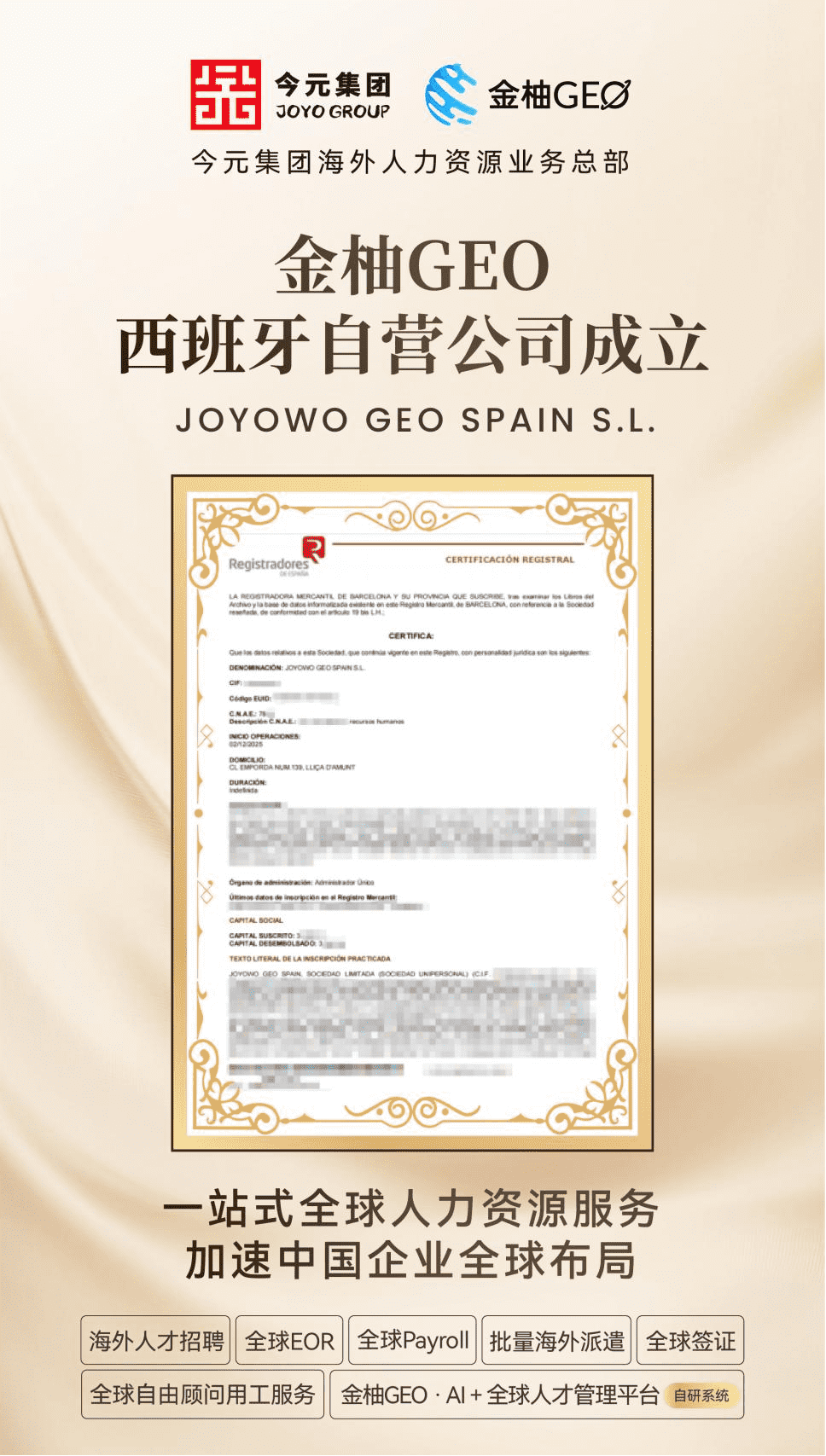
今元集团西班牙自营公司成立,锚定南欧战略枢纽,构建全球人力服务新支点
Sou Hu Cai Jing· 2026-02-12 06:19
Core Insights - Jinyou Group's establishment of its self-operated company in Spain marks a significant step in its globalization strategy, enhancing its service network across Europe and providing comprehensive human resource solutions for Chinese enterprises entering the Spanish and broader European markets [1][14] Group 1: Strategic Importance of Spain - Spain serves as a crucial gateway for Chinese companies entering the European market due to its geographical location, connecting Europe, Africa, and Latin America [4] - The bilateral trade between China and Spain has shown resilience, with trade volume exceeding $50 billion in 2024 and cumulative investments surpassing $11 billion, indicating deepening cooperation in various sectors [4] - The action plan for strengthening the comprehensive strategic partnership between China and Spain (2025-2028) is expected to further unlock cooperation potential [4] Group 2: Challenges for Chinese Enterprises - Chinese companies face significant challenges in human resources, including strict regulations on work and residence permits for foreign employees, which demand high compliance standards [6][7] - There is a mismatch in the supply and demand for technical talent in emerging sectors like renewable energy and high-end manufacturing, complicating local recruitment efforts [6] - Cultural differences across regions in Spain can hinder business negotiations and team management, necessitating the establishment of personal trust before formal cooperation [6] Group 3: Jinyou Group's Solutions - Jinyou Group's Jinyou GEO offers a comprehensive cross-border human resource service system, addressing key pain points for Chinese enterprises in Spain through services like overseas talent recruitment and payroll management [9] - The establishment of a localized professional service team aims to provide compliance support and cross-cultural management guidance, enhancing operational efficiency for Chinese companies [10] - The integration of AI technology into human resource processes is designed to improve compliance and efficiency, facilitating digital transformation and reducing management costs [10] Group 4: Collaborative Ecosystem Development - Jinyou Group aims to create a full-cycle, all-chain empowerment system for overseas expansion by leveraging its integrated ecosystem solutions and collaborating with its training and consulting brand [12] - The focus is on building a customized training and consulting service system that aligns with the different stages of overseas expansion, ensuring that companies can effectively meet their talent and management needs [12] - The establishment of the self-operated company in Spain is seen as a response to the growing demand for human resource services among Chinese enterprises, reinforcing Jinyou Group's commitment to supporting their global development [14]
尚品宅配(300616):联手拓竹探索家居行业个性化定制
Xin Lang Cai Jing· 2026-02-12 04:40
Core Viewpoint - The company anticipates a net loss attributable to shareholders of between 200 million to 250 million yuan for 2025, with a non-recurring net profit loss of 220 million to 266 million yuan, primarily due to the ongoing downturn in the real estate market impacting overall demand in the home furnishing industry [1] Group 1: Company Performance - The company is facing significant pressure on its overall operating performance, with revenue declining year-on-year due to the persistent downturn in the real estate sector [1] - The company is implementing various strategies to counteract industry challenges, including deepening AI technology applications, optimizing channel structures, and innovating its business model [1] - Despite these efforts, the company continues to experience losses, with gross margin under pressure from rigid cost characteristics [1] Group 2: Strategic Partnerships - The company has formed a strategic alliance with TuoZhu Technology to integrate 3D printing technology into home furnishing, aiming to create a "3D printing maker space" for Chinese families [1][2] - This collaboration is seen as a benchmark case for the integration of home furnishing and technology, addressing industry pain points related to the slow adoption of 3D printing [2] - The partnership leverages the company's extensive network of over 2,000 stores and a service network reaching millions of households to enhance TuoZhu's market penetration among high-net-worth families [2] Group 3: Future Outlook - The company and TuoZhu Technology plan to expand the application of 3D printing in various family scenarios, including daily use, creative activities, and customized home furnishing, to meet personalized family needs [3] - They aim to jointly establish standards for personalized home manufacturing, integrating resources across the entire supply chain and enhancing AI, digital, and flexible production models [3]

华谊兄弟股价持续下跌,多重因素影响公司基本面
Jing Ji Guan Cha Wang· 2026-02-12 04:38
Core Viewpoint - Huayi Brothers' stock price continues to decline due to deteriorating fundamentals, increasing debt risks, and insufficient market confidence [1] Financial Performance - Huayi Brothers has reported losses for seven consecutive years since 2018, with a cumulative net loss exceeding 8.2 billion yuan [2] - Revenue for the first three quarters of 2025 was only 215 million yuan, a year-on-year decrease of 46%, with a net loss of 114 million yuan [2] - The core business of film and entertainment saw revenue drop to 443 million yuan in 2024, only 13% of the peak value of 3.374 billion yuan in 2017 [2] - In the first half of 2025, film and entertainment revenue fell by 50.37%, and the gross margin turned negative at -30.54% [2] Financial Condition - As of December 10, 2025, overdue debts reached 52.5 million yuan, exceeding 10% of the net assets for 2024 [3] - Some bank accounts have been frozen, with only 645,000 yuan available for daily operations, severely threatening operational viability [3] - The debt-to-asset ratio has been rising, reaching 87.69% by the end of the third quarter of 2025, with cash reserves around 50 million yuan and short-term loans nearing 200 million yuan, indicating significant repayment pressure [3] Executive Shareholding - The shares held by controlling shareholders Wang Zhongjun and Wang Zhonglei are all pledged or frozen, accounting for 13.81% of the total share capital [4] - In December 2025, Wang Zhongjun's 154 million shares (5.55% of total shares) were subject to judicial auction [4] - The second-largest shareholder, Alibaba Investment, reduced its stake by 1.06% in December 2025, bringing its holding below 5%, further undermining market confidence [4] Project Development - Assets acquired at high premiums in earlier years, such as real-life entertainment (e.g., Suzhou Movie World) and gaming (e.g., Hero Mutual Entertainment), have been continuously losing money and are now being sold at low prices [5] - In 2024, the company recognized asset impairment losses of 155 million yuan, which accounted for 33.2% of its revenue [5] - Revenue from diversified businesses (brand licensing, internet entertainment) is less than 1%, with negative gross margins, failing to provide effective support [5] Industry and Risk Analysis - The film industry saw a 28% year-on-year decline in box office revenue in 2024, but Huayi Brothers' decline was significantly steeper than the industry average [6] - The company's major films in 2025, such as "Towards the Sun" and "Lychee of Chang'an," performed poorly, shrinking its market share to less than 1% [6] - The company is overly reliant on traditional cinema models and has not adapted to new trends like streaming and short dramas, despite recent efforts to enter these areas [6] Recent Stock Performance - As of February 12, 2026, Huayi Brothers' stock price was 2.00 yuan, down 5.21% on that day, with a total market value of 5.549 billion yuan, having shrunk by over 90% since its peak in 2015 [7] - If the net assets for 2025 are negative, the company may face delisting risk warnings [7]

新国都业绩预告符合预期,股价短期震荡
Jing Ji Guan Cha Wang· 2026-02-12 04:26
Group 1 - The core viewpoint of the article indicates that New Guodu's (300130) 2025 performance forecast aligns with market expectations, with a projected net profit attributable to shareholders expected to grow by 70.79%-113.49% year-on-year, primarily benefiting from the growth in payment hardware exports and cross-border payment business [1] - The report maintains a "buy" rating and emphasizes that the company's Hong Kong listing plan is likely to accelerate its global expansion [1] - Current stock price fluctuations are related to market concerns regarding investments in AI technology and the volatility of gross profit margins in domestic acquiring business [1] Group 2 - New Guodu's 2025 performance forecast reveals an expected net profit of 400 million to 500 million yuan, representing a year-on-year increase of 70.79%-113.49%, while the non-recurring net profit is expected to decline by 8.6%-28.91%, mainly due to increased marketing investments in domestic acquiring business and impacts from new business expansion [2] - Based on the latest stock price of 27.07 yuan, the company's price-to-earnings ratio (TTM) is 44.58 times, and the price-to-book ratio is 3.54 times, reflecting market expectations regarding its overseas strategy [2] Group 3 - In the past 7 days, New Guodu's stock price has fluctuated between a decline of 2.87%, with a highest price of 28.28 yuan and a lowest price of 26.11 yuan [3] - On February 12, the stock experienced a single-day drop of 1.13%, with a net outflow of 10.8275 million yuan in main funds and a turnover rate of 0.40%, underperforming the computer sector [3] - Technical analysis indicates that the stock price is near the middle band of the Bollinger Bands, suggesting a continuation of the short-term fluctuation pattern [3]

中辉有色观点-20260212
Zhong Hui Qi Huo· 2026-02-12 03:58
中辉有色观点 | 品种 | 核心观点 | 主要逻辑 | | --- | --- | --- | | | | 美国非农数据超预期,市场无视,另外美联储官员强调联储独立性,盘面继续调整。 | | 黄金 | 企稳多配 | 中长期地缘秩序重塑,不确定性持续存在,央行继续买黄金(中国央行连续 15 个月 | | ★ | | 购金),长期战略配置价值不变。关注调整幅度。 | | | | 白银多空拥挤交易博弈或没有结束。尽管长期理由仍然存在供需缺口连续 5 年,全 | | 白银 | 等待降波 | 球大财政均对白银长期有利,但是短期市场会继续调整,保持关注,短期参与难度 | | ★ | | 大,风险报酬比不合适。 | | | | 非农表强里弱,短期市场降息预期降温,美元走强,关注后续美国 CPI 和沃什讲话。 | | 铜 | | 隔夜铜冲高回落,建议多单止盈落袋,持币空仓过节。中长期,铜作为中美博弈的 | | ★ | 长线持有 | 重要战略资源和贵金属平替资产配置,对铜依旧看好。 | | 锌 | | 锌外强内弱,随着春节长假临近,需求疲软,锌锭库存累库,建议准备持币空仓过 | | ★ | 承压 | 节,规避风险。 | | 铅 ...
银禧科技:公司的玻纤材料不可用于玻纤电子布,公司PPO产品可用于覆铜板PCB中
Mei Ri Jing Ji Xin Wen· 2026-02-12 03:47
Core Viewpoint - The demand for fiberglass materials is increasing due to the rise in AI technology, leading to price hikes. However, the company's fiberglass materials are not suitable for fiberglass electronic cloth applications, but its PPO products can be used in copper-clad PCBs [1]. Company Summary - The company, Yingxi Technology (300221.SZ), confirmed that its fiberglass materials cannot be used for fiberglass electronic cloth [1]. - The company's PPO products are applicable in copper-clad PCBs [1]. Industry Summary - There is a significant surge in demand for fiberglass materials driven by AI technology [1]. - The market for high-end copper-clad boards and PCBs is expanding, indicating potential growth opportunities in this sector [1].

晶方科技股价近期活跃,AI封装技术受关注
Jing Ji Guan Cha Wang· 2026-02-12 02:31
经济观察网 晶方科技(603005)近7日股价表现活跃,2月9日单日涨幅达8.02%,收盘报31.50元,成交 额19.83亿元,主力资金净流入1.64亿元,占成交额8.25%。2月10日股价继续上涨2.10%至32.16元,但2 月11日小幅回调0.81%至31.90元。截至2月12日早盘,股价进一步升至32.25元,5日累计涨幅8.73%,表 现强于半导体板块(0.94%)和大盘。资金流向显示,2月9日游资净流出6937.56万元,散户净流出 9429.49万元,融资净偿还5670.82万元,反映短期博弈加剧。 近期市场关注点集中在AI技术对半导体封装需求的拉动。2月9日,公司董秘在互动平台回应投资者时 强调,晶方科技在晶圆级TSV先进封装技术领域具备显著领先优势,AI芯片、自动驾驶等场景的快速发 展为公司带来市场机遇。此外,行业层面,高盛2月8日报告指出全球存储芯片供应短缺可能加剧,尤其 DRAM领域2026年供需缺口达4.9%,或间接利好先进封装企业。但需注意,公司未直接涉及存储芯片 生产。 机构观点 机构对晶方科技中长期前景保持中性偏积极。截至2月12日,机构综合目标价为37.00元,较当前价有约 ...

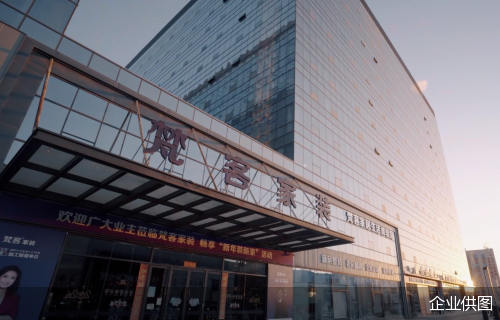
数字化重塑品质生态 头部引领行业升级——北京家装行业高质量发展观察
Bei Jing Shang Bao· 2026-02-12 02:24
随着城市更新深入推进与居民品质居住需求持续释放,首都家装行业正迎来结构性变革。从粗放扩张转 向精细运营,从价格竞争转向价值比拼,以数字化、标准化、口碑化为核心的新发展格局加速形成。头 部企业以技术创新与服务升级破局,推动行业向规范化、智能化、可持续方向稳健前行,为民生消费与 产业升级注入强劲信心。 当前,家装行业告别野蛮生长,进入优胜劣汰、头部集中的深度调整期。北京家装市场形成新的头部格 局,部分企业因模式单一、交付不稳逐步退出,优质企业凭借稳健经营逆势增长,彰显行业良性发展韧 性。梵客家装等标杆企业明确冲刺市场前列目标,以综合实力夯实行业地位,折射出资源向品牌口碑、 交付能力、运营效率倾斜的长期趋势,行业集中度持续提升,发展生态持续优化。 数字化与AI技术成为家装高质量发展的核心底座。面对流程不透明、响应不及时、效率待提升等行业 痛点,头部企业加快全链路数字化改造,以数据驱动重构服务链条。梵客家装规划2026年实现全面数字 化运营与AI机器人客服全覆盖,通过智能客服、节点管控、进度可视、智能派单等工具,大幅提升运 营效率与客户体验。技术赋能让工期管理、成本管控、质量追溯更加精准,从"经验驱动"转向"数据驱 ...