
摩尔定律

Search documents
MKS Instruments (MKSI) FY Conference Transcript
2025-05-14 16:20
Summary of MKS Instruments Conference Call Company Overview - MKS Instruments is a nearly 65-year-old company that started in the semiconductor market, focusing on instruments for vacuum chambers, which are critical in semiconductor equipment [2][3] - The company has expanded its portfolio through multiple acquisitions, including Newport Corporation in 2015, which broadened its technology offerings beyond just semiconductor equipment to include lithography, metrology, and inspection [4][7] Financial Performance - MKS exceeded guidance in all metrics for Q1, achieving a gross margin of over 47% for the fifth consecutive quarter, despite a higher proportion of lower-margin equipment revenue [10][11] - The company reported Q1 semi revenue guidance indicating a 15% increase year-over-year, driven by strategic investments in semiconductor technology [24][25] Market Dynamics - The semiconductor market remains stable, with no significant changes due to tariffs affecting strategic investments in node migrations and AI accelerated compute [14][16] - The automotive and industrial segments have shown weakness, impacted by tariffs, but the semiconductor and packaging markets have remained steady [15][16] Tariff Impact and Mitigation Strategies - MKS has accounted for a potential 100 basis points impact on gross margin due to tariffs, primarily affecting the vacuum business [18][20] - The company is exploring supply chain adjustments and commercial actions to mitigate tariff impacts while maintaining a long-term gross margin target of 47% [21][22] Semiconductor Business Insights - MKS is positioned to outperform the semiconductor market, with expectations of a 200 basis points premium to wafer fabrication equipment (WFE) growth due to its strong market position [23][27] - The company faces headwinds from restrictions on sales to certain Chinese companies, which has impacted revenue [27] NAND Technology Upgrades - Customers are transitioning from 100+ layers to 200+ layers in NAND technology, which is expected to drive significant spending [29][34] - MKS's vacuum portfolio typically represents 1.5% to 2.5% of the bill of materials (BOM) for customers, indicating substantial revenue opportunities from these upgrades [35][36] Electronics and Packaging Market - The electronics and packaging market is driven by high-density interconnect (HDI) and package substrate applications, particularly in AI and advanced PCBs [65][67] - MKS has seen strong bookings for chemistry equipment, which is closely tied to its equipment sales, indicating a healthy future revenue stream [68][70] Specialty Industrial Business - The specialty industrial segment, which includes defense, healthcare, and automotive, has been impacted by macroeconomic conditions but remains a high-margin business that generates cash flow [75][77] Long-term Growth Initiatives - MKS is investing in long-term growth initiatives, particularly in lithography, metrology, and chemistry equipment, while maintaining a focus on operational efficiency [80][82] - The company aims to maintain a net leverage ratio of 2.0 over the next several years, supported by strong cash generation and debt repayment strategies [84][85] Conclusion - MKS Instruments is well-positioned in the semiconductor and electronics markets, with a strong focus on innovation and strategic growth initiatives, despite facing some macroeconomic challenges and tariff impacts. The company continues to leverage its broad portfolio to capitalize on emerging opportunities in advanced technologies and applications.

芯片发展简史
半导体行业观察· 2025-05-14 01:47
Core Viewpoint - The semiconductor industry is foundational to modern technology, with applications across various sectors including automotive, computing, medical devices, and smartphones. The increasing reliance on advanced chips is driven by innovations in AI, electric vehicles, wind turbines, and 5G networks, making semiconductors essential for data storage, electronic signal control, and information processing [1]. Historical Development of Semiconductors - The early development of semiconductors dates back to the 19th century, with significant discoveries such as the Seebeck effect in 1821 and the increase of silver sulfide conductivity with temperature in 1833, laying the groundwork for semiconductor technology [2]. - The first practical semiconductor was invented in 1947 by John Bardeen, Walter Brattain, and William Shockley at Bell Labs, marking a pivotal moment in semiconductor history [5]. Transition to Silicon - The shift from germanium to silicon in semiconductor manufacturing occurred in the 1950s due to silicon's abundance and lower cost, despite initial challenges related to its stability [6][7]. - The development of integrated circuits (ICs) in 1958 by Jack Kilby and Robert Noyce revolutionized the industry, allowing for the miniaturization of electronic components and significant improvements in performance and reliability [8][9]. Microprocessor Era - The introduction of microprocessors, starting with Intel's 4004 in 1971, transformed the semiconductor landscape by enabling powerful personal computers and creating new markets for storage chips and interface circuits [11]. Modern Semiconductor Industry - The semiconductor industry has experienced exponential growth in the 21st century, driven by the rise of personal computers and smartphones, with a focus on energy efficiency and advanced processing capabilities [12]. - The demand for AI-driven hardware is projected to reach $150 billion by 2025, with the semiconductor market expected to grow to $1 trillion by 2030, fueled by digital transformation and innovations in machine learning [12]. Key Players - As of April 2025, major semiconductor manufacturers include Nvidia, Broadcom, TSMC, Samsung, and ASML, highlighting the competitive landscape of the industry [13]. Challenges Facing the Semiconductor Industry - The semiconductor industry faces challenges such as supply chain vulnerabilities, geopolitical tensions, and environmental concerns related to high energy consumption and resource management [14].


芯片博弈:钱往何处投?
天天基金网· 2025-05-09 12:05
以下文章来源于兴证全球基金 ,作者与您相伴的 兴证全球基金 . 投资理财,有温度,有深度,有态度。 在剧集《爱,死亡和机器人》中有一段场景: 3个机器人重返荒无人烟的地 球,像游客一样参观人类的历史遗迹,一边吐槽着人类灭绝的陈年往事,不 禁引人深思遐想。硅基物种会取代人类吗?这需要先看看芯片作为"大脑"发 展到什么程度了。 如果将目光聚焦当今资本市场,不难看出硅基物种的地位和芯片的重要性。目前全球市值前 5位分别是:苹果、微软、英伟达、亚马逊和谷歌,都或多或 少身处于芯片竞争之中。 全球市值前五的公司,截至 2 025/5/1 (来源 M arketcap ) " 还没有指甲盖 大 的芯片, 却 决定了未来的走向 。 "经济历史学家克里斯·米勒在其著作《芯片战争》中如此判断。 芯片有多重要? 《芯片战争》一书的副标题非常醒目: "世界最关键技术的争夺战"。 芯片,比石油更具战略性? "人工智能时代,人们常说数据是新的石油。我们面临的真正限制不是数据的可用性,而是数据的处理能力。" 一个重要的改进思路来自 "晶体管之父"威廉·肖克利,他认为可以用"半导体"来制造晶体管,以替代真空管。 什么是 "半导体"呢? — ...

晶体管,还能微缩吗?
半导体行业观察· 2025-05-09 01:13
Core Viewpoint - The article discusses the evolution and significance of Moore's Law in the semiconductor industry, emphasizing its historical context, current challenges, and future prospects for technology advancements in integrated circuits [3][5][6]. Group 1: Historical Context of Moore's Law - Moore's Law originated from Gordon Moore's observation in 1965 that the number of components on integrated circuits would double approximately every two years, leading to exponential growth in circuit complexity [5][15]. - The early development of the integrated circuit industry was driven by military defense needs, with significant investments from the U.S. Air Force in the 1960s [6][9]. - Predictions made by industry leaders in the 1960s indicated that integrated circuits would become cost-competitive with traditional circuits, with estimates suggesting that by 1973, integrated circuits could be priced at one-third to two-thirds of traditional circuit costs [9][10]. Group 2: Current Challenges and Future of Moore's Law - There is ongoing debate about the "death" of Moore's Law, with concerns about potential technological barriers. However, the semiconductor industry has consistently overcome such challenges through innovation [6][22]. - The article highlights the transition from traditional planar transistors to advanced architectures like FinFET and GAA (Gate-All-Around) transistors, which enhance performance and efficiency [35][37]. - The semiconductor industry aims to continue reducing power consumption and costs while increasing performance and integration density, with a focus on maintaining the trajectory of Moore's Law [27][41]. Group 3: Technological Innovations - Innovations such as strained silicon and high-k materials have been pivotal in enhancing transistor performance and enabling further miniaturization [31][32]. - The introduction of 3D transistor architectures, such as FinFET and GAA, represents a significant advancement in transistor design, allowing for better control and efficiency [35][37]. - Future technologies, including CFET and FFET, are anticipated to further push the boundaries of transistor scaling and performance, continuing the legacy of Moore's Law into the next decade [39][41].
游戏机涨价,全是芯片惹的祸?
半导体芯闻· 2025-05-06 11:08
Core Viewpoint - The gaming console market is experiencing a significant shift, with prices increasing rather than decreasing, which contradicts historical trends where prices typically drop over time [2][9]. Price Trends - The last major price drop for gaming consoles occurred in 2016 with the PS4 Slim, which saw a price reduction from $349 to $299 [2]. - Recent price increases include the OLED version of the Nintendo Switch, which rose by $50, and the PS5's digital version, which also increased by $50 in 2023 [2]. - Xbox Series S and X saw price hikes of $80 to $100 without any hardware improvements [2]. Factors Influencing Price Increases - Multiple factors contribute to the rising prices, including inflation, supply shortages during the pandemic, unpredictable trade policies, and a shift away from the traditional model of selling hardware at a loss [2]. - A core technical reason for the price increases is the slowdown of Moore's Law, which has historically driven down costs through advancements in chip manufacturing [2][3]. Moore's Law and Its Implications - Moore's Law, proposed by Gordon Moore, suggests that the number of transistors on a chip doubles approximately every two years, but this trend is slowing down [3]. - The slowdown in chip manufacturing advancements has led to increased costs and reduced benefits from die shrink technologies, which previously allowed for smaller, more efficient chips [3][4]. Impact on Gaming Consoles - The benefits of die shrink in gaming consoles have diminished, leading to less significant improvements in size, power consumption, and heat generation [5][6]. - Historical examples, such as the PlayStation 2 and Xbox 360, illustrate how die shrink technology previously allowed for lower prices and improved performance, but this trend is no longer evident in the latest console generations [6][7]. Future Outlook - The gaming console market may not revert to historical pricing trends, and future price reductions are uncertain, depending on global trade agreements and advancements in manufacturing processes [8]. - The expectation is that the current trend of rising prices and stagnant technological improvements will continue, leading to a shift in consumer purchasing behavior [9].
台积电COO:打造每个人的晶圆厂
半导体行业观察· 2025-05-02 03:58
Core Viewpoint - TSMC is adapting its strategies to meet the increasingly diverse demands of its customers in the semiconductor industry, emphasizing a shift towards tailored manufacturing capabilities for specific market segments [1][17]. Group 1: Industry Trends - The semiconductor industry is evolving with the rise of artificial intelligence, which is expected to drive demand for data center processors as a primary application of TSMC's advanced manufacturing technology [2][3]. - TSMC's future roadmap includes three key directions: maximizing transistor density and performance efficiency, achieving high performance efficiency at reasonable costs, and providing multi-chip packaging solutions suitable for data centers [3][5]. Group 2: Technological Advancements - TSMC plans to introduce advanced process technologies such as NP, N, NP, and A for mobile and consumer-grade SoCs, which are optimized for high performance without the complexity and cost of back-end power supply [5][17]. - The company is also expanding its advanced packaging product portfolio to meet the growing demand for multi-chip packaging solutions in AI and high-performance computing applications [5][18]. Group 3: Innovation and Efficiency - TSMC's transition from N to N nodes has seen a 30% increase in mixed chip density, while the transition to A is expected to yield a 7% to 10% increase in transistor density [6][13]. - The company is confident in achieving significant geometric scaling advantages with the A node, which is expected to be mass-produced by 2028 [6][11]. Group 4: Customer-Centric Approach - TSMC serves over 500 customers from various segments and is continuously improving its strategies to meet the diverse needs of its clientele, moving from a one-size-fits-all approach to a series of dedicated nodes and packaging solutions [17][18]. - The company is committed to allowing customers to reuse their IP throughout the development of its manufacturing processes, reinforcing its long-standing "everyone can be a foundry" philosophy [17].
微软高管解读Q3财报:年底仍会存在供应短缺 但持乐观态度
Xin Lang Ke Ji· 2025-05-01 01:07
专题:聚焦美股2025年第一季度财报 微软发布2025财年第三财季财报:营收为700.66亿美元,同比增长13%,不计入汇率变动的影响为同比 增长15%;净利润为258.24亿美元,同比增长18%,不计入汇率变动的影响为同比增长19%。 微软第三 财季营收和每股收益均超出华尔街分析师此前预期,从而推动其盘后股价大幅上涨逾5%(注:微软财 年与自然年不同步)。 详见: 微软第三财季营收700.66亿美元 净利润同比增长18% 财报发布后,微软CEO萨提亚·纳德拉(Satya Nadella)、执行副总裁兼CFO艾米·胡德(Amy Hood)等 公司高管出席了随后举行的财报电话会议,解读财报要点,并回答分析师提问。 所以在下半财年,我们一直在采取措施,包括之前也提到过的,我们甚至将一些空间提前准备好,并且 本季度能够提前交付给客户,团队在这方面的工作非常出色,因为我们在这个过程中越来越高效。我也 期待未来能够继续保持这样的状态。我在发言中提到过,我们原本希望看到在第四财季末实现供需平 衡,但正如你们在本季度所看到的,需求确实有所增加,所以到今年年底我们仍会存在一些供应短缺的 情况,情况依然会比较紧张,但我们对此还 ...

风暴中的英特尔,正在发生一场史无前例的改革
虎嗅APP· 2025-04-30 10:38
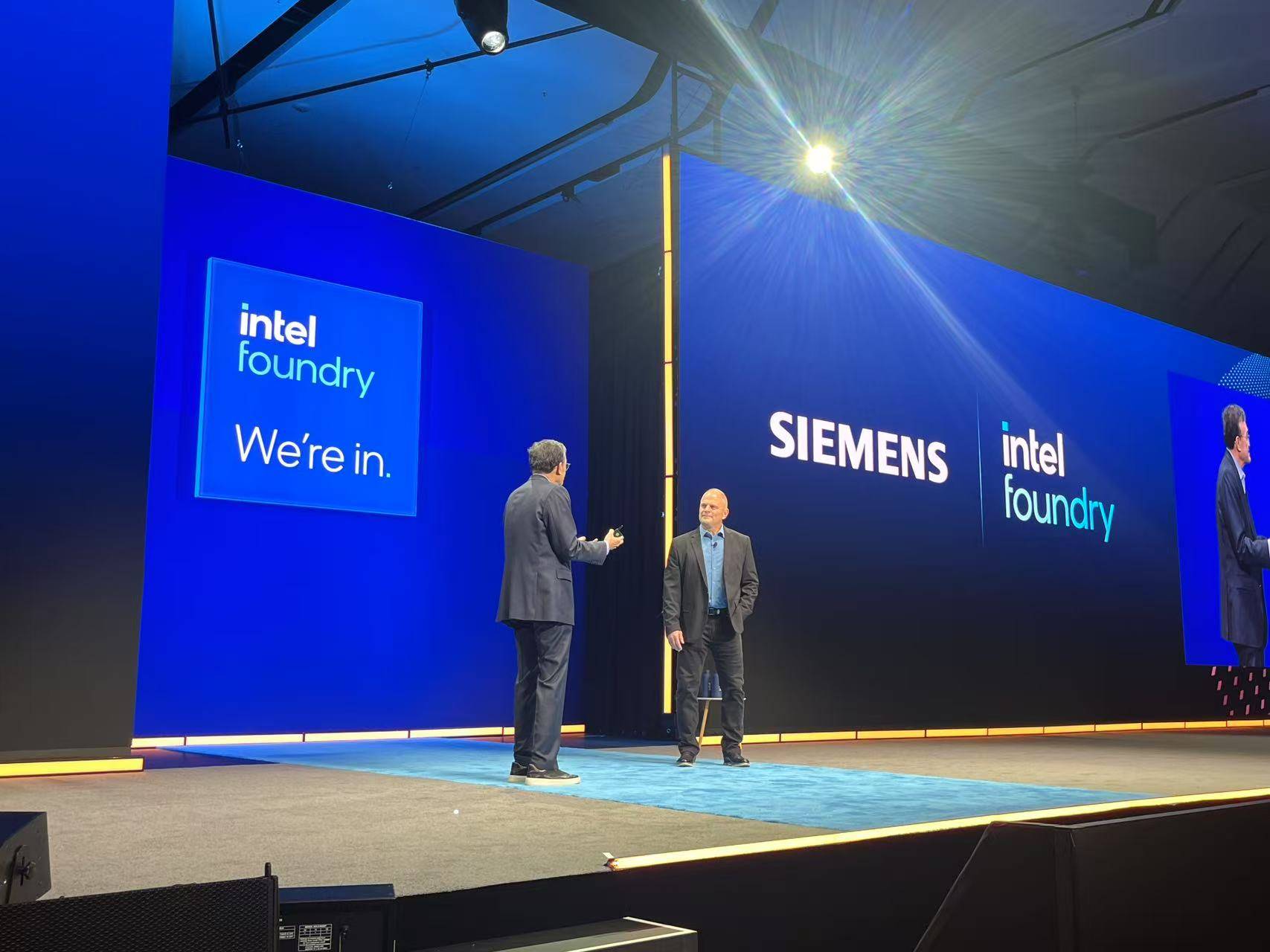
以下文章来源于AGI接口 ,作者丸都山 AGI接口 . AI卷起的财富风暴。 编辑 | 苗正卿 头图 | 虎嗅拍摄 "我将全力确保代工业务的成功。" 在4月30日举办的英特尔代工大会上,66岁的陈立武在开场时,抛出了这样一句掷地有声的表态。 5周前,当陈立武被任命为英特尔CEO的消息传出时,部分业内人士认为,考虑到他长期从事于投资行业的背景,可能会削减调晶圆代工业 务,以帮助财务报表恢复到健康的状态。 如今看来,陈立武的态度非常明确,晶圆代工业务不仅要继续做,而且还要将其置于更高的优先级上。 不过,一个无法忽略的问题在于,英特尔近4年花掉900亿美元投资晶圆厂,本质上是为了IDM 2.0的落地,现在的英特尔是否还要遵循这个 框架? 在今天的会议上,陈立武并没有提到IDM 2.0的相关问题,甚至没有过多渲染代工业务对于自家产品的帮助,而是反复提到一句话"获得客 户信任"。 对于一般公司来说,这似乎是一句"正确的废话",但对于素来崇尚"工程师文化"的英特尔而言,这样的表述从未被如此密集地提到过。 出品 | 虎嗅科技组 作者 | 丸都山 这句话背后,或许暗藏着英特尔当下正在发生的一场"文化变革"。 01 华裔老将, ...
风暴中的英特尔,正在发生一场史无前例的改革
Hu Xiu· 2025-04-30 09:44
Core Viewpoint - Intel's new CEO, Pat Gelsinger, emphasizes the importance of the foundry business and aims to prioritize it despite previous concerns about financial health and potential cuts to the division [1][2][4] Group 1: Leadership and Cultural Shift - Gelsinger's commitment to the foundry business marks a significant cultural shift within Intel, moving from an engineering-centric approach to one that prioritizes customer trust and responsiveness [3][5][6] - The focus on gaining customer trust is a departure from Intel's traditional engineering culture, indicating a potential transformation in the company's operational philosophy [4][5] Group 2: Foundry Business Strategy - Intel has invested $90 billion over the past four years in wafer fabrication to support its IDM 2.0 strategy, but the future direction under Gelsinger remains uncertain [2] - The company is building an ecosystem around its foundry services, including partnerships with leading EDA firms to enhance customer support in design processes [6][7] Group 3: Technological Advancements - Intel is advancing its manufacturing processes with multiple technology nodes, including Intel 4, Intel 3, and the highly anticipated Intel 18A, which is entering risk production and set for mass production this year [10][14] - The Intel 18A node features groundbreaking technologies such as RibbonFET and PowerVia, which are expected to significantly enhance performance and efficiency, potentially giving Intel a competitive edge over TSMC [17][18] Group 4: Competitive Landscape - Intel's competition with TSMC is intensifying, with both companies developing advanced nodes; however, Intel's unique technologies may provide it with a strategic advantage [14][21] - The introduction of Intel 14A, which utilizes high-NA EUV lithography, positions Intel to potentially surpass TSMC in technology, although TSMC's cost-effective strategies could pose challenges for Intel [20][21]
一种新型光刻技术,突破EUV极限
半导体芯闻· 2025-04-28 10:15
如果您希望可以时常见面,欢迎标星收藏哦~ 来源:内容 编译自 eenewseurope ,谢谢。 据报道,初创公司Lace Lithography AS(挪威卑尔根)正在开发一种光刻技术,该技术使用向表 面发射的原子来定义特征,其分辨率超出了极紫外光刻技术的极限。 该公司由卑尔根大学首席执行官 Bodil Holst 教授和首席技术官 Adria Salvador Palau 于 2023 年 7 月共同创立,后者在卑尔根大学获得博士学位,但目前在西班牙巴塞罗那运营。 传统的 EUV 系统使用 13.5nm 波长的光,通过一系列反射镜和掩模在晶圆上形成图案。原子光刻 技术能够实现直接无掩模图案化,其分辨率甚至小于受波长限制的 EUV 系统所能达到的分辨率。 该公司在其网站上声称:"通过使用原子代替光,我们为芯片制造商提供了领先当前技术 15 年的 功能,而且成本更低、能耗更低。" Salvador Palau 和 Holst 教授共同撰写了一篇发表在《物理评论 A》上的论文,题为《利用中性 氦原子进行真实尺寸表面映射》。该论文详细介绍了立体氦显微镜的实现和操作。 Lace Litho 所称的 BEUV 理论上 ...