
新基建

Search documents
21社论丨优化区域经济布局,撬动更大内需空间
21世纪经济报道· 2025-11-05 02:09
Group 1 - The article emphasizes the importance of constructing a high-quality regional economic layout and spatial system, highlighting the need for modern governance in mega cities and the integration of urban clusters [1] - It discusses the cultivation of multiple urban clusters and economic cores to create a coordinated development pattern, leveraging innovation, industrial upgrades, and regional collaboration [1][2] - The article outlines the expected addition of 5,500 to 6,000 kilometers of suburban and intercity railways, along with 3,000 kilometers of urban rail transit, to enhance infrastructure connectivity [2] Group 2 - It highlights the systematic promotion of modern governance in mega cities, focusing on urban renewal to optimize living environments and stimulate domestic demand [3] - The article mentions that urban renewal will create new demands for infrastructure upgrades, generating a market space worth trillions of yuan for related industries [3] - It specifies that approximately 600,000 kilometers of various urban pipelines will need to be updated in the next five years, alongside improvements in disaster prevention and new infrastructure investments exceeding one trillion yuan annually [3] Group 3 - The article advocates for a differentiated development approach for small and medium-sized cities, emphasizing unique characteristics and quality improvements [4] - It suggests that small cities near core urban areas can sustain growth by absorbing industrial overflow and achieving commuting integration [5] - The article stresses the need for regional coordinated development as an inherent requirement of Chinese modernization, aiming to optimize productivity layout and enhance domestic market space [5]


优化区域经济布局,撬动更大内需空间
2 1 Shi Ji Jing Ji Bao Dao· 2025-11-05 00:53
Core Insights - The article discusses the Central Committee's proposal for the 15th Five-Year Plan, emphasizing the need for a high-quality regional economic layout and spatial system, focusing on modernizing governance in mega cities and promoting urban agglomeration integration [1][2] Group 1: Regional Economic Development - The proposal aims to cultivate multiple urban agglomerations and economic cores to create a coordinated development pattern that emphasizes high-quality growth and resource optimization [1] - Key urban clusters such as Beijing-Tianjin-Hebei, Yangtze River Delta, and Guangdong-Hong Kong-Macao Greater Bay Area are highlighted for their roles in technological innovation and financial openness [1][2] - The development of central and western regions, such as the Chengdu-Chongqing economic circle, is accelerating, creating new growth poles for talent and industry expansion [1][2] Group 2: Infrastructure and Connectivity - The plan includes enhancing infrastructure connectivity through the construction of cross-regional and cross-basin transportation networks, with an expected addition of 5,500 to 6,000 kilometers of suburban and intercity railways over the next decade [2] - A modern transportation network will support regional development by facilitating efficient movement of people and goods [2] - The strategy promotes a tiered industrial layout, with high-end resources concentrating in first-tier cities while basic manufacturing shifts to peripheral cities and central regions [2] Group 3: Urban Renewal and Investment - Urban renewal initiatives are set to improve living conditions and stimulate demand in sectors like construction, building materials, and community services, potentially unlocking trillions of yuan in investment [3] - The focus on upgrading urban infrastructure will include the renovation of approximately 600,000 kilometers of urban pipelines over the next five years [3] - Investment in new infrastructure, including 5G and AI, is projected to exceed one trillion yuan annually, driving digital and intelligent urban transformation [3] Group 4: Small and Medium City Development - The development of small and medium cities should shift from a homogenized approach to one that emphasizes unique characteristics and high-quality growth [4] - Different types of small cities will receive tailored development opportunities, leveraging their proximity to core cities or resource advantages [4] - Regional coordinated development is essential for modernizing China's economy, requiring optimized productivity layouts and the activation of key growth areas [4]
21社论丨优化区域经济布局,撬动更大内需空间
2 1 Shi Ji Jing Ji Bao Dao· 2025-11-04 22:36
Core Insights - The article discusses the Central Committee's proposal for the 15th Five-Year Plan, emphasizing the construction of a high-quality regional economic layout and spatial system, marking the first time such governance modernization and urban integration are highlighted in a five-year plan [1] Group 1: Regional Economic Development - The proposal aims to cultivate multiple urban clusters and economic cores to create a coordinated development pattern that emphasizes high-quality growth through innovation, industrial upgrading, and regional collaboration [1][2] - The plan seeks to enhance the roles of the Beijing-Tianjin-Hebei, Yangtze River Delta, and Guangdong-Hong Kong-Macau Greater Bay Area in driving technological innovation and financial openness [1][2] Group 2: Infrastructure and Connectivity - The initiative includes accelerating the construction of cross-regional and cross-basin transportation networks, with an expected addition of 5,500 to 6,000 kilometers of suburban and intercity railways and 3,000 kilometers of urban rail transit over the next decade [2] - A modern transportation network is envisioned to support regional interconnected development, facilitating the efficient flow of high-end resources to major cities while allowing manufacturing and supporting industries to shift to peripheral cities and central cities in the Midwest [2] Group 3: Urban Renewal and Investment - The focus on urban renewal aims to optimize living environments and unlock domestic demand, with significant investments expected in infrastructure upgrades, including the renovation of 600,000 kilometers of urban pipelines and improvements in disaster prevention systems [3] - The anticipated investment in new infrastructure, such as 5G and industrial internet, is projected to exceed one trillion yuan annually over the next five years, driving digital and intelligent urban transformation [3] Group 4: Small and Medium City Development - The article advocates for a shift in the development of small and medium cities from a homogenized approach to one that emphasizes unique characteristics and high-quality growth, leveraging local cultural resources and optimizing public services [4] - Different types of small and medium cities are expected to receive differentiated development opportunities, with those near core cities benefiting from industrial spillover and integrated commuting [4]
“新基建”赋能公募高质量发展
Jing Ji Ri Bao· 2025-11-04 22:27
Core Viewpoint - The launch of the FISP platform marks a significant advancement in the public fund industry, addressing long-standing issues such as high operational costs and low capital efficiency, thereby enhancing the direct sales service for institutional investors [1][2]. Group 1: FISP Platform Overview - The FISP platform is an industry service platform authorized by the China Securities Regulatory Commission and operated by China Securities Depository and Clearing Corporation, aimed at improving the efficiency of fund direct sales [1][2]. - It provides a centralized, standardized, and automated "one-stop" data information exchange service for institutional investors, creating a standardized "highway" for direct sales in the public fund industry [1][2]. Group 2: Efficiency and Cost Reduction - The FISP platform enhances industry efficiency through hardware and software improvements, including shared infrastructure and unified data standards, which reduce redundancy and lower human and technical costs [2]. - Direct sales via the FISP platform may offer fee advantages compared to indirect sales, potentially lowering investment costs for investors [2]. Group 3: Service Empowerment and Security - The platform significantly shortens transaction cycles and improves capital utilization efficiency, while digitalization enhances transaction processing efficiency [2]. - FISP also strengthens financial data security and risk prevention through a comprehensive governance system, which helps build investor confidence and purifies the market environment [2]. Group 4: Future Outlook - The full potential of the FISP platform will require collaborative efforts across the industry, emphasizing a shift from scale to investor returns in fund management practices [3]. - The ongoing effectiveness of this "new infrastructure" is expected to support the stable development of the public fund industry and enhance its role in serving the real economy and managing residents' wealth [3].
净利润超9000亿元,深市公司最新成绩单来了
Zhong Guo Ji Jin Bao· 2025-11-04 22:26
Core Insights - The overall performance of Shenzhen-listed companies shows steady growth in both revenue and net profit for the first three quarters of 2025, indicating a positive trend in the market [1][2] Revenue and Profit Growth - Shenzhen-listed companies achieved a total revenue of 15.72 trillion yuan, a year-on-year increase of 4.31%, and a net profit of 903.02 billion yuan, up 9.69% year-on-year [2] - 2,169 companies reported profits, accounting for 75.34% of the total, with 207 companies experiencing profit growth exceeding 100% [2] - The main board and the ChiNext board both showed strong performance, with the main board generating 12.47 trillion yuan in revenue and 658.36 billion yuan in net profit, while the ChiNext board achieved 3.2 trillion yuan in revenue and 244.66 billion yuan in net profit, both with double-digit growth rates [2] Leading Companies - There are 57 companies in Shenzhen with a market capitalization exceeding 100 billion yuan, collectively generating 4.38 trillion yuan in revenue and 461.37 billion yuan in net profit, with growth rates of 10.70% and 13.84% respectively [3] - Leading companies such as BYD, Midea Group, and CATL have significantly contributed to the overall performance, with revenues exceeding 100 billion yuan and net profits over 10 billion yuan [3] Sector Performance - The technology sector continues to thrive, with industries such as electronics, power equipment, and communications benefiting from policy support and demand, driving performance growth [4][5] - The electronics industry reported revenue of 1.59 trillion yuan, a year-on-year increase of 15.03%, and net profit of 791.22 billion yuan, up 32.12% [4] - The power equipment sector achieved revenue of 1.32 trillion yuan, a 10% increase, and net profit of 946.09 billion yuan, up 29.53% [5] - The communications sector saw revenue of 292.83 billion yuan, a 14.29% increase, and net profit of 307.94 billion yuan, up 36.71% [5] Non-Banking Financial Sector - The non-banking financial sector has shown a recovery, with total revenue of 213.58 billion yuan, a year-on-year increase of 10.67%, and net profit of 60.85 billion yuan, up 49.03% [6] - The brokerage sector performed particularly well, with revenue of 117.48 billion yuan, a 30.05% increase, and net profit of 50.91 billion yuan, up 77.15% [6] R&D and Investor Returns - Shenzhen-listed companies have increased R&D investment, with total R&D expenses reaching 518.01 billion yuan, a 6.20% increase, and an R&D intensity of 3.29% [7] - A total of 507 companies implemented or announced cash dividend plans, with a total dividend amount of 129.11 billion yuan, doubling from the previous year [7] - Companies also disclosed 257 share repurchase plans with a total upper limit of 74.57 billion yuan, and 106 shareholding increase plans with a total upper limit of 26.08 billion yuan [7]
新基建开路,“十五五”抢先机!“适度超前”拓展增长空间
2 1 Shi Ji Jing Ji Bao Dao· 2025-11-04 12:17
Core Viewpoint - The development of new-type infrastructure is essential for achieving significant breakthroughs in the new quality productivity during the "15th Five-Year Plan" period, as highlighted in the Central Committee's suggestions for national economic and social development [1][2][5]. Infrastructure Development - The "14th Five-Year Plan" emphasized accelerating the construction of new-type infrastructure, while the "15th Five-Year Plan" suggests "moderately ahead" construction to align with the urgent needs of economic transformation and upgraded growth momentum [2][6]. - The focus is on building emerging pillar industries and accelerating the development of strategic emerging industry clusters such as new energy and low-altitude economy, which rely heavily on new-type infrastructure like computing power and communication networks [2][8]. Strategic Planning - The "15th Five-Year Plan" aims to create a modern infrastructure system, promoting the efficient utilization of information communication networks, integrated computing power networks, and major scientific and technological infrastructures [5][10]. - The government emphasizes the need for a balanced approach in infrastructure investment, ensuring alignment with industry demands and technological trends while avoiding blind expansion and resource waste [11]. Economic Integration - The integration of technology, industry, and economy is crucial, with new-type infrastructure expected to support technological innovation and enable digital transformation across various sectors [9][10]. - The suggestions outline four key tasks: optimizing traditional industries, nurturing emerging industries, promoting high-quality service development, and constructing a modern infrastructure system [9]. Future Outlook - The focus on "moderately ahead" infrastructure construction is seen as a way to gain a competitive edge in global technology and to guide the transformation of traditional industries, enhancing the resilience of industrial chains [8][10]. - The government aims to ensure that advanced manufacturing and modern service industries can achieve high-quality development in a supportive hardware environment, ultimately contributing to the realization of socialist modernization by 2035 [10].

申万宏源建筑周报:十五五规划强调巩固建筑产业全球竞争力,适度超前建设新基建-20251102
Shenwan Hongyuan Securities· 2025-11-02 03:41
Investment Rating - The report maintains a positive outlook on the construction industry, particularly in the context of the 14th Five-Year Plan emphasizing the consolidation of global competitiveness in the construction sector and the proactive development of new infrastructure [3][4]. Core Insights - The construction and decoration sector experienced a weekly decline of 1.49%, underperforming compared to major indices such as the Shanghai Composite Index and Shenzhen Component Index [5][6]. - The report highlights that the best-performing sub-industry for the week was professional engineering, with a weekly increase of 2.08% [7]. - Significant year-to-date gains were noted in the infrastructure private enterprises sector, which rose by 67.91%, and the decoration curtain wall sector, which increased by 44.62% [7]. - Key companies such as Sichuan Road and Bridge and Jianfa Hecheng reported revenue growth of 1.95% and 10.55% respectively for the first three quarters of 2025 [14][15]. Industry Performance - The construction industry underperformed against major indices, with a weekly drop of 1.49% compared to the Shanghai Composite Index's increase of 0.11% [5]. - The report indicates that the construction sector's performance is expected to improve as national strategic layouts deepen, providing greater elasticity in regional investments [4][12]. Key Company Updates - Sichuan Road and Bridge reported a year-on-year revenue increase of 1.95% and a net profit increase of 11.04% for the first three quarters of 2025 [14]. - Jianfa Hecheng's revenue grew by 10.55% year-on-year, with a net profit increase of 21.2% during the same period [15]. - Other notable companies include Xinjiang Jiaojian, which saw a revenue increase of 38.58% and a net profit increase of 147.73% [16]. Investment Recommendations - The report recommends low-valuation state-owned enterprises such as China Chemical, China Railway, and China Railway Construction, while also suggesting attention to companies like China Electric Power Construction and China Energy Construction [4]. - For private enterprises, companies like Zhi Te New Materials and Honglu Steel Structure are highlighted as potential investment opportunities [4].
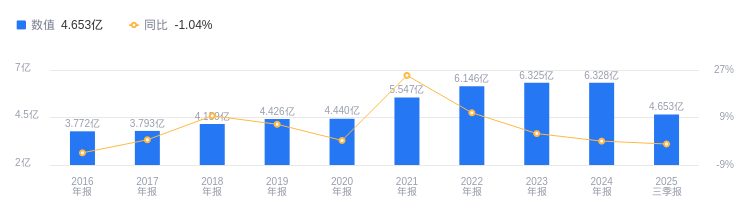
新宏泰的前世今生:2025年三季度营收4.65亿排行业20/26,远低于行业平均
Xin Lang Zheng Quan· 2025-10-31 10:52
Core Viewpoint - The company XinHongTai, established in 2008 and listed in 2016, is a significant supplier of key components for circuit breakers in China, showcasing technological and product quality advantages in the low-voltage electrical sector, indicating potential investment value [1] Group 1: Business Performance - In Q3 2025, XinHongTai achieved a revenue of 465 million yuan, ranking 20th among 26 companies in the industry, while the industry leader, Chint Electric, reported revenue of 46.396 billion yuan [2] - The company's net profit for the same period was 50.126 million yuan, placing it 18th in the industry, with Chint Electric's net profit at 5.656 billion yuan [2] Group 2: Financial Ratios - As of Q3 2025, XinHongTai's debt-to-asset ratio was 18.72%, an increase from 18.11% year-on-year, significantly lower than the industry average of 40.49% [3] - The company's gross profit margin in Q3 2025 was 28.15%, down from 30.33% year-on-year, but still above the industry average of 23.98% [3] Group 3: Management and Shareholder Information - The total compensation for General Manager Zhao Minhui was 1.1852 million yuan in 2024, reflecting an increase of 201,000 yuan from 2023 [4] - As of September 30, 2025, the number of A-share shareholders increased by 17.39% to 13,200, while the average number of circulating A-shares held per account decreased by 14.82% [5]

祥和实业的前世今生:2025年三季度营收5.91亿行业排名19,净利润1.12亿行业排名12,展现成长潜力
Xin Lang Cai Jing· 2025-10-30 16:23
Core Viewpoint - Xianghe Industrial, established in 1997 and listed in 2017, specializes in rail transit equipment, showcasing strong technical capabilities in the development, production, and sales of rail fasteners and electronic components [1] Group 1: Business Performance - In Q3 2025, Xianghe Industrial achieved a revenue of 591 million yuan, ranking 19th among 33 peers, with the industry leader, CRRC, generating 183.865 billion yuan [2] - The revenue breakdown includes rail transit products at 168 million yuan (44.17%), electronic components at 114 million yuan (29.94%), and polymer modified materials at 93.817 million yuan (24.64%) [2] - The net profit for the same period was 112 million yuan, placing the company 12th in the industry, while the top performer, CRRC, reported a net profit of 12.58 billion yuan [2] Group 2: Financial Ratios - As of Q3 2025, the company's debt-to-asset ratio was 30.35%, an increase from 19.89% year-on-year, but still below the industry average of 38.16% [3] - The gross profit margin for Q3 2025 was 33.65%, up from 25.05% year-on-year, exceeding the industry average of 29.99% [3] Group 3: Shareholder Information - As of September 30, 2025, the number of A-share shareholders increased by 38.75% to 17,400, while the average number of shares held per shareholder decreased by 27.93% to 19,100 [5] - Notable new shareholders include Wan Jia New Opportunities Leading Enterprises Mixed A and Wan Jia Domestic Demand Growth One-Year Holding Period Mixed A [5] Group 4: Future Outlook - Shanxi Securities forecasts revenue growth for Xianghe Industrial, projecting 763 million yuan in 2025, 885 million yuan in 2026, and 1.031 billion yuan in 2027, with corresponding net profits of 119 million yuan, 141 million yuan, and 171 million yuan [6] - Key business highlights include significant revenue growth in rail transit products due to participation in major railway projects, stable growth in electronic components, and expansion in polymer modified materials [6]


南山铝业:紧抓航空板国产替代新机遇,2025年前三季度实现利润总额53.48亿元
Zheng Quan Shi Bao Wang· 2025-10-29 11:59
Core Insights - Nanshan Aluminum achieved a revenue of 26.325 billion yuan in the first three quarters of 2025, representing a year-on-year growth of 8.66% [1] - The company's total profit reached 5.348 billion yuan, up 20.58% year-on-year, while the net profit attributable to shareholders, excluding non-recurring gains and losses, was 3.751 billion yuan, reflecting a 10.02% increase [1] Company Overview - Nanshan Aluminum has established a complete aluminum processing industry chain, including thermal power, alumina, electrolytic aluminum, casting, aluminum profiles, hot-rolled and cold-rolled products, foil rolling, and aluminum recycling [1] - The company's main products include upstream products like electricity, alumina, and aluminum alloy ingots, as well as downstream products such as aluminum plates and strips, aluminum profiles, and aluminum foil, which are widely used in various sectors [1] Strategic Focus - Under the national "New Infrastructure" and "Aviation Power" strategies, Nanshan Aluminum is focusing on automotive and aerospace plate products to build a high ground for independent innovation [1] - The company is developing a collaborative ecosystem in the transportation sector, integrating technology research and development, product certification, and capacity expansion [1] Market Position - Nanshan Aluminum is recognized as the only domestic company supplying aluminum alloy materials to major global manufacturers like Boeing and Airbus, and is a key supplier for the domestic C919 aircraft project [2] - The company has broken the monopoly of foreign giants in the aviation materials sector and has a complete process technology from mineral smelting to material processing [2] Profit Distribution - In the third quarter of 2025, Nanshan Aluminum proposed a cash dividend of 2.584 yuan per 10 shares, totaling over 3 billion yuan, reflecting the company's stable operating performance and healthy cash flow [3] - The company has also repurchased approximately 80.97 million shares, accounting for about 0.70% of its total share capital, further demonstrating its commitment to returning value to shareholders [3]
