零关税

Search documents
海南自贸港封关 中国制度型开放迈出一大步
Mei Ri Jing Ji Xin Wen· 2025-12-17 13:43
大有大的道理。海南聚焦旅游业、现代服务业和高新技术产业"三大领域",依托国家深海基地南方中心 等"五大平台"构建特色产业体系,充足的空间体量能承载完整的产业链布局。 大也有大的底气。海南自贸港的大体量是中国超大规模经济的必然要求,其不仅仅着眼于外,也立足于 国内广阔的经济腹地——南繁科研育种基地可联动全国农业市场,航天基地能对接国内航天产业集 群……这种产业联动的模式,让海南既能吸引全球高端要素,又能将开放红利传导至国内,形成国内国 际双循环的枢纽节点。 2025年12月18日,中国改革开放进程迎来历史性时刻——海南自由贸易港正式启动全岛封关运作。 这种覆盖全要素、全产业的制度革新,以《中华人民共和国海南自由贸易港法》的形式得到确认和保 护,为来自全世界的市场主体创造了稳定的政策环境。海南自贸港"2025年初步建立、2035年更加成 熟、本世纪中叶全面建成"的目标也就有了高确定性的预期。 封关并非物理隔绝,而是以"'一线'放开、'二线'管住、岛内自由"为基本特征的自由化便利化政策制 度。随之落地的零关税、低税率等政策红利,将广泛惠及市场主体——企业可享受进口生产资料免税、 对鼓励类产业企业生产的含进口料件加工 ...
明日海南全岛封关,一图看懂十大要点
Hua Er Jie Jian Wen· 2025-12-17 12:46
Core Points - The article discusses the official launch of the Hainan Free Trade Port's full island closure on December 18, 2025, marking a significant milestone in China's efforts to expand its openness and enhance the development of the Hainan Free Trade Port [1]. Group 1: Full Island Closure - "Full island closure" refers to establishing Hainan Island as a special customs supervision area, implementing a policy characterized by "one line open, one line managed, and free movement within the island" [2]. - The "one line open" policy allows for a series of free and convenient measures for goods entering and exiting between Hainan and other countries and regions [4]. - The "two lines managed" policy involves precise management of goods entering the mainland from Hainan, with ten designated ports facilitating smooth passage for eligible goods [6]. Group 2: Trade and Tax Benefits - The full island closure is not equivalent to an island lockdown; instead, it aims to further open up to the outside world, attract global resources, and promote high-quality development of the Hainan Free Trade Port [9]. - The "zero tariff" policy will apply to 6,600 categories of goods, covering approximately 74% of all product categories, representing a 53 percentage point increase from before the closure [14]. - Enterprises can benefit from a reduced corporate income tax rate of 15% if they meet specific criteria, including operating in encouraged industries listed in the Hainan Free Trade Port's directory [18][21]. Group 3: Consumer and Resident Benefits - Residents will not need additional permits to travel to Hainan after the full island closure [11]. - The upgraded duty-free shopping policy allows island residents to purchase duty-free items without limit after one departure from the island within a calendar year [13]. - The policy changes also include the expansion of duty-free product categories, which now encompass nearly all production equipment and raw materials, potentially saving import equipment companies about 20% in costs [17].


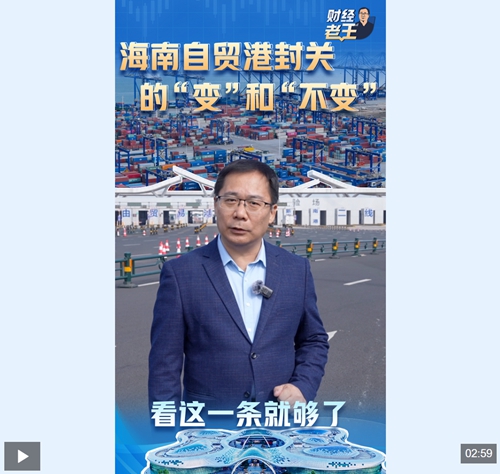
财经老王丨一文了解海南自贸港封关的“变”和“不变”
Yang Shi Xin Wen Ke Hu Duan· 2025-12-17 11:43
Group 1 - The core point of the news is that the Hainan Free Trade Port will start full island closure operations, but this will not affect tourism or business activities for domestic travelers and international tourists from 86 countries [1][3] - Domestic travelers can continue to visit Hainan without any additional documentation, and the recent upgrade of the duty-free policy has expanded the variety of products available for purchase [3][6] - The individual income tax exemption policy for high-demand talent in Hainan remains unchanged, continuing until the end of 2027 [6] Group 2 - A significant change for businesses is the increase in the number of zero-tariff goods from over 1,900 to more than 6,600, which will reduce import costs for enterprises [6][7] - The rules for zero-tariff goods entering and exiting Hainan have changed, with customs directly releasing qualifying goods imported from abroad, but these goods will be subject to regulation when entering the mainland [7][10] - The introduction of 38 new product codes for bonded maintenance services in Hainan will enhance the level of openness in this sector, creating new business opportunities for companies [10][13]
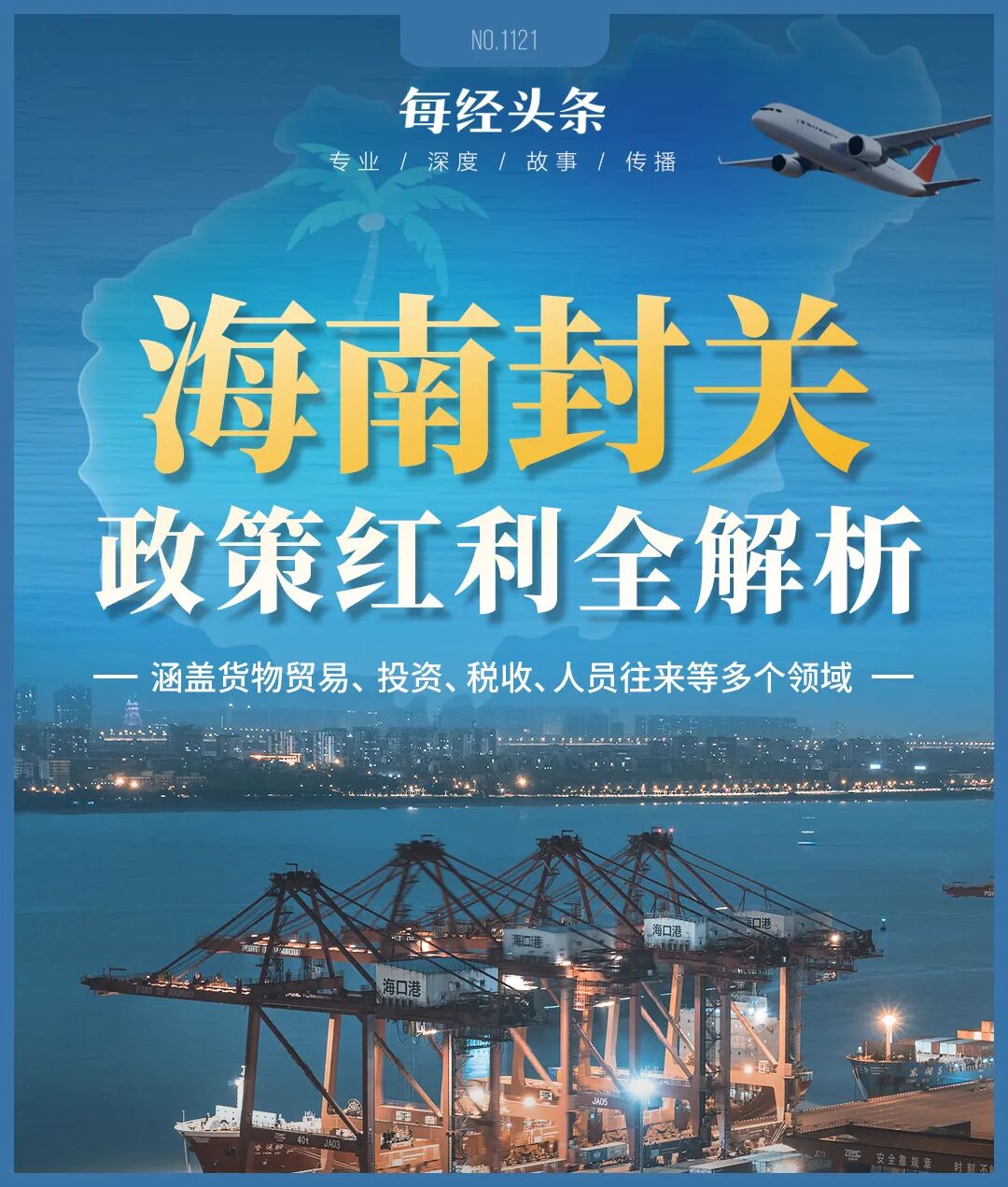
海南封关政策红利全解析:零关税、低个税、投资准入放宽、跨境资金自由、创业扶持……
Mei Ri Jing Ji Xin Wen· 2025-12-17 11:19
Core Viewpoint - The Hainan Free Trade Port will officially start its full island closure operation on December 18, 2025, marking a significant milestone in China's reform and opening-up process, with policies aimed at higher levels of openness to the world [3][4]. Policy Changes - The closure operation represents a systematic and institutional upgrade, significantly enhancing the "zero tariff" level, optimizing processing and value-added tax exemptions, improving the investment environment, and facilitating entry and exit from Hainan [4]. - The "zero tariff" policy will expand from 1,900 tax items to approximately 6,600 tax items, covering about 74% of all product tax items, an increase of nearly 53 percentage points compared to before the closure [9][13]. Tax Incentives - The low tax rate policy, known as the "two 15%" policy, allows qualifying enterprises to be taxed at a reduced rate of 15% on corporate income tax, significantly lowering operational costs [14]. - Individuals classified as high-end or urgently needed talents working in Hainan can also benefit from personal income tax reductions, with any income tax burden exceeding 15% being exempted [19][21]. Comparison with Other Free Trade Ports - Hainan Free Trade Port differs from other international free trade ports like Singapore and Dubai by remaining within China's customs territory, allowing for domestic circulation of goods and easier access for mainland residents [23][24]. - Hainan's unique advantages include its vast market potential, being the largest free trade port globally at 33,900 square kilometers, and a focus on developing a modern industrial system centered on tourism, modern services, high-tech industries, and tropical agriculture [23][24]. Industry Development Focus - Post-closure, Hainan will prioritize the development of tourism, modern services, high-tech industries, and tropical agriculture, while also enhancing high-end shopping, healthcare, and international education sectors [26]. - The digital economy is expected to be a key industry, supported by significant infrastructure developments, including the establishment of the largest data center in Hainan and the world's first commercial underwater data center [27].

海南全岛封关:只是一个“购物天堂”吗?
Jing Ji Guan Cha Wang· 2025-12-17 10:51
Core Points - The Hainan Free Trade Port will officially start its full island closure on December 18, 2025, implementing a new regulatory framework for the entry and exit of goods, which includes a shift to a "negative list" management system for zero-tariff imports [2][3][29] - The new policies are expected to significantly enhance Hainan's role in various industries, including agriculture, logistics, and commercial aerospace, moving beyond the perception of being merely a shopping destination [3][29] Agriculture Sector - Hainan is a key player in China's hybrid corn seed production, with a significant portion of seed breeding materials being transported to Hainan for accelerated breeding cycles due to its favorable climate [4][5] - The establishment of the Hainan South Breeding Industry Group aims to enhance the province's agricultural development, having introduced over 25,600 tropical fruit and medicinal crop resources [5][6] - The transition from a traditional breeding model to a standardized, industrialized service model is underway, supported by the new policies that lower procurement costs for essential research materials [6][7] Logistics and Transportation - The launch of a cross-strait low-altitude drone logistics route significantly reduces transportation time, enhancing Hainan's logistics efficiency [8][9] - The development of low-altitude economy is seen as a strategic necessity for Hainan, with plans to establish a comprehensive air transport network to improve connectivity across the island [10][11] Commercial Aerospace - The completion of the first phase of the reusable rocket assembly and testing facility in Hainan marks a significant advancement in China's commercial aerospace capabilities [12][13] - The zero-tariff policy is expected to lower procurement costs for high-tech manufacturing companies, further attracting investment in the aerospace sector [14][15] Marine Resources - The "Deep Sea No. 1" project, China's first ultra-deepwater gas field, has begun full production, significantly contributing to the country's energy output [19][20] - The successful operation of this gas field is part of a broader strategy to enhance Hainan's marine resource development and establish it as a hub for energy services [22][23] Energy Transition - Hainan aims to ban the sale of fuel vehicles by 2030, with a current clean energy installation rate of 87.1%, indicating a strong push towards renewable energy [25][26] - The completion of the 500 kV digital power grid project enhances the island's electricity transmission capacity, supporting the transition to a more sustainable energy model [28][29]

快递、旅游、购物等有无变化?海南自贸港封关的“变”和“不变”
Sou Hu Cai Jing· 2025-12-17 10:44
Group 1 - The core point of the news is that the Hainan Free Trade Port will soon start full island closure operations, but this will not affect tourism and business for domestic travelers and international tourists from 86 countries [1][2]. - Domestic travelers can continue to visit Hainan without any additional documentation, and the recent upgrade of the duty-free policy will enhance shopping experiences [2]. - The individual income tax exemption policy for high-demand talent working in Hainan remains unchanged and will continue until the end of 2027 [3]. Group 2 - For businesses, significant changes will occur post-closure, including an increase in the number of "zero tariff" goods from over 1,900 to more than 6,600, which will lower import costs for enterprises [4]. - The rules for "zero tariff" goods entering and exiting Hainan have changed; while goods imported from abroad will be directly released by customs if they meet conditions, they will be subject to regulation when entering the mainland [4]. - Specific customs channels will be designated for different categories of goods, with certain goods requiring passage through regulated channels, while others will not be affected by the new policies [4].
记者去哪儿·迈向“十五五” 从“全岛封关”看我国对外开放新蓝图
Ren Min Wang· 2025-12-17 05:54
Core Viewpoint - The establishment of a high-level open economy in Hainan Free Trade Port marks a significant step towards creating a win-win cooperation model, with the implementation of a free trade pilot zone strategy and the construction of a high-standard free trade port in Hainan [1] Group 1: Policy Implementation - Hainan Free Trade Port has officially launched its full island closure policy, characterized by "one line open, one line controlled, and free movement within the island" [2] - The "one line" refers to the open policy towards foreign countries, while the "two line" involves precise management of goods entering from the mainland to maintain market order [2] - The customs will manage three categories of goods under the "two line" policy, including zero-tariff goods and those enjoying processing and value-added policies [2] Group 2: Customs and Trade Facilitation - Yangpu Port is identified as the largest maritime opening port in Hainan, with 35 international shipping routes, serving as the main channel for the "one line open" policy [2] - The H986 non-intrusive inspection equipment allows for quick customs checks, completing the process in about one minute without requiring drivers to exit their vehicles [3] Group 3: Economic Impact and Benefits - The zero-tariff policy will expand to approximately 6,600 tax items, covering about 74% of all goods, benefiting various enterprises and organizations across the island [3] - The shift from a "positive list" to a "negative list" for zero-tariff items has reduced costs for companies, allowing more components to enjoy tax exemptions [4] - Since the implementation of the processing and value-added policy, companies like Hainan Oscar International Grain and Oil Co. have saved nearly 300 million yuan, reinvesting these savings into R&D and production [4] Group 4: Growth Metrics - Since the announcement of the Hainan Free Trade Port construction plan in June 2020, the actual foreign investment in Hainan has exceeded the total of the previous 32 years [4] - The annual growth rate of goods trade has surpassed 30%, and the economic openness has increased by 15 percentage points over five years [4]
国台办:海南自贸港将给台商台企带来更多机遇和利好
Zhong Guo Xin Wen Wang· 2025-12-17 05:48
国台办:海南自贸港将给台商台企带来更多机遇和利好 中新网12月17日电 国务院台办17日举行例行新闻发布会。会上,有记者问:12月18日,海南自贸港将 正式启动全岛封关运作,这是大陆坚定不移扩大高水平对外开放、推动建设开放型世界经济的标志性举 措,受到台商台企高度关注。请问将给台商台企带来哪些机遇和利好? 发言人朱凤莲表示,2025年12月18日起,海南自由贸易港将正式启动全岛封关运作。这是大陆坚定不移 扩大高水平对外开放、推动建设开放型世界经济的标志性举措。 广告等商务合作,请点击这里 本文为转载内容,授权事宜请联系原著作权人 中新经纬版权所有,未经书面授权,任何单位及个人不得转载、摘编或以其它方式使用。 关注中新经纬微信公众号(微信搜索"中新经纬"或"jwview"),看更多精彩财经资讯。 封关后,海南自贸港将全面实施"一线放开、二线管住、岛内自由"的特殊监管模式,以"零关税、低税 率、简税制"为核心的税收优惠政策将充分释放红利,既能降低企业生产成本,增强发展活力,又能提 升消费供给质量,打造国际旅游消费中心。同时,贸易管理更加宽松便利,监管模式更加精准高效,一 系列涉及贸易自由、投资便利、金融开放等方面 ...
“筑巢引凤”释放发展红利 多维度解读海南自贸港封关的“变”与“不变”
Yang Shi Wang· 2025-12-17 02:42
Core Viewpoint - The Hainan Free Trade Port will officially start its full island closure operation on December 18, 2025, marking a significant step in China's commitment to high-level opening-up and the construction of an open world economy [2]. Group 1: Overview of the Closure - The closure will transform Hainan Island into a customs supervision special zone, characterized by "one line" being open, "two lines" being controlled, and freedom within the island [4][5]. - Eight open ports will be established on Hainan Island, including Haikou Port, Yangpu Port, Sanya Port, and Boao Airport, responsible for the supervision of goods, items, and personnel entering and exiting between Hainan and overseas [4][8]. Group 2: Policy Details - "One line" refers to the opening between Hainan Free Trade Port and other countries and regions outside China's customs territory, while "two lines" refers to the control between Hainan and the mainland [7]. - Over 6,600 types of goods will be exempt from tariffs when entering Hainan Island, significantly increasing the range of zero-tariff products available [8][20]. Group 3: Impact on Individuals and Businesses - For individuals, travel to Hainan will remain unchanged, with no additional documentation required for domestic travelers, and tourists from 86 countries can still enter visa-free [17]. - For businesses, the rules for zero-tariff goods entering and exiting Hainan will change, with customs directly releasing eligible zero-tariff goods imported from abroad [20]. - The introduction of 38 new product codes for bonded maintenance will provide new business opportunities in Hainan, enhancing the region's attractiveness for investment [21]. Group 4: Economic Implications - The closure aims to attract global capital, technology, and talent to Hainan, accelerating its development and paving the way for national reform and opening-up [22]. - The increase in zero-tariff goods will lower import costs for businesses, creating a favorable environment for economic growth [20].
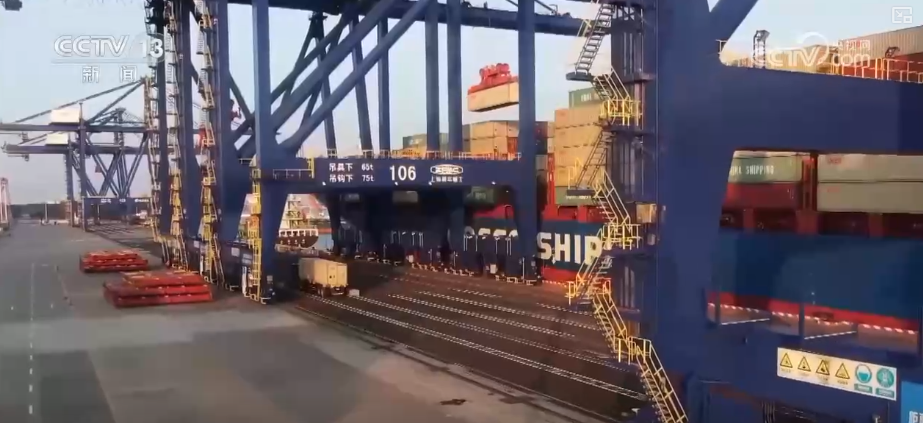
海南明日封关 对河南有啥影响?
Sou Hu Cai Jing· 2025-12-17 00:10
Group 1 - The official launch of the Hainan Free Trade Port's island-wide customs closure is set for December 18, which will create a special customs supervision area with liberalized policies characterized by "open on one line, controlled on another, and free within the island" [2] - The implementation of "zero tariffs, low tax rates, and simplified tax systems" will significantly expand the range of eligible products and reduce barriers for enterprises, covering approximately 74% of product tax categories, particularly benefiting key industries such as pharmaceuticals and high-end food processing [3] - The "Double 15%" tax incentive policy will allow qualifying enterprises and core talents to enjoy a 15% income tax reduction, which is a core attraction of Hainan's free trade port policies [3] Group 2 - After the customs closure, most imported goods, including production equipment, raw materials, and daily consumer goods, will be exempt from tariffs, VAT, and consumption tax, lowering import costs and enhancing trade freedom for enterprises [4] - Hainan is positioned to serve as an offshore trade center, allowing companies to directly sell imported goods from Africa to European clients while managing all trade services in Hainan [4][5] - The interaction between logistics hubs in Hainan and Henan will enhance resource allocation capabilities, with practical examples of logistics operations already underway, such as the transportation of fertilizer raw materials from Henan to Hainan [6]