Agent

Search documents
2025人工智能计算大会成功举办,云计算ETF沪港深(517390)涨1.34%,计算机ETF(159998)同标的实时成交额第一
2 1 Shi Ji Jing Ji Bao Dao· 2025-09-29 03:31
Group 1: Market Performance - The ChiNext Index rose over 2.00%, while the Shanghai Composite Index fell by 0.04% and the Shenzhen Component Index increased by 1.13% [1] - The Cloud Computing ETF (517390) experienced a 1.34% increase, with a net inflow of over 23.66 million yuan over three consecutive days [1] - The Computer ETF (159998) saw a 0.28% rise, with a trading volume exceeding 80 million yuan, making it the top product in its category [1] Group 2: Industry Developments - The AICC2025 Artificial Intelligence Computing Conference focused on AI infrastructure and domestic AI computing system optimization, aiming to promote high-quality development in the AI industry [2] - A comprehensive cooperation agreement was signed between Zhejiang Silicon-based Ark Robotics Co., Ltd. and Alibaba Cloud Computing during the Cloud Habitat Conference [2] Group 3: Technology and Business Models - The value in the computer and software development industry is highly concentrated among upstream core technology suppliers, who enjoy high bargaining power and profit margins due to technological barriers [3] - As technology advances and production scales up, hardware costs are expected to decline, shifting industry value towards software and services [3] - The future business model is anticipated to evolve from hardware to an integrated "hardware + software + ecosystem services" approach, with software platforms and ecosystems creating the most value and profit [3]
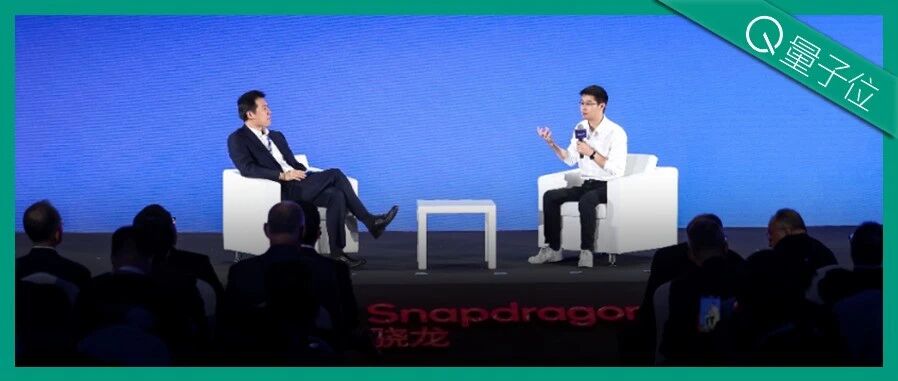
高通组局,宇树王兴兴说了一堆大实话
量子位· 2025-09-26 09:12
Core Viewpoint - The article discusses the challenges and opportunities in the field of embodied intelligence and robotics, emphasizing the importance of collaboration among industry players to address technical difficulties and accelerate progress [3][25][48]. Group 1: Industry Challenges - The current state of robotics is characterized by diverse technical routes, leading to a lack of significant progress despite the apparent excitement in the field [4][25]. - Many robotics and chip manufacturers overlook the critical role of chips in robotics, which is essential for enhancing performance and reliability [16][18]. - The industry faces difficulties in deploying large-scale computing power in robots due to space constraints, battery capacity, and heat dissipation issues [20][21]. Group 2: Technological Developments - The goal of companies like Yushu Technology is to develop universal AI for robots that can perform various tasks in unfamiliar environments, akin to a "ChatGPT moment" for robotics [11][12]. - The development stages for achieving advanced robotic capabilities include fixed action demonstrations, real-time action generation, task execution in unfamiliar settings, and achieving high success rates in delicate operations [12]. - The future of embodied intelligence in robotics may involve using mobile phone chips, which could provide significant potential for innovation [24]. Group 3: Collaboration and Open Source - The article highlights the importance of open-sourcing models to foster collaboration and accelerate advancements in the field, similar to OpenAI's approach with earlier GPT models [28][29]. - Companies are encouraged to maintain an open attitude towards various models and collaborate with third parties to enhance development [30][31]. Group 4: AI and Agent Systems - The article discusses the role of agent systems in AI, emphasizing the need for end-cloud collaboration to improve user experience and privacy [35][36]. - The demand for end-side models is increasing, as they are crucial for understanding user needs and facilitating communication with cloud models [39][40]. - The industry lacks a unified standard for AI applications across different devices, leading to high development costs and fragmentation [48][50]. Group 5: Future Directions - The future of AI in robotics and other sectors will likely involve creating a cross-terminal operating system that integrates various services and enhances user experience [50][51]. - Collaboration among industry players is essential for building the necessary infrastructure and supporting innovation in smart devices [51].


X @Avi Chawla
Avi Chawla· 2025-09-25 06:33
AI Risk & Failure - AI failures can lead to job loss [1] - Building robust Agents is crucial to avoid production failures [1] Financial Losses due to AI - Zillow experienced a $304 million loss due to its home-buying AI [1] - iTutor paid $365 thousand when AI rejected older applicants [1] Examples of AI Failures - Replit's Agent wiped out a production database [1]
阿里云栖大会聚焦(3):AI驱动下的SaaS与CRM未来格局演进
Haitong Securities International· 2025-09-25 05:03
Investment Rating - The report does not explicitly provide an investment rating for the industry or specific companies discussed. Core Insights - The AI-driven transformation of SaaS and CRM systems is fundamentally redefining software products and creating a new technological and business ecosystem [1][3][17] - Traditional SaaS products are shifting from "passive response" to "proactive insight," with AI agents evolving through three development levels: predictive AI, Copilot mode, and Agent intelligence [2][16] - The future of AI SaaS will focus on "credibility" and "explainability," with AI engines needing to be built on localized data foundations and providing transparent decision-making processes [4][18] Summary by Sections Event Overview - The Alibaba Cloud Computing Conference highlighted the profound changes in SaaS products and CRM systems driven by AI, emphasizing the evolution of intelligent agents and the construction of trusted data foundations [1][15] AI Agent Development - AI agents are expected to evolve into a multi-agent collaborative network, enhancing autonomy and decision-making capabilities, with predictions that they will become the core of "intent-understanding operating systems" within 5-10 years [2][16] SaaS Product Transformation - SaaS products will achieve breakthroughs in interaction personification, functional atomization, and service proactiveness, allowing users to complete processes through dialogue and enabling real-time business insights [3][17] Data Governance and Model Controllability - The competitive edge of AI SaaS will hinge on its credibility and explainability, necessitating strict compliance with data governance and risk assessment protocols [4][18] Future CRM Systems - Future CRM products will integrate multiple services through open APIs, enabling seamless information and workflow connections across different systems, thus enhancing digital resilience and collaboration efficiency [4][19]
阿里云饱和式投入Agent,这是ASI蓝图的关键拼图
Sou Hu Cai Jing· 2025-09-24 14:34
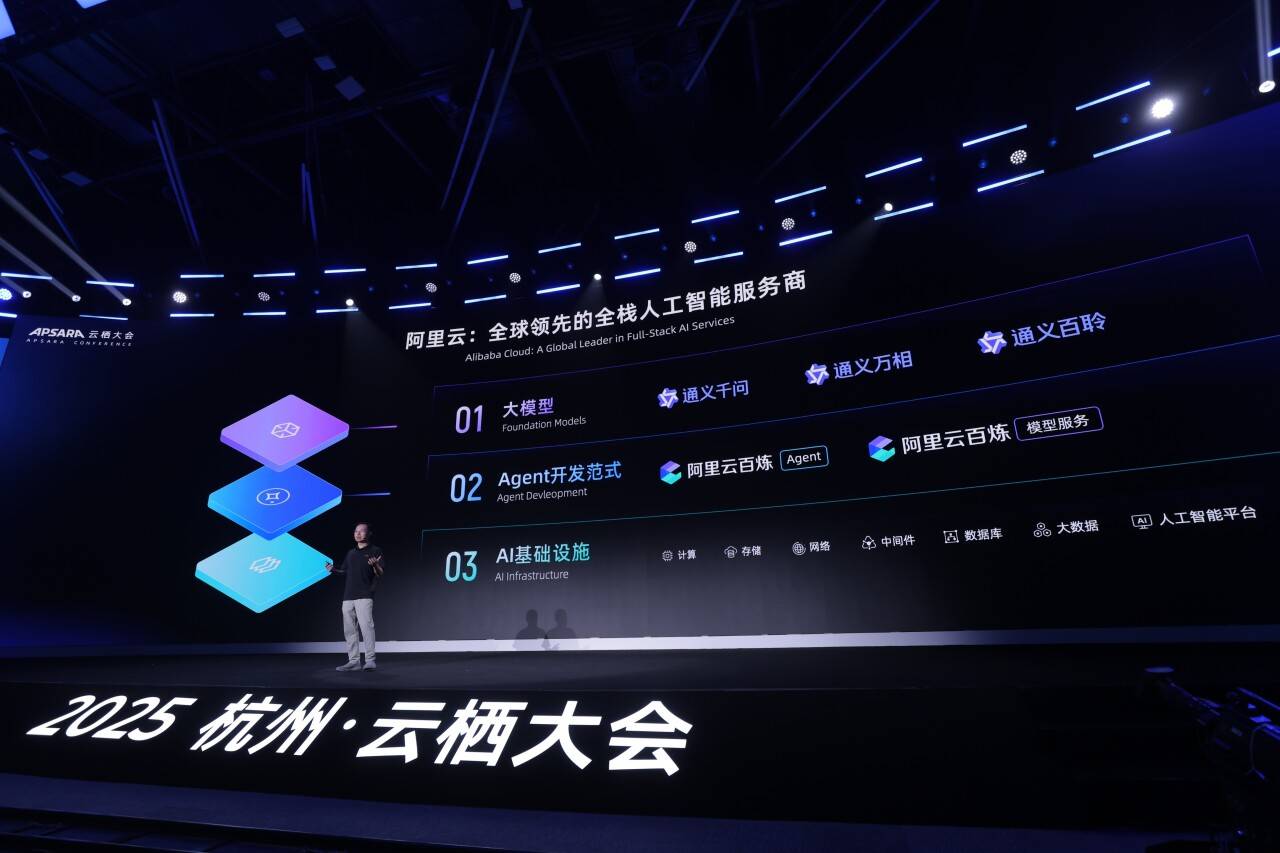
Core Insights - The cloud conference this year has a higher profile and intensity than previous years, with a focus on AI and the concept of Agent intelligence as a key driver for AI implementation [1][4] - The future may see more Agents and robots than the global population, significantly impacting the real world, as Agents are viewed as the best medium connecting the digital and physical worlds [3][4] Technology Developments - Alibaba Cloud introduced seven advanced models led by Qwen3-Max, achieving breakthroughs in intelligence, tool utilization, coding capabilities, deep reasoning, and multimodal functions, with Qwen3-Max outperforming GPT-5 [4] - The vision of "ASI (Super Artificial Intelligence)" was presented, indicating that large models will serve as the next generation operating system, with super AI cloud as the next computing paradigm [4] Agent Definition and Market Trends - Agents are defined as AI applications that understand human needs, autonomously plan decisions, and execute complex tasks, existing in various forms from software applications to hardware-integrated systems [7] - The Agent market is rapidly evolving, with predictions of over 100,000 Agents in China by December 2024, and potentially reaching millions by 2025, although many current Agents lack significant breakthroughs compared to foundational models [10] Development Frameworks - Alibaba Cloud launched the ModelStudio-ADK, a high-code Agent development framework that allows for efficient development of Agents with autonomous decision-making and multi-round reflection capabilities [4][13] - The ModelStudio-ADK framework supports cloud deployment and integrates various enterprise-level capabilities, enabling developers to convert complex business logic into executable Agent logic [15] Industry Positioning - Alibaba Cloud aims to be a full-stack AI service provider, similar to Google, offering public cloud infrastructure, cloud computing capabilities, and Agent toolchains, which is crucial for the commercialization of Agents [21] - The company supports both high-code and low-code development for Agents, allowing for a range of applications from simple to complex business scenarios [19][16]

AI产业跟踪:云栖大会即将启幕,关注AI技术演进与产业落地
Changjiang Securities· 2025-09-23 14:50
Investment Rating - The industry investment rating is "Positive" and maintained [8] Core Insights - The 2025 Cloud Habitat Conference will be held from September 24 to 26 in Hangzhou, focusing on the theme "Cloud Intelligence Integration and Carbon-Silicon Symbiosis," featuring three main forums and over 110 sub-topic activities, showcasing the evolution of AI technology from infrastructure and large models to embodied intelligence [2][5] - The conference serves as a significant platform for observing industry trends and the speed of application implementation, with a strong emphasis on the commercialization of AI agents and investment opportunities [2][12] - Key areas of investment interest include AI infrastructure, AI agent-related companies, the Chinese inference computing industry chain, CSP manufacturers driven by inference demand, and IDC firms collaborating with leading companies [12] Summary by Sections Event Description - The conference will feature three main forums: "Cloud Habitat Outlook," "Cloud Habitat Technology," and "Incalculable Value," discussing AI's future development, technological breakthroughs, and industry application value [12] - The exhibition area will cover 40,000 square meters with over 500 companies showcasing 3,500 products, including AI applications and high-density AI servers [12] Event Commentary - The conference is expected to signal a new phase for China's AI industry, characterized by infrastructure upgrades and large-scale industry implementation [12] - The event will also include interactive experiences such as an AI Super Exchange and various themed activities to enhance participant engagement [12]
作者、专家和顾问
3 6 Ke· 2025-09-23 01:22
Group 1 - The article discusses the differences between three roles: author, expert, and consultant, emphasizing that each serves a distinct purpose in addressing business challenges [27][28] - Authors primarily explain phenomena and provide insights, while experts summarize patterns and frameworks that can be applied to various situations [27][28] - Consultants are expected to diagnose specific problems and offer tailored solutions based on the unique context of a business [18][27] Group 2 - The article highlights that many so-called experts in the domestic market often act as "experience porters," relying on personal experiences rather than established methodologies [10][11] - In contrast, Western experts tend to be methodologically driven, utilizing theoretical frameworks to provide innovative solutions [11][22] - The domestic consulting industry is characterized by a prevalence of "quick-fix" solutions, often lacking the depth of diagnosis and tailored approaches that true consulting requires [23][24][26]
天风证券每日晨报精选:降息或利好建材低估值品种,关注新疆板块催化
Zhong Guo Neng Yuan Wang· 2025-09-23 01:04
Group 1: Computer Industry Insights - The rise of Agent applications in the US highlights the importance of low error rates and quick validation for successful implementation, with C-end applications like search and programming leading the way, while B-end focuses on verticals such as legal and finance [1] - Chinese enterprises are increasingly willing to pay for Agent applications that can significantly reduce costs, indicating a shift in software business models towards SaaS subscriptions and potentially performance-based payments in the future [1] - A pivotal moment for Chinese Agent applications is anticipated in H1 2026, with domestic models expected to close the gap with overseas counterparts by Q4 2024, alongside a surge in product launches across various sectors [1] Group 2: Construction and Building Materials - The recent 25 basis point interest rate cut by the Federal Reserve is expected to benefit undervalued building materials sectors, leading to potential valuation recovery [2] - The Xinjiang region is highlighted for its strong economic growth, with fixed asset investment increasing by 9.1% year-on-year from January to August, significantly outpacing national averages [2] - Major infrastructure projects in Xinjiang, such as the new railway constructions, are projected to drive substantial cement demand, estimated between 462,000 to 694,000 tons [2] Group 3: Company Developments - The company has developed an Anti-Resonant Hollow Core Fiber (AR-HCF) that has shown excellent performance in laboratory tests, with plans to increase R&D investment for further advancements in multi-band and multi-application scenarios [3]

从中美差异,看TOBAgent破局时点
Tianfeng Securities· 2025-09-22 05:11
Industry Investment Rating - The industry investment rating is maintained at "Outperform the Market" [1] Core Insights - The report highlights the significant shift in the software payment willingness of Chinese enterprises, moving from traditional software efficiency enhancement to a clearer ROI with the adoption of Agent technology [3][32] - The report anticipates that the first half of 2026 will be a turning point for the Chinese Agent market, driven by advancements in domestic large models and increased product offerings [4][59] Summary by Sections 1. Current Status of Agents in the U.S. - The commercialization of Agents is becoming a trend, with major companies like OpenAI and Google making significant advancements [2][8] - The consumption of tokens for underlying large models has increased by approximately 2478.95% over the past year, indicating a surge in demand for Agent capabilities [9] 2. Changing Dynamics in Software Payments in China - Historically, Chinese companies were reluctant to pay for software due to lower labor costs compared to the U.S. (11.7%-20.8% lower) and the difficulty in quantifying ROI from traditional software [28][29] - The emergence of Agent technology is changing this dynamic, as companies are now more willing to invest in solutions that provide clear cost reductions and ROI greater than 1 [32] 3. Demand and Supply Dynamics - The report identifies that the Chinese Agent market is expected to see a breakthrough in the first half of 2026, with domestic large models expected to close the performance gap with international counterparts by Q4 2024 [4][48] - The total addressable market (TAM) for Agents in China is estimated at approximately 3.61 trillion yuan, with significant opportunities in sectors like IT, finance, and customer service [64] 4. Market Trends and Opportunities - The report outlines three major market trends: the integration of large models with Agent capabilities, the importance of low error rates for rapid validation, and the predominance of large enterprises as primary customers [18] - Companies like Sierra are highlighted for their strong market presence, with 50% of their clients having annual revenues exceeding 1 billion USD [20] 5. Technological Trends and Challenges - The report emphasizes the need to reduce model hallucinations for the successful application of Agents, with companies like Palantir leveraging ontology technology to enhance data interaction [23][25] - The introduction of GPT-5 has significantly reduced factual error rates, showcasing advancements in model reliability [25] 6. Future Outlook - The report predicts that the Agent market will continue to evolve, with SaaS subscriptions becoming a dominant business model and a potential shift towards performance-based payment structures [32] - The focus on product development across various sectors, including programming, customer service, and finance, is expected to accelerate the adoption of Agent technology [58]
AI播客的未来是成为每个人的音频助手,事实性、完整性和活人感都很重要|对话ListenHub
量子位· 2025-09-21 08:01
Core Insights - The article discusses the emergence of AI podcast tools, particularly ListenHub, which aims to transform various content formats into audio podcasts, highlighting its potential as a personal audio assistant for users [3][6]. - It raises questions about the sustainability of AI podcasts as a new interactive medium and how products can differentiate themselves in a crowded market [5][6]. Group 1: Product Features and Differentiation - ListenHub is positioned as an "AI mouthpiece for creators," focusing on transforming text and links into engaging audio content, with features like FlowSpeech for converting written language into natural speech [9][10][15]. - The product includes a three-layer agent system: one for information gathering, another for content organization, and the last for converting materials into spoken word, enhancing user experience [16][18]. - ListenHub's unique selling points include the ability to edit content, customize voice tones, and support both single and dual-host podcasts, which sets it apart from competitors [32][39]. Group 2: User Engagement and Feedback - The company emphasizes the importance of early user feedback, particularly from the first 100 paid users, to refine product features and ensure they meet real user needs [33][34]. - ListenHub's user base primarily consists of self-media practitioners who utilize the tool for content creation, indicating a strong market demand for efficient audio production tools [29][30]. Group 3: Market Positioning and Future Outlook - ListenHub aims to become the go-to audio assistant for users, expanding its capabilities beyond podcasts to include various audio content formats, such as audiobooks and educational materials [100][102]. - The company recognizes the challenge of competing with larger firms but believes that its specialized features and user-centric approach will create a high switching cost for users [80][81]. Group 4: Development Strategy and Product Launch - The company adopted a strategy of launching a minimum viable product (MVP) to gather user insights and iterate on features based on real-world usage [33][36]. - ListenHub's initial focus was on core functionalities, ensuring that the primary user experience was compelling before adding additional features [75][76]. Group 5: AI Integration and Future Trends - The integration of AI in product development is highlighted as a key factor in enhancing efficiency and creativity within the team, with a focus on making every team member a product manager [49][50]. - The future of AI in content creation is seen as leaning towards agent-based systems, where users can interact with AI to generate and refine content seamlessly [59][60].