人工智能泡沫

Search documents
全球AI泡沫恐慌蔓延,韩国股市大跌6%,比尔·盖茨警告“互联网泡沫重现”?
Guo Ji Jin Rong Bao· 2025-11-05 05:37
Core Viewpoint - The South Korean stock market, which had seen significant gains earlier in the year, is experiencing a sharp decline due to concerns over AI and chip stock valuations, leading to a drop in the KOSPI index below 4000 points [1][3]. Group 1: Market Performance - As of early November, the KOSPI index has risen 72% year-to-date, outperforming the MSCI Emerging Markets index by 41% and the S&P 500 by 54% [2]. - The total market capitalization of the South Korean stock market has surged to 3500 trillion KRW, a 48% increase compared to the same period last year [2]. - Daily trading volume in October averaged 12.6 trillion KRW, more than doubling year-on-year [2]. Group 2: AI and Semiconductor Sector - The semiconductor supercycle, driven by the AI wave, is a key factor behind the rise in the South Korean stock market, with Samsung Electronics and SK Hynix controlling 91% of global high-bandwidth memory (HBM) capacity [2]. - SK Hynix's HBM3E holds a 72% share of the global high-end market, while Samsung's 12-layer HBM3E has gained favor with Nvidia [2]. - The South Korean government has allocated 12 trillion KRW for semiconductor R&D and 8 trillion KRW for military exports as part of a 35 trillion KRW economic rescue plan [2]. Group 3: Government Initiatives - The South Korean government plans to triple its AI-related spending, allocating 10.1 trillion KRW to enhance its position alongside the US and China as a global AI power [3]. - The government aims to transform traditional military capabilities into advanced systems suitable for the AI era, enhancing national defense and achieving "self-reliant defense" [3]. Group 4: Valuation Concerns - Concerns about an AI bubble are rising, with notable figures like Sam Altman and Bill Gates warning that market enthusiasm may be excessive [4][5]. - The forward P/E ratio of the S&P 500 has risen above 23 times, nearing its highest level since 2000, raising alarms among financial executives about potential market corrections [5]. - Major tech companies are still heavily investing in infrastructure, with Microsoft, Meta, Amazon, and Alphabet collectively spending approximately 78 billion USD on data centers and AI chips last quarter [5].
【真灼财经】舆论警告美股回调风险 中美元首有望多次会晤
Sou Hu Cai Jing· 2025-11-05 03:32
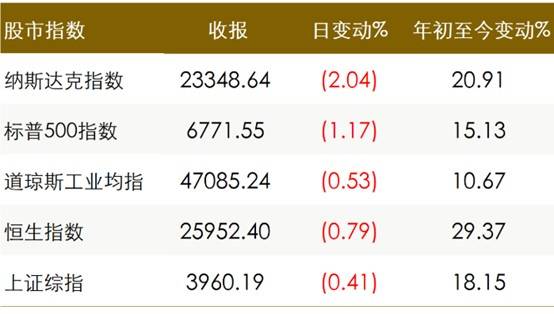
Market Overview - The US stock market experienced a significant decline, with major banks warning of a potential market pullback due to growing concerns over high valuations [1] - US Treasury prices rose, leading to lower yields, while the dollar strengthened against the euro, reaching a four-month high amid doubts about the Federal Reserve's interest rate cuts [1] - Oil prices fell due to weak manufacturing data and a strong dollar impacting demand, while OPEC+ decided to pause production increases in Q1 next year, indicating concerns over potential supply surplus [1] - Gold prices dropped over 1% as the dollar hit a three-month high, with traders awaiting US economic data for clues on the Fed's monetary policy direction [1] Stock Indices and Performance - Nasdaq Index closed at 23,348.64, down 2.04% for the day and up 20.91% year-to-date [2] - S&P 500 Index closed at 6,771.55, down 1.17% for the day and up 15.13% year-to-date [2] - Dow Jones Industrial Average closed at 47,085.24, down 0.53% for the day and up 10.67% year-to-date [2] - Hang Seng Index closed at 25,952.40, down 0.79% for the day and up 29.37% year-to-date [2] - Shanghai Composite Index closed at 3,960.19, down 0.41% for the day and up 18.15% year-to-date [2] Bond Yields - US 2-year Treasury yield closed at 3.5758%, down 0.80% for the day and down 15.84% year-to-date [2] - US 5-year Treasury yield closed at 3.6958%, down 0.70% for the day and down 15.82% year-to-date [2] - US 10-year Treasury yield closed at 4.0852%, down 0.61% for the day and down 10.72% year-to-date [2] Corporate News - Apple is reportedly preparing to launch its first low-cost laptop to attract users from Chromebook and entry-level Windows computers [4] - AMD's Q3 revenue growth exceeded average expectations, but the company's Q4 revenue outlook did not impress investors [4] - Tesla's sales in China for October showed a year-on-year decline, indicating challenges ahead for Q4 [9] - Morgan Stanley faces scrutiny related to the Trump administration's actions against "de-banking" [4] International Relations and Trade - The US Treasury Secretary indicated that there may be multiple meetings between the US and Chinese leaders next year, potentially allowing for the sale of Nvidia's high-end chips to China after the Blackwell chip becomes outdated [3] - The White House announced a reduction in tariffs on Chinese goods related to fentanyl from 20% to 10%, effective November 10 [3] - China initiated a series of activities aimed at promoting imports to alleviate trade partner concerns [5]


宏观视角下的AI前景之辩
HTSC· 2025-11-05 02:49
Group 1: AI Investment Trends - Since 2025, AI-related investments in the U.S. have surged, with the proportion of companies using AI rising to around 10%[9] - In the first half of 2025, AI investment growth reached a year-on-year increase of 14.6%, significantly higher than the 2.8% growth for non-AI investments[12] - Major tech companies like Facebook, Microsoft, and Google are expected to exceed $300 billion in capital expenditures in 2025, contributing approximately 1 percentage point to U.S. economic growth[1] Group 2: Concerns About AI Bubble - There is a growing concern about an AI bubble, with 54% of global fund managers believing AI stocks are in a bubble as of October 2025[6] - Historical patterns show that major technological innovations often lead to speculative bubbles, as seen during the "Roaring Twenties" and the internet bubble[2] - Optimists argue that current AI valuations are supported by strong fundamentals, while pessimists highlight significant risks of resource misallocation and return mismatches[5] Group 3: Macroeconomic Implications - AI investments are expected to maintain high intensity over the next 1-2 years, supporting growth and inflation while impacting the job market[3] - The anticipated capital expenditures for U.S. tech giants are projected to reach $470 billion and $510 billion in 2026 and 2027, respectively[8] - AI's impact on labor productivity is expected to be significant, with potential annual contributions to global economic value ranging from $2.6 trillion to $4.4 trillion[21] Group 4: Risks and Future Outlook - The potential for a tightening monetary policy by the Federal Reserve poses a risk to the AI investment cycle, especially if inflation rises unexpectedly[4] - The AI sector's current revenue generation is significantly lower than its market valuation, with OpenAI's annual revenue at $13 billion against a valuation of $500 billion[17] - There is a projected $800 billion revenue gap by 2030 needed to support AI-related investments, indicating potential financial strain in the sector[38]


“大空头”斥资10亿美元做空英伟达和Palantir,Palantir回怼:简直疯了
Di Yi Cai Jing Zi Xun· 2025-11-05 02:23
这也并非伯里首次做空英伟达。他早在今年一季度,就几乎清空了所有上市股票持仓,同时在美国总统 特朗普挑起关税战搅动全球市场前,就建立了对英伟达和中概股的看跌头寸。 今年以来,英伟达股价已累计上涨55%,市值增加逾1.6万亿美元。上周更是创造历史,成为全球首家 市值突破5万亿美元的公司。英伟达股价在2023年和2024年业分别录得240%和170%的涨幅。Palantir股 价年内更是飙升超过157%。周一,Palantir还上调了全年营收预期。 在华尔街近期越来越频繁警示人工智能(AI)投资泡沫之际,美国传奇空头迈克尔·伯里(Michael Burry) 旗下的赛恩资产管理公司(Scion Asset Management)最新披露的持仓显示,他已开始大举做空AI概念股龙 头股英伟达和Palantir。 受此影响,英伟达、Palantir和其他一众大型科技股、AI概念股均录得下跌。今日亚太交易时段,受隔 夜美股影响,日韩等亚太股市同样低开低走,软银集团已跌去10%。 近几个月来,投资者担忧情绪升温,原因是围绕OpenAI、英伟达及其他以人工智能为焦点的公司出现 了一波"循环交易",引发外界担心AI繁荣被人为支撑 ...



泡沫隐现,电力为王:AI狂欢的终局与开端
3 6 Ke· 2025-11-04 23:53
Core Insights - The debate over whether there is a bubble in AI has intensified, with significant warnings from major media outlets about potential financial risks in the sector [1] - Despite these warnings, key figures in Silicon Valley, such as NVIDIA's CEO Jensen Huang, assert that there is no AI bubble, indicating a stark contrast between optimism from industry leaders and caution from the media [1][4] - The stock performance of major tech companies shows a clear divide, with AI-focused companies like NVIDIA and Microsoft performing well, while others like Apple and Tesla lag behind [4][5] Group 1: Current Market Dynamics - Silicon Valley leaders express optimism, claiming that concerns about an AI bubble are exaggerated, despite NVIDIA's significant stock drop earlier this year due to competitive pressures [4] - Microsoft CEO Satya Nadella warns that AI companies lacking genuine demand will ultimately fail, highlighting the challenges faced by many AI applications in delivering real value [4][5] - The U.S. stock market shows a stark contrast in performance among the "Tech Seven," with NVIDIA up over 150% this year, while companies like Apple and Tesla struggle due to slower AI adoption [5] Group 2: Investment Landscape and Risks - A report from Coatue indicates that AI-related companies in the S&P 500 have returned 165% since the launch of ChatGPT, while non-AI companies only saw a 24% return, showcasing a significant market divide [5] - OpenAI's valuation has soared to $340 billion, but projected losses could reach $14 billion in 2025, raising concerns about sustainability and profitability in the AI sector [5][11] - The concentration of venture capital in top AI companies has reached unprecedented levels, with the top 10 companies receiving 52% of all venture funding, leading to a distorted market landscape [10] Group 3: Future Investment Directions - The current AI boom is characterized by a focus on hardware providers, while many AI application companies struggle to achieve profitability [11] - The energy sector is emerging as a critical factor for AI development, with significant electricity demands for AI operations, suggesting a potential shift in investment focus from AI to energy solutions [13][15] - Companies that can provide stable and affordable energy resources will likely become key players in the AI ecosystem, as energy infrastructure becomes increasingly vital for AI operations [15][16]

今夜!做空!
中国基金报· 2025-11-04 16:20
Market Overview - The US stock market experienced a significant decline, with the Dow Jones dropping approximately 150 points, the Nasdaq down about 1%, and the S&P 500 falling around 0.6% [4] - Concerns over the valuation of AI-related stocks, particularly Palantir, have contributed to the market's downturn [5][9] Company Performance - Palantir's third-quarter earnings exceeded Wall Street expectations, with projected revenue of $1.33 billion, surpassing analyst estimates of $1.19 billion, and a 63% increase in revenue from the previous quarter [5] - Despite strong earnings, Palantir's stock price fell approximately 7%, reflecting investor concerns about the sustainability of growth in the AI sector [5][7] - Palantir's forward P/E ratio exceeds 200, and its current P/E ratio is nearing 700, indicating high investor expectations for continued profit and revenue growth [7] Analyst Insights - Deutsche Bank strategist Jim Reid noted that while Palantir's performance was solid, the market's disappointment stems from a lack of visibility for the entire year of 2026 [6] - Concerns about a potential market correction were echoed by executives from Goldman Sachs and Morgan Stanley, predicting a possible pullback of 10% to 20% in the stock market over the next 12 to 24 months [9] Short Selling Activity - Notable short-seller Michael Burry's Scion Asset Management disclosed bearish positions on Nvidia and Palantir, indicating a warning about market exuberance [14] - Burry's recent social media posts highlighted concerns about "circular financing" surrounding AI-focused companies, suggesting a potential bubble in the market [14]

“大空头”出手:做空英伟达
财联社· 2025-11-04 11:31
Core Viewpoint - Michael Burry, known for his role in the film "The Big Short," has taken significant short positions in the market, indicating a belief that the current AI hype may be a bubble similar to the internet bubble of the early 2000s [2][4]. Group 1: Market Sentiment and Actions - Burry's recent social media post suggests he sees a bubble in the current AI market, echoing concerns about overinvestment reminiscent of the early internet era [2][4]. - His firm, Scion Asset Management, disclosed a 13F report showing substantial short positions, particularly in AI-related companies like Palantir and Nvidia [4][5]. Group 2: Investment Positions - The report reveals that Burry holds put options on Palantir valued at approximately $912 million (5 million shares) and Nvidia valued at about $186.58 million (1 million shares), together making up 80% of his portfolio [5][6]. - The positions taken are not typical; they represent significant amounts, indicating a strong conviction in the anticipated downturn of these stocks [5][6]. Group 3: Historical Context and Predictions - Burry's strategy mirrors his previous actions during the subprime mortgage crisis, where he successfully shorted the housing market [7]. - Despite the current positions, Burry's past experiences show that he may have entered the market too early, leading to potential losses before the anticipated downturn occurs [7].

OpenAI与亚马逊达成380亿美元算力合作协议,首次携手云服务领域领导者!从使用英伟达芯片起步,亚马逊股价收盘上涨 4%
Sou Hu Cai Jing· 2025-11-04 01:23
Core Insights - OpenAI has signed a $38 billion agreement with Amazon Web Services (AWS) for computing resources, marking its first collaboration with a leading cloud infrastructure provider and reducing its reliance on Microsoft [2][3] - The partnership will initially utilize hundreds of thousands of NVIDIA GPUs in the U.S. and plans to scale up computing power in the coming years [2] - OpenAI's CEO, Sam Altman, emphasized that this collaboration will strengthen the computing ecosystem necessary for the next era of artificial intelligence [3] Group 1: Agreement Details - The first phase of the agreement will leverage existing AWS data centers, with plans for AWS to build additional dedicated facilities for OpenAI [2] - OpenAI will continue to invest significantly in Microsoft, committing to purchase an additional $250 billion in Microsoft Azure cloud services [4] - The collaboration is seen as a strategic move for OpenAI to diversify its cloud service partnerships and enhance its operational independence [8] Group 2: Market Context - AWS reported over 20% year-on-year revenue growth, surpassing analyst expectations, although Microsoft and Google’s cloud services are growing faster at 40% and 34% respectively [4] - OpenAI has also established partnerships with other major cloud providers, including Oracle and Google, but AWS remains the largest in market share [3] - The agreement with AWS is part of OpenAI's broader strategy to prepare for a potential public offering, showcasing its operational maturity and independence [8] Group 3: Technical Aspects - The initial phase of the agreement will utilize NVIDIA's Blackwell series chips, with potential for incorporating more chip types in the future [5] - The infrastructure will support both inference tasks, such as real-time responses for ChatGPT, and training for next-generation models [5] - OpenAI's models are now accessible through AWS's Bedrock service, which allows various companies to utilize these models for diverse applications [7]
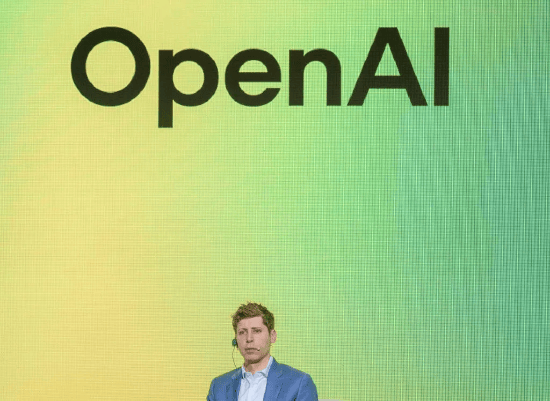
OpenAI与亚马逊签署380亿美元算力采购协议,减少对微软依赖
Sou Hu Cai Jing· 2025-11-03 14:28
Core Insights - OpenAI has entered into a $38 billion (approximately 270.73 billion RMB) computing power procurement agreement with Amazon Web Services (AWS), marking its first collaboration with a global cloud infrastructure leader and reducing its reliance on Microsoft [1][3][4] - The partnership will initially utilize hundreds of thousands of Nvidia GPUs deployed in the U.S. and plans to expand computing capacity in the coming years [3] - OpenAI has announced a total of approximately $140 billion (around 997 trillion RMB) in infrastructure investment agreements with various companies, raising concerns about a potential AI bubble and resource availability in the U.S. [3] OpenAI and AWS Collaboration - OpenAI will begin running workloads on AWS infrastructure immediately, with the first phase leveraging existing data center facilities [3] - AWS will build additional infrastructure specifically for OpenAI in the future, and the collaboration is expected to enhance the overall computing ecosystem for advanced AI technologies [4][5] - OpenAI's CEO, Sam Altman, emphasized the need for massive and reliable computing power to support the scaling of frontier AI [4] Impact on Amazon - The agreement is strategically significant for Amazon, especially as AWS has invested billions in OpenAI's competitor, Anthropic [5] - AWS reported over 20% year-on-year revenue growth, surpassing analyst expectations, although Microsoft and Google Cloud's growth rates were higher at 40% and 34%, respectively [5] - The deal specifies the use of Nvidia chips, with potential future inclusion of Amazon's own Trainium chips for cost-effective options [5][6] Future Prospects - OpenAI has committed to purchasing an additional $250 billion (approximately 1.78 trillion RMB) worth of Azure cloud services from Microsoft, indicating continued collaboration despite the new partnership with AWS [4] - The infrastructure will support both inference tasks and training of next-generation models, with flexibility for OpenAI to expand its collaboration with AWS over the next seven years [6] - The partnership is seen as a crucial step towards OpenAI's potential IPO, signaling its operational independence and mature business structure [6][7]
人工智能将如何崩盘?
虎嗅APP· 2025-11-03 09:53
Core Viewpoint - The articles from Wired and The Atlantic highlight that artificial intelligence (AI) represents an unprecedented "ultimate bubble" that could lead to a significant financial collapse, drawing parallels to past economic crises [4][5]. Group 1: Anatomy of the Ultimate Bubble - AI is characterized as the "ultimate bubble" due to its unprecedented uncertainty, with 95% of companies using generative AI not making a profit [9][10]. - The investment landscape is dominated by "pure plays," where venture capitalists are heavily investing in companies solely focused on AI, leading to a self-reinforcing ecosystem [11][12]. - A surge of new retail investors is fueling the bubble, with significant investments in AI stocks like Nvidia, which saw nearly $30 billion from retail investors [13][14]. - The powerful narrative surrounding AI, promising transformative capabilities, acts as a catalyst for investment despite the underlying uncertainties [14][15]. Group 2: Physical Mechanisms of Collapse - The physical manifestation of the AI bubble is evident in the rapid construction of data centers, which are consuming vast amounts of energy and resources [17][18]. - AI-related spending is projected to contribute 92% to GDP growth by mid-2025, indicating a disconnect between AI-driven growth and the declining real economy [19][20]. - The financial structure supporting AI investments is increasingly complex, involving private equity firms and creating a potential for a crisis reminiscent of the 2008 financial collapse [23][24]. Group 3: Mechanisms of Collapse - The impending crisis may be triggered by the realization that AI companies cannot transition from significant losses to profitability, leading to a collapse in tech stock prices and a devaluation of data center leases [30][31]. - The rapid depreciation of data center assets, driven by technological advancements, poses a significant risk to the financial instruments tied to these assets [28][29]. Group 4: The Endgame - Regardless of whether AI succeeds or fails, the outcome is likely to be detrimental, with potential for unprecedented financial turmoil or a future where human labor is rendered obsolete [35][40]. - The pursuit of scale by tech giants may lead to chaos, leaving behind outdated infrastructure and a fragile financial system [42].