市场竞争

Search documents
星巴克中国“不卖”!
Hua Er Jie Jian Wen· 2025-06-24 01:32
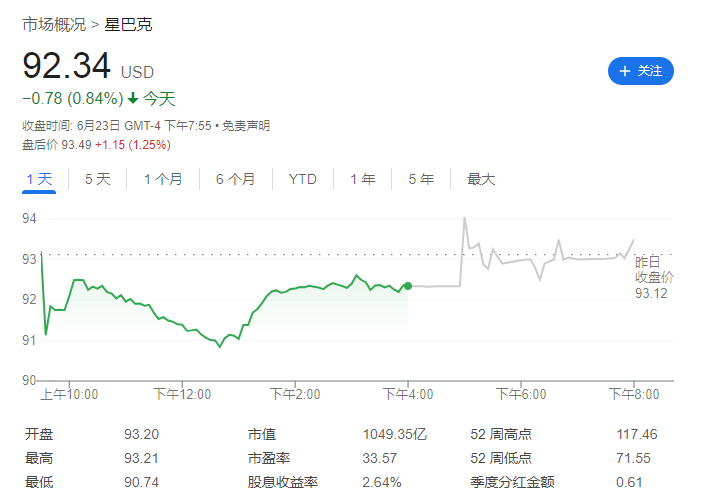
Group 1 - Starbucks clarifies that it is not considering a full sale of its China business and remains optimistic about the long-term potential of the Chinese market [1] - The company is evaluating the best ways to capture future growth opportunities in China, emphasizing its strong team and brand presence [1] - Previous media reports suggested that Starbucks was contemplating a full sale, which led to a nearly 1% increase in its stock price in after-hours trading [1] Group 2 - Starbucks has faced ongoing pressure in the Chinese market, with local competitors like Luckin Coffee eroding its market share through aggressive pricing and rapid expansion [3] - In response to competitive pressures, Starbucks has implemented a pricing strategy that includes lowering prices on certain beverages and introducing sugar-free options to cater to local consumer preferences [3] - The company has experienced a decline in same-store sales for five consecutive quarters, indicating challenges that extend beyond the Chinese market [3] Group 3 - Despite not considering a full sale, Starbucks has engaged with investors to explore various strategic options, including the potential sale of partial equity, to address current market challenges [4]


洽洽食品: 洽洽食品股份有限公司公开发行可转换公司债券2025年跟踪评级报告
Zheng Quan Zhi Xing· 2025-06-23 16:43
Core Viewpoint - The credit rating agency maintains the long-term credit rating of Qiaqia Food Co., Ltd. at AA with a stable outlook, reflecting the company's strong competitive advantages in the snack food manufacturing industry and its solid financial position [1][3][4]. Company Overview - Qiaqia Food Co., Ltd. is a leading manufacturer of snack foods in China, primarily engaged in the research, production, and sales of nut and seed products [10]. - As of March 2025, the company has a registered capital of 507 million yuan and operates 35 subsidiaries [10]. Financial Performance - For the year 2024, Qiaqia achieved total revenue of 71.31 billion yuan and a profit of 10.79 billion yuan, with a significant increase in revenue from nut products [10][17]. - The company's cash assets were reported at 49.52 billion yuan as of 2024, with a debt-to-asset ratio of 43.04% [9][10]. - The EBITDA for 2024 was 13.19 billion yuan, indicating strong operational cash flow [9]. Competitive Advantages - The company maintains a strong brand reputation, stable supply chain, innovative product processes, and extensive distribution networks, which contribute to its competitive edge in the snack food sector [3][4][12]. - Qiaqia has established a robust procurement system for raw materials, ensuring quality and stability through direct partnerships with farmers and international suppliers [13][19]. Market Position and Challenges - The snack food industry is characterized by intense competition, with Qiaqia facing challenges such as fluctuating raw material prices and the need to adapt to changing consumer preferences [4][5][11]. - The company is expanding its product lines and optimizing its product structure to capture growth in emerging markets [3][4]. Future Outlook - The outlook for Qiaqia is positive, with expectations of enhanced market strength through continued expansion into lower-tier markets and the introduction of new products [4][11]. - Potential factors for rating upgrades include significant improvements in capital strength and market demand for its products [4][5].

八成营收下滑,近3年跨国仪器巨头在华业绩大起底
仪器信息网· 2025-06-23 08:18
Core Viewpoint - The revenue of multinational instrument companies in China has generally declined in 2024, with only Merck achieving growth, while many companies have experienced consecutive declines over the past two years due to multiple factors including US-China trade tensions, economic environment, and market competition [1][2]. Revenue Performance Summary - In 2024, Merck led the revenue rankings in China with $32.98 billion, marking a 5.8% increase after a 14.2% decline in 2023 [5][6]. - Danaher followed with $28.05 billion, down 10.8%, continuing a downward trend from $31.43 billion in 2023, which was a 13.0% decrease [6][8]. - Agilent ranked third with $12.20 billion, a decline of 11.6%, following a 7.9% drop in 2023 [7][8]. - Shimadzu and Mettler-Toledo ranked fourth and fifth with revenues of $6.30 billion and $6.22 billion, respectively, both experiencing declines [8]. - Overall, over 80% of the listed companies saw a year-on-year revenue decrease in 2024, with some companies facing declines for two consecutive years [8][14]. Market Share Analysis - The market share of many companies in China has also shown a downward trend, reflecting poor performance and indicating a relative decline in market vitality compared to global markets [9]. - In 2024, Agilent's market share in China was 18.74%, down from over 20% in previous years, indicating a significant drop [9]. Company-Specific Insights - Danaher reported that approximately 12% of its sales come from China, highlighting the potential adverse effects of the political, economic, and regulatory environment on its business [11]. - Waters experienced a notable 30% decline in sales in China, attributed to decreased demand across various customer categories due to economic conditions and trade tensions [12]. - Agilent's revenue decline was primarily driven by pressures in capital spending from clients, particularly in the pharmaceutical market [12]. - Mettler-Toledo emphasized the importance of the Chinese market, which accounted for 16% of its external sales, and noted the impact of geopolitical tensions and economic pressures on its performance [13]. Strategic Adjustments - In response to market changes, multinational companies are accelerating strategic adjustments, increasing investment in local R&D, and launching products tailored to local needs [15]. - Despite the challenges faced from 2022 to 2024, the long-term potential of the Chinese market remains significant, and companies are expected to adapt more flexibly and innovatively to maintain competitiveness [15].


中国驻欧盟使团发言人就欧盟委员会主席在G7峰会期间涉华言论答记者问
news flash· 2025-06-18 11:28
Core Viewpoint - The spokesperson of the Chinese Mission to the EU expressed strong dissatisfaction and firm opposition to the biased and double-standard remarks made by the President of the European Commission during the G7 summit, emphasizing that China's industrial subsidy policies adhere to principles of openness, fairness, and compliance with WTO rules [1] Group 1: China's Industrial Policies - China's industrial development relies on continuous technological innovation, a well-established supply chain system, sufficient market competition, and abundant human resources, rather than subsidies [1] - The spokesperson highlighted that China's new energy capacity significantly contributes to global efforts in addressing climate change and energy transition [1] Group 2: China-EU Relations - China is willing to enhance communication and coordination with the EU to properly address trade differences, aiming for win-win outcomes and mutual development [1]
N134炭黑价格策略分析市场竞争与供需关系的角度
Sou Hu Cai Jing· 2025-06-16 22:53
Core Viewpoint - The pricing strategy of N134 carbon black is influenced by market competition and supply-demand relationships, with a focus on product quality, pricing, and service in a competitive market environment [2][3]. Group 1: Market Competition - The carbon black market is highly competitive with numerous suppliers, primarily concentrated in the Asia-Pacific region [2]. - Suppliers compete on product quality, price, and service, as the quality of carbon black is crucial for the product quality of partnering companies [2]. Group 2: Demand Influence - The demand for carbon black mainly comes from industries such as rubber, plastics, and inks, with varying demand levels globally [2]. - Domestic market development speed and demand volume determine the long-term price trends of carbon black, while international supply-demand relationships affect short-term price fluctuations [2]. Group 3: Pricing Strategies - Suppliers adjust prices based on market demand and supply conditions, increasing prices during high demand and potentially lowering them to capture market share during low demand [3]. - Different pricing strategies are developed based on product quality and added value, with high-quality products commanding higher prices [3]. - Raw material and transportation costs significantly impact carbon black pricing, with fluctuations in the prices of natural rubber and petroleum directly affecting carbon black prices [3]. Group 4: Complexity of Pricing Strategy - The pricing strategy for N134 carbon black is complex and dynamic, requiring suppliers to closely monitor market changes and adjust prices accordingly [3]. - Suppliers must also consider raw material and transportation costs to ensure price rationality and maximize profits [3].

星巴克降价的试探
Jing Ji Guan Cha Wang· 2025-06-14 15:20
Core Insights - Starbucks China has announced a price reduction for its main products for the first time in 25 years, with an average decrease of 5 yuan per cup for 10 products starting June 10 [2] - The new CEO, Brian Niccol, emphasized the need to return to the essence of coffee shops and rethink pricing strategies [2] - The decision to lower prices comes after nearly a year of contemplation and is seen as a response to the competitive non-coffee market in China [2][3] Pricing Strategy - The price reduction aims to test the conversion rate of price-sensitive consumers, particularly during afternoon tea hours and in key urban clusters [3] - Feedback from core customers, especially members who contribute 74% of sales, is crucial to understanding the impact of price changes on customer retention [3] - The sustainability of repurchase rates post-price reduction will be a key indicator of Starbucks' pricing power and brand value [3] Market Context - Starbucks has faced stagnant revenue growth in China, with a 1.4% decline in fiscal year 2024 and a 23.8% drop in net profit [3] - The company has struggled against local coffee and tea brands in a highly competitive low-price market, indicating that relying solely on brand premium is no longer effective [3][6] - The timing of the price reduction may also relate to previous rumors about potential equity sales or seeking local buyers for its Chinese operations [4] Business Expansion Plans - As of March 2025, Starbucks operates 7,758 stores in China, with plans to expand from 8,000 to 20,000 stores [5][4] - The company is exploring minority stake sales to potential investors, indicating a strategic shift in its approach to the Chinese market [4] Strategic Challenges - Starbucks faces operational bottlenecks and a changing consumer landscape, with local brands gaining traction and foreign brands losing appeal [6] - The company must address fundamental questions about maintaining market leadership amid rising local competition and evolving consumer preferences [6]

三年亏11亿,核心产品仍未商业化!银诺医药赴港IPO能成功吗?
Xin Lang Cai Jing· 2025-06-13 06:45
Financial Pressure and R&D Investment - Guangzhou Yinnuo Pharmaceutical Group Co., Ltd. has submitted a listing application to the Hong Kong Stock Exchange, marking a significant step in its capital market journey [1] - The company has not generated any revenue in 2022, 2023, and the first half of 2024, with losses of approximately 301 million, 733 million, and 75.27 million yuan respectively, totaling over 1.1 billion yuan [1] - High R&D expenditures, particularly for the core product Isu-Paglutide α, account for 97.6%, 76.4%, and 95.4% of total R&D spending during the same periods, contributing to the financial strain [1] Market Competition and Product Commercialization - The core product Isu-Paglutide α is entering a highly competitive market with 484 innovative drugs targeting weight loss, over 40% of which focus on GLP-1 [2] - Major international players like Novo Nordisk and Eli Lilly have already commercialized similar products, while domestic companies such as Innovent Biologics and Hansoh Pharmaceutical are also active in this space [2] - The company lacks experience in commercial production of biopharmaceuticals and currently relies on Contract Development and Manufacturing Organizations (CDMOs), posing a challenge for establishing its own production facilities [2] Liquidity and Sustained Losses - As of June 30, 2024, the company held cash and cash equivalents of 463 million yuan, while R&D expenses for 2023 reached 492 million yuan, indicating potential financial pressure [3] - The future business and financial outlook heavily depends on the commercialization of Isu-Paglutide α, with risks associated with delays or cost overruns [3] R&D Expenditure and Financial Losses - R&D expenditures during the reporting period were 267 million, 492 million, and 51.91 million yuan, with Isu-Paglutide α accounting for a significant portion of these costs [3] - There has been a noticeable decline in R&D spending, dropping from 240 million yuan in the first half of 2023 to 51.91 million yuan in the same period of 2024, indicating a potential strategic contraction [3] Product Pipeline and Focus - The company has a narrow product pipeline, primarily focusing on Isu-Paglutide α, which is under development for treating Type 2 Diabetes and obesity [3] - The product has received acceptance for its BLA for Type 2 Diabetes treatment and is undergoing clinical trials for obesity and MASH, with expectations to achieve key trial results by the end of 2024 [3] Market Acceptance and Marketing Strategy - The company has prepared for the commercialization of its first product by forming a core commercialization team and developing an omnichannel marketing strategy [4] - A strategic partnership with a CDMO was established in 2020 for the commercial production of Isu-Paglutide α, although the timeline from BLA acceptance to commercialization is uncertain and typically takes around one year [4]
Arm(ARM.O):英伟达(NVDA.O)是一个非常激烈的竞争对手。
news flash· 2025-06-12 11:40
Arm(ARM.O):英伟达(NVDA.O)是一个非常激烈的竞争对手。 ...

到拉美去,中企找到另一个“黄金海岸”丨力见
2 1 Shi Ji Jing Ji Bao Dao· 2025-06-10 09:15
Core Insights - The article discusses the increasing interest of Chinese companies in the Latin American market, particularly in Mexico and Brazil, due to changing external environments and the need to diversify risks from reliance on single markets [1][2][3] - The Latin American e-commerce market is transitioning from chaotic growth to rational competition, with a significant increase in the number of Chinese sellers leading to price reductions and increased competition [2][3][10] - The article highlights the diverse market conditions within Latin America, with Mexico being the most developed market, Brazil presenting high risks and rewards, and Chile offering opportunities for mid-to-high-end products [4][5][6] Market Dynamics - The Latin American e-commerce landscape is becoming more competitive, with platforms like Amazon, Meikedo, and others vying for market share, particularly in Mexico [8][10] - Regulatory changes in Brazil and Mexico are increasing compliance pressures for cross-border e-commerce sellers, but these changes are also seen as necessary for market maturation [3][6] - The competition among platforms is expected to intensify, with significant investments in logistics and payment infrastructure, which will lower entry barriers for new sellers [10][11] Seller Strategies - Successful sellers in Latin America are focusing on deep localization and understanding consumer needs, as exemplified by a case of a rugged smartphone tailored for local outdoor workers [11][12] - Companies are advised to invest resources in market research and to develop differentiated products rather than relying on simple procurement strategies [11][12] - The article emphasizes that the era of easy profits in Latin America has ended, and sellers must adapt to a more competitive environment by focusing on brand and service quality [12]
联合利华中国高层变动背后:市场挑战与战略调整
Sou Hu Cai Jing· 2025-06-10 05:14
Group 1 - The recent leadership change at Unilever (China) Co., Ltd. reflects the company's strategic adjustments in response to challenges in the global and Chinese markets [1][3] - Roland Polaroid Hutabarat has been appointed as the new chairman, succeeding Zhong Zhaomin, indicating Unilever's focus on the beauty and health sectors in China [1][3] - The leadership transition is part of a broader trend of management changes within Unilever globally, aimed at driving business transformation and enhancing profitability [3] Group 2 - Unilever faces significant challenges in the Chinese market, including a high single-digit decline in performance during Q1 2025, with brands like Clear and Lifebuoy experiencing downturns [4] - The rise of local brands poses a strong competitive threat to Unilever, as these brands leverage their understanding of the local market and offer more competitive pricing [4] - Rapid changes in consumer demand are increasing the pressure on Unilever to innovate its product offerings [4] Group 3 - In response to market challenges, Unilever is intensifying its investment in the Chinese market, particularly in the beauty and health sectors, by establishing a high-end beauty matrix with ten major brands [6] - The company is optimizing its brand portfolio by discontinuing underperforming brands, such as Tatcha and REN, to focus resources on stronger brands [6] - Unilever's strategic adjustments aim to enhance market competitiveness and operational efficiency in China [6] Group 4 - The leadership change is seen as a crucial part of Unilever's strategy to address market challenges and signals the company's long-term commitment to the Chinese market [7] - The new chairman's extensive supply chain management experience is expected to improve operational efficiency, particularly in the beauty and health sectors [7] - Unilever's ongoing adjustments and new management are anticipated to bring fresh energy and opportunities in the Chinese market [9]