报行合一

Search documents
银保渠道崛起!低利率时代,险企如何深耕实现业务增长?
Huan Qiu Wang· 2025-09-24 05:20
Core Insights - The life insurance industry is undergoing significant changes due to a continuous decline in preset interest rates and the implementation of the "reporting and operation integration" policy, leading to a shift towards a transparent fee structure and a focus on dividend insurance products [1][4]. Group 1: Sales Channel Dynamics - The bancassurance channel has seen a substantial transformation, with major insurance companies reporting significant growth in premium income from this channel. For instance, China Life's bancassurance premiums reached 72.44 billion yuan, a year-on-year increase of 45.7% [2]. - In the first half of 2025, New China Life's bancassurance premiums totaled 46.19 billion yuan, up 65.1%, while Taiping Life's premiums grew by 82.6% to 41.66 billion yuan [2]. - The individual insurance channel's performance has lagged, with some companies experiencing a decline in new business volume, highlighting the need for large insurers to reassess the value of the bancassurance channel [2][4]. Group 2: New Business Value - New business value, a key indicator of an insurance company's profitability and sustainability, has shown remarkable growth in the bancassurance channel, with companies like Taiping Life and New China Life reporting over 100% year-on-year growth in this area [3]. - The contribution of new business value from the bancassurance channel for New China Life and People’s Insurance has exceeded 50%, indicating its critical role in overall business performance [3]. Group 3: Product Strategy - The decline in product attractiveness due to lower interest rates has prompted insurers to adjust their product structures, with dividend insurance emerging as a strategic option due to its combination of guaranteed and floating returns [6]. - Dividend insurance is particularly suited for the bancassurance channel, as it aligns with customer preferences for stable returns and is easier for bank staff to sell compared to more complex products [8]. Group 4: Challenges for Smaller Insurers - Smaller insurers face heightened challenges in the current environment, struggling to compete for bancassurance resources due to the transparency of fees and the preference of banks for larger, more established companies [9]. - To navigate these challenges, smaller insurers are encouraged to focus on product differentiation, establish exclusive partnerships with regional banks, and leverage digital tools to enhance channel efficiency [9]. Group 5: Strategic Recommendations - The bancassurance channel is seen as a vital growth engine, complementing the individual insurance channel, which requires a professional transformation to enhance customer experience [10]. - Insurers are advised to promote multi-channel collaboration, ensuring that both bancassurance and individual channels work synergistically to maximize market potential [10].





申万宏源:维持阳光保险“买入”评级 目标价5.35港元
Zhi Tong Cai Jing· 2025-09-24 01:59
Core Viewpoint - The report from Shenwan Hongyuan indicates that Sunshine Insurance (06963) is expected to achieve a net profit attributable to shareholders of 5.734 billion, 6.056 billion, and 6.788 billion yuan for the years 2025-2027, reflecting year-on-year growth of 5.2%, 5.6%, and 12.1% respectively, with a revised company valuation of 57.3 billion yuan and a target price of 5.35 HKD per share, maintaining a "Buy" rating [1] Group 1 - The company is projected to have a stable profit growth with a balanced asset-liability performance, and a dividend yield that ranks among the top in the industry. The net profit attributable to shareholders is expected to increase by 45.8% year-on-year to 5.449 billion yuan in 2024, with a 7.8% year-on-year increase to 3.389 billion yuan in the first half of 2025 [2] - The company emphasizes shareholder returns, with a dividend payout ratio expected to reach 40.1% in 2024, the highest among listed insurance companies, and a calculated dividend yield of 5.4% as of September 22, ranking second in the industry [2] Group 2 - The company has shown strong resilience and growth in its individual insurance performance, with a year-on-year increase in new business value (NBV) of 44.2% and 43.3% for 2023 and 2024 respectively, and a 47.3% increase to 4.008 billion yuan in the first half of 2025, leading the industry [3] - The bancassurance channel remains a traditional strength for the company, benefiting significantly from the "reporting and operation integration," with channel NBV growth of 43.6% and 53.0% for 2024 and the first half of 2025, contributing 60% of the total NBV [3] Group 3 - The company has seen a significant decline in liability costs, with a high proportion of new liabilities, and is expected to optimize the cost of existing liabilities. The NBV to effective business value ratio is projected to be 12.79% in 2024, ranking third among listed insurance companies [4] - The net investment yield and the difference between NBV and VIF yield are expected to improve, with year-on-year increases of 100 basis points and 31 basis points respectively, indicating a favorable trend in interest margins [4] - The company has increased its equity allocation in the secondary market, with a stock allocation ratio of 15.1% as of June, and a significant portion of FVOCI stocks exceeding 70%, indicating a stable performance compared to peers [4]

申万宏源:维持阳光保险(06963)“买入”评级 目标价5.35港元
智通财经网· 2025-09-24 01:57
Core Viewpoint - The report from Shenwan Hongyuan indicates that Sunshine Insurance (06963) is expected to see a steady growth in net profit from 2025 to 2027, with projected figures of 5.734 billion, 6.056 billion, and 6.788 billion yuan respectively, reflecting year-on-year growth rates of 5.2%, 5.6%, and 12.1% [1] Group 1: Profit Growth and Dividend Policy - The company is projected to achieve a year-on-year net profit increase of 45.8% to 5.449 billion yuan in 2024, with a stable profit performance in the first half of 2025, showing a year-on-year growth of 7.8% to 3.389 billion yuan [2] - The dividend payout ratio is expected to reach 40.1% in 2024, ranking first among listed insurance companies, with a calculated dividend yield of 5.4% based on the closing price on September 22, placing it second in the industry [2] Group 2: New Business Value (NBV) and Distribution Channels - The company has demonstrated strong resilience and growth in its life insurance segment, with NBV growth rates of 44.2% and 43.3% for 2023 and 2024 respectively, and a year-on-year increase of 47.3% to 4.008 billion yuan in the first half of 2025, leading the industry [3] - The bancassurance channel remains a traditional strength for the company, benefiting significantly from the "reporting and operation integration," with channel NBV growth rates of 6.4 percentage points and 7.2 percentage points for 2024 and the first half of 2025 respectively [3] Group 3: Liability Costs and Investment Returns - The company has seen a significant decline in new liability costs, with the NBV to effective business value ratio at 12.79% in 2024, ranking third among listed insurance companies, which is expected to further dilute the cost of existing liabilities [4] - The net investment return rate and the difference between NBV and effective business value yield are projected to increase year-on-year by 100 basis points and 31 basis points respectively, indicating an expansion of the interest spread [4] Group 4: Equity Allocation and Performance Stability - As of the end of June, the company's equity allocation in the secondary market has increased by 1.28 percentage points to 15.1%, with a stock allocation level that continues to rise, reaching 14.1% by the end of 2024, and the proportion of FVOCI stocks exceeding 70.38% [5] - The company’s CSM has shown steady growth, with a year-on-year increase of 12.6% to 50.9 billion yuan by the end of 2024, maintaining a stable amortization rate of 8.45% [5]
21专访|复旦大学许闲:四支柱支撑保险业进入新一轮黄金发展期
2 1 Shi Ji Jing Ji Bao Dao· 2025-09-23 08:33
Core Insights - The insurance industry in China is entering a "golden development period," providing a historic opportunity for insurance agents to transition into professional consultants [1][3] - The industry is undergoing a fundamental paradigm shift from a product-pushing model to a client-value-centric elite model [1][3] Four Pillars Behind the Golden Development Period - The combination of national policies is aimed at regulating past insurance practices, necessitating a shift from extensive growth to quality-focused growth [3][4] - The challenges of an aging population and declining birth rates are creating new trends in wealth management and retirement planning [3][4] - The awakening of younger generations, particularly those born after 2000, is leading to increased awareness and demand for insurance products [3][4] - Historical data shows that as GDP per capita exceeds $10,000, insurance industries in mature economies experience significant growth, indicating a similar trajectory for China [4] Differences from Previous Growth Phases - The current phase differs from the high-growth periods of 2018 and 2019 due to natural cyclical fluctuations in the industry [5] - The focus has shifted from pursuing growth in a saturated market to emphasizing quality development [5] Three Key Directions for Industry Transformation - The industry must prioritize improving the quality of its services, particularly through enhancing the scale and quality of the agent workforce [6][7] - Embracing technological advancements, especially in AI and big data, is crucial for improving operational efficiency [6][7] - Protecting consumer rights is increasingly important, as consumer awareness is rising, necessitating better products and services [6][7] Product and Channel Transformation - The shift from traditional life insurance to participating insurance products is driven by market conditions and consumer preferences [8][9] - The decline in predetermined interest rates is making participating insurance more attractive, as it allows consumers to share in the insurer's profits [8][9] Agent Channel Transformation - The implementation of agent classification and "reporting and operation integration" policies is fostering a more professional and sustainable agent workforce [10] - Despite a decline in overall premium income, the new business value rate has increased, indicating a positive trend towards quality over quantity [10] Core Competencies for Agents - Agents need to enhance their understanding of the industry's value and their professional capabilities across various domains [11][12] - Building strong service capabilities is essential, as personal connections and empathy are increasingly valued in the AI era [11][12] Key Directions for Insurers - Insurers must maintain confidence in the industry and adhere to principles of professionalism and long-termism to navigate the golden development period [13] - The insurance sector should leverage modern technologies to enhance its societal value and contribute to social welfare [13]
面朝“大海”,保险科技突围“报行合一”寻增长
2 1 Shi Ji Jing Ji Bao Dao· 2025-09-22 11:15
Core Insights - Nuanwa Technology, a leading domestic insurance AI technology company, has submitted its IPO application to the Hong Kong Stock Exchange, marking a significant step in the insurance technology sector [1] - The company has achieved profitability starting in 2023, with adjusted net profits projected at RMB 18.51 million, RMB 57.50 million, and RMB 24.90 million for the years 2023, 2024, and the first half of 2025 respectively [1][2] - The insurance technology industry is under pressure from regulatory changes and market conditions, prompting companies to leverage technology for competitive differentiation and explore new growth avenues [1][4] AI Implementation - AI technology is becoming central to enhancing operational efficiency and user experience in the insurance technology sector [2] - Nuanwa Technology's AI systems, "Alamos" and "Robopo," automate the underwriting and claims processes, achieving a 97.5% policy renewal rate and a 63.0% cross-selling rate in the first half of the year, significantly above industry averages [2] - The company has facilitated RMB 10.7 billion in first-year premiums and intercepted over one million high-risk applicants, reducing claim rates by 10 to 23 percentage points [2] Industry Trends - Companies like Shouhui Technology and Waterdrop are focusing on AI underwriting and advisory services to automate key processes, enhancing efficiency and accuracy [3] - Waterdrop's AI initiatives have led to a 100% user coverage with its AI customer service and a 99.8% accuracy rate in underwriting [3] - The regulatory push for digital transformation in the insurance sector is creating substantial market opportunities for third-party technology service providers [4] Strategic Developments - Insurance technology firms are deepening their vertical market focus, developing customized products, and building ecosystem partnerships to create competitive advantages [5] - Waterdrop has launched 174 customized insurance products in 2024, with over 92% being tailored offerings, while Car Car Technology has partnered with 15 major car manufacturers to integrate insurance services into their apps [6] - Zhibao Technology is expanding its service boundaries through ecosystem collaborations, including partnerships in disaster management and health insurance [7] Profitability Improvements - Several listed insurance technology companies are showing signs of profitability improvement, with Waterdrop reporting a net operating income of RMB 838 million and a net profit of RMB 140 million in Q2 2025 [8] - Shouhui Technology has achieved a total premium of approximately RMB 4.9 billion in the first half of 2025, with a net profit increase of over 900% [8][9] - Companies are finding a better balance between technology investment and commercial benefits, with a focus on quality over scale [9] International Expansion - Nuanwa Technology is considering international markets as a key focus for future growth, aiming to replicate its technology capabilities in suitable overseas markets [10] - Waterdrop has established a licensed insurance brokerage in Hong Kong and is expanding its international business [10][11] - Car Car Technology plans to initiate its internationalization process in Q4 2025, targeting the Asia-Pacific and European markets [11]
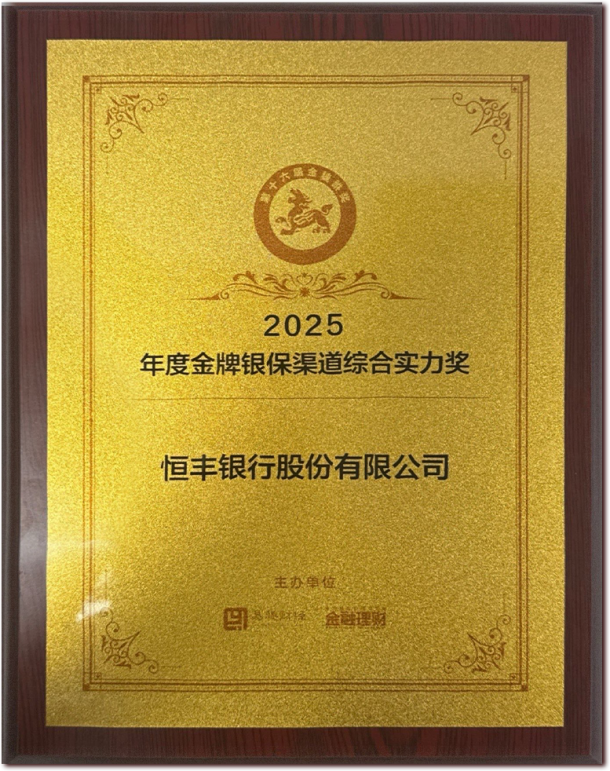
恒丰银行荣获2025年度金牌银保渠道综合实力奖
Qi Lu Wan Bao· 2025-09-22 03:15
Group 1 - The "2025 Golden Pi Xiu Award" ceremony was held in Beijing, where Hengfeng Bank won the "2025 Gold Medal Comprehensive Strength Award for Insurance and Banking Channels," reflecting high recognition from clients and the industry for its performance in the insurance and banking channel operations [1] - The award has been held for sixteen consecutive years, showcasing significant industry credibility and influence, with the evaluation process involving data research, online voting, and expert reviews focusing on comprehensive strength, team, products, and services [1] Group 2 - Under the "reporting and banking integration" policy and the resonance of the interest rate cycle, the domestic insurance and banking channel development model has successfully transitioned from a "scale-oriented" approach to a "value reconstruction" strategy [3] - Hengfeng Bank adheres to the new concept of "precise adaptation" and "collaborative win-win" in insurance and banking cooperation, actively promoting high-quality business development around channel collaboration, technological empowerment, and team building [3] Group 3 - The business has experienced rapid growth, with potential fully released through mechanism optimization, resource allocation, and model innovation, achieving explosive growth in agency insurance business, with multiple core indicators reaching record highs, ranking first among national joint-stock banks in year-on-year growth as of the end of August this year [4] - The bank emphasizes channel construction and ecological win-win strategies, deepening partnerships with a focus on "complementary advantages, resource sharing, and win-win development," enhancing professional training, optimizing product structure, and deepening customer rights to create a "1+1>2" aggregation effect [4] - Hengfeng Bank is advancing technological empowerment by promoting online and offline integration, developing digital channels such as mobile banking apps and intelligent advisory services, facilitating online customer flow and initial screening, while offline customer managers handle and manage the business, forming a closed-loop sales model [4] - The bank is enhancing team building and overall capabilities through systematic training, internalizing high-quality external training resources, and creating a virtuous cycle of team development, significantly improving professional capabilities and customer service levels [4] - In the future, Hengfeng Bank will deepen its customer-centric philosophy, adhere to value orientation, leverage technological innovation, strengthen compliance, and enhance the precision and added value of insurance and banking services through digital means, contributing to the construction of a strong financial nation [4]
保险行业周报(20250915-20250919):8月寿险显著增长,预计9月增速或承压-20250921
Huachuang Securities· 2025-09-21 11:33
Investment Rating - The insurance industry is rated as "Recommended," with expectations for the industry index to exceed the benchmark index by more than 5% in the next 3-6 months [21]. Core Insights - August saw significant growth in life insurance, but September's growth may face pressure due to high base effects and the impact of the upcoming adjustment in the preset interest rate [4][6]. - The insurance sector experienced a decline, with the insurance index dropping by 4.8%, underperforming the broader market by 4.36 percentage points [1]. - The report highlights that the transition from the "2.5% era" to the "2.0% era" in preset interest rates is expected to benefit sales in the short term, with a notable increase in monthly premiums [4]. Summary by Sections Weekly Dynamics - China Pacific Insurance, New China Life, and ZhongAn Online have disclosed their premium announcements for January to August 2025 [2]. - China Pacific Insurance's share transfer actions were noted, with significant stakes being transferred to Shanghai Jiushi and Shanghai Electric [2]. Premium Analysis for Listed Insurance Companies - China Pacific Insurance reported a cumulative premium of 359.9 billion yuan from January to August 2025, a year-on-year increase of 7.8% [3]. - New China Life's cumulative life insurance premium reached 158.1 billion yuan, up 21.3% year-on-year [3]. - ZhongAn Online's cumulative premium was 23.6 billion yuan, reflecting a year-on-year increase of 6.4% [3]. Investment Recommendations - The report suggests that despite recent adjustments in the insurance sector, there are opportunities for structural market movements that could lead to better-than-expected performance for some flexible insurers [4]. - The report recommends China Pacific Insurance, China Life H, China Re H, and Sunshine Insurance H, with specific recommendations based on market conditions [5].
保险中介人数5年缩水超70%
2 1 Shi Ji Jing Ji Bao Dao· 2025-09-19 03:47
Core Insights - The report indicates a significant reduction in the number of insurance agents in China, with a decline from 9.12 million in 2019 to 2.64 million by the end of 2024, reflecting a decrease of over 70% [2][6] - Despite the reduction in the number of agents, insurance depth and density have improved, with insurance depth rising from 4.07% in 2023 to 4.2% in 2024, and insurance density increasing from 3,635 yuan to 4,046 yuan in the same period [7][9] - The industry is facing challenges in agent performance and morale, with a notable drop in high-performing agents and increased pressure on income and business metrics [9][11] Group 1: Agent Workforce Changes - The number of insurance marketing agents in China has decreased to 2.64 million by the end of 2024, showing a stabilization compared to 2.81 million at the end of 2023 [2][6] - The educational level of insurance agents is improving, with 72.34% holding a college degree or higher, an increase of 5.5 percentage points from 2024 [6] - The age distribution of agents is shifting, with the 25-34 age group increasing to 15.4%, while the 45-54 age group has decreased by 3.3 percentage points to 32.2% [6][9] Group 2: Performance and Market Dynamics - Overall agent performance has declined, with 36.2% of agents completing fewer than 12 policies annually, an increase of 4 percentage points [9] - The geographical distribution of agents is changing, with 59% of agents located in municipalities or provincial capitals, up 13.4 percentage points from 2024, intensifying competition in urban markets [9] - The individual insurance channel is under pressure, with a slowdown in premium growth and a decrease in the number of agents due to regulatory changes [11]

保险中介“清虚提质”:代理人减少 深度密度提升
2 1 Shi Ji Jing Ji Bao Dao· 2025-09-19 02:44
Core Insights - The report indicates that the insurance agent workforce in China has undergone a significant reduction, with the number of insurance marketing agents dropping to 2.64 million by the end of 2024, down over 70% from the peak of 9.12 million in 2019, but showing a stabilization compared to 2.81 million at the end of 2023 [1][2][4] - Insurance depth and density have both improved, with insurance depth rising from 4.07% in 2023 to 4.2% in 2024, and insurance density increasing from 3,635 yuan to 4,046 yuan during the same period, reflecting the ongoing effects of the industry's "clearing and quality improvement" initiatives [1][3][4] Workforce Changes - The educational level of insurance marketing agents is on the rise, with 72.34% holding a college degree or higher by 2025, an increase of 5.5 percentage points from 2024, indicating a shift towards a more professional workforce [2] - The age distribution of insurance agents is also changing, with the proportion of agents aged 25-34 increasing by 2.2 percentage points to 15.4%, while the 45-54 age group is declining by 3.3 percentage points to 32.2%, suggesting a trend towards a younger workforce [2][4] Performance and Challenges - Despite structural improvements, the overall performance of agents has slightly declined, with 36.2% of agents completing fewer than 12 policies in a year, an increase of 4 percentage points, while those completing 25 or more policies dropped by 4.3 percentage points to 28.5% [4][5] - A significant 71.8% of agents report increased difficulty and pressure in their work, highlighting the challenges faced in the current market environment [4] Market Dynamics - The geographical distribution of agents is shifting, with 59% of agents working in municipalities or provincial capitals by 2025, an increase of 13.4 percentage points from 2024, intensifying competition in urban markets [5] - The individual insurance channel is experiencing pressure, with a slowdown in premium growth and a decline in first-year premiums for long-term insurance products, attributed to regulatory changes and market dynamics [5][6]
个代vs银保!头部险企银保新单增速超70%:合作网点大增,价值率上升,其他公司怎么办?
13个精算师· 2025-09-18 15:19
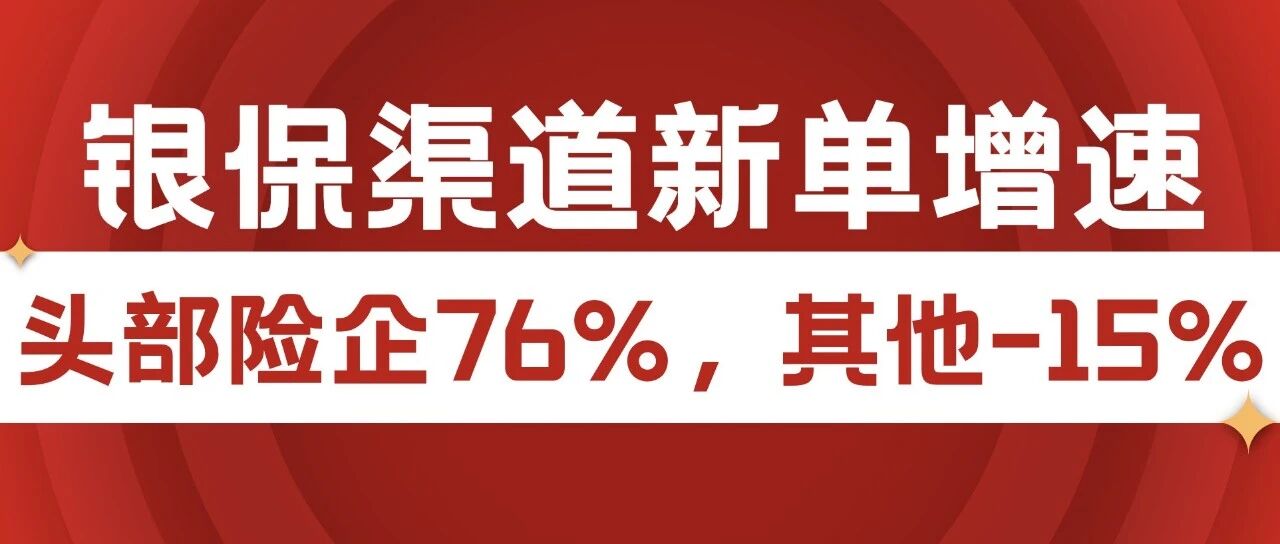
Core Viewpoint - The insurance industry is experiencing a significant recovery in premium growth, primarily driven by the rapid development of the bancassurance channel, which has outpaced other distribution channels like individual agents and brokers [3][4][5]. Group 1: Bancassurance Channel Performance - In the first half of 2025, the bancassurance channel's premium income reached approximately 1 trillion, with a year-on-year growth of about 9%, significantly surpassing the overall industry growth and other channels [7][8]. - The new premium growth rate for the bancassurance channel among leading insurers exceeded 70%, while other channels experienced negative growth [28][31]. - The bancassurance channel has become the largest contributor to premium growth for major insurers, with companies like China Life and New China Insurance reporting new premium growth rates exceeding 100% [18][14]. Group 2: Competitive Landscape - The removal of the "one-to-three" restriction has allowed leading insurers to accelerate strategic partnerships with banks, enhancing their market presence [15][27]. - The competitive environment for smaller insurers has become increasingly challenging, as they must compete not only on product pricing but also on brand influence and reputation against larger firms [30][31]. - The disparity in new premium growth rates is stark, with leading insurers achieving a 76% growth in the bancassurance channel compared to a 15% decline for smaller firms [28][31]. Group 3: Product Strategy and Market Trends - The shift towards participating insurance products is evident, with major insurers like China Life and Taikang reporting that over 50% of their premium income from individual agent channels comes from floating income products [35]. - The focus on high-quality growth is reflected in the increasing new business value rates for leading insurers in the bancassurance channel, indicating a strategic pivot towards more profitable product offerings [33][35]. - The overall trend in the insurance industry is moving towards a higher quality of development, with an emphasis on transforming product offerings to include more dividend-based insurance products [36].