摩尔定律

Search documents
【明日开幕】16位大咖共聚甬江实验室 | 2025异质异构集成封装产业大会(HIPC 2025)
势银芯链· 2025-04-28 05:06
"宁波膜智信息科技有限公司"为势银(TrendBank)唯一工商注册实体及收款账户 势银研究: 势银产业研究服务 势银数据: 势银数据产品服务 势银咨询: 势银咨询顾问服务 重要会议: 4月29日,2025势银异质异构集成封装产业大会(浙江宁波) 点此报名 添加文末微信,加 先进封装 群 2025势银异质异构集成封装产业大会 将于 4月29日 在浙江宁波 · 甬江实验室举办。 会议议程 专题论坛: 异构集成研究中心成立仪式 09:00 09:10 相关领导 主办方、联合主办方致辞 09:10 09:20 相关领导 混合键合在异构集成先进封装中的应用 09:20 钟飞 主任助理、信息材料与微纳器件制备 09:40 平台负责人 爵江实验室 Chiplet EDA全流程:设计空间探索,物 理实现及多物理验证 09:40 吴晨 项目总监 10:00 芯粒CAD和制造浙江省工程研究中心/深圳 市比昂芯科技有限公司 聚焦2.5D/3D先进封装EDA平台,探索后 10:00 端全流程设计、仿真与验证协同创新模式 10:20 赵毅 创始人兼首席科学家 珠海硅芯科技有限公司 空部 10:20 10:40 硅基光芯片制造与集成工 ...
2025年深度行业分析研究报告
未知机构· 2025-04-27 06:00
Investment Rating - The report does not explicitly state an investment rating for the industry Core Insights - The lithography process is the most technically challenging, costliest, and time-consuming step in chip manufacturing, accounting for approximately 30% of costs and 40-50% of time in the manufacturing process [7][10][12] - The lithography process involves multiple steps, including surface treatment, coating, exposure, development, and inspection, with advanced technology nodes requiring 60-90 lithography steps [7][10] - The lithography market is dominated by three major players: ASML, Nikon, and Canon, with a market size in the hundreds of billions [3.2][4.1] Summary by Sections 1. Lithography Process - Lithography is crucial for defining the minimum line width of chips and directly impacts the performance and process level of semiconductor devices [7][10] - Key parameters in lithography include resolution and overlay accuracy, which are essential for ensuring the precise transfer of patterns onto silicon wafers [14][32] 2. Components of Lithography Machines - Lithography machines consist of several key components, including the light source, illumination system, and projection optics, which are critical for the exposure process [43][45] - The light source provides the energy needed for lithography, with different types such as mercury lamps, excimer lasers, and extreme ultraviolet (EUV) light being used depending on the process requirements [45][48] 3. Lithography Machine Market - The lithography machine market is characterized by a high level of competition among leading manufacturers, with ASML being a dominant player in the EUV segment [3.2][4.1] - The report highlights the evolution of lithography technology, including advancements in light source wavelengths and numerical aperture (NA), which are essential for improving resolution [19][22] 4. Domestic Supply Chain Manufacturers - The report outlines several domestic manufacturers involved in the lithography supply chain, including Shanghai Micro Electronics, Guoke Precision, and Huazhuo Jingke, each specializing in different aspects of lithography technology [4.1][4.2][4.3]


倒计时4天!16位大咖共聚甬江实验室 | 2025异质异构集成封装产业大会(HIPC 2025)
势银芯链· 2025-04-25 06:56
添加文末微信,加 先进封装 群 2025势银异质异构集成封装产业大会 将于 4月29日 在浙江宁波 · 甬江实验室举办。 会议议程 "宁波膜智信息科技有限公司"为势银(TrendBank)唯一工商注册实体及收款账户 势银研究: 势银产业研究服务 势银数据: 势银数据产品服务 势银咨询: 势银咨询顾问服务 重要会议: 4月29日,2025势银异质异构集成封装产业大会(浙江宁波) 点此报名 ⊙ 09:00 - 12:00 专题论坛: 异构集成研究中心成立仪式 09:00 09:10 相关领导 主办方、联合主办方致辞 09:10 09:20 相关领导 混合键合在异构集成先进封装中的应用 09:20 钟飞 主任助理、信息材料与微纳器件制备 09:40 平台负责人 爵江实验室 Chiplet EDA全流程:设计空间探索,物 理实现及多物理验证 09:40 吴晨 项目总监 10:00 芯粒CAD和制造浙江省工程研究中心/深圳 市比昂芯科技有限公司 聚焦2.5D/3D先进封装EDA平台,探索后 10:00 端全流程设计、仿真与验证协同创新模式 10:20 赵毅 创始人兼首席科学家 珠海硅芯科技有限公司 空部 10:20 1 ...
苹果彻底改变了这颗芯片
半导体行业观察· 2025-04-24 00:55
如果您希望可以时常见面,欢迎标星收藏哦~ 来源:内容 编译自 appleinsider ,谢谢。 自蒂姆·库克发布Apple Silicon芯片以来,即将迎来五周年纪念日。其实,关于它的传闻也已持续 了十多年。以下是整个故事的起源、发布过程以及未来的展望。 在多年应对英特尔芯片限制之后,苹果在 2020 年WWDC期间宣布转向 Apple Silicon。放弃常用 架构的努力将使苹果从同年晚些时候开始转向为其Mac和 MacBook 产品线设计新的内部芯片系 列。 从英特尔到 Apple Silicon 的两年过渡开启了公司乃至整个行业的重大变革。除了宣称高效设计和 高性能之外,这款芯片的发布也符合预期。Apple Silicon 还将其iPhone芯片中最具前瞻性的功能 引入了桌面平台。在其 M 系列芯片中添加神经引擎是一项突破性举措,并迫使其他计算行业考虑 在处理器选择上采取类似的举措。 该芯片从根本上遵循了内置 GPU 处理器的基本理念,这在处理领域过去和现在都是一种相当传统 的概念。神经引擎无疑提升了机器学习任务的性能,但另一个与常规做法不同的变化也起到了一定 作用。 苹果决定使用统一内存,而不是为 ...

最短命电子产品:谁杀死了上网本?
3 6 Ke· 2025-04-23 08:23
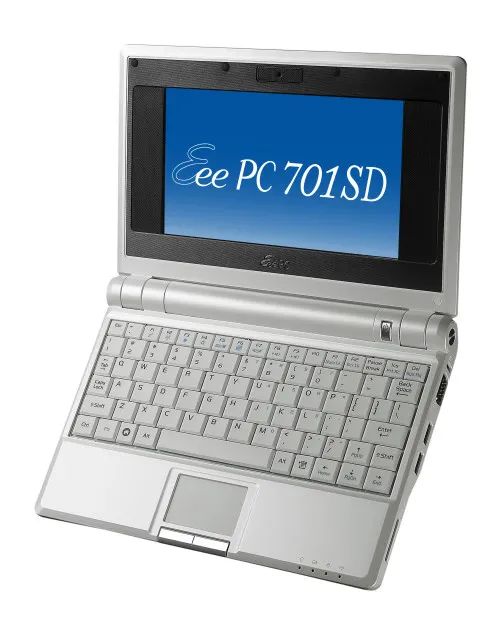
Core Viewpoint - The rise and fall of the ASUS Eee PC, which pioneered the netbook category, illustrates the rapid evolution of consumer electronics and the impact of market dynamics on product lifecycle [1][13][43] Group 1: Product Launch and Market Impact - ASUS became the world's second-largest OEM in 2006, primarily manufacturing computers and servers for Dell and HP [1] - The launch of the ASUS Eee PC in 2007 marked the beginning of the netbook revolution, achieving nearly 40 million units sold at its peak [1][9] - The Eee PC was priced at $299, significantly lower than traditional laptops, which contributed to its rapid adoption [4][9] Group 2: Market Dynamics and Consumer Behavior - The global financial crisis in 2007 amplified the appeal of low-cost netbooks as consumers sought affordable alternatives to traditional laptops [7][9] - The entry of various manufacturers, including Acer and numerous low-cost producers in Shenzhen, further drove down prices and expanded the netbook market [6][9] - Netbooks found a niche in the education sector, particularly in developing countries, where they were seen as a cost-effective solution for providing students with computers [9][12] Group 3: Decline and Technological Evolution - Despite initial success, netbook sales began to decline sharply after 2010, with sales dropping from 39.4 million units in 2010 to just 1.4 million by 2013 [10][13] - The emergence of tablets and smartphones, which offered better performance and portability, contributed to the decline of netbooks [30][36] - The rapid advancement of technology, as described by Moore's Law, led to increased performance in traditional laptops, making them more competitive against netbooks [26][29] Group 4: Legacy and Industry Influence - The netbook phenomenon highlighted consumer demand for lightweight, affordable computing solutions, influencing the design and marketing of future products like ultrabooks and Chromebooks [42][43] - Although netbooks were short-lived, their impact on the industry was significant, prompting manufacturers to explore new market segments and innovate in product design [42][43]

一种新型光刻技术,突破EUV极限
半导体行业观察· 2025-04-23 01:58
Core Viewpoint - Lace Lithography AS is developing a new lithography technology that utilizes atoms to define features, surpassing the resolution limits of extreme ultraviolet (EUV) lithography, potentially extending Moore's Law [1][2]. Group 1: Company Overview - Lace Lithography AS was founded in July 2023 by Bodil Holst and Adria Salvador Palau, with operations currently based in Barcelona, Spain [1]. - The company claims its atomic lithography technology can provide capabilities 15 years ahead of current technologies, with lower costs and energy consumption [1]. Group 2: Technology Details - The traditional EUV systems operate at a wavelength of 13.5nm, while the atomic lithography technology can achieve direct maskless patterning with resolutions even finer than those limited by wavelength in EUV systems [1]. - The technology is expected to support the continued miniaturization of transistors [1]. Group 3: Funding and Projects - Lace Lithography has raised approximately €450,000 in seed funding from various investors, including Runa Capital and the European Innovation Council [2]. - The FabouLACE project, funded by the EU with a budget of €2.5 million, aims to develop helium atom lithography technology and is set to run from December 1, 2023, to November 30, 2026 [2]. - The NanoLACE project, which started in 2019 and ends on December 31, 2024, has received €3.36 million in funding [2].
一种新型光刻技术,突破EUV极限
半导体行业观察· 2025-04-23 01:58
如果您希望可以时常见面,欢迎标星收藏哦~ 来源:内容 编译自 eenewseurope ,谢谢。 据报道,初创公司Lace Lithography AS(挪威卑尔根)正在开发一种光刻技术,该技术使用向表 面发射的原子来定义特征,其分辨率超出了极紫外光刻技术的极限。 Lace Litho 所称的 BEUV 理论上可以实现更精细的特征,支持晶体管的持续小型化并延伸摩尔定 律。 该公司由卑尔根大学首席执行官 Bodil Holst 教授和首席技术官 Adria Salvador Palau 于 2023 年 7 月共同创立,后者在卑尔根大学获得博士学位,但目前在西班牙巴塞罗那运营。 传统的 EUV 系统使用 13.5nm 波长的光,通过一系列反射镜和掩模在晶圆上形成图案。原子光刻 技术能够实现直接无掩模图案化,其分辨率甚至小于受波长限制的 EUV 系统所能达到的分辨率。 该公司在其网站上声称:"通过使用原子代替光,我们为芯片制造商提供了领先当前技术 15 年的 功能,而且成本更低、能耗更低。" https://www.eenewseurope.com/en/lace-lithography-uses-atoms-t ...
这将是未来的芯片?
半导体行业观察· 2025-04-21 00:58
如果您希望可以时常见面,欢迎标星收藏哦~ IEEE IEDM 会议由 IEEE 电子器件学会主办,是全球规模最大、最具影响力的论坛,旨在展 示晶体管及相关微纳电子器件领域的突破性进展。 在第 70 届 IEEE IEDM 会议上,他们以"塑造未来的半导体技术"分享了芯片的未来技术。我 们摘录如下,以飨读者。 先进的逻辑技术 基于纳米片的晶体管以及由纳米片构建的3D互补场效应晶体管 (CFET) 是延续摩尔定律微缩的关 键,因为现有的FinFET架构正在达到其性能极限。纳米片是一种环栅 (GAA) 晶体管架构,其中 硅堆叠的沟道完全被栅极包围。它们比FinFET具有更好的静电控制、相对较高的驱动电流和可变 的宽度。而CFET是高度集成的3D设计,其中n-FET和p-FET纳米片相互堆叠。这些堆叠器件可以 单片构建(在同一晶圆上),也可以顺序构建(在单独的晶圆上构建,然后进行转移和集成)。 堆叠器件本质上使晶体管密度翻倍,而无需增加器件尺寸,从而实现更强大的功能,并提高功率效 率和性能。在 IEDM 2024 上,多篇论文推动了以下领域的最前沿研究: 一、台积电全新业界领先的 2 纳米 CMOS 逻辑平台 台积电 ...


这类芯片,中国实现里程碑式突破
半导体行业观察· 2025-04-21 00:58
如果您希望可以时常见面,欢迎标星收藏哦~ 来源:内容编译自IEEE,谢谢。 中国科学家称,一块微芯片拥有近 6,000 个晶体管,每个晶体管只有三个原子厚,是迄今为止用 二维材料制成的最复杂的微处理器。 新器件采用半导体二硫化钼制成,这种材料由一层钼原子夹在两层硫原子之间构成。科学家们希 望,一旦硅材料无法继续发展,二硫化钼等二维材料能够使摩尔定律得以延续。 上海复旦大学微电子学院教授包文忠表示:"尽管二维材料十多年来一直被广泛推崇,但其当前发 展的真正限制因素并非单一器件的性能,因为许多二维电子设备在实验室水平上已经运行良好。人 们之所以不断质疑二维材料的实用性,是因为缺乏可扩展、可重复且与工业流程兼容的集成技术体 系。" 这款名为RV32-WUJI的新微芯片拥有5931个采用现有CMOS技术制造的二硫化钼晶体管。研究人 员表示,相比之下,此前最大的二维逻辑电路由156个二硫化钼晶体管组成。鲍哲南表示,这些新 发现标志着"二维半导体材料从器件级实验室研究向系统级工程应用的转变,为后硅时代的半导体 技术提供了一种可行的替代方案"。 RV32-WUJI 搭 载 RISC-V 架 构 , 能 够 执 行 标 准 ...
这将是未来的芯片?
半导体行业观察· 2025-04-21 00:58
Core Insights - The IEEE IEDM conference showcased groundbreaking advancements in semiconductor technology, focusing on the future of chips and their applications in AI, mobile, and high-performance computing [1]. Advanced Logic Technologies - The introduction of nanosheet transistors and 3D complementary field-effect transistors (CFET) is crucial for continuing the miniaturization trend of Moore's Law, as current FinFET architectures reach performance limits [3]. - TSMC's upcoming 2nm CMOS logic platform (N2) is set to enhance chip density by over 1.15 times, with a 15% speed increase and a 30% reduction in power consumption compared to the existing 3nm CMOS platform (N3) [4]. - The N2 platform utilizes GAA nanosheet transistors and features the highest density SRAM macro to date, with plans for risk production in 2025 and mass production in late 2025 [4]. - Intel's RibbonFET technology demonstrates the ability to scale down gate lengths to 6nm while maintaining electron mobility, with a focus on achieving low threshold voltages [8][9]. - A fully functional advanced CFET inverter with a gate length of 48nm was demonstrated, marking a significant milestone in CFET technology for future logic applications [14]. Emerging Materials and Devices - High-density aligned carbon nanotube (A-CNT) arrays have shown potential in extending Moore's Law, with a record-setting 100nm gate length MOSFET achieving a saturation current of 2.45mA/μm [22][23]. - Researchers have achieved a record subthreshold slope in WSe2 PMOS devices, highlighting the potential of two-dimensional materials in next-generation electronics [31]. DRAM Innovations - A new 4F2 DRAM design using GAA IGZO vertical channel transistors has been developed, demonstrating significant potential for high-density, low-power applications [33]. - Research on IGZO TFT threshold voltage instability has identified solutions to enhance reliability in future memory technologies [39]. Memory Computing Advances - A 3D integrated chip based on metal-oxide CFET has been developed, significantly reducing area, delay, and energy consumption compared to 2D CIM circuits [48]. - 3D FeNAND arrays have shown a 4,000-fold increase in CIM density, with a computation efficiency 1,000 times higher than 2D arrays [50]. High-Frequency and Power Devices - Intel's GaN MOSHEMT transistors, built on a 300mm GaN-on-TRSOI substrate, exhibit excellent RF performance, crucial for advancing 6G wireless communication [54][56]. - A Ga2O3 JFET has been developed to operate at 250°C, showcasing its potential for high-voltage applications in power electronics [58]. Sensor and Imaging Developments - A multi-modal sensor capable of measuring pressure, gas, and temperature has been developed, achieving high accuracy and sensitivity [65]. - Sony researchers have created a single-chip solution for simultaneous RGB imaging and distance measurement, enhancing mobile device capabilities [68]. Diverse Research Themes - Interest in selector-only memory (SOM) technology is growing, with research focusing on optimizing materials for better performance and reliability [78][79]. - AI-driven simulations are being utilized to model thermal behavior in electronic devices, addressing challenges in temperature management [81][82].