
智能化

Search documents
老陈种蘑菇尝试新科技
Ren Min Ri Bao· 2026-02-17 23:59
Core Insights - The article highlights the challenges and innovations in mushroom farming, particularly focusing on the experiences of a farmer named Chen Guohua, who transitioned from traditional methods to modern technology in mushroom cultivation [1][2] Group 1: Challenges in Traditional Farming - Chen Guohua faced significant difficulties in the early years of mushroom farming, feeling frustrated due to hard work without financial returns [1] - A failed attempt to cultivate a high-value mushroom, the morel, due to adverse weather conditions led to substantial losses, impacting Chen's morale [1] Group 2: Adoption of New Technologies - The local government encouraged farmers to embrace new technologies alongside traditional practices, emphasizing the importance of standardization, industrialization, and intelligence in farming [1] - Chen learned about "smart cabins" during a training session, which automate various aspects of mushroom cultivation, leading him to invest in six units for his farm [1] Group 3: Successful Implementation and Results - After implementing the smart cabin system, Chen observed rapid growth in the mushrooms, with the first harvest yielding high-quality produce that attracted eager buyers [2] - The transition from traditional methods to modern technology has transformed Chen's perception of his role in farming, from feeling like an "old hand" to a "newcomer" embracing innovation [2]
奥迪,只卖10万了
商业洞察· 2026-02-17 09:35
Core Viewpoint - The significant drop in the Audi A3's terminal price below 100,000 yuan reflects a broader crisis in the luxury car market, driven by the rise of electric vehicles and changing consumer preferences [2][5]. Group 1: Price and Sales Trends - The Audi A3's official price was 203,100 yuan in 2023, but it has now fallen to 99,800 yuan in various regions, with some dealers offering "0 down payment + 3 years interest-free" financing options [2][7]. - Audi's sales have been declining since 2020, with projections indicating a drop to 54,700 units in 2024, a significant decrease from over 80,000 units sold annually between 2016 and 2019 [8][10]. - In 2025, Audi's sales in China were 617,500 units, down 5% year-on-year, marking a return to sales levels seen seven to eight years prior [8][12]. Group 2: Market Competition and Consumer Behavior - The decline in Audi A3's price is attributed to competition from electric vehicles like BYD Qin PLUS DM-i and Xpeng MONA, which offer advanced features at similar price points [14][15]. - The traditional brand premium associated with Audi has diminished, as consumers now prioritize technology and features over brand names, leading to a shift in purchasing behavior [16][17]. - The A3's sales increase has come at the expense of its sibling model, the Volkswagen Golf, indicating internal competition within the brand [19]. Group 3: Dealer Challenges and Brand Trust - Over 52% of Audi dealers are operating at a loss, with many closing or switching brands due to unsustainable business conditions [11][22]. - The pressure from the manufacturer to maintain high inventory levels has led to significant financial strain on dealers, further eroding trust in the brand [22][23]. - The collapse of dealer trust poses a more significant challenge than declining sales, as it affects long-term brand loyalty and consumer confidence [24]. Group 4: Strategic Responses and Future Outlook - Audi plans to phase out entry-level fuel vehicles like the A1 and A3 by 2026, focusing on electric vehicle platforms to improve cash flow and adapt to market changes [12][25]. - The introduction of the new Audi A6L, featuring Huawei's advanced driving systems, represents Audi's attempt to regain competitiveness in the smart vehicle market [25][27]. - The launch of a new brand under SAIC Audi aims to combine German engineering with Chinese innovation, reflecting a strategic pivot to meet evolving consumer demands [27]. Group 5: Broader Industry Context - The decline of the Audi A3 is part of a larger trend affecting the luxury car segment, with brands like Mercedes-Benz and BMW also experiencing significant sales drops [33]. - The luxury car market is undergoing structural changes, as electric vehicles eliminate traditional barriers to entry, leading to a reevaluation of brand value and consumer expectations [34][36]. - As product differentiation diminishes, consumers are increasingly focused on value for money rather than brand prestige, indicating a shift in the luxury market landscape [37][38].


掘金锂电园林工具高端市场 劳尼克斯的“突围”范本
Shang Hai Zheng Quan Bao· 2026-02-17 06:44
Core Insights - The global garden tools industry is undergoing a transformation driven by lithium battery technology and smart solutions, with a focus on high-performance applications [1][3] - The market for lawn and garden equipment is projected to grow from $39.7 billion in 2023 to $45.45 billion by 2025, with lithium battery products being the fastest-growing segment [3] - Lonix Technology (Nanjing) Co., Ltd. has successfully entered the high-performance application field with its 60V lithium battery smart garden tools, achieving monthly sales exceeding 10 million yuan since its launch in January 2026 [1][3] Industry Trends - The industry is shifting from traditional fuel tools to electric solutions due to cost reductions in lithium technology and stricter emissions regulations in Europe and the U.S. [3] - The focus has shifted from whether electric tools are usable to their ability to maintain stable power output under high-intensity continuous operation [3] Company Strategy - Lonix has established a research and development team of over 130 members, with approximately 70% dedicated to product research [1] - The company is leveraging its participation in international exhibitions and partnerships, such as with the Central China Television for the 2026 Spring Festival Gala, to enhance brand exposure and market foundation [5][6] - Lonix is adopting a phased strategy for market penetration, starting with online channels and gradually extending to offline systems, with ongoing negotiations with retailers in Europe and North America [5][6] Competitive Landscape - The transition in the power system is reshaping the competitive boundaries of the garden tools industry, with voltage platform capabilities becoming a new technical threshold [8] - Lonix's development path reflects a shift from single product output to building system capabilities, emphasizing the importance of technology platforms, channel layouts, and brand development [8][9]
汽车行业政策落地与新品周期成热点,板块表现分化
Jing Ji Guan Cha Wang· 2026-02-16 21:35
Core Viewpoint - The automotive industry is currently focused on policy implementation and new product cycles, with significant developments expected in 2026, including the listing of Lantu Automotive and the introduction of new models [1] Group 1: Policy Developments - The 2026 vehicle trade-in subsidy details have been released, with an average subsidy reduction of 30% compared to 2025, but the policy rollout is earlier than in previous years [1] - Cities like Shanghai and Jiangxi are offering up to 20,000 yuan in subsidies for individual consumers to stimulate consumption during the Spring Festival [1] Group 2: New Product Launches - Lantu Automotive plans to launch four new models within the year, including the L3-level SUV Lantu Taishan Ultra [1] - New models from AITO and Li Auto are being prepped for the mid-to-high-end market, while BYD's new sub-brand "Linghui" focuses on B-end mobility solutions [1] Group 3: Market Performance - The automotive sector index reported a decline of 0.48% on February 13, with a 5-day cumulative increase of 1.56% [2] - The main funds in the automotive sector saw a net inflow of 181 million yuan on February 11, although individual stock performances varied significantly [2] Group 4: Institutional Insights - Analysts suggest that the automotive industry's driving force is shifting towards product innovation, with expectations of a rapid sales rebound post-Spring Festival [3] - The focus on smart technology and globalization presents structural opportunities, particularly for leading manufacturers benefiting from premium pricing [3] Group 5: Financial Analysis - January production and sales data reveal a significant decline of 25.7% and 28.3% month-on-month, with domestic sales of new energy passenger vehicles down 22.9% year-on-year, while exports increased by 100% [4] - Mercedes-Benz reported a revenue forecast of 132.2 billion euros for 2025, indicating resilience in the high-end market [4]

《工程机械》杂志社恭祝行业同仁新春大吉 马年大吉
工程机械杂志· 2026-02-16 12:04
Core Viewpoint - The engineering machinery industry is transitioning from scale expansion to value leadership, with a focus on intelligence, greening, and internationalization as the three core themes for transformation, essential for high-quality development [5]. Industry Highlights - The engineering machinery industry may be on the path to recovery, with improved performance indicators [6]. - The industry is set to enter the "National IV" era starting December 1 [6]. - Domestic sales have declined for 13 consecutive months, while exports surged over 70% this year, raising questions about the future of the excavator industry [6]. - February's construction rate showed improvement, leading to optimistic expectations for the engineering machinery sector [6]. - Caterpillar is nearing a cyclical turning point, with its rating downgraded to "neutral" [6]. Market Data - Sales data for excavators and loaders is being tracked for 2025, with monthly breakdowns available [6][7]. - Average working hours for major products are also being monitored for 2025 [8]. Downstream Demand - The average working hours for major products are being recorded monthly for 2025 [8]. - The CCTV excavator index is being tracked for 2025, with monthly data available [8]. - Komatsu's working hours are also being monitored for 2025 [8]. Market Dynamics - February's construction rate improvement has led to a "warm" outlook for the engineering machinery industry [8]. - January's strong credit performance has reinforced expectations for a recovery in domestic demand, suggesting a potential thaw in the engineering machinery sector [8]. Expert Insights - Industry leaders are discussing the current development situation and key tasks for the engineering machinery sector [9]. - Support for the electrification of engineering machinery and commercial vehicles is being advocated by industry representatives [9].

唐山医生造人工关节,干出70亿骨科龙头
2 1 Shi Ji Jing Ji Bao Dao· 2026-02-16 08:39
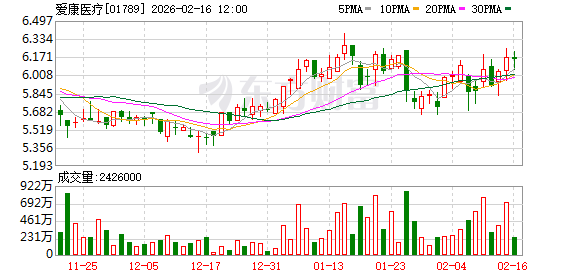
Core Viewpoint - The orthopedic doctor Li Zhijiang has announced significant progress in his company, Aikang Medical, with multiple successful bids for advanced orthopedic surgical navigation systems in top-tier hospitals across China, indicating a strong market presence and growth potential [2][3]. Group 1: Company Developments - Aikang Medical has secured six new contracts since December 2024, including notable institutions like Zhejiang University First Affiliated Hospital and Peking University Third Hospital, showcasing its expanding footprint in the orthopedic sector [2][3]. - The company’s market capitalization is approaching HKD 7 billion, with an average of one Aikang prosthetic being implanted every two minutes [3]. - Aikang Medical's revenue for the first half of 2025 reached RMB 694.2 million, reflecting a 5.6% increase year-on-year, while net profit rose by 15.3% to RMB 160.6 million [8][9]. Group 2: Pricing and Market Strategy - The company faced significant pricing pressures due to centralized procurement policies, with initial price drops of 82% in the first round and an additional 6% in the second round [5][6]. - Despite these challenges, Aikang Medical has managed to increase its market share significantly, benefiting from its local service advantages and entering numerous top-tier hospitals [6][19]. - The company has successfully transitioned from traditional prosthetics to advanced digital and intelligent solutions, including a digital orthopedic platform and a smart surgical robot system [20][22]. Group 3: Technological Innovations - Aikang Medical has pioneered the use of 3D printing technology in orthopedic implants, significantly improving the integration of prosthetics with human bone and reducing risks of loosening and detachment [14][15]. - The introduction of a digital orthopedic solution covers the entire process from 3D modeling to customized prosthetics, enhancing surgical planning and execution [22]. - The company has also developed the first orthopedic medical-engineering interactive platform in China, which provides comprehensive pre-surgical planning and real-time monitoring during procedures [20][22]. Group 4: International Expansion - Aikang Medical is actively expanding its international presence, having acquired the UK orthopedic brand JRI in 2018 and establishing a dual-brand strategy to penetrate both developed and emerging markets [24]. - In the first half of 2025, the company reported overseas revenue of RMB 128 million, with ongoing registration processes in multiple countries [24].
趋势研判!2026年中国工业污水处理行业政策、产业链全景、行业现状及未来发展趋势分析:需求升级与模式革新并行,资源化、智能化成转型主线[图]
Chan Ye Xin Xi Wang· 2026-02-16 01:07
Core Viewpoint - The industrial wastewater treatment industry in China is transitioning towards quality improvement and efficiency enhancement, driven by stringent environmental regulations and the need for resource recycling and reuse [1][5][10]. Group 1: Industry Overview - Industrial wastewater treatment involves removing pollutants from industrial wastewater through various processes to meet discharge standards and promote water resource recycling [1][2]. - The industry is characterized by a stable industrial water usage of approximately 97 billion cubic meters, with a focus on efficiency and quality [6][8]. - The market for industrial wastewater treatment is expanding, with a projected market size of 149.3 billion yuan by 2024, representing 22.29% of the overall wastewater treatment industry [10][12]. Group 2: Policy Analysis - Recent policies in China aim to enhance wastewater treatment efficiency, promote resource recycling, and support technological innovation in the industry [5][6]. - Key policies include initiatives for reducing pollution and carbon emissions, promoting the construction of green benchmark plants, and enhancing regulatory oversight [5][6]. Group 3: Industry Chain - The industrial wastewater treatment industry chain includes upstream raw materials and equipment supply, midstream facility construction and operation, and downstream resource utilization and discharge management [6][8]. - The industry is witnessing a shift towards integrated solutions that combine equipment, engineering, and operation to enhance competitiveness [6][8]. Group 4: Current Development Status - In 2024, there are 83,367 industrial enterprises involved in wastewater discharge, with 82,130 sets of treatment facilities in operation, indicating a stable operational environment [8][9]. - The distribution of wastewater treatment facilities is concentrated in regions with high industrial activity, such as Zhejiang, Jiangsu, and Guangdong [8][9]. Group 5: Future Development Trends - The industry is expected to focus on resource recovery, smart technology integration, and low-carbon development, moving away from traditional compliance towards value creation [10][11][12]. - Technological advancements in biological treatment, membrane separation, and AI integration are anticipated to drive efficiency and reduce operational costs [11][12]. - A collaborative ecosystem is emerging, with increased reliance on third-party management and regulatory frameworks to guide industry growth [12].

向“高”攀 向“智”转 向“绿”行——上海化工产业焕新记
Xin Hua She· 2026-02-15 03:55
Core Insights - The traditional chemical industry in Shanghai is undergoing a transformation towards high-end, intelligent, and green production, resulting in higher product value, lower energy consumption, and more efficient production processes [1] Group 1: High-End Development - Shanghai Petrochemical has become the first company in China to master the industrialization technology of 48K large tow carbon fiber, with production lines established in 2022 [2] - The carbon fiber produced is being utilized in large wind turbine blades and new energy storage, with sales expected to double by 2025 [2] - Shanghai Huayi New Materials has developed a new type of acrylic acid catalyst, reducing production costs by over 30% [2] - The Shanghai Chemical Industry Zone has attracted approximately 13 billion yuan in investments, focusing on semiconductor photoresists and electronic chemicals [2] Group 2: Intelligent Transformation - The integration of digital technologies such as artificial intelligence and industrial internet is shifting chemical production from experience-driven to data-driven processes [3][4] - Companies are now able to monitor equipment continuously, enhancing safety and stability in production [4] - For instance, Covestro has optimized production processes using AI, resulting in a 5% reduction in production time, thereby increasing capacity [5] Group 3: Green Initiatives - A 100,000-ton green methanol project is set to be operational by the end of 2025, utilizing local agricultural waste as raw materials [6] - The project converts waste from livestock into biogas, which is then purified and used in methanol production, turning environmental challenges into valuable resources [6] - Covestro's integrated production base in Shanghai is expected to contribute 16% of the chemical zone's output while consuming only 10% of its total energy by 2025, with a 70% reduction in CO2 emissions per unit product compared to 2009 [7]
因地制宜发展新质生产力|向“高”攀 向“智”转 向“绿”行——上海化工产业焕新记
Xin Hua She· 2026-02-15 03:20
Core Viewpoint - The chemical industry in Shanghai is undergoing a transformation towards high-end, intelligent, and green production, with significant advancements in product quality, energy efficiency, and production processes [1][3]. Group 1: High-End Transformation - Shanghai Petrochemical has become the first company in China to master the industrialization technology of 48K large tow carbon fiber, with the first domestic production line established in 2022 [3]. - The carbon fiber produced is being utilized in large wind turbine blades and new energy storage, with a goal to double sales by 2025 [3]. - Shanghai Huayi New Materials has developed a new type of acrylic acid catalyst, reducing production costs by over 30% through innovation [3]. Group 2: Intelligent Transformation - The integration of digital technologies such as artificial intelligence and industrial internet is shifting chemical production from experience-driven to data-driven processes [3]. - Companies like Covestro have optimized production processes using AI, resulting in a 5% reduction in production time and increased capacity [5]. - The use of smart inspection tools has enhanced safety and efficiency in chemical production, allowing for real-time monitoring and early intervention [3]. Group 3: Green Transformation - A 100,000-ton green methanol project is set to be operational by the end of 2025, utilizing local agricultural waste as raw materials [5]. - Covestro's integrated production base is expected to contribute 16% of the chemical district's output while consuming less than 10% of its total energy [5]. - The carbon emissions per unit of product at Covestro's facility have decreased by 70% compared to 2009 levels, showcasing significant advancements in green production [5].
研判2026!中国水质检测仪器行业发展背景、产销量、市场规模、竞争格局及未来展望:水质安全需求提升带动检测仪器市场,国产替代进程不断加快[图]
Chan Ye Xin Xi Wang· 2026-02-15 00:27
Core Viewpoint - The water quality testing instrument industry is experiencing steady growth driven by increasing public concern for water safety and stricter environmental regulations, with the market size projected to grow from 1.83 billion yuan in 2017 to 5.22 billion yuan by 2025, representing a compound annual growth rate (CAGR) of 14.03% [1][9]. Industry Overview - Water quality testing refers to the process of determining the types and concentrations of pollutants in water, evaluating water quality status [3]. - Key water quality indicators include comprehensive indicators (temperature, color, turbidity, pH, conductivity, suspended solids, dissolved oxygen, chemical oxygen demand, and biochemical oxygen demand) and toxic substances (phenols, cyanides, arsenic, lead, chromium, cadmium, mercury, and organic pesticides) [3]. - Water quality testing instruments can be categorized by function (single-parameter and multi-parameter testers), testing items (pH meters, total phosphorus testers, etc.), and usage environment (laboratory, portable, simple, and online testers) [4][3]. Market Demand and Growth - The market demand for water quality testing instruments is steadily increasing due to heightened public awareness and regulatory pressures [1][9]. - The industry is expected to play a crucial role in dynamic water quality monitoring, pollution warning, and comprehensive management, driven by advancements in smart, portable, and multi-parameter integrated technologies [1][9]. Industry Development Background - Water quality safety is a significant concern, with ongoing improvements in surface and groundwater quality in China [4][5]. - In 2024, 90.4% of monitored surface water quality sections were rated as good (Class I-III), indicating progress in water environment governance [5]. - Continuous, precise, and efficient monitoring of water quality is essential for ensuring environmental safety and supporting scientific decision-making [5]. Industry Chain - The upstream of the water quality testing instrument industry includes raw materials and components such as sensors, probes, circuit boards, optical components, and consumables [5]. - The midstream involves the production and manufacturing of water quality testing instruments, while the downstream encompasses sales channels and application fields, including environmental water, wastewater, and water conservancy sectors [5][6]. Competitive Landscape - The industry features a diverse competitive landscape with international leaders (e.g., Thermo Fisher, Hach, Siemens, ABB) dominating the high-end market, while domestic companies (e.g., Xuedilong, Xianhe Environmental Protection, and others) focus on mid-range markets and specialized applications [9][10]. - Domestic firms leverage their understanding of local markets and flexible service models to establish competitive advantages in mid-tier markets [10]. Key Companies - Xianhe Environmental Protection Technology Co., Ltd. has developed a comprehensive service provider model in environmental monitoring, with a reported revenue of 138 million yuan in the first half of 2025, reflecting a 0.73% year-on-year growth [10]. - Lihua Technology Co., Ltd. specializes in environmental monitoring systems, reporting a revenue of 558 million yuan in the first three quarters of 2025, marking a 5.15% increase [12]. Industry Trends - The industry is moving towards multi-parameter integration, real-time monitoring, and intelligent analysis, with future instruments expected to combine various detection technologies [13]. - There is a focus on miniaturization and rapid on-site detection capabilities, enabling water quality testing to expand into distributed scenarios such as river inspections and household water safety [14]. - Companies are transitioning from equipment suppliers to comprehensive solution providers, offering monitoring systems and data services, enhancing the value derived from long-term monitoring data [14].


