碳中和

Search documents
香港特区政府更新《香港电动车普及化路线图》
智通财经网· 2026-02-12 12:54
Core Viewpoint - The Hong Kong government has updated its Electric Vehicle (EV) Popularization Roadmap to enhance the adoption of electric vehicles, aiming for zero vehicle emissions by 2050 and the cessation of new registrations for fuel-powered vehicles by 2035 [1][2]. Group 1: Policy Promotion - The Hong Kong Environmental Bureau will coordinate efforts to establish a robust EV charging network, support the adoption of electric commercial vehicles, and fund research and development of related technologies with nearly HKD 200 million allocated so far [2]. - A collaboration between the National Energy Administration and the Hong Kong Environmental Bureau aims to address the differences in EV charging standards between mainland China and Hong Kong, with a pilot plan for the new generation charging technology ChaoJi expected to be completed by 2027 [2]. Group 2: Electric Private Vehicles - The number of electric private vehicles in Hong Kong has quadrupled over four years to over 140,000, with projections suggesting it could exceed 290,000 by 2030 and approach 500,000 by 2035 [3]. - The government will focus on enhancing charging infrastructure, maintenance training, and battery recycling to support the transition to electric private vehicles, maintaining its goal to stop new registrations of fuel-powered vehicles by 2035 [3]. Group 3: Electric Commercial Vehicles - The development of electric commercial vehicles is still in its early stages, with the government planning to gradually promote those that meet the conditions for large-scale application [4]. Group 4: Charging Network - Since 2011, Hong Kong has been promoting the installation of charging infrastructure in new parking facilities, with the number of public charging stations increasing from approximately 4,700 in 2021 to about 16,500 currently, supporting around 100,000 electric vehicles [6]. - The government aims to establish at least 4,000 fast charging stations by 2030, capable of supporting around 200,000 electric vehicles, and expects to reach about 10,000 fast charging stations by 2035 [6]. Group 5: Supporting Measures - A large battery recycling facility is under construction in the Environmental Park, expected to be operational by mid-2026, which will convert retired batteries into regenerated black powder for supply to mainland and surrounding regions [7]. - The government is updating the technical guidelines for EV charging facilities, aiming for completion by the end of the year, and is collaborating with universities to enhance training for EV technology and maintenance, with around 1,100 technicians having completed relevant training courses as of last December [7].
氢能:市场洞察:从“能源补充”到“战略主角” 绿氢能否成为能源版图的“新风口”?
Tou Bao Yan Jiu Yuan· 2026-02-12 12:24
Investment Rating - The report does not explicitly state an investment rating for the hydrogen energy industry Core Insights - Hydrogen energy is categorized into gray hydrogen, blue hydrogen, and green hydrogen, with green hydrogen being the most ideal form of hydrogen utilization [2] - The "14th Five-Year Plan" positions hydrogen energy alongside quantum technology, biomanufacturing, and nuclear fusion, indicating its transition from a supporting role in energy transformation to a mainstay in industrial economics [9] - As of 2024, China's hydrogen production capacity exceeds 50 million tons per year, with fossil fuel-based hydrogen still dominating the supply [14] - The average production and consumption prices of hydrogen in China are projected to decline, with significant price differences between demonstration and non-demonstration city clusters narrowing [15] Summary by Sections Hydrogen Energy Classification - Hydrogen energy is classified into gray, blue, and green hydrogen, with gray hydrogen produced from fossil fuels, blue hydrogen incorporating carbon capture, and green hydrogen generated from renewable energy sources [2][3] Policy Developments - Over 60 countries have announced hydrogen development strategies, with significant investments and policy frameworks being established to support hydrogen production and trade [10][11] - China's "15th Five-Year Plan" emphasizes hydrogen energy as a strategic resource for future energy security and technological competition [9] Market Dynamics - China's hydrogen production capacity and output are the highest globally, with fossil fuel-based hydrogen still accounting for a significant portion of the supply [14] - The average hydrogen prices in China are expected to decrease, with production prices falling below 30 yuan per kilogram and consumption prices below 52 yuan per kilogram by 2024 [15] Industry Chain Overview - The hydrogen industry chain includes hydrogen production, storage and transportation, refueling, and application, with fossil fuel-based hydrogen currently being the mainstream production method [21][22] - The number of hydrogen refueling stations in China is the highest globally, with over 540 stations established [22] Green Hydrogen Potential - Green hydrogen is gaining traction due to supportive policies, technological advancements, and market expansion, positioning it as a key player in the future energy landscape [26] - The cost of green hydrogen production is expected to decrease significantly, with projections indicating a price of around 10 yuan per kilogram by 2030 [29]
亚洲开发银行原首席气候变化专家吕学都:减碳可以给企业带来正资产
Xin Lang Cai Jing· 2026-02-12 09:46
Core Viewpoint - Achieving carbon peak by 2030 is both a target and a driving force for enterprises, with the understanding that exceeding carbon emission limits will lead to negative assets while reducing emissions will create positive assets [3][15]. Group 1: Global Climate Governance - Current global climate governance faces challenges due to geopolitical conflicts, which may divert resources away from climate initiatives, but the overall trend towards green and low-carbon development remains unchanged [3][15]. - Developing countries are becoming significant drivers in global climate governance, transitioning from passive participants to active contributors in emission reduction due to the decreasing costs of carbon reduction technologies [4][16]. Group 2: China's Low-Carbon Development Goals - China has set new Nationally Determined Contributions (NDC) targets for 2035, aiming for a 7%-10% reduction in greenhouse gas emissions from peak levels and increasing non-fossil energy consumption to over 30% of total energy consumption [5][17]. - The next five years will see China's carbon emissions stabilize at current levels, with a deep transformation of the energy structure primarily through renewable energy development [5][17]. Group 3: Challenges in Low-Carbon Transition - The biggest challenge in promoting low-carbon development is enhancing societal awareness of the necessity and inevitability of green and low-carbon development, requiring a fundamental shift in established habits and practices [6][18]. Group 4: Corporate Strategies for Carbon Emission Management - Companies should view carbon emissions strategically, recognizing that carbon emissions will eventually be accounted for, and exceeding limits will result in negative assets while reductions will yield positive assets [7][19]. - Enterprises are encouraged to establish new carbon neutrality strategic goals aligned with national targets, such as achieving carbon neutrality by 2050, and to develop phased targets and action plans [9][21]. Group 5: Collaborative Efforts in Carbon Reduction - Companies should collaborate with upstream and downstream partners to promote carbon reduction across the entire supply chain, establishing low-carbon standards and requirements [10][22]. - Tencent serves as a case study, having set a goal for carbon neutrality across its entire supply chain by 2030 and implementing various innovative solutions to support low-carbon transitions [11][22].


碳中和领域动态跟踪(一百七十三):电改4号文:全国统一电力市场顶层文件
EBSCN· 2026-02-12 05:51
Investment Rating - The report maintains a "Buy" rating for the public utility sector, indicating an expected investment return exceeding the market benchmark index by more than 15% over the next 6-12 months [4]. Core Insights - The electricity market reform is progressing with the implementation of the "4th Document," which aims to establish a unified national electricity market by 2030, with a market share of approximately 70% for market-based electricity [1]. - The transition of thermal power from reliance on long-term contracts to a more market-oriented approach is highlighted, with a focus on mid-to-long-term and spot markets, enhancing the commercial viability of various power sources [2]. - The report emphasizes the importance of green electricity (green power) and its environmental premium, which is expected to stabilize profitability for green power operators as new application scenarios continue to emerge [2][3]. Summary by Sections Electricity Market Reform - The "4th Document" outlines a roadmap for a unified electricity market, aiming for completion by 2035, with a focus on optimizing resource allocation and enhancing market functions [1]. - Key features include the establishment of a spot market, mid-to-long-term contracts, and auxiliary services to support the electricity market [1]. Transition of Thermal Power - Thermal power is shifting towards a market-driven model, with an emphasis on optimizing commercial models and enhancing the value of base-load power [2]. - The report notes that the national policy framework is expected to resolve issues related to cross-province trading capacity subsidies for thermal power [2]. Green Electricity and Environmental Premium - The report identifies the growing recognition of the environmental premium associated with green electricity, which is crucial for enhancing green power consumption standards [2]. - Green certificates are highlighted as a significant revenue stream for green power operators, contributing to the overall stability of green electricity profitability [2][3]. Investment Recommendations - The report suggests that the interplay between thermal and green electricity will enhance market structure, with a focus on optimizing business models and expanding application scenarios for green electricity [3]. - Specific companies to watch include Yangtze Power, Huaneng International, and Guodian Power for thermal power, and Electric Investment Green Energy and Longyuan Power for green electricity [3].
商品板块轮动 现在到哪个阶段了?
Qi Huo Ri Bao· 2026-02-12 00:20
Core Insights - The commodity market is transitioning from a "broad increase" to "structural differentiation," with funds shifting towards undervalued sectors with solid fundamentals [1][3] - The historical divergence between "green metals" (copper, lithium, nickel) and traditional energy (crude oil, coal) has become a defining feature of the current market [3][4] - The current commodity cycle is characterized by a unique combination of financial and strategic attributes, driven by structural narratives rather than traditional economic growth [7][12] Market Dynamics - The supply-demand relationship for green metals is tight due to rigid supply and explosive demand, while traditional energy faces relaxed supply and slowing demand [3][4] - The global supply chain is shifting from "efficiency-first" globalization to "security-first" regionalization, impacting commodity pricing and availability [4][20] - Recent price movements, such as a 30% increase in LME copper prices in January 2026, reflect the new characteristics of the market [4] Historical Context - The current commodity cycle shows similarities to the 1970s, with a focus on the restructuring of the global monetary system and ongoing supply chain disruptions [11][12] - The previous commodity supercycle was driven by China's industrialization and urbanization, while the current cycle is influenced by AI infrastructure and green transitions [7][12] Investment Opportunities - Investors are advised to focus on the fundamental differences among commodities to identify structural opportunities [4][13] - Key commodities to watch include zinc, wheat, iron ore, and platinum, which are expected to perform well in the current market environment [15][24] - The chemical sector is anticipated to see growth due to domestic policy changes and supply optimization, with specific attention to products with strong export expectations [14] Future Outlook - The commodity market is expected to continue exhibiting significant differentiation, with traditional rotation patterns being disrupted [13][24] - The focus on strategic resources like gold, silver, copper, and tin is likely to lead to a scenario where these commodities experience upward price pressure while others may lag [24]
商品板块轮动,现在到哪个阶段了?
Qi Huo Ri Bao· 2026-02-12 00:20
Group 1 - The current commodity market is transitioning from a "general rise" to "structural differentiation," with funds shifting towards undervalued sectors with solid fundamentals [1][2] - Precious metals are leading the market, followed by industrial metals, while energy and chemical sectors are starting to rise from low levels [1][2] - The historical divergence between "green metals" (copper, lithium, nickel) and traditional energy sources (crude oil, coal) is becoming evident, with the former experiencing tight supply and explosive demand, while the latter faces relaxed supply and slowing demand [2][3] Group 2 - The macroeconomic environment is more akin to a recovery phase rather than overheating, driven by demand growth from the AI technology revolution rather than traditional economic overheating [3] - The supply chain is shifting from a focus on efficiency to a focus on security, with resource country policies becoming key price drivers [3][4] - The recent price fluctuations in gold and silver are seen as corrections rather than reversals of long-term trends, with the long-term upward logic for these metals remaining intact [3][4] Group 3 - The current commodity cycle is characterized by a paradigm shift, with the strong performance of precious and strategic metals driven by structural narratives rather than robust global economic growth [5][6] - The traditional sequence of commodity price movements is being disrupted, with the new sequence being gold → new energy metals (copper/silver/lithium) → electric infrastructure (aluminum/zinc) → strategic minor metals (tungsten/tin/cobalt) [10][11] - The market is witnessing significant differentiation, with precious and non-ferrous metals showing strong performance while traditional economic growth-related sectors remain weak [10][11] Group 4 - The current commodity market is in a critical transition phase, similar to the 1970s, but with new variables such as energy transition and weakening dollar credit [9][10] - The price resilience of commodities is stronger, but the volatility is also more extreme due to the combination of historical inflation and new demand drivers like AI and green transition [9][10] - Investors are advised to focus on understanding the new market dynamics and structural changes rather than relying on historical patterns [10][11]
双碳-政策专家电话会
2026-02-11 15:40
Summary of Key Points from the Conference Call on Carbon Neutrality Policies Industry Overview - The conference focused on China's carbon neutrality policies, particularly the chemical and petrochemical industries, and their implications during the 14th Five-Year Plan (2021-2025) period [1][2]. Core Points and Arguments 1. **Carbon Peak and Neutrality Goals**: China aims to peak carbon emissions around 2028 and achieve a 7%-10% reduction in emissions by 2035 after reaching the peak. The long-term goal is carbon neutrality by 2060 [2][10]. 2. **Strict Control Measures**: The chemical and petrochemical industries will face stringent controls, including local carbon budget assessments, inclusion in carbon markets, and enhanced carbon management practices [1][2]. 3. **New Mechanisms for Energy Consumption Control**: A dual control mechanism for energy consumption will be implemented, focusing on total volume control rather than just intensity, with strict evaluations at the local government level [6][5]. 4. **Expansion of Carbon Market**: By 2027, eight high-energy-consuming industries will be included in the national carbon market, with a combination of free and paid quota distribution methods to enhance emission reductions [1][9]. 5. **Challenges from Climate Change**: The chemical industry faces challenges from climate change and extreme weather, necessitating a shift from coal to renewable resources and the adoption of technologies like Carbon Capture, Utilization, and Storage (CCUS) [1][10]. 6. **Carbon Market Development**: The national carbon market has been steadily advancing since its establishment in 2021, with plans to tighten quota issuance requirements starting in 2027 [1][11]. 7. **Support for Enterprises**: The government will provide multi-dimensional support for enterprises to reduce emissions, including financial subsidies, green loans, and trading profits from carbon credits [25][26][27]. Additional Important Content 1. **New Project Approval**: New capacity additions require approval from the National Development and Reform Commission (NDRC), ensuring that total emissions do not exceed provincial limits [3][14]. 2. **Carbon Footprint Accounting**: A carbon footprint accounting system will be established for products to comply with international standards, such as the Carbon Border Adjustment Mechanism (CBAM) [5][10]. 3. **Monitoring and Data Collection**: Real-time monitoring of carbon emissions data is being improved, with expectations for more accurate data collection by 2027 [23][29]. 4. **Market Mechanisms for Emission Reduction**: The government will implement market mechanisms to encourage emission reductions, including voluntary reduction projects and the ability for non-regulated enterprises to participate in the carbon market [8][9]. 5. **Long-term Industry Transition**: The chemical industry, heavily reliant on coal, is expected to gradually reduce its coal usage from over 56% to lower levels, with a focus on sustainable development through carbon cost integration [19][20]. This summary encapsulates the critical insights and implications of the conference call regarding China's carbon neutrality policies and their impact on the chemical and petrochemical industries.
“双碳”政策专家电话会
2026-02-11 15:40
Summary of Conference Call on Carbon Neutrality and Chemical Industry Industry Overview - The conference focused on the chemical industry in the context of China's dual carbon goals, specifically the 14th Five-Year Plan (14th FYP) and the transition towards carbon neutrality by 2060 [1][2]. Key Points and Arguments 1. **Carbon Peak and Neutrality Goals**: - China aims to reach carbon peak by 2030 and achieve carbon neutrality by 2060, with a specific target of reducing total carbon emissions by 7% to 10% after reaching the peak [2][4]. - The transition from intensity-based targets to total emission reduction is a significant shift in policy [4][6]. 2. **Policy Implementation**: - The 14th FYP emphasizes a comprehensive green transformation across all industries, moving from energy consumption control to carbon emission control [5][6]. - A carbon emission budget mechanism will be established at provincial and municipal levels, with specific targets allocated to each region [6][7]. 3. **Inclusion of Industries in Carbon Market**: - Currently, eight major industries, including power, cement, aluminum, and steel, are included in the carbon market, which accounts for 65% of national carbon emissions [7][8]. - By 2027, additional sectors such as petrochemicals, chemicals, paper, and construction materials will be integrated into the carbon market [7][8]. 4. **Carbon Management and Monitoring**: - Companies will be required to incorporate carbon management into their operational frameworks, with carbon emissions data becoming a prerequisite for project approvals [8][9]. - A product carbon footprint database will be established to track and certify carbon emissions associated with products [9][10]. 5. **Development of Zero-Carbon Facilities**: - The government plans to establish 100 national-level zero-carbon parks by 2030, with ongoing efforts to create zero-carbon factories in high-emission industries [9][10]. 6. **Market Mechanisms and Cost Implications**: - The introduction of paid carbon allowances is anticipated, with a gradual shift from free allocation to auction-based distribution [11][12]. - The carbon market will also facilitate voluntary emission reduction projects, allowing non-regulated companies to participate [12][13]. 7. **Impact on Chemical Industry**: - The chemical industry faces significant pressure due to its reliance on coal, which constitutes over 40% of its emissions [16][17]. - The projected carbon emissions from the chemical sector are expected to increase slightly, posing challenges for compliance with future carbon reduction targets [16][17]. 8. **Technological Innovations**: - The industry is encouraged to adopt renewable resources and improve production processes to reduce carbon emissions, including the use of Carbon Capture, Utilization, and Storage (CCUS) technologies [17][18]. Additional Important Content - The transition to a carbon-neutral economy will require a comprehensive understanding of the carbon footprint across various production processes, particularly in the chemical sector [17][18]. - The government is expected to monitor and adjust carbon emission allowances based on real-time data, although the current monitoring system is still under development [45][46]. - The dual carbon goals will necessitate a balance between maintaining industrial competitiveness and achieving environmental sustainability, particularly in coal-dependent sectors [38][39]. This summary encapsulates the critical discussions and insights from the conference call regarding the implications of China's carbon neutrality goals on the chemical industry and related sectors.
粤电力A(000539.SZ):新能源方面未来将继续把握“碳达峰”、“碳中和”目标下加快能源转型的发展大势
Ge Long Hui· 2026-02-11 14:25
Core Viewpoint - The company is focusing on accelerating energy transition in line with the "carbon peak" and "carbon neutrality" goals, particularly emphasizing offshore wind power projects [1] Group 1: Company Development Plans - The company is currently drafting its 14th Five-Year Plan, which includes a strong emphasis on renewable energy development [1] - Future projects will prioritize offshore wind power among other renewable energy initiatives [1] Group 2: Industry Trends - The company aims to optimize its power generation structure and promote a clean and low-carbon transition in response to industry trends [1]

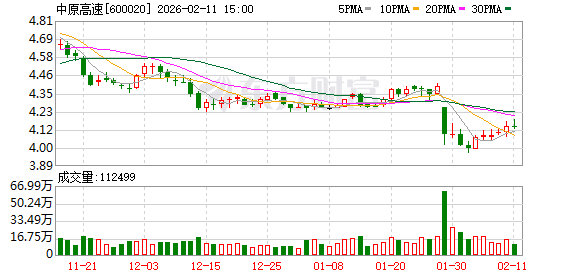
中原高速:公司在聚焦高速公路主业的基础上围绕产业链上下游布局新兴产业
Zheng Quan Ri Bao· 2026-02-11 12:39
Group 1 - The company is focusing on its core business of expressways while also expanding into emerging industries along the industrial chain [2] - The company has established a smart technology innovation company and is participating in investments in new energy, low-altitude economy, and carbon neutrality funds [2]