
量化宽松

Search documents
突发!泰国空袭柬埔寨!俄罗斯发动大规模袭击!美联储,重磅消息
Qi Huo Ri Bao· 2025-12-13 23:55
早上好,先来关注下地缘局势和特朗普的最新表态。 泰国军队称空袭柬埔寨两处军事目标 据央视新闻消息,泰国陆军第一军区13日在社交媒体发文说,当地时间13日16时09分,该军区陆军部队 联合空军对柬方两处军事目标实施空袭,成功摧毁一处弹药库和一处防空通信系统。 泰国海军发言人13日表示,海军舰队于当天凌晨在泰国湾开展军事行动,旨在削弱并遏制柬方在戈公省 一带的军事能力,保障泰国湾沿岸民众的生命与财产安全。 另据泰国国防部发言人及卫生部官员13日在有关泰柬边境局势的新闻发布会上通报,此轮泰柬冲突已造 成15名泰国士兵死亡、超过270名士兵受伤。截至当天上午,7名平民死亡,民众转移超26万人。 此外,当地时间12月13日下午,泰国总理阿努廷回应了马来西亚总理安瓦尔关于13日22时泰柬边境停火 的说法。 阿努廷表示,目前尚未收到相关消息,现在各种信息传播很多,建议以泰国军方发布的正式声明为准。 阿努廷还表示,目前尚未开始任何停火谈判,也还未到那个阶段。 此前,美国总统特朗普在社交媒体平台"真实社交"上表示,他当天早上分别与泰国总理阿努廷和柬埔寨 首相洪玛奈通话,讨论两国边境冲突的最新情况。特朗普称,两国领导人已同意从当 ...
别光盯着降息!美联储“悄悄放水”背后,普通人如何抓住明年投资主线?
Sou Hu Cai Jing· 2025-12-12 10:40
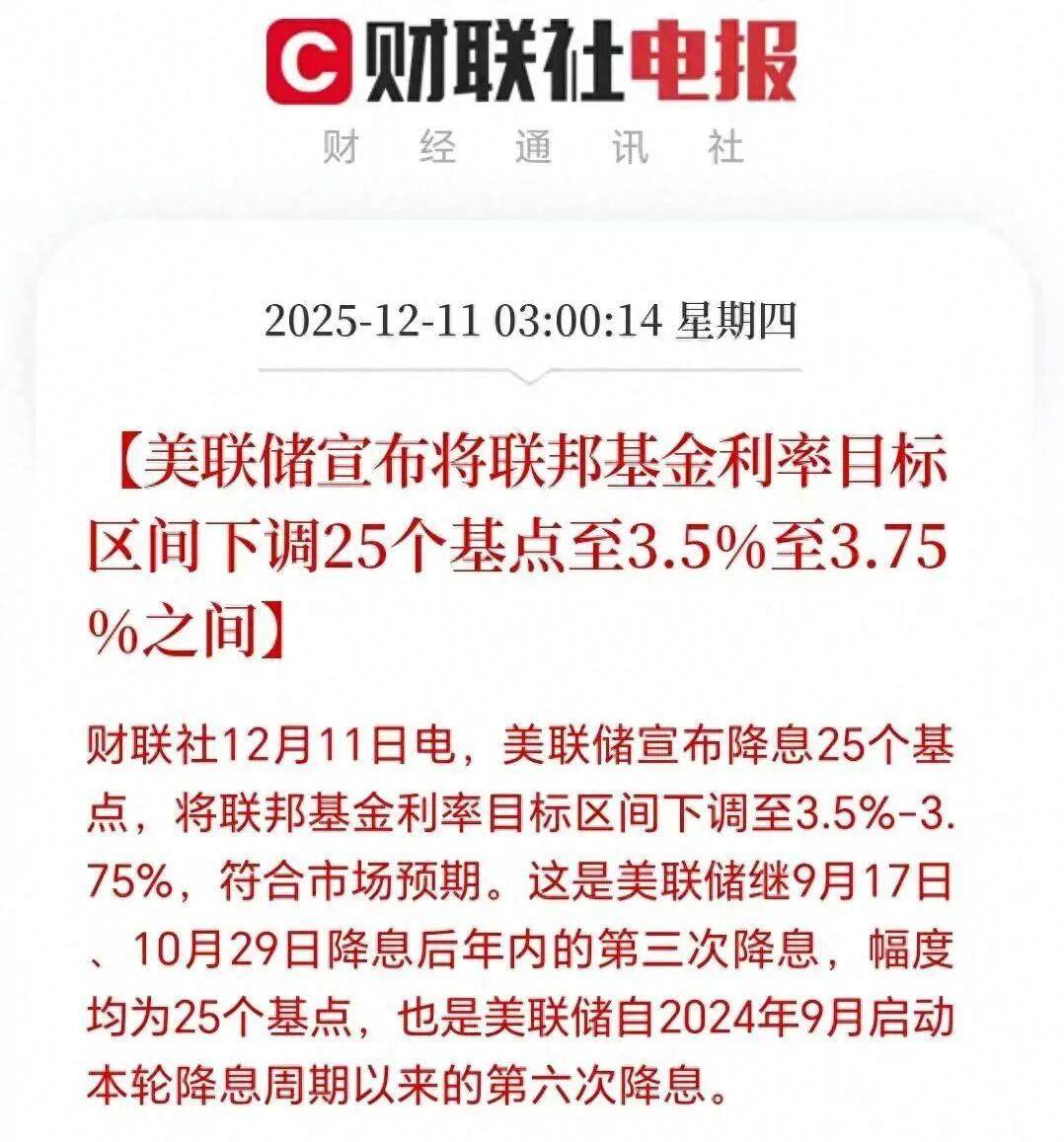
最近朋友圈又被美联储刷屏了。降息25个基点?这事儿市场早就消化得差不多了,真没啥意外。但有意思的是,几乎同一时间,美联储宣布要从12月13日 起,每月掏400亿美元买短期国债——也就是市场常说的"扩表"。虽然鲍威尔一再强调这只是"技术性操作",不是为了刺激经济,但明眼人都知道,水龙 头拧开的幅度,哪怕只是一点点,也会顺着管道流到各个角落。 (图源网络,侵删) 这不,美股应声大涨,道指直奔500点涨幅,连A50期指也跟着凑热闹。但热闹是市场的,我们普通人该想的是:这套操作到底意味着什么?更重要的 是,它会不会像过去几轮宽松周期那样,悄悄改写一批人的财富轨迹? 扩表不是QE,但"水"确实来了 首先要打破一个幻觉:这次扩表,真不是2020年那种"直升机撒钱"式的量化宽松。简单理解,QE买长期国债,是为了压低下企业贷款成本、刺激实体经 济;而这次买短期国债,更像是因为银行间市场"缺钱",美联储得往里补流动性,防止出现2019年那种回购利率飙升的尴尬局面。 美联储这一轮操作,背后是美国财政发债、银行准备金紧张、通胀仍有韧性等多重矛盾的妥协。也就是说,它不是一轮大开大合的刺激,而是走一步看一 步的"预防性动作"。这意味着 ...

A Divided Federal Reserve Cuts 25bps as an Announcement of a New Fed Chair Looms
Yahoo Finance· 2025-12-12 10:36
Wednesday’s 25bp Fed rate cut was no surprise, but Scope Ratings (Scope) may consider it as the wrong decision nevertheless partially forced through political and market pressure. It was certainly a highly divisive decision with the most dissents since 2019 and, for the second consecutive meeting, dissents for holding rates unchanged as well as for a bigger cut. Divisions on the Federal Open Market Committee (FOMC) are only set to widen after next May as the unifying figure of Jerome Powell steps aside and ...
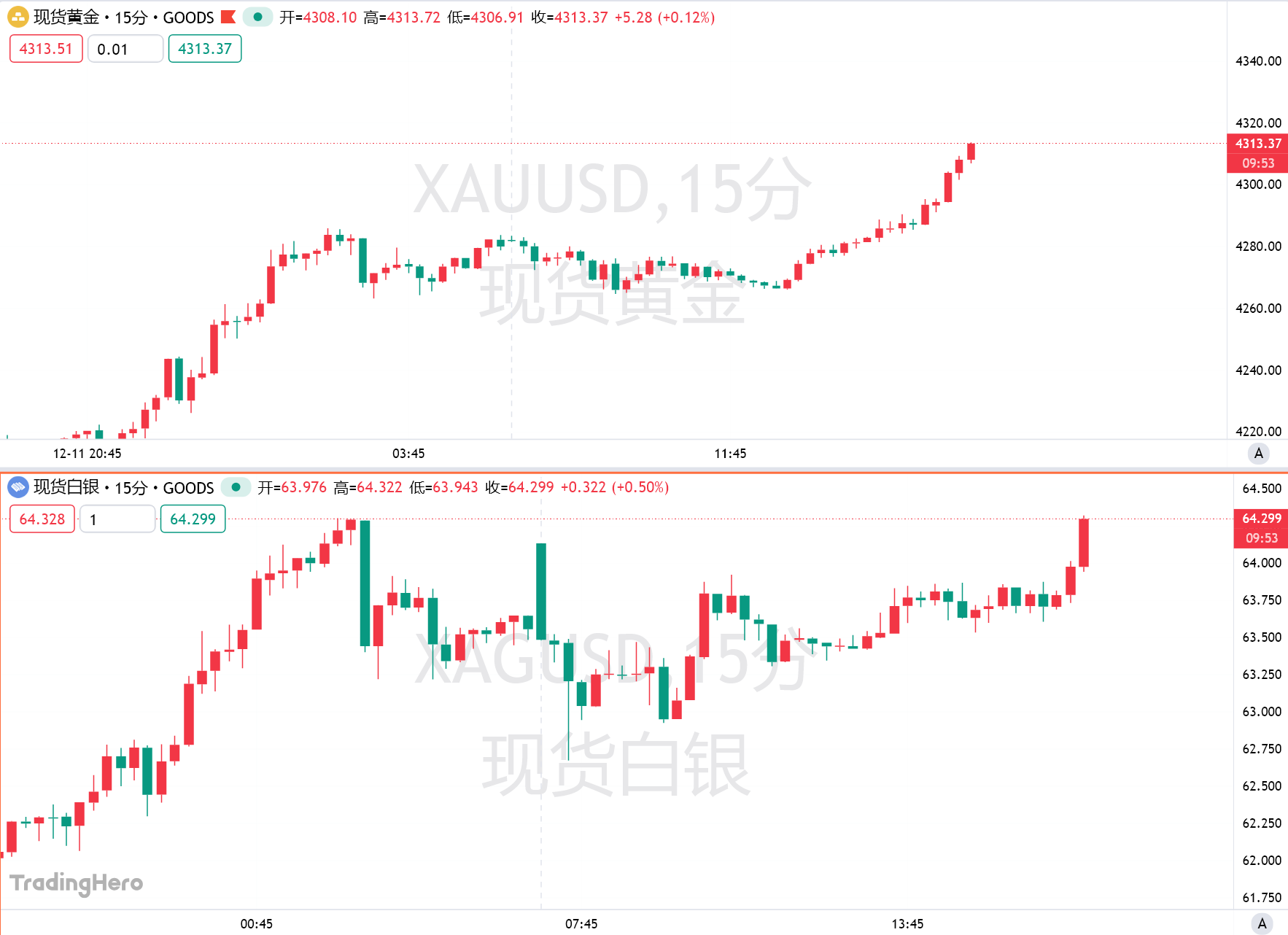
黄金站上4310美元关口,“疯牛”行情回归?
Jin Shi Shu Ju· 2025-12-12 09:25
金价本周有望实现超过2.5%的周涨幅。美联储政策制定者在周三降息后,并未排除明年进一步降息的可能性。尽管美联储点阵图暗示2026年只会降息一 次,但掉期交易员仍押注两次降息。 低利率环境对不支付利息的贵金属有利。此外,美联储将于周五开始每月购买400亿美元的国债,以重建此前缩表期间下滑的银行体系准备金,这将进一步 支撑金价。美元有望连续第三周下跌,这也使得海外买家购买黄金更加便宜。 激石研究策略师吴迪琳(Dilin Wu,音译)表示,黄金的结构性上涨趋势仍有进一步发展的空间。"12月或明年1月消费者价格指数(CPI)意外上升可能会 引发短暂回调,但只要美联储保持温和立场,中期看涨趋势就可能保持不变。"她说。 世界黄金协会的数据显示,今年除5月外,黄金ETF持仓量每月都在增加。墨尔本万致市场(Vantage Markets)分析师陈希贝(Hebe Chen)表示,"由于稳 健的央行需求和重新出现的ETF资金流入,再加上宽松的政策以及持续的地缘政治紧张局势,宏观背景仍将坚定地为黄金提供支撑,因此黄金的涨势有望延 续至2026年。" 周五,由于市场预计本周美联储降息后仍将进一步宽松货币政策,现货黄金在连续第四个交易 ...
张津镭:数据与政策双利好引爆金市 日内回踩低多为主
Xin Lang Cai Jing· 2025-12-12 05:29
Core Viewpoint - The recent surge in gold prices is attributed to a significant increase in U.S. unemployment claims, which has strengthened market expectations for the Federal Reserve to continue easing monetary policy. Additionally, the Fed's announcement to purchase short-term government bonds is interpreted as a form of quantitative easing, injecting substantial liquidity into the financial system, which is favorable for gold priced in dollars [1][5]. Market Performance - On December 12, gold exhibited a typical bottom-rebound pattern, initially rebounding slightly before falling back, with a low of $4203. After stabilizing, it saw a strong upward movement during the U.S. trading session, peaking at $4285 and closing at approximately $4278, marking three consecutive days of gains [1][5]. - The market sentiment has shifted to a more optimistic outlook, with short-term trends appearing strong. However, the price increase of over $80 in one day has pushed technical indicators into overbought territory, and gold is approaching a critical resistance level at $4300 [6][7]. Economic Indicators - The U.S. initial jobless claims rose by 44,000 to 236,000, the largest weekly increase since March 2020, which contrasts sharply with the low levels seen during the Thanksgiving period. This data supports the Fed's assessment of a cooling labor market [1][5]. - The Federal Reserve's decision to initiate a $40 billion purchase of short-term government bonds is aimed at managing market liquidity, contributing to a total of approximately $55 billion in liquidity injections, which has pressured the dollar and benefited gold [1][5]. Technical Analysis - The daily chart shows a solid bullish candlestick, with prices above the MA7/MA10 and close to the upper Bollinger Band, indicating bullish dominance. The four-hour chart maintains a golden cross, suggesting continued upward momentum after any short-term pullbacks [6]. - Key resistance levels to watch include the psychological $4300 mark, while support levels are identified around $4260 and $4220-4210 for potential short positions if the price breaks below [8]. Trading Recommendations - Suggested trading strategy includes going long on gold at $4268-4267 with a stop loss at $4259 and a target of $4295-4300. If the price drops below $4260, consider shorting on rebounds with targets set at $4220-4210 [3][8]. Upcoming Events - Key speeches from Federal Reserve officials are scheduled, which may influence market volatility, particularly if any hawkish comments are made [4][8].
美联储每月将购入400亿美债!因美债无人问津,最大多头托底?
Sou Hu Cai Jing· 2025-12-12 04:29
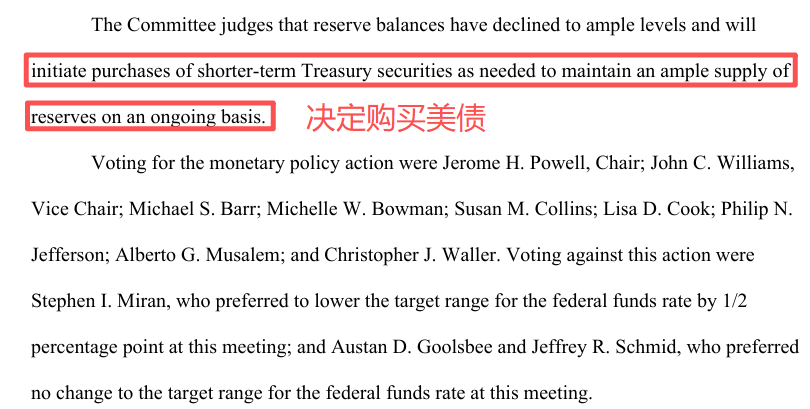
美联储召开本年度最后一次联邦公开市场委员会会议后,公布了两项引发市场广泛关注的重大决策。一是将联邦基金利率下调25个基点,即实施0.25%的降 息操作。该决策没啥好多说的,市场早已知晓。 二是美联储重启美国国债购买计划,初始规模为每月400亿美元,并保留未来进一步扩大购买规模的可能性。 首先需要明确一个基本事实:美联储确实是美国国债的最大持有者。 当前美国国债总规模已突破36万亿美元,这一数字令全球瞩目。在外国投资者中,日本、英国和中国是最大的持有国,三者合计持有2.75万亿美元,尽管数 额庞大,但与美联储的持仓规模相比仍相形见绌。 | Reserve Bank credit, related items, and | | | Averages of daily figures | | Wednesd | | --- | --- | --- | --- | --- | --- | | reserve balances of depository institutions at | | Week ended | | Change from week ended | Dec 10, 2 | | Federal R ...
张津镭:数据与政策双利好引爆金市,日内回踩低多为主
Sou Hu Cai Jing· 2025-12-12 03:37
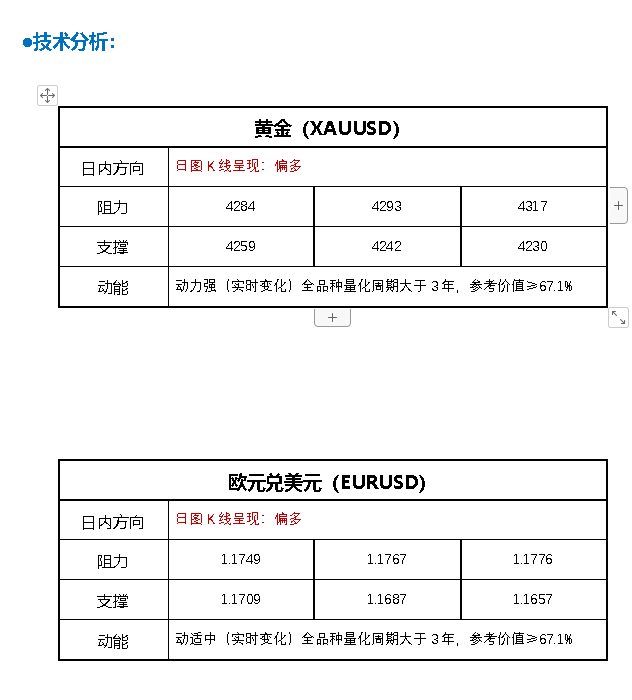
从技术上来看,日线收出实体大阳线,价格运行于MA7/MA10上方并贴近布林带上轨,多头占优;4小 时级别均线系统维持金叉且布林带开口,短线回踩后仍有放量上攻动能。上方关注整数关口与密集成交 区的突破有效性,下方关注突破后的回踩确认带。 总之,市场情绪已明显转向乐观,短期趋势偏强。然而,金价一日内飙升超80美元,技术指标进入超买 区域,且即将面临4300美元关键阻力,日内需警惕技术性回调与获利了结盘的冲击。此外,今日将有包 括2026年FOMC票委在内的多位美联储官员发表讲话,任何鹰派言论都可能引发短线波动。 来源:黄金分析师张津镭 张津镭:数据与政策双利好引爆金市,日内回踩低多为主 昨日黄金走出典型的探底回升节奏:亚盘小幅反弹后回落,在4240附近布局空单;欧盘时段下探至日内 低点4203一线后止跌企稳,空单于4210附近手动平仓,收获约30美元;美盘多头明显发力,最高上攻至 4285美元,尾盘略有回落,最终收于4278美元附近,日线录得三连阳,短线多头占优。 周五(12月12日)昨晚公布的美国上周初请失业金人数激增4.4万人,达到23.6万人,创下2020年3月疫 情以来的最大单周增幅。这一数据远超预期,与 ...
FPG财盛国际:金价暴涨51美元 美联储这则意外大消息引爆市场
Sou Hu Cai Jing· 2025-12-12 03:25
●FPG最新市场脱水消息: 1.当地时间12月10日,美联储结束为期两天的货币政策会议,如期宣布降息25个基点。值得注意的是, 美联储还宣布将启动"迷你量化宽松(QE)",通过短期国债购买计划调控市场流动性水平。这项技术性操 作将于12月12日启动。首轮操作将购买约400亿美元的短期国库券。 2.美国国债收益率周四大幅下跌,10年期基准国债收益率下降3个基点至4.122%。与黄金价格呈负相关 的美国实际收益率下跌近2.5个基点至1.872%,为金价上涨提供了支撑。 3.美国联邦公开市场委员会(FOMC)周三投票决定将联邦基金利率目标区间下调25个基点至 3.50%-3.75%。美联储主席鲍威尔强调劳动力市场存在风险,同时淡化对通胀的担忧。 4.另一个不利美元的因素是,美国初请失业金人数意外增加,反映美国劳动市场降温。 15:00 德国11月CPI月率终值 FPG特约分析师(chad)观点: 黄金技术面大幅改善,金价飙升突破4250美元/盎司,并一度触及六周高点4285美元/盎司,随后小幅回 落。相对强弱指数(RSI)显示看涨动能正在增强,预示着金价有望进一步上涨。如果金价日线收盘价高 于4300美元/盎司,则 ...
当降息遇到扩表,美联储在“滞胀魅影”中走钢丝
Sou Hu Cai Jing· 2025-12-12 03:07
下调基准利率25个基点。 美联储此次决议的本质是在通胀、就业、增长、政治四重约束下的"风险管理"操作。不是激进的宽松, 也不是坚定的紧缩,而是试图以最小的代价稳定经济的中间路径。降息的同时,宣布启动一项规模为 400亿美元的短债购买计划。 这引发了对流动性宽松的强烈预期。 决议后,美股上涨,美债收益率下跌,美元指数走弱,黄金等资产同步上升,市场认定美联储此次行动 更像是一次为经济注入预防性缓冲的温和操作。不过,此次会议暗流涌动,美联储内部分歧严重。而 且,特朗普在决议公布后立即公开抨击"降息幅度太小",并暗示将在鲍威尔届满后换人。 就业市场的明确放缓,是此次降息最直接的经济依据。 至于400亿美元得短债购买计划,与量化宽松是不同的。 QE的主要目标是通过购买长期国债和抵押贷款支持证券来压低长期利率,刺激信贷和投资;而RMP专 注于购买短期国债,目的是确保银行体系有充足准备金,维持货币市场平稳运行。用鲍威尔的话说,这 与货币政策立场本身"是分开的"。 但这事不能仅从技术层面理解。 历史上。 美联储在政策声明中删除了此前长期使用的"失业率仍然处于低位"这一表述,这并非修辞上的微调,而 是对劳动力市场现状的重要承认 ...
南华期货早评-20251212
Nan Hua Qi Huo· 2025-12-12 02:56
Report Industry Investment Rating No relevant information provided. Core Views - Overseas markets focus on the Fed's policy direction, and the expectation of finalizing the next Fed chair is rising. The market anticipates that the new chair may push for more aggressive rate cuts, but there is uncertainty about the implementation of rate cuts. Asset prices will show structural differentiation. Domestically, the economy shows marginal improvement, but the foundation for economic recovery is not yet solid. The Politburo meeting has set a positive tone, emphasizing the expansion of domestic demand [1]. - The Fed's rate cut and bond - buying decision are interpreted as "not QE but similar to QE", which is negative for the US dollar index. The central economic work conference aims to keep the RMB exchange rate stable, and the RMB exchange rate is expected to show a two - way fluctuation in the long - term [2]. - The central economic work conference is expected to boost market sentiment, and the stock index is expected to be strong in the short - term, with large - cap stock indexes outperforming [4]. - The bond market has room for growth in the medium - term, and it is recommended to hold long - term positions [5]. - The price of the container shipping European line is expected to be supported before the Spring Festival, but there are both long and short factors in the market, and short - term fluctuations may intensify [6]. - Precious metals prices are expected to rise in the medium - to long - term, driven by factors such as central bank gold purchases and investment demand. Platinum is recommended to be bought on dips, and palladium is expected to fluctuate widely in the short - term [10]. - The copper price is supported by the Fed's rate cut, and it is recommended to hold long positions. The aluminum market is expected to fluctuate strongly in the short - term; the alumina market is expected to be weak; and the cast aluminum alloy market is expected to fluctuate strongly [14]. - The zinc market is expected to maintain a high - level shock in the short - term, and the tin market is expected to be strong and volatile in the short - term. The lead market is expected to fluctuate [16][17]. - The steel product market is expected to fluctuate within a certain range, and attention should be paid to the inventory reduction speed and downstream consumption. The iron ore price is expected to have limited downward space, and the coking coal and coke market is under pressure in the short - term [19][23]. - The ferroalloy market is expected to be weak and volatile, and attention should be paid to the possibility of price rebounds due to production cuts [25]. - The oil price is affected by geopolitical tensions and fundamentals, and the short - term price is mainly affected by the US - Venezuela situation. The LPG market is driven down by multiple factors, and the PX - PTA market has no obvious driving force in the short - term [28][30]. - The ethylene glycol market is expected to be under pressure in the medium - to long - term, and it is recommended to short on rallies. The methanol market is expected to be weak, and the PP market is not recommended to be shorted further at the current valuation [34][39]. - The PE market is expected to maintain a bottom - level shock in the short - term, and the pure benzene - styrene market is expected to be volatile. The fuel oil market is recommended to be observed, and the low - sulfur fuel oil market is also recommended to be observed [42][46]. - The rubber market is expected to fluctuate narrowly, and the urea market is expected to fluctuate. The soda ash market is expected to be under pressure, and the glass market is affected by cold - repair expectations [51][54][55]. - The caustic soda market is expected to be weak and volatile, and the pulp and offset paper markets are recommended to be observed. The log market is not recommended to be shorted at the current price, and the propylene market is expected to be weak [57][59][61]. - The oilseed market is expected to continue the positive spread trend, and the oil market is expected to continue to fluctuate in a range. The cotton market is recommended to be long on dips, and the sugar market is expected to be weak. The apple market is expected to be strong, and the jujube market is expected to have limited downward space [62][63][65]. Summary by Relevant Catalogs Financial Futures - **Macro**: The central economic work conference emphasizes the implementation of a moderately loose monetary policy, stabilizing the real estate market, and resolving local government debt risks. Overseas, the Fed's policy direction and the US economic data affect market expectations [1]. - **RMB Exchange Rate**: The Fed's rate cut and bond - buying decision are negative for the US dollar index. The central economic work conference aims to keep the RMB exchange rate stable, and the RMB is expected to appreciate in the short - term due to seasonal factors [2]. - **Stock Index**: The central economic work conference is expected to boost market sentiment, and large - cap stock indexes are expected to outperform [4]. - **Treasury Bond**: The bond market has room for growth in the medium - term, and it is recommended to hold long - term positions [5]. - **Container Shipping European Line**: The price is expected to be supported before the Spring Festival, but there are both long and short factors in the market, and short - term fluctuations may intensify [6]. Commodities Non - ferrous Metals - **Platinum & Palladium**: The prices of platinum and palladium rose due to the Fed's rate cut. In the medium - to long - term, the prices are expected to be boosted by factors such as central bank gold purchases and investment demand. Platinum is recommended to be bought on dips, and palladium is expected to fluctuate widely in the short - term [9][10]. - **Gold & Silver**: The prices of gold and silver rose. Silver is in an easy - to - rise and difficult - to - fall pattern. In the short - term, gold is expected to be strong and volatile, and silver is recommended to be sold on rallies. In the medium - to long - term, both are expected to rise [10][12]. - **Copper**: The copper price is supported by the Fed's rate cut, and it is recommended to hold long positions [13]. - **Aluminum Industry Chain**: The aluminum market is expected to fluctuate strongly in the short - term; the alumina market is expected to be weak; and the cast aluminum alloy market is expected to fluctuate strongly [14]. - **Zinc**: The zinc market is expected to maintain a high - level shock in the short - term [16]. - **Tin**: The tin market is expected to be strong and volatile in the short - term [17]. - **Lead**: The lead market is expected to fluctuate [17]. Black Metals - **Rebar & Hot - Rolled Coil**: The steel product market is expected to fluctuate within a certain range, and attention should be paid to the inventory reduction speed and downstream consumption [18][19]. - **Iron Ore**: The iron ore price is expected to have limited downward space, and it is affected by macro - factors and fundamentals [19][20]. - **Coking Coal & Coke**: The coking coal and coke market is under pressure in the short - term, and it is recommended to hold short positions in coking coal and avoid shorting coke blindly [23]. - **Silicon Iron & Silicon Manganese**: The ferroalloy market is expected to be weak and volatile, and attention should be paid to the possibility of price rebounds due to production cuts [25]. Energy and Chemicals - **Crude Oil**: The oil price is affected by geopolitical tensions and fundamentals, and the short - term price is mainly affected by the US - Venezuela situation [27][28]. - **LPG**: The LPG market is driven down by multiple factors, including the decline in oil prices, weakening fundamentals, and increased warehouse receipts [29][30]. - **PTA - PX**: The PX - PTA market has no obvious driving force in the short - term, and it is expected to follow the commodity sentiment and cost - side fluctuations [30][33]. - **MEG - Bottle Chip**: The ethylene glycol market is expected to be under pressure in the medium - to long - term, and it is recommended to short on rallies [33][34]. - **Methanol**: The methanol market is expected to be weak, and it is recommended to hold short - call options and 1 - 5 reverse spreads [36]. - **PP**: The PP market is not recommended to be shorted further at the current valuation, and attention should be paid to the PDH device operation and the spot market [38][39]. - **PE**: The PE market is expected to maintain a bottom - level shock in the short - term, and attention should be paid to the spot market and basis changes [40][42]. - **Pure Benzene - Styrene**: The pure benzene - styrene market is expected to be volatile, with pure benzene showing a near - weak and far - strong pattern and styrene showing a near - strong and far - weak pattern [42][44]. - **Fuel Oil**: The fuel oil market is recommended to be observed, with the high - sulfur fuel oil market showing stable supply and weak demand, and the low - sulfur fuel oil market having improved fundamentals [45][46]. - **Rubber**: The rubber market is expected to fluctuate narrowly, and the synthetic rubber is relatively strong. It is recommended to observe the natural rubber - synthetic rubber spread [51][52]. - **Urea**: The urea market is expected to fluctuate, with high supply and export policy regulation affecting the price [52][53]. - **Soda Ash & Glass**: The soda ash market is expected to be under pressure due to over - supply expectations, and the glass market is affected by cold - repair expectations [54][55]. - **Caustic Soda**: The caustic soda market is expected to be weak and volatile, with limited fundamental support and weakening demand [56][57]. - **Pulp - Offset Paper**: The pulp and offset paper markets are recommended to be observed, with the pulp price expected to fluctuate and the offset paper being affected by the pulp price and supply [57][58]. - **Log**: The log market is not recommended to be shorted at the current price, and attention should be paid to the 01 - 03 reverse spread [59]. - **Propylene**: The propylene market is expected to be weak and volatile, with a loose supply - demand situation and cost - side support [60][61]. Agricultural Products - **Oilseeds**: The oilseed market is expected to continue the positive spread trend, with the external soybean market likely to fluctuate near the cost line, and the domestic soybean meal and rapeseed meal markets affected by supply and demand factors [62]. - **Oils**: The oil market is expected to continue to fluctuate in a range, with palm oil being weak, rapeseed oil being strong, and soybean oil being weak [63][64]. - **Cotton**: The cotton market is recommended to be long on dips, with the short - term domestic downstream showing resilience and the overall supply being tight [65]. - **Sugar**: The sugar market is expected to be weak, affected by global supply pressure [65][66]. - **Apple**: The apple market is expected to be strong, and the 01 contract hit a new high [67][68]. - **Jujube**: The jujube market is expected to have limited downward space, and attention should be paid to downstream pre - holiday purchases [69].