
中性利率

Search documents
日本央行行长植田和男:正逐步接近持续通胀的目标,暗示未来加息将“不止一次”
Hua Er Jie Jian Wen· 2025-12-09 12:36
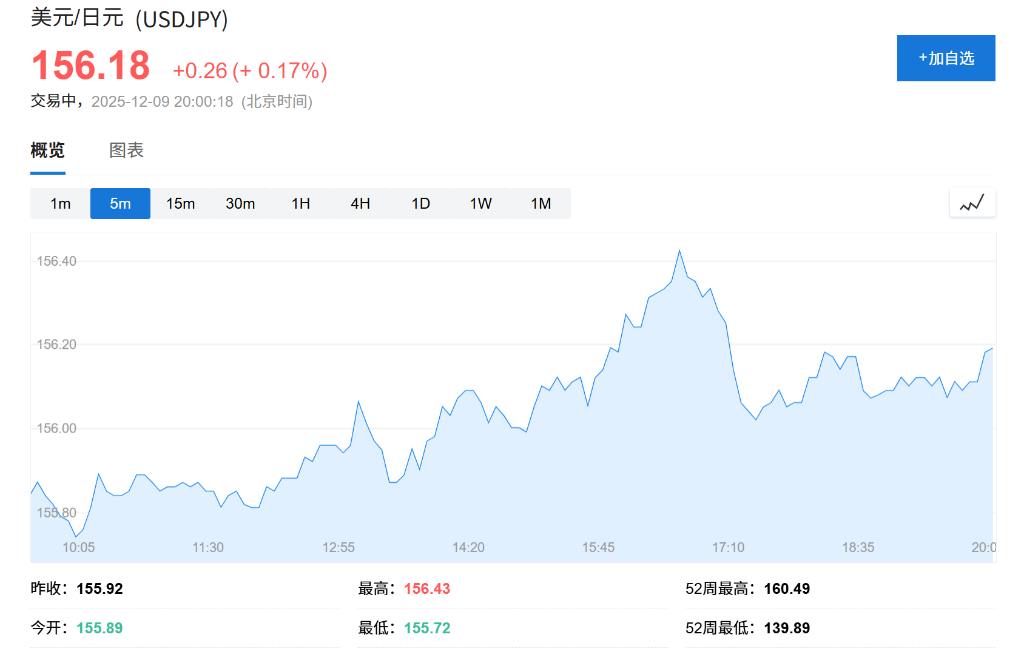
日本央行行长植田和男表示,央行正逐步接近实现通胀目标,并暗示加息步伐不会仅限于一次,这为本月晚些时候可能实施的政策转向释放了明 确信号。 植田和男在周二接受英国《金融时报》采访时表示,"我们正接近持续性的2%通胀"。他同时指出,央行将持续缓慢调整货币宽松程度,直至实现 持续性2%通胀目标,且政策利率回到自然利率水平。 此番表态推高了市场对12月19日政策会议加息的预期。据华尔街见闻此前文章,植田和男9日在国会答询时表示,"如果经济前景实现,将进行加 息",但"不对利率具体细节发表评论"。基于隔夜掉期交易,投资者目前预计加息25基点的概率约为88%。若央行将利率上调至0.75%,这将是日 本自1995年以来的最高借贷成本水平。 植田和男的讲话令日元短暂走强,兑美元汇率一度升破156关口,随后有所回落。 | 概览 | 图表 | | | | | | | | | | | | | | --- | --- | --- | --- | --- | --- | --- | --- | --- | --- | --- | --- | --- | --- | | 1 m | 5m | 15m | | 30m | 1H | 4H ...

日本IPO市场迎2018年来最火爆一年!未来恐遭日本央行加息“逆风”
智通财经网· 2025-12-09 07:05
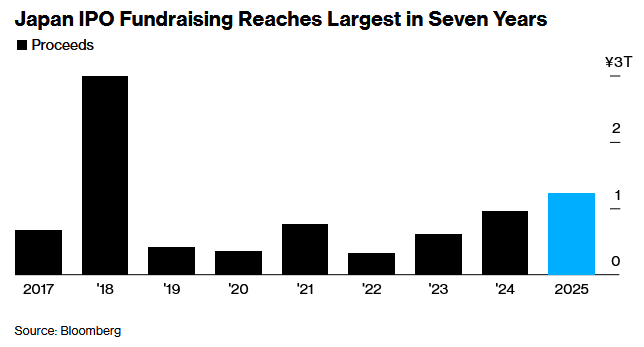
2025年日本股市IPO的亮眼表现得益于席卷亚洲的IPO热潮。在印度,随着企业急于将投资者对新股的 需求货币化,印度的IPO融资规模创下纪录新高。在中国香港,IPO融资规模也有望创2021年以来的新 高。 投资者对日本股票的需求看起来也很强劲。日本基准股指东证指数今年再创新高,这得益于日本持续数 十年的通缩结束、以及日本政府和东京交易所推动公司治理改善。 日本央行加息或令IPO市场承压 然而,值得注意的是,在日本央行大概率将于本月加息且后续可能进一步加息的背景下,利率的上升可 能会给IPO市场带来挑战。 上周有报道指出,知情人士透露,日本央行已准备在本月晚些时候的政策会议上加息,前提是在此期间 经济或金融市场没有发生重大冲击。知情人士称,日本央行还将表示,如果其经济展望得以实现,将继 续加息,同时对最终会将利率推高到什么程度保持谨慎。 市场的关注点在于,日本央行将如何积极地暗示进一步加息。知情人士表示,随着美国关税影响更加明 朗,以及企业利润持续高企为企业提供了提高工资的余地,日本央行官员们评估认为,他们的经济展望 实现的可能性有所增加。 智通财经APP获悉,2025年日本股市首次公开募股(IPO)筹集了1. ...
全球央行鹰派抬头,美联储或成异类,美元贬值压力加剧!
Jin Shi Shu Ju· 2025-12-09 06:32
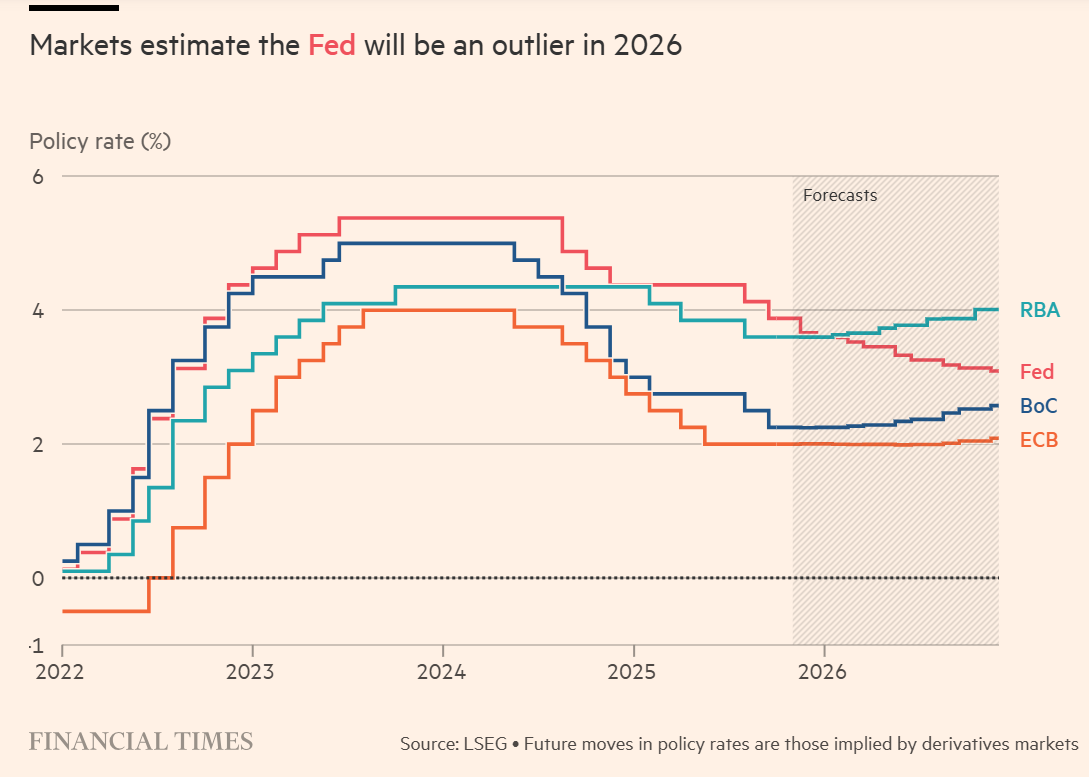
AI播客:换个方式听新闻 下载mp3 音频由扣子空间生成 投资者加大了对欧元区明年可能加息的押注,而预计美国则将继续降低借贷成本,这一转变可能进一步拖累本已疲软的美元。 互换市场定价目前显示,欧洲央行2026年加息的可能性高于降息。相比之下,普遍被认为在周三下次会议上几乎肯定会降息的美联储,明年预计还将再降息 至少两次。 投资者还押注,随着经济好转,澳洲联储和加拿大央行明年将加息,而英国央行则被广泛预期将在明年夏天前结束降息周期。 道明证券(TD Securities)的普贾·库姆拉(Pooja Kumra)将明年描述为欧洲央行、加拿大央行和澳洲联储的潜在"转折点",并补充道:"鹰派声音愈发响 亮。" 尽管这一转变可能会缩小美国与其他国家的利差,但借贷成本的相反走势可能会加剧美元的下跌——美元今年以来兑一篮子货币已下跌逾8%。 目前,欧元区和其他几个主要经济体的利率低于美国,部分原因是它们的经济增长更为缓慢。 但欧洲央行和其他央行的政策制定者似乎不太可能进一步降息以刺激增长,因特朗普的贸易战对美国贸易伙伴的损害已被证明低于此前预期。 互换市场定价目前显示,到明年年底,欧洲央行平均将加息0.08个百分点。相比之 ...
惠誉评级:预计美联储将在12月维持利率不变 明年6月前降息三次
Zheng Quan Shi Bao Wang· 2025-12-09 03:31
Core Viewpoint - Fitch predicts that by mid-2026, the policy interest rates in the US, Eurozone, and UK will approach estimated "neutral" levels [1] Group 1: US Economic Outlook - Fitch expects the Federal Reserve to maintain interest rates in December, but anticipates three rate cuts by June next year as tariff shocks stabilize and unemployment rises slightly [1] Group 2: UK Economic Outlook - The current forecast indicates that the Bank of England will implement three rate cuts by 2026 due to a significant rise in unemployment [1] Group 3: Eurozone Economic Outlook - Fitch predicts that the European Central Bank will not pursue further rate cuts [1]
美联储议息会议临近 内部分歧暴露下一任主席难题
智通财经网· 2025-12-08 12:30
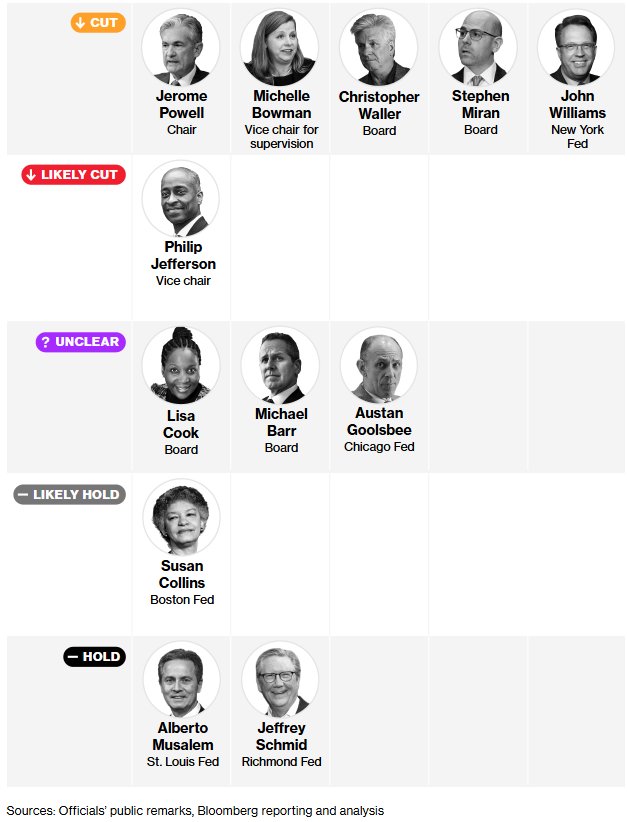
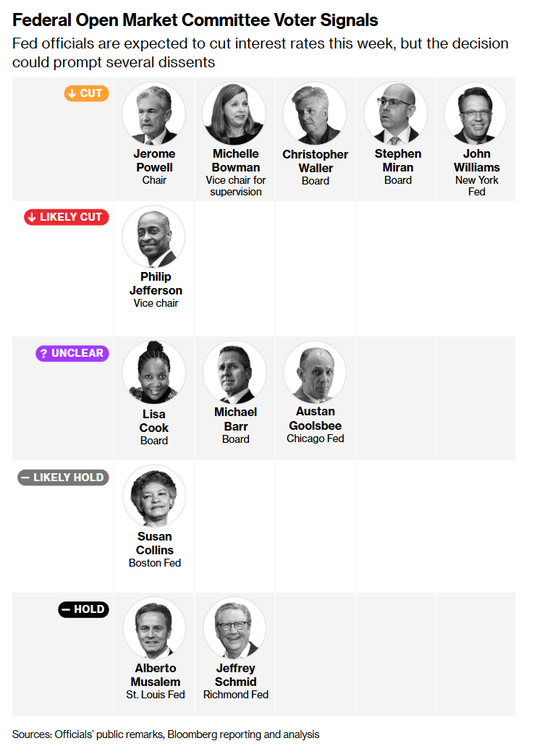
智通财经APP注意到,美联储预计将在本周进行第三次连续降息,但主席鲍威尔在争取同事支持这一举 动中所面临的挑战,预示着他的继任者未来将面临的困难考验。 今年的历次降息都伴随着反对票。预计在本年度最后一次会议上,将有三名决策者再次投下反对票。 面对唯一的工具需要应对相互冲突的两个目标——通胀过高和就业市场走弱——这位以即使在困难时期 也能召集共识而闻名的美联储领导人,现在发现这项任务几乎不可能完成。 这是鲍威尔扮演过多次的角色,他在担任主席期间很少看到反对票。与其他一些中央银行不同,美联储 通常以共识运作,潜在的反对者会通过同意投票换取对会后声明或主席对未来利率路径指导的调整。这 种方法的支持者认为,它表明了对政策的更多信心,从而限制了市场的不确定性和波动性。 鉴于鲍威尔(其主席任期将于明年 5 月届满)在利率制定委员会中享有深厚的尊重,这对于下一任主席团 结其 18 位同事的能力来说,预示着不好的前景。 但那种合作的时代似乎正在终结。本月的会议将是连续第四次出现至少一次反对多数决定的投票——如 果 12 月有三张反对票,那么在此期间的反对票总数将达到八张。这与此前 47 次会议中投出的反对票数 量相同。 曾于 ...
鲍威尔有望推动“三连降”落地,反对票暴增将给继任者埋雷!
Xin Lang Cai Jing· 2025-12-08 12:14
炒股就看金麒麟分析师研报,权威,专业,及时,全面,助您挖掘潜力主题机会! 来源:金十数据 美联储预计将在本周实施今年第三次连续降息,但主席鲍威尔争取同事支持这一举措时面临的挑战,预 示着其继任者未来将遭遇严峻考验。 今年美联储的每次降息都伴随着反对票,预计在今年最后一次会议上将有三位政策制定者再次投出反对 票。 面对相互冲突的两大目标——通胀仍居高不下,就业市场却持续疲软——鲍威尔这位即便在困难时期也 擅长凝聚共识的美联储主席,如今发现这项任务几乎难以完成。 "如果没有分歧,我反而会更担心,"2014年至2024年担任克利夫兰联储主席的洛雷塔·梅斯特(Loretta Mester)表示,"我们看到的反对票,恰恰反映出经济可能朝着不同方向发展。" 鲍威尔的主席任期将于明年5月届满,他在利率制定委员会中享有深厚威望,即便如此,这一局面仍给 下任主席团结18位同事的能力蒙上阴影。 中性利率之争 美联储官员普遍认同,希望将利率下调至既不会对经济造成显著压力、也不会主动刺激经济的水平。但 他们无法就这一"中性利率"的具体数值达成共识,这也导致反对票数量不断增加。 "这就是问题的本质,"巴克莱资本首席美国经济学家、前达拉 ...
陶冬:美联储新主席势必有大动作
Di Yi Cai Jing· 2025-12-08 03:56
Group 1 - The core viewpoint of the articles revolves around the potential nomination of Kevin Hassett as the next Federal Reserve Chair, which could lead to a rapid adjustment of policy interest rates to a neutral level and a restructuring of the Federal Reserve [1][2][3] - The market anticipates that if Hassett is nominated and supported by Congress, he may lower the policy interest rate to around 2.5%, with the possibility of further reductions to 2% if economic or market instability arises [3][2] - There is a concern in the bond market regarding Hassett's potential dovish stance, which may lead to significant interest rate cuts and alignment with Trump's fiscal deficit policies, raising fears of extreme monetary decisions for political gain [2][3] Group 2 - The Japanese central bank has signaled a clearer intention to raise interest rates, with recent developments indicating a potential increase in December, as inflation in Japan reaches 3% compared to 2.9% in the U.S. [4][5] - The adjustment of Japan's policy interest rates is seen as necessary to align with international funding costs, especially given Japan's status as a net capital outflow country, which could impact global capital flows and asset prices [4][5] - The long-term effects of Japan's interest rate adjustments may lead to an increase in the attractiveness of Japanese savings rates, potentially repatriating funds that have been held overseas, which would benefit the yen and Japanese assets [5]
加息只是开胃菜?日元暴动前兆:日本央行或上调中性利率区间,释放长期鹰派信号
Xin Lang Cai Jing· 2025-12-07 23:35
(来源:领盛Optivest) 基本面总结: 1.日本央行预计对未来加息采取"建设性模糊"策略 日本央行预计将在未来加息路径上采取"建设性模糊"策略。报道称,行长植田和男近期就中性利率估计发出了较以往更清晰的指引信号。目前,日本央行 评估名义中性利率位于1%至2.5%的区间。鉴于市场已几乎完全定价日本央行将在12月将政策利率从0.5%上调至0.75%,部分市场参与者据此推测,日本 央行可能会上调中性利率估计,以释放未来仍有继续加息空间的信号。 尽管市场产生此类预期,多名前日本央行官员认为,央行不太可能公布明确的中性利率数字。前日本央行首席经济学家龟田诚策表示,在高度不确定性 下,央行更倾向于通过"建设性模糊"方式保留政策灵活性,而非给出可能束缚自身的具体数字。他预计植田和男最多会指示中性利率在宽幅区间内的大致 位置。 前日本央行官员、现任摩根大通日本首席经济学家藤田彩子预计,日本央行将强调1%仅为预估区间的下限,并暗示实际中性利率可能更高。但她同时指 出,央行仍会表示无法确知中性利率的真实水平,并可能希望市场将其定价在1.5%左右,从而实现预期管理。 报道称,在主要央行中,日本央行并非唯一对披露中性利率细节保 ...

外卖推荐性国标落地,摩尔线程中一签赚近27万 | 财经日日评
吴晓波频道· 2025-12-06 00:30
Group 1: Global Economic Outlook - Major global economies are expected to end their interest rate cuts by the end of 2026, with the OECD predicting only two more rate cuts by the Federal Reserve, bringing the rate down to 3.25%-3.50% [2] - The European Central Bank is set to begin its easing cycle in June 2024, with a total of eight rate cuts anticipated [2] - Japan is experiencing a unique tightening cycle, potentially accelerating rate hikes to counter inflation pressures from new government policies [3] Group 2: China's Monetary Policy - The People's Bank of China conducted a 10 trillion yuan reverse repurchase operation, indicating a focus on maintaining liquidity in the market [4] - Despite the need for more aggressive monetary policy due to slowing economic growth, the central bank has remained silent on interest rate cuts, emphasizing long-term policy adjustments [5] Group 3: E-commerce and Delivery Standards - New national standards for food delivery platforms have been implemented, focusing on the rights of delivery personnel and ensuring fair labor practices [6] - The standards require platforms to calculate delivery times based on a maximum speed of 15 km/h for electric bike riders, which may impact delivery efficiency [7] Group 4: Real Estate Market Trends - The second-hand housing market in major cities like Beijing, Shanghai, Guangzhou, and Shenzhen showed significant increases in transaction volumes in November, driven by demand for affordable housing [8] - The overall market remains in a state of price-volume exchange, with some cities showing signs of price stabilization, but the recovery foundation is still fragile [9] Group 5: E-sports Industry Growth - The Chinese e-sports industry is projected to generate 29.331 billion yuan in revenue by 2025, with a year-on-year growth of 6.4% [10] - Live streaming continues to dominate revenue sources, accounting for over 80% of total income, indicating a reliance on consumer engagement [10][11] Group 6: Meta's Strategic Shift - Meta's CEO Mark Zuckerberg plans to cut the budget for the metaverse project by up to 30%, shifting focus towards AI and related hardware products [12] - The metaverse sector has seen slow technological advancement, leading to a strategic pivot towards AI, which presents clearer business opportunities [12] Group 7: Stock Market Performance - The stock market experienced a rebound, with significant gains in the Shanghai Composite Index and the ChiNext Index, driven by expectations of potential interest rate cuts [14] - The trading volume increased significantly, indicating active market participation and a potential shift in investor sentiment [14][15]

报道:日本央行12月极有可能加息50基点,并暗示未来仍有上调空间
Hua Er Jie Jian Wen· 2025-12-05 06:02
周五,据媒体援引知情人士消息,日本央行官员准备在本月晚些时候的政策会议上加息,前提是经济或 金融市场在此期间没有受到重大冲击。这将使日本政策利率达到1995年以来最高水平,同时央行将暗示 未来仍有进一步加息空间。 知情人士称,日本央行官员清楚市场会如何解读这些言论,暗示投资者已经做出了正确的判断。这种刻 意的沟通策略表明,央行正在为政策调整做铺垫。隔夜掉期指数显示,交易员认为本月加息的概率约为 90%。 据知情人士透露,随着美国关税的影响更加明朗,以及企业利润持续增长使得具备提高工资的空间,官 员们评估认为,经济预期实现的可能性已经增加。这些因素为加息决定提供了基本面支持。 不过知情人士表示,央行仍将持续分析最新数据和信息,直至最后一刻才做出最终政策决定。这表明尽 管加息可能性很高,但仍存在一定灵活性。 消息发布后,美元兑日元短线走低,日本国债期货小幅下跌。日本关键政府成员本周早些时候表态,如 果日本央行决定在12月提高利率,政府不会阻挠。 植田和男释放明确信号,经济条件支持加息 市场参与者对即将到来的加息预期在本周大幅增强,主要因为植田和男周一讲话中释放的明确信号。这 位央行行长表示,政策委员会将就提高利率 ...