出口管制

Search documents
稀土战火烧到世贸:七天博弈如何改写全球产业链命运?
Sou Hu Cai Jing· 2025-10-18 16:34
Core Viewpoint - The recent changes in China's rare earth export regulations have triggered a significant geopolitical response, highlighting the strategic importance of rare earth elements in global supply chains and the escalating tensions between China and Western nations [1][3][11]. Group 1: China's New Export Regulations - China's Ministry of Commerce and Customs has implemented comprehensive export controls on rare earth elements, affecting the entire supply chain from mining to manufacturing, requiring detailed reporting and approval for exports [3][5]. - The new regulations include a stringent "0.1% Chinese content" rule, meaning any foreign product containing even trace amounts of Chinese rare earths will require extensive approval for export [3][5]. - This move is seen as a strategic maneuver by China to leverage its market position and resource advantages in the global value chain [3][11]. Group 2: Western Response - In response to China's actions, Western allies, particularly the U.S. and EU, have mobilized quickly, with the EU Trade Commissioner indicating that China's controls have led to production halts in some EU companies [5][9]. - The Netherlands has taken aggressive steps by nationalizing ASML, a key player in the semiconductor supply chain, to prevent Chinese influence [5][9]. - The U.S. has also ramped up its search for rare earth resources, committing $7 billion to global mining efforts, but faces challenges in execution due to geopolitical instability in regions like Pakistan [9][11]. Group 3: WTO's Role and Double Standards - The World Trade Organization (WTO) has shown a bias in its responses, suggesting that China should rebalance its economy while ignoring similar actions taken by the U.S. against Chinese companies [7][8]. - The WTO's stance reflects a broader Western hypocrisy regarding export controls, as similar measures are often justified under national security by the U.S. [7][8]. Group 4: Implications for Global Supply Chains - China's dominance in the rare earth permanent magnet market, holding over 70% of the global share, poses a significant threat to Western industries that rely on these materials [9][11]. - The inability of Western nations to establish alternative supply chains or sources for rare earths highlights their vulnerability in the face of China's strategic moves [9][11]. - The ongoing conflict over rare earth resources signifies a deeper clash over industrial dominance in the 21st century, with China positioned to reshape the underlying logic of global supply chains [11].

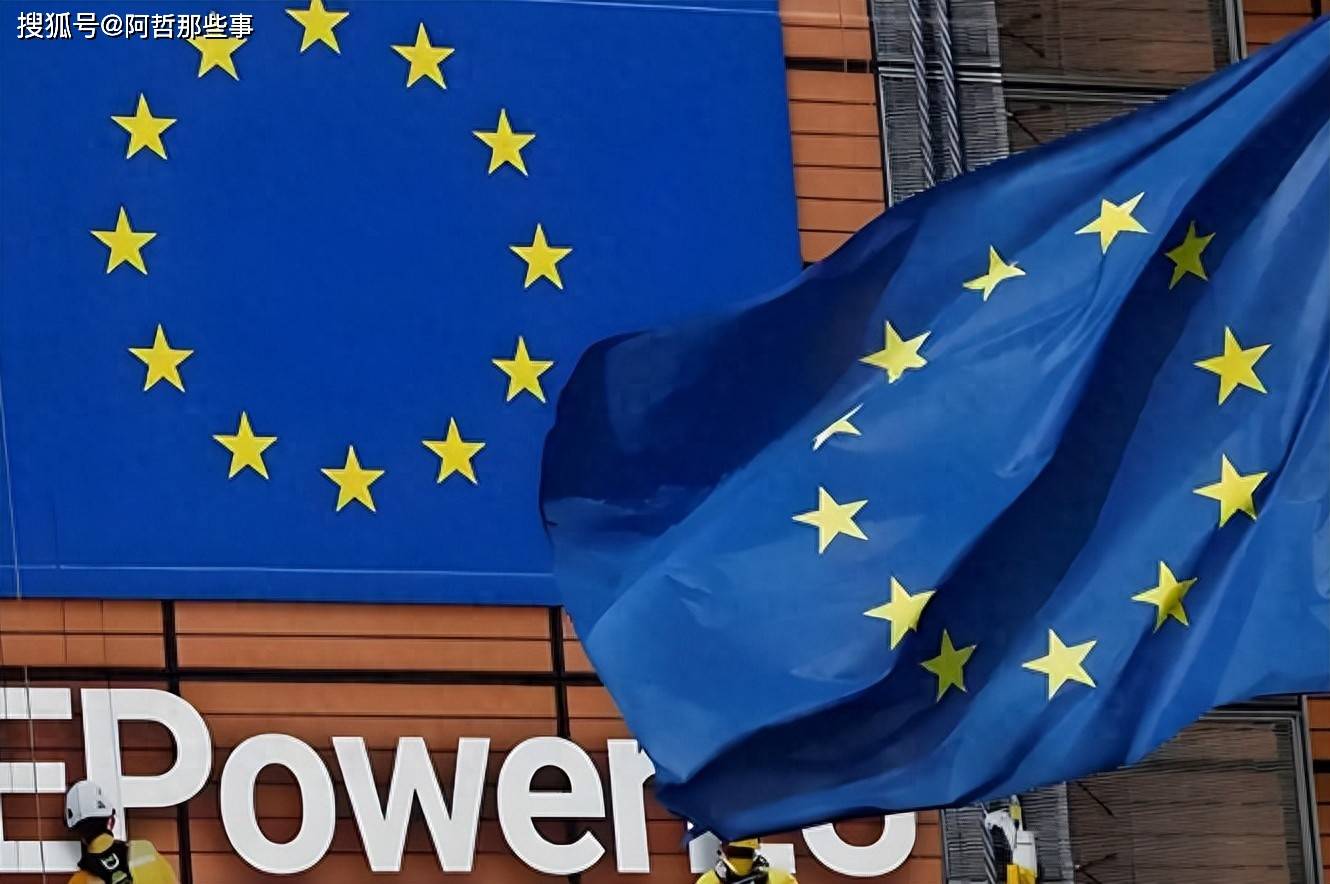
商务部再通告全球,敢打就奉陪到底,美财长喊话100%关税可能不加
Sou Hu Cai Jing· 2025-10-18 12:17
Core Points - China has issued a strong counter to the U.S. in the ongoing trade war, emphasizing its readiness to respond decisively to U.S. pressures [1][3] - The Chinese government has implemented actual measures, including special port fees for U.S. ships and export controls on critical materials, demonstrating its commitment to counter U.S. trade actions [3][5] - China's export growth remains robust, with a reported increase of 8.3% in the first nine months of the year, indicating economic resilience despite U.S. tariffs [9][12] Trade Measures - As of October 14, U.S. ships docking at Chinese ports are required to pay special port fees, marking a shift from verbal responses to tangible actions [3] - China has enacted export controls on rare earths and advanced lithium battery materials, targeting U.S. industries such as energy storage and AI [5][6] - The Chinese Ministry of Commerce clarified that its export controls are not outright bans but targeted responses to U.S. actions [3][12] Economic Data - In the first nine months of the year, China's trade surplus exceeded $90 billion, reflecting strong export performance despite U.S. tariffs [9][12] - China's rare earth exports fell by approximately 30% in September, reaching the lowest level since February 2025, indicating the enforcement of export controls [10][12] - The U.S. imported 65% of its lithium batteries from China in the first half of 2025, highlighting China's dominance in the global lithium battery market [6] U.S. Response - U.S. officials, including President Trump, have shown signs of retreat, expressing a desire for dialogue while simultaneously imposing new restrictions on Chinese products [7][9] - The U.S. Treasury Secretary indicated that imposing 100% tariffs is not necessarily the final option, suggesting a willingness to negotiate further [9]
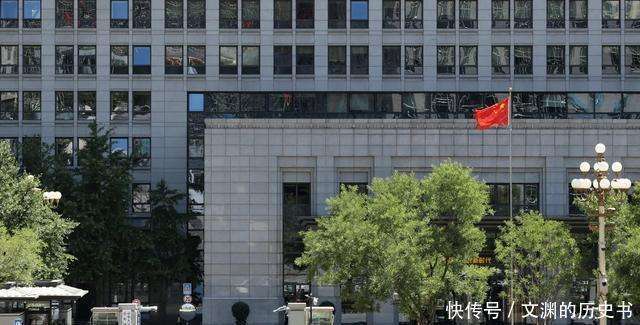
荷兰狡辩也没用?调查4天后,商务部明确定性,反制措施已在路上
Sou Hu Cai Jing· 2025-10-18 12:16
Core Viewpoint - The Dutch government's freezing of the global business of Nexperia, a subsidiary of Wingtech Technology, under the pretext of "national security" is strongly condemned by the company, which argues that this action violates fundamental principles of market economy [1][3]. Group 1: Company Response - Wingtech Technology has issued a statement denouncing the Dutch government's actions and emphasizes that the legality and compliance of the freezing measures are still unclear [1]. - The Chinese Ministry of Commerce has indicated that the Dutch government is overinterpreting the concept of "national security" and interfering in corporate affairs, which undermines the spirit of market economy and could harm the Netherlands' business environment [3][6]. Group 2: U.S. Involvement - The Chinese government has accused the U.S. of being a behind-the-scenes instigator in this situation, warning that the U.S. has influenced the Dutch government's decision regarding Nexperia [3]. - Evidence from Dutch court documents suggests that the Dutch government communicated with the U.S. regarding "penetration rules," where the U.S. requested changes in Nexperia's management structure to avoid sanctions [5]. Group 3: Potential Consequences - The Chinese Ministry of Commerce has stated that if the Dutch government does not rectify its actions, China may impose similar severe measures against Dutch companies [6]. - Previous instances of Chinese countermeasures include sanctions against South Korea's Hanwha Group for cooperating with U.S. investigations into China's shipbuilding industry [5].

中美贸易冲突风险上升对出口影响:前三季度出口相对强势,稀土管控将推升第四季度出口需求
Xiangcai Securities· 2025-10-18 09:34
Core Insights - The report highlights the increasing risks of the US-China trade conflict, with both sides exhibiting significant differences in trade demands and a high-intensity, fast-paced negotiation environment [2][10][12] - China's exports have shown resilience in the first three quarters of 2025, with a year-on-year growth rate of around 6%, although exports to the US have declined significantly due to the implementation of reciprocal tariff policies by the US [4][5][42] - The report anticipates that export controls on rare earths and related technologies will boost demand for these products in the fourth quarter, positively impacting sectors such as machinery, high-tech products, and integrated circuits [6][8][48] Export Analysis - In September 2025, China's exports maintained a strong performance, with significant contributions from electromechanical products and high-tech products, which grew at rates of 7-8%, while integrated circuits saw a remarkable growth rate exceeding 20% [4][38][40] - The share of exports to the US has been on a downward trend, dropping from 14.74% in January 2025 to 11.41% in September 2025, primarily due to the negative impact of the US's reciprocal tariff policies [5][42][45] - The report notes that the overall export growth is supported by increased exports to ASEAN and stable exports to the EU, despite the challenges posed by US tariffs [45] Fourth Quarter Outlook - The report projects that China's exports will continue to perform relatively strongly in October and November 2025, driven by new export controls on rare earths, which are expected to enhance the export of related products [6][8][48] - However, the high base of exports in the fourth quarter of 2024 may limit the year-on-year growth rate, although the overall outlook is more optimistic than previously anticipated [7][48] Investment Recommendations - The report suggests focusing on sectors that have shown resilience, such as banking and insurance, as well as industries related to environmental protection and rare earths, which may benefit from the ongoing trade tensions [8][50]

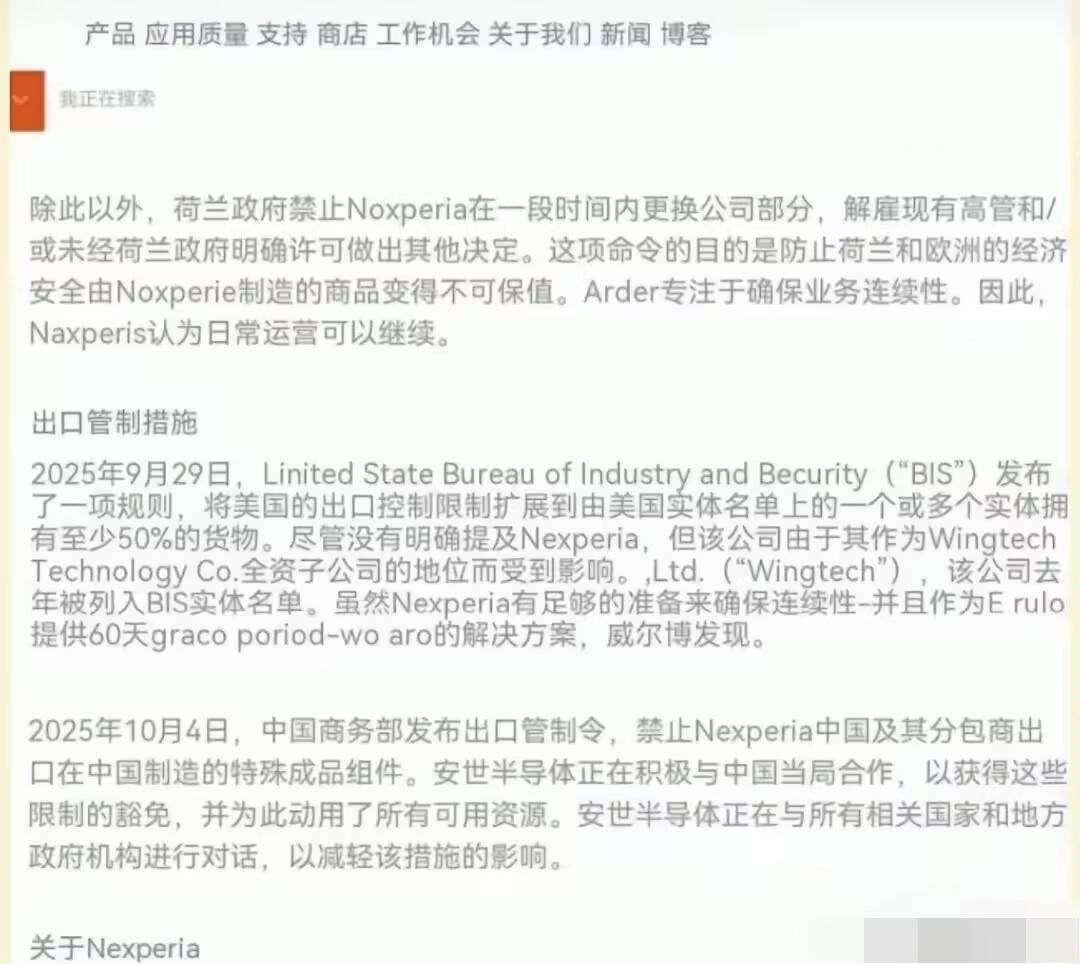
荷兰希望中国豁免他们生产售卖稀土制品的申请被商务部无视了!
Sou Hu Cai Jing· 2025-10-18 06:15
Group 1 - The Chinese Ministry of Commerce has implemented new regulatory policies regarding heavy rare earths, superhard materials, and lithium batteries, requiring declarations for products with over 0.1% value [1] - A notification issued on October 4 prohibits Anshi Semiconductor China and its subcontractors from exporting specific finished components and subcomponents manufactured in China [1] Group 2 - The Dutch company, which acquired Anshi through questionable means, is now facing difficulties due to the lack of components from Anshi China and its supply chain, hindering their production assembly [3] - Despite having some inventory, the Dutch company cannot sell finished products due to the new rare earth product regulations, risking severe sanctions if they attempt to do so [3] - The Dutch government is seeking exemptions from the Chinese export control restrictions, indicating a desperate attempt to continue operations despite the acquisition's controversial nature [3] - The Chinese Ministry of Commerce appears to be taking a passive approach, waiting to see how long the Dutch company can sustain its operations without compliance [3]
培育钻石板块成A股“明星赛道” 力量钻石、黄河旋风等月涨超10% 年内翻倍股有哪些?
Hua Xia Shi Bao· 2025-10-18 01:27
Core Viewpoint - The cultivated diamond sector has emerged as a standout performer in the A-share market, driven by improving fundamentals and favorable policies, leading to significant price increases in key stocks [2][4]. Group 1: Market Performance - As of October 16, the cultivated diamond sector index rose from 1851.15 points to 2002.93 points, reflecting a notable increase despite a slight pullback on October 17 [2]. - Key stocks such as Power Diamond, Sifangda, and Yellow River Wind have seen monthly gains exceeding 10%, while some companies like *ST Yazhen, Chaohongji, and Hengsheng Energy have experienced over 100% annual growth [2][11]. Group 2: Policy Impact - On October 9, the Ministry of Commerce and the General Administration of Customs announced export controls on superhard materials, effective November 8, which has created a protective barrier for the domestic superhard materials industry and heightened market expectations for scarcity and performance certainty [4][5]. - The export controls are expected to lead to a shift in order structures towards domestic demand and non-restricted specifications, enhancing the competitive edge of domestic companies in high-end segments [5]. Group 3: Company Analysis - Power Diamond, Sifangda, and Yellow River Wind are leading the market, with their revenue figures showing fluctuations; Power Diamond's revenue is projected to decline by 17.03% in 2023 and 8.74% in 2024, while Yellow River Wind's revenue is expected to drop by 34.67% and 17.36% in the same years [8][9]. - Research and development expenditures for these companies in the first half of 2025 were 30.44 million, 28.72 million, and 39.16 million respectively, with R&D spending as a percentage of revenue being highest for Power Diamond [9]. Group 4: Future Outlook - The cultivated diamond sector's growth is attributed to a combination of policy support and a rebound in market conditions, with expectations for continued interest in the sector due to its performance potential [11][12]. - The market may experience a phase of differentiation, where stock prices will increasingly depend on fundamental factors such as order volume and profit margins [12].


全球产供链安全稳定需要共同维护(钟声)
Ren Min Ri Bao· 2025-10-17 22:00
Core Viewpoint - The article emphasizes that the U.S. approach of imposing high tariffs and trade restrictions on China is not the correct way to handle bilateral relations, and it calls for a rational and pragmatic dialogue to maintain global supply chain stability [1][2][3][4]. Group 1: U.S.-China Trade Relations - The U.S. has implemented multiple trade restrictions against China, including adding Chinese entities to export control lists and expanding the scope of these controls, which negatively impacts thousands of Chinese companies [1][2]. - The U.S. actions are seen as damaging to the atmosphere of trade talks and disrupting international trade rules, leading to adverse effects on bilateral economic relations [1][2]. Group 2: China's Export Control Measures - China's export control measures on rare earths and related items are framed as a responsible action to maintain national and international security, especially given their importance in military applications [2]. - The number of items on China's export control list is approximately 900, while the U.S. has over 3,000 items, highlighting a disparity in the application of export controls [2]. Group 3: Call for Dialogue and Cooperation - China maintains a clear stance of being open to dialogue while also prepared to respond firmly to any actions that harm its interests, emphasizing the need for mutual respect and cooperation [3][4]. - A recent survey indicates that a majority of American respondents view U.S. protectionist policies as a significant barrier, suggesting a public desire for reduced tariffs and increased trade facilitation [4].
黄仁勋:英伟达在华份额已从95%降至0,伤害中国的政策往往更严重地伤害美国
Xin Lang Cai Jing· 2025-10-17 20:22
Core Viewpoint - The U.S. government's fluctuating chip export policies towards China have severely impacted NVIDIA's operations in the Chinese market, leading to a dramatic decline in market share from 95% to zero, as stated by CEO Jensen Huang [1][4][5]. Group 1: NVIDIA's Market Position - NVIDIA's market share in advanced chips in China has plummeted to zero, with the company fully exiting the Chinese market [4][5]. - The company has adjusted its forecasts, assuming that its business in China will contribute nothing, with any future developments seen as a bonus [4][5]. - In 2024, NVIDIA's H20 series chip shipments in China are estimated to be around 600,000 to 800,000 units, indicating a significant presence despite the challenges [5]. Group 2: U.S. Export Policies and Implications - The U.S. government has implemented strict export controls since 2022, prohibiting NVIDIA from exporting high-end GPUs to China, which has led to a continuous decline in revenue from the region [5][6]. - Huang emphasized the need for a nuanced strategy from U.S. policymakers to balance maintaining technological leadership while ensuring global reliance on U.S. technology [4][6]. Group 3: Competitive Landscape - Chinese companies like Huawei are rapidly advancing in AI technology, with Huawei's next-generation chips designed to challenge NVIDIA's dominance [8][9]. - Huang noted that the Chinese AI market is projected to reach $50 billion by 2026, presenting significant opportunities for NVIDIA if it can navigate the current restrictions [9]. Group 4: Future Outlook and Strategy - NVIDIA continues to invest heavily in China, maintaining a large engineering team to support local tech companies in adapting to compliant models [10]. - Huang has called for the U.S. government to allow American tech firms to compete in markets like China to enhance U.S. influence [10].

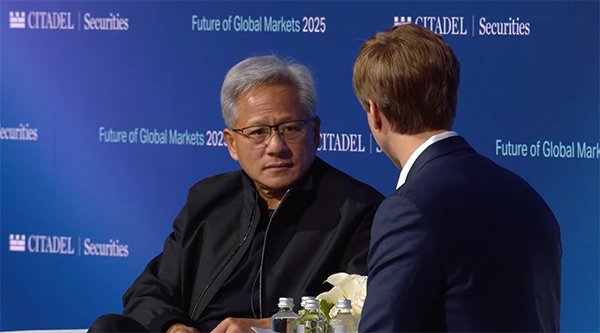
黄仁勋:英伟达 100% 退出了中国市场,份额暴跌到 0!
程序员的那些事· 2025-10-17 14:37
Core Viewpoint - The article discusses the impact of U.S. export controls on NVIDIA's operations in China, highlighting the significant loss of market share and potential revenue due to legislative changes and restrictions on AI chip sales [1][2]. Group 1: Legislative Impact - The U.S. Congress is pushing for legislation that requires chip manufacturers like AMD and NVIDIA to prioritize domestic supply for AI chip products [1]. - NVIDIA's CEO, Jensen Huang, stated that due to U.S. export controls, the company has completely exited the Chinese market, with its market share dropping from 95% to 0% [1]. Group 2: Financial Consequences - Following the U.S. export controls initiated in October 2022, NVIDIA faced ongoing challenges in selling high-end AI chips in China [1]. - The introduction of compliant AI chips for China, such as A800, H800, and H20, was not sufficient to mitigate losses, as new regulations in April 2025 forced the discontinuation of the H20 chip, resulting in approximately $4.5 billion in inventory losses and $8 billion in potential revenue losses [1]. Group 3: Future Outlook - Despite the challenges, NVIDIA remains hopeful for a policy change and is actively communicating with the U.S. government regarding its operations in China [2]. - Huang emphasized that the U.S. has lost access to one of the largest markets globally, suggesting that policies aimed at China could also harm U.S. interests [2]. - He noted that China possesses about 50% of the world's AI researchers and has a strong focus on AI development, indicating the competitive landscape [2].
黄仁勋:英伟达在华高端芯片市场份额已降至0%
财联社· 2025-10-17 14:08
据环球网援引香港《南华早报》当地时间16日报道,美国英伟达公司首席执行官(CEO)黄仁勋近日表示, 由于美国实施出口管制,这家 美国半导体巨头被禁止向中国大陆企业出售其先进产品,该公司在华高端芯片市场份额已从95%降至0%。 他还表示,美对华技术封锁是一个"错误",英伟达将继续争取重返中国市场。报道称,黄仁勋本月6日在美国纽约参加活动时作出上述表 述。"目前我们已完全退出中国市场。"黄仁勋说,"我们希望继续解释和说明情况,并坚持对政策调整抱有希望。" ...