
贸易协议

Search documents
印媒:印度与美国接近达成贸易协议,关税从50%降至15%
Hua Er Jie Jian Wen· 2025-10-22 02:34
Core Points - India is nearing a trade agreement with the United States that could significantly reduce punitive tariffs on Indian exports from 50% to 15-16% [1] - The agreement aims to increase bilateral trade to $500 billion by 2030, with initial results expected between October and November [1][5] - Key negotiation topics include energy and agriculture, with India potentially agreeing to reduce oil imports from Russia in exchange for tariff concessions [1][3] Trade Impact - The punitive tariffs have severely impacted Indian exports, with a report indicating a 20.3% month-over-month decline in September, bringing exports to $5.5 billion [2] - Since May, Indian exports to the U.S. have dropped by over $3.3 billion, highlighting the direct effects of the tariff increases [2] - Key sectors affected include textiles, gems and jewelry, engineering products, and chemicals, creating significant pressure on these industries [2] Political Pressure - President Trump has intensified political pressure on India, linking oil imports from Russia to potential further tariff increases [3] - Trump claimed that Indian Prime Minister Modi had assured him of stopping Russian oil purchases, a statement India has strongly denied [3] Negotiation Environment - Despite the tensions, trade negotiations are reportedly progressing in a "friendly atmosphere" [4] - Indian officials emphasize the need to protect the interests of farmers, fishermen, and small businesses during negotiations [5] - India has set "red lines" in areas such as agriculture, small and medium enterprises, digital trade, e-commerce, and intellectual property [6]
瑞达期货贵金属产业日报-20251020
Rui Da Qi Huo· 2025-10-20 09:48
1. Report Industry Investment Rating - No information provided 2. Core Viewpoints of the Report - The precious metals market has been under pressure and in a callback trend due to the cooling of the tariff situation, with the market's risk aversion sentiment declining and risk appetite improving [2]. - The sharp correction in the precious metals market since last Friday may be driven by both fundamental and technical factors. The monthly RSI indicates that gold and silver prices are in an overbought range, and the market's expectation of Trump's tariff implementation has decreased, leading to a decline in the safe - haven premium [2]. - Fed officials maintain a dovish stance, and the probability of interest rate cuts in October and December is over 90%, which may provide some support for gold prices [2]. - Looking ahead, tariff developments will still affect gold price fluctuations. The U.S. government shutdown is expected to continue, and this Friday's CPI data will be crucial. Precious metals are expected to fluctuate this week, with short - term correction pressure remaining. The Shanghai Gold 2512 contract is expected to trade between 930 - 990 yuan/gram, and the Shanghai Silver 2512 contract between 11000 - 12000 yuan/kg [2]. 3. Summary by Relevant Catalogs 3.1 Futures Market - The closing price of the Shanghai Gold main contract is 970.32 yuan/gram, down 29.48 yuan; the closing price of the Shanghai Silver main contract is 11742 yuan/kg, down 507 yuan [2]. - The main contract positions of Shanghai Gold are 207916 lots, down 14276 lots; those of Shanghai Silver are 432663 lots, down 38499 lots [2]. - The net positions of the top 20 in the Shanghai Gold main contract are 117407 lots, down 13605 lots; those of Shanghai Silver are 99705 lots, up 4292 lots [2]. - The warehouse receipt quantity of gold is 84606 kg, unchanged; that of silver is 855850 kg, down 64253 kg [2]. 3.2 Spot Market - The Shanghai Non - ferrous Metals Network's gold spot price is 975.5 yuan/gram, down 21.79 yuan; the silver spot price is 11834 yuan/kg, down 365 yuan [2]. - The basis of the Shanghai Gold main contract is 5.18 yuan/gram, up 7.69 yuan; that of the Shanghai Silver main contract is 92 yuan/kg, up 142 yuan [2]. 3.3 Supply - Demand Situation - Gold ETF holdings are 1047.21 tons, up 12.59 tons; silver ETF holdings are 15497.4 tons, up 74.79 tons [2]. - The non - commercial net positions of gold in CFTC are 266749 contracts, up 339 contracts; those of silver are 52276 contracts, up 738 contracts [2]. - The total supply of gold in the quarter is 1313.01 tons, up 54.84 tons; the total annual supply of silver is 987.8 million troy ounces, down 21.4 million troy ounces [2]. - The total demand for gold in the quarter is 1313.01 tons, up 54.83 tons; the global total annual demand for silver is 1195 million ounces, down 47.4 million ounces [2]. 3.4 Option Market - The 20 - day historical volatility of gold is 24.14%, up 1.47%; the implied volatility of at - the - money call options for gold is 32.85%. The 40 - day historical volatility of gold is 18.9%, up 1.37%; the implied volatility of at - the - money put options for gold is 32.85%, up 0.82% [2]. 3.5 Industry News - Trump continued to send conciliatory signals in an interview, and the Trump administration is quietly relaxing some tariff policies, exempting dozens of products from "reciprocal tariffs" [2]. - On the morning of October 18, Chinese and U.S. economic and trade leaders held a video call, agreeing to hold a new round of Sino - U.S. economic and trade consultations as soon as possible [2]. - Trump signed an executive order on October 17 to impose a 25% tariff on imported medium and heavy trucks and parts from November 1, and a 10% tariff on imported passenger cars [2].

韩国:与美国关税谈判取得“实质性进展”
Hua Er Jie Jian Wen· 2025-10-20 09:41
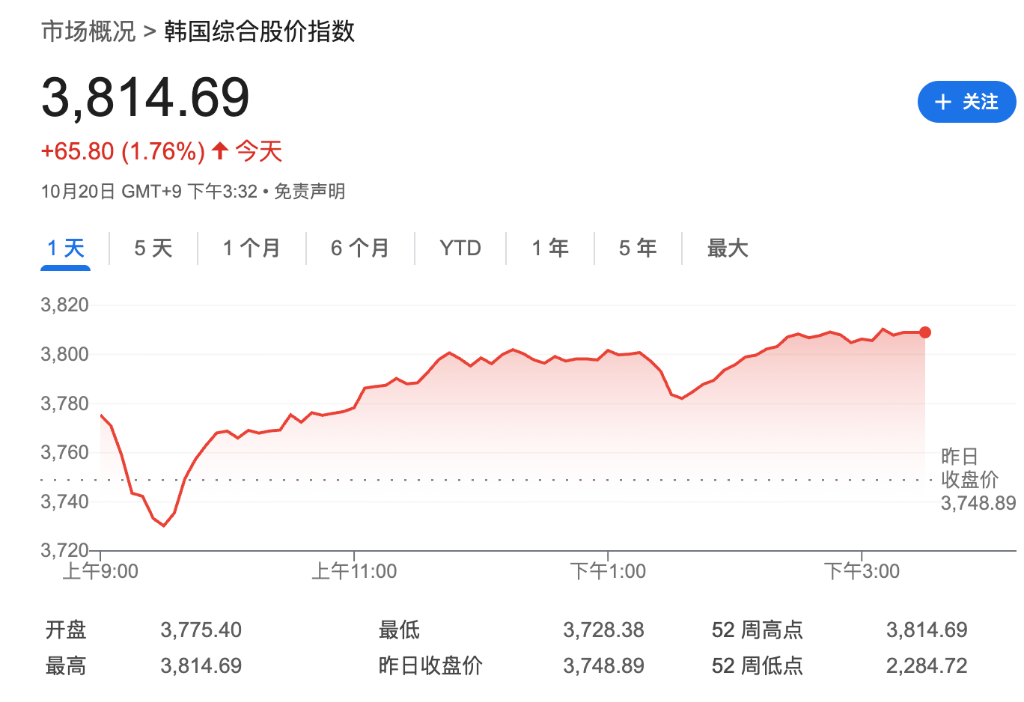
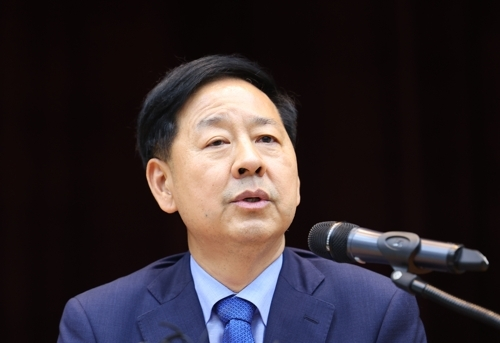
Group 1 - South Korea has made "substantial progress" in tariff negotiations with the United States on most key issues, although there are still disagreements regarding the structure of a $350 billion investment fund, which is central to the agreement that sets a 15% tariff cap on South Korean goods [1] - Kim Yong-beom, the head of the South Korean presidential office's policy room, indicated that there is a broad consensus on many issues, but several matters still require further negotiation, with an increased likelihood of reaching an agreement at the upcoming APEC summit [1] - Following informal discussions at Mar-a-Lago involving South Korean business leaders and U.S. President Trump, the South Korean benchmark stock index, Kospi, reached a new high, surpassing the 3,800-point level [1] Group 2 - In July, a trade agreement framework was reached between South Korea and the U.S., where the U.S. would lower tariffs on South Korean goods in exchange for a $350 billion investment from South Korea; however, there are disputes on how to handle the investment, preventing the agreement from being implemented [4] - Concerns were raised by Lee Jae-myung regarding the potential economic risks if South Korea were to withdraw $350 billion in cash for investment in the U.S., likening it to the financial crisis of 1997 [4] - President Trump has repeatedly requested that South Korea "prepay" the $350 billion investment, while South Korea is advocating for a currency swap agreement to support its investment commitments in the tariff negotiations, noting that the proposed amount would account for over 80% of its foreign exchange reserves [4]

South Korea sees higher chance of US trade deal by APEC summit
Reuters· 2025-10-19 09:22
Core Points - South Korea is likely to reach a trade deal with the U.S. before the upcoming APEC summit [1] Group 1 - The chief policy advisor of South Korea indicated an increased probability of a trade agreement with the U.S. [1]
热点思考 | 美方视角下的特朗普关税策略(申万宏观·赵伟团队)
申万宏源宏观· 2025-10-16 04:24
Core Viewpoint - The article discusses the renewed threats of tariffs from Trump in October, highlighting China's more composed response and increasing divisions within the U.S. regarding tariff strategies [1][6]. Group 1: Changes in China's Tariff Strategy - The uncertainty surrounding tariffs stems from non-tariff measures taken by the U.S. since September, including the expansion of sanctions by the BIS and new export controls on rare earths [2][7]. - Two new changes in China's tariff strategy are noted: first, China is using tactical agreements to gain strategic development space, such as the TikTok agreement and agricultural purchases, which do not harm its core interests but satisfy Trump's demands; second, compared to the previous tariff conflict, China has increased its proactivity by halting soybean purchases and creating negotiation topics before meetings [2][10]. Group 2: Deficiencies in Trump's Tariff Strategy - Trump's strategy of releasing strong statements before meetings is a common tactic aimed at increasing negotiation leverage, but this year, China's response differs from previous conflicts [3][11]. - Think tanks like Cato and AEI criticize the design of reciprocal tariffs, arguing they are economically unviable and not suitable as negotiation leverage due to issues like incorrect incentives, unsustainable high tariffs, and collateral damage to domestic supply chains [3][13][25]. - Recommendations for U.S. strategy include reducing reliance on broad high tariffs and focusing on non-tariff barriers and targeted measures, such as a narrow and deep export control list and expanding positive incentive systems [3][14][25]. Group 3: Desired Trade Agreements with China - The U.S. political focus is on strategic and security issues, contrasting with Trump's preference for visible negotiation outcomes, which often prioritize economic topics over diplomatic and security concerns [4][15]. - Criticism arises regarding Trump's short-term transactional approach, which is seen as neglecting long-term strategic interests, particularly in areas like export controls and agricultural agreements [4][16][17]. - The absence of a formal agreement is viewed as more detrimental to the U.S., with Trump facing pressure to reach a verifiable agreement due to economic costs primarily borne by the U.S. [4][18][19]. Group 4: Feasibility of Trade Agreements - Large-scale trade agreements are deemed unlikely to align with U.S. interests, with a preference for smaller, more manageable agreements that can provide temporary relief despite limited strategic significance [5][19][27].
特朗普大消息!大涨!
中国基金报· 2025-10-16 01:22
李在镕、郑义宣、 SK 集团会长崔泰源以及 LG 集团会长具光谟应软银董事长孙正义邀请, 出席在海湖庄园举行的 " 星际之门 " ( Stargate )项目投资推介活动。韩国几大财阀掌门 人还可能与特朗普及其他商界人士一起打高尔夫球。特朗普预计将于 10 月 17 日至 19 日期 间在海湖庄园停留。孙正义此次共邀请了约 70 家全球企业的首席执行官参加该活动。 中国基金报记者 李智 一起来关注下日韩股市及最新资讯。 韩国综合指数再创历史新高 韩国综合指数涨幅扩大至 1% ,再创历史新高。 | W | | 韩国综合指数(KS11) 10-16 09:11:40 延时行情 | | | | | --- | --- | --- | --- | --- | --- | | 3698.98 | | 昨收 | 3657.28 | 成交额 | 0 | | 41.70 | 1.14% | 今开 | 3675.82 | 成交量 | 5531.3万 | | 上 涨 | 487 | 中 留 | 97 | 下 跌 | 252 | | 最高价 | 3700.28 | 市盈率 | 16.4 | 近20日 | 10.61% | | 最低 ...

韩国经济副总理:美方不再坚持3500亿美元投资全部以现金形式提供,这是“重大进展”
Huan Qiu Wang· 2025-10-14 09:29
【环球网报道 记者 张倩】据路透社报道,韩国经济副总理兼企划财政部长官具润哲当地时间14日表 示,美国不再坚持要求韩国将今年7月达成的贸易协议中承诺的3500亿美元投资全部以直接投资形式落 实,称这是"重大进展"。 路透社提到,具润哲计划本周赴华盛顿出席多国财长会议。他13日曾表示,正在协调与贝森特的会面。 韩美7月底达成贸易协议框架,但在具体执行方案上尚未最终达成一致。根据美国总统特朗普的说法, 韩国输美产品将适用15%关税税率,美国产品在韩国则不会被征收关税。韩国还将向美国投资3500亿美 元。但韩美围绕这3500亿美元对美投资的谈判陷入僵局。韩国政府今年7月宣布与美方达成"原则协 议"时曾解释称,3500亿美元投资"多数以担保和贷款为主,现金仅占极少部分",但近期被爆美方要求 韩方"几乎全部以现金出资"。韩国《朝鲜日报》称,3500亿美元的短期投资,超过了韩国过去5年全球 海外直接投资(FDI)总额。 据韩联社9月22日报道,韩国总统李在明接受英国路透社和英国广播公司采访时表示,韩方争取尽快与 美方达成关税协议,但在韩美未签货币互换协议的情况下,韩方若按照美方要求以现金形式投资3500亿 美元,韩国"将 ...
根据欧盟协议,爱尔兰免受美国新药品关税的影响
Shang Wu Bu Wang Zhan· 2025-10-08 17:28
Core Points - The article discusses the exemption of Ireland from the new 100% tariffs on pharmaceuticals imposed by the United States, as confirmed by the White House [1] - The announcement of new tariffs by President Donald Trump introduces uncertainty to the previously established framework agreement between the EU and the US [1] - A White House official stated that the Trump administration will adhere to the 15% tariff cap included in the framework agreement [1] - Irish Deputy Prime Minister Simon Harris welcomed the confirmation that the new US drug tariffs do not apply to the EU or Ireland [1]
刚签完协议就变卦?美国新要求惹怒欧盟,贸易战乌云再起!
Jin Shi Shu Ju· 2025-10-08 12:40
Group 1 - The new demands from the U.S. government may undermine a recently reached trade agreement with the EU, which had previously eased tensions between the allies [1] - The U.S. has proposed a new trade proposal aimed at achieving "reciprocal, fair, and balanced" trade, but EU officials view these demands as excessive [1] - The U.S. is seeking discussions on EU legislation, including digital and technology rules, while the EU insists on maintaining regulatory autonomy [1] Group 2 - In return for concessions, the EU has submitted legislation to lower tariffs on U.S. industrial goods and some non-sensitive agricultural products, pending approval from the European Parliament [2] - Discussions regarding the reduction of U.S. tariffs on steel and aluminum have made little progress, with the EU planning to impose tariffs on foreign steel imports exceeding certain quotas [2] - Concerns have been raised that the U.S. is expanding the list of products subject to the 50% tariff, potentially affecting medical devices and technology, which could weaken the EU's hard-won 15% tariff cap [2]