
量化投资

Search documents
金融工程2026年度策略:拥抱AI投研巨浪,迎接量化投资新篇章
SINOLINK SECURITIES· 2025-12-31 15:29
Group 1: Large Model Ecosystem and Applications - The iteration speed of large models remains high, with a stable ecosystem and trends expected in the short term, including the dominance of closed-source models and the increasing importance of multimodal capabilities [11][12][18] - The application of Agentic AI is accelerating, with a well-established infrastructure supporting rapid deployment in investment research, indicating a shift towards expert agents in the field [21][25] Group 2: 2026 Asset Allocation Strategy Outlook - The macroeconomic environment is currently in a weak recovery phase, with manufacturing PMI and PPI showing gradual improvement, suggesting a potential for inflation to rise in 2026 due to external factors like interest rate cuts and AI-driven capital expenditures [53][56][62] - The report anticipates a dual-line market trend of cyclical and technological growth, with a shift in style allocation from small-cap growth to large-cap balance, and a focus on fundamental factors in industry allocation [2][56] Group 3: Factor Stock Selection Outlook - The trend of using AI models for stock selection has increased, but the strategies have become crowded, leading to potential collective drawdowns; optimization methods are being explored to enhance model performance [2][3][21] - The introduction of advanced techniques such as Huber Loss and memory modules aims to reduce excess drawdowns and improve the models' adaptability to market fluctuations [2][3][21] Group 4: 2025 Equity Fund Investment Outlook - Active equity funds are expected to see a return of alpha, particularly in the context of a dual-line market of technology and cyclical sectors, with recommendations for both broad-based and thematic funds [3][4][30] - The new regulations on performance benchmarks are likely to shift the focus towards stock selection alpha as a primary source of excess returns [3][4][30]
有色的优质基底,航天的量化助涨
猛兽派选股· 2025-12-31 09:03
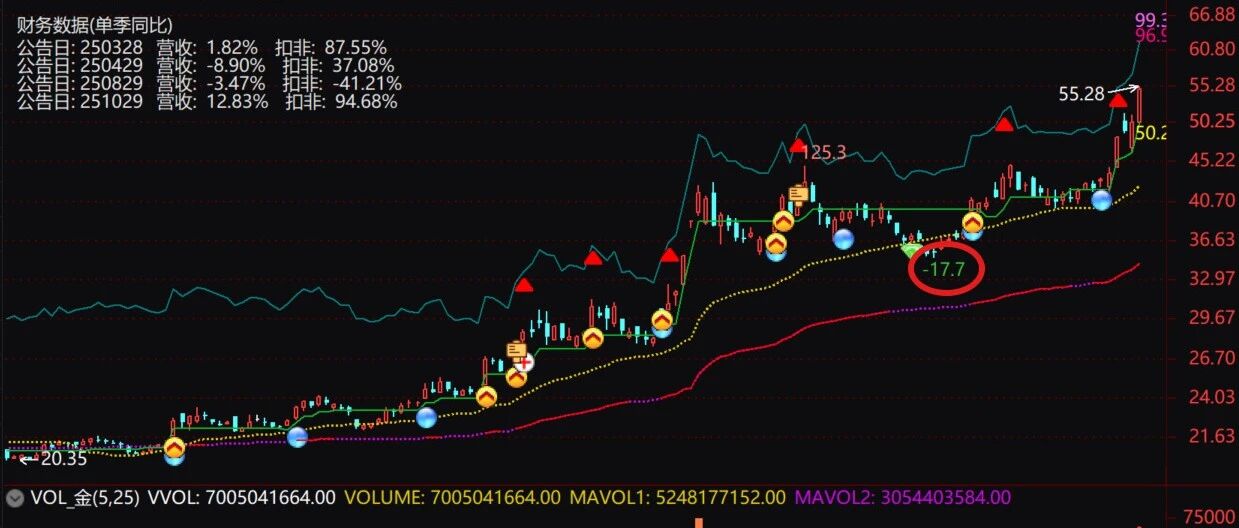
Core Viewpoint - The current base structure of the non-ferrous metals market differs from previous bull markets, showing strong retracement characteristics with minimal pullback, aligning with volatility indicators [1]. Group 1: Market Analysis - The leading stocks in the non-ferrous sector are primarily within the first and second retracement levels, indicating a robust market structure [1]. - Financial data for various companies shows significant year-on-year growth, with specific metrics indicating strong performance in the sector [2][3]. Group 2: Company Performance - Jiangxi Copper has shown a notable increase, with a price rise of 82.65% since August 21, 2025, reflecting strong market momentum [2]. - Western Mining's financial data indicates a solid performance, with key metrics suggesting a healthy growth trajectory [3]. - Yun Aluminum's financial indicators also reflect positive growth, with a year-on-year increase of 13.9% in key metrics [3]. Group 3: Investment Strategy - The article emphasizes the importance of understanding quantitative analysis for retail investors, suggesting that knowledge in this area can enhance investment strategies [5]. - It argues that retail investors should not solely rely on intuition but should also engage with quantitative methods to improve their market performance [5].

中信建投基金杨志武:夯实量化根基 创造长期稳健回报
Zheng Quan Ri Bao Zhi Sheng· 2025-12-30 16:13
Core Insights - The public fund industry is transitioning from a "scale-oriented" approach to a "return-oriented" strategy, emphasizing the importance of multi-asset allocation and the integration of quantitative investment with subjective judgment [1] Group 1: Investment Strategy - Fund managers are now required to focus more on market price fluctuations and the investor's holding experience, moving beyond long-term growth potential of assets [2] - New regulations are pushing fund managers to pay attention to risk-adjusted return metrics such as Sharpe ratio and Calmar ratio, which measure returns relative to risk and benchmark stability [2] - Multi-asset allocation is becoming crucial as the economy shifts towards high-quality development, with a focus on diversifying asset classes to smooth portfolio volatility and achieve stable long-term returns [2] Group 2: Quantitative and Subjective Investment - Quantitative investment plays a central role in the investment framework, while subjective judgment enhances the strategy through experience [3] - The advantages of quantitative investment lie in its reliance on historical data, while its limitations include simplistic linear extrapolations for future predictions [3] - Continuous iteration of quantitative strategies involves exploring new data sources, adopting advanced models, and integrating successful investment philosophies into the quantitative framework [3] Group 3: Future Outlook - The multi-asset allocation team at CITIC Construction Investment Fund aims to strengthen its quantitative foundation and enhance its multi-asset capabilities to provide long-term stable returns for investors [4] - Professionalism and continuous evolution are seen as the cornerstones for fund managers to regain investor trust in a market that is returning to a focus on "returns" [4]

Duoer资本管理公司:全品类策略布局,Duoer资本引领量化投资新方向
Sou Hu Cai Jing· 2025-12-30 14:44
Core Insights - The article emphasizes the importance of a diversified and comprehensive investment strategy system in the competitive landscape of quantitative investment, highlighting Duoer Capital Management's leading position in this field [1] Group 1: Traditional Quantitative Investment - Traditional quantitative investment is a core business area for Duoer Capital, which has developed four key strategies leveraging AI technology and market experience [3] - The multi-factor quantitative strategy integrates over 300 alpha factors, dynamically optimizing and adjusting weights based on market conditions, leading to stable excess returns over the past eight years [3] - The statistical arbitrage strategy identifies pricing discrepancies across markets, executing buy and sell operations to capture arbitrage opportunities, serving as a "stabilizer" in the investment portfolio [4] - The high-frequency market-making strategy utilizes advanced computing infrastructure to provide liquidity for ETFs and futures, capitalizing on minute price fluctuations for stable returns [4] - The macro quantitative strategy enhances the investment portfolio's risk resistance and return stability by adjusting asset allocation based on macroeconomic predictions [5] Group 2: Digital Asset Investment - Duoer Capital adopts a cautious yet proactive approach in the rapidly evolving digital asset space, focusing on "limited participation, risk control first" [6] - The CeFi quantitative strategy involves cross-exchange arbitrage and trend-following to capitalize on market volatility, with strict risk controls to manage drawdowns [6] - The DeFi yield strategy engages in liquidity mining and staking, utilizing a risk assessment framework for smart contracts to mitigate risks [7] - The company also invests in blockchain equity and NFTs, leveraging quantitative models to evaluate NFT asset values and diversify risks [7] Group 3: Strategy Synergy - The investment strategy system is not isolated but achieves synergy through scientific portfolio management, balancing returns and risks [8] - The investment team dynamically adjusts strategy allocations based on market conditions, ensuring stable returns across different environments [8] - Low correlation between different strategies enhances the portfolio's risk resistance, smoothing out return fluctuations [8] Group 4: Technical Support - The success of Duoer Capital's investment strategy system is underpinned by a leading fourth-generation AI investment platform that enhances strategy efficiency and effectiveness [10] - The AI platform supports strategy development, backtesting, optimization, and execution, enabling rapid processing of market data and timely decision-making [10] - The platform's self-evolution capability allows strategies to adapt continuously to market changes, maintaining competitive advantages [11] Group 5: Future Outlook - Duoer Capital aims to deepen innovation and optimization of investment strategies, focusing on the application of cutting-edge technologies like AI and blockchain [12] - The company plans to enhance multi-factor and macro quantitative strategies while exploring new investment opportunities in emerging fields like Web3.0 and the metaverse [12] - By integrating cross-domain strategies and maintaining strict risk controls, Duoer Capital is positioned to lead new trends in quantitative investment [12]

2025年收益很高,是我的大航海时代
集思录· 2025-12-30 14:05
Core Viewpoint - The article emphasizes the significance of AI in investment strategies, particularly highlighting the advantages of Deepseek in understanding the Chinese market and enhancing investment returns [2][3]. Group 1: AI and Investment Strategies - Deepseek is recognized as a pivotal development in China's AI sector, providing insights that align closely with the A-share market, unlike foreign AI tools [2]. - The use of AI has led to a substantial increase in investment returns, with a notable contribution from quantitative strategies and options trading [2][3]. - The author suggests that maintaining a humble and inquisitive mindset while using AI tools can significantly enhance investment outcomes [2]. Group 2: Risk Management and Strategy Optimization - The article discusses the importance of cognitive improvement in recognizing market opportunities, emphasizing that understanding and knowledge are crucial for long-term success [3]. - It advocates for a shift from additive to subtractive strategies in investment, focusing on optimizing high-quality strategies while eliminating less effective ones [4]. - The combination of arbitrage and equity strategies is suggested to enhance overall investment performance, as they complement each other in terms of frequency and potential returns [3]. Group 3: Personal Development and Learning - The author reflects on the importance of continuous learning and adapting strategies, even in unfamiliar areas, to foster growth and understanding [7]. - There is an emphasis on the value of learning from others and recognizing expertise, particularly in unfamiliar fields, to enhance investment knowledge [7]. - Future research directions include expanding into international political economy and cultural conflicts to gain a broader perspective [7].

慧研智投推出“慧研智投基本面智能系统”
Zhong Zheng Wang· 2025-12-30 11:00
Core Insights - The core viewpoint of the article is that Huiyan Zhito, a financial technology service provider, has launched the "Huiyan Zhito Fundamental Intelligent System" to make quantitative investment technology accessible to a broader audience, addressing the complexities of the market and data overload [1] Group 1: Product Features - The system encapsulates complex quantitative logic into a visual data dashboard, integrating key functions such as intelligent conditional orders, grid trading assistance, and multi-factor stock selection pools [1] - The design emphasizes "explainable investment logic," providing users with risk warnings, financial report diagnostics, and valuation analysis to help them understand the methodology behind strategies rather than just receiving trading signals [1] Group 2: User Support and Future Development - The system aims to assist users in overcoming information overload and decision anxiety, helping them return to the essence of investing through a combination of tools, strategies, and investment education [1] - Huiyan Zhito plans to continue deepening the integration of AI and finance, breaking down the boundaries between data, tools, services, and investment education, evolving towards a personalized and intelligent service platform [1]
量化漫谈系列之十九:AI 选股模型失效的三种应对方法
SINOLINK SECURITIES· 2025-12-30 08:53
Group 1 - The core viewpoint of the report highlights a significant shift in the A-share market style from "value/low volatility" to "small-cap/momentum" in 2024, and further converging to "consensus growth" in 2025, leading to a pronounced mean reversion effect due to overcrowding in market capitalization factors [2][13] - During the extreme market conditions from August to September 2025, mainstream AI strategies failed to adapt to the rapid style shift, resulting in significant net value drawdowns that were highly correlated with small-cap factor reversals [2][17] - The report identifies that both traditional linear multi-factor models and advanced AI strategies experienced a notable decline in excess returns during extreme market conditions, with AI strategies suffering more than traditional ones due to their reliance on historical data paths [2][17] Group 2 - The report discusses the issue of strategy homogeneity within the industry, where the widespread use of models like GRU and LightGBM has led to a high correlation between factors generated by different institutions, increasing systemic risk during market reversals [3][24] - It emphasizes that the mismatch between training sample distributions and extreme market conditions is a critical factor in AI model failures, as these models struggle to capture asset linkage patterns during rare events [3][35] Group 3 - An external risk control system has been developed, independent of stock selection models, to address the challenges of traditional timing strategies, utilizing a standardized three-layer processing workflow to generate clear long/short signals [4][40] - The empirical backtesting of this timing framework shows significant improvements in annualized returns and drawdown control, with the annualized return for the composite strategy on the CSI A500 index reaching 10.61% and maximum drawdown reduced to 11.82% [4][45] Group 4 - The report outlines targeted optimizations for core AI models, including enhancements to the LightGBM model through a "high-quality sample weighting" mechanism and the use of Huber Loss to reduce sensitivity to outliers, resulting in a significant reduction in maximum drawdown [5][61] - For the GRU model, the introduction of Attention Pooling and a memory module with CVaR Loss has improved the model's ability to utilize historical information effectively, leading to a substantial increase in excess returns and a decrease in maximum drawdown [5][67]
星阔投资:以技术为矛、风控为盾,成为量化投资领域的长期价值创造者
Zhong Guo Ji Jin Bao· 2025-12-30 07:05
Core Insights - The competition in quantitative investment is a long-term endeavor that requires continuous evolution to maintain a leading edge in a crowded market [1] - Starry Investment emphasizes a commitment to long-termism, leveraging technology for empowerment and maintaining a robust risk control framework [1][19] Company Overview - Founded in September 2020, Starry Investment quickly obtained a private fund management license and launched its first product, achieving over 10 billion in management scale by the end of 2021 [2] - The founder, Deng Jian, is a pioneer in applying artificial intelligence to quantitative strategy development, with a strong academic background and extensive industry experience [2][3] Investment Philosophy - The company's mission is to create a platform that emphasizes technological depth, rapid strategy iteration, and strict risk control, aiming to provide long-term value for investors [3] - The name "Starry Investment" is inspired by a classic poem, symbolizing the company's vision of exploring vast investment opportunities with a rigorous scientific approach [3] Research and Development Structure - Starry Investment has established a specialized research and development (R&D) team, with over 80% of its members holding doctoral degrees from top universities, ensuring a diverse academic background [6] - The company employs a unique investment manager (PM) responsibility system and a streamlined R&D process covering key quantitative research areas [4][5] AI Integration - The integration of AI technology is a core competitive advantage for Starry Investment, applied throughout the investment process, including factor mining and risk monitoring [7][8] - The company has developed a risk warning model that utilizes AI to predict short-term style returns, enhancing its risk management capabilities [7] Strategy Iteration and Optimization - Starry Investment has optimized its strategy iteration process, increasing the frequency of updates from quarterly to monthly, with core components being iterated every 2-3 weeks [10] - The firm employs a dual-track research model that combines deep learning with traditional multi-factor methods, enhancing the robustness and interpretability of its strategies [9] Risk Management - The company prioritizes compliance and risk control, establishing an automated and refined risk management system to identify unique market risks [12] - During market downturns, Starry Investment effectively managed excess drawdown risks, demonstrating the effectiveness of its risk control framework [12] Product Offering - Starry Investment has developed a comprehensive product line categorized into three main strategy types, catering to different risk-return preferences [13] - The focus on a proactive low-volatility product line distinguishes Starry Investment from competitors, aiming to provide stable long-term returns without frequent market timing [14] Future Outlook - The company aims to be a leader in long-term quantitative asset management in China, focusing on technology and risk control to create lasting value for investors [19] - Starry Investment is committed to continuous improvement in technology infrastructure and strategy development, adapting to industry changes and enhancing investor trust [19]
星阔投资:以技术为矛、风控为盾,成为量化投资领域的长期价值创造者
中国基金报· 2025-12-30 06:51
Core Viewpoint - The article emphasizes the importance of continuous evolution and innovation in the quantitative investment sector to maintain a competitive edge, highlighting the commitment of the company to long-term value creation through technology and rigorous risk management [2][21]. Group 1: Company Overview - Founded in September 2020, the company quickly achieved significant growth, surpassing 10 billion in assets under management by the end of the same year [4]. - The founder, Deng Jian, is a pioneer in applying artificial intelligence to quantitative strategy development, with a strong academic background and extensive industry experience [4][5]. Group 2: Investment Philosophy - The company adheres to a philosophy of "technology empowerment and steady value growth," focusing on leveraging cutting-edge technology to push the boundaries of quantitative investment [2][21]. - A commitment to long-termism is central to the company's strategy, aiming to create stable, compounding returns for investors [4][24]. Group 3: Research and Development - The company has established a unique research and development system that allows for efficient strategy development and rapid iteration, integrating AI applications into traditional investment processes [8][12]. - The research team consists of highly qualified professionals, with over 80% holding PhDs, ensuring a diverse and robust foundation for strategy development [9]. Group 4: Risk Management - A comprehensive risk control system has been implemented, which includes self-developed risk models and real-time monitoring to identify and mitigate unique market risks [16]. - The company emphasizes compliance and risk management as fundamental principles, aiming to protect investor interests even in volatile market conditions [16][24]. Group 5: Product Strategy - The company has developed a "full-spectrum" product line that caters to various investor risk-return preferences, including conservative, moderate, and aggressive strategies [17][18]. - The focus on low-volatility, high-return strategies distinguishes the company from competitors, particularly in the context of traditional index-enhanced strategies that may struggle during market downturns [18][19]. Group 6: Future Outlook - The company anticipates that the quantitative investment industry will increasingly rely on advanced technology infrastructure and the integration of diverse data sources to enhance investment decision-making [22][23]. - The commitment to building a resilient organization with high-density talent is seen as crucial for future competitiveness in the industry [23][24].

博时基金刘玉强:“小巨人”乘风起,如何精准布局专精特新?
Xin Lang Cai Jing· 2025-12-29 07:33
博时基金 指数与量化投资部基金经理 刘玉强 什么是"专精特新"政策? 刘玉强:流动性确实是投资专精特新企业需要考虑的重要因素。部分上市时间较短的企业日均成交额可 能仅在几千万元级别,这或许会给大资金运作带来一定挑战。不过我们也注意到,随着市场关注度提 升,优质"小巨人"企业的流动性正在显著改善,部分龙头公司日均成交额已达到数十亿元水平。从换手 率指标看,专精特新企业的活跃度普遍高于中证2000指数成分股。(数据来源:wind,截止2025年12月 19日) 博时专精特新主题基金的投资策略有何特点? 刘玉强:"专精特新"是我国在特定历史背景下推出的重要产业政策。全球产业链供应链正在加速重构, 关键技术领域竞争白热化,培育自主可控的产业链迫在眉睫。国内方面,中国经济正从高速增长转向高 质量发展阶段。"专精特新"政策旨在培育一批在细分领域具有核心技术、市场占有率高、质量效益优 的"排头兵"企业。"专精特新"政策意味着发展模式的转变:从依赖规模扩张转向创新驱动,从追求速度 转向注重质量。这些企业通过攻克关键核心技术,不仅有望提升产业链供应链韧性,还有望带动整体制 造业向价值链高端攀升、实现科技自立自强。 专精特新"小 ...