人民币升值

Search documents
业内人士:支撑人民币走强的核心逻辑清晰可见
Xin Lang Cai Jing· 2026-01-02 07:09
Core Viewpoint - The offshore RMB has surpassed 6.97 against the USD, continuing its appreciation trend since the end of 2025, with expectations for RMB to officially return to the "6" range by 2026 [1] Group 1: Factors Supporting RMB Strength - The weakening of the USD index, driven by the high debt pressure in the US and the Federal Reserve's difficulty in tightening policies, creates favorable external conditions for RMB appreciation [1] - Continuous improvement in the domestic economic fundamentals, along with the release of policy dividends from the "14th Five-Year Plan," has significantly enhanced market confidence in RMB assets [1] Group 2: Trade Surplus Impact - Approximately $900 billion in unconverted trade surplus accumulated over the past three years is showing signs of returning, providing strong support for the RMB exchange rate [1]
人民币全年升值4.2%,低于美元贬值幅度,2026年能升破6.6吗?
Sou Hu Cai Jing· 2026-01-02 07:09
人民币全年升值4.2%,美元却跌了9.4%! 这背后藏着央行的一场精心调控。 如果你在2025年1月需要1万美元,你得准备7.299万元人民币;如果你等到12月 31日再去换,只需要6.994万元,足足省了3000多元。 可奇怪的是,美元在这一年里的贬值幅度高达9.4%,而人民币的升值幅度还不到它的一半。 欧元、日元等其他主要货币对美元的升值幅度都远超人民币。 这种"克制"的升值节奏并非偶然。 2025年,特朗普政府推出了所谓的"对等关税"政策,给中国出口企业带来了巨大压力。 如果人民币升值太快,出口企业 将同时面临关税上涨和汇率升值的双重挤压。 中国船舶宣布2026年开展外汇套期保值业务,新开展交易额度预计不超过240亿美元。 宁德时代调整后的外汇套期保值额度最高合约价值不超过2600亿元。 跨境资金流动更加活跃。 11月单月中国实际使用外资同比增长26.1%,改变了此前同比下降的趋势。 人民币资产吸引力提升,外资增配中国股票等资产,直接增加了对人民币的需求。 央行通过汇率中间价等工具悄悄引导着升值节奏。 全年人民币汇率呈现出明显的"先弱后强、波动收窄"特征。 年初到4月初,人民币甚至一度贬值至7.35附近 ...

【业内人士:支撑人民币走强的核心逻辑清晰可见】今早离岸人民币兑美元升破6.97,这一走势延续了2025年底以来的升值态势,市场普遍预期人民币将在2026年正式重返“6字头”时代。业内人士分析认为,支撑人民币走强的核心逻辑清晰可见:一方面,美国高债务压力下美联储政策易松难紧,美元指数持续走弱...
Sou Hu Cai Jing· 2026-01-02 07:05
Core Viewpoint - The offshore RMB has strengthened against the USD, breaking the 6.97 mark, continuing the appreciation trend since the end of 2025, with expectations for RMB to return to the "6" range by 2026 [1] Group 1: Supporting Factors for RMB Strength - The US faces high debt pressure, making it difficult for the Federal Reserve to tighten policies, which has led to a continuous weakening of the USD index, creating favorable external conditions for RMB appreciation [1] - The domestic economic fundamentals are continuously improving, coupled with the release of policy dividends from the "14th Five-Year Plan," significantly enhancing market confidence in RMB assets [1] Group 2: Trade Surplus and Its Impact - Approximately $900 billion in unconverted trade surplus accumulated over the past three years is showing signs of returning, providing strong support for the RMB exchange rate [1]
恒生科指午后持续走强涨超4%,华虹半导体涨超10%,百度集团涨近9%
Jin Rong Jie· 2026-01-02 06:29
Group 1 - The Hang Seng Technology Index rose over 4%, with the Hang Seng Index up 2.68% at 26,317.5 points, and the Hang Seng Technology Index at 5,743.7 points, reflecting strong performance in sectors such as electric equipment, domestic retail, gaming software, semiconductors, and military industry stocks [1] - Major technology stocks saw significant gains, including Alibaba up 4.62%, Tencent up 4.09%, JD.com up 3.32%, Xiaomi up 2.85%, NetEase up 6.62%, Meituan up 1.84%, Kuaishou up 3.83%, and Bilibili up 3.42% [1] - Hua Hong Semiconductor surged over 10% after announcing plans to acquire a 97.4988% stake in Huali Micro for a transaction price of 8.268 billion RMB, along with plans to raise 7.556 billion RMB through a stock issuance [1] - Baidu Group increased nearly 9% following the announcement that Kunlun Chip submitted a listing application to the Hong Kong Stock Exchange, aiming for approval by January 1, 2026 [1] Group 2 - Guolian Minsheng Securities predicts that the Hong Kong stock market will benefit from a weak recovery in the domestic economy, ongoing Federal Reserve easing, and continued industry catalysts in the first half of 2026 [2] - There is an expected incremental capital inflow of 630 billion to 1,050 billion HKD from southbound funds in 2026, with passive index funds and insurance capital having significant potential [2] - The valuation of major Hong Kong technology stocks is currently aligned with earnings, and any further valuation increase will require earnings growth or an unexpected improvement in the funding environment [2] - Western Securities anticipates a short-term trend of RMB appreciation driven by substantial pending settlement funds and cross-border capital, with long-term support from China's strong industrial competitiveness [2]
开门红!港股、人民币大涨
Zhong Guo Zheng Quan Bao· 2026-01-02 05:49
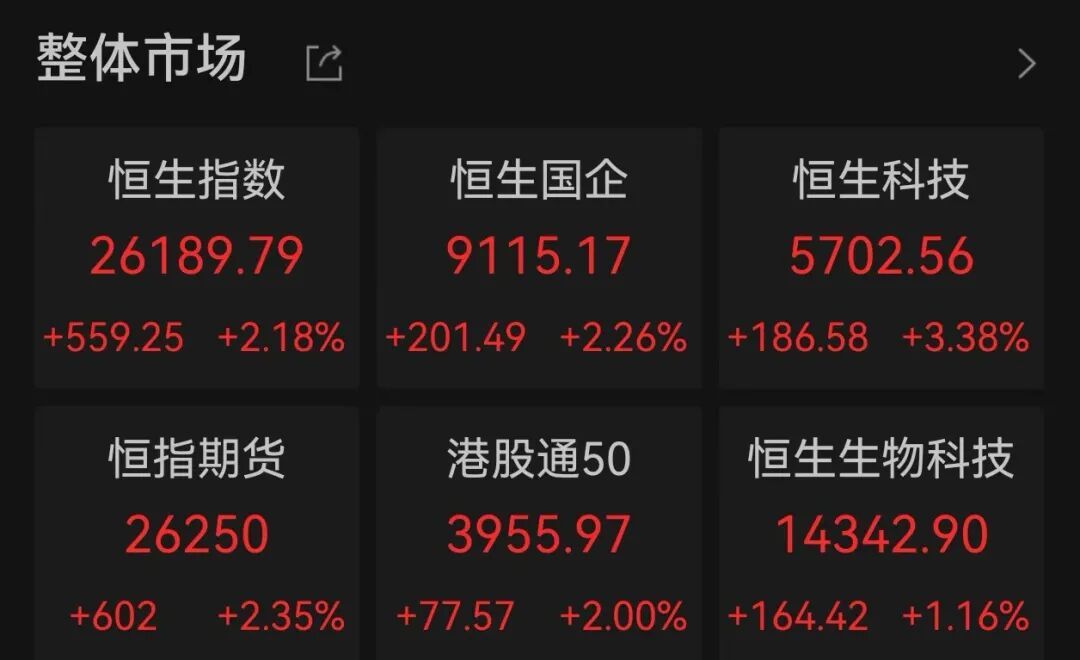
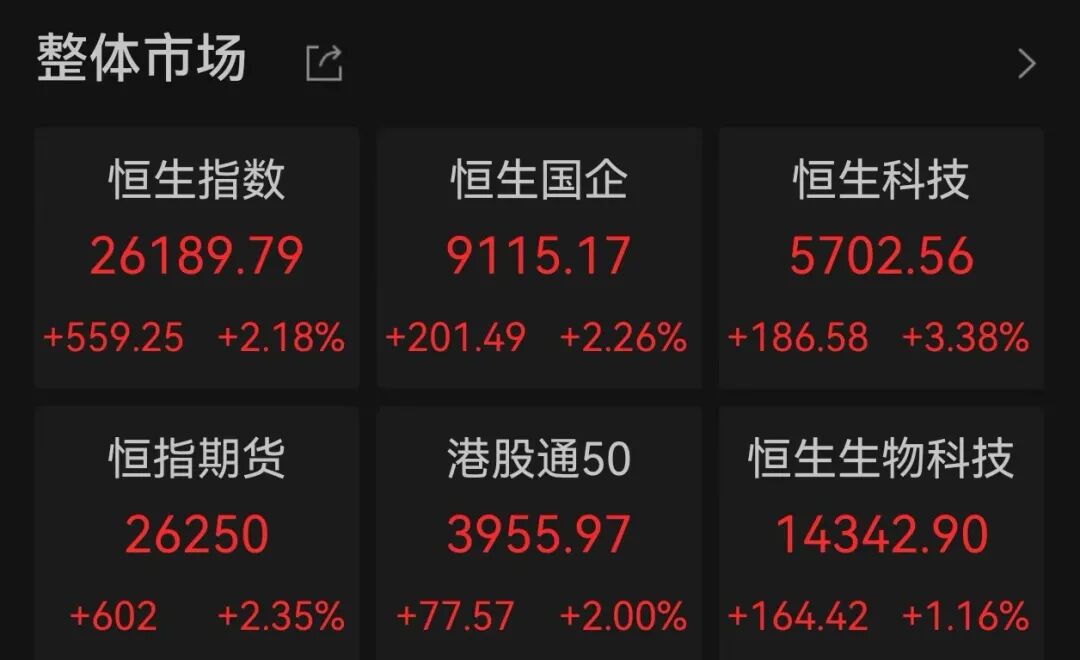
Group 1 - The Hong Kong stock market experienced a strong start in 2026, with all three major indices rising over 2% on the first trading day [1][3] - The Hang Seng Index, Hang Seng China Enterprises Index, and Hang Seng Technology Index increased by 2.18%, 2.26%, and 3.38% respectively, with the Hang Seng Index recovering above the 26,000-point mark [3] - Semiconductor, internet giants, home appliances, and automotive sectors showed significant strength, contributing to the overall market performance [1][5] Group 2 - Wall Street's first listed stock in Hong Kong, Biren Technology, debuted with a strong performance, initially rising over 100% and closing up 72.86%, with a market capitalization exceeding 80 billion HKD [1][5][7] - Biren Technology's IPO price was set at 19.6 HKD per share, raising a total of 5.583 billion HKD, with a subscription rate of 2347.53 times [7] - The company focuses on providing general intelligent computing solutions and aims to develop smart computing hardware and software platforms [6][7] Group 3 - The offshore RMB strengthened significantly, breaking the 6.97 mark against the USD, reaching a high of 6.96755, the highest level since May 2023 [1][7] - Analysts expect the RMB appreciation trend to continue due to strong industrial competitiveness and capital inflows [11]
开门红!港股大涨,人民币大涨
Zhong Guo Zheng Quan Bao· 2026-01-02 05:10
Core Viewpoint - The Hong Kong stock market experienced a strong start in 2026, with significant gains across major indices, driven by technology stocks and the debut of Wallrun Technology, which saw a substantial increase in its share price [1][2][4]. Market Performance - On January 2, 2026, the three major indices in the Hong Kong stock market all rose by over 2%, with the Hang Seng Index recovering above the 26,000-point mark. The Hang Seng Index, Hang Seng China Enterprises Index, and Hang Seng Tech Index increased by 2.18%, 2.26%, and 3.38% respectively [2]. - Technology stocks led the market rally, with notable performances from Baidu Group, Alibaba, Kuaishou, and Tencent, all showing significant gains [4]. Wallrun Technology Listing - Wallrun Technology, known as the "first GPU stock" in Hong Kong, was listed on January 2, 2026, and saw its share price rise by as much as 120% during the morning session, ultimately closing up by 72.86% with a market capitalization exceeding 80 billion HKD [4][6]. - The company issued shares at a price of 19.6 HKD, raising a total of 5.583 billion HKD, with a subscription rate of 2,347.53 times [6]. Currency Movement - The offshore RMB strengthened significantly, breaking the 6.97 mark against the USD, reaching a high of 6.96755, the highest level since May 2023 [1][6]. Future Outlook - Analysts from Guolian Minsheng Securities are optimistic about the Hong Kong stock market's performance in 2026, citing factors such as a weak recovery in the domestic economy and continued liquidity from the Federal Reserve as supportive for the market [7]. - The report suggests that there is a potential inflow of 630 billion to 1,050 billion HKD from southbound capital, with passive index funds and insurance capital expected to play a significant role [7]. - The technology sector is highlighted as a potential area for investment, with current valuations aligning with earnings, but further increases in valuation will depend on earnings growth and improved liquidity conditions [8].
开门红!港股大涨 人民币大涨
Zhong Guo Zheng Quan Bao· 2026-01-02 05:08
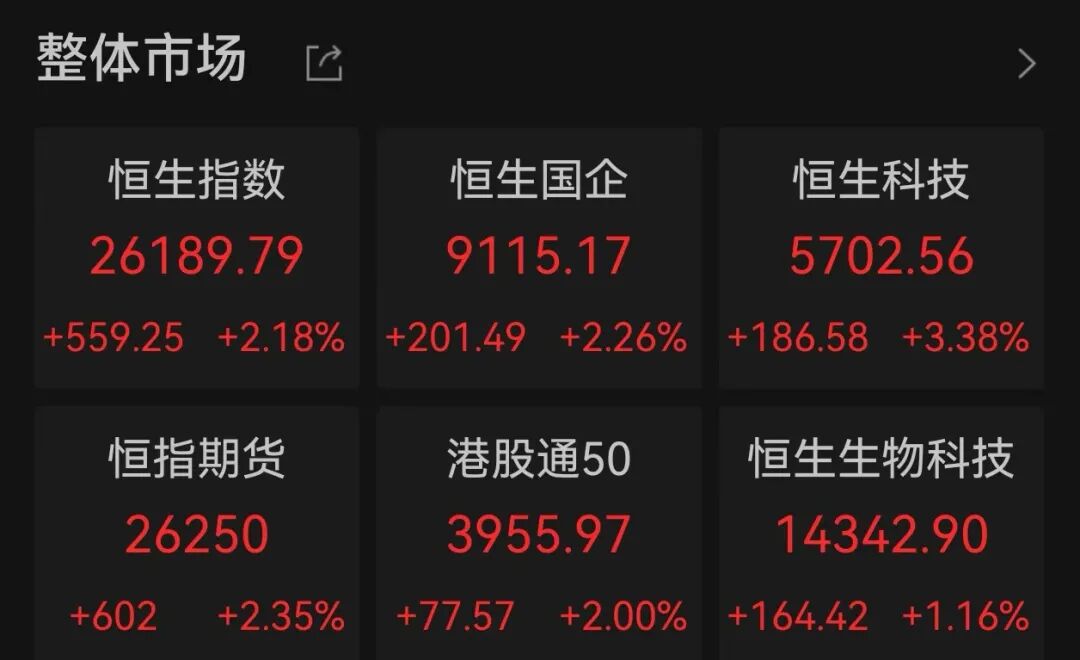
Group 1 - The Hong Kong stock market experienced a strong start in 2026, with all three major indices rising over 2% in the morning session, led by technology stocks [2][3][8] - The Hang Seng Index recovered the 26,000-point mark, with specific increases of 2.18% for the Hang Seng Index, 2.26% for the Hang Seng China Enterprises Index, and 3.38% for the Hang Seng Tech Index [3][8] - Semiconductor, internet giants, home appliances, and automotive sectors showed significant strength, contributing to the overall market performance [1][3] Group 2 - Wall Street's first listed stock in 2026, Birran Technology, saw its share price rise by 72.86% at midday, reaching a market capitalization of over 80 billion HKD [1][5][7] - Birran Technology's initial public offering (IPO) was priced at 19.6 HKD per share, raising a total of 55.83 billion HKD, with a subscription rate of 2347.53 times [7][5] - The company focuses on providing general intelligent computing solutions and aims to develop smart computing hardware and software platforms [6][7] Group 3 - The offshore RMB strengthened significantly, breaking the 6.97 mark against the US dollar, reaching a high of 6.96755, the highest since May 2023 [1][7] - Analysts from Guolian Minsheng Securities are optimistic about the Hong Kong stock market's performance in 2026, citing a weak recovery in the domestic economy and continued liquidity from the Federal Reserve as positive factors [9][10] - The anticipated inflow of southbound funds is projected to be between 630 billion HKD and 1,050 billion HKD, indicating substantial growth potential for the market [9]
离岸人民币兑美元升破6.97,创2023年5月以来新高,行业如何配置?
Sou Hu Cai Jing· 2026-01-02 01:39
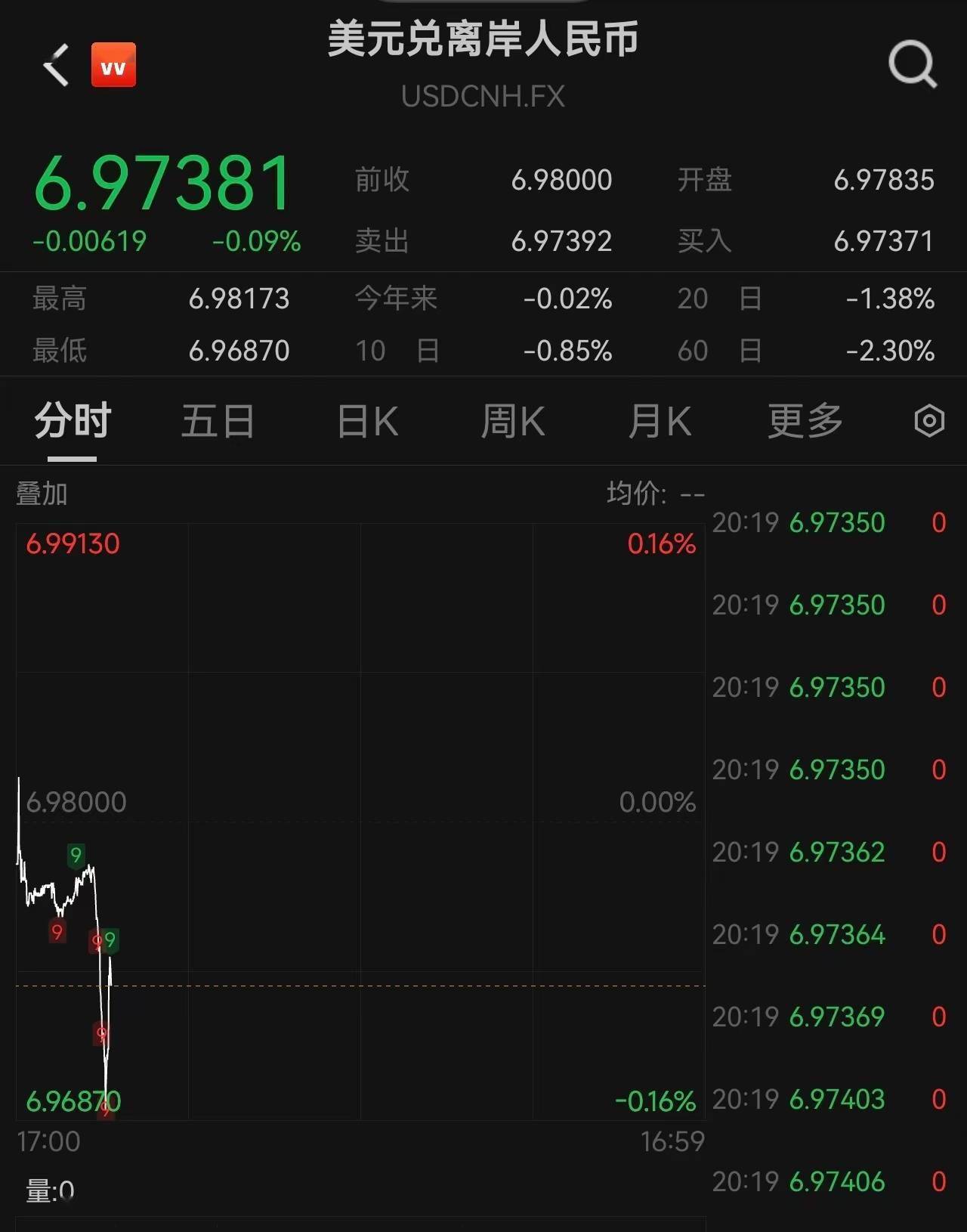
Core Viewpoint - The offshore RMB has appreciated against the US dollar, surpassing 6.97, reaching a high of 6.9678, the highest since May 2023 [1] Group 1: Impact of RMB Appreciation - The appreciation of the RMB is expected to reverse capital flows, including domestic funds waiting to be settled abroad and previously withdrawn foreign funds, potentially leading to a significant capital inflow into Chinese assets [3] - Historical data shows that during previous RMB appreciation cycles since 2016, both A-shares and Hong Kong stocks generally experienced gains [3] - The current macro environment is characterized by "domestic fundamentals improving + overseas easing," which may enhance the upward elasticity of Hong Kong stocks compared to A-shares [3] Group 2: Industry Configuration Logic - Four key logic points for industry configuration during RMB appreciation include: 1. Lower import costs benefiting upstream resource sectors such as coal, steel, and certain chemicals [4] 2. Decreased foreign currency debt costs benefiting industries with significant USD liabilities, including real estate and logistics [4] 3. Increased domestic purchasing power benefiting consumption-driven sectors like cross-border e-commerce and high-end services [4] 4. Attraction of foreign capital back to Chinese assets, with a shift in foreign investment preferences potentially reinforcing current market trends [4] Group 3: Key Sectors to Watch - Focus on sectors benefiting from changing foreign investment preferences and strong domestic consensus, including AI hardware, advanced manufacturing, and non-ferrous metals [5] - Upstream resource sectors benefiting from rising PPI and reduced import costs, such as steel and chemicals [5] - Service and high-end consumption sectors benefiting from improved domestic purchasing power, including duty-free and e-commerce [5] - Industries with reasonable valuations and potential for marginal improvement in 2024, such as aviation, paper, and logistics [5] Group 4: Industry Performance Metrics - The projected net profit growth rates for various sectors by 2026 and Q3 2025 indicate high growth potential in communication electronics, battery manufacturing, and certain chemical sectors [6] - Specific industries like steel and logistics show varying degrees of recovery potential, with some facing challenges while others are positioned for growth [6]
大涨4462点,人民币进入6字头,中国官媒12个字罕见警告
Sou Hu Cai Jing· 2026-01-01 11:41
Group 1 - The core point of the article is that the recent appreciation of the Renminbi (RMB) against the US dollar is a result of both external and internal factors, leading to a complex situation where the Chinese government has issued warnings despite the apparent benefits of currency appreciation [2][3][5][11]. - The external factor driving the RMB appreciation is the change in US monetary policy, specifically the shift from interest rate hikes to rate cuts, which weakened the US dollar and made RMB assets more attractive to international investors [5][9]. - Internally, a "settlement tide" has emerged as Chinese export companies, previously holding onto US dollars in anticipation of further depreciation, are now converting their dollars to RMB due to fears of losing value, creating a self-reinforcing cycle of appreciation [7][9]. Group 2 - The Chinese government warns that while currency appreciation may seem beneficial, it poses risks to export-oriented businesses, as a stronger RMB can make their products more expensive and less competitive internationally [11][13]. - There is concern about speculative capital entering the market, which could lead to volatility and potential financial instability, reminiscent of past economic crises in other countries [13][15]. - The government emphasizes the importance of maintaining a stable RMB exchange rate rather than focusing solely on appreciation, advocating for a dual-directional fluctuation as the norm to prevent market overheating and speculative behavior [15][16]. Group 3 - For businesses, especially exporters, it is crucial to adopt a "risk-neutral" mindset and utilize financial instruments to hedge against currency fluctuations, ensuring stable profits regardless of exchange rate movements [16][18]. - Ordinary individuals are advised not to engage in currency speculation unless there is a clear need for foreign currency, as the long-term stability of the RMB is expected, and efforts should be focused on enhancing personal capabilities and investing in domestic assets [19][21]. - The article concludes that the recent RMB appreciation is justified by underlying factors, but the government's warnings serve as a precaution against potential market excesses that could harm the real economy [21].
人民币站上7.0,央行工具箱亮了!存款、股市、工作迎三大新变化
Sou Hu Cai Jing· 2026-01-01 10:38
Core Viewpoint - The recent appreciation of the offshore RMB against the USD has raised concerns about potential economic impacts, drawing parallels to Japan's past experiences with currency appreciation and its consequences [1][4]. Group 1: Currency Appreciation Effects - The RMB has recently crossed the 7.0 mark against the USD, leading to discussions about its implications for the economy [1]. - The appreciation of the RMB has made imports cheaper, benefiting industries such as steel and oil, and providing cost relief to consumers [10][12]. - Companies involved in overseas mergers and technology imports are finding it more cost-effective due to the stronger RMB, with significant savings reported [12]. Group 2: Impact on Savings and Investments - Individuals holding USD deposits are experiencing reduced real returns due to both the appreciation of the RMB and falling interest rates in the US [15]. - Export-oriented businesses are converting their USD holdings to RMB to reduce debt burdens, as the cost of borrowing in RMB becomes more favorable [17]. - Foreign capital is increasingly entering the Chinese market, with significant net inflows into A-shares, particularly in consumer and technology sectors [17]. Group 3: Economic Outlook and Investment Strategy - Fund managers indicate that foreign investors are optimistic about the recovery of the Chinese economy and are positioning themselves accordingly [19]. - It is advised that investors focus on sectors with policy support and capital inflows, such as consumption recovery and technology growth, rather than speculative currency trading [19][21]. - The overall sentiment suggests that as the economic fundamentals improve, asset values in real estate and stock markets will stabilize and potentially rise [23].