战略性新兴产业

Search documents
江苏发布“十四五”金融“成绩单”:新增259家上市公司,居全国第一
Yang Zi Wan Bao Wang· 2026-01-21 13:30
Core Insights - Jiangsu Province has achieved significant financial development during the "14th Five-Year Plan" period, with notable increases in new loans, listed companies, and direct financing [1][2][7] Group 1: Financial Achievements - Jiangsu Province ranked first in the nation for new loans for four consecutive years, with a total of 2,295 billion yuan raised from 259 newly listed companies [1][2] - The total number of domestic listed companies in Jiangsu reached 722, with a significant increase in the quality of these companies [3][6] - The province's social financing scale has remained among the top in the country, with an average annual increase of 3.35 trillion yuan from 2021 to 2024 [4] Group 2: Risk Management and Financial Stability - Jiangsu has maintained a low non-performing loan rate of 0.84%, significantly below the national average, and has successfully cleared 575 non-compliant financial institutions [2][3][7] - The province has implemented measures to reduce financial risks, including a crackdown on illegal fundraising activities and the restructuring of high-risk companies [3][6] Group 3: Support for the Real Economy - Financing guarantees in Jiangsu exceeded 1.16 trillion yuan, with a focus on supporting the manufacturing, technology, and green sectors [2][4] - The average interest rate for new corporate loans decreased by 149 basis points compared to 2020, contributing to a favorable lending environment [4] Group 4: Digital Currency and Innovation - Jiangsu has led the nation in the promotion of digital currency, with a total transaction volume of 15 trillion yuan and 7.805 million digital wallets opened [5] - The province has seen the emergence of innovative financial products, including various first-of-their-kind projects in the country [7] Group 5: Capital Market Development - Direct financing in Jiangsu reached 6.97 trillion yuan during the "14th Five-Year Plan," marking a 61.95% increase from the previous five-year period [7] - The province has established 11 companies with a market capitalization exceeding 100 billion yuan, reflecting the growth of strategic emerging industries [6]
三大先导产业增加值同比增长9.6%!上海工业经济动能强劲
Xin Lang Cai Jing· 2026-01-21 04:46
Core Insights - The economic performance of Shanghai in 2025 shows a year-on-year industrial value-added growth of 5.0% and a total industrial output value growth of 4.6% [2][5] - Strategic emerging industries in Shanghai are projected to grow by 6.5%, increasing their share of the total industrial output value to 45% in 2025, up from 43.6% in 2024 [2][5] - The three leading industries in Shanghai are expected to see a manufacturing output growth of 9.6%, with integrated circuit manufacturing growing by 15.1% and artificial intelligence manufacturing by 13.6% [2][5] Industrial Growth - The total output value of Shanghai's strategic emerging industries is expected to grow by 6.5% in 2025, with the new energy industry growing by 12.9% and high-end equipment industry by 11.1% [2][5] - The "14th Five-Year Plan" emphasizes that this period is crucial for Shanghai's comprehensive development and transformation [2][5] Policy Initiatives - The "14th Five-Year Plan" suggests accelerating the development of three leading industries, enhancing the capabilities and manufacturing levels of integrated circuit equipment, and promoting breakthroughs across the entire industrial chain [4][7] - The plan also focuses on advancing artificial intelligence innovations and improving the development of high-performance computing chips and intelligent technology [4][7] - Shanghai's traditional manufacturing sector will concentrate on product value enhancement, efficiency improvement, and structural optimization to transition from a following position to a leading one [4][7]

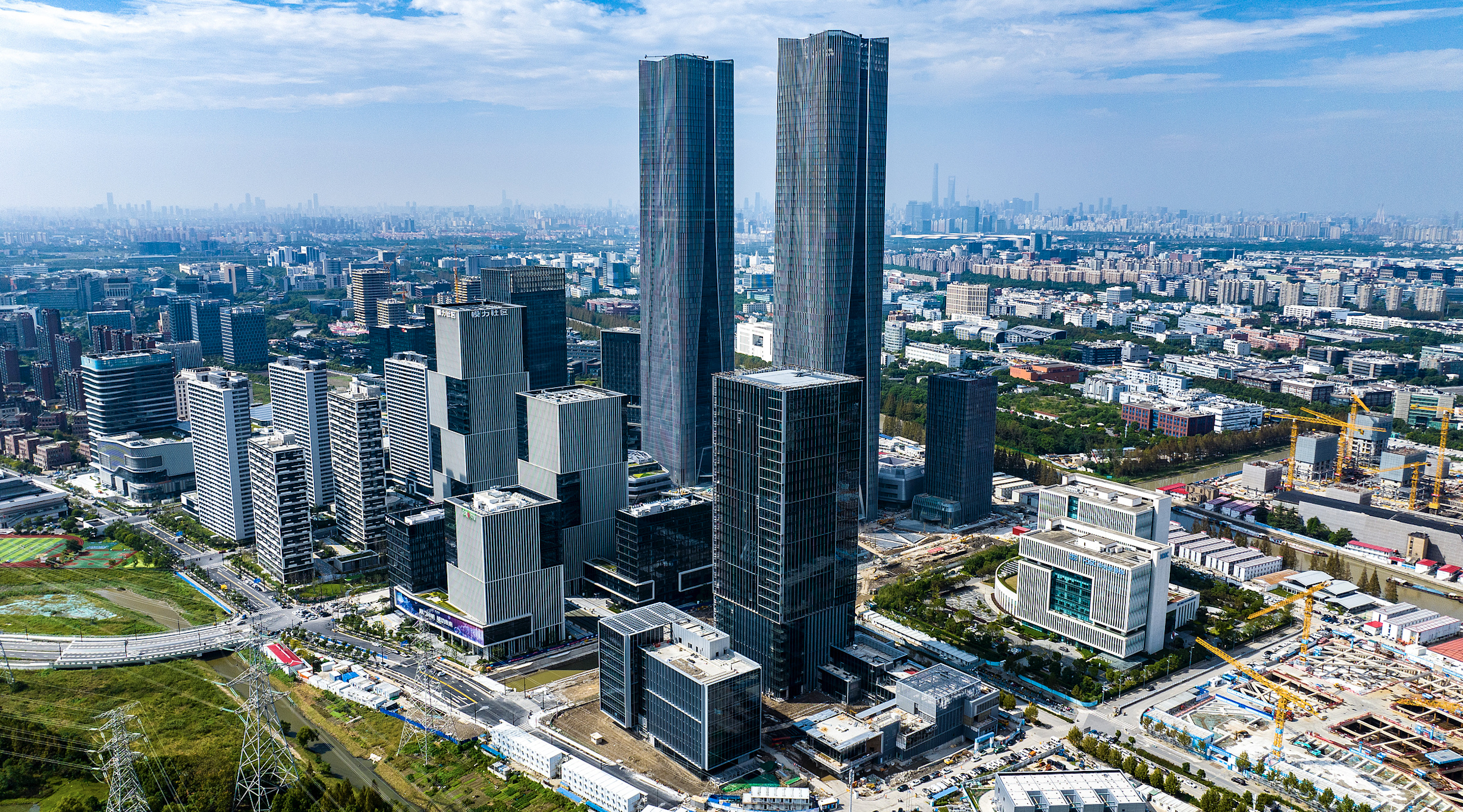
盐城2025年GDP 突破8000亿元,战略新兴产业规模全部超百亿
Yang Zi Wan Bao Wang· 2026-01-21 03:21
Core Insights - The government report from Yancheng indicates a significant economic growth target for 2025, with GDP expected to exceed 800 billion yuan, an average annual growth rate of approximately 5.7%, and per capita GDP surpassing 120,000 yuan [1] Group 1: Economic Growth Drivers - The industrial economy is expected to continue its robust growth, with total industrial output projected to exceed 1 trillion yuan, and all "5+2" strategic emerging industries expected to surpass 100 billion yuan [3] - The automotive industry is anticipated to regain a scale of 100 billion yuan, with the annual growth rate of industrial added value projected at 8% [3] - High-tech industries are expected to account for 47% of the industrial output, reflecting an increase of 8.4 percentage points over five years [3] Group 2: Agricultural Development - Yancheng has been recognized as a national pilot zone for agricultural green development, with total grain production exceeding 14 billion jin for 11 consecutive years [3] - The city is the only one in the Yangtze River Delta with agricultural output value exceeding 150 billion yuan [3] - The establishment of the Blue Seed Industry Yellow Sea Laboratory and the addition of five national key agricultural leading enterprises are notable developments [3] Group 3: Service Sector Expansion - The service sector's contribution to the GDP is projected to exceed 50%, with revenue from large-scale service enterprises surpassing 100 billion yuan [3] - The annual number of tourists and total revenue from tourism are expected to exceed 60 million visitors and 60 billion yuan, respectively [3] Group 4: County-Level Economic Growth - By 2025, all counties and districts in Yancheng are expected to exceed 50 billion yuan in economic output, with Dongtai becoming a 100 billion yuan county [5] - Dafeng, Yandu, Sheyang, Jianhu, and Funing are projected to surpass 80 billion yuan [5] - Yancheng Economic Development Zone and Yancheng High-tech Zone are expected to improve their national rankings by over 10 positions, indicating a continuous enhancement of county-level economies [5]
财政部等四部门印发新规,对政府投资基金布局和投向作出系统规范;名川资本第三期人民币基金正式成立丨01.12-01.18
创业邦· 2026-01-21 00:08
Key Points - The article discusses significant events in the private equity fund market from January 12 to January 18, highlighting various fund establishments and their investment focuses [5] - It emphasizes the role of government-guided funds in supporting strategic industries and innovation [6] Government-Backed Funds - A 5 billion RMB fund for the vanadium-titanium industry in Panzhihua was established to support key sectors like new materials and clean energy [7] - Zhengzhou's 5 billion RMB mother fund was set up to engage in private equity investments and venture capital [8] - Hefei's specialized fund, with a total scale of 1.5 billion RMB, aims to invest in competitive small and medium enterprises in advanced manufacturing and new materials [8] - Beijing's 500 million RMB fund focuses on robotics and hard technology, aiming to nurture potential unicorns [9] - Lishui's 2.7 million RMB fund will invest in high-end equipment and new energy sectors [9] New Fund Establishments - Yantai's 1 billion RMB venture capital fund targets green industries and top ten provincial industries [10] - Hubei's 1 billion RMB fund focuses on strategic emerging industries [11] - Hainan's 500 million RMB fund aims to support digital economy and low-carbon manufacturing [12] - Maoming's 10 billion RMB fund will invest in green chemicals and new materials [13] Investment Strategies - The article outlines various funds' strategies, such as focusing on early-stage investments and high-tech sectors [16][19] - It highlights the collaboration between local governments and private sectors to enhance investment effectiveness [19] Policy Developments - New guidelines from multiple government departments aim to strengthen the planning and guidance of government investment funds, emphasizing support for early-stage and hard technology investments [23] - Shandong's action plan targets a 10% annual growth in venture capital investment by 2027, with a focus on early-stage hard technology [23]

奋战一季度 开新局起好步丨加速布局战略性新兴产业 温州晋级GDP万亿之城
Xin Lang Cai Jing· 2026-01-20 13:40
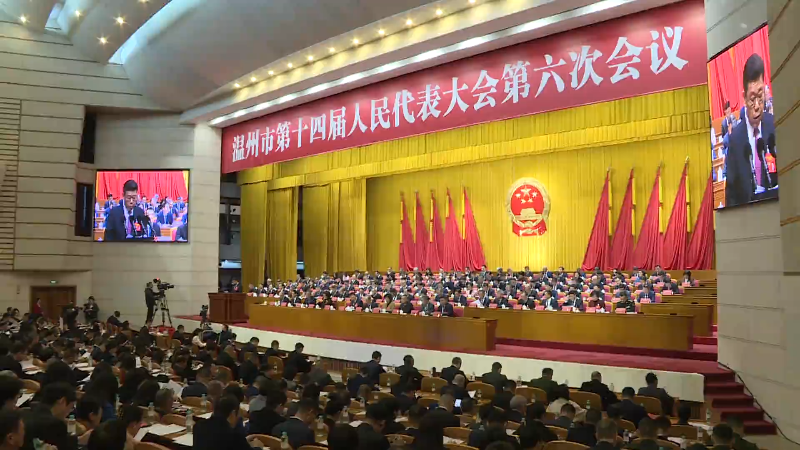
Group 1 - Wenzhou's GDP is projected to exceed 1 trillion yuan by 2025, making it the third city in Zhejiang province to achieve this milestone after Hangzhou and Ningbo [1][12] - The city's GDP ranking will rise to 28th nationally, re-entering the top 10 among prefecture-level cities [1][12] - The growth is attributed to innovation, particularly in the new energy sector, which has been a key focus for developing modern industrial clusters [3][17] Group 2 - High-tech industries in Wenzhou have increased their share of GDP from 60.9% to 73% over the past five years, while strategic emerging industries have risen from 26.4% to 31.2% [3][17] - The automotive parts industry in Wenzhou has seen a nearly 20% increase in added value last year, with a shift towards high-end production [21] - Traditional industries are also transforming, with smart production processes being implemented, significantly increasing product value [22] Group 3 - Wenzhou aims to continue accelerating the development of emerging and future industries, targeting sectors such as low-altitude economy, frontier electronics, synthetic biology, hydrogen energy, and new energy storage [21] - The local government emphasizes the importance of top-level design in driving economic development and modern industrial system construction [6][19]
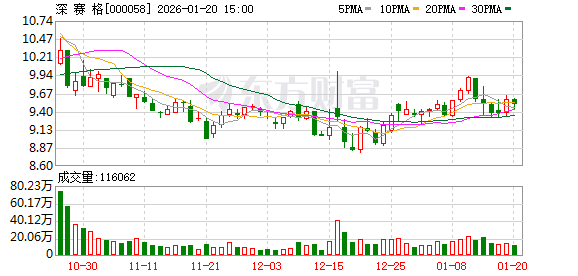
深赛格:公司持续巩固发展电子市场流通和物业经营管理与城市服务两大存量业务
Zheng Quan Ri Bao· 2026-01-20 09:38
Group 1 - The company is focusing on consolidating its existing businesses in electronic market circulation and property management while also emphasizing strategic emerging industries such as inspection and testing equipment manufacturing and services, as well as new energy applications [2] - The company's production and main business operations have not undergone substantial changes [2] - The company adheres to strict information disclosure regulations and confirms that there are no undisclosed significant matters [2] Group 2 - As a state-controlled listed company, the company is committed to effective management and enhancing its intrinsic value while safeguarding shareholder rights [2] - The company has consistently returned profits to investors, having implemented cash dividends for 10 consecutive years [2] - The company aims to preserve and increase the value of state-owned assets [2]

科技企业主导深圳写字楼市场需求,市场竞争预计维持高强度
Di Yi Cai Jing· 2026-01-20 09:31
Core Viewpoint - The overall vacancy rate of Grade A office buildings in Shenzhen rose to 26.2% in 2025, reflecting structural pressures in the market due to high new supply and a transformation in leasing demand from enterprises [1][2] Group 1: Market Overview - The Shenzhen Grade A office market is undergoing structural adjustments, with a "total pressure and structural differentiation" pattern emerging due to high levels of new supply and changes in leasing demand [1] - The technology sector dominates the market demand, accounting for nearly 30% of the transaction area, with the smart manufacturing sector showing particularly active leasing demand [1][2] Group 2: Demand Drivers - The main drivers of new leasing demand in Shenzhen's office market are threefold: expansion in the consumer electronics industry, accelerated overseas branding leading to increased demand for related professional services, and the rapid development of strategic emerging industries like artificial intelligence and semiconductor chips [2] - Approximately 30% of the new leasing demand in 2025 will come from expansions, upgrades, and new establishments in the aforementioned sectors [1] Group 3: Supply and Vacancy Trends - The overall vacancy rate for Grade A office buildings in Shenzhen increased by 1.8 percentage points year-on-year to 26.2% in 2025, indicating further structural pressure [2] - An estimated 1.5 million square meters of new supply is expected to enter the market in 2026, with short-term structural supply-demand contradictions likely to persist, maintaining high competition and pressure on rental prices [2] Group 4: Future Outlook - The demand for office space is anticipated to continue rising due to the recovery in consumer electronics demand and the accelerated application of artificial intelligence, which will drive the expansion of smart manufacturing and consumer electronics companies [2]
厦门炬科启航二期基金启动
FOFWEEKLY· 2026-01-20 04:40
Group 1 - The core viewpoint of the article highlights the successful signing of the Xiamen Juke Qihang Phase II Fund, marking the completion of the first phase and the initiation of the second fund's operations [1] - The Xiamen Juke Qihang Phase II Fund has a scale of 100 million yuan, continuing the strategy of "technology value + industrial synergy" [1] - The fund will focus on strategic emerging industries and future industries, particularly in sectors such as new materials, semiconductors, intelligent manufacturing, and aerospace [1]
东莞东寮创联新材料基金启动
Zhong Guo Hua Gong Bao· 2026-01-20 04:24
Core Viewpoint - The establishment of the Dongliao Chuanglian New Materials Venture Capital Fund, with a total scale of 94.5 million yuan, aims to support high-quality projects in the new materials sector and contribute to the development of Dongguan's strategic emerging industry cluster [1] Group 1: Fund Overview - The fund is initiated by the People's Government of Liaobu Town, Dongguan Science and Technology Innovation Group, Changlian Technology, and Dongguan Securities [1] - The total scale of the fund is 94.5 million yuan, focusing on the new materials industry [1] Group 2: Investment Focus - The fund will prioritize investments in growth-stage companies with technological barriers and significant market potential [1] - Key investment areas include semiconductor new materials such as photoresists, semiconductor packaging materials, and wafer-level materials; new energy materials like cathode materials for power batteries, separators, and electrolytes; and advanced manufacturing materials such as high-end alloy materials, composite materials, and functional ceramics [1] Group 3: Strategic Context - Dongguan has incorporated the new materials industry into its "7+1" strategic emerging industries, which include new generation information technology, high-end equipment manufacturing, new materials, new energy, biomedicine, energy conservation and environmental protection, and marine economy, with "1" representing future industries [1] - The city is promoting industrial clustering and upgrading through the establishment of guiding funds and supportive policies [1]
能源央企重组从规模扩张到生态构建
Zhong Guo Dian Li Bao· 2026-01-20 03:49
Group 1 - The core point of the news is the successful restructuring between China Petroleum & Chemical Corporation and China Aviation Oil Group, signaling a clear direction for future strategic mergers and professional integration among state-owned enterprises [1] - The restructuring and integration aim to enhance the operational efficiency of state-owned capital, with significant growth in total assets from 68.8 trillion yuan at the end of the 13th Five-Year Plan to an expected 91 trillion yuan by the end of 2024, reflecting an annual growth rate of 7.3% [2] - During the 14th Five-Year Plan, state-owned enterprises are projected to increase their value-added and total profits by over 40% and 50% respectively compared to the 13th Five-Year Plan, with improvements in labor productivity and return on net assets [2] Group 2 - The restructuring is not only about scale expansion but also about a systematic transformation towards new productive forces, with state-owned enterprises investing 8.6 trillion yuan in strategic emerging industries since the 14th Five-Year Plan, significantly increasing revenue contributions [3] - State-owned enterprises have contributed over 10 trillion yuan in taxes and fees since the 14th Five-Year Plan, accounting for approximately 80% of crude oil, 70% of natural gas, and 60% of electricity supply [3] Group 3 - Three types of restructuring models are identified: horizontal mergers for synergy, vertical integration to streamline supply chains, and professional integration to enhance quality [4][5][6] - Horizontal mergers focus on deepening integration within business segments, exemplified by China Shenhua Energy's acquisition of key subsidiaries to enhance competitiveness [4] - Vertical integration aims to connect upstream and downstream sectors, as seen in the merger of China National Nuclear Corporation and China Nuclear Engineering Corporation, creating a complete nuclear power industry chain [5] Group 4 - Future restructuring will increasingly focus on technological breakthroughs and the development of new productive forces, with a dual approach of exiting inefficient businesses while investing in strategic emerging industries [8] - Professional integration is expected to deepen, targeting specific key areas and high-end niche markets, such as inspection and testing, industrial software, and data services [8] - The construction of open and collaborative industrial ecosystems will become a significant development direction, with state-owned enterprises potentially transforming into industry organizers or service providers [9] Group 5 - Key areas for future restructuring activity are anticipated to include strategic mineral resources, high-end manufacturing, digital technology, green and low-carbon energy, and life sciences [10]