智能汽车

Search documents
新股消息 车联天下递表港交所 2024年在中国智能座舱域控制器领域位居全国第二
Jin Rong Jie· 2025-12-01 05:05
Core Viewpoint - The company, Wuxi Che Lian Tian Xia Intelligent Technology Co., Ltd., has submitted its application for listing on the Hong Kong Stock Exchange, positioning itself as a leader in the automotive E/E architecture evolution and providing comprehensive solutions in the smart vehicle sector [1] Company Overview - The company specializes in full-stack solutions for smart automotive systems, including hardware platforms, underlying software, application ecosystems, and service architectures [1] - Its product offerings include in-vehicle computing solutions and regional controller solutions, with a notable presence in the smart cockpit domain, ranking second in China by revenue in 2024 [1] Strategic Collaborations - The company adopts an open collaboration approach, establishing strategic partnerships with domestic and international players, allowing automotive manufacturers to customize smart upgrades through modular structures [2] - It has partnered with leading hardware and chip manufacturers, such as Bosch and Qualcomm, to develop a diverse product range compatible with mainstream SoC ecosystems [2] Market Position and Growth - By June 30, 2025, the company is projected to be the global leader in shipments of smart cockpit domain controllers based on the Qualcomm Snapdragon SA8155P platform [3] - The company has secured production projects for over 100 models as a first-tier supplier, indicating a strong position in a diverse customer base [3] Financial Performance - The company's revenue for the years 2022, 2023, 2024, and the first half of 2025 is approximately CNY 369 million, CNY 2.298 billion, CNY 2.656 billion, and CNY 1.039 billion respectively [4] - The total comprehensive expenses attributable to the company owners for the same periods are approximately CNY 514 million, CNY 201 million, CNY 253 million, and CNY 262 million [5] - The gross profit margins for these years are 9.5%, 17.5%, 16.2%, and 16.2% respectively [6] Industry Overview - The global smart automotive market has experienced strong growth, with sales of vehicles equipped with L1 to L5 autonomous driving capabilities increasing from 21.2 million to 53.9 million [7] - The global domain controller market is projected to grow from CNY 27.1 billion in 2020 to CNY 193.4 billion in 2024, with a compound annual growth rate (CAGR) of 63.4% [9] - The Chinese smart vehicle market is also expanding rapidly, with sales expected to rise from 7.4 million in 2020 to 30.5 million by 2029 [8]
车联天下递表港交所 2024年在中国智能座舱域控制器领域位居全国第二
Zhi Tong Cai Jing· 2025-12-01 04:07
Core Viewpoint - The company, Wuxi Che Lian Tian Xia Intelligent Technology Co., Ltd. (referred to as Che Lian Tian Xia), has submitted its application for listing on the Hong Kong Stock Exchange, with China International Capital Corporation and Guotai Junan Securities as joint sponsors [1] Company Overview - Che Lian Tian Xia is a pioneer and leader in the evolution of automotive E/E architecture, providing a full-stack solution that includes hardware platforms, underlying software, application ecosystems, and service architectures [3] - The company's product portfolio includes in-vehicle computing solutions and regional controller solutions, with a strong focus on intelligent cockpit domain controllers and cockpit-driving integration domain controllers [3][5] - According to Frost & Sullivan, the company ranks second in the Chinese intelligent cockpit domain controller market by revenue in 2024 [3] Strategic Collaborations - The company adopts an open collaboration approach, establishing strategic partnerships with domestic and international partners, allowing automotive manufacturers to customize their intelligent upgrades [4] - It has partnered with leading hardware companies such as Bosch and major chip manufacturers like Qualcomm to develop a diverse product range compatible with mainstream SoC ecosystems [4] Market Position and Growth - As of June 30, 2025, the company is the global leader in shipments of intelligent cockpit domain controllers based on the Qualcomm Snapdragon SA8155P platform [5] - The company has secured over 100 mass production projects for intelligent cockpit domain controllers as a first-tier supplier, indicating a strong market position [5] - The number of design wins for intelligent cockpit domain controllers has significantly increased, with 12 additional wins in 2022 and 45 more expected in 2024 [5] Financial Performance - The company's revenue for the years 2022, 2023, 2024, and the first half of 2025 is approximately RMB 369 million, RMB 2.298 billion, RMB 2.656 billion, and RMB 1.039 billion respectively [6] - The company reported losses of approximately RMB 514 million, RMB 201 million, RMB 253 million, and RMB 262 million for the same periods [7] - The gross profit margins for the years 2022, 2023, 2024, and the first half of 2025 are 9.5%, 17.5%, 16.2%, and 16.2% respectively [8] Industry Overview - The global smart automotive market has experienced strong growth, with sales of vehicles equipped with L1 to L5 autonomous driving capabilities increasing from 21.2 million to 53.9 million [11] - The global domain controller market is expanding, driven by the need for faster system response, increased electrification, and growing complexity in control systems, with a projected market size of RMB 1,934 billion by 2024 [14] - The Chinese domain controller market is also rapidly expanding, with a projected market size of RMB 934 billion by 2024 [14]

新股消息 | 车联天下递表港交所 2024年在中国智能座舱域控制器领域位居全国第二
智通财经网· 2025-12-01 03:50
Company Overview - Wuxi Cheliantianxia Intelligent Technology Co., Ltd. (Cheliantianxia) has submitted an application for listing on the Hong Kong Stock Exchange, with China International Capital Corporation and Guotai Junan as joint sponsors [1] - The company is a pioneer and leader in the evolution of automotive E/E architecture, providing a full-stack solution from hardware platforms to service architecture [3][4] Product and Market Position - Cheliantianxia's product portfolio includes in-vehicle computing solutions and domain controller solutions, with a strong position in the smart cockpit domain controller market, ranking second in China by revenue in 2024 [3] - The company has established strategic partnerships with leading global hardware and chip manufacturers, enabling the development of a diverse product range compatible with mainstream SoC ecosystems [4][5] Financial Performance - Revenue figures for Cheliantianxia are as follows: approximately RMB 369 million in 2022, RMB 2.298 billion in 2023, RMB 2.656 billion in 2024, and RMB 1.039 billion for the first half of 2025 [6][9] - The company reported losses of approximately RMB 514 million in 2022, RMB 201 million in 2023, RMB 253 million in 2024, and RMB 262 million for the first half of 2025 [6] - Gross profit margins were recorded at 9.5% in 2022, 17.5% in 2023, and 16.2% for both 2024 and the first half of 2025 [7] Industry Overview - The global smart automotive market has seen strong growth, with sales of vehicles equipped with L1 to L5 autonomous driving capabilities increasing from 21.2 million to 53.9 million [10] - The domain controller market is diversifying, with a projected growth from RMB 27.1 billion in 2020 to RMB 193.4 billion in 2024, reflecting a compound annual growth rate (CAGR) of 63.4% [13] - The Chinese market is also expanding rapidly, with the domain controller market expected to grow from RMB 13.9 billion in 2020 to RMB 93.4 billion in 2024, at a CAGR of 61.0% [13]
告别“中低端”,国产车规MCU吹响高端突围号角
半导体行业观察· 2025-12-01 01:27
Core Viewpoint - The automotive industry is undergoing a transformative change driven by electrification and intelligence, evolving from mere transportation tools to "super mobile intelligent terminals" that integrate smart computing, real-time perception, and complex control [1] Group 1: Evolution of Automotive Electronics - The traditional distributed architecture of automotive electronics is inadequate for the data processing and cross-domain collaboration required by software-defined vehicles (SDV), leading to the emergence of a new "central computing + regional control" architecture [1] - Major manufacturers like XPeng, Leapmotor, and GAC have begun mass production of new generation EE architecture vehicles, with quasi-central and central + regional control architectures becoming mainstream for optimizing costs and improving efficiency [1] Group 2: Demand for High-Performance MCUs - The limitations of traditional MCUs in computing power, storage, peripherals, and security are becoming increasingly apparent, creating a rising demand for high-performance automotive MCUs to support complex control tasks in cross-domain scenarios [4] - The global evolution of the smart automotive industry presents significant opportunities for domestic chip manufacturers, allowing them to transition from followers to innovators, particularly in the high-end automotive MCU sector [4] Group 3: Market Dynamics and Challenges - The automotive-grade MCU chip market is characterized by a "strong outside, weak inside" dynamic, with domestic high-end MCU self-sufficiency below 5%, dominated by international giants like Infineon, Renesas, NXP, and STMicroelectronics [5] - These international companies maintain a competitive edge not only through chip technology but also by building ecological barriers with long-term partnerships with Tier 1 suppliers and OEMs, complicating market entry for domestic firms [5] Group 4: Domestic MCU Breakthroughs - Domestic MCU companies have historically focused on lower-end applications but are now advancing towards higher-end markets, leveraging accumulated design experience and supply chain management capabilities [6] - The emergence of companies like Chipsea Technology, which is redefining high-end automotive MCUs, marks a significant shift in the domestic market [8] Group 5: Chipsea Technology's Innovations - Chipsea Technology's E3650 MCU, produced using a 22nm process, offers significant energy efficiency advantages over competitors using 28-40nm processes, and features an 8-core Arm Cortex-R52+ architecture with a frequency of 600MHz [9] - The E3650 MCU meets ISO21434 standards for information security, addressing specific market needs in China, and provides over 350 I/Os for flexible integration in regional control applications [12] Group 6: Future Market Outlook - The domestic automotive MCU market is projected to reach 29.4 billion yuan by 2025, with the localization rate of automotive-grade MCUs increasing from under 5% to 18% [8] - The rise of domestic MCUs is reshaping industry value logic, moving from being seen as "cheap alternatives" to becoming key players that offer rapid market responses and tailored services to meet local automotive manufacturers' needs [20]
华为技术帮汽车圈“点石成金”?
经济观察报· 2025-11-29 07:30
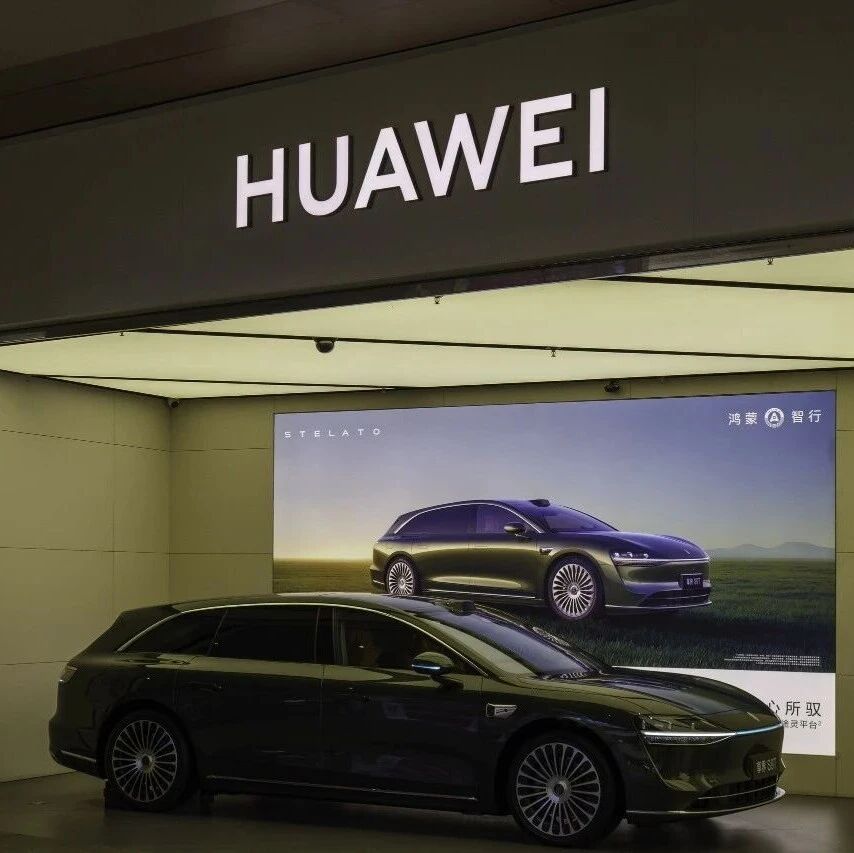
Core Viewpoint - Huawei has become an indispensable presence in China's smart automotive industry, with its technology significantly enhancing the products of various car manufacturers, leading to a perception that without Huawei, success is unattainable [1][3]. Group 1: Huawei's Influence at the Auto Show - The 2025 Guangzhou Auto Show showcased Huawei's extensive presence, with multiple brands featuring Huawei's technology prominently, including independent booths for brands like Aito and Avita [2][3]. - Huawei launched its new "Jing" series brands, including "Qijing" and "Yijing," in collaboration with Dongfeng and GAC, marking a significant expansion of its automotive ecosystem [5][6]. Group 2: Market Performance and Brand Strategy - As of October 2023, Huawei's "Jing" series brands are set to release new models, with Yijing's first vehicle expected to debut at the Beijing Auto Show in April 2026, and Qijing planning to launch two new cars in 2026 [6][10]. - In October 2023, Huawei's vehicles equipped with the "Kirin" driving system achieved sales of over 100,000 units in a single month, indicating strong market acceptance [13]. Group 3: Partnerships with Luxury and Joint Venture Brands - Audi's A5L Kirin Intelligent Driving Edition became the first fuel vehicle globally to feature Huawei's Kirin technology, highlighting the growing trend of luxury brands adopting Huawei's solutions [8][9]. - Japanese joint venture brands like Dongfeng Nissan and GAC Toyota are also integrating Huawei's technology, with Nissan's "Tianlai Hongmeng Cabin" being promoted as the world's first fuel vehicle with the Hongmeng cabin system [9]. Group 4: Competitive Landscape and Differentiation - The proliferation of "Jing" and "Jie" brands raises concerns about differentiation among car manufacturers using Huawei's technology, as many brands may start to appear similar [14][15]. - Industry experts suggest that while Huawei's technology provides a competitive edge, the true differentiation will depend on how car manufacturers address consumer pain points and enhance their overall product offerings beyond just technology [14][15].
座舱芯片战事:谁能撬开高通「铁王座」的裂缝?
雷峰网· 2025-11-28 13:48
Core Viewpoint - The article discusses the competitive landscape of cockpit chips in the automotive industry, highlighting Qualcomm's dominance and the emerging opportunities for domestic manufacturers like MTK, Huawei, and others in the context of cost and localization advantages. Group 1: Qualcomm's Dominance - Qualcomm's cockpit chip, the Snapdragon 8797, supports cabin and driving integration, establishing strong partnerships with major global automakers, including luxury brands like Mercedes and BMW, as well as new players like Li Auto and NIO [2][3]. - The collaboration creates a positive feedback loop where automakers rely on Qualcomm's performance, Tier 1 suppliers adapt to Qualcomm's solutions, and developers optimize applications around Qualcomm's ecosystem [3][4]. - Despite its strong position, Qualcomm faces challenges from domestic competitors who are increasing their market share, with companies like Chipone and Huaqin making significant inroads [3][4]. Group 2: Competitive Landscape - Domestic manufacturers are leveraging cost advantages and localized services to penetrate the market, with MTK's chips like the MT8676 and MT8678 offering competitive pricing and features [15][16]. - The market share of domestic cockpit chip manufacturers is projected to rise from under 3% in 2023 to over 10% in 2024, indicating a significant shift [36]. - MTK's strategy includes targeting entry-level markets, where cost advantages are most pronounced, and it is expected to capture over 30% market share by 2025 [18][36]. Group 3: Challenges in Cabin-Driving Integration - The integration of cabin and driving functions is seen as a critical step towards achieving centralized computing architecture in vehicles, but it presents significant technical and organizational challenges [21][24]. - Different safety standards for cabin and driving systems complicate the integration process, requiring higher levels of certification and increasing development costs [25][26]. - The complexity of developing a true cabin-driving integration chip involves balancing various technical requirements, which can lead to internal conflicts within organizations [30][31]. Group 4: Future Outlook - The future of cockpit chips will likely see a division where domestic manufacturers focus on the Chinese market while Qualcomm maintains its stronghold in the global high-end market [39]. - Companies that can combine localized services with global compatibility will have greater growth potential in the evolving automotive landscape [39].


“国民好车”驶入千家万户 埃安UT super全国百城启动交付工作
Zhong Guo Jin Rong Xin Xi Wang· 2025-11-28 13:46
Core Insights - The "National Good Car" Aion UT Super, launched by GAC Group, CATL, and JD Auto, has commenced mass delivery across over 100 cities in China, including Beijing and Guangzhou [1][2] - Initial feedback from car owners highlights satisfaction with the vehicle's design, spaciousness, and overall value, with specific praise for its practicality for family use [1][2] Group 1 - Aion UT Super integrates JD's user insights and sales capabilities, GAC's manufacturing strength, and CATL's battery technology, offering an exceptional driving experience [1] - The vehicle features CATL's "chocolate battery," providing a range of over 500 kilometers and a rapid battery swap time of 99 seconds, addressing range anxiety for users [1] - With a wheelbase of 2750mm, the Aion UT Super offers spaciousness typical of a class A vehicle while catering to family and daily commuting needs [1] Group 2 - The smart experience is a significant highlight of the Aion UT Super, being the first model to feature Huawei's cloud vehicle system, which supports unlimited functions, computing power, storage, and updates [2] - Safety features include a unique "reversing sentinel" function and a 540-degree panoramic view, enhancing safety for novice drivers and family users [2] - As the first batch of vehicles reaches customers, the Aion UT Super will enter a user validation phase, where real-world performance in terms of range, smart features, and quality will be critically assessed [2]



零跑Lafa5正式上市 重塑10万级纯电轿跑价值标杆
Zheng Quan Ri Bao Wang· 2025-11-28 02:43
Core Viewpoint - Leap Motor has launched the Lafa5, a new electric sports sedan aimed at the post-95 generation, redefining the value standard in the 100,000 yuan electric sedan market with competitive pricing and performance [1][3]. Product Launch and Pricing - The Lafa5 offers two versions with ranges of 515 km and 605 km, priced between 92,800 yuan and 116,800 yuan, including a 5,000 yuan launch discount [3]. - The vehicle aims to address industry pain points regarding aesthetics and performance in the 100,000 yuan electric market, entering with capabilities typically found in 200,000 yuan products [3]. Company Performance and Goals - Leap Motor aims to achieve a net profit of 150 million yuan and revenue of 19.45 billion yuan by Q3 2025, with a year-on-year growth of nearly 100% [3]. - The company has maintained its position as the monthly sales champion among new force brands in China for eight consecutive months and has reached its annual sales target of 500,000 units ahead of schedule [3]. Design and Features - The Lafa5 features a leading width of 1880 mm, a low stance, and a drag coefficient of 0.256, enhancing its sporty appeal and extending its range by 35 km [4]. - The interior boasts an 86% leading space utilization rate, over 80% soft-touch materials, and a 1.02 m² panoramic sunroof, combining luxury and practicality [4]. Technology and Smart Features - Equipped with the Qualcomm 8295P chip and a 14.6-inch 2.5K central display, the Lafa5 supports smooth interactions and advanced voice recognition capabilities [4]. - The vehicle includes 27 high-precision sensing hardware components and a Qualcomm 8650 chip for advanced driving assistance features, with future OTA upgrades planned [5]. Performance and Safety - The Lafa5 features a rear-wheel drive layout with a 160 kW motor, achieving 0-100 km/h in 6.4 seconds, and offers customizable driving modes [6]. - Safety features include a robust body structure with 77.5% high-strength steel and a battery system designed to prevent thermal runaway for 48 hours [6]. Market Positioning - The launch of the Lafa5 fills a gap in the high-value electric sedan market under 100,000 yuan, showcasing the capabilities of Chinese manufacturing in the global market [6].

启境品牌首款车为猎装轿跑,预计明年6月上市
Zhong Guo Jing Ji Wang· 2025-11-27 13:07
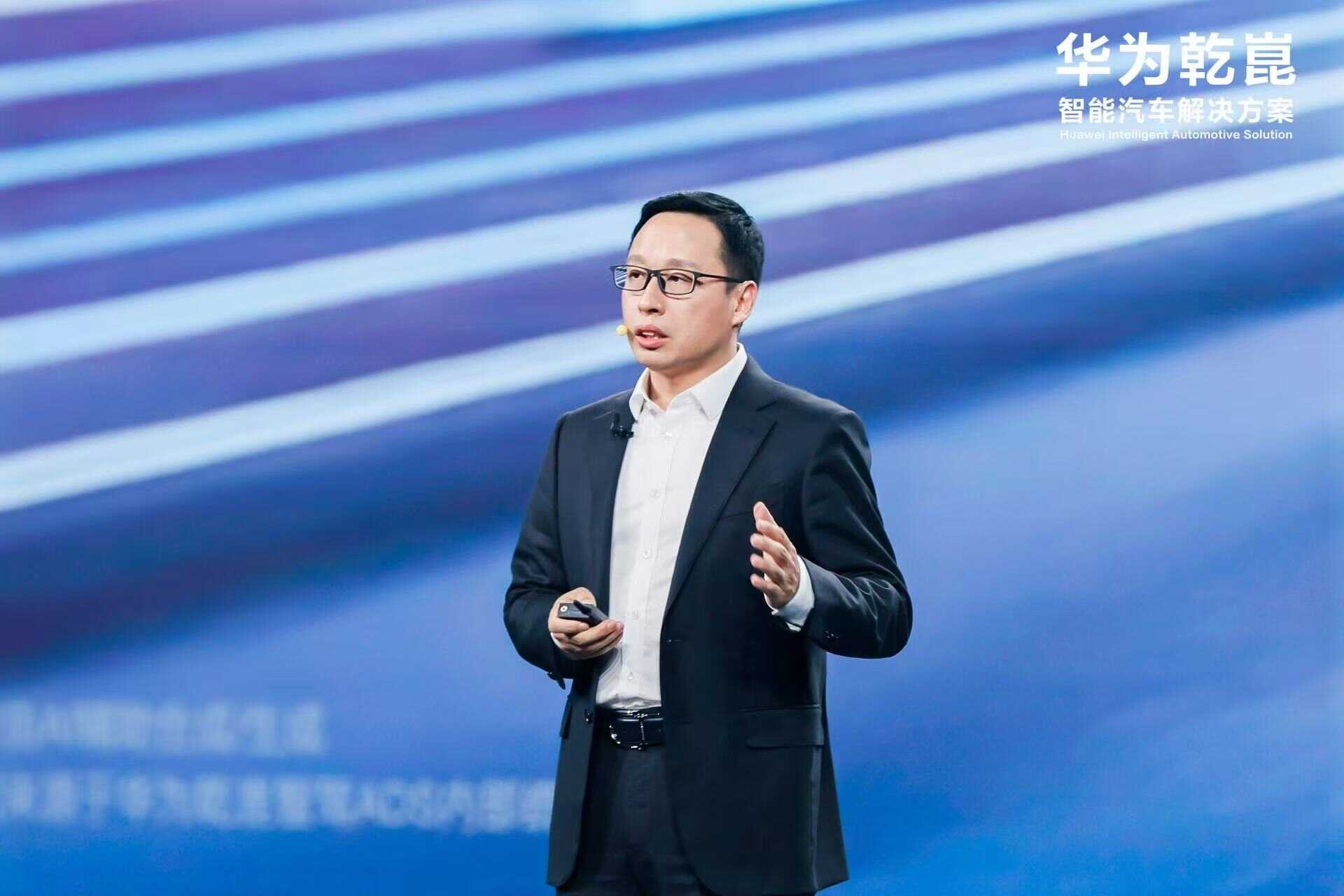
与"1+1>2"的协同效应,更为优质产品的打造注入了强劲动能。 启境CEO刘嘉铭 近日,启境品牌首次正式公开亮相,启境是华为乾崑和启境团队联合打造的全新高端智能新能源汽车品牌,由广汽集团投资。作为华为乾崑"境"系列开篇之 作,启境承载着华为乾崑对智能汽车未来发展的战略构想,也宣告其在高端智能汽车领域品牌布局正式启航。 在大会现场,华为智能汽车解决方案BU CEO靳玉志阐述了华为乾崑的愿景,即将智能融入每一辆车,让出行更安全、生活更美好。谈及与启境的合作,靳 玉志用"一启入境,共赴美好"一词定义双方的紧密合作关系。他表示,为打造用户心目中的梦想之车,华为乾崑将与启境坚持"绝不妥协"的态度,共同打造 一款"美得出色、驾得热爱、智得自在"的"六边形战士"车型,以全维度优势突破用户期待,打造真正超越想象的Dream Car。 华为智能汽车解决方案BU CEO靳玉志 启境品牌CEO刘嘉铭表示,华为乾崑与启境团队构建起紧密高效的联动机制,双方以精准的用户洞察为切入点,充分整合各自在技术研发与资源整合上的优 势,在造型工程优化、智能交互体验升级、底盘性能精细调校及全维度安全体系搭建等关键领域,稳步推进扎实且高效的联合研发工 ...
华为乾崑的技术商业化“阳谋”
财联社· 2025-11-27 08:44
Core Viewpoint - The automotive industry is undergoing a technological transformation, with software increasingly adding value, and Huawei's QianKun is positioned to lead this change by creating an intelligent and open automotive platform [1][5][9] Group 1: Achievements and Market Position - Huawei QianKun's monthly sales have surpassed 100,000 units, with over 20 million uses of the parking-to-parking feature and an active user rate of 95.2% for assisted driving [1] - In the first nine months of this year, Huawei QianKun achieved sales of 452,000 units, capturing a market share of 27.8%, which is greater than the combined total of the second and third competitors [5] - Predictions indicate that Huawei QianKun will achieve annual profitability in 2024, with a revenue growth of 474.4%, potentially exceeding 60 billion yuan in revenue and 12 billion yuan in profit within 1-3 years [7] Group 2: Business Model and Collaboration - Huawei QianKun's business model emphasizes an open ecosystem, collaborating with 15 leading automotive companies and covering 1 million units across 35 models, including partnerships with brands like Audi [9][11] - The collaboration with various automotive manufacturers is seen as a means to quickly acquire mature solutions and reduce R&D costs, establishing Huawei QianKun as a preferred supplier [11] Group 3: Technological Advancements - Huawei QianKun has developed a robust technological moat through its fully self-developed technology, achieving high scores in critical tests for features like AEB and parking assistance [12] - The latest ADS 4 system features significant upgrades, including a 50% reduction in end-to-end latency and a 20% increase in traffic efficiency, showcasing Huawei's commitment to safety and performance [13][15] Group 4: Industry Impact and Future Outlook - Huawei QianKun's rapid growth is not just a corporate event but signifies a broader industry transformation, marking China's shift from following to leading in automotive technology [15] - The company aims to establish itself as the leading brand in automotive intelligence, with a successful transition from backend operations to a prominent market presence [15]