第二增长曲线

Search documents
金洲管道:公司会始终以价值创造为核心导向
Zheng Quan Ri Bao Wang· 2025-09-15 13:41
证券日报网讯金洲管道(002443)9月15日在互动平台回答投资者提问时表示,公司会始终以价值创造 为核心导向,聚焦当前主营业务,寻找适当投资机会,开辟新的增长点构建第二增长曲线;公司确实已 组织专门团队对第二主业的发展规划进行研究,并正在完善相关发展规划纲要,待完善好后会及时汇报 董事会审议,并严格履行信息披露义务。 ...

雪祺电气(001387) - 2025年9月15日投资者关系活动记录表
2025-09-15 13:38
Group 1: Financial Performance - In the first half of 2025, the company achieved revenue of 896.57 million CNY, a decrease of 3.92% compared to the same period last year [2] - The net profit attributable to shareholders was 34.99 million CNY, with a growth of 13.70% when excluding share-based payment impacts [2] - The revenue breakdown by product shows that refrigerators, commercial display cabinets, and PCBA generated 756.43 million CNY (84.37%), 78.42 million CNY (8.75%), and 28.46 million CNY (3.17%) respectively [3] Group 2: Regional Revenue Distribution - Domestic revenue accounted for 500.68 million CNY, representing 55.84% of total revenue, with a year-on-year decline of 17.34% [3] - Overseas revenue was 395.89 million CNY, making up 44.16% of total revenue, and saw a year-on-year increase of 20.91% [3] Group 3: Cost and Profitability Metrics - The gross margin increased by 0.21% year-on-year, while the net margin decreased by 0.35 percentage points due to a rise in expense ratios [3] - Sales expenses surged by 59.42%, primarily due to increased marketing costs aimed at overseas market expansion [3] Group 4: Accounts Receivable and Risk Management - Accounts receivable reached 388.98 million CNY, accounting for 18.16% of total assets, with a year-on-year decrease of 2.62% [3] - Overdue accounts receivable over one year constituted only 1.39% of total accounts receivable, indicating a low risk [3] Group 5: Shareholder Actions and Company Outlook - Major shareholders reduced their stakes by 3% and 1%, respectively, but this is not expected to impact the company's governance or operations significantly [4] - The management remains confident in the company's long-term growth strategy, focusing on technological advancements and global market expansion [4] Group 6: Strategic Acquisitions and Market Position - The company announced the acquisition of a 70% stake in Shengbang Electric, aimed at enhancing supply chain stability and reducing procurement costs [5] - The subsidiary Wuliang Intelligent is expanding into new energy storage and automotive electronics, viewed as a second growth curve for the company [6] Group 7: International Market Strategy - The company is actively expanding its overseas market presence, with significant growth in regions such as South America, Asia, and North America [6] - Strategies are in place to adapt to international trade policy changes and to balance regional market exposure [6]
保利、万科稳居营收千亿俱乐部,首开、滨江增速领跑
Xin Jing Bao· 2025-09-14 02:21
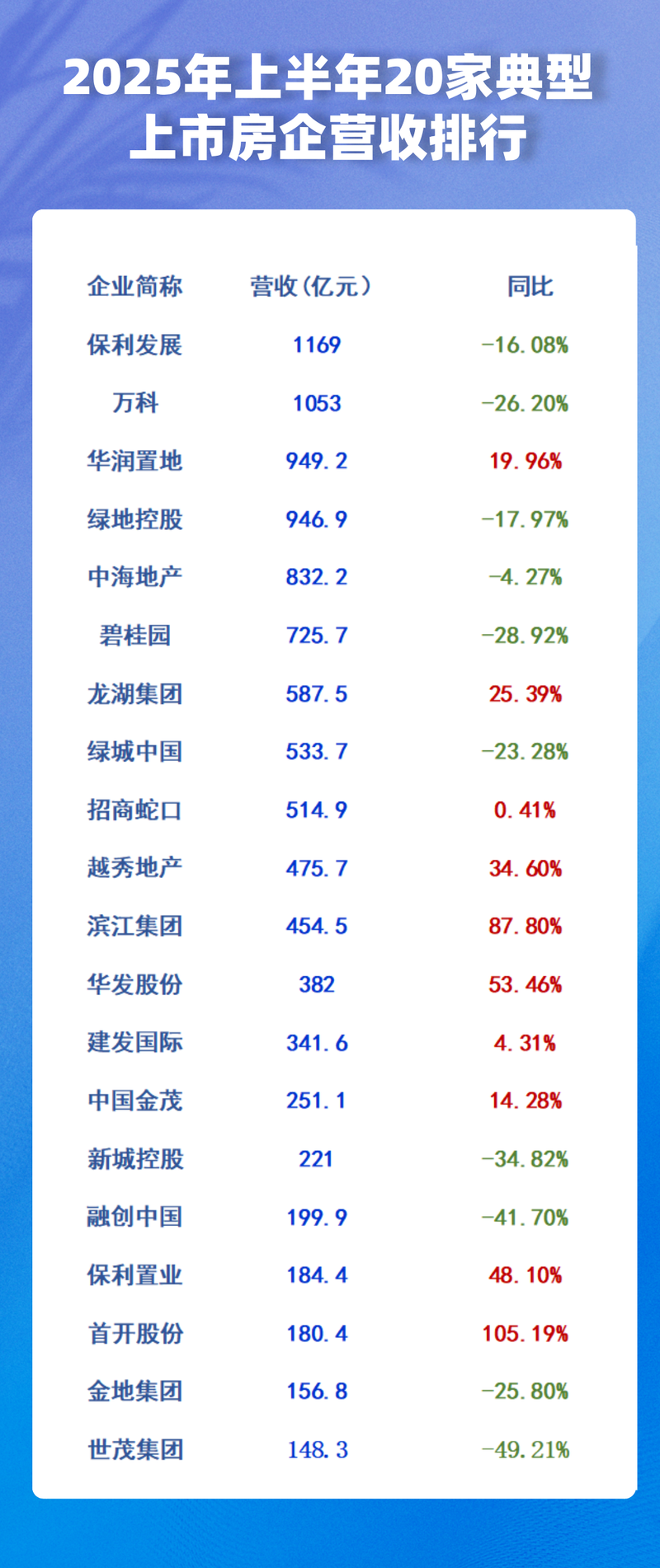
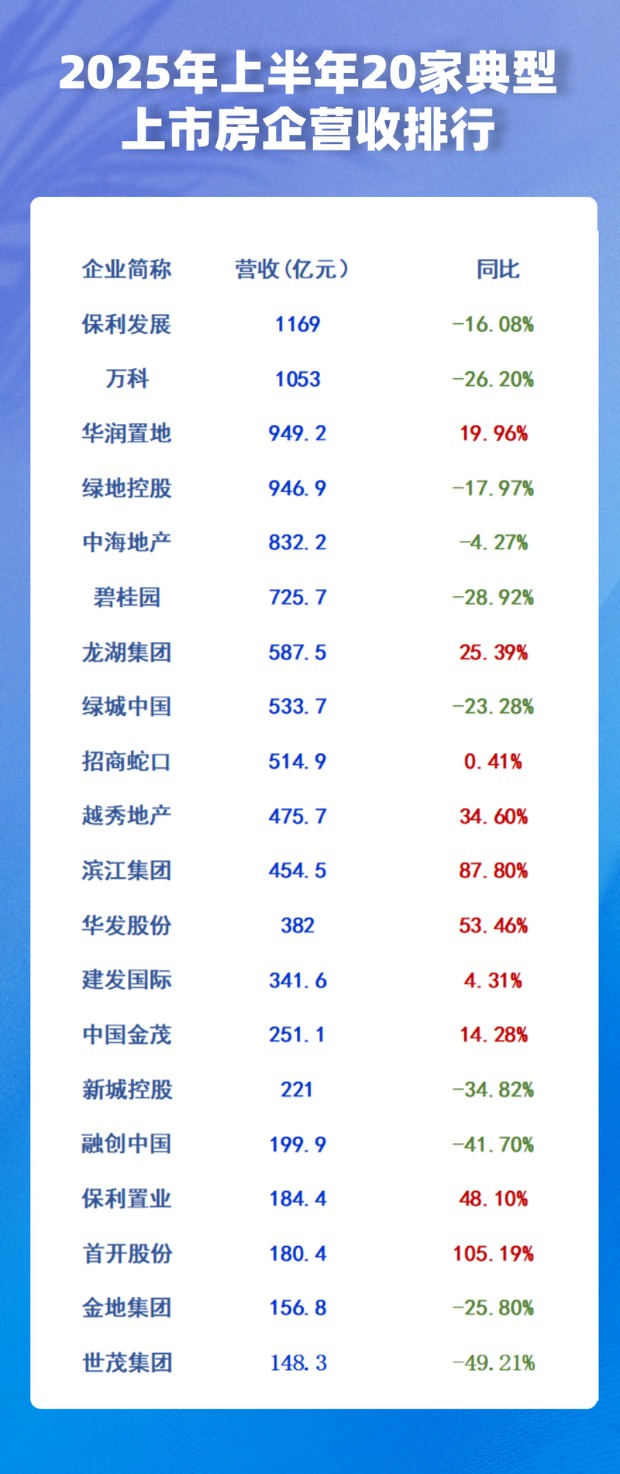
Core Viewpoint - The financial reports of listed real estate companies for the first half of 2025 reflect a significant industry transformation, moving from a "scale competition" phase to a "steady operation" phase, with ongoing deep adjustments and increasing differentiation among companies [1] Group 1: Revenue Performance - Only two companies, Poly Developments and Vanke, entered the "billion revenue club" with revenues of 116.9 billion and 105.3 billion respectively, while the average revenue growth rate for the 20 companies was only 7.72% [4][6] - Half of the listed real estate companies experienced revenue declines, with Shimao Group and Sunac China seeing declines close to 50% [1][6] - Notable revenue growth was observed in companies like Shoukai Co. and Binjiang Group, which reported growth rates exceeding 80% [1][6] Group 2: Revenue Breakdown - The first tier includes only Poly and Vanke, while the second tier consists of seven companies with revenues between 50 billion and 100 billion, including China Resources Land and Greenland Holdings [5] - The third tier includes 11 companies with revenues below 50 billion, featuring regional leaders and companies that have faced debt crises, such as Sunac China and Shimao Group [5] Group 3: Differentiation Among Companies - Significant differentiation in revenue growth rates is evident, with China Resources Land achieving nearly 20% positive growth, while Poly and Vanke saw declines of 16.08% and 26.2% respectively [6] - Companies like Binjiang Group and Yuexiu Property achieved growth rates of 87.8% and 34.6%, respectively, driven by strategic market positioning [6][7] Group 4: Challenges and Transformation - State-owned and central enterprises demonstrate stronger risk resistance, with stable revenues and lower financing costs, while private companies face significant pressures [7][8] - Many companies are shifting towards "second growth curves" through light asset transformation and non-development businesses, with China Resources Land's operational income contributing over 60% to its profits [8] - The industry is entering a new development phase characterized by declining scale and slower growth, necessitating improved financial management and debt restructuring among companies [8]





透视半年报|保利、万科稳居营收千亿俱乐部 首开、滨江增速领跑
Xin Jing Bao· 2025-09-14 01:42
Core Viewpoint - The financial reports of listed real estate companies for the first half of 2025 reflect a significant industry transformation, moving from a "scale competition" phase to a "steady operation" phase, with ongoing deep adjustments and increasing differentiation among companies [1][7]. Group 1: Revenue Performance - Only two companies, Poly Developments and Vanke, entered the "billion revenue club" with revenues of 116.9 billion and 105.3 billion respectively, while the average revenue growth rate for the 20 companies was only 7.72% [4][6]. - Half of the listed real estate companies experienced revenue declines, with Shimao Group and Sunac China seeing declines close to 50% [1][6]. - Notable revenue growth was observed in companies like Shoukai Co. and Binjiang Group, with growth rates exceeding 80% and 87.8% respectively [1][6]. Group 2: Company Rankings - The first tier includes only two companies with revenues exceeding 100 billion, while the second tier consists of seven companies with revenues between 50 billion and 100 billion [4][5]. - The third tier includes 11 companies with revenues below 50 billion, many of which are regional leaders or have faced debt crises [5][6]. Group 3: Market Dynamics - State-owned and central enterprises demonstrated stronger risk resistance, with companies like Poly, China Resources Land, and China Overseas Land showing stable revenues and lower declines [7][8]. - Private companies, except for a few like Longfor Group and Binjiang Group, continue to face significant pressures, with many experiencing revenue declines of over 25% [7][8]. Group 4: Strategic Shifts - Many companies are focusing on "second growth curves" through light asset transformations and non-development businesses to drive revenue [8]. - China Resources Land's operational income from shopping centers, office buildings, and hotels contributed over 60% to its profits, helping it become the "profit king" [8].


卤味没有以前好卖了,周黑鸭开卖椰子水
Di Yi Cai Jing Zi Xun· 2025-09-13 14:39
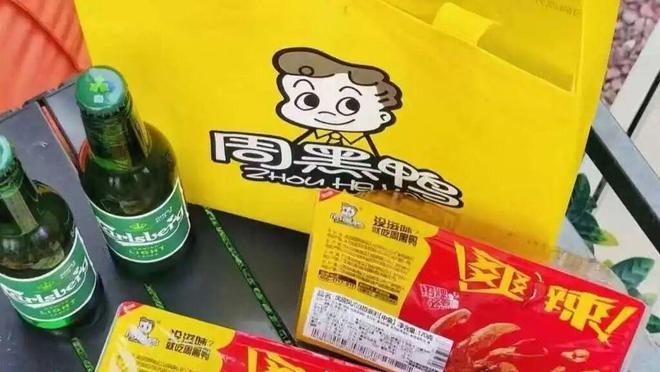
Core Viewpoint - The "three giants" of the marinated food industry are facing revenue declines in the first half of 2025, indicating overall industry pressure. Despite efforts to stabilize profits through cost control and store reductions, growth in core business remains weak [2]. Group 1: Revenue and Profit Trends - The marinated food market showed signs of weakness in the first half of the year, with major players like Juewei Food experiencing a 15.57% year-on-year decline in revenue to 2.82 billion yuan and a 40.71% drop in net profit to 175 million yuan [3]. - Huangshanghuang reported a 7.19% decrease in revenue to 984 million yuan, but net profit increased by 26.9% to approximately 76.92 million yuan, attributed to cost-cutting measures [3][5]. - Zhou Hei Ya's revenue fell by 2.9% to 1.22 billion yuan, while net profit surged by 228% to 108 million yuan, driven by improved store efficiency despite a reduction in total store count [4][5]. Group 2: Cost Control Measures - The decline in raw material prices has allowed some marinated food companies to maintain or even increase net profits despite lower sales volumes. Huangshanghuang noted a 2.23 percentage point increase in gross margin due to reduced production costs [5][6]. - The overall market dynamics indicate that the marinated food sector is facing challenges due to decreased consumer willingness and confidence, leading to a need for companies to balance cost reduction and innovation [5][6]. Group 3: Strategic Shifts and New Ventures - The three giants are exploring new business avenues to counteract declining core business performance. Zhou Hei Ya has launched a coconut water brand and is developing compound seasonings and instant food products [6]. - Huangshanghuang is entering the freeze-dried food market, planning to invest 495 million yuan to acquire a 51% stake in a freeze-dried food company, aiming to leverage complementary products and sales channels [6]. - Juewei Food has opened a new concept store, "Juewei Plus," venturing into casual dining with a diverse product range, including fried snacks and desserts [7].


卤味没有以前好卖了,周黑鸭开卖椰子水
第一财经· 2025-09-13 14:31
Core Viewpoint - The "three giants" of the marinated food industry are facing revenue declines in the first half of 2025, prompting them to explore new business avenues to break through their current challenges [3]. Cost Reduction to Maintain Profit - The marinated food market showed signs of weakness in the first half of the year, with companies like Juewei Food experiencing a 15.57% decline in revenue to 2.82 billion yuan and a 40.71% drop in net profit to 175 million yuan due to decreased internal sales [6]. - Huangshanghuang reported a 7.19% revenue decline to 984 million yuan but achieved a 26.9% increase in net profit to approximately 76.92 million yuan, attributed to cost-cutting measures and a reduction in store numbers [5][6]. - Zhou Hei Ya's revenue fell by 2.9% to 1.22 billion yuan, while net profit surged by 228% to 108 million yuan, thanks to improved store efficiency and the closure of underperforming outlets [6][7]. Seeking a Second Growth Curve - The three giants are actively seeking new growth avenues as reliance on core business becomes unsustainable. Zhou Hei Ya launched a coconut water brand and partnered with Sichuan Shentang Food to develop compound seasonings and convenience food products [9][10]. - Huangshanghuang is entering the freeze-dried food sector, planning to invest 495 million yuan to acquire a 51% stake in Fujian Lixing Food Co., which complements its existing product offerings [9][10]. - Juewei Food opened a new "Juewei Plus" store in Changsha, venturing into the casual dining space with products like fried marinated food, desserts, and fruit wine [10]. Market Insights - Analysts suggest that the growth of the marinated food sector relies on demographic advantages and increased store numbers, but the overall pricing is perceived as high, leading to challenges in consumer willingness and confidence [7][8]. - Experts caution that while exploring new business areas is a common strategy during performance pressures, companies must ensure alignment with brand positioning and conduct thorough market assessments to avoid diluting their core business [11].

卤味没有以前好卖了!上半年营收均下滑的三巨头 靠卖椰子水能否逆袭
Di Yi Cai Jing· 2025-09-13 13:19
Core Viewpoint - The "three giants" of the marinated food industry are collectively facing revenue decline in the first half of 2025, indicating overall industry pressure. Despite efforts to stabilize profits through store reductions and cost control, the main business growth remains weak [1] Group 1: Revenue and Profit Trends - The marinated food market showed signs of weakness in the first half of this year, with major players like Juewei Food experiencing a 15.57% year-on-year decline in revenue to 2.82 billion yuan and a 40.71% drop in net profit to 175 million yuan [2] - Huangshanghuang reported a 7.19% decline in revenue to 984 million yuan, while net profit increased by 26.9% to 76.92 million yuan, attributed to cost-cutting measures despite a decline in main business segments [2] - Zhou Hei Ya's revenue decreased by 2.9% to 1.22 billion yuan, but net profit surged by 228% to 108 million yuan, driven by improved single-store operational efficiency [3] Group 2: Cost Control Measures - The decline in raw material prices has helped some marinated food companies maintain net profit levels. Huangshanghuang noted that the prices of key raw materials remained low, leading to a decrease in production costs and a 2.23 percentage point increase in gross profit margin for its marinated meat products [4] - The overall market dynamics indicate that the marinated food industry faces significant challenges due to decreased consumer willingness and confidence, alongside high prices and insufficient cost-performance ratios [4] Group 3: Strategic Shifts and New Ventures - The three giants are exploring new business avenues to sustain performance, with Zhou Hei Ya launching a coconut water brand and entering into partnerships for compound seasoning and convenience food products [5] - Huangshanghuang is investing 495 million yuan to acquire a 51% stake in a freeze-dried food company, aiming to enter the freeze-dried food market [5][6] - Juewei Food has opened a new "Juewei Plus" store in Changsha, venturing into the casual dining sector with a diverse product offering [7]
卤味没有以前好卖了!上半年营收均下滑的三巨头,靠卖椰子水能否逆袭
Di Yi Cai Jing· 2025-09-13 13:16
Core Viewpoint - The "three giants" of the marinated food industry are facing revenue declines in the first half of 2025, prompting them to explore new business avenues to establish a "second growth curve" amidst a challenging market environment [1]. Group 1: Industry Performance - The marinated food market has shown signs of weakness in the first half of the year, with major players like Juewei Food experiencing a 15.57% decline in revenue to 2.82 billion yuan and a 40.71% drop in net profit to 175 million yuan [2]. - Huangshanghuang reported a 7.19% decrease in revenue to 984 million yuan, while net profit increased by 26.9% to approximately 76.92 million yuan, attributed to cost-cutting measures despite a decline in main business segments [2]. - Zhou Hei Ya's revenue fell by 2.9% to 1.22 billion yuan, but net profit surged by 228% to 108 million yuan, driven by improved single-store efficiency and the closure of underperforming outlets [3]. Group 2: Cost Management - The decline in raw material prices has helped some marinated food companies maintain or even increase net profits, with Huangshanghuang noting a 2.23 percentage point increase in gross margin for its marinated meat products due to lower production costs [4]. - The overall market dynamics indicate that the marinated food sector is facing significant challenges due to decreased consumer willingness and confidence, leading to a need for companies to balance cost reduction and innovation [4]. Group 3: New Business Initiatives - Zhou Hei Ya has launched a coconut water brand and is collaborating with Sichuan Shentang Food to develop compound seasonings and convenience food products, transitioning to a dual business model [5]. - Huangshanghuang is entering the freeze-dried food market by acquiring a 51% stake in Fujian Lixing Food Co., investing 495 million yuan to leverage complementary products and sales channels [6]. - Juewei Food has opened a new concept store, "Juewei Plus," in Changsha, expanding into the casual dining sector with offerings like fried marinated dishes and desserts [7].
白酒行业冰与火:珍酒李渡失速与头部酒企的进击
Sou Hu Cai Jing· 2025-09-11 02:03
Core Viewpoint - The Chinese liquor industry is experiencing a significant divergence, with leading companies showing growth while others, like Zhenjiu Lidu, face substantial declines in revenue and profit [2][4][5]. Group 1: Financial Performance of Liquor Companies - In the first half of 2025, 22 listed liquor companies reported a total revenue of approximately 242.4 billion yuan and a net profit of about 95.1 billion yuan [4]. - Six companies, including Kweichow Moutai and Wuliangye, achieved both revenue and net profit growth, with Kweichow Moutai reporting revenue of 89.389 billion yuan, up 9.1%, and net profit of 45.403 billion yuan, up 8.9% [2]. - Conversely, Zhenjiu Lidu saw a significant decline, with revenue dropping to 2.497 billion yuan, down 39.6%, and adjusted net profit falling to 613 million yuan, down 39.3% [2][6]. Group 2: Industry Challenges - The liquor industry is undergoing a deep adjustment period characterized by high channel inventory, leading companies to adopt inventory control and price stabilization strategies [3]. - Macro-economic pressures and limited consumption scenarios have reduced consumer purchasing willingness, with liquor sales dropping 15% year-on-year during the 2025 Spring Festival, and mid-to-high-end sales declining by 20% [3]. - Intense competition and price wars among companies, particularly among smaller enterprises, are compressing profit margins and reducing overall profitability in the industry [3][5]. Group 3: Zhenjiu Lidu's Struggles - Zhenjiu Lidu is facing severe challenges, including excessive inventory turnover days at 855, far exceeding the healthy range of 450-700 days [6]. - The company relies heavily on its Zhenjiu brand, with other brands contributing minimally to revenue, and has seen a consistent decline in core product sales over the past four years [6][7]. - The decline in sales reflects weakened product competitiveness and shrinking consumption scenarios, with the company struggling to adapt its product structure and marketing strategies [7]. Group 4: Strategic Responses - Zhenjiu Lidu is attempting to navigate its challenges by launching new products, such as the "Da Zhen·Zhenjiu," priced at 600 yuan, targeting middle-class families and small business owners [8]. - The company is also implementing a "Ten Thousand Merchants Alliance" strategy to expand its dealer network and create a broad channel ecosystem [8]. - Additionally, Zhenjiu Lidu is entering the craft beer market with its "Niu Shi" brand, seeking to establish a second growth curve amid the liquor industry's stagnation [9][10]. Group 5: Market Entry Challenges - The craft beer market is highly competitive, dominated by established players like China Resources and Budweiser, posing significant challenges for new entrants like Zhenjiu Lidu [11]. - Transitioning from liquor to beer requires Zhenjiu Lidu to reconfigure its sales channels, as beer distribution is more diverse and includes restaurants and bars, unlike the traditional liquor sales model [12]. - While seeking new growth avenues is a reasonable strategy, the differences in product, channel, and consumer demographics between liquor and beer present substantial hurdles for successful cross-industry expansion [12].





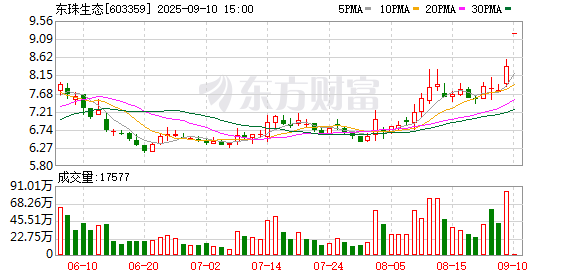
东珠生态拟收购凯睿星通跨界卫星通信领域
Zheng Quan Ri Bao· 2025-09-10 16:41
Core Viewpoint - Dongzhu Ecology is planning a strategic transformation by entering the satellite communication sector through the acquisition of 89.49% of Kairui Xingtong, aiming to create a second growth curve and enhance profitability [2][3]. Group 1: Company Performance - Dongzhu Ecology has faced declining performance, with revenues of 829 million yuan and 376 million yuan in 2023 and 2024 respectively, and net losses of 315 million yuan and 630 million yuan [2]. - In the first half of 2025, the company reported revenues of 208 million yuan, a year-on-year decrease of 23.04%, and a net loss of approximately 9.54 million yuan [2]. Group 2: Acquisition Details - The acquisition involves Dongzhu Ecology purchasing Kairui Xingtong, a high-tech company specializing in satellite communication technology, including products like satellite communication baseband products and terminal products [2][3]. - Kairui Xingtong has shown rapid growth, with revenues of 149 million yuan, 258 million yuan, and 110 million yuan for 2023, 2024, and the first half of 2025 respectively, alongside net profits of 8.95 million yuan, 41.50 million yuan, and 7.82 million yuan [3]. Group 3: Strategic Implications - The acquisition is expected to facilitate Dongzhu Ecology's transition into the satellite communication and space information technology sectors, potentially increasing its sustainable profitability [3]. - Experts suggest that for the transformation to be successful, Dongzhu Ecology must establish a reasonable organizational structure and collaborative mechanisms to ensure synergy between the two business areas [4].