
粮食安全

Search documents
年终话“三农”丨全链条发力 携手护粮安——2025年粮食和重要农产品稳产保供一线观察
Xin Hua Wang· 2025-12-25 01:20
Core Insights - Food security is emphasized as a national priority, with significant efforts made to ensure stable production and supply of grain and important agricultural products by 2025 [1] Group 1: Agricultural Production - In 2025, China's grain production faced challenges from various natural disasters, yet the total grain output reached a historical high of 14,297.5 billion jin, marking a significant increase from the previous year [2][3] - The national average grain yield was reported at 399.1 kg per mu, an increase of 1.1% from the previous year, with corn planting area reaching 67.4 million acres, up by 3.3 million acres [3] - The Ministry of Agriculture and Rural Affairs noted that grain production achieved self-sufficiency, ensuring absolute safety for staple foods while maintaining a rich supply of other agricultural products [3] Group 2: Storage and Processing - Enhancements in grain storage capabilities are crucial for food security, with advancements in technology such as intelligent control systems in storage facilities to maintain grain quality [5] - The reduction of grain loss during harvesting and processing is emphasized, with new machinery reducing loss rates significantly, such as a drop in wheat loss rates to 0.78% in Shandong [6][4] - The processing sector also shows potential for reducing waste, with companies implementing strict measures to minimize grain loss during transportation and processing [6] Group 3: Consumption and Waste Reduction - Initiatives at the consumer level, such as offering smaller portion sizes in community canteens, aim to reduce food waste and promote a culture of conservation [8][9] - The community's efforts in promoting food-saving practices contribute to the overall goal of ensuring food security for the population [9]

探寻新时代发展足迹|中国人的饭碗应该主要装中国粮
Zhong Guo Xin Wen Wang· 2025-12-25 00:48
作为全国粮食主产区之一,2025年,湖南围绕打造更高水平"洞庭粮仓"发力,克服多种不利因素,通过 科技赋能、设施完善等举措,促进粮食生产高产再高产。三湘大地的每一寸耕土、每一粒稻穗,都在书 写着"中国人的饭碗装中国粮"的生动答卷。(徐志雄 张雪盈 龚顺) 2024年3月,习近平总书记来到湖南省常德市鼎城区谢家铺镇粮食生产万亩综合示范片区,走进水稻田 边,察看秧苗培育和土地翻耕情况,并同种粮大户、农技人员、基层干部和村民亲切交流,详细询问春 耕备耕等情况。总书记强调,我国有14亿多人口,粮食安全必须靠我们自己保证,中国人的饭碗应该主 要装中国粮。 ...
年终话“三农”|全链条发力 携手护粮安——2025年粮食和重要农产品稳产保供一线观察
Xin Hua Wang· 2025-12-24 23:04
Core Viewpoint - Food security is emphasized as a national priority, with significant efforts made to ensure stable production and supply of grain and important agricultural products in the face of various natural disasters in 2025 [1] Group 1: Agricultural Production - The agricultural sector has implemented measures to maintain and enhance grain production, achieving a historical high of 14,297.5 billion jin, marking a significant increase from the previous year [2][3] - The national grain yield per mu reached 399.1 kg, an increase of 1.1% from the previous year, with corn planting area expanding to 67.4 million acres, up by 3.3 million acres [3] - Despite challenges such as drought and excessive rainfall, the overall grain production has remained stable, particularly in regions like Northeast China, contributing to a general increase in autumn grain output [3] Group 2: Storage and Processing - Enhancements in grain storage capabilities are crucial for food security, with advancements in technology such as intelligent control systems in storage facilities to maintain grain quality [5][6] - The reduction of grain loss during harvesting and processing is being prioritized, with new machinery reducing loss rates significantly, such as a decrease in wheat loss rates to 0.78% in Shandong [6][7] - Efficient processing techniques are being adopted to minimize waste, with companies implementing strict measures to prevent grain loss during transportation and processing [7] Group 3: Consumption and Waste Reduction - Initiatives at the consumer level, such as offering smaller portion sizes in community canteens, are being introduced to reduce food waste and promote a culture of conservation [9][10] - The community's efforts in promoting food-saving practices contribute to the broader goal of ensuring food security for the population [10]
澳媒:榴莲推动中国和东南亚的“食品丝绸之路”
Xin Lang Cai Jing· 2025-12-24 22:54
Group 1 - The article discusses how the rising popularity of durian in China has turned this tropical fruit into a diplomatic tool, with China being the largest importer and consumer, accounting for approximately 95% of global demand [1] - In 2024, China's durian imports are expected to reach a record high, with a total value nearing $7 billion [1] - Southeast Asian countries are leveraging durian exports to strengthen political and economic ties with China, using high-quality durians as gifts to foster friendly relations [1] Group 2 - The demand for durian in China is driving economic growth in Southeast Asia, transforming previously impoverished agricultural regions into prosperous areas [2] - Malaysian durian farmers report significant improvements in their livelihoods, enabling them to rebuild homes and afford education for their children abroad [2] - The Malaysian government views durian exports as a means to attract Chinese investment and enhance trade relations, emphasizing the importance of collaboration with Chinese businesses [2] Group 3 - Durian trade is part of a larger strategy for China to ensure food security, contributing to a new network termed the "Food Silk Road," which aims to diversify food imports from various regions [2] - The overall agricultural trade between China and ASEAN countries is growing, with imports expected to reach nearly $7.5 billion in the first quarter of 2025, marking a 14% increase from the same period in 2024 [3] - Southeast Asian countries face challenges in managing their durian industries while capitalizing on the growing demand from China amidst global economic uncertainties [3]
抗旱保粮创佳绩 宁夏实现粮食“二十二连丰”
Xin Lang Cai Jing· 2025-12-24 14:45
Group 1 - Ningxia's grain planting area is projected to reach 10.386 million acres by 2025, with a total output of 3.814 million tons, successfully achieving the national task and maintaining a "22 consecutive years of harvest" in grain production [1] - Despite adverse weather conditions such as strong winds and drought, Ningxia has implemented a series of measures including technical empowerment and policy support to ensure food security [1][3] - The region plans to construct 311 high-quality agricultural demonstration areas, integrating drought-resistant varieties and water-saving irrigation technologies [3] Group 2 - The average yield for corn in demonstration areas reached 1,154.2 kg per acre, while spring and winter wheat yields were 682 kg and 659.8 kg per acre respectively, setting new records for large-scale production [3] - Ningxia has built and renovated 874,300 acres of high-standard farmland and developed 369,600 acres of efficient water-saving irrigation, improving the effective utilization coefficient of irrigation water to 0.586, surpassing the national average [3] - In response to severe drought conditions from May to July, Ningxia established a three-tier service system and provided support to 1,128 large-scale planting entities, resulting in a 4.85% increase in yield per unit area compared to the previous year [3][4] Group 3 - Ningxia has strengthened policy and financial support, allocating 1.218 billion yuan for farmland fertility protection and providing additional subsidies for wheat and soybean-corn intercropping ranging from 50 to 150 yuan per acre, with a maximum subsidy of 450 yuan per acre [4] - In response to the drought, Ningxia pre-allocated 20 million yuan for disaster relief and secured an additional 53 million yuan for pest control and disaster reduction, enhancing farmers' confidence and ability to cope with drought [4]

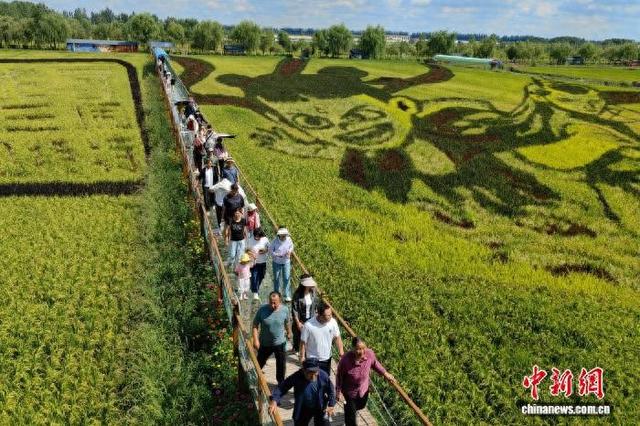
年终话“三农” | 全链条发力 携手护粮安——2025年粮食和重要农产品稳产保供一线观察
Xin Hua She· 2025-12-24 14:07
Core Viewpoint - Food security is a national priority, and efforts are being made to ensure stable production and supply of food and important agricultural products by 2025 [1] Group 1: Agricultural Production - In 2025, China's grain production faced challenges from various natural disasters, yet the total grain output reached a historical high of 14,297.5 billion jin, marking a significant increase from the previous year [2][3] - The national grain yield per mu was 399.1 kg, an increase of 4.4 kg or 1.1% year-on-year, with corn planting area reaching 67.4 million mu, up by 3.3 million mu [3] - The Ministry of Agriculture and Rural Affairs reported that grain production achieved a bumper harvest, ensuring basic self-sufficiency in grains and absolute safety in staple foods [3] Group 2: Storage and Processing - Enhancements in grain storage capabilities are crucial for food security, with the introduction of intelligent control systems in storage facilities to maintain grain quality [5] - The use of advanced technology in grain processing has significantly reduced loss rates, with one company reporting a decrease in wheat breakage from 0.3% to 0.1% [6] Group 3: Waste Reduction and Consumer Awareness - Initiatives to reduce food waste at the consumer level include offering smaller portion sizes in community dining facilities, which helps minimize waste while catering to diverse customer needs [8][9] - The promotion of food-saving concepts and practices in restaurants and households is essential for contributing to overall food security [9]
年终话“三农”|全链条发力 携手护粮安——2025年粮食和重要农产品稳产保供一线观察
Xin Hua She· 2025-12-24 14:01
Core Insights - Food security is emphasized as a national priority, with significant efforts made to ensure stable production and supply of grain and important agricultural products by 2025 [1] Group 1: Agricultural Production - In 2025, China's grain production faced challenges from various natural disasters, yet the total grain output reached a historical high of 14.2975 trillion jin, marking a significant increase from the previous year [2][3] - The national average grain yield was 399.1 kg per mu, an increase of 4.4 kg or 1.1% year-on-year, with corn planting area reaching 67.4 million mu, up by 3.301 million mu [3] - The Ministry of Agriculture and Rural Affairs reported that grain production achieved a bumper harvest, ensuring basic self-sufficiency in grains and absolute safety in staple foods [3] Group 2: Storage and Processing - Enhancements in grain storage capabilities are crucial for food security, with the introduction of intelligent control systems in storage facilities to maintain grain quality [5] - The use of advanced technology in grain processing has significantly reduced loss rates, with one company reporting a decrease in wheat breakage from 0.3% to 0.1% during transport [6] Group 3: Waste Reduction Initiatives - Efforts to reduce food waste extend to consumer behavior, with initiatives like offering smaller portion sizes in community canteens to minimize waste [8][9] - The promotion of "clean plate" campaigns and other activities in the food service industry aims to contribute to food security by encouraging responsible consumption [9]
农林牧渔行业:农产品保供稳价,积极推进农业高质量发展
Dongxing Securities· 2025-12-24 12:13
Investment Rating - The industry investment rating is "Positive" [5] Core Insights - The report emphasizes the importance of ensuring food security and stabilizing agricultural product prices, with a focus on grain production and the rural revitalization strategy [2][3] - The report highlights the need for innovation in agriculture, advocating for the development of new productive forces through smart agriculture and biotechnology [4] Summary by Sections Agricultural Production and Price Stability - The central economic meeting stresses the need to strictly adhere to arable land limits and maintain grain production to keep prices of essential agricultural products at reasonable levels [2] - Since June 2025, a series of capacity control measures have been implemented, leading to a decrease in the breeding sow inventory to below 4,000 heads by October 2025, aligning with the central economic meeting's directives [2] - The report recommends focusing on the pig farming industry, particularly on leading enterprises like Muyuan Foods, and other beneficiaries such as Wens Foodstuff Group and DeKang Agriculture [2] County Economic Development and Brand Agriculture - The report discusses the promotion of county-level economic development as a key driver for high-quality growth, suggesting the establishment of a full industry chain from production to branding [3] - It encourages agricultural enterprises to transition from bulk raw material producers to specialty agricultural brand companies, highlighting the potential for growth in county-level economies [3] Innovation and New Productive Forces - The report advocates for a new round of high-quality development actions in key industrial chains, emphasizing the integration of artificial intelligence in agriculture [4] - It identifies three key areas for investment: biotechnology innovation, agricultural machinery upgrades, and smart agriculture, recommending specific companies in each sector [4]

招商证券2026年农林牧渔业投资策略:聚焦于周期与成长两大维度
Zhi Tong Cai Jing· 2025-12-24 06:44
Core Viewpoint - The investment opportunities in the agriculture, forestry, animal husbandry, and fishery sector are expected to focus on both cyclical and growth dimensions by 2026, with a gradual recovery in pig prices anticipated in the second half of 2026 due to the reduction of sow capacity and industry losses [1] Group 1: Pig Farming - The recovery of sow capacity is expected to lead to a gradual increase in pig prices in the second half of 2026, despite a downward trend in prices throughout 2025 [2] - The industry is experiencing both passive and active capacity reductions due to price drops below cash costs, with a significant acceleration in capacity reduction starting in October [2] - High-quality pig farming companies are expected to continue improving cash flow and asset-liability ratios, enhancing their intrinsic value [2] Group 2: Feed Industry - The domestic feed industry is entering a phase of accelerated consolidation, with leading companies gaining market share and improving profitability [3] - The peak capital expenditure period for leading feed companies has passed, and improved feed sales are expected to enhance profitability [3] - Leading feed companies are likely to replicate successful domestic competition models in overseas markets, creating new growth opportunities [3] Group 3: Poultry Farming - The supply of quality parent stock for white feather chickens is expected to be tight in 2026 due to a significant decline in overseas breeding and performance issues [4] - The supply contraction in yellow feather chickens, combined with low breeding costs, is anticipated to set the stage for price increases and significant profit recovery [4] Group 4: Seed Industry - The focus on food security has heightened the importance of the seed industry, with expectations of a favorable environment for planting and seed production [5] - The supply of hybrid rice seeds is expected to be sufficient in 2025, while high-quality varieties remain scarce [5] - The corn seed industry is projected to see price increases and sustained planting enthusiasm, with a notable decline in hybrid corn seed production area and ongoing inventory reduction [5]

海南大学团队揭秘植物酚胺抗逆核心机制
Huan Qiu Wang Zi Xun· 2025-12-24 01:26
植物无法主动移动,需依靠内在精密的化学调控网络,应对干旱、高温、病虫害等多重环境胁迫。酚胺 是植物体内广泛存在的天然代谢产物,被公认为增强植物自身抵抗力的关键物质之一。不过,此前科学 界对酚胺在植物整体代谢网络中的核心定位、多样功能间的系统关联,以及如何将其系统性应用于作物 遗传改良等关键问题,缺乏统一且深入的理论阐释。 为破解这一难题,研究团队系统整合国内外相关研究成果并开展前瞻性分析,首次从"代谢建筑师"的视 角,构建起酚胺调控植物环境适应的系统理论框架。研究明确,酚胺处于植物初级代谢与次级代谢、生 长发育与防御抗逆信号的交汇关键节点,堪称调控资源分配、维持细胞内环境稳定、传递胁迫信号 的"总调度师"——能助力植物在资源有限条件下,智能权衡"生长"与"生存"的平衡,做出最优适应决 策。 来源:科技日报 科技日报记者 王祝华 通讯员 江雨 12月22日,记者从海南大学获悉,该校南繁学院(三亚南繁研究院)王守创教授团队联合国内外多家科 研机构,系统阐释了酚胺类化合物在植物感知、适应复杂环境中的核心枢纽作用,为作物抗逆育种提供 了"代谢新蓝图"。相关研究成果已发表于国际权威期刊《植物科学趋势》。 作为抗逆"多面 ...