
资本市场

Search documents
连平:资本市场环境发生重大变化
Sou Hu Cai Jing· 2025-10-10 01:58
Group 1 - The capital market is undergoing a profound transformation due to collective monetary easing by major global economies, including the U.S. and China, leading to increased attention on capital markets as alternative investment avenues [1][3] - The liquidity environment in capital markets is expected to remain loose, with the U.S. Federal Reserve having cut interest rates by 100 basis points since the beginning of 2024, indicating a shift towards a more accommodative monetary policy [3][4] - China's monetary policy has shifted from "prudent" to "moderately loose," marking the first change in 14 years, aimed at maintaining economic growth around 5% [6][7] Group 2 - Investment demand is likely to shift towards capital markets as traditional channels like real estate and high-yield financial products have seen significant declines in returns, with real estate entering a prolonged adjustment period since late 2021 [7][9] - The average yield on financial products has dropped to around 2%, failing to attract medium-risk investors, thus making capital markets a more appealing option for those seeking better returns [9][10] - The trend of capital flowing into the capital markets is expected to strengthen, enhancing the role of capital markets in China's modern economic system [7][9] Group 3 - The central bank is expected to support capital markets more vigorously, having introduced innovative tools to provide liquidity directly to financial institutions, which is a departure from previous indirect support methods [10][12] - The central bank has initiated special loans to support stock buybacks by listed companies, allowing them to access low-cost funding for repurchases, which had not been previously utilized [10][12] - The establishment of a market stabilization fund through the China Investment Corporation aims to provide liquidity support and stabilize market expectations, reflecting a proactive approach to maintaining market stability [12][13]


招商基金研究部首席经济学家李湛:资本市场结构性机遇与挑战并存
Zheng Quan Shi Bao· 2025-10-09 18:23
Group 1 - The current economic situation in China shows a divergence between strong external demand and weak internal demand, with macroeconomic data showing marginal slowdown in July and August, and the GDP growth rate for the third quarter declining compared to July [1] - Consumer employment index is at a low level since the second half of 2024, leading to weak income and consumption willingness; the "old-for-new" policy has generated approximately 1.9 trillion yuan in sales with subsidy funds consumed nearing 264 billion yuan, indicating a need for additional subsidies in the fourth quarter to sustain consumption recovery [1] - Fixed asset investment in August only grew by 0.5% year-on-year, down 1.1 percentage points from the previous month, with all three investment categories facing downward pressure, making effective support unlikely in the short term [1] Group 2 - The capital market is showing signs of stabilization and recovery due to multiple supporting factors, although the funding structure and risk points still require vigilance; since the third quarter, market liquidity has been ample, with non-bank financial institutions' deposits increasing by 194 billion yuan year-on-year [2] - External risks are easing, with extended US-China tariff negotiations and a 25 basis point rate cut by the Federal Reserve in September, which may lead to an additional 50 basis points cut within the year, improving international capital liquidity [2] - The funding structure indicates that private equity, speculative funds, and leveraged funds are the main sources of new capital, with private equity securities investment fund registrations in July increasing 22 times compared to the low point in 2024, while resident willingness to invest directly in the market remains weak [2]
连平:四季度还能实施哪些稳增长举措
和讯· 2025-10-02 03:41
Core Viewpoints - The current international situation is characterized by "four certainties" and "three uncertainties," impacting global capital flows and presenting structural challenges to the Chinese economy [2] - Domestic issues such as weak demand, structural overcapacity, deflationary pressures, and unstable expectations remain significant [3][4][5] Group 1: Economic Indicators - Infrastructure investment growth has declined, with fixed asset investment from January to August showing a cumulative year-on-year decrease of 0.5%, and infrastructure investment (excluding electricity) down 2.0% [3] - The real estate market continues to face challenges, with national commercial housing sales area in August down 11% year-on-year, and real estate investment from January to August down 12.9% [4] - Credit growth is notably weak, with July seeing a reduction of 500 billion yuan in credit, marking the first decline since July 2005, and the total new credit for January to August at 1.34 trillion yuan, the lowest in five years [5] Group 2: Policy Recommendations - It is recommended to advance next year's government investment quotas to stimulate demand, with a proposed early release of 1.5-2 trillion yuan in local government bonds [6] - Monetary policy should continue to signal positivity, with suggestions for a 0.5% reserve requirement ratio cut and a 0.2% interest rate reduction [6] - The establishment of a "dynamic adjustment" mechanism for structural tools is advised to enhance efficiency and prevent fund idling [7] Group 3: Capital Market Support - Lowering the operational thresholds for capital market support tools is suggested, including reducing the interest rate for stock repurchase loans from 1.75% to 1.5% [8] - The recommendation includes expanding the range of institutions eligible for liquidity support and increasing the scale of the central financial company's assets to stabilize the capital market [8] Group 4: Real Estate and Housing Policies - A reduction in mortgage rates and optimization of housing tax policies are recommended, particularly in major cities, to stimulate housing demand [9][10] - The "white list" credit arrangement is currently at approximately 8.5 trillion yuan, which is about 60% of the existing development loan balance, indicating a need for increased credit support for real estate companies [10] Group 5: Consumer and Trade Support - An additional 1 billion yuan for consumer goods replacement subsidies is proposed, along with measures to enhance service consumption and lower re-loan rates [11][12] - Strengthening financial and fiscal support for foreign trade, including the establishment of emergency funds for affected enterprises, is recommended [13][14]

向“新”而行 “疆”更美好
Zheng Quan Shi Bao· 2025-09-28 18:28
Core Insights - Xinjiang's capital market has experienced significant growth, with 61 listed companies achieving a total market value exceeding 900 billion yuan as of August 2023, and projected total revenue surpassing 300 billion yuan by mid-2025 [1][3] - The region's capital market is evolving, integrating into the national market, and leveraging multi-tiered financing tools to strengthen core industries [1][4] Group 1: Market Development - Xinjiang's capital market has transitioned from a nascent stage in 1994 with the listing of Xin Hongxin to a more mature system with 61 listed companies by August 2025, ranking among the top in Northwest China [3][4] - The quality of listed companies has improved, with total assets reaching approximately 34,554.88 billion yuan, a year-on-year increase of 4.91%, and net profits growing for 28 companies, with 15 of them seeing increases over 30% [4][6] Group 2: Industry Performance - Key industries such as manufacturing, construction, wholesale and retail, and finance have shown significant profit growth, with respective net profit increases of 30.22%, 111.34%, 47.87%, and 33% [4] - Companies like Daqo New Energy and Guanghui Energy are leading in their sectors, with Daqo optimizing production amid market challenges and Guanghui pursuing a green energy transition [5][12] Group 3: Strategic Initiatives - Xinjiang companies are actively engaging in mergers and acquisitions, with 9 companies completing 8 major asset restructurings totaling 13.28 billion yuan from 2022 to August 2025 [9][10] - Guanghui Energy's strategic partnership with strong investors aims to enhance its long-term development and optimize its capital structure [8][9] Group 4: Future Outlook - The Xinjiang regulatory body emphasizes the importance of supporting listed companies to utilize capital market tools effectively, aiming for a robust and high-quality regional market [14] - The region is focusing on building a modern industrial system that leverages its resource advantages, with significant investments planned in coal and renewable energy sectors [11][12]

黄奇帆:抓好生产性服务业,是高质量发展的“关键一招”
Di Yi Cai Jing· 2025-09-28 13:14
Group 1 - The core viewpoint emphasizes the importance of the productive service industry as a key driver for high-quality economic development in China, particularly in the context of the upcoming "14th Five-Year Plan" and the 2040 vision [1][5] - Huang Qifan advocates for venture capital and private equity to focus on early-stage investments in the productive service sector, which he identifies as a crucial area for "hard technology" investment [1][8] - The productive service industry is recognized as a significant contributor to GDP growth, with its share increasing from 10% in 1980 to approximately 30% in recent years, highlighting its role as a growth engine for the economy [9][10] Group 2 - Huang Qifan points out that China's capital market has substantial growth potential, with the current market value at about 100 trillion RMB, representing only 70% of GDP, indicating room for expansion [4][5] - He predicts that by 2040, China's GDP could reach around 280 trillion RMB, suggesting that the stock market could potentially grow to 400 trillion RMB, aligning with the goal of achieving a 100% to 120% market capitalization to GDP ratio [5][6] - The current investment landscape shows a misallocation of funds, with 40% of venture capital invested in low-risk fixed income, which Huang Qifan argues should be redirected towards early-stage investments in the productive service sector [7][10] Group 3 - The productive service industry is described as the largest segment of GDP and a critical growth pole, essential for enhancing labor productivity and fostering innovation [8][9] - Huang Qifan highlights that successful unicorn companies often emerge from the productive service sector, which serves as a fertile ground for high-value enterprises [10][11] - The integration of productive service values into hardware and terminal equipment is crucial for creating high-value products, emphasizing the need for investment in this sector [11]
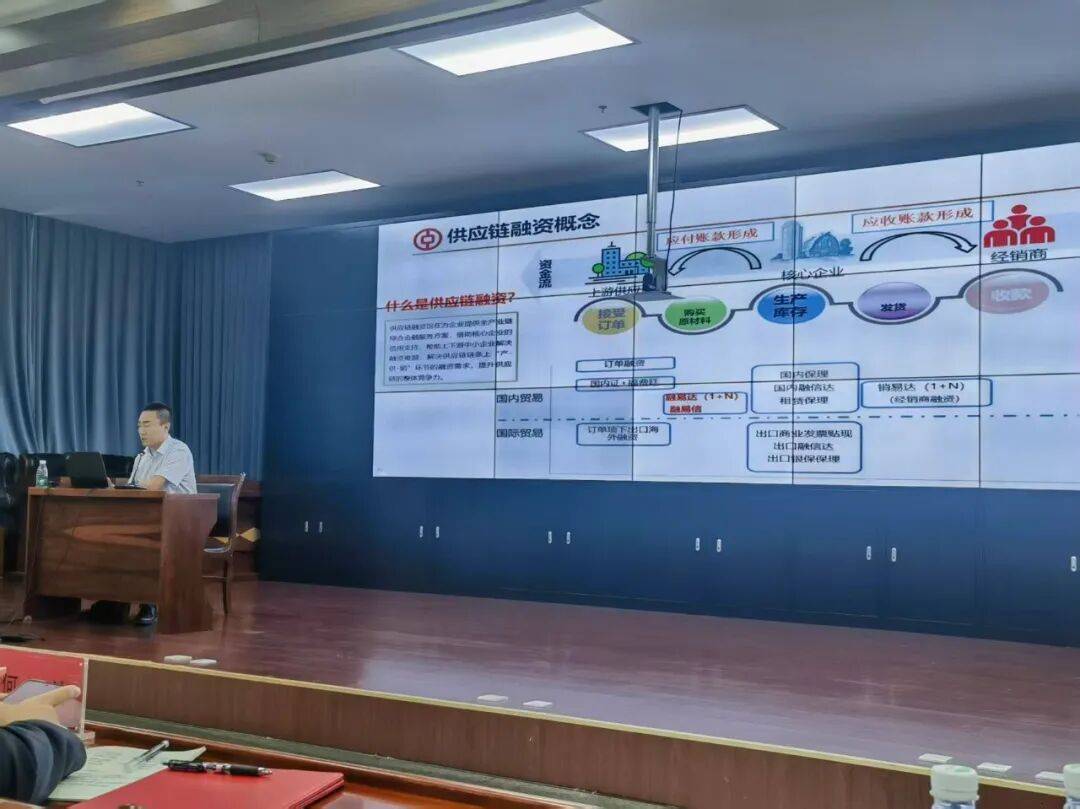
赤峰市财政局组织召开规上企业资本市场培训会
Sou Hu Cai Jing· 2025-09-28 10:59
Group 1 - The training session aimed to enhance the willingness and confidence of enterprises in listing, aligning with the regional financial support initiatives and the "Tianjun Plan" for corporate listings [1][5] - Experts from various institutions discussed capital market policies, the latest trends, and the requirements for domestic enterprises to list in Hong Kong, focusing on financing methods, equity exit, and capital operations [3] - The session emphasized the importance of understanding listing policies and regulations, encouraging enterprises to align their strategies with industry characteristics and financing needs to leverage capital markets for growth [3] Group 2 - The Chifeng Municipal Finance Bureau plans to implement the "Tianjun Plan" by identifying and nurturing enterprises with listing potential, enhancing the reserve of key listed companies in the region [5] - The bureau will adopt a tailored approach for each enterprise to strengthen guidance on the listing process, supporting the entire lifecycle of enterprise development and contributing to high-quality economic growth in the city [5]
瑞达期货宏观市场周报-20250926
Rui Da Qi Huo· 2025-09-26 09:39
Report Summary 1. Investment Rating The report does not provide an overall industry investment rating. 2. Core Views - A-share market: A-share major indices generally rose this week, with the Science and Technology Innovation 50 Index surging over 6%. Most stock index futures increased, and large-cap blue-chip stocks performed well. The market was in a state of multiple vacuums of performance, policies, and macro data, with less disturbance from domestic and foreign news. Investor sentiment was cautious due to approaching holidays, resulting in a random walk pattern and a slight decline in trading activity. It is recommended to buy on dips [9][14]. - Bond market: Treasury bond futures declined across the board this week. The "supply - strong, demand - weak" pattern in August economic data may continue, pressuring third - quarter economic growth and providing some support for the bond market. However, in the absence of incremental positive factors, the market is sensitive to negative news. The uncertainty of the new public bond fund regulations continues to disrupt, and bearish sentiment dominates. It is expected that Treasury bond futures will continue to fluctuate weakly in the short term, and it is recommended to watch cautiously [9]. - Commodity market: The Wind Commodity Index rose 4.59%. Gold fell from its historical high due to the rising dollar but has long - term upward potential in a globally loose liquidity environment. Crude oil's trend was volatile due to geopolitical conflicts, and long - term supply pressure remains. The commodity index is expected to fluctuate widely, and it is recommended to mainly watch [9]. - Foreign exchange market: The euro - dollar exchange rate declined. Strong US economic data and hawkish signals from some Fed officials dampened the expectation of interest rate cuts, leading to a short - term rebound of the dollar. The euro was suppressed by the dollar's rebound. It is recommended to watch cautiously [9][13]. 3. Summary by Directory 3.1 This Week's Summary and Next Week's Allocation Suggestions - **Monetary policy**: China's central bank net injected 9406 billion yuan in the open market this week. The September LPR quotes remained stable, with the 1 - year and over - 5 - year varieties at 3.0% and 3.5% respectively. The current economic downward pressure has increased, but previous policies are still taking effect. The Fed's 25 - basis - point interest rate cut in September provides more room for China's monetary policy. If the third - quarter fundamentals continue to weaken, there may be a new round of reserve requirement ratio and interest rate cuts in the fourth quarter [14]. - **Capital market**: As mentioned above, A - shares and stock index futures performed well, while Treasury bond futures declined [9][14]. 3.2 Important News and Events - **Domestic**: President Xi Jinping announced China's new national independent contributions at the UN Climate Change Summit. Premier Li Qiang attended the High - level Meeting on the Global Development Initiative and met with the President of the European Commission [16]. - **International**: The US lowered the tariff on EU cars to 15% and exempted some EU products from tariffs. There were differences within the Fed on future monetary policy paths. The OECD raised the global economic growth forecast for 2025. The Bank of Japan maintained the interest rate at 0.5% and announced the reduction of ETF and real estate investment trust holdings [18]. 3.3 This Week's Domestic and Foreign Economic Data - **China**: The central bank's open - market net injection was 9406 billion yuan. The 9 - month LPR remained stable. The year - on - year growth rate of total social electricity consumption in August was 5% [14][19]. - **US**: The initial jobless claims in the week ending September 20 decreased to 218,000. The annualized quarterly rate of real GDP in the second quarter was revised up to 3.8%. The core PCE price index was slightly higher than expected [13][19]. - **EU**: The September consumer confidence index improved slightly, but the manufacturing PMI declined [13][19]. - **Germany**: The September manufacturing PMI was lower than expected, and the October Gfk consumer confidence index improved [19]. - **France**: The September manufacturing PMI was lower than expected [19]. - **UK**: The September manufacturing PMI was lower than expected [19]. 3.4 Next Week's Important Economic Indicators and Economic Events - Multiple important economic data will be released next week, including China's September official manufacturing PMI, the UK's second - quarter GDP annual rate final value, Germany's September unemployment rate, the US's September ADP employment, and the unemployment rate, etc. [81]

建发致新成功登陆深交所!
Quan Jing Wang· 2025-09-26 09:02
Group 1 - Shanghai C&D INNOSTIC Medical Technology Group Co., Ltd. successfully held its IPO ceremony on September 25 [2] - The company, founded in 2010 and headquartered in Shanghai, is a national medical device distributor and part of the C&D Group [3] - The company engages in direct sales and distribution of medical devices and provides centralized operation services for medical consumables to hospitals, maintaining long-term partnerships with over 100 well-known domestic and international high-value medical device manufacturers [3] Group 2 - Chairman Yu Feng emphasized that the company will leverage its listing as an opportunity to utilize capital market resources, focusing on industry pain points and enhancing hospital scenarios [9] - The company aims to embrace the intelligent era and actively serve the public and society, with a commitment to delivering better operational performance to shareholders and contributing to society [9]

破解大股东减持痼疾 刘纪鹏建言三剂“良方”:设持股上限、流通底价与分红挂钩
Xin Lang Zheng Quan· 2025-09-25 10:38
Core Viewpoint - The A-share market is gradually showing a slow bull trend one year after the "924" policy, but it remains in a value trap due to underlying economic challenges and structural issues in the capital market [1][2]. Group 1: Economic and Market Conditions - The current Chinese economy is in a downward cycle, with significant fiscal pressure on local governments and a severe employment situation, making it difficult for the fundamental economy to provide effective support [1]. - The total social financing in China is heavily reliant on bank loans, which amount to approximately 36 trillion yuan, indicating a low proportion of direct financing from the capital market [1]. Group 2: Liquidity and Institutional Reforms - The coordination efficiency between the central bank and the China Securities Regulatory Commission has significantly improved, with the Central Financial Committee playing a key role in injecting ample liquidity into the market [2]. - Despite a rebound of about 800 points from the market's low, systemic optimization of institutional frameworks is necessary to avoid resistance to further market growth [2]. Group 3: Shareholder Behavior and Corporate Governance - Current large shareholders are focusing on cashing out rather than improving company operations, which undermines the original intent of the capital market to support the real economy [3]. - There are over 5,400 listed companies in A-shares with a total share capital of approximately 77 trillion shares, with more than 90% being tradable, leading to significant pressure for large shareholders to reduce their holdings [2]. Group 4: Proposed Institutional Innovations - Three key institutional innovations are proposed to address structural issues: 1. Setting a cap on the shareholding ratio of the largest shareholder in newly listed companies at 30% to control reduction pressure [4]. 2. Implementing a "minimum price for liquidity" mechanism that ties the reduction price to company performance and market index levels [4]. 3. Linking reduction qualifications to dividend distribution, requiring cumulative dividends to exceed total financing amounts before allowing reductions [4]. - The regulatory authorities are urged to adopt differentiated policies for existing and newly listed companies to prevent a potential market crash due to uncontrolled large shareholder reductions [4][5].

刘纪鹏:A股是巨大的“价值洼地” 市盈率40倍以内都合理,但向年轻投资者发出重要警示
Xin Lang Zheng Quan· 2025-09-25 09:54
Core Viewpoint - The A-share market is gradually showing a slow bull trend one year after the "924" policy was introduced, indicating that it remains a value lowland for investors [1] Group 1: Market Dynamics - The number of new accounts is increasing, with more "post-00s" and "post-10s" entering the stock market, reflecting a shift towards a younger investor base [1] - The A-share market is compared to the US market, where the US stock market recently reached a historical high of 46,000 points, while the A-share market's recent high was only about 3,899 points, highlighting a significant gap [2] Group 2: Economic Growth and Valuation - China's GDP growth rate is significantly higher than that of the US, suggesting that the A-share market should theoretically enjoy a higher price-to-earnings (P/E) ratio [2] - The current P/E ratio of the Shanghai Composite Index is approximately 15 times, while the overall market P/E ratio is around 30 times, indicating that A-shares are undervalued compared to US stocks, which have an overall P/E ratio exceeding 30 times [2] Group 3: Investment Opportunities and Risks - The potential for the A-share market is substantial, with a reasonable P/E ratio of up to 40 times, considering China's economic growth [2] - Young investors are encouraged to participate in the capital market as it is seen as a crucial platform for increasing property income, but they must also be cautious of financial risks [2][3]