
高水平科技自立自强

Search documents
4000点,投资者该如何面对
IPO日报· 2025-10-28 04:01
Core Viewpoint - The article discusses the current state of the A-share market, emphasizing that despite recent fluctuations, the market is fundamentally supported by China's economic strength and policy measures aimed at stabilizing growth [6][7][9]. Economic Analysis - China's nominal GDP ranks as the second-largest globally, and by purchasing power parity, it was noted to be the largest as early as 2015 [7]. - The recent communique from the 20th Central Committee of the Communist Party highlights the resilience and potential of China's economy, asserting that the long-term positive trend remains unchanged [8][9]. - The government aims to stabilize employment, businesses, and market expectations while ensuring economic recovery continues [8][9]. Market Dynamics - The A-share market is characterized as a structural bull market, with significant sector rotation being a notable feature [6][7]. - Investors are encouraged to adapt to changing investment styles and focus on sectors they have researched thoroughly to identify opportunities [6][7]. International Relations - The article notes the complexities in the international political and economic landscape, particularly due to the ongoing trade tensions initiated by the U.S. since 2018 [9]. - Recent discussions between China and the U.S. in Kuala Lumpur suggest a potential easing of tensions, which could stabilize bilateral relations [9]. Investment Opportunities - The communique outlines new investment opportunities, emphasizing the need for technological self-reliance and innovation, as well as the development of a modern industrial system [10]. - Investors are advised to explore these areas for potential wealth creation [10].


鄢一龙:五年规划为世界提供了一份难得的“中国确定性”
Sou Hu Cai Jing· 2025-10-28 03:52
Group 1 - The "14th Five-Year Plan" has laid a solid foundation for China's economic development, emphasizing the importance of long-term planning in achieving sustainable growth [2][4] - The "15th Five-Year Plan" focuses on building a modern industrial system, with a strong emphasis on the manufacturing sector, which currently accounts for approximately 30% of global manufacturing value added [4][7] - The integration of manufacturing and service industries is crucial, with a push towards digital solutions and service-oriented manufacturing to enhance competitiveness [5][7] Group 2 - The plan outlines 12 key deployments, with the first being the consolidation and strengthening of the real economy, indicating a strategic shift towards a new type of major power [4][8] - The emphasis on innovation-driven development marks a transition from merely addressing shortcomings to enhancing profitability and establishing a modern industrial framework [8][10] - The goal of achieving a per capita GDP level of middle-income countries by 2035 reflects China's commitment to maintaining mid-to-high-speed economic growth [10][11] Group 3 - China's ongoing commitment to opening up its market will create significant opportunities for international businesses, positioning China as one of the largest single markets globally [12][14] - The country's complete industrial system and strong manufacturing capabilities provide a stable foundation for global supply chains, enhancing production efficiency for partner countries [13][14] - China's focus on green production capabilities addresses global challenges in sustainable development, contributing to the green transition worldwide [13][14]
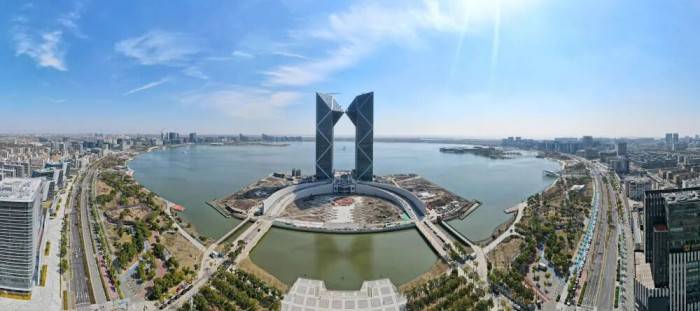
陈刚深入宾阳县宣讲党的二十届四中全会精神
Guang Xi Ri Bao· 2025-10-28 01:35
Group 1 - The core message emphasizes the importance of deeply learning and implementing the spirit of the 20th Central Committee's Fourth Plenary Session, focusing on high-quality development and the modernization of Guangxi [1][4] - The session outlines significant deployments aimed at achieving socialist modernization by 2035, particularly in rural revitalization, enhancing grassroots governance, and promoting common prosperity, which are crucial for economic and social development [2][4] - The local government is encouraged to optimize the business environment and support enterprises in embracing opportunities in artificial intelligence and modern industrial systems, enhancing their core competitiveness [3][4] Group 2 - The visit to the Nanning Lide Robot Company highlights the focus on high-level technological self-reliance and the importance of integrating into the modern industrial framework [3] - The emphasis on maintaining a strong crackdown on various crimes, including telecom fraud, indicates a commitment to ensuring public safety and social stability [3] - The call for all levels of government to align their development plans with national strategies and ensure the successful completion of economic and social development goals reflects a proactive approach to governance [4]
牢牢把握推动高质量发展这个主题——四论学习贯彻党的二十届四中全会精神
Xin Hua Wang· 2025-10-28 00:26
Core Viewpoint - High-quality development is the primary task for building a modern socialist country, emphasizing the need for a strategic focus on this theme during the "14th Five-Year Plan" period [1][2][3]. Group 1: Economic Growth and Innovation - During the "14th Five-Year Plan" period, under the strong leadership of the central government, China has implemented new development concepts, achieving significant quality and efficiency transformations in its economy [2]. - China's economic growth rate ranks among the top in major economies, with the country being a key driver of global economic growth [2]. - The national comprehensive innovation capability ranking improved from 14th in 2020 to 10th in 2024, indicating a strengthening of innovation momentum [2]. - The added value of high-tech manufacturing industries increased by 42% compared to the end of the "13th Five-Year Plan" period [2]. Group 2: Modernization and Industrial Structure - High-quality development is essential for advancing Chinese-style modernization, with a focus on transforming development methods, optimizing economic structures, and changing growth drivers [3]. - A modern industrial system is crucial for a modern nation, emphasizing the need to strengthen the real economy and maintain a reasonable proportion of manufacturing [3]. - The strategy includes optimizing traditional industries, nurturing emerging industries, and promoting high-quality development in the service sector [3]. Group 3: Technological Independence and Innovation - High-level technological self-reliance is a strategic support for high-quality development, with a focus on enhancing the national innovation system and boosting independent innovation capabilities [4]. - The strategy involves seizing opportunities from the new technological revolution and industrial transformation, emphasizing the importance of basic research and breakthroughs in key technologies [4]. - There is a call for deep integration of technological and industrial innovation, alongside the development of digital infrastructure to support new productive forces [4]. Group 4: Long-term Commitment to High-Quality Development - High-quality development is a comprehensive requirement for all aspects of economic and social development, necessitating long-term commitment across all regions [5]. - The focus is on practical actions and sustained efforts to achieve continuous and healthy economic growth and comprehensive social progress [5].
中泰证券:恒生科技板块或长期占优
Xin Lang Cai Jing· 2025-10-28 00:14
Core Viewpoint - The Hong Kong stock market is expected to continue its upward trend in the short term, driven by policy support from mainland China and a recovery in sentiment in the A-share market [1] Group 1: Market Outlook - The technology sector, particularly companies involved in artificial intelligence, will remain a focal point for the market [1] - Investors should be cautious of market volatility that may arise from changes in China-U.S. relations [1] Group 2: Domestic Policy Impact - The "14th Five-Year Plan" emphasizes accelerating high-level technological self-reliance and leading the development of new productive forces [1] - The Hang Seng Technology sector is likely to outperform in the long term due to these domestic policy initiatives [1]

接续奋斗向未来(学习贯彻党的二十届四中全会精神)
Ren Min Ri Bao· 2025-10-27 22:38
Group 1 - The "14th Five-Year Plan" period is marked by significant achievements in China's economic and social development, with a focus on technological innovation and modernization [2][3][4] - The construction of Zhangjiang Science City aims to establish it as a globally influential technology innovation center by 2030, emphasizing high-level self-reliance in technology [2] - The agricultural sector in Jilin Province has seen a substantial increase in protective farming techniques, enhancing soil quality and agricultural productivity [4] Group 2 - The "15th Five-Year Plan" period is crucial for advancing major projects in Xiong'an New Area, with a focus on high-level modernization and urban development [5] - The emphasis on high-quality development and effective governance is highlighted as essential for economic and social progress during the "15th Five-Year Plan" [5] - The construction of the Pinglu Canal is expected to enhance connectivity between inland ports and coastal areas, supporting the new development pattern and high-level opening up [8] Group 3 - The Hainan Free Trade Port is preparing for its operational launch, focusing on institutional innovation and policy implementation to ensure smooth operations [9] - The forestry sector in Fujian Province is exploring sustainable economic practices, promoting ecological development while enhancing local incomes [10] - The Xinjiang Production and Construction Corps is committed to promoting common prosperity through the integration of agricultural practices and cultural heritage [11]
新华社评论员:牢牢把握推动高质量发展这个主题——四论学习贯彻党的二十届四中全会精神
Xin Hua She· 2025-10-27 16:55
Core Viewpoint - High-quality development is the primary task for building a modern socialist country, emphasizing the need to adhere to new development concepts and strategic deployments to achieve significant economic and social advancements [1][3]. Group 1: Economic Growth and Quality - During the "14th Five-Year Plan" period, under the leadership of the central government, China has implemented new development concepts, achieving quality and efficiency transformations, with the economy maintaining a leading growth rate among major economies [2][3]. - China's comprehensive innovation capability ranking improved from 14th in 2020 to 10th in 2024, indicating a significant enhancement in innovation momentum [2]. - The added value of high-tech manufacturing industries increased by 42% compared to the end of the "13th Five-Year Plan" period, showcasing substantial progress in industrial innovation [2]. Group 2: Modernization and Industrial Structure - High-quality development is essential for advancing Chinese-style modernization, with a focus on transforming development methods, optimizing economic structures, and changing growth drivers [3]. - A modern industrial system is crucial for a modern nation, emphasizing the need to strengthen the real economy and maintain a reasonable proportion of manufacturing [3]. - The strategy includes optimizing traditional industries, nurturing emerging industries, and promoting high-quality service sector development to lay a solid foundation for modernization [3]. Group 3: Technological Independence and Innovation - High-level technological self-reliance is a strategic support for high-quality development, with a focus on enhancing the national innovation system and boosting independent innovation capabilities [4]. - The emphasis is on seizing opportunities from the new round of technological revolutions and industrial transformations, integrating education, technology, and talent development [4]. - Continuous efforts are required in basic research and breakthroughs in key technologies to foster new productive forces and drive high-quality development [4]. Group 4: Long-term Commitment to High-Quality Development - High-quality development is a comprehensive requirement for all aspects of economic and social development, necessitating long-term commitment across all regions [5]. - The "15th Five-Year Plan" period aims to anchor high-quality development as a central theme, promoting sustainable economic growth and social progress through practical efforts [5].
解析二十届四中全会发布会:点亮科技树
Changjiang Securities· 2025-10-27 09:15
Core Insights - The 20th Central Committee's Fourth Plenary Session concluded successfully, approving the "Suggestions on Formulating the 15th Five-Year Plan for National Economic and Social Development" [1][4] - The impact of new productive forces on economic growth is gradually increasing, with ongoing industrial upgrades and a rise in technological advancements [1][4] Summary by Sections Modern Industrial System Construction - Traditional industries are expected to generate approximately 10 trillion yuan in market space over the next five years [4][11] - Key initiatives include optimizing traditional industries such as chemicals, machinery, and shipbuilding to enhance global competitiveness and developing advanced manufacturing clusters [4][11] - New and future industries will create significant market opportunities, with strategic clusters in new energy, new materials, aerospace, and low-altitude economy expected to emerge [4][11] High-Level Technological Self-Reliance - A new national system will be established to drive breakthroughs in key technologies like integrated circuits and high-end equipment [5][11] - Support for high-tech enterprises and SMEs will be strengthened, including increased R&D expense deductions [5][11] - A unified national data market will be developed to promote the integration of the real economy and digital economy [5][11] Strong Domestic Market Development - A robust domestic market is seen as a strategic foundation for modernization, with actions to boost consumption and optimize government investment structures [5][11] - Measures will be taken to unify market regulations and eliminate local protectionism [5][11] Outlook on Market Trends - A "slow bull" market is anticipated, with increased market activity driven by new productive forces and technological advancements [6][13] - Emerging tech industries are expected to create new demand through quality supply, particularly in AI and robotics [6][13] - Scarcity in supply will lead to valuation premiums, particularly in resource sectors influenced by energy transitions and geopolitical factors [6][13] - Overcapacity in certain industries is expected to clear, leading to valuation recovery in sectors like photovoltaics and chemicals [6][13]
开源证券孙金钜:承前启后,“十五五”蓝图坚持创新在现代化建设全局中的核心地位
Xin Lang Zheng Quan· 2025-10-27 06:22
Group 1 - The core viewpoint of the article emphasizes the importance of the 15th Five-Year Plan, which accelerates high-level technological self-reliance and the construction of a modern industrial system, highlighting innovation-driven development strategies [1][2] - The 15th Five-Year Plan sets "improving the level of technological self-reliance" as a primary goal, distinguishing it from the previous plan, which viewed technological innovation as part of economic development [1] - The meeting underscores the urgency of original innovation and tackling key core technologies, aiming to enhance independent innovation capabilities and seize the high ground in technological development [1] Group 2 - The frequency of mentions regarding "consumption" has significantly increased, indicating a focus on promoting consumption and expanding domestic demand through the interaction of new supply and new demand [2] - The next Five-Year Plan will expand the significance of capital markets, positioning them as a key driver for technological innovation and a crucial tool for boosting domestic demand [2]