
中国制造

Search documents
相信“自己造”的价值(创作谈)
Ren Min Ri Bao· 2025-07-03 00:31
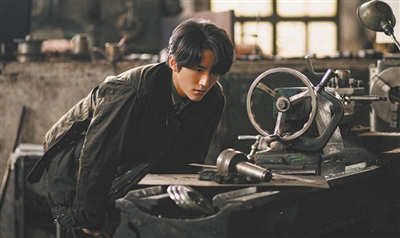
Core Insights - The article discusses the evolution of China's manufacturing industry, transitioning from "Made in China" to "Intelligent Manufacturing" and highlights the significant role of private enterprises in this transformation [1][5]. Group 1: Industry Development - The narrative of "The Tempering Era" is based on the real experiences of private manufacturing enterprises in China, showcasing their growth from small factories to global equipment providers [1]. - The story is set between 1998 and 2008, a period marked by China's accession to the WTO and rapid development of the private economy, which faced intense market competition and required overcoming institutional and technological barriers [1][2]. Group 2: Character Representation - The protagonist, Liu Jun, symbolizes a generation of young engineers who strive for technological independence and innovation, emphasizing the importance of perseverance and belief in self-reliance in manufacturing [2][3]. - Supporting characters, such as bank credit officer Cui Bingbing, reflect the complexities of the era, providing insights into the challenges faced by private enterprises and the financial support they required [2]. Group 3: Cultural and Spiritual Significance - The series aims to convey that manufacturing is not just an economic activity but also a cultural and spiritual expression, highlighting the dedication and ideals of those involved in the industry [5]. - The transformation of the manufacturing sector is paralleled with the personal growth and struggles of individuals, emphasizing that the value lies in the journey and commitment to progress, regardless of the outcome [3][5].

外交部:从“中国制造”到“中国品牌”,是高质量发展的必然
news flash· 2025-07-02 07:49
Core Viewpoint - The transition from "Made in China" to "Chinese Brands" is an inevitable outcome of high-quality development, supported by China's complete industrial system, fair and open market environment, and long-term innovation and research and development [1] Group 1 - Chinese brands are gaining increasing recognition among overseas consumers due to their technological content, cultural heritage, design inspiration, and emotional value that bridges cultures [1] - The global presence of Chinese brands provides consumers with richer choices, while also welcoming more high-quality foreign brands to enter the Chinese market for mutual learning and development [1]
全国优秀共产党员郝鹏:“泥土博士”将中国制造“挖”向全球
Zhong Guo Xin Wen Wang· 2025-07-02 06:42
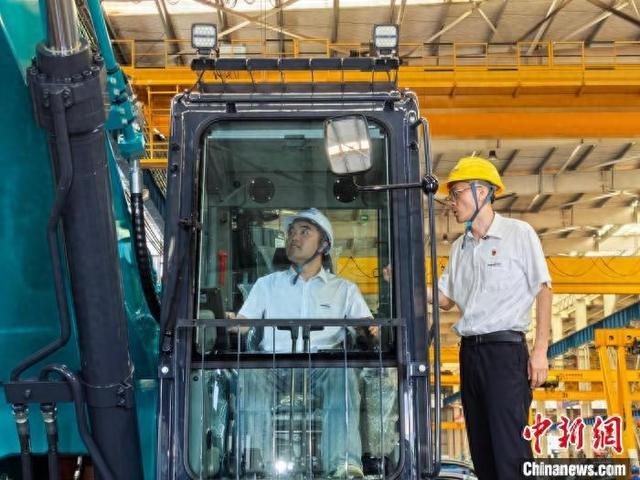
中新网长沙7月2日电 题:郝鹏的创新哲学:扎进泥里 摸清挖掘机的脉动 记者 鲁毅 夏日午后,位于长沙经开区的山河智能装备股份有限公司生产车间内,郝鹏站在一台挖掘机的驾驶室 旁,与驾驶室内的调试工作人员轻松交流着操控体验,确认调试后的效果。 今年46岁的郝鹏,现任山河智能挖掘机研究院总工程师。他潜心研究挖掘机领域20多年,从填补国内智 能挖掘机空白,到全球首创系列化油电混合动力大型挖掘机,再到为高原、油田、湿地等复杂危险施工 环境定制特种装备,累计开发出50余款"国际范"产品,荣获全国优秀共产党员、全国五一劳动奖章、全 国劳动模范和湖南省创新创业青年英才等称号。 郝鹏的"设计室",不局限于窗明几净的办公室。生产车间、施工工地,尤其是那些环境恶劣、挑战极限 的现场,如高原高寒地带、油田高温现场、湿地及沼泽地软底区域等,均是他灵感的源泉和创新的战 场。 为降低挖掘机油耗,他带团队分析国内外行情,结合产品特色,通过计算和测试,自主研发出节能机 型;为提升操作员舒适度,他亲自驾驶挖掘机,改善细微细节。针对复杂危险施工环境,郝鹏率先研制 6月27日,郝鹏(右)与同事交流挖掘机操控细节。记者 鲁毅 摄 智能挖掘机填补国内空 ...

读懂穿越百年的两个故事(观象台)
Ren Min Ri Bao· 2025-07-01 22:08
Core Viewpoint - The evolution of Chinese manufacturing from being rejected for investment to becoming a global leader in various industrial products showcases its significant growth and commitment to open cooperation and mutual benefits [1][3]. Group 1: Historical Context - In 1924, Sun Yat-sen invited Henry Ford to invest in China, but was rejected; Ford's production methods later revolutionized the automotive industry [1]. - By 2023, Ford sought collaboration with CATL for electric vehicle battery technology, indicating a shift in foreign companies' approach towards Chinese manufacturing [1]. Group 2: Current Achievements - China now produces over 220 types of industrial products that rank first in the world, with trade partners in over 150 countries and regions [1]. - Despite rising external uncertainties, China's goods exports grew by 7.2% in the first five months of the year, with high-tech electromechanical products making up 60% of total exports [1]. Group 3: Competitive Advantages - China's manufacturing ecosystem is characterized by a complete industrial system and strong supporting capabilities, enabling it to produce a wide range of products efficiently [2]. - Recent innovations, such as solar-powered charging phones and enhanced engine sealing for vehicles, demonstrate China's commitment to quality and customer needs, attracting global interest [2]. Group 4: Global Collaboration - Chinese manufacturing emphasizes open cooperation and mutual benefits, contributing to global innovation and job creation, even as cross-border investments face challenges [3]. - The historical significance of Chinese manufacturing is highlighted by its long-standing reputation for goodwill and friendship, rooted in its ancient craftsmanship [3].
超6000万户中小企业夯实中国经济韧性
Zheng Quan Ri Bao· 2025-07-01 16:21
Core Viewpoint - The 20th China International Small and Medium Enterprises Expo (CISME) showcased the resilience and vitality of over 60 million SMEs in China, highlighting their role in driving economic stability and innovation amidst complex external environments [2][3]. Group 1: Economic Contribution of SMEs - SMEs are a significant source of economic resilience, with over 10,000 buyers attending the CISME and achieving intended transaction amounts exceeding 100 billion yuan [1]. - By the end of 2024, the number of registered enterprises in China is projected to reach 61.226 million, with SMEs accounting for over 60 million, representing a growth of approximately 3.6 times since the end of 2012 [1][2]. - In the first five months of 2025, the added value of industrial SMEs increased by 8.0% year-on-year, with 28 out of 31 manufacturing sectors maintaining growth [3]. Group 2: Innovation and Technology - SMEs are becoming pioneers in technological innovation, with 140,000 specialized and innovative enterprises and 14,600 "little giant" firms contributing to key segments of the global supply chain [4]. - Notable advancements include high-performance collaborative robots and surgical robots achieving precision operations of 0.1 millimeters, showcasing the shift from scale advantages to technology empowerment in "Made in China" [4]. - Over 60% of "little giant" enterprises focus on industrial foundational sectors, with nearly 80% involved in key industrial chain segments, actively participating in major engineering projects [4]. Group 3: Global Market Integration - SMEs serve as vital links between "Made in China" and global markets, leveraging flexibility and rapid response capabilities to become key players in the global supply chain [5]. - Examples include a smart manufacturing company from Shenyang establishing a joint venture in Saudi Arabia, localizing production while introducing Chinese manufacturing standards to the Middle East [5]. - The emphasis on specialized and innovative practices at international exhibitions indicates that SMEs are crucial in reshaping industrial chains and enhancing China's economic competitiveness [5].
风电光伏火了之后,下一个“能源主角”悄然登场
Sou Hu Cai Jing· 2025-06-27 08:22
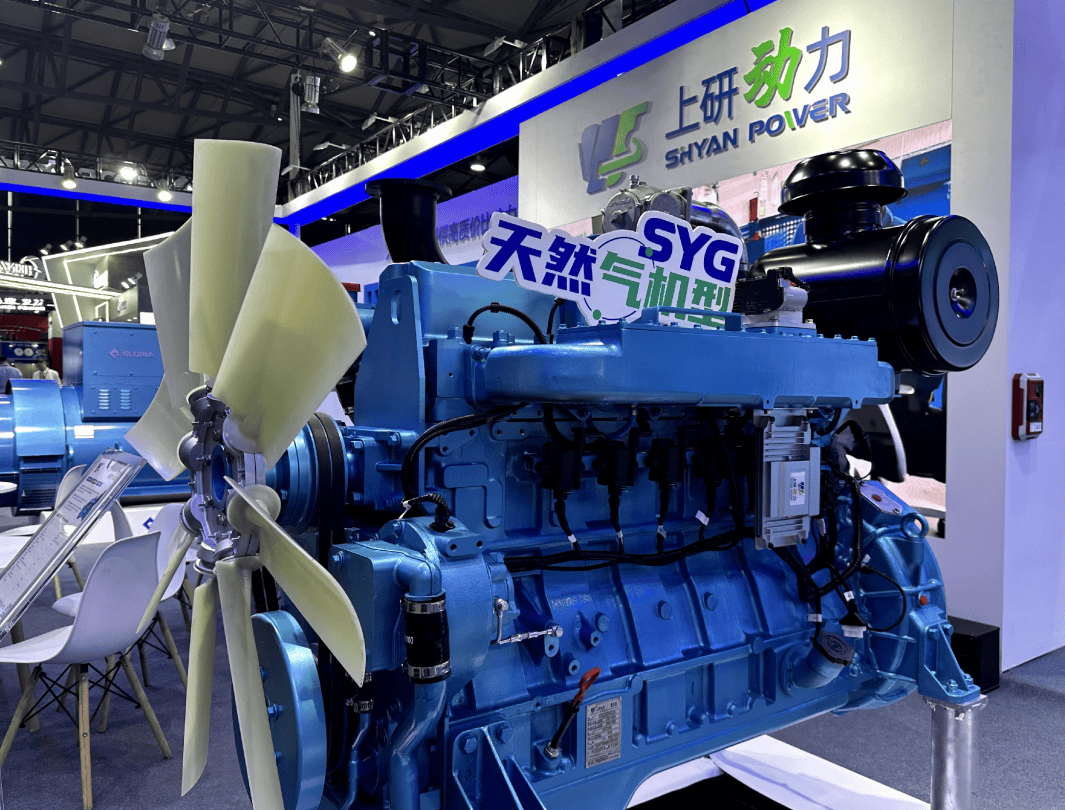
如果你最近留意能源相关的新闻,会发现很多关键词都很"高大上":风电、光伏、氢能、储能、光储充……但在这些喧嚣的热词背后,有一样东西正在 悄悄走进我们的生活,甚至直接影响你所在的工厂、医院、数据中心——燃气机。 听起来是不是有点陌生?或者觉得它是"老掉牙的东西"?但现实是,燃气机正成为很多城市和工业区不可或缺的一部分。 它不是主角,但谁都离不开它 简单说,燃气机就是"烧天然气发电"的设备。过去,它多出现在公交车、备用电站或者乡村小型发电系统中。但现在,它被越来越多地用在"关键场 合": 数据中心:不能断电,燃气机是稳定供能的"底牌"; 医院、高端小区:燃气机联合供热供电,稳定又环保; 工业园区:白天靠光伏,晚上靠燃气机顶上,确保不停产; 农业和垃圾处理场:废气(比如沼气)能转成电,环保又实用。 在很多地方,它就像是"幕后英雄",不像风电光伏那么抢眼,却稳定、灵活、关键——就像是能源系统中的"中场核心"。 为什么是现在火起来? 当我们谈中国制造、谈能源安全、谈新工业体系的时候,也许更应该把目光放在这种"不高调但很重要"的产业上。 低调的中国制造,在这条路上开始加速了 以前,中国的高端燃气机主要靠进口。但近几年,一 ...
秦朔:从中国制造到中国创造&全球制造 | 出海峰会
吴晓波频道· 2025-06-24 00:52
Core Viewpoint - The article emphasizes the transition of Chinese manufacturing from being a global manufacturing hub to becoming a leader in global manufacturing, highlighting the need for Chinese companies to adopt a global mindset and explore new markets while leveraging their manufacturing capabilities [3][5][12]. Group 1: Global Manufacturing Transition - Chinese manufacturing has evolved from "global manufacturing in China" to "Chinese manufacturing for the world," indicating a shift towards innovation and quality [3][6]. - The ability of Chinese companies to drive globalization is primarily reflected in the manufacturing sector, where China has developed a comprehensive manufacturing capability system [6][12]. - The restructuring of global supply chains is underway, moving from offshore and efficiency-driven models to more autonomous and diversified approaches [10][11]. Group 2: Strategic Global Expansion - Chinese companies are encouraged to adopt a global perspective when selecting overseas markets, identifying regions with favorable tariff conditions such as the Middle East, Southeast Asia, and Latin America [16][19]. - The case of Zhejiang Tongxiang's China Jushi illustrates how tariffs can significantly impact business decisions, leading to the establishment of manufacturing facilities in countries with lower tariffs [17][18]. - Companies must navigate the complexities of different markets, balancing opportunities and risks while adapting to local conditions [21][22]. Group 3: Export and Outbound Investment - In 2024, China's goods trade export scale is projected to reach 25.45 trillion yuan, with a year-on-year growth of 7.1%, indicating resilience despite external challenges [34][35]. - China's outbound non-financial direct investment is expected to grow by 10.5% to $143.85 billion in 2024, showcasing a simultaneous increase in both exports and outbound investments [35]. - The home appliance industry exemplifies the dual strategy of expanding domestic demand while actively pursuing international markets, with significant growth in both revenue and exports [38][39]. Group 4: Case Studies of Successful Globalization - Lenovo serves as a prime example of a company that has successfully integrated global resources while maintaining core manufacturing in China, achieving a balance between local delivery and global supply chains [44][46]. - The article highlights the importance of new infrastructure capabilities, particularly in digital technology and renewable energy, as Chinese companies expand their influence globally [48][50]. - Emerging companies in smart hardware are leveraging China's supply chain to innovate and redefine industry standards, moving from imitation to original innovation [51][52]. Group 5: Strategic Considerations for Global Operations - Companies must find a balance between exporting and establishing local production to navigate trade barriers and optimize costs [56]. - Emphasizing local operations while maintaining a global strategy is crucial for long-term success, requiring cultural sensitivity and community engagement [57]. - Collaboration with international firms presents opportunities for joint market development, reinforcing the role of Chinese companies in stabilizing and accelerating global supply chains [58].

这一年,中国出口了多少“全球爆款”?
吴晓波频道· 2025-06-22 01:30
Core Viewpoint - The article emphasizes the deep integration of "Made in China" products into global households, highlighting their significance in everyday life and the ongoing trend of globalization [1][39]. Export Growth - In 2024, China's export scale surpassed 25 trillion yuan, reaching 25.45 trillion yuan, with a year-on-year growth of 7.1%, marking eight consecutive years of growth [5]. - The top ten categories of exported products include mobile phones, lithium batteries, integrated circuits, toys, and diesel, while niche products like natural lacquer wood furniture have also seen significant growth, exceeding 600 million USD in exports [6]. Key Export Markets - Major importers of Chinese products include the United States, Vietnam, Japan, South Korea, India, Russia, Germany, Malaysia, the Netherlands, and Mexico [7]. Specific Product Insights - Garlic from China dominates the Indonesian market, with over 98% of imports sourced from China, amounting to 575,800 tons in 2024 [11][13]. - China is the largest producer and exporter of garlic globally, accounting for over 75% of the world's garlic exports, with a total export volume of 2,493,400 tons and an export value of 3.874 billion USD in 2024, reflecting a 25% increase [13][14]. Household Appliances - In the U.S., over 99% of household toasters and 90% of microwaves are labeled "Made in China," indicating a strong preference for Chinese small appliances [16]. - Export data shows significant growth in small appliances, with electric kettles and toasters seeing a 24% and 10% increase in export value, respectively [17]. Seasonal Products - China exports 59.83 billion USD worth of Christmas decorations, capturing 80% of the global market, with the U.S. being a major importer [21][22]. - The toy export value from China reached 39.87 billion USD in 2024, making it the seventh-largest export category, with the U.S. accounting for 76.3% of toy imports from China [24]. Emerging Trends - The demand for crystal products has surged among Gen Z consumers in the U.S., with 42% viewing them as alternatives for mental health support, leading to significant cross-border e-commerce transactions [27][28]. - In the electric vehicle sector, China's exports of new energy vehicles reached 441,000 units in Q1 2025, a 43.9% increase, with Belgium being a key market [31][33]. Renewable Energy Products - China exported 7.79 billion solar batteries in 2024, a 38.2% increase, with rising demand from countries like the Netherlands, Pakistan, and Saudi Arabia [36]. - The integration of Chinese products into global households reflects a response to real consumer needs and the resonance of China's industrial capabilities with global market demands [38].

中方警告全球:不允许配合!美媒直言:中国已到超越的“分水岭”
Sou Hu Cai Jing· 2025-06-21 19:16
Group 1 - The article highlights the increasing urgency in the U.S. as it perceives China is on the verge of surpassing it, marking a significant turning point in global dynamics under Trump's administration [3][10][31] - The U.S. is concerned about China's advancements in emerging technologies, particularly in areas like artificial intelligence and electric vehicles, where companies like BYD are outperforming Tesla [4][5] - The article argues that Trump's short-sighted policies, particularly the tariff wars, have weakened U.S. innovation and competitiveness, leading to a decline in its global market position [5][27] Group 2 - China is taking a strong stance against U.S. attempts to restrict its advanced technology, warning that any country cooperating with the U.S. will face consequences [12][14] - The Chinese government has enacted laws, such as the Anti-Foreign Sanctions Law, to counteract U.S. sanctions and protect its interests [16] - The article suggests that the U.S. is increasingly resorting to aggressive policies out of fear, as it can no longer rely on its previous advantages in the global market [20][23] Group 3 - The article critiques the notion that Trump's policies are solely responsible for America's decline, arguing that the U.S. would still struggle against China even without these tariffs due to China's growing technological and industrial capabilities [25][30] - It posits that the trend of China's rise and America's decline is inevitable, regardless of who is in power in the U.S. [28][31]
【高端访谈】构建“在墨西哥、为墨西哥”的出海模式——访捷途国际总经理柯传灯
Xin Hua Cai Jing· 2025-06-20 12:48
18日晚,捷途国际在墨西哥首都墨西哥城举办子公司上市发布会,携JETOUR和SOUEAST双品牌进入 墨西哥市场,迈入捷途国际全球化进展的新征程。 捷途国际秉承"在地发展"理念,坚持"在墨西哥、为墨西哥",目前已全面启动覆盖墨西哥的销售和服务 网络布局。近日,新华财经记者专访了捷途国际总经理柯传灯,就捷途国际在墨西哥的双品牌战略、本 地化措施和销售网络等话题展开对话。 记者:捷途国际在墨西哥发布JETOUR和SOUEAST,这两个品牌差异性在哪?产品如何满足墨西哥当 地用户的需求,是否做了一定适应性开发? 在车型上市前,捷途国际已提前在墨西哥开展了适应性调研,结合本地路况特殊性,如高海拔、高落 差、多崎岖等,有针对性的进行法规开发以及适应性专项开发。例如,捷途国际在墨西哥推出的所有车 型都进行了全场景环境测试,以确保在拉美地区高原及高湿环境下,仍然带来舒适的驾乘体验。 记者:捷途国际在墨西哥会如何发展销售网络?如何建立售后服务等保障体系,以更好服务的当地用 户? 柯传灯:JETOUR和SOUEAST两个品牌瞄准不同的细分市场,拥有鲜明的定位差异、精准的产品阵容 差异。JETOUR以"旅行+"战略为核心,深耕越 ...