文化自信

Search documents
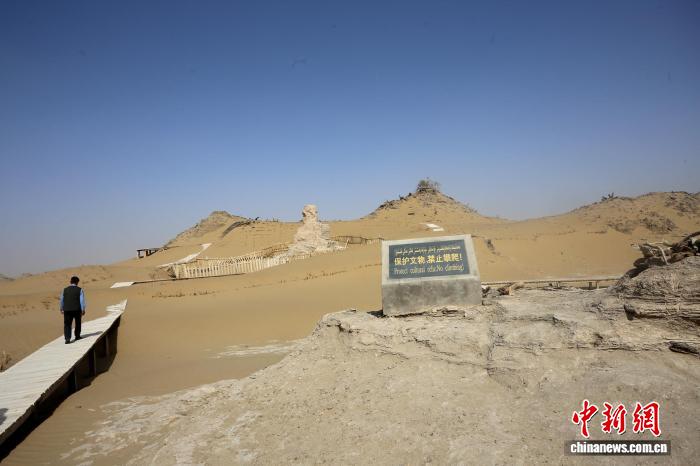
“五星出东方利中国”锦护臂的当代价值何在?
Zhong Guo Xin Wen Wang· 2025-10-29 12:34
Core Viewpoint - The 30th anniversary of the discovery of the "Five Stars Rising in the East Benefits China" brocade armlet highlights its significance as a cultural symbol and a testament to ancient craftsmanship and cross-cultural exchanges along the Silk Road [2][10]. Archaeological Significance - The brocade armlet was unearthed in 1995 at the Niya site in Xinjiang, which was a crucial point on the southern Silk Road [2][7]. - The armlet measures 18.5 cm in length and 12.5 cm in width, showcasing advanced weaving techniques with a density of 220 warp threads per square centimeter, featuring intricate patterns like phoenixes and auspicious symbols [4][5]. - The use of mineral and plant dyes has allowed the colors to remain vibrant for nearly 2000 years due to the arid conditions of the Taklamakan Desert [4]. Cultural and Historical Context - The inscription on the armlet reflects ancient Chinese astronomical understanding and philosophical concepts, symbolizing auspiciousness and hope [4][5]. - The discovery of the armlet, along with other artifacts, underscores the administrative connections between the Han dynasty and the western regions, enhancing the understanding of ancient Chinese cosmology and governance [5][10]. Modern Relevance - The armlet has become a cultural symbol, frequently featured in cultural events, and serves as a means to enhance cultural confidence and national unity [8][10]. - It represents the rich cultural interactions along the Silk Road, embodying the historical ties between various ethnic groups and civilizations [10]. - The armlet's significance extends beyond its historical value, contributing to contemporary cultural identity and heritage preservation efforts [10].

“十四五”北京文化答卷出炉,全国文化中心建设干了这些大事
Bei Jing Ri Bao Ke Hu Duan· 2025-10-29 09:37
Core Viewpoint - The Beijing government is focusing on high-quality cultural development during the "14th Five-Year Plan" period, emphasizing the integration of various cultural resources and enhancing the city's cultural heritage and offerings [3][5][6]. Group 1: Cultural Achievements - Beijing has made significant progress in cultural construction, guided by Xi Jinping's thoughts, focusing on ancient, red, and innovative cultures [3]. - The city has developed three major red cultural theme areas and protected 31 early revolutionary sites, attracting over 31 million visitors [5]. - The protection and revitalization of historical cultural heritage have been prioritized, with over 100 restoration projects and the recognition of 312 historical buildings [6]. Group 2: Cultural Events and Participation - The city plans to host 57,000 commercial performances in 2024, with an expected audience of over 12.8 million and ticket sales exceeding 3.9 billion yuan, marking historical highs [7][9]. - Cultural consumption has expanded, with new cultural facilities and events enhancing the experience for residents and tourists [8][9]. Group 3: Integration of Culture and Economy - A mechanism for integrating culture, commerce, tourism, and sports has been established, promoting a "one-stop" consumption experience [8]. - The city has seen a rise in cultural tourism, with innovative initiatives like "follow the movie to travel" enhancing consumer engagement [8]. Group 4: Public Cultural Services - The city has improved public cultural services, achieving basic coverage of cultural facilities and creating a 15-minute public cultural service circle for residents [8]. - The use of technology in public cultural services has been emphasized, with initiatives like "cloud reading season" and "digital central axis" enhancing accessibility [9].

广交会第二期闭幕 累计近24万境外采购商到会
Nan Fang Ri Bao Wang Luo Ban· 2025-10-28 07:43
Core Insights - The 138th Canton Fair's second phase concluded with a record attendance of nearly 240,000 overseas buyers from 223 countries and regions, marking a 6.8% increase compared to the previous session, showcasing the enduring appeal of Chinese manufacturing [1] - Companies are leveraging design innovation and smart manufacturing to enhance value and expand their global market reach, moving away from price competition [2] - The integration of traditional craftsmanship with modern aesthetics is becoming a unique selling point for Chinese products in international markets, reflecting cultural confidence [4][5] Group 1: Market Trends - The global trade environment is shifting towards a new replenishment cycle as overseas inventory levels normalize and demand from non-US economies rebounds [2] - The Canton Fair highlighted a strong willingness among foreign buyers to place orders, contrasting with previous events where inventory pressures led to a more cautious approach [2] - Companies are adopting intelligent production technologies to improve efficiency and product quality, enabling them to respond better to market demands [2] Group 2: Design and Innovation - Design innovation is seen as a "golden key" for foreign trade enterprises to break through market challenges, with a focus on integrating smart manufacturing [2] - Products showcased at the fair, such as smart kitchen appliances, reflect a deeper understanding of market needs, blending functionality with aesthetic appeal [3] - The fusion of Eastern aesthetics with international trends is gaining traction, with companies creatively combining traditional elements with modern designs to attract global buyers [4][5] Group 3: Cultural Representation - The Canton Fair serves as a platform for China to showcase its cultural confidence and charm to the world, with products that embody traditional Chinese art and modern design [5][6] - The "Guochao" (national trend) movement is becoming a new hallmark for Chinese manufacturing in international markets, emphasizing the blend of cultural heritage and contemporary style [4][5] - Companies are increasingly focusing on cultural storytelling through their products, positioning them as vehicles for cultural exchange and representation [6]
领航中国·牢记嘱托看变化丨古老殷墟 时代重生
He Nan Ri Bao· 2025-10-27 23:54
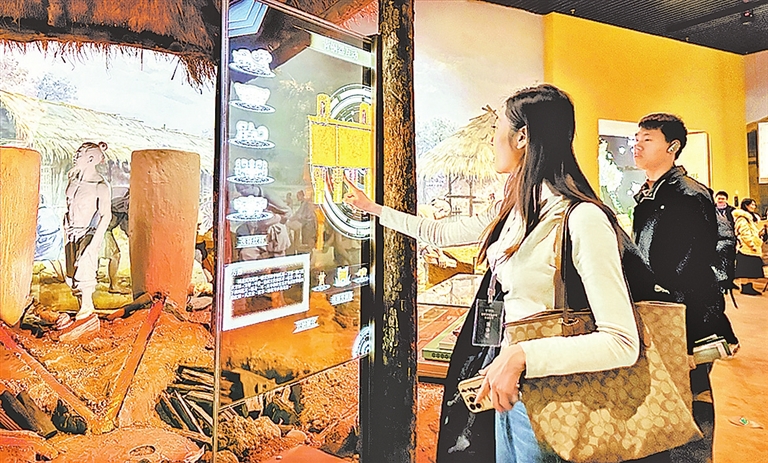
Core Insights - The Yinxu Museum has become a popular destination, attracting 140,000 visitors during the recent National Day and Mid-Autumn Festival holiday, with a single-day record of 23,000 visitors and revenue of 6 million yuan, including 1.8 million yuan from cultural products, marking an 8% year-on-year increase [2][10] - The museum, which opened on February 26, 2024, has welcomed nearly 3.3 million visitors, showcasing over 4,000 artifacts that illustrate the significance of the Shang Dynasty in Chinese civilization [2][10] - The museum employs advanced technologies such as 3D displays, virtual reality, and interactive digital exhibits to enhance visitor engagement and education about Shang culture [5][6] Visitor Experience - The museum features immersive experiences, including a section that showcases the daily life of a Shang prince through over 110 newly exhibited oracle bone inscriptions [3][4] - Interactive displays allow visitors to engage with artifacts in a dynamic way, transforming traditional exhibition methods into more engaging formats [6][8] Cultural and Economic Impact - The museum has developed nearly 800 cultural products, with over 300 currently available for sale, creating tangible connections between ancient culture and modern life [8] - The broader cultural revitalization in Anyang includes various events and activities that integrate archaeological culture with contemporary experiences, contributing to a significant increase in tourism and economic growth [9][10]
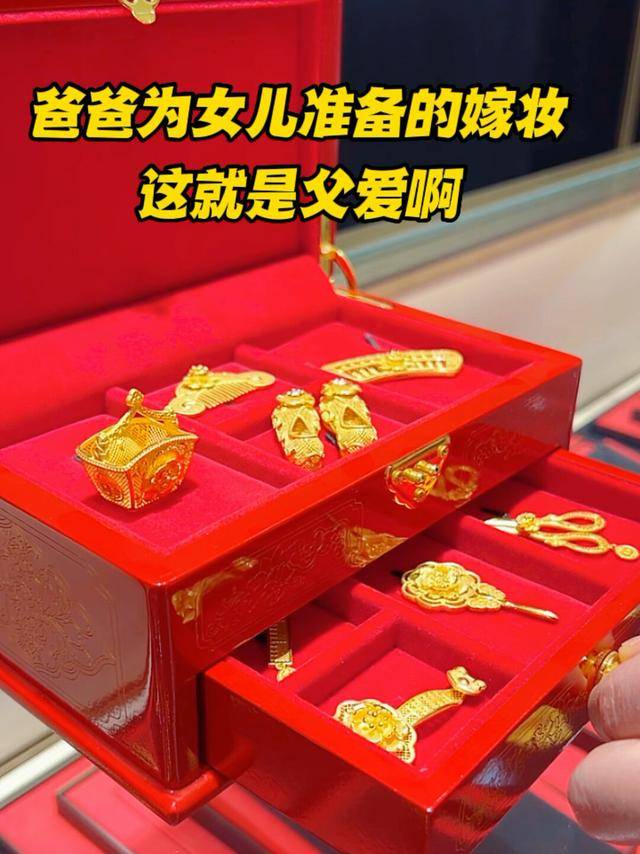
父亲囤40多件黄金给女儿当嫁妆,老铺黄金为何魅力难挡?
Sou Hu Cai Jing· 2025-10-26 17:16
Core Insights - The recent surge in consumer interest in gold, particularly for the brand Laopu Gold, reflects a shift in market trends and consumer behavior towards local brands and unique craftsmanship [9][10]. Brand Appeal - Laopu Gold, established in 2009, is recognized for promoting the "ancient method gold" concept, akin to luxury brands, and has gained significant emotional value among consumers [1]. - The brand is perceived as the "Hermès of gold," attracting consumers who appreciate its strong brand allure and the expectation of annual price increases [1]. Craftsmanship - Laopu Gold is distinguished by its exquisite craftsmanship, having pioneered the use of pure gold as a base for diamond inlays in 2019 and developed "golden blue" products using traditional techniques in 2022 [3]. Pricing Strategy - The recent opening of a new store offered a 10% discount and a complete product range, with expectations of a price increase on October 26, creating a strong incentive for consumers to purchase before the price hike [5]. Changing Consumer Mindset - The perception of gold has evolved from merely a means of value preservation to a form of emotional expression and personal identity, with consumers associating gold jewelry with unique taste and familial love [7]. Market Trends - The long queues outside Laopu Gold stores symbolize a broader trend of rising local brand popularity and diversified consumer demand for gold jewelry [9]. - Gold is increasingly viewed as a "social currency" among younger consumers, who share their purchases on social media platforms, enhancing the brand's social attributes [10][12]. Investment and Consumption Duality - The dual nature of gold as both an investment and a consumable aligns with the financial sensibilities of younger consumers, who seek quality without excessive luxury premiums [14]. - Consumers express satisfaction in purchasing gold as it provides immediate enjoyment while also serving as a stable investment, with one customer noting that gold never depreciates [14]. Cultural Confidence - The rise of Laopu Gold reflects a growing cultural confidence, as its "ancient method" craftsmanship resonates with younger generations' renewed appreciation for traditional culture [16][17]. - Many consumers feel a sense of mission in supporting intangible cultural heritage through their purchases, recognizing the high aesthetic value of traditional craftsmanship [17]. Future Outlook - The ongoing trend of national pride and evolving consumer attitudes suggests that the gold market will continue to develop, potentially integrating innovative technologies like AR in future retail experiences [19].
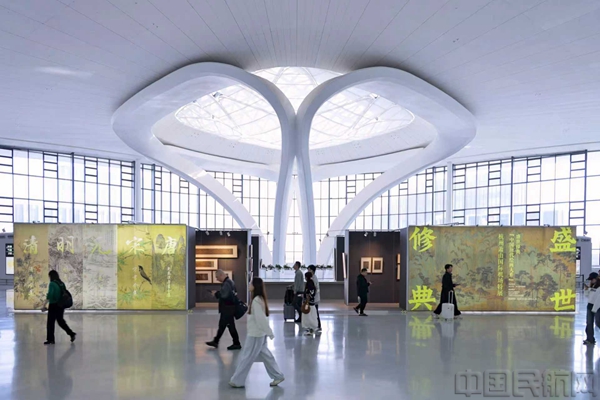
盛世修典——“中国历代绘画大系”特展走进杭州机场
Zhong Guo Min Hang Wang· 2025-10-26 03:50
Core Viewpoint - The "Chinese Historical Painting Series" special exhibition has opened at Hangzhou Xiaoshan International Airport, marking the 70th stop of a national cultural project approved by Xi Jinping in 2005, which has attracted over 10 million visitors globally [1][3]. Group 1: Exhibition Overview - The exhibition is co-hosted by Zhejiang Airport Group and Zhejiang University, and features a total area of 200 square meters [3]. - It showcases a resource library of 12,405 ancient painting collections from 263 cultural institutions worldwide, divided into three thematic sections: "National Treasure Archives," "Cultural Tourism Cities," and "Great Sound and Silence" [3]. Group 2: Thematic Sections - The "National Treasure Archives" section includes 40 national treasure-level ancient paintings, such as Han Huang's "Five Cattle" from the Tang Dynasty and Zhao Ji's "Lotus and Golden Rooster" from the Northern Song Dynasty [3]. - The "Cultural Tourism Cities" section highlights 28 paintings depicting the beauty of Hangzhou, including Qian Xuan's "West Lake Poem" from the Yuan Dynasty [3]. - The "Great Sound and Silence" section features 24 exhibits that provide a glimpse into the integration of music and painting during the Song Dynasty [3]. Group 3: Featured Artwork - A notable highlight of the exhibition is the 11.9-meter-long "Thousand Miles of Rivers and Mountains," created by Wang Ximeng during the Northern Song Dynasty, which has been rarely exhibited due to the fragility of its materials [4]. - The exhibition will last for three months and coincides with the third "Liangzhu Forum," promoting the innovative development of traditional Chinese culture [4].
二十届四中全会公告解读:科技自强、文化自信
Lian He Zi Xin· 2025-10-24 12:17
Economic Strategy - The 20th Central Committee emphasizes the importance of economic growth, reaffirming that "economic construction is the central task" and focusing on quality improvement and reasonable growth rates during the 14th Five-Year Plan period[6] - The entity economy is prioritized, with a focus on building a modern industrial system centered on advanced manufacturing, aiming for intelligent, green, and integrated development[8] - The "high-level self-reliance in technology" is now deemed essential for survival, with a shift in focus towards domestic market opportunities in response to external pressures, particularly in the semiconductor industry[9] Macro Control and Development - The macro control system will be enhanced, focusing on a demand-driven growth model, improving residents' income, and stimulating consumption to leverage the advantages of a large market[11] - The report highlights the need for a comprehensive security system that integrates political, economic, technological, and ideological security, reflecting the complex international environment[15] - The commitment to green development is reinforced, with China positioned as a leader in renewable energy technologies, creating significant employment and export opportunities[14] Cultural and Social Development - The integration of information technology in cultural innovation is emphasized, aiming to enhance China's cultural influence globally through digital platforms and new cultural industries[12] - Investment in human capital is prioritized, focusing on improving public services across the lifespan and enhancing the quality of the workforce to meet the demands of industrial upgrades[13]
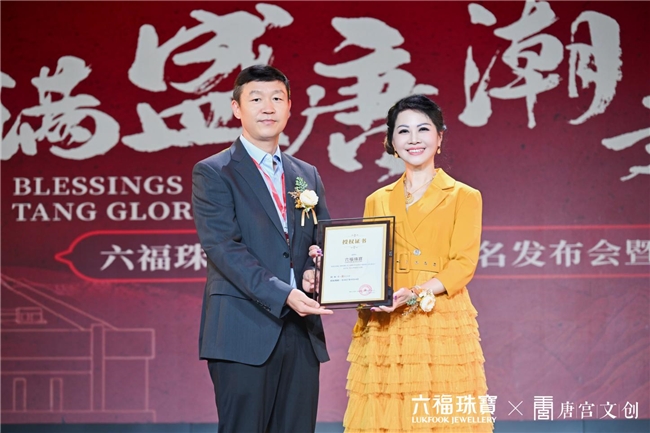
抖音超品包揽五榜TOP1,六福珠宝与唐宫文创战略联手,共启国潮新篇
Sou Hu Wang· 2025-10-24 02:58
Core Insights - The collaboration between Luk Fook Jewelry and Tang Palace Cultural Creative aims to launch jewelry products inspired by the cultural essence of the Tang Dynasty, featuring three major cultural IPs, including the popular "Tang Palace Night Banquet" [1][10] - The project includes over 140 new products, ranging from entry-level to collectible items, integrating culture, art, and commerce through various marketing strategies [1][10] Group 1: Strategic Collaboration - Luk Fook Jewelry and Tang Palace Cultural Creative have formed a strategic partnership to create jewelry that reflects the spirit of the Tang Dynasty [1][10] - The collaboration emphasizes the cultural significance of the Tang Dynasty, aiming to reinterpret Chinese cultural heritage through contemporary jewelry design [1][10] Group 2: Marketing and Sales Strategy - The launch includes a large-scale public exhibition at the Henan Museum, showcasing a 500-square-meter immersive Tang-style space, enhancing consumer engagement [3][10] - The brand utilized a comprehensive marketing approach on platforms like Douyin (TikTok), achieving significant visibility and sales, with the brand's Douyin account seeing a 859.7% increase in followers [7][10] Group 3: Cultural Integration - The partnership extends to cultural programming, with sponsorship of the popular Henan TV show "Chinese Festivals: Mid-Autumn Wonderful Tour," reaching an audience of 660 million [9][10] - The collaboration aims to resonate with contemporary consumers' cultural confidence, establishing a new benchmark for cross-industry integration of cultural and commercial elements [10]
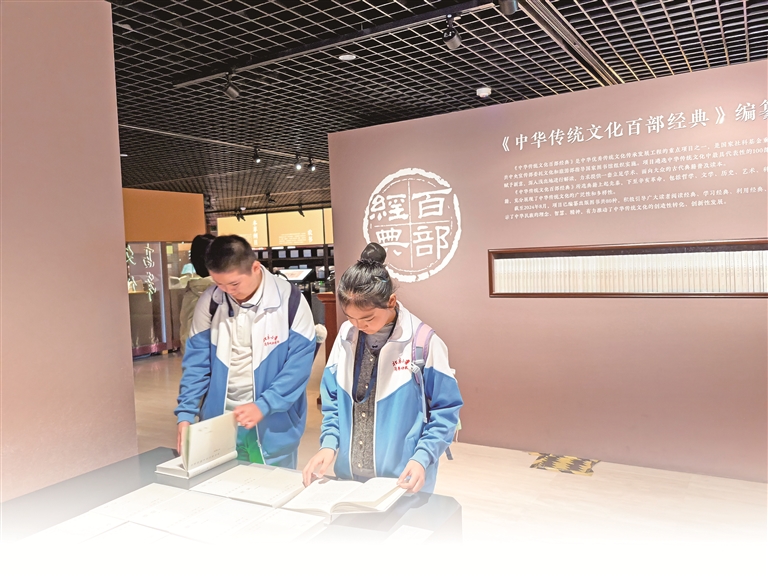
坚定文化自信 建设文化强国|典籍载文脉 一馆藏古今从“中华优秀传统文化典籍展”看文明传承
Zhong Yang Ji Wei Guo Jia Jian Wei Wang Zhan· 2025-10-24 00:47
Core Viewpoint - The exhibition "Ancient Masterpieces, Brilliant Cultural Heritage - Exhibition of Excellent Traditional Chinese Classics" showcases the depth and richness of Chinese historical and cultural texts, emphasizing their significance as a treasure of the Chinese nation and a vital part of its cultural identity [2][4]. Group 1: Cultural Significance - The exhibition highlights the importance of historical texts as carriers of national wisdom and as a continuation of the spiritual lineage of the Chinese people [3][4]. - The "Five Classics" such as "Yijing," "Shujing," "Shijing," "Liji," and "Chunqiu" are presented as foundational texts that embody the philosophical and ethical underpinnings of Chinese culture [4][5]. Group 2: Historical Context - The exhibition features artifacts from various historical periods, including oracle bones and bamboo slips, illustrating the evolution of Chinese civilization and its literary heritage [3][12]. - The "Great Unity" concept is explored through historical texts, emphasizing its role in maintaining the cultural cohesion of the Chinese nation [12]. Group 3: Modern Relevance - The initiative "Chinese Traditional Culture Hundred Classics" aims to make classical literature accessible to the public, promoting cultural confidence and understanding among the Chinese people [15][16]. - Digitalization efforts, such as the establishment of databases for ancient texts, are transforming the way these classics are studied and appreciated, making them more accessible to the general public [17]. Group 4: Public Engagement - The exhibition encourages public participation and feedback, reflecting a growing interest in traditional culture among diverse audiences across China [14][19]. - Various activities and programs are being implemented to promote the understanding and appreciation of ancient texts, ensuring their relevance in contemporary society [17][19].
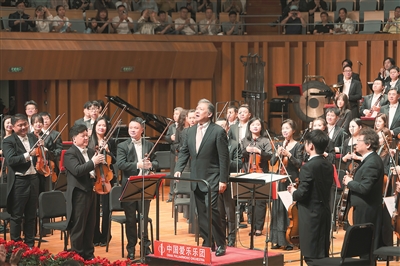
音乐为媒,让世界听见中国
Ren Min Ri Bao Hai Wai Ban· 2025-10-23 23:05
Core Points - The China Philharmonic Orchestra celebrates its 25th anniversary, highlighting its role as a cultural ambassador connecting China with the world [3][4] - The orchestra aims to showcase Chinese cultural confidence by performing Western classical music with a unique interpretation rooted in Chinese culture [4][5] - The orchestra has gained international recognition for its ability to perform complex Western compositions beautifully, earning respect from global audiences [5][6] Group 1: Cultural Significance - The China Philharmonic Orchestra serves as a benchmark for Chinese music and plays a vital role in cultural exchange between China and the world [3][4] - The orchestra's development is deeply rooted in Chinese culture, emphasizing harmony and inclusivity while showcasing its unique understanding of Western classics [4][5] - The orchestra has collaborated with numerous international conductors, receiving praise for its interpretations of works by composers like Wagner [4][5] Group 2: International Engagement - The orchestra actively participates in international music festivals and events, enhancing cultural exchange by inviting international artists to perform [5][6] - It has performed at significant diplomatic and cultural events, demonstrating its ability to connect with diverse audiences through music [7][8] - The orchestra's performances at events like the Shanghai Cooperation Organization TV Festival exemplify its role in fostering international relationships through music [7] Group 3: Future Development - The orchestra is exploring the construction of a "digital concert hall" to enhance public cultural services and share performances globally [9] - A new concert hall designed by renowned architect Ma Yansong is set to be built in Beijing, which will serve as a new base for the orchestra's activities [9] - The integration of advanced technologies like 8K will allow audiences to experience performances as if they were present, expanding the reach of symphonic music [9]