AGI

Search documents
梁文锋旗下幻方量化去年收益率56.6%,位列百亿级量化基金业绩榜第二
Xin Lang Cai Jing· 2026-01-14 06:06
Group 1: Company Performance - The average return of Huansheng Quantitative for 2025 is projected to be 56.55%, ranking second among quantitative private equity firms in China with over 10 billion yuan in management scale, only behind Lingjun Investment at 73.51% [1][4] - Huansheng Quantitative has a management scale exceeding 70 billion yuan, with an average return of 85.15% over the past three years and 114.35% over the past five years [1][4] - The strong performance of Huansheng Quantitative has provided substantial research and development funding for DeepSeek, a company under the leadership of Liang Wenfeng [1][4] Group 2: Company Background and AI Development - Huansheng Quantitative, founded by Liang Wenfeng in 2008 while studying at Zhejiang University, is one of the most well-known quantitative private equity giants in China, with a focus on mathematics, computation, research, and AI [1][4] - The company broke the 10 billion yuan management scale in 2019 and surpassed 100 billion yuan in 2021 [1][4] - Huansheng Quantitative has been investing in AI since 2016, with its first stock position generated by deep learning algorithms going live in October 2016, and by the end of 2017, nearly all quantitative strategies were using AI models [1][4] Group 3: DeepSeek and AI Innovations - In April 2023, Huansheng Quantitative announced the establishment of an independent research organization, DeepSeek, to explore the essence of AGI, focusing on serving the common interests of humanity through AI technology [2][5] - DeepSeek's R1 model, released in January 2025, gained significant media attention and is noted for its industry-leading capabilities and cost advantages, with training costs an order of magnitude lower than competitors [2][6] - DeepSeek is set to release its next flagship AI model, DeepSeek V4, in February, which is expected to have strong programming capabilities and significantly impact the current AI competitive landscape [2][6] Group 4: Research Contributions - On January 12, DeepSeek published a new paper titled "Conditional Memory via Scalable Lookup: A New Axis of Sparsity for Large Language Models," co-authored with Peking University, featuring Liang Wenfeng as a co-author [3][6] - DeepSeek also open-sourced a related memory module named Engram on the same day [3][6]
凯基:中美AI路径或 “殊途同归” 短期因科技基础导致风格分化 长期都将通往“物理AI”
Xin Lang Cai Jing· 2026-01-14 05:08
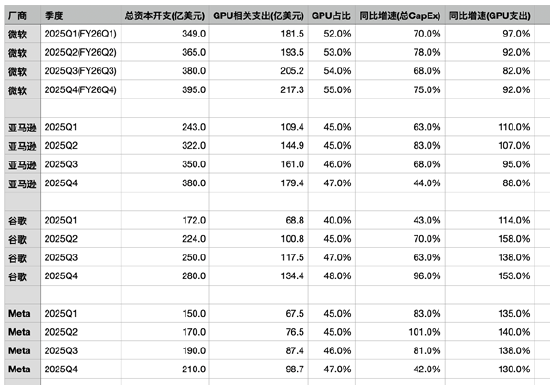
Core Viewpoint - The investment logic in the AI industry between China and the US shows significant divergence, stemming from differences in industrial foundations and development paths, but it is expected that the global AI industry will eventually converge towards Physical AI [1][2][3] Investment Logic Divergence - The current investment paths in AI are clearly differentiated, with US companies focusing on foundational research and core technologies, while China emphasizes application scenarios due to limitations in computing power [2][11] - The US investment is guided by the "Scaling Law," which prioritizes increasing computational power to enhance model quality, particularly in areas leading to Artificial General Intelligence (AGI) [2][11] - China leverages its vast AI talent pool and market space to achieve breakthroughs from the application side, particularly excelling in sectors like autonomous driving and robotics [3][12] Roots of Divergence - The divergence in investment logic is driven by the US's focus on foundational capabilities and model performance, while China's strengths lie in its manufacturing capabilities and industrial technology [3][12] - Historical examples from the internet industry illustrate that companies that effectively apply technology to consumer needs, like Facebook and Google, tend to be the most profitable [3][12] Shift in Market Focus - The previously high interest in AGI is waning, with market attention shifting towards Physical AI, which includes applications like robotics and autonomous vehicles [4][13] - Physical AI aligns well with China's current focus on robotics and autonomous driving, matching its industrial advantages [5][14] Future Trends in AI Investment - The US is expected to maintain significant capital expenditure in the chip sector, with major cloud service providers allocating 40-55% of their server spending to GPUs in 2024 [6][15] - The GPU capital expenditure in the US is projected to grow at a compound annual growth rate of over 50% from 2024 to 2026, with total data center capital spending expected to reach $1 trillion by 2028 [8][16] - The total investment in Physical AI in the US is anticipated to exceed $50 billion between 2025 and 2026, indicating a comprehensive approach from foundational research to commercialization [9][19] Major Investments in Physical AI - Significant investments are being made by US tech giants in Physical AI, with Tesla investing over $4 billion in its humanoid robot project, Nvidia over $10 billion in its AI platforms, and Google’s DeepMind allocating $5 billion for robotics research [9][17]





DeepSeek母公司去年进账50亿,够烧2380个R1
猿大侠· 2026-01-14 04:11
Core Viewpoint - DeepSeek remains focused on AGI research without pursuing external financing or commercialization, supported by substantial revenue from its parent company, Huanfang Quantitative [1][2][36]. Group 1: Financial Performance of Huanfang Quantitative - Huanfang Quantitative earned 5 billion RMB last year, with nearly all its funds projected to yield over 55% returns by 2025 [4][6]. - The average return for Chinese quantitative funds was 30.5%, significantly outperforming global competitors [7]. - Huanfang Quantitative's average return of 56.6% ranks it second among large quantitative funds, only behind Lingjun Investment, which achieved 70% [8]. - With over 70 billion RMB in assets under management, the impressive returns translate to substantial profits for the company [9]. - Estimated earnings from management fees and performance bonuses could exceed 700 million USD (approximately 5 billion RMB) for Huanfang Quantitative in the past year [10][12]. Group 2: DeepSeek's Research and Development - DeepSeek's V3 training cost only 5.576 million USD, while R1 training cost 294,000 USD, indicating efficient use of funds [15][17]. - Based on last year's revenue, Huanfang Quantitative could fund the production of 125 V3 models and 2,380 R1 models [16][18]. - DeepSeek has maintained a strong research output, continuously publishing high-level papers and recently open-sourcing a memory module [3][35]. Group 3: Strategic Positioning and Market Dynamics - Unlike other major players like OpenAI, DeepSeek has not engaged in aggressive monetization strategies, focusing instead on pure AGI research [26][27]. - DeepSeek's lack of external financing allows it to operate without the pressure of short-term returns, fostering a pure research environment [40][52]. - The company has a unique position as the only AI lab that has not accepted external funding and is not affiliated with any major tech firms [36]. Group 4: Talent Retention and Team Stability - DeepSeek has experienced minimal talent turnover, with many core contributors remaining with the team, indicating a stable and committed workforce [53][58]. - The financial backing from Huanfang Quantitative enables DeepSeek to offer competitive salaries and resources, attracting idealistic researchers dedicated to AGI [58]. Group 5: Market Impact and Investment Opportunities - DeepSeek's technical papers have become valuable resources for investors, with many using them as investment guides [62]. - The release of new models often leads to stock price surges for companies adapting their hardware to DeepSeek's specifications, demonstrating the market's responsiveness to its research [71][72].

深度共创 绝影与英伟达推进AGI开发
Zhong Guo Jing Ji Wang· 2026-01-14 03:26
双方基于NVIDIA TensorRT Edge-LLM,以端到端的高效解决方案,推动车载AI技术规模化商业落地。 TensorRT Edge-LLM是一款全新的开源C++框架,专为LLM和VLM推理而设计,旨在满足日益增长的高 性能边缘端推理需求。 "SenseAuto的成果展示了NVIDIA的边缘AI和LLM软件栈如何能够在大规模的真实汽车应用场景中落 地。"NVIDIA汽车业务副总裁Rishi Dhall表示。"通过利用NVIDIA DRIVE平台以及TensorRT和面向边缘 的LLM能力,SenseAuto正在推动智能座舱和自动驾驶体验的发展,使多模态AI更接近可量产部署。此 次合作彰显了我们汽车生态的实力,即将前沿AI转化为实用的车载创新。" 自动驾驶领域,绝影通过集成视觉语言模型(VLM)支持和优化推理能力的TensorRT Edge-LLM,显著提 升了系统对复杂交通场景的认知与决策能力。通过部署简化的工具链,模型可快速适配NVIDIA DRIVE AGX Orin和Thor等主流车载计算平台。 CES2026期间,绝影与英伟达以Drive AGX高算力平台为基石,在算子开发、模型量化等核心技 ...

深度解读 AGI-Next 2026:分化、新范式、Agent 与全球 AI 竞赛的 40 条重要判断
3 6 Ke· 2026-01-14 00:17
Core Insights - The AGI-Next 2026 event highlighted the significant role of Chinese teams in the AGI landscape, with expectations for further breakthroughs by 2026 [1] - The event showcased a clear trend of model differentiation driven by varying demands in To B and To C scenarios, as well as strategic choices by different AI labs [1][2] - The consensus on autonomous learning as a new paradigm indicates a collective shift towards this direction by 2026 [1][5] Differentiation - AI differentiation is observed from two angles: between To C and To B, and between "vertical integration" and "layering of models and applications" [2] - In the To C space, user needs often do not require highly intelligent models, with context and environment being the main bottlenecks [2][3] - In the To B market, there is a willingness to pay a premium for "strong models," leading to a growing divide between strong and weak models [3][4] New Paradigms - Scaling will continue, but there are two distinct paths: known scaling through data and compute, and unknown scaling through new paradigms where AI systems define their own learning processes [5][6] - The goal of autonomous learning is to enhance models' self-reflection and self-learning capabilities, allowing them to improve without human intervention [6][10] - The biggest bottleneck for new paradigms is imagination, particularly in defining what success looks like for these new models [10][12] Agent Development - Coding is essential for the development of agents, with models needing to meet high requirements to perform complex tasks [13][25] - The differentiation between To B and To C agents reflects varying metrics of success, with To B agents focusing on real-world task solutions [27][28] - Future agents may operate independently based on general goals set by users, reducing the need for constant interaction [30][31] Global AI Competition - There is optimism regarding China's potential to enter the global AI first tier within 3-5 years, leveraging its ability to replicate successful models efficiently [19][20] - However, cultural differences and structural challenges in computing power compared to the U.S. present significant hurdles [20][38] - Historical trends suggest that constraints can drive innovation, with Chinese teams motivated to optimize algorithms and infrastructure [39][40]
DeepSeek母公司去年进账50亿,够烧2380个R1
3 6 Ke· 2026-01-13 13:02
Core Insights - DeepSeek has not engaged in new financing or significant commercialization activities despite the buzz surrounding large model players in the market [1] - DeepSeek continues to produce high-quality research papers, indicating a stable output of academic contributions [2] - The financial success of its parent company, Huanfang Quantitative, which earned approximately $7 billion last year, provides substantial funding for DeepSeek's research endeavors [6][8] Group 1: Financial Performance - Huanfang Quantitative's funds are showing impressive returns, with nearly all of its funds projected to yield over 55% in 2025 [3] - The average return for quantitative funds in China last year was 30.5%, significantly outperforming global competitors [4] - Huanfang Quantitative's asset management exceeds $70 billion, contributing to its substantial earnings [7] Group 2: Research and Development - DeepSeek's research expenditures are relatively low, with the latest V3 training costing $557,600 and R1 costing $29,400, allowing for the potential production of numerous models with available funds [6] - DeepSeek has maintained a focus on AGI research without the pressure of immediate financial returns, as it has not accepted external funding and is not tied to any major tech company [11][15] - The company has consistently released significant research outputs, including recent advancements in OCR and V3.2, while also open-sourcing components like the memory module [9][10] Group 3: Market Position and Strategy - DeepSeek operates with a unique business model that allows it to focus solely on AGI without the distractions of monetization pressures [10][12] - The company benefits from a stable and committed research team, with minimal turnover and even some returning members, indicating a strong internal culture [28][30] - DeepSeek's research outputs have become valuable to investors, as its technical papers provide insights that influence stock movements in related hardware companies [34][39] Group 4: Competitive Landscape - Compared to other major players like OpenAI, DeepSeek's approach is characterized by a lack of aggressive monetization strategies, focusing instead on pure research [26][9] - The ability to leverage a mature business model for cross-subsidization of AI research is often underestimated in the market [19][20] - DeepSeek's model integrates the strengths of both established companies and pure AI startups, positioning it uniquely in the competitive landscape [26]


深度解读 AGI-Next 2026:分化、新范式、Agent 与全球 AI 竞赛的 40 条重要判断
海外独角兽· 2026-01-13 12:33
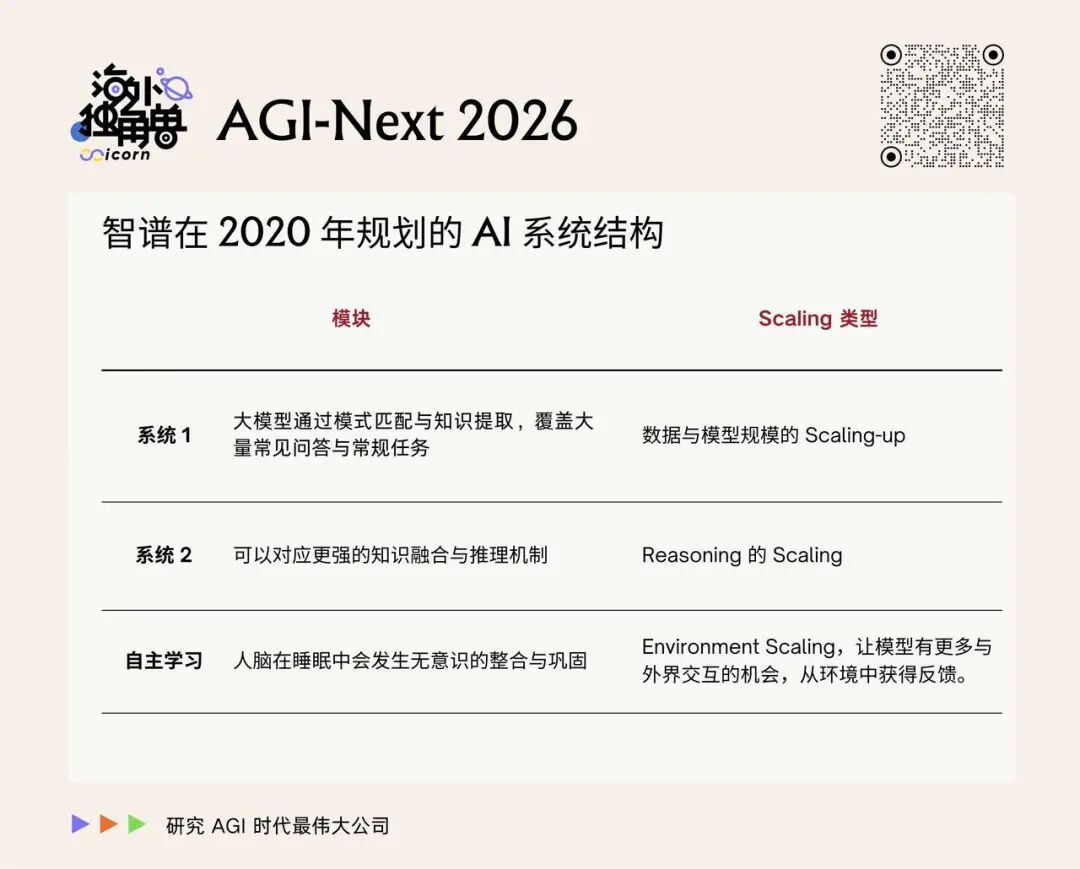
Core Insights - The AGI-Next 2026 event highlighted the significant role of Chinese teams in the AGI landscape, with expectations for further advancements by 2026 [1] - The article emphasizes the ongoing trend of model differentiation driven by various factors, including the distinct needs of To B and To C scenarios [1][3] - A consensus on autonomous learning as a new paradigm is emerging, with expectations that it will be a focal point for nearly all participants by 2026 [1][8] Differentiation - There are two angles of differentiation in the AI field: between To C and To B, and between "vertical integration" and "layering of models and applications" [3] - In To C scenarios, the bottleneck is often not the model's strength but the lack of context and environment [3][4] - In the To B market, users are willing to pay a premium for the "strongest models," leading to a clear differentiation between strong and weak models [4][5] New Paradigms - Scaling will continue, but there are two distinct paths: known paths that increase data and computing power, and unknown paths that seek new paradigms [8][9] - The goal of autonomous learning is to enable models to self-reflect and self-learn, gradually improving their effectiveness [10][11] - The biggest bottleneck for new paradigms is imagination, particularly in defining what tasks will demonstrate their success [12][13] Agent Development - Coding is essential for the development of agents, with models needing to meet high requirements to perform complex tasks [25][26] - The differentiation between To B and To C products is evident in agent development, where To C metrics may not correlate with model intelligence [27][28] - The future of agents may involve a "managed" approach, where users set general goals and agents operate independently to achieve them [30][31] Global AI Competition - There is optimism regarding China's potential to enter the global AI first tier within 3-5 years, driven by its ability to replicate successful models efficiently [36][37] - However, structural differences in computing power between China and the U.S. pose challenges, with the U.S. having a significant advantage in next-generation research investments [38][39] - Historical trends suggest that resource constraints may drive innovation in China, potentially leading to breakthroughs in model structures and chip designs [40]

不追DAU的AI公司火了!MiniMax港交所上市,技术路线成关键
Sou Hu Cai Jing· 2026-01-13 10:39
Core Insights - MiniMax officially listed on the Hong Kong Stock Exchange on January 9, 2025, marking a significant milestone for the company and its founder, Yan Junjie, who emphasized the importance of perseverance in technology belief [1] - The company underwent a strategic pivot after the release of competitor DeepSeek-R1, realizing that focusing on Daily Active Users (DAU) was not the right direction for their AI model development [3][5] Company Strategy - Initially, MiniMax aimed to achieve GPT-4 level technology and a tenfold increase in user scale, but shifted focus after recognizing the unique requirements of large models compared to consumer apps [3][5] - The company has consistently pursued a hybrid expert system (MoE) approach, which allows multiple smaller models to work together, proving to be more efficient than a single large model [5][7] - Despite early challenges and failures, the persistence in MoE development led to the release of the M1 model, a significant advancement in linear attention with over 100 billion parameters [5][9] Product Development - MiniMax transitioned from developing 3D digital humans to multi-modal interactions, integrating text, images, and voice, resulting in three core products: Glow for emotional companionship, Xingye for enterprise services, and Hailuo AI for long text processing [9][11] - User feedback indicates strong engagement, with Glow users finding emotional support through AI interactions, while enterprise clients report significant efficiency improvements and cost reductions [9][11] Industry Context - The company operates under constraints of limited computational resources compared to larger firms, necessitating innovative solutions to optimize performance [11][15] - MiniMax's approach to long text processing addresses traditional model limitations, enabling efficient handling of extensive documents, which is particularly beneficial in legal contexts [11][15] Future Outlook - The trend towards multi-modal interaction is expected to grow, with aspirations to make advanced AI capabilities accessible to the general public [17][19] - The balance between technological ambition and practical product deployment is crucial for MiniMax's ongoing success, highlighting the importance of both innovation and market relevance [17][19]
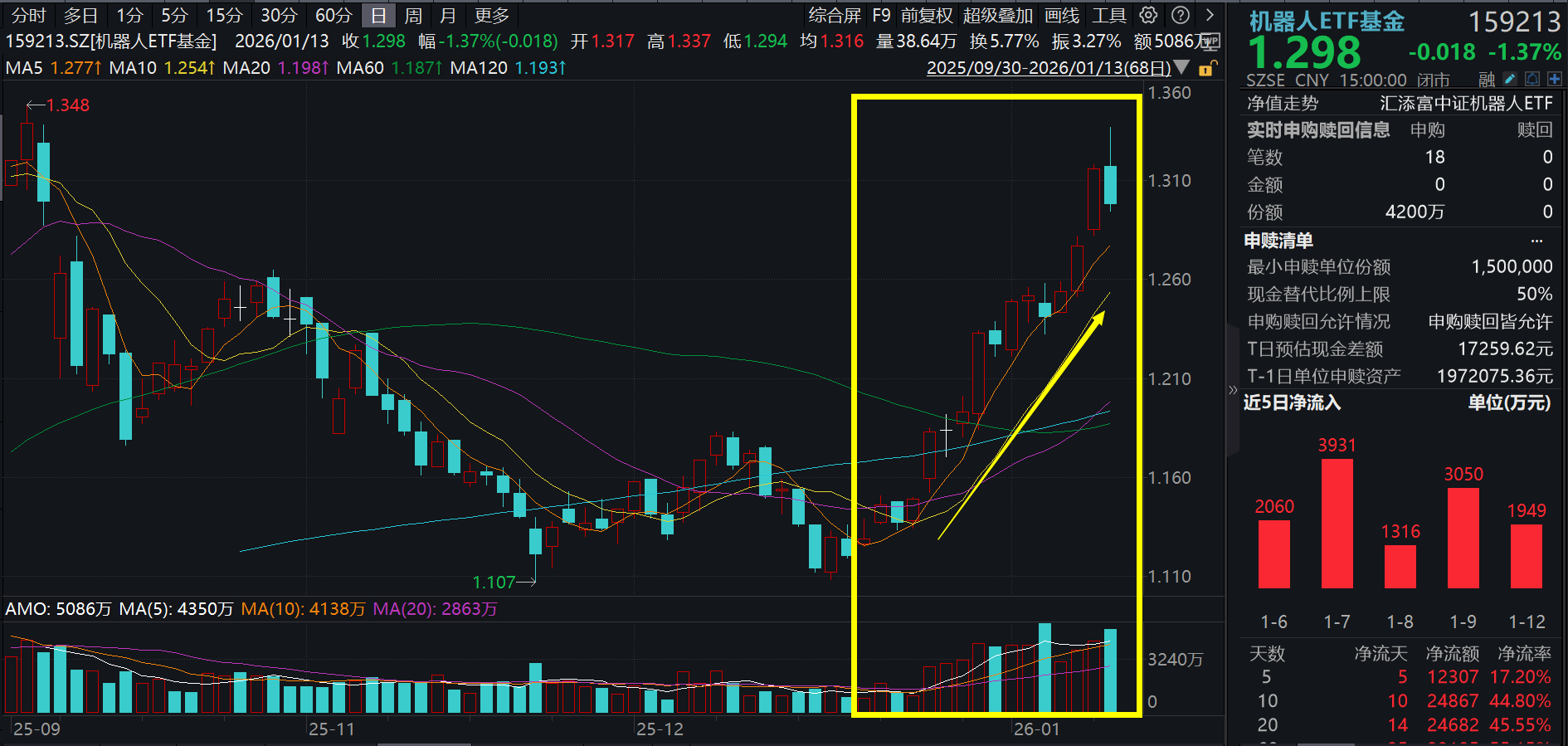
人形机器人再迎政策催化!中控技术涨近10%,资金连续11日涌入机器人ETF基金(159213),合计净流入超3亿元!机器人4年后将完胜人类医生?
Sou Hu Cai Jing· 2026-01-13 09:43
Market Overview - On January 13, the A-share market experienced a volatile pullback, with the Shanghai Composite Index halting its 17-day winning streak. The Robot ETF Fund (159213) fell by 1.37%, while it attracted over 55 million yuan in capital on that day, marking a total of over 300 million yuan in inflows over the past 11 days [1] ETF Fund Composition - The top ten constituent stocks of the Robot ETF Fund (159213) showed mixed performance, with notable gainers including Zhongkong Technology (+9.9%), Lide Harmony (+3.54%), and Keda Xunfei (+2.16%). Conversely, major declines were seen in Dazhu Laser (-5.52%) and Huichuan Technology (-3.12%) [2][4] Policy and Industry Dynamics - The Ministry of Industry and Information Technology announced initiatives for the 14th Five-Year Plan, focusing on revitalizing traditional industries and promoting emerging sectors, including quantum technology, humanoid robots, and AI [3] - The recent CES exhibition highlighted the dominance of Chinese humanoid robot manufacturers, with Chinese companies occupying 21 out of 38 humanoid robot booths, exceeding 50% of the total [5] Technological Developments - Elon Musk projected that general artificial intelligence (AGI) will arrive by 2026, with robots expected to surpass human surgical skills within three years and achieve superior performance compared to human doctors in four years [6] - Eastern Securities noted that the narrative around humanoid robots is shifting from simple mass production to AGI capabilities, suggesting that the latter will have a stronger impact on investment opportunities [7] Challenges in Production - The production of humanoid robots faces three main challenges: developing a highly dexterous hand, an AI brain capable of understanding the real world, and achieving large-scale production. The AI brain is identified as the most critical challenge for the industry's advancement [8] - Tesla is actively working on enhancing its AI brain for humanoid robots, with expectations for prototype production readiness by early 2026, indicating potential investment opportunities in the first half of 2026 [9] Investment Opportunities - The market is witnessing a significant interest in humanoid robots, with major global tech companies investing in this sector. The Robot ETF Fund (159213) is positioned to provide investors with access to the growth potential of the humanoid robot industry [10]





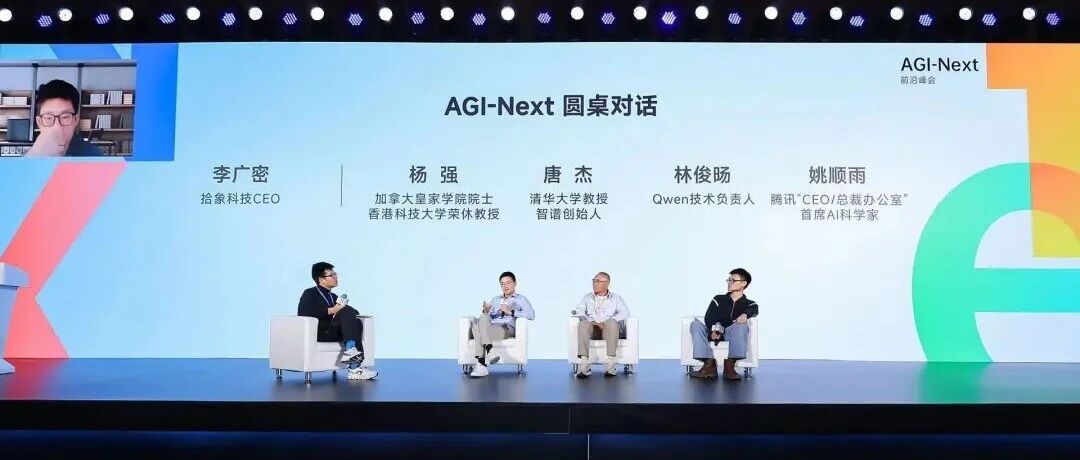
【全网无错版】上周末,唐杰、杨强、林俊旸、姚顺雨真正说了什么?
机器人圈· 2026-01-13 09:41
Core Viewpoint - The article discusses the vibrant developments in China's AI sector at the beginning of 2026, highlighting key figures in the field and their contributions to the evolution of large models and AI applications. Group 1: Event Highlights - The event featured prominent figures in AI, including Professor Tang Jie, Yang Zhilin, Lin Junyang, and Yao Shunyu, marking a significant gathering in Beijing [1]. - The presence of foundational figures like Zhang Bo and Yang Qiang indicates the event's importance in shaping the future of the large model industry [1]. Group 2: Observations on AI Development - The year 2025 was noted as a breakthrough year for open-source models in China, with a 10 to 20 times increase in coding activities [6]. - The discussion emphasized the differentiation of AI models, with a focus on enterprise applications and coding, inspired by developments in Silicon Valley [7][8]. Group 3: Model Differentiation - Yao Shunyu pointed out the clear division between To C (consumer) and To B (business) models, with a growing trend towards vertical integration and layered applications [9][12]. - The article highlights that while consumer applications may not require the highest intelligence, business applications benefit significantly from stronger models, leading to a willingness to pay for superior performance [10][11]. Group 4: Future Paradigms in AI - The conversation shifted to the next paradigm in AI, focusing on autonomous learning and self-improvement, with various interpretations of what this entails [23][24]. - Yao Shunyu mentioned that the bottleneck for autonomous learning is not methodology but rather the data and tasks involved, indicating a need for context and environment to enhance AI capabilities [23][25]. Group 5: Agent Strategy - The potential for agents to automate human tasks significantly was discussed, with expectations that by 2026, agents could handle workloads equivalent to one or two weeks of human effort [39][40]. - The article suggests that the development of agents is closely tied to advancements in model capabilities and the complexity of interaction environments [45][46].