
中美博弈

Search documents
绕过矿产禁令,第三国对美锑出口量暴增,商务部:专项行动已部署
Sou Hu Cai Jing· 2025-07-11 15:22
Core Viewpoint - The article discusses how the U.S. has circumvented China's mineral export ban by importing key minerals like antimony through third countries, leading to a significant increase in U.S. imports of these minerals despite China's restrictions [3][5][10]. Group 1: U.S. Actions and Responses - The U.S. government has been secretly importing minerals from China via third countries like Mexico and Thailand to bypass China's export ban on critical minerals [5][8]. - Reports indicate that from December 2022 to April 2023, the U.S. imported 3,834 tons of antimony oxide from Thailand and Mexico, which is more than the total imports from the previous three years [8][10]. Group 2: China's Export Controls - In response to U.S. sanctions, China implemented strict export bans on key minerals such as antimony, gallium, and germanium starting December 2023 [3][5]. - China has also tightened controls on dual-use items to prevent their export to the U.S. [3]. Group 3: Consequences of Circumvention - The circumvention of China's export controls has rendered these measures ineffective, undermining China's leverage in U.S.-China relations [10]. - This situation highlights the internal challenges China faces, as domestic entities may be colluding with foreign parties to smuggle critical minerals out of the country [11][13]. Group 4: Government Actions - In light of the situation, China's Ministry of Commerce has initiated a special operation to combat the export of critical minerals to the U.S. through third countries [11].

吴伟:美“零和”思维挡不住中国创新药
Huan Qiu Wang Zi Xun· 2025-07-09 22:45
Group 1 - The core viewpoint of the article highlights the increasing competition and insecurity in the U.S. biopharmaceutical sector, prompting President Trump to threaten high tariffs on imported drugs and copper, with drug tariffs potentially reaching 200% [1] - The U.S. National Security Council's report indicates that China is systematically challenging U.S. biotechnological dominance, particularly in the innovative drug sector, exemplified by China's significant presence in antibody-drug conjugate (ADC) research [1][3] - The shift in the global innovative drug landscape is marked by China's dominance in ADC studies, with Chinese companies accounting for 89 out of 184 global studies, reflecting a significant change in competitive dynamics [1][2] Group 2 - Prior to 2010, Chinese pharmaceutical companies were largely invisible in the global innovative drug market, relying heavily on generic drugs, but reforms initiated in 2015 have led to a rapid development of an independent innovation system in China's pharmaceutical industry [2] - The number of innovative drugs approved in China has surged from 9 in 2018 to an expected 48 by 2024, aided by expedited approval processes and a dynamic adjustment mechanism for new drug reimbursement [2][3] - In 2024, Chinese pharmaceutical companies are projected to complete over 90 overseas licensing deals, with total amounts exceeding $50 billion, indicating a robust international expansion [3][4] Group 3 - Despite U.S. efforts to limit collaboration with Chinese pharmaceutical firms, American companies like Pfizer and Merck continue to engage in significant licensing agreements with Chinese firms, reflecting a dependency on Chinese capabilities [4] - The competitive landscape is characterized by a "scissors gap," with China increasing its share of high-impact papers in synthetic biology while U.S. shares decline, showcasing China's growing research capabilities [4] - The cost-effectiveness of Chinese drug development, with costs being 20-30% of U.S. counterparts and shorter development cycles, positions China favorably in the global market [4] Group 4 - The article emphasizes that the future of innovative drug development will hinge on creating an open and collaborative ecosystem rather than maintaining technological hegemony, suggesting that U.S. protectionism may hinder its progress [5][6] - The ongoing competition between the U.S. and China in the biopharmaceutical sector is framed as a critical race for global health standards, with the potential for China to redefine these standards [6]
A股市场多个主要指数创阶段新高 专家解读
Zheng Quan Shi Bao Wang· 2025-07-09 13:56
Group 1 - A-shares market indices showed strong performance on July 9, with several indices reaching new highs, including the Shanghai Composite Index surpassing 3500 points, hitting a peak of 3512.67 points, the Shenzhen Component Index reaching 10656.58 points, and the ChiNext Index peaking at 2204.64 points, marking significant milestones since early 2025 [1][2] - The overall market has demonstrated a positive trend over the past three months, with high trading activity reflected in the continuous trading volume exceeding 1 trillion shares and transaction amounts surpassing 1.2 trillion yuan for 12 consecutive trading days [1][2] - Factors driving the recent strength in the A-shares market include improved domestic economic growth momentum, a better-than-expected GDP growth rate in Q1, and a supportive monetary policy from the central bank, leading to a decline in risk-free interest rates [1][2] Group 2 - The release of the new "National Nine Articles" has led to ongoing reforms in the domestic capital market, boosting investor confidence and expectations for long-term capital inflows [2] - Positive developments in the US-China relations, the Federal Reserve nearing a potential interest rate cut, and government initiatives to combat "involution" have also contributed positively to the A-shares market [2] - Looking ahead, the optimistic outlook for the A-shares market is expected to continue, contingent on the persistence of favorable economic fundamentals, including export performance and the real estate market [2]
特朗普访华计划刚敲定,转头就抓捕六名中国人,中方反制已在路上
Sou Hu Cai Jing· 2025-07-03 12:53
Core Viewpoint - The article discusses the recent developments in US-China relations, particularly focusing on the timing of Trump's planned visit to China and the simultaneous arrest of Chinese citizens by the US Department of Justice, suggesting a strategic maneuver by the US amidst ongoing trade tensions [1][3]. Group 1: US-China Relations - Trump's visit to China was initially seen as a positive step for business relations, with a large delegation of CEOs expected to accompany him [1][3]. - The arrest of six Chinese citizens on charges related to funding North Korea's weapons program appears to be a calculated move by the US, undermining the diplomatic overtures [1][3][5]. - The article compares this situation to previous incidents, such as the Meng Wanzhou case, highlighting a pattern of the US engaging in diplomatic gestures while simultaneously taking aggressive actions [5][7]. Group 2: Economic Implications - The article emphasizes the intertwined nature of US-China trade, suggesting that extreme measures like a 500% tariff would be self-destructive for the US economy [7][10]. - Federal Reserve Chairman Jerome Powell indicated that the trade tensions and tariffs have complicated monetary policy, preventing interest rate cuts that could stimulate the economy [8][10]. - The US faces significant internal challenges, including inflation and economic slowdown, which may drive its aggressive foreign policy [10][11]. Group 3: Strategic Responses - China's diplomatic strategy, particularly Wang Yi's recent meetings in Europe, is portrayed as a counter to US efforts to isolate China in the Indo-Pacific region [11][13]. - The article suggests that China is leveraging its position by engaging with European leaders, thereby undermining US influence [11][13]. - China's potential use of tools like the "Unreliable Entity List" and export controls on rare earth elements is highlighted as a means to exert pressure on the US [13][19]. Group 4: Broader Context - The article argues that the current geopolitical landscape reflects a shift in power dynamics, with China adopting a more strategic and composed approach compared to the US's aggressive tactics [15][17]. - It posits that the ongoing competition is not just about trade but represents a clash of development philosophies, with China's cooperative model gaining traction [17][21]. - The narrative concludes that the US's attempts to maintain its hegemony through conflict are increasingly seen as outdated, while China's approach is viewed as more aligned with contemporary global cooperation [21].
频繁挥舞关税大棒,美国漠视盟友,最新消息担忧:恐加速解放军武统
Sou Hu Cai Jing· 2025-07-02 04:37
Group 1 - The core concern expressed by South Korean media is not the Taiwan Strait situation, but rather the decline of U.S. power and the potential abandonment of South Korea by the U.S. [1] - The U.S. has shown a lack of substantial trade agreements with allies such as Japan, South Korea, and the EU in the past 90 days, while frequently imposing tariffs, indicating a self-serving approach that disregards ally interests [3] - The U.S. is demanding NATO members to significantly increase military spending to 5% of GDP, reflecting a shift away from unconditional security commitments to allies [5] Group 2 - South Korea's media concerns about the Taiwan Strait are linked to the perceived weakening of U.S. influence in the global arena, which raises doubts about the reliability of U.S. security commitments to South Korea [7] - The reduction of U.S. Marine Corps troops from the Okinawa base and ambiguous positions on the Korean Peninsula further illustrate South Korea's anxieties regarding U.S. support [7] - The pressure from the U.S. regarding trade and troop cost-sharing has severely damaged South Korea's trust in the U.S. alliance, leading to a strategic approach of highlighting Taiwan Strait issues to draw U.S. attention to South Korean security [7]

90天宽限到期,加拿大率先向美低头!将中企驱逐出境,向特朗普表忠心
Sou Hu Cai Jing· 2025-07-02 04:19
Group 1 - Canada has succumbed to U.S. pressure by expelling Chinese company Hikvision, reflecting the challenges smaller nations face in the geopolitical landscape [1][3] - The Canadian government, citing "national security," ordered Hikvision to cease operations within 120 days, a decision influenced by the economic impact of U.S. tariffs [1][3] - The U.S. imposed a 25% tariff on Canadian automobiles, significantly affecting Canada's economy, which relies heavily on exports to the U.S. [1][3] Group 2 - Canada's cancellation of the planned digital services tax against U.S. tech giants demonstrates the economic disparity and pressure from the U.S. [3][5] - The expulsion of Hikvision is seen as a political gesture rather than a legitimate security concern, as no concrete evidence has been provided [5][8] - The move aligns with the U.S. strategy to isolate Chinese technology firms, indicating a broader trend of geopolitical alignment among allies [5][8] Group 3 - China's Ministry of Commerce condemned Canada's actions, asserting that it would take necessary measures to protect the rights of Chinese companies [7][8] - The situation may trigger a ripple effect among other nations, as seen with the EU's willingness to accept U.S. tariffs while seeking exemptions in specific sectors [7][8] - Despite short-term concessions by some countries, the fundamental market dynamics suggest that reliance on Chinese manufacturing will persist [7][8]


关税豁免临近 预计铜价运行于78500-81000之间
Jin Tou Wang· 2025-07-01 08:24
Group 1 - The core viewpoint from Zhonghui Futures indicates that the short-term focus for copper prices should be within the range of 78,500 to 81,000 yuan, with a long-term bullish outlook due to ongoing global copper supply tightness and geopolitical tensions [1][2] - Changjiang Futures expects copper prices to operate in the range of 78,500 to 81,000 yuan in the short term, suggesting a cautious approach to holding long positions due to potential demand suppression from rising prices and ongoing tariff uncertainties [1][2] - Guantong Futures anticipates a slow upward trend in copper prices amidst a volatile market, influenced by geopolitical conflicts and uncertain tariff policies, while also considering the tight supply of copper and weak U.S. economic data [2] Group 2 - The recent performance of copper futures shows a strong fluctuation, with the main contract reaching a peak of 80,760.00 yuan and closing at 80,640.00 yuan, reflecting a 1.09% increase [1] - The macroeconomic sentiment appears to be improving, with the U.S. copper premium over London copper expanding, although concerns about seasonal demand and tariff uncertainties may continue to exert pressure on prices [1][2] - The upcoming expiration of a 90-day tariff exemption on July 9 is expected to reignite tariff negotiations, adding to the uncertainty in the copper market [1]
大摩宏观闭门会:政治局会议前瞻,稳定币解读及房地产市场更新
2025-07-01 00:40
好 那我们开始倒数5 4大家上午好欢迎来到一周一度的大模宏观策略谈我是Robin邢思强那么大家肯定很关注接下来7月份有政治局会议对下半年的经济政策定调会不会有一些新的调整变化 我从昨天开始周末就到了北京这周也会参加一些闭门研讨我想现在各个部委各个智库各个体制内都在紧锣密鼓地分析经济形势为决策层供告建言准备一些政策选项 我今天和我们团队的三位主讲嘉宾包括蔡志鹏博士经济学家包括张磊我们大宗商品和战略原材料行业的主管以及Anson我们香港房地产的分析师一起会聚焦四个问题第一点就是政治局会议对下半年经济政策节奏和空间的判断第二点则是最近把中美博弈的因素扩展到 货币结算体系包括人民币稳定币以及稀土这张牌中国接下来会怎么打其实稀土小院高墙这张牌跟稳定币人民币的贸易结算之间是有互相促进的可能性我们会做一些探讨和分析这里面尽管今天Laura我们的首席策略师由于在休假错过一周但我们也会简单的涉及到一点 从过去三四个月我们讲到的东稳西大就美国的各种政策不确定性带来的对未来长线美元资产和美国经济例外论的趋美退波但是短线来讲最近美国金融市场特别是美股似乎在不断的收复失地震荡中创出新高怎么看那我来抛砖引玉吧长话短说首先还是从政治局会议 ...
中方给稀土加上“新锁”,特朗普察觉情况不妙,对华收回一个禁令
Sou Hu Cai Jing· 2025-06-29 07:23
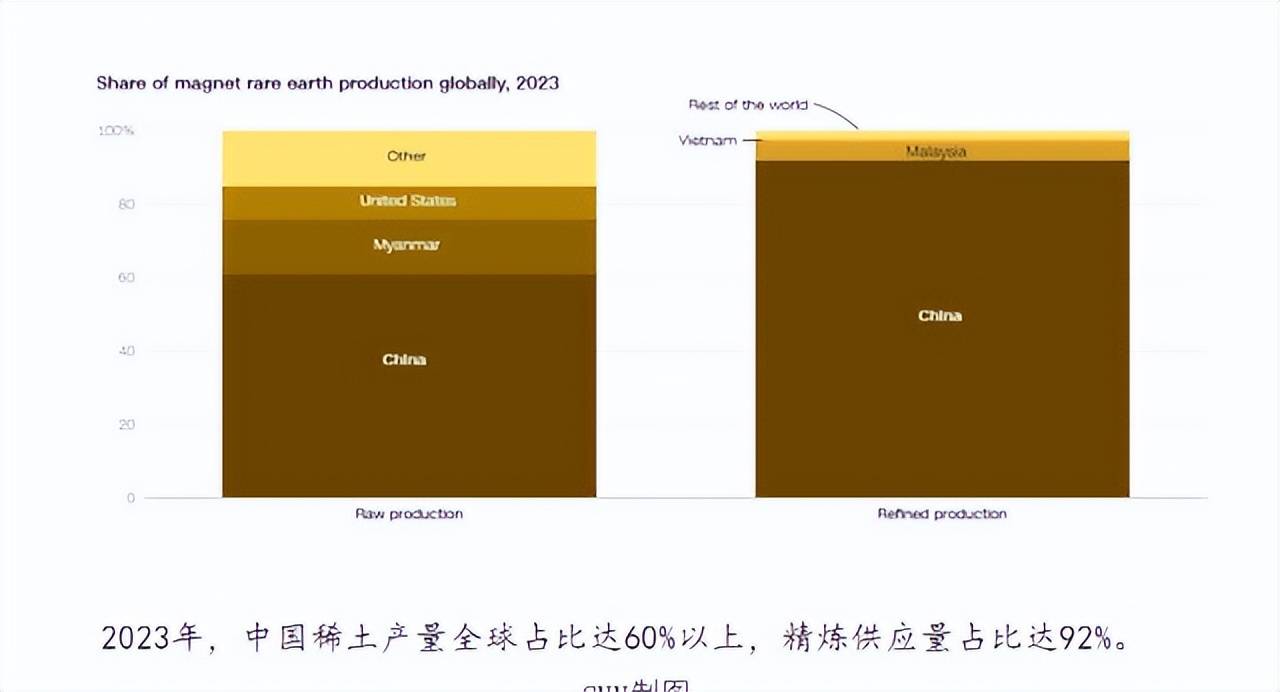
Group 1 - Rare earth elements are essential for modern technology, including smartphones, electric vehicles, and military equipment, making them crucial for both economic and national security [1] - China controls approximately 37% of global rare earth reserves and dominates 80% of processing capacity, particularly in heavy rare earth refining technology [2][5] - In April 2025, China announced strict export controls on rare earth elements, transitioning from a quota system to a more stringent licensing requirement for each export batch [2][5] Group 2 - The Chinese government aims to safeguard national security and public interest through these export controls, as rare earth elements are vital for sensitive military and industrial applications [5] - Following the announcement, rare earth prices surged dramatically, with dysprosium oxide reaching $850 per kilogram and terbium exceeding $3000, reflecting a price increase of over 210% [5] - The U.S. defense sector, heavily reliant on rare earths, expressed significant concern over potential supply disruptions affecting high-tech and military industries [5][6] Group 3 - In response to China's actions, the U.S. government declared a "national emergency" regarding its dependence on critical minerals and initiated efforts to boost domestic rare earth mining [6][8] - The U.S. is attempting to form a rare earth alliance with allies like Japan and Australia to reduce reliance on China, but faces significant challenges in matching China's processing capabilities [8][9] - The geopolitical implications of the rare earth situation highlight the ongoing U.S.-China rivalry, with both nations leveraging their resources in the tech and military sectors [9][11] Group 4 - Recent U.S.-China trade talks indicate a desire to avoid a complete breakdown in relations, yet the rare earth issue remains a contentious topic [11] - The long-term outlook suggests that the rare earth dilemma could lead to a reshaping of global supply chains, as countries seek alternative sources to mitigate dependence on China [11]
李礼辉:双赤字结构性矛盾加剧、加深,美国会竭力维持美元的货币霸权地位
Feng Huang Wang Cai Jing· 2025-06-28 05:41
Group 1 - The "2025 China Enterprises Going Global Summit" was held in Shenzhen, focusing on providing a high-end platform for Chinese companies to address challenges in global expansion amidst deep restructuring of global industrial chains [1] - The summit aimed to facilitate thought exchange, resource connection, and regulatory dialogue among participants [1] Group 2 - Former Bank of China President Li Lihui discussed the international financial competition environment faced by Chinese enterprises, emphasizing the competition between China and the United States [3] - Li highlighted the structural contradictions in the U.S. economy, including a significant trade deficit exceeding $500 billion annually and a national debt of $36 trillion, with annual interest payments surpassing $1 trillion [3] - He noted that the U.S. relies on its monetary hegemony to address its fiscal deficits, which could lead to efforts to maintain the dollar's dominance in the global financial system [3] Group 3 - Li pointed out that the recent U.S. stablecoin initiative aims to tie stablecoins to the dollar, expanding the U.S. Treasury market and increasing demand for U.S. debt [4] - This initiative is seen as a strategy to enhance U.S. financial dominance in a decentralized global financial market, intensifying direct competition in the monetary and financial sectors between China and the U.S. [4]
