线上线下融合

Search documents
21社论丨深挖潜力提振消费,做强国内大循环
2 1 Shi Ji Jing Ji Bao Dao· 2025-05-28 17:23
Core Viewpoint - The Chinese government is focusing on strengthening domestic circulation by enhancing consumption, promoting upgrades in bulk consumption, and stimulating service consumption potential, as indicated by a 5.1% year-on-year increase in social retail sales in April, reaching 37,174 billion yuan [1] Group 1: Consumption Trends - The growth in social retail sales reflects not only an increase in total volume but also significant improvements in structure and quality, driven by rising income levels and changing consumer preferences towards diversified and personalized demands [1] - In April, retail sales of sports and entertainment products surged by 23.3%, indicating a shift from basic needs to experience-oriented consumption [1] Group 2: Policy Impact - The "trade-in" policy has effectively stimulated consumption, with retail sales of communication equipment, home appliances, and furniture increasing by 19.9%, 38.8%, and 26.9% respectively in April [2] - Urban and rural retail sales both showed steady growth, with urban retail sales increasing by 5.2% year-on-year in April, supported by improved infrastructure and public services in rural areas [2] Group 3: Challenges and Future Outlook - Despite overall stable growth, the consumption market faces challenges such as the impact of real estate market adjustments and international economic uncertainties, necessitating further actions to boost domestic demand [3] - Future trends indicate a continued upgrade in consumption structure, with rapid growth in tourism, entertainment, and health services, alongside a rise in demand for green and low-carbon products [4] - The integration of online and offline retail models is expected to accelerate, enhancing shopping experiences through digital empowerment [4] - Emerging consumer groups, particularly younger consumers and the elderly, are anticipated to play significant roles in shaping the future consumption landscape [4]
万达商业版图再调整!黑龙江两座万达广场易主
Xin Lang Cai Jing· 2025-05-27 01:56
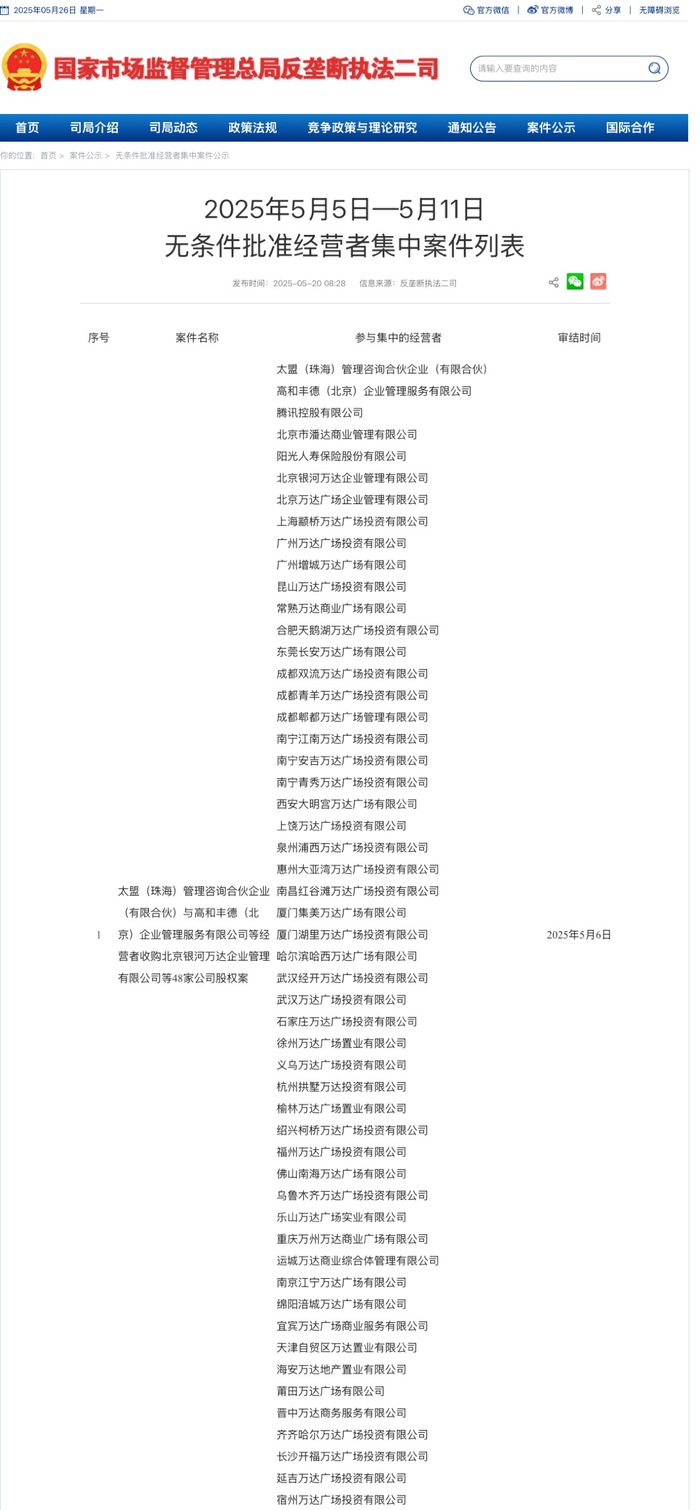
Core Viewpoint - The announcement by the State Administration for Market Regulation reveals Wanda Group's strategic shift towards a light-asset model through the establishment of a joint venture to acquire 100% equity in 48 target companies, including key Wanda Plaza locations in Heilongjiang Province [1][6]. Group 1: Acquisition Details - The joint venture involves several companies, including TPG (Zhuhai), Gaohe Fengde, Tencent Holdings, and Sunshine Life Insurance, indicating a collaborative effort to manage and acquire Wanda's assets [1][6]. - The specific financial details of the transaction have not been disclosed, but it is part of Wanda's strategy to alleviate debt pressure by selling off multiple Wanda Plaza projects over the past two years [1][6]. Group 2: Strategic Implications - The involvement of tech giants like Tencent and JD.com suggests that this acquisition may not be purely financial but could also aim to integrate Wanda's offline retail spaces with online ecosystems, enhancing customer engagement through digital channels [6]. - The example of Harbin Haxi Wanda Plaza, a flagship project, highlights its significance as a cultural and commercial landmark, which has maintained vitality through community engagement and events [7][9]. Group 3: Future Challenges - The new investors will face challenges in balancing Wanda's standardized operational model with local consumer preferences, particularly in regions with long winters, necessitating a focus on indoor experiences [9]. - There is a need to optimize the tenant mix, as evidenced by past regulatory issues related to space utilization and safety compliance, which could impact operational efficiency [9].


推动直播行业向价值创造转变
Jing Ji Ri Bao· 2025-05-25 22:17
Core Points - The "Quality Anchor Cultivation Project" aims to identify and nurture high-quality live streaming rooms and anchors, with a target of recognizing 6,000 quality live streaming rooms by 2026 [1] - As of December 2024, China's live streaming user base reached 833 million, a growth of 17.37 million from December 2023, accounting for 75.2% of the total internet users [1] - The live streaming industry is experiencing a shift towards high-quality content, with a focus on professionalization and standardization, driven by both market forces and policy guidance [1][2] Industry Development - The live streaming industry is characterized by improved artistic standards, cultural depth, and knowledge density in content, reflecting a trend towards "content improvement, upward mobility of anchors, and innovative industry practices" [2] - Live streaming platforms are transitioning from "traffic growth" to "value creation" through technological empowerment and content leadership [2] - The industry has entered an era where "content is king," with a focus on high-quality content as the foundation of the content ecosystem [2] Content Innovation - Douyin has segmented its live streaming content into 48 sub-categories to promote the development of quality content, establishing clear standards for quality content across different categories [3] - Online performances are becoming a focal point, with a model of "online and offline integration" driving the development of performing arts organizations [3] - By March 2025, 203 state-owned performing arts groups had joined Douyin, averaging about 540 high-quality live performances daily [3] Cultural Impact - Live streaming has become a significant cultural space for conveying social values and promoting positive energy, with calls for optimizing the industry ecosystem to enhance its role as a new platform for social service and innovation [4] - The Central Opera House has successfully attracted new audiences through live streaming, achieving self-improvement and audience engagement [4]
趋势研判!2025年中国仓储会员超市行业产业链图谱、市场规模、重点企业及未来趋势:国内仓储会员超市行业热度持续高涨,市场规模稳步增长[图]
Chan Ye Xin Xi Wang· 2025-05-23 01:16
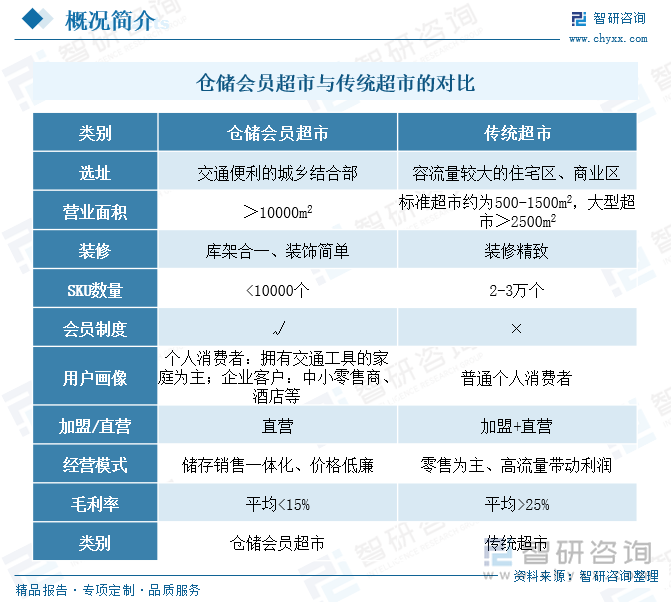
Core Insights - The warehouse membership supermarket industry in China is experiencing significant growth, with the market size increasing from 21.63 billion yuan in 2012 to 38.78 billion yuan in 2024, driven by economic growth and consumer demand for high-quality, cost-effective products [1][5][16] Industry Overview - Warehouse membership supermarkets operate on a membership basis, offering a limited selection of high-quality products at lower prices, primarily targeting middle-income families and businesses [2][5] - The industry is characterized by a focus on cost efficiency, with operations typically located in suburban areas to reduce overhead costs [3][5] Market Dynamics - The consumer base for warehouse membership supermarkets is predominantly located in first and second-tier cities, with over 80% of consumers residing in these areas [7] - The shopping habits of consumers are evolving, with a significant portion preferring online shopping options, leading to a blend of online and offline shopping experiences [9][17] Competitive Landscape - The competitive environment includes both established international brands like Sam's Club and Costco, as well as emerging domestic players such as Hema and Yonghui, indicating a growing market with increasing competition [11][12] - The number of warehouse membership supermarket enterprises is expected to continue rising, gradually replacing some traditional supermarket markets [11] Development Trends - The market is projected to expand further into third and fourth-tier cities, driven by rising incomes and changing consumer preferences for high-quality goods [16] - Digital transformation is becoming a focal point for competition, with companies enhancing their online platforms and delivery systems to meet consumer demands [17] - Differentiation in product offerings and services is intensifying, with a growing emphasis on health, organic, and personalized products to cater to evolving consumer needs [18]
加速华东市场布局 华人健康拟共计约3.27亿元收购医药公司股权
Zheng Quan Ri Bao Wang· 2025-05-22 12:01
Core Viewpoint - The Chinese pharmaceutical retail market is experiencing robust growth due to increasing health awareness and rising healthcare demands, with a projected annual growth rate of 5% to 6% by 2025 [1] Company Summary - Anhui Huaren Health Pharmaceutical Co., Ltd. plans to acquire equity stakes in three pharmaceutical chain companies in Fujian and Zhejiang provinces for approximately 327 million yuan [1] - The acquisitions include a 46.01% stake in Yangzu Huimin Pharmaceutical Chain Co., Ltd. for 133 million yuan, a 46.01% stake in Fujian Haihua Pharmaceutical Chain Co., Ltd. for 125 million yuan, and a 70.01% stake in Tonglu Yishengtang Pharmacy Chain Co., Ltd. for 68.26 million yuan [1] - The company aims to deepen its market presence in East China and leverage the acquired companies' networks, brand recognition, and customer resources to enhance its market share and brand influence locally [1] Industry Summary - The performance commitment agreements signed with the acquired companies set sales targets of no less than 295 million yuan, 310 million yuan, and 325 million yuan for the years 2025, 2026, and 2027, respectively, along with corresponding net profit targets [2] - The acquisition is expected to impact the competitive landscape of the pharmaceutical retail market in East China, prompting other companies to accelerate their own expansion and consolidation efforts [2] - The move serves as a reference case for industry consolidation, promoting a trend towards scale and concentration within the sector [2] - The company plans to continue its strategy of focusing on East China while optimizing its industry layout and enhancing service quality and customer experience [2] - With the advancement of internet technology and changing consumer purchasing habits, the company will explore an online-offline integration model to improve operational efficiency and market competitiveness [3]
曼卡龙20250521
2025-05-21 15:14
Summary of Mankalon's Conference Call Company Overview - **Company**: Mankalon - **Industry**: Gold and Jewelry Key Points and Arguments 1. **Revenue Growth**: Mankalon reported a 40% year-on-year increase in online and offline revenue, with profits growing over 30%. Online sales grew over 60%, while offline sales increased by 30%, indicating strong market competitiveness [2][3]. 2. **Target Market**: The company focuses on young white-collar women, utilizing segmented positioning and brand deepening to attract this demographic. New product lines such as Fenghua series and Cinderella series have been successful in engaging young consumers [2][3]. 3. **Product Innovation**: Self-developed styles account for nearly half of offline sales, with a goal to reach 50% of total sales by year-end, showcasing the company's commitment to product innovation and design capabilities [2][8]. 4. **Marketing Strategy**: Mankalon employs social media for brand awareness and consumer insights, aiming for online and offline synergy. The company is exploring live e-commerce to enhance operational efficiency and ROI [2][7]. 5. **Gross Margin Management**: The gross margin for weight-based pricing products is maintained at 25%-30%. The proportion of fixed-price products is about 20% and is gradually increasing, indicating a focus on optimizing profitability [2][11][13]. 6. **Design Philosophy**: The design philosophy revolves around young consumers, providing emotional value and social attributes through products. The Fenghua series and traditional Chinese medicine-inspired products reflect this approach [5][6]. 7. **Consumer Insights**: Mankalon has a dedicated R&D team that encourages innovation and captures consumer psychology to develop products that resonate with young consumers [6][10]. 8. **Channel Strategy**: The company is expanding its physical store presence, prioritizing core cities and commercial areas for new openings, with a focus on healthy franchise development [4][21]. 9. **Customer Retention**: Online channels primarily attract new customers, while offline channels focus on maintaining and increasing repeat purchases. The company has seen an increase in new customer ratios, especially in newly opened stores [10][27]. 10. **Sales Channel Dynamics**: The average transaction value for online sales ranges from 2,000 to 5,000 yuan, while offline sales exceed 4,000 to 6,000 yuan. The company maintains a differentiated product offering across channels to avoid price discrepancies [18][19]. 11. **Future Growth Plans**: Mankalon plans to open stores in all provincial cities within one to two years, focusing on the central and southern regions of China, particularly outside of Zhejiang and Jiangsu [4][21]. 12. **E-commerce Strategy**: The company is leveraging platforms like Tmall, which accounts for 60%-70% of online sales, while exploring opportunities in other high-margin channels [24][29]. 13. **Live Streaming Initiatives**: Mankalon is developing its own live streaming capabilities to enhance brand presence and product promotion, aiming for efficient customer acquisition and retention [25][30]. 14. **Membership Growth**: The company has over 1 million core members, with total membership reaching several million across all channels [26]. 15. **Differentiation in the Jewelry Market**: Mankalon emphasizes brand differentiation in the jewelry sector, focusing on emotional value and unique product offerings to stand out in a competitive landscape [40][41]. Additional Important Insights - **Supply Chain Efficiency**: The company has implemented a data-driven approach to enhance supply chain responsiveness and operational efficiency, utilizing Alibaba Cloud for data iteration [4][17]. - **AI Integration**: AI technology is being used to enhance product design processes, improving efficiency while maintaining the core design philosophy [42][43]. - **Market Positioning**: Mankalon positions itself against gold jewelry companies rather than pure accessory brands, focusing on higher average transaction values [20][37]. This summary encapsulates the key insights from Mankalon's conference call, highlighting the company's growth strategies, market positioning, and innovative approaches in the gold and jewelry industry.
董事长“下台”,捧出江西首富的“民营超市第一股”宣布退市
Sou Hu Cai Jing· 2025-05-18 04:19
Core Viewpoint - The announcement of the delisting of Renrenle (stock code: *ST Renrenle) signals a significant transformation in the traditional supermarket industry, highlighting the urgent need for innovation and optimization to survive in a competitive market [2][3][4]. Company Summary - Renrenle has received a notice from the Shenzhen Stock Exchange regarding the termination of its stock listing, marking a pivotal moment in the company's trajectory [2][3]. - In its 2024 annual report, Renrenle reported a revenue of 1.43 billion yuan, a year-on-year decrease of 49.86%, with total assets down by 50.94% and a net asset of approximately -404 million yuan [3]. - The company closed 45 stores and opened only 1 new store during the reporting period, indicating a significant contraction in its operations [3]. - The resignation of Chairman Hou Yankui due to health reasons further destabilized the company, as he held multiple key positions [3][4]. - Renrenle has faced continuous losses from 2021 to 2024, with net losses of 860 million yuan, 510 million yuan, 500 million yuan, and 20 million yuan respectively [10][11]. Industry Summary - The traditional supermarket industry is undergoing significant challenges due to the rise of e-commerce, changing consumer habits, and the emergence of new business models [2][12]. - Digital transformation is crucial for traditional supermarkets, with strategies focusing on online-offline integration, supply chain optimization, experiential consumption, and sustainable development [2][12][14]. - In 2024, nearly 60% of supermarket enterprises experienced a decline in total sales, with the revenue of the top 100 supermarket chains dropping from 979.2 billion yuan in 2019 to 868 billion yuan in 2023 [13]. - The integration of online and offline channels has become a key strategy for enhancing competitiveness, as seen in partnerships like Walmart China and Meituan [12][14]. - The development of private label products is essential for differentiation, with companies like Sam's Club achieving a 30% sales share from their private label [13][14]. - Traditional supermarkets are also focusing on enhancing customer experience through value-added services and optimizing store environments to increase customer retention [14][15].

国补和百亿补贴齐上阵,“618”京东MALL四店开业
Bei Jing Ri Bao Ke Hu Duan· 2025-05-16 03:32
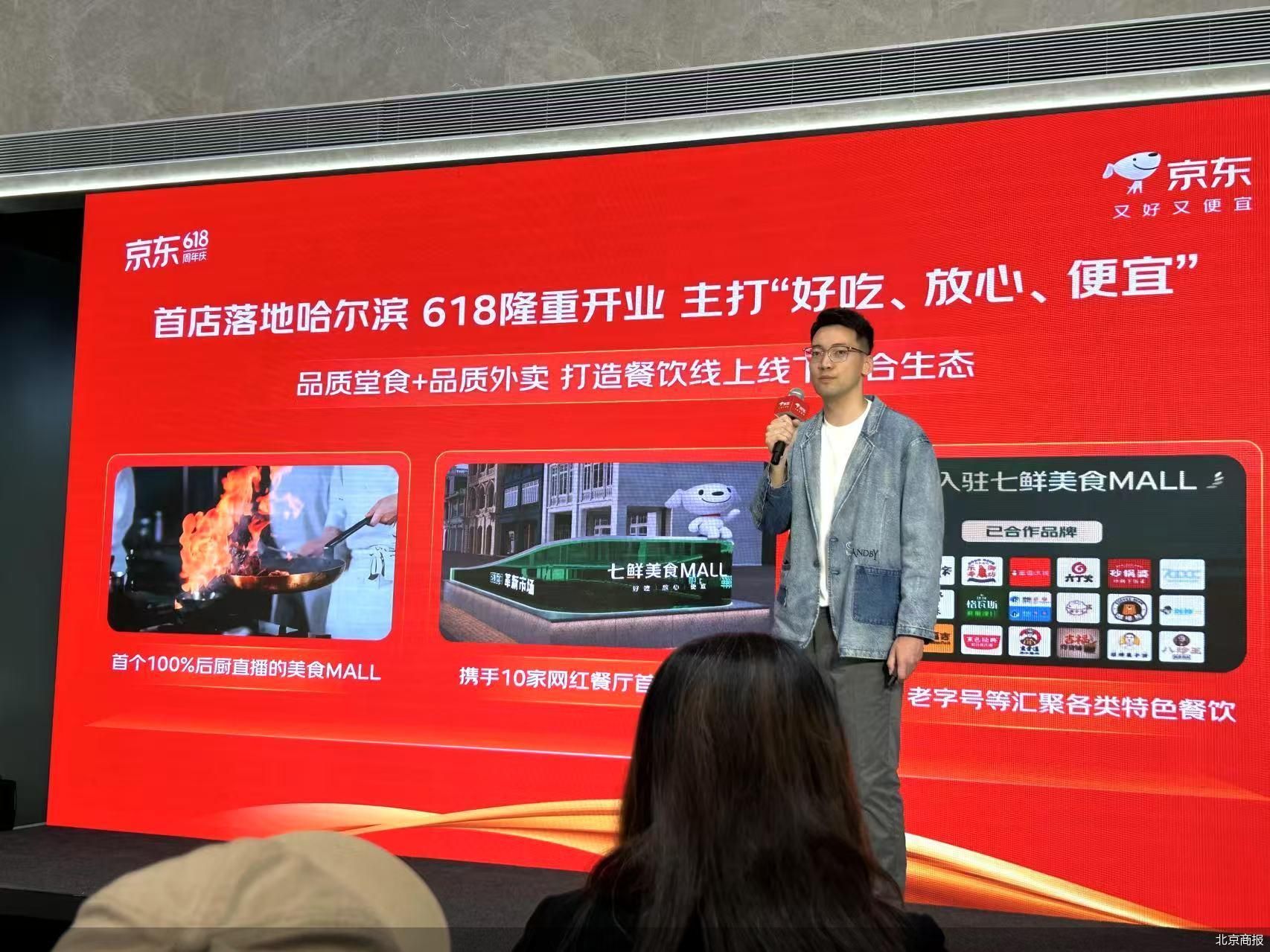
Core Insights - JD.com is expanding its physical retail presence with the launch of multiple stores during the "618" shopping festival, including its first dining collection store, "Seven Fresh Food MALL" [1][2] - The "618" event will officially start at the end of May, offering consumers over 1000 yuan in shopping subsidies daily, alongside various promotional days [1] - JD.com is accelerating its nationwide expansion of JD MALLs, with new openings planned in major cities including Beijing and Shenzhen [1] Group 1 - JD.com will open two new JD MALLs in Beijing during the "618" festival, with one being the largest in the country [1] - The company is also set to launch its first dining infrastructure, "Seven Fresh Food MALL," in Harbin on June 18, featuring live kitchen broadcasts and local dining options [2] - JD.com aims to enhance user experience by integrating online and offline services, expanding its delivery business from core retail operations [2] Group 2 - The "618" shopping festival will feature various promotional activities, including "Super Savings Days" and "Super Live Streaming Days" [1] - JD.com has introduced a "JD Super Takeaway Day" with monthly promotions on beverages, enhancing its food delivery service [2] - The company is leveraging its platform to provide quality dining services through a combination of in-store dining and takeaway options [2]

研判2025!中国家居收纳用品行业产品分类、市场规模、竞争格局及发展前景分析:家居收纳用品市场需求日益增长,行业向环保和可持续方向发展[图]
Chan Ye Xin Xi Wang· 2025-05-16 01:36
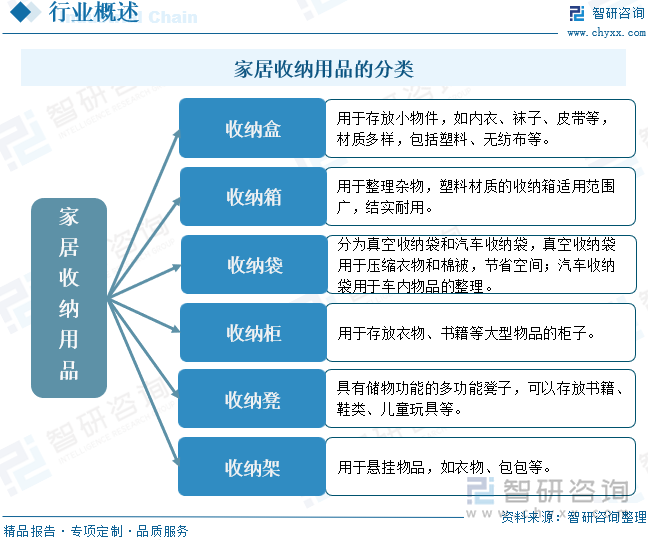
Core Insights - The home storage industry originated in the United States during the 1980s, driven by economic growth and increased consumer demand, leading to a rise in home organization services [1][11] - China's home storage products market is expected to grow significantly, with a market size projected to exceed 300 billion yuan by 2025, up from 101.279 billion yuan in 2020 [1][11] - The industry is supported by rising disposable income and consumer spending, with per capita disposable income in China increasing from 21,966 yuan in 2015 to 41,314 yuan in 2024, reflecting a compound annual growth rate of 7.27% [9][11] Industry Overview - Home storage products are primarily plastic items designed to organize and store various household items, including storage boxes, bags, cabinets, and shelves [3] - The industry is characterized by a supply chain that includes upstream plastic materials, midstream manufacturing, and downstream sales channels such as e-commerce and retail [5] Market Dynamics - The demand for home storage products is rapidly increasing due to urbanization and the fast-paced lifestyle of residents in major cities, leading to a growing consumption of these products [1][11] - The plastic storage box segment is particularly popular, with a market size of approximately 1.093 billion yuan in 2024, driven by rising consumer demand [13] Competitive Landscape - The industry features a competitive landscape with leading companies such as Chahua Co., Ltd., Jialian Technology, and Taili Technology, which dominate the market [15][17][19] - The market is fragmented, with many small and medium-sized enterprises, leading to intense price competition and a prevalence of low-end products [21] Challenges - The industry faces challenges from numerous small enterprises producing low-quality products, which complicates market competition [21] - Rising labor costs and a shortage of skilled labor are pressing issues that necessitate automation and technological upgrades within the industry [22][23] Future Trends - Consumer preferences are shifting towards high-quality, personalized, and eco-friendly products, prompting companies to innovate in design and production [24][25] - The integration of online and offline sales channels is accelerating, with a focus on experiential marketing and digital engagement to enhance consumer experience [26]

“6·18”开出餐饮集合店京东线下狂奔
Bei Jing Shang Bao· 2025-05-15 13:56
电商巨头瞄准了线下场景。5月15日,北京商报记者从京东"6·18"发布会获悉,京东不仅将在大促期间开出首家餐饮集合店"七鲜美食MALL",引入餐饮品 牌,自营商业体京东MALL也会开出四家店。与此同时,京东外卖日订单量已突破2000万,并上线特定活动日拉动流量。巨头在线下左奔右突,是为在线上 流量到顶之际寻找更多增量,线下场景将是电商巨头争相揽客的重要赛场。 再战餐饮业态 京东似乎还是很难放下餐饮业态。据北京商报记者了解,首家七鲜美食MALL会落地于哈尔滨,于6月18日正式亮相,门店引入十大网红餐饮品牌,包括秋 林格瓦斯、蜜雪冰城、六丁火等。据介绍,七鲜美食MALL入驻的餐饮商家会涵盖本地老字号、非遗美食、网红小吃等,主张"好吃、放心、便宜"。 那么,七鲜美食MALL是七鲜又孵化出的一个业务吗?京东相关负责人向北京商报记者回应称,七鲜是京东集团的品牌,七鲜美食MALL跟七鲜超市是完全 独立的两个业务。不过,对于七鲜美食MALL业态的店型打造、选址逻辑等方面,该负责人未进行更多透露。 京东对餐饮并非完全陌生。例如七鲜超市门店设置用餐区,主打"超市+餐饮"两类业务结合。消费者进店后能享受生鲜食品现场加工的服务,获 ...