
耐心资本

Search documents
耐心资本推动人工智能企业发展|封面专题
清华金融评论· 2025-12-11 10:06
一是技术特性的长周期研发与高不确定性。人工智能技术研发周期远超传统行业,研发投入巨大、耗时长。例如大模型研发需要5~10年时间的持续投 入,以OpenAI的GPT-4模型研发为例,耗资超10亿美元、历经6年的迭代才得以推出。另据统计,全球人工智能企业倒闭案例中,68%是因为无法跨越商 业化的"死亡之谷"。 文/ 中国科学技术大学科技商学院、管理学院教授 姚加权 ,北京大学国家发展 研究院金光讲席研究员、智库中心常务副主任 范保群 人工智能正重塑全球竞争与文明进程,其长周期、高投入、高不确定性亟 须"耐心资本"护航。文章系统梳理AI企业成长新特征,剖析科创板五年 改革如何以包容制度引导长期资金,并建言上市标准、资金渠道、退出机 制 、 治 理 结 构 再 升 级 , 呼 唤 资 本 与 制 度 共 振 , 托 举 中 国 AI 跨 越 " 死 亡 之 谷",抢占新质生产力制高点。 人工智能作为通用技术,是生产力革命的引擎和文明演进的关键变量 人工智能目前已超越了技术工具范围,日益在引领科技创新、突破关键领域,驱动经济转型升级、培育新质生产力,重构国际竞争格局、提升战略主动 权,重塑社会治理模式、提升治理效能,赋 ...


保险公司风险因子调整点评:培育壮大耐心资本,有效服务国家战略
Bank of China Securities· 2025-12-10 23:51
非银金融 | 证券研究报告 — 行业点评 2025 年 12 月 11 日 强于大市 本次风险因子调整降低了保险公司部分长期持仓股票及外贸保险业务相关的 风险因子,旨在培育壮大耐心资本,加大保险行业对外贸企业的支持力度, 有效服务国家战略,有助于提升保险公司资本运用效率,加强资产负债匹配 管理,且有助于股票市场健康稳定发展。对证券行业而言,长期资金入市将 带来增量机构服务业务需求。在行业景气度向好的背景下板块长期估值中枢 有望提升,建议布局头部券商扩大综合优势与中小券商打造差异化特色化竞 争力两条主线。 要点 投资建议 监管政策定调积极,券商板块估值存在向上空间。截至 12 月 9 日,板块 市净率 1.38 倍,位于近十年 35%~36%分位。当前监管政策定调积极,引 导资本市场生态优化与机构高质量发展,证券行业"十五五"发展路径 清晰,政策为增量"耐心资本"入市打开空间,在行业景气度上升背景 下板块长期估值中枢有望上升。建议关注头部综合券商优势扩大以及特 色中小券商错位发展两条主线。 风险提示 监管政策、宏观经济发展及市场流动性表现不及预期;证券市场及利率 大幅波动导致业绩波动加剧;资本市场开放加速带来海 ...
川财证券陈雳:做好金融“五篇大文章” 赋能新质生产力发展
Zhong Guo Jing Ying Bao· 2025-12-10 14:29
中经记者 郭婧婷 北京报道 12月9日,由《中国经营报》主办的"2025中国企业竞争力年会"在京举行,在主题为"金融赋能实体经济 与新质生产力"圆桌论坛环节中,川财证券首席经济学家、研究所所长陈雳基于川财证券的央企控股背 景与实践,系统阐述了在新时代背景下,金融机构如何优化资源配置、聚焦国家战略,以及资本市场在 培育新质生产力中的独特作用。 川财证券首席经济学家、研究所所长陈雳 陈雳认为,在百年未有之大变局下,面对高度不确定的外部环境,我们更需练好内功,加快实现国产自 立与科技突破。资本市场也将大力做好"金融五篇大文章",齐心聚力支持新质生产力,树立价值投资理 念、做好耐心资本,为"十五五"高质量发展和中国企业竞争力提升再添一把火。 立足国企禀赋 做好绿色金融特色发展 "川财证券股东有四大发电集团之一的中国华电,核心围绕着'双碳'目标,进一步保障能源供给安全的 同时,推动绿色低碳转型。"陈雳指出,在这一定位下,川财证券将绿色金融视为落实金融"五篇大文 章"的重要抓手。 "绿色金融与华电的产业方向高度契合,也是近年来资本市场最具活力的增长领域之一。"陈雳介绍,川 财证券依托股东产融协同平台,整合了租赁、信托、保 ...
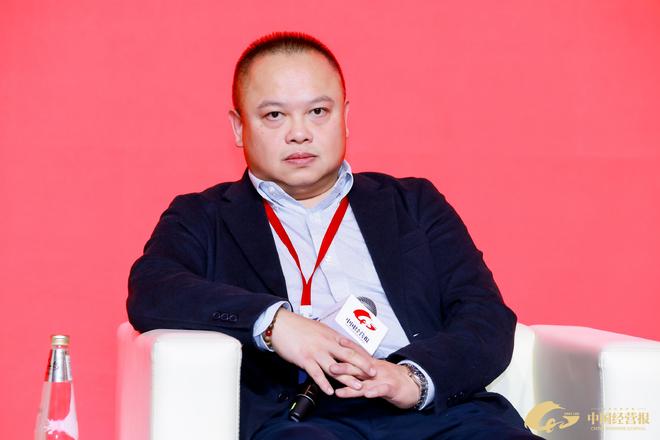
专访田轩:耐心资本成普惠金融关键
Bei Jing Shang Bao· 2025-12-10 11:53
Core Insights - The wave of inclusive finance in China has transitioned from "scale expansion" to "quality improvement" over the past decade [1] - Current challenges include long credit repair cycles for low- and middle-income groups, high credit risks for small and micro enterprises, and insufficient insurance coverage [1][2] - The need for a multi-level collaborative mechanism among central and local governments, regulators, and markets is emphasized to achieve a deeper transformation from "blood transfusion" to "blood production" in inclusive finance [2][4] Group 1: Characteristics of Inclusive Finance - The inclusive finance system is evolving with diversified service entities, technology-driven operations, and systematic ecological collaboration [5] - Services are expanding from single credit support to comprehensive financial services, enhancing precision and sustainability [5] - The application of big data and artificial intelligence is improving service efficiency and reducing costs [5] Group 2: Policy Recommendations - Establish a risk compensation fund shared by central and local governments to balance service delivery and risk coverage [2][14] - Propose a "government guidance, market operation" model for inclusive finance development funds [2][14] - Suggest the creation of a multi-layered collaborative mechanism among various stakeholders to enhance the effectiveness of inclusive finance policies [14][15] Group 3: Credit Repair and Consumer Confidence - The People's Bank of China's one-time personal credit relief policy is seen as a significant step towards optimizing the credit ecosystem and boosting consumer confidence [6][7] - This policy aims to provide a clear path for credit repair for those facing genuine difficulties, enhancing their future expectations and consumption potential [6][7] Group 4: Role of Small and Medium Banks - Small and medium banks are encouraged to deepen the application of asset securitization (ABS) to optimize their funding sources and asset-liability structures [11] - The focus should be on selecting stable cash flow loans from small and micro enterprises and individual businesses as underlying assets for securitization [11] Group 5: Engaging Patient Capital - "Patient capital" is identified as a natural fit for financing needs in the inclusive finance sector, particularly for small and micro enterprises [12] - Mechanisms for risk sharing, yield matching, and ecological collaboration are recommended to attract long-term capital into inclusive finance [12][13] Group 6: Regulatory and Market Mechanisms - The current policy and regulatory framework for inclusive finance is multi-layered and dynamic, but there is room for further optimization [14] - Recommendations include enhancing the precision of policy tools and improving the coordination of regulatory responsibilities [14][15] - A balance between regulatory oversight and market-driven initiatives is essential for fostering innovation while managing risks [15][16]

激活金融赋能新质生产力内生动力
Zhong Guo Jing Ying Bao· 2025-12-10 11:14
Core Viewpoint - Financial institutions must adapt deeply and effectively to drive technological innovation, which is crucial for promoting high-quality economic development in the context of the "14th Five-Year Plan" [1] Group 1: Construction of "Patient Capital" New Paradigm - The cultivation of new productive forces has long cycles and high uncertainty, differing from traditional finance's focus on safety, liquidity, and profitability [2] - To build "patient capital," banks should implement five major transformations: 1. Shift in operational philosophy to become a supportive financial service provider [2] 2. Transformation of product services to cover the entire lifecycle of technology enterprises [2] 3. Change in target clientele to include potential high-tech companies beyond established firms [2] 4. Transition in revenue models towards diversified structures [2] 5. Collaboration shift from isolated efforts to multi-party cooperation [2] Group 2: Internal Mechanism Adjustments - The bank has established a technology finance task force led by the president to strategically position itself in key areas [3] - Key measures include incorporating technology finance credit indicators into the assessment system and creating a supportive environment for lending [3] - Long-term assessment cycles for technology finance business are emphasized to encourage internal motivation [3] Group 3: Innovative Products and Service Ecosystem - The introduction of the "New Quality Loan" product signifies a fundamental shift in evaluation logic, focusing on future potential rather than traditional financial metrics [4] - The bank is exploring innovative products like "Equity Option Loans" to align with the characteristics of technology enterprises [4] - A comprehensive service ecosystem is being developed to support companies throughout their lifecycle, including risk-sharing loans for startups and one-stop financing services for growing firms [4] Group 4: Early Identification of Core Clients - The bank has created a proactive "scout" mechanism to identify future core clients early [5] - Establishing specialized industry teams and technology finance centers in key regions enhances early engagement with potential clients [5] - Collaboration with local government initiatives and industry funds is aimed at building a supportive ecosystem for early-stage technology enterprises [5] Group 5: Risk Management Enhancements - The bank is leveraging technology to enhance risk identification and pricing capabilities through a multi-dimensional assessment approach [6] - The risk management philosophy has evolved from traditional financial analysis to a dynamic evaluation model incorporating technology, industry, and policy factors [6] - The bank aims to integrate various financial services into its development strategy to support the growth of new productive forces [6]
建信投资王卉:以“耐心资本”助力硬科技企业穿越周期
Zhong Guo Jing Ying Bao· 2025-12-10 08:13
2025年12月9日,由《中国经营报》主办的"新跨越 新征程——2025中国企业竞争力金融论坛"在北京举 行。 建信投资并购重组部高级经理王卉在论坛上表示,建信投资始终坚持政策导向,聚焦科技金融、绿色金 融、普惠金融、养老金融、数字金融"五篇大文章",积极优化金融资源配置结构,确保资金精准流向国 家需要、人民关切的领域。 中经记者 秦玉芳 广州报道 王卉指出,在业务实践中,建信投资突出以耐心资本支持新质生产力的功能作用,积极融入国家级产业 集群,通过股权投资助力新兴产业发展和未来产业培育。以新质生产力为主线,围绕现代化产业体系建 设主动布局,优先支持国家急需的"卡脖子"领域,坚持投向"硬科技、真创新"企业,持续巩固优化"国 家所需、建行所长、股权所宜、公司所能"的投资布局。业务模式上,建信投资背靠建行集团,通过联 动各地分行,因地制宜深耕当地新质生产力企业,推动商投行一体化,探索科技金融的母子协同的工作 模式,为客户提供全面的金融服务方案,切实服务实体经济。 面对新质生产力培育周期长、不确定性高的特点,建信投资通过设立存续期较长的AIC试点基金,提供 匹配企业成长周期的"耐心资本",陪伴企业在长周期中不断实现 ...

地产、海南概念携手大涨!看懂这两个逻辑,抓住年底修复行情
Sou Hu Cai Jing· 2025-12-10 08:01
此外,彭博社的报道进一步勾勒了纾困框架,提及中金公司正协助深圳方面制定包含债务重组、资产出 售、引入政策性资金等在内的综合方案。这并非无先例可循,此前深圳国资已通过收购项目、提供贷款 等方式支持万科,龙岗区也曾以类似模式化解其他大型项目的困境。虽然方案强调市场化原则,但地方 政府与中央的协调路径已清晰可见。 因此,本次地产股的异动,本质上是信用债市场情绪"180度逆转"在股票市场的映射。它向市场传递出 一个清晰信号:对于具备系统重要性的优质房企,其流动性困境的解决已进入由政府协调、市场化方式 执行的"攻坚阶段"。这显著降低了行业的尾部风险,从而引发了基于风险重估的板块性修复。 不过,今日行情的最大看点,还是海南自贸港相关概念的全面爆发。其驱动逻辑是多维且坚实的:首先 是政策预期步入兑现阶段,全岛封关运作这一里程碑事件临近,提升了市场对制度红利释放的想象力。 其次是产业逻辑契合年末主线,海南作为免税消费和文旅复苏的前沿,与正在走强的商贸零售、社会服 务板块形成共振。最后是资金层面的印证,近期宽基ETF持续吸金,表明机构资金正在对包括区域战略 龙头在内的核心资产进行系统性配置。 在我看来,比单一热点更值得深入探讨 ...

风险因子下调鼓励险资“买得进”“拿得住”
Jin Rong Shi Bao· 2025-12-10 02:03
Core Viewpoint - The adjustment of risk factors by the regulatory authority is a significant step in implementing the "long money, long investment" system, aimed at encouraging long-term and value investments in the market [1][7]. Group 1: Regulatory Changes - The Financial Regulatory Bureau issued a notice adjusting the risk factors for insurance companies investing in the CSI 300 index, the CSI Dividend Low Volatility 100 index, and stocks listed on the Sci-Tech Innovation Board [1][6]. - The risk factor for stocks held for over three years in the CSI 300 and CSI Dividend Low Volatility 100 indices has been reduced from 0.3 to 0.27, while for stocks held for over two years on the Sci-Tech Innovation Board, it has been reduced from 0.4 to 0.36 [2][4]. Group 2: Impact on Insurance Companies - The adjustment allows insurance companies to allocate more capital to stock investments, as lower risk factors mean less capital is required to cover potential risks [2][4]. - Analysts estimate that if the minimum capital is fully allocated to the CSI 300 stocks, it could release approximately 108.6 billion yuan [4]. Group 3: Long-term Investment Encouragement - The primary intention behind the notice is to guide insurance capital towards long-term holding rather than merely providing short-term capital relief [4][6]. - The regulatory authority aims to encourage insurance funds to not only invest but also hold onto their investments for longer periods, thereby reducing market volatility [4][7]. Group 4: Growth of Insurance Capital - As of September 2025, the total investment balance of insurance companies exceeded 37 trillion yuan, with stock and securities fund investments reaching 5.59 trillion yuan, accounting for 14.92% of total investments, up from 12.8% the previous year [7]. - The role of insurance capital in the capital market is expected to become increasingly significant, with projections indicating that new equity investments from insurance funds could remain around one trillion yuan in 2026 [7].
上级动态 | 金融监管总局:调整保险公司投资相关股票的风险因子,培育壮大耐心资本
Xin Lang Cai Jing· 2025-12-09 13:41
Core Viewpoint - The recent notification from the Financial Regulatory Bureau aims to enhance the solvency supervision standards for insurance companies, promoting the role of insurance funds as patient capital and improving service quality to the real economy [1][3]. Group 1: Adjustments to Risk Factors - The risk factor for stocks held by insurance companies for over three years in the CSI 300 Index and the CSI Low Volatility 100 Index has been reduced from 0.3 to 0.27, based on a six-year weighted average holding period [1][3]. - The risk factor for ordinary shares listed on the Sci-Tech Innovation Board held for over two years has been decreased from 0.4 to 0.36, determined by a four-year weighted average holding period [1][4]. - The premium risk factor for export credit insurance and overseas investment insurance by the China Export & Credit Insurance Corporation has been lowered from 0.467 to 0.42, while the reserve risk factor has been reduced from 0.605 to 0.545 [2][4]. Group 2: Future Guidance and Management - The Financial Regulatory Bureau will guide insurance companies to implement the notification's requirements, enhancing their long-term investment management capabilities and ensuring the accuracy and completeness of solvency data [1][3]. - Insurance companies are advised to improve internal controls, accurately measure stock holding periods, and continuously enhance their long-term investment management capabilities [3][5]. - There is an emphasis on strengthening solvency management and accurately measuring various risk capital requirements to ensure the authenticity of solvency data [5].
东兴证券晨报-20251209
Dongxing Securities· 2025-12-09 10:46
Core Insights - The report highlights the adjustment of risk factors for insurance companies' investment activities, aimed at enhancing their long-term investment management capabilities and supporting the real economy [6][7][9] - The adjustments include differentiated risk factor settings based on holding periods for specific stock indices and insurance business types, promoting the use of insurance capital in the market [8][9] - The report emphasizes the importance of insurance capital as a stabilizing factor in the capital market, especially during periods of economic uncertainty and market volatility [10][11] Summary by Sections Economic News - The U.S. government has allowed NVIDIA to sell its H200 AI chips to China, with a 25% revenue share for the U.S. [2] - The Federal Reserve has a high probability of a 25 basis point rate cut in December, with a cumulative 25 basis point cut probability of 68.5% by January [2] - China's foreign exchange reserves increased to $3.3464 trillion, up by $3 billion from October [2] - The China Securities Regulatory Commission has established legislative contact points to enhance market participation in capital market legislation [2] - The National Taxation Bureau reported a 10.7% year-on-year increase in machinery and equipment purchases by enterprises [2] Important Company News - Xintai received approval for clinical trials of its innovative drug SAL0140 for primary aldosteronism [5] - Honghua Digital plans to acquire 49% of Shandong Yingkejie, aiming for full ownership [5] - PIANO's major shareholder is planning a change in control, leading to a temporary stock suspension [5] - Rongsheng Petrochemical is transferring its 100% stake in Rongsheng Energy to its controlling shareholder [5] - Moore Threads will hold its first developer conference to unveil its new GPU architecture [5] Non-Banking Financial Sector - The report discusses the adjustment of risk factors for insurance companies, focusing on long-term investments in major stock indices and supporting foreign trade enterprises [6][7][9] - Specific adjustments include lowering risk factors for stocks held over three years and two years, as well as for export credit insurance [8] - The report suggests that these changes will enhance the efficiency of insurance capital and improve investment returns, benefiting the overall performance of insurance companies [10][11]