体育产业

Search documents
鸿合科技上半年营收14.00亿元同比降10.99%,归母净利润4468.90万元同比降70.09%,毛利率下降6.23个百分点
Xin Lang Cai Jing· 2025-08-26 11:48
Core Viewpoint - Honghe Technology reported a significant decline in revenue and net profit for the first half of 2025, indicating potential challenges in its business performance [1][2]. Financial Performance - The company's revenue for the first half of 2025 was 1.4 billion yuan, a year-on-year decrease of 10.99% [1]. - The net profit attributable to shareholders was 44.69 million yuan, down 70.09% year-on-year [1]. - The non-recurring net profit was 32.18 million yuan, reflecting a 75.72% decline compared to the previous year [1]. - Basic earnings per share were reported at 0.19 yuan [1]. - The gross margin for the first half of 2025 was 28.17%, a decrease of 6.23 percentage points year-on-year [2]. - The net profit margin was 2.93%, down 6.34 percentage points from the same period last year [2]. Cost Management - Total operating expenses for the first half of 2025 were 309 million yuan, a reduction of 66.06 million yuan compared to the previous year [2]. - The expense ratio was 22.07%, down 1.77 percentage points year-on-year [2]. - Sales expenses decreased by 13.97%, management expenses fell by 14.93%, R&D expenses decreased by 2.07%, and financial expenses saw a significant drop of 93.41% [2]. Shareholder Information - As of the end of the first half of 2025, the total number of shareholders was 20,400, a decrease of 1,026 from the previous quarter, representing a decline of 4.79% [2]. - The average market value per shareholder increased from 267,700 yuan at the end of the first quarter to 284,900 yuan, an increase of 6.41% [2]. Company Overview - Honghe Technology, established on May 28, 2010, and listed on May 23, 2019, is based in Beijing and specializes in the design, research and development, production, and sales of smart interactive display products and smart audio-visual solutions [3]. - The main business revenue composition includes IWB products at 72.38%, other smart interactive products at 20.49%, and smart audio-visual solutions at 7.12% [3]. - The company belongs to the electronic-optical optoelectronics-panel industry and is associated with concepts such as IoT, Huawei, gesture recognition, sports industry, and small-cap stocks [3].

“川超”将于9月下旬开赛,体育赛事提振消费热情,这些相关股频获机构调研
Xin Lang Cai Jing· 2025-08-26 10:09
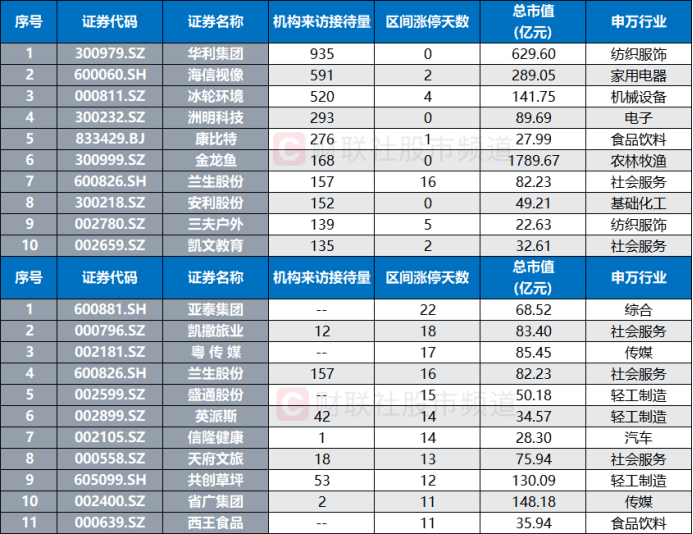
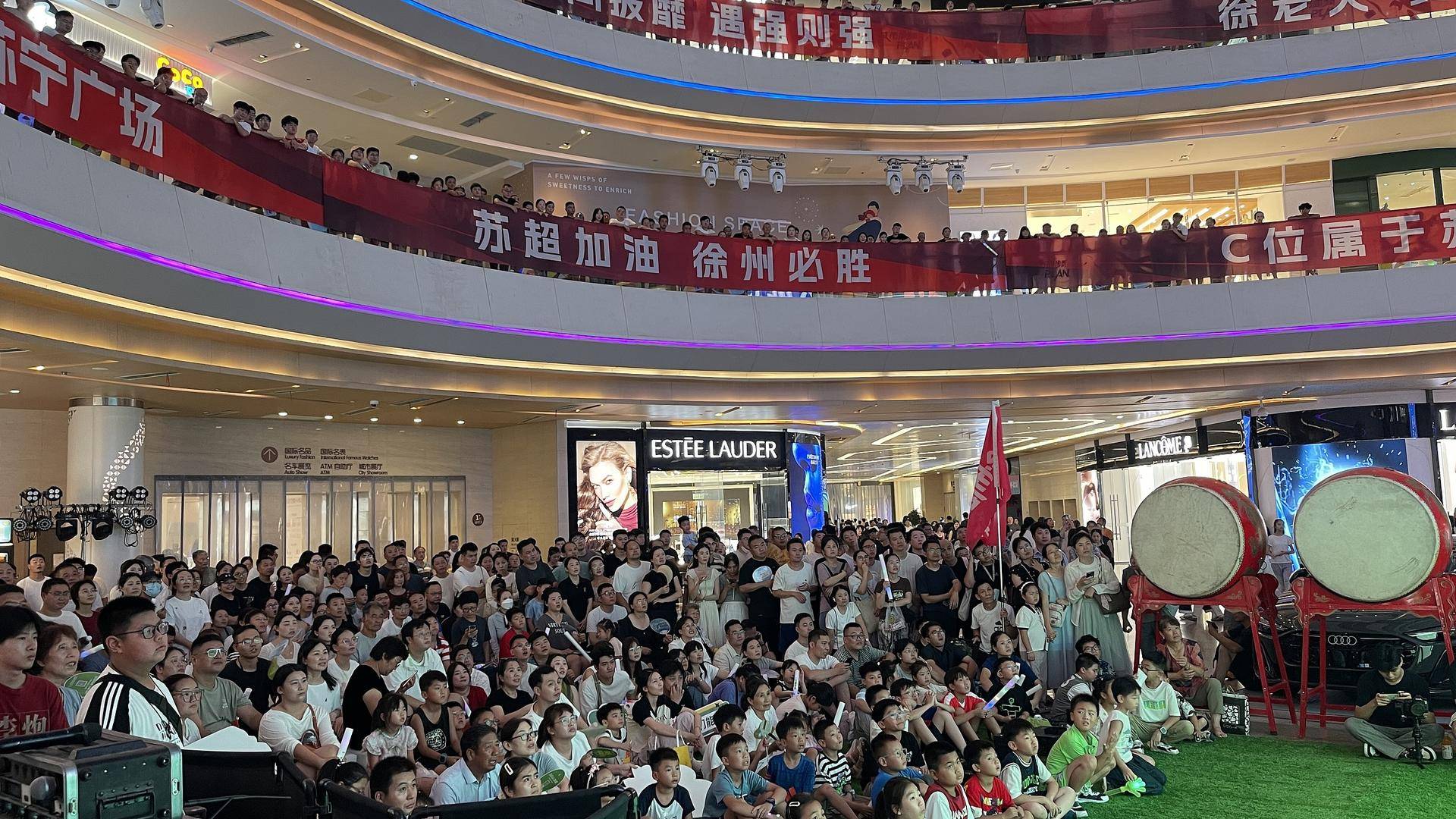
Group 1 - The new Sichuan Urban Football League (referred to as "Chuan Super") will be held across years, starting on September 20, 2025, and ending in July 2026, featuring a total of 28 rounds and 162 matches [1] - The Chengdu Football Association has already received over 300 registrations for the Chuan Super Chengdu team as of August 15 [1] - The sports event atmosphere in China has been intensifying this year, with various sports events boosting consumer enthusiasm for sports products [1] Group 2 - The "Su Super" football viewing trend initiated in May has significantly increased related consumption, with a report indicating that 95.9% of attendees in six host cities engaged in additional spending beyond ticket purchases [1] - Long-term growth logic in the sports industry includes increased fitness participation rates, enhanced service customer spending, and policy benefits promoting sports and consumption [1] - Key sports events and venues are undergoing a shift in profit models, with significant leverage effects from related industries, enhancing the visibility of the industry chain [1] Group 3 - Notable sports industry stocks with high institutional research activity over the past year include Huali Group, Hisense Visual, Ice Wheel Environment, and others [2] - Stocks with the highest number of price limit increases in the past year, excluding ST stocks, include Yatai Group, Caesar Travel, and others [2][3]

春风动力跌2.00%,成交额9366.69万元,主力资金净流入2.77万元
Xin Lang Cai Jing· 2025-08-26 02:32
Core Viewpoint - Chuncheng Power's stock price has shown significant volatility, with a year-to-date increase of 76.09% but a recent decline of 4.18% over the past five trading days [2] Group 1: Stock Performance - As of August 26, Chuncheng Power's stock price was 269.80 CNY per share, with a market capitalization of 41.165 billion CNY [1] - The stock has experienced a 15.94% increase over the past 20 days and a 48.18% increase over the past 60 days [2] - The company has appeared on the trading leaderboard three times this year, with the most recent instance on July 18, where it recorded a net buy of -1.11 billion CNY [2] Group 2: Financial Performance - For the first half of 2025, Chuncheng Power reported a revenue of 9.855 billion CNY, representing a year-on-year growth of 30.90%, and a net profit of 1.002 billion CNY, up 41.35% year-on-year [2] - Cumulative cash dividends since the company's A-share listing amount to 1.485 billion CNY, with 1.115 billion CNY distributed over the past three years [3] Group 3: Shareholder Information - As of June 30, 2025, the number of shareholders for Chuncheng Power was 10,100, a decrease of 13.40% from the previous period [2] - The average number of circulating shares per shareholder increased by 15.47% to 15,093 shares [2] - The top ten circulating shareholders include Hong Kong Central Clearing Limited and E Fund Consumption Industry Stock, with notable changes in their holdings [3]

东兴晨报-20250825
Dongxing Securities· 2025-08-25 09:21
Economic News - The central bank conducted a reverse repurchase operation of 361.2 billion yuan at a fixed rate of 1.40% for a 7-day term, with the same amount maturing today [1] - The State Council approved the "Three Norths" project, emphasizing its importance for ecological security and sustainable development in China [1] - New regulations on rare earth mining and smelting have been introduced, imposing penalties for non-compliance and emphasizing the importance of supervision [1] - A new mandatory national standard for harmful substances in electrical and electronic products will be implemented in 2027, aiming to enhance environmental protection and consumer health [1] - Federal Reserve Chairman Powell indicated potential interest rate cuts in September due to rising employment market risks, with major US stock indices showing gains [1] Company News - China Railway announced a tragic accident during construction, resulting in 12 fatalities and 4 missing, but stated it would not significantly impact the company's operations [6] - Cha Yan Yue Se faced plagiarism allegations regarding a new product, which has been taken down, and the company is conducting an internal review [6] - China National Machinery announced a contract worth approximately 51.3 million yuan for road construction related to an airport project in Nicaragua, expected to positively impact future earnings [6] - Innovent Biologics received FDA approval for a global Phase III clinical trial of its PD-1/IL-2 α-bias dual-specific antibody for treating non-small cell lung cancer [6] - Alibaba restructured its business into four main categories, focusing on e-commerce and cloud + AI [6] Industry Insights - The natural gas market is experiencing a decline in prices, with domestic LNG prices dropping by 4.63% month-on-month [7] - China's natural gas production saw a significant decrease of 10.89% in July compared to the previous month, while European gas inventories increased by 15.90% [8] - The import of natural gas in China rose slightly in July, indicating a potential shift in demand dynamics [9] - The pipeline industry is expected to see stable growth, driven by the increasing penetration of new energy vehicles and the expansion into new business areas such as liquid cooling systems [12][15]
国常会再部署扩大内需 强化财税金融政策支持“两新”
Sou Hu Cai Jing· 2025-08-24 16:54
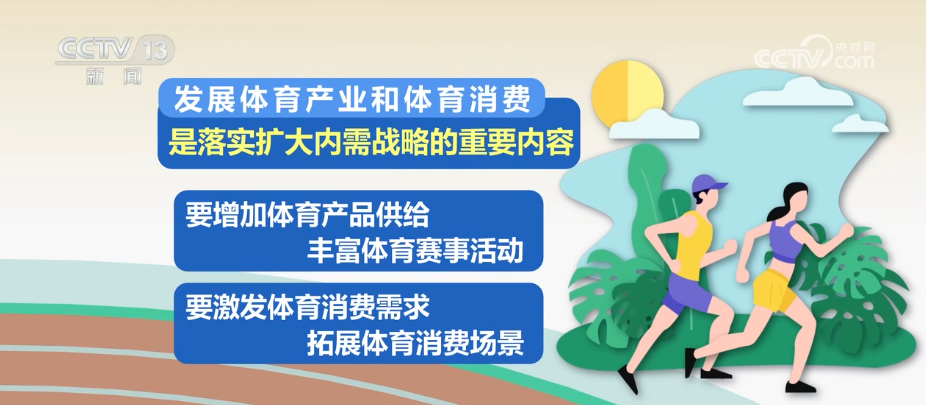
Group 1: Sports Industry Development - The development of the sports industry and sports consumption is a crucial part of the strategy to expand domestic demand, contributing significantly to economic growth and local economic transformation [1][6] - The sports industry in China has shown steady growth, with a total scale of 3.67 trillion yuan in 2023, achieving an average annual growth rate of 10.3% [6] - The sports industry's added value reached 1.49 trillion yuan in 2023, growing at an annual rate of 11.6%, and accounting for 1.15% of GDP [6] Group 2: Policy Support and Implementation - The State Council has emphasized the need to strengthen fiscal and financial policies to support the "Two New" initiatives, aiming to optimize the consumption investment environment [1][4] - The implementation of large-scale equipment updates and the old-for-new policy has shown significant results, with over 2.8 billion people applying for subsidies, leading to sales exceeding 1.6 trillion yuan [2] - The issuance of long-term special bonds to support consumption and equipment updates is set to continue, with 690 billion yuan allocated for the third batch and another 690 billion yuan planned for the fourth batch [2][3] Group 3: Consumer Behavior and Market Dynamics - The sports industry not only drives direct economic growth but also promotes deep integration with manufacturing, services, culture, tourism, and health sectors, fostering new business models [7] - The government aims to stimulate sports consumption demand by increasing the supply of sports products, enhancing event activities, and implementing consumer-friendly measures [6][7] - The "Two New" policies are designed to benefit both consumers and enterprises, with a focus on combating fraudulent subsidy claims to ensure effective use of funds [5]
国常会再部署扩大内需,强化财税金融政策支持“两新”
Di Yi Cai Jing· 2025-08-24 12:37
Group 1: Policy Implementation and Financial Support - The State Council has allocated 690 billion yuan in special long-term bonds to support local implementation of the old-for-new consumption policy, with funds to be disbursed in October [1][2] - The "Two New" policies have shown significant results in stabilizing investment, expanding consumption, and improving livelihoods, with over 280 million people applying for subsidies, leading to sales exceeding 1.6 trillion yuan [2][4] - The government aims to enhance fiscal and financial support, innovate consumption investment scenarios, and optimize the investment environment to unleash domestic demand potential [4][5] Group 2: Equipment Update and Investment - The 188 billion yuan in special long-term bonds for equipment updates has been fully allocated, supporting approximately 8,400 projects across various sectors, driving total investment over 1 trillion yuan [3] - The procurement of machinery and equipment by enterprises has increased by 7.3% year-on-year, with significant growth in the information transmission and technology service sectors [2][3] Group 3: Sports Industry Development - The development of the sports industry is a key component of the domestic demand expansion strategy, with the sports industry contributing significantly to economic growth, reaching a total scale of 3.67 trillion yuan in 2023 [6][7] - The government plans to stimulate sports consumption by increasing the supply of sports products, enhancing event activities, and encouraging local sports consumption initiatives [6][7] - The sports industry not only drives direct economic growth but also promotes deep integration with manufacturing, services, culture, tourism, and health sectors, fostering new business models and optimizing industrial structure [7]
多维度解读·增速超10% 体育产业成国民经济中极具活力增长极
Yang Shi Wang· 2025-08-24 02:46
Core Viewpoint - The Chinese government is focusing on unlocking the potential of sports consumption and promoting high-quality development in the sports industry, emphasizing the need to cultivate new growth points and build a modern sports industry system [1][5]. Industry Growth - China's sports industry has seen an average annual growth rate of over 10% in the past five years, with significant developments in event economy, outdoor industry, and ice and snow economy, indicating substantial sports consumption potential [4]. - The sports industry is considered a crucial part of the strategy to expand domestic demand, with a focus on increasing the supply of sports products and enriching sports events [5][7]. Market Dynamics - The sports industry can directly stimulate economic growth and foster deep integration with manufacturing, services, culture, tourism, and health sectors, leading to new business models and optimizing industrial structure [5][7]. - The sports goods manufacturing industry is a vital foundation of the sports industry, with a growing and innovative product system catering to various groups and scenarios [7][11]. Product Development - China has developed a comprehensive product system for ice and snow equipment, covering all needs from individual to venue, and showcasing Chinese-made sports equipment at the 2024 Paris Olympics [9]. - The sports goods manufacturing sector comprises over 63,000 production units, with an annual output value exceeding 1 trillion yuan, accounting for 40% of the total sports industry scale [11]. Export and Competitiveness - In 2024, China's sports goods export is projected to reach nearly $28.4 billion, reflecting a year-on-year growth of 6.8%, enhancing international competitiveness and influence [11]. Event Economy - The rapid development of sports events, such as marathons, has significantly expanded the market for running shoes and apparel, indicating a growing trend in sports consumption driven by events [16][17]. - Regional cooperation in hosting events is seen as a key trend for developing the sports industry and creating regional brand events [19].
国常会明确激发体育消费需求 苏超带动江苏消费380亿元的场景该如何复制?
Sou Hu Cai Jing· 2025-08-23 06:10
Group 1 - The core viewpoint emphasizes the importance of developing the sports industry and sports consumption as a key strategy for expanding domestic demand, with a focus on increasing the supply of sports products and enriching sports events [2][6] - The "Su Super" league has significantly boosted local consumption, with a single match attracting over 60,000 attendees and generating 38 billion yuan in multi-scenario consumption across Jiangsu [3][4] - The government aims to stimulate sports consumption demand and expand consumption scenarios by encouraging local sports consumption activities and implementing consumer-friendly measures [6] Group 2 - The hosting of international high-level sports events is seen as a catalyst for urban development, enhancing cities' international influence and boosting related industries such as culture and tourism [5] - The ongoing development of urban infrastructure and diverse sports scenes is making sports activities more accessible to the general public, thus increasing participation and consumption opportunities [8] - Cities hosting sports events are encouraged to convert visitor traffic into tourism consumption, promoting a "watch a game, visit a city" model to enhance local economic benefits [10] Group 3 - The outdoor sports market is experiencing steady growth, with participation in water sports projected to exceed 120 million people and the industry scale reaching 438.6 billion yuan, reflecting an 18.7% year-on-year increase [10] - Emerging outdoor sports activities, such as frisbee and fishing, are gaining popularity, contributing to the overall expansion of the sports consumption landscape [10]
泰慕士上半年营收3.80亿元同比降16.34%,归母净利润2971.40万元同比降43.69%,毛利率下降3.45个百分点
Xin Lang Cai Jing· 2025-08-22 10:55
Core Viewpoint - The financial performance of Jiangsu Taimusi Textile Technology Co., Ltd. in the first half of 2025 shows a significant decline in revenue and profit compared to the previous year, indicating potential challenges in the company's operations and market conditions [1][2]. Financial Performance - The company's revenue for the first half of 2025 was 380 million yuan, a year-on-year decrease of 16.34% [1]. - The net profit attributable to shareholders was 29.71 million yuan, down 43.69% year-on-year [1]. - The net profit after deducting non-recurring items was 24.31 million yuan, a decline of 46.19% year-on-year [1]. - Basic earnings per share stood at 0.27 yuan [1]. Profitability Metrics - The gross profit margin for the first half of 2025 was 18.29%, a decrease of 3.45 percentage points year-on-year [2]. - The net profit margin was 7.81%, down 3.79 percentage points compared to the same period last year [2]. - In Q2 2025, the gross profit margin was 17.29%, a year-on-year decrease of 3.85 percentage points and a quarter-on-quarter decrease of 1.76 percentage points [2]. - The net profit margin for Q2 2025 was 5.47%, down 5.64% year-on-year and 4.10% quarter-on-quarter [2]. Expense Analysis - Total operating expenses for the first half of 2025 were 42.52 million yuan, a decrease of 2.57 million yuan from the previous year [2]. - The expense ratio was 11.18%, an increase of 1.26 percentage points year-on-year [2]. - Sales expenses increased by 28.74%, while management expenses rose by 10.69% [2]. - Research and development expenses decreased by 4.54%, and financial expenses saw a significant reduction of 1780.71% [2]. Shareholder Information - As of the end of the first half of 2025, the total number of shareholders was 10,900, an increase of 2,499 shareholders or 29.78% from the previous quarter [2]. - The average market value per shareholder decreased from 233,400 yuan at the end of the previous quarter to 215,300 yuan, a decline of 7.77% [2]. Company Overview - Jiangsu Taimusi Textile Technology Co., Ltd. was established on August 26, 1992, and went public on January 11, 2022 [3]. - The company's main business includes the research, production, and sales of knitted fabrics and knitted garments [3]. - The revenue composition is as follows: sportswear 39.52%, children's clothing 35.36%, casual wear 22.29%, fabrics 2.49%, and others 0.34% [3]. - The company belongs to the textile and apparel industry, specifically in the sportswear segment [3].
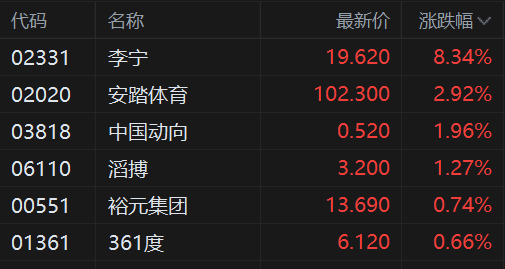
港股异动丨体育用品继续上涨 李宁绩后涨超8% 安踏续创阶段新高
Ge Long Hui· 2025-08-22 02:18
个股方面,李宁发布2025年中期业绩。上半年公司继续贯彻"单品牌、多品类、多渠道"核心战略,稳健 经营,聚焦专业运动,进一步夯实经营基础,积极蓄力业务发展,实现收入达148.2亿元,同比上升 3.3%。上半年,李宁公司毛利为74.1亿元,同比上升2.5%,整体毛利率为50.0%,净利润为17.4亿元, 净利率为11.7%。同时,李宁公司保持现金流充沛,库存健康可控,为稳健发展打下重要基础。(格隆 汇) | 代码 | 名称 | 最新价 | 涨跌幅 ▽ | | --- | --- | --- | --- | | 02331 | 李 | 19.620 | 8.34% | | 02020 | 安踏体育 | 102.300 | 2.92% | | 03818 | 中国动向 | 0.520 | 1.96% | | 06110 | 溜搏 | 3.200 | 1.27% | | 00551 | 裕元集团 | 13.690 | 0.74% | | 01361 | 361度 | 6.120 | 0.66% | 港股体育用品股继续上上涨行情,其中,李宁绩后涨超8%领衔,且刷新阶段新高,安踏涨3%亦创阶段 新高价,中国动向涨2%,滔 ...