全国统一大市场

Search documents
奋力推动“十五五”安徽市场监管工作开好局起好步
Xin Lang Cai Jing· 2026-01-20 14:47
Core Viewpoint - The Anhui Provincial Market Supervision Work Conference emphasizes the importance of market regulation in supporting high-quality development and outlines key tasks for 2026, focusing on innovation, collaboration, and risk prevention in the market environment [1][2][3]. Group 1: Achievements and Goals - In 2025, the Anhui market supervision system made significant contributions to enhancing operational vitality, promoting quality, and ensuring market safety, which provided a solid foundation for high-quality development [2][3]. - The "14th Five-Year" period saw substantial achievements in market regulation, with increased operational vitality, improved competitive environment, and enhanced quality competitiveness in industries [4]. - The conference highlighted the need for a strong start to the "15th Five-Year" plan, focusing on political leadership, market vitality, consumer confidence, and fair competition [5]. Group 2: Strategic Focus Areas - The conference outlined ten strategic focus areas for market regulation, including enhancing political leadership, stimulating market vitality, optimizing consumer environments, and strengthening intellectual property protection [5]. - Emphasis was placed on integrating technology and industry innovation, improving regulatory efficiency, and ensuring safety in key sectors [5]. - The need for a collaborative regulatory mechanism across departments and regions was highlighted to support the construction of a unified national market [2][3].
北京产权交易所:助力国家战略与首都经济高质量发展,“十四五”交出亮眼成绩单
Xin Lang Cai Jing· 2026-01-20 14:15
Core Insights - The "14th Five-Year Plan" period marks the first five years of China's journey towards building a modern socialist country and achieving the second centenary goal, with the Beijing Property Exchange playing a leading role in facilitating resource allocation and promoting high-quality economic development [1][12]. Group 1: Support for State-Owned Enterprises - During the "14th Five-Year Plan," the Beijing Property Exchange has actively supported the reform of state-owned enterprises (SOEs), completing 58,972 projects in four categories, with a total transaction amount of 21,980 billion yuan and an appreciation amount exceeding 160 billion yuan [2][13]. - The exchange has empowered 238 enterprises to develop high-tech industrial clusters, with a cumulative transaction amount exceeding 300 billion yuan, significantly contributing to the growth of emerging industries [2][13]. Group 2: Optimization of State-Owned Economic Structure - The exchange has facilitated the transfer of ownership for over 2,600 non-core and non-advantageous enterprises, recovering over 180 billion yuan in funds [3][14]. - It has also supported the efficient activation of existing assets through various initiatives, including the completion of 7,521 rental projects with a transaction amount of 1,046.27 billion yuan [3][14]. Group 3: Government Asset Management - The Beijing Property Exchange has completed over 97,600 asset disposals for government departments, with a transaction amount of 1.573 billion yuan, and has been a key player in judicial asset disposal, handling over 51,600 cases with a transaction amount of 26.986 billion yuan [4][16]. Group 4: Green Development Initiatives - The exchange has facilitated over 60 green development projects, with a transaction amount exceeding 220 billion yuan, contributing to the promotion of low-carbon and sustainable economic development [5][17]. - It has also been involved in the national voluntary greenhouse gas emission reduction trading market, with a cumulative transaction volume of 318.71 million tons and a transaction amount of approximately 267 million yuan [6][17]. Group 5: Technology Transfer and Innovation - The Beijing Property Exchange has completed 103,000 technology transfer projects with a transaction amount close to 980 billion yuan, promoting the integration of technological innovation and industrial development [7][18]. - It has also launched the first patent licensing securitization project in Beijing, with a total issuance scale of 1.418 billion yuan [7][18]. Group 6: National Unified Market Construction - The exchange has actively participated in the construction of a national unified market, facilitating the free flow of resources across regions and optimizing resource allocation [8][19]. - It has collaborated with various regional property exchanges to promote project displays and joint releases, enhancing market integration [8][19]. Group 7: Service Quality Enhancement - The Beijing Property Exchange has focused on "investment banking, financialization, digitization, and internationalization" to improve service efficiency and support the high-quality development of the real economy [10][21]. - It has launched various financial products and services, including residential mortgage loans and green financing, to meet diverse financing needs [10][21].
权威数读丨这五个“新”,概括了2025年经济工作“成绩单”
Xin Hua Wang· 2026-01-20 13:46
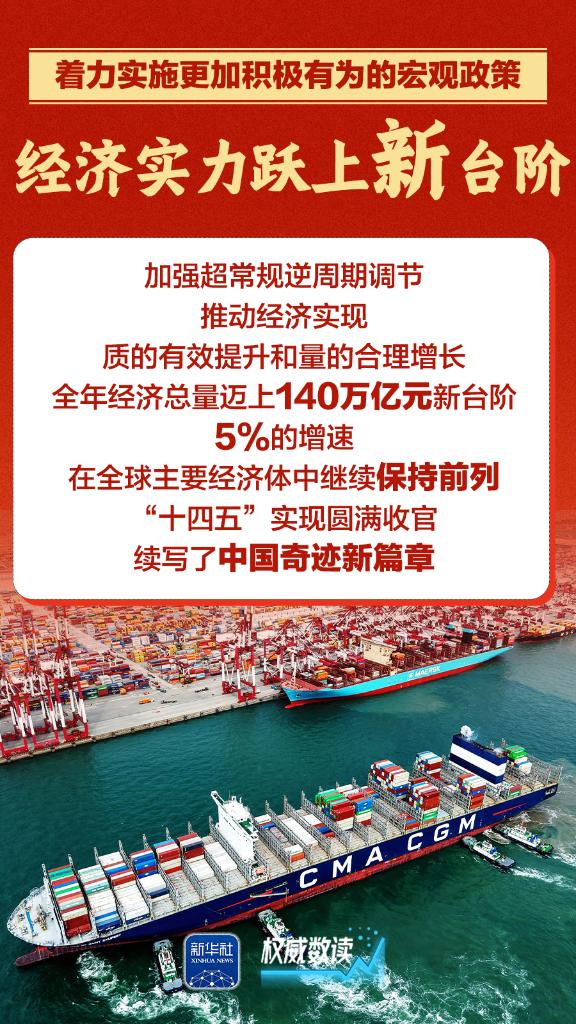
Group 1 - The core viewpoint of the news is that China's economic work for 2025 is summarized by five "new" aspects, highlighting significant advancements in economic strength, production capacity, reform, regional development, and public welfare [1] Group 2 - The implementation of a more proactive macro policy aims to achieve a reasonable growth rate of 5% and elevate the total economic output to a new level of 140 trillion yuan, maintaining a leading position among major global economies [2] - The development of new productive forces has made breakthroughs, with a focus on enhancing key core technology research and development in areas such as artificial intelligence, biomedicine, and robotics, positioning China at the forefront globally [4][5][6] Group 3 - The reform and opening-up process has made significant strides, including the establishment of a unified national market and the implementation of the Private Economy Promotion Law, which supports communication with private entrepreneurs [9][10] - In 2025, China's total goods exports are projected to grow by 6.1%, with total imports reaching 18.48 trillion yuan, making China a major export destination for 79 countries and regions [10] Group 4 - Regional and urban-rural development has opened new avenues, with a focus on human-centered urbanization, resulting in an urbanization rate of 67.89% by the end of the year, an increase of 0.89 percentage points, allowing over 10 million people to enjoy modern urban life [13][14]

权威数读|这五个“新”,概括了2025年经济工作“成绩单”
Xin Hua She· 2026-01-20 13:22
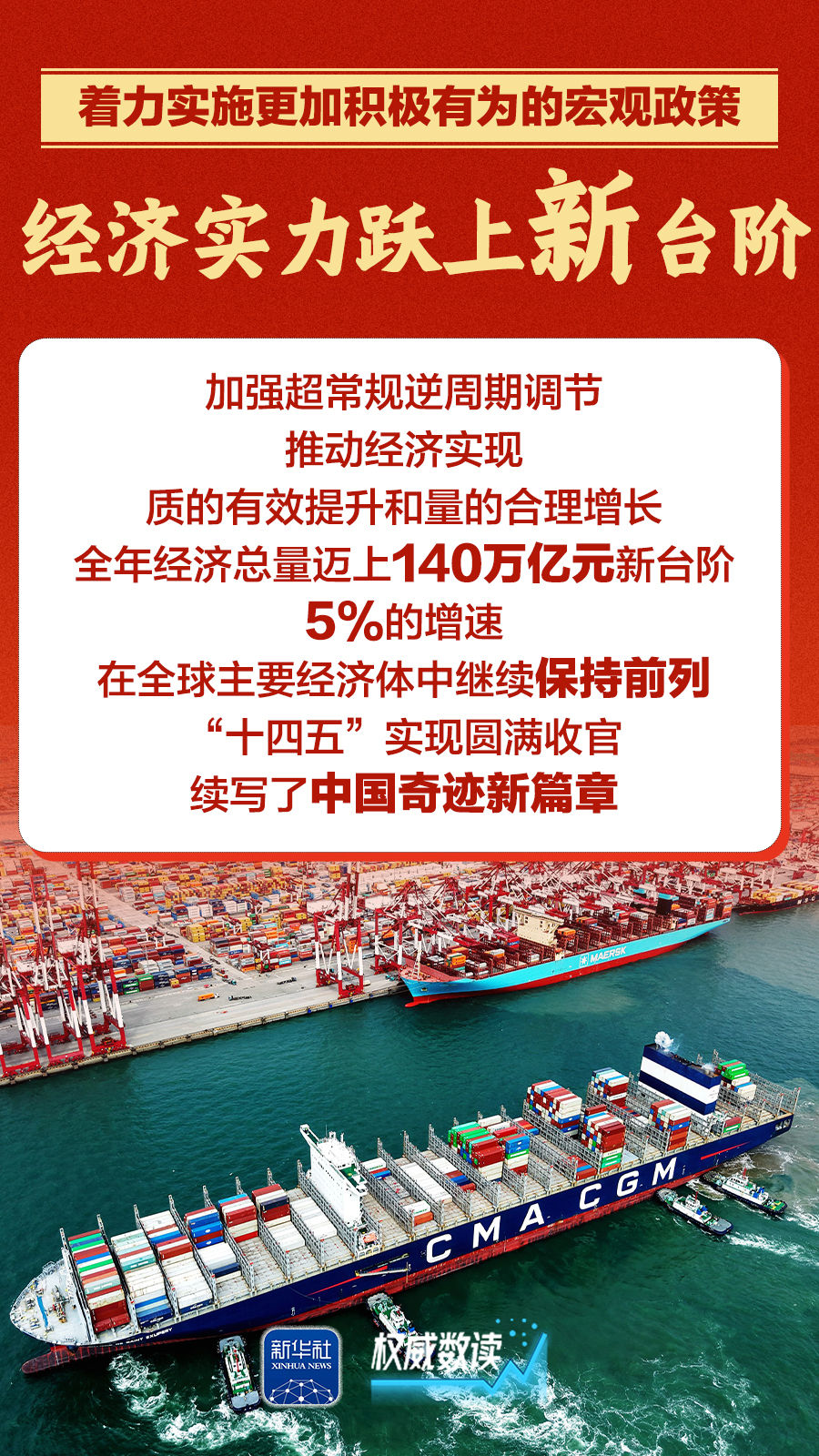
Economic Strength and Development - The core viewpoint of the article emphasizes the significant advancements in economic strength, production capabilities, reform and opening-up, regional development, and improvements in public welfare as outlined by the National Development and Reform Commission [1] Economic Work for 2025 - The economic work for 2025 is summarized with five "new" aspects: new economic strength, breakthroughs in new production capabilities, new steps in reform and opening-up, new developments in regional and urban-rural areas, and new enhancements in public welfare [1] Technological Advancements - There is a strong focus on accelerating high-level technological self-reliance, with key areas such as artificial intelligence, biomedicine, and robotics leading in research and application globally [6] - The manufacturing value added has ranked first globally for 16 consecutive years, indicating robust industrial growth [6] Reform and Opening-Up - Efforts are being made to eliminate economic circulation bottlenecks, with significant reforms in key areas and the promotion of a unified national market [8] - The introduction of the Private Economy Promotion Law and regular communication with private entrepreneurs are part of the ongoing reform initiatives [8] Trade and Export Growth - In 2025, there is an expected 6.1% growth in goods exports, with total imports reaching 18.48 trillion yuan, establishing China as a major export destination for 79 countries and regions [9] Regional Development - The article highlights the importance of coordinated regional strategies and urbanization, with the urbanization rate reaching 67.89% by year-end, an increase of 0.89 percentage points from the previous year [13] - Over 10 million people have transitioned to modern urban living, showcasing the success of urbanization efforts [13] Public Welfare Improvements - There is a commitment to enhancing public welfare through inclusive and foundational social services, promoting high-quality employment, and implementing childcare subsidies and free preschool education [16] - The optimization of holiday arrangements is also part of the strategy to improve the quality of life for citizens [16]
扩内需战略实施方案将出台,正研究制定居民增收计划
Di Yi Cai Jing· 2026-01-20 13:00
Core Insights - The Chinese government emphasizes "increasing residents' income" and "investing in people" as key strategies to expand domestic demand and stabilize economic growth [1][2][3] Group 1: Policy Initiatives - The National Development and Reform Commission (NDRC) plans to implement a strategic plan for expanding domestic demand from 2026 to 2030, focusing on creating an economy driven by domestic demand and consumption [1][3] - The Ministry of Finance has announced six policies aimed at stimulating private investment and promoting consumer spending, with sufficient budgetary arrangements made for these initiatives in 2026 [1][8] - The "Two New" policy, which promotes equipment upgrades and trade-in programs, is expected to significantly boost consumer spending and investment, with over 3.6 billion people expected to benefit from these initiatives by 2025 [6][10] Group 2: Economic Growth Projections - China's economy is projected to grow by 5% in 2025, with a total economic output surpassing 140 trillion yuan, contributing approximately 30% to global economic growth [3] - The government aims to enhance the effectiveness of investments by focusing on both material and human capital, with a commitment to improving the quality of government investments in public welfare projects [9][10] Group 3: Consumer Confidence and Investment - Increasing residents' income and enhancing consumer confidence are identified as critical factors for boosting consumption [2][3] - The government is working on a plan to increase urban and rural residents' income, which is expected to enhance their consumption capacity and optimize supply [3][9] - The new policies are designed to lower financing costs and reduce barriers for private enterprises, thereby stimulating private investment [8][10]
2025年,地方“外贸万亿元俱乐部”再扩容!
Mei Ri Jing Ji Xin Wen· 2026-01-20 12:36
聚焦于安徽,外贸"狂飙"背后是工业的有力支撑。以汽车为例,2025年,安徽汽车(含底盘)年出口量达 122.8万辆,出口量稳居全国第一,成为全国首个汽车年出口量突破百万辆的省份。 《每日经济新闻.城市进化论》记者了解到,一个更核心的工业指标是规上工业企业营收。仅2025年 1~11月,安徽全省实现规上工业企业营收5.27万亿元,首次超过福建,跻身规上工业企业营收规模全国 第五,也是前五序列中唯一的内陆省份。 全盘来看,安徽外贸总值突破万亿元的路径,有何借鉴之处?在安徽、河南之外,中部大省下一个上位 者又会是谁? 安徽"晋级" "在多重压力挑战下,安徽外贸展现出强大韧性,增势强劲、结构优化、量质齐升,进出口总值取得历 史最好成绩。"近日,合肥海关关长周荣球在新闻发布会上介绍称,2025年,安徽进出口总值首次突破 万亿元大关,为10135.6亿元,同比增长17.3%。 近日,31个省份2025年年度外贸数据正式出炉。 过去一年,全国进出口总值达45.47万亿元,增长3.8%,外贸总值突破万亿元的省份增至9个。 广东以"9万亿元+"独占一档;江苏、浙江、上海、山东、北京外贸总值在3万亿元至5万亿元区间;安徽 以10 ...
关于增收计划、换新补贴、扩大内需……国家发改委明确
Xin Lang Cai Jing· 2026-01-20 10:39
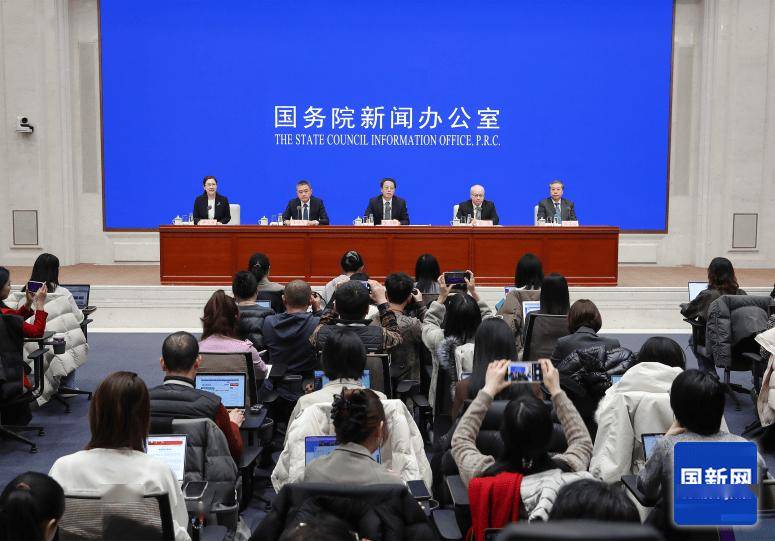
Group 1 - The core viewpoint of the news is the successful completion of the main economic and social development goals for 2025, emphasizing proactive macro policies, technological self-reliance, and improved living standards [1] - The manufacturing sector has maintained its position as the world's largest for 16 consecutive years, with a focus on high-level technological independence and breakthroughs in new productivity [1] - The total import value for the year reached 18.48 trillion yuan, maintaining a global import share of around 10% [1] Group 2 - By 2026, significant development potential will be released across consumption, investment, technology, industry, urban-rural, and regional sectors, with a continuous shift towards higher quality economic structure [2] - New economic growth points in high-tech industries such as renewable energy, aerospace, and quantum technology are being planned, with the new energy storage capacity exceeding 100 million kilowatts, accounting for over 40% of the global total [2] Group 3 - A strategic plan for expanding domestic demand from 2026 to 2030 is being developed, focusing on adapting to demand upgrades and aligning with new technological revolutions [3] - The establishment of a national-level merger fund is being researched to enhance government investment and promote innovation and entrepreneurship [4] Group 4 - Measures to address "involution" competition are being implemented, aiming to shift from price competition to value competition, and to regulate market entry and exit mechanisms [5] - The "Two New" policies are expected to continue driving investment stability, consumption expansion, and transformation, with over 8,400 equipment renewal projects supported by long-term special government bonds [6][7] Group 5 - Policies to promote reasonable price recovery are being coordinated, with a focus on fiscal and monetary policy synergy to foster economic growth and price recovery [8][9] - Measures to enhance private investment and improve the participation of private enterprises in major projects are being implemented [10][11] Group 6 - A nationwide unified market construction regulation is being developed to strengthen legal protections and clarify the roles of local governments in economic development [12]
坚持改革攻坚 增强高质量发展动力活力
Xin Lang Cai Jing· 2026-01-20 09:49
Group 1 - The core viewpoint emphasizes that reform is essential for liberating and developing social productivity, serving as the fundamental driving force for national development [1][10] - The 20th Central Committee's Fourth Plenary Session highlights the necessity of comprehensive deepening of reforms during the "14th Five-Year Plan" period, with reform and innovation as the main driving forces [1][10] - The Central Economic Work Conference proposed a series of policy measures to enhance development momentum and confidence, ensuring a good start for the "14th Five-Year Plan" [1][10] Group 2 - Understanding the significance of reform is crucial, as it is seen as a key pathway to enhance high-quality development and achieve Chinese-style modernization [2][11] - The past 40 years of economic development in China have been achieved under open conditions, and future high-quality development must also occur in a more open environment [2][11] - Systematic and coordinated institutional innovation is necessary to address the complex challenges facing economic development, emphasizing the need for a high-quality development framework [3][12] Group 3 - The essence of reform is to confront and solve problems, with a strong focus on the needs and interests of the people [4][15] - The leadership of the Communist Party is identified as the greatest political advantage of the socialist system, ensuring the continuous advancement of comprehensive reforms [4][14] - Reform efforts must be interconnected and coordinated, avoiding isolated approaches to achieve greater overall effectiveness [5][14] Group 4 - The focus on enhancing high-quality development requires a commitment to innovation across all sectors, including state-owned, private, and foreign enterprises [3][12] - Establishing a unified national market and improving the business environment are critical for fostering competition and supporting the growth of various economic entities [3][12] - The development of new productive forces through technological innovation is essential for driving high-quality growth [6][16] Group 5 - A comprehensive approach to reform must prioritize social equity and the well-being of the people, addressing their immediate concerns and aspirations [8][18] - Employment must be prioritized, with support for industries and enterprises that can absorb labor effectively [8][18] - The coordination of macroeconomic governance is vital, ensuring that various policies work in harmony to promote stable and sustainable development [8][19]
国家发改委:研究设立国家级并购基金,加强政府投资基金布局规划和投向指导
Sou Hu Cai Jing· 2026-01-20 09:21
Core Viewpoint - The Chinese government is focusing on addressing the imbalance between strong supply and weak demand in the economy, aiming to promote a dynamic balance and a virtuous cycle between supply and demand through macroeconomic policies and reforms [2][4][22]. Group 1: Macroeconomic Policy - The macroeconomic policy will emphasize strengthening domestic circulation and expanding domestic demand, adapting to the trend of demand upgrading and aligning with the new round of technological revolution and industrial transformation [2][4]. - The government will implement a strategic plan for expanding domestic demand from 2026 to 2030, focusing on innovation measures and resource guarantees to stimulate new supply and demand [2][4]. Group 2: Economic Structure and Growth Potential - In 2026, China's economic structure is expected to continue improving, with new growth drivers emerging from sectors like new energy, aerospace, and artificial intelligence, which are anticipated to significantly contribute to economic growth [5][6]. - The digital economy is projected to reach a value of 49 trillion yuan by 2025, accounting for approximately 35% of GDP, indicating substantial market potential [6]. Group 3: Investment and Consumption Policies - The "Two New" policy has shown significant results since its implementation, with over 3.6 billion people benefiting from consumption subsidies, leading to a retail sales increase of 0.6 percentage points [10][11]. - The government plans to enhance the effectiveness of the "Two New" policy by optimizing support ranges and subsidy standards, aiming to further stimulate investment and consumption [11]. Group 4: Unified National Market - The construction of a unified national market is a key focus, with significant progress made in enhancing market infrastructure and reducing transaction costs, as evidenced by increased inter-provincial trade sales [18][19]. - Future efforts will include establishing regulations and mechanisms to support the unified market, ensuring fair competition and resource optimization across regions [19][20]. Group 5: Consumer Income and Demand - The government aims to boost consumer income as a critical factor in enhancing domestic demand, with strategies including job stability and income growth plans [22][23]. - The focus will be on integrating investment in physical and human capital to enhance overall economic growth and consumer spending [24].
滨州今年将实施63项产城融合重点项目 推动县域协同共进
Qi Lu Wan Bao· 2026-01-20 08:52
Group 1 - The government work report emphasizes the importance of regional coordination and development, aiming to enhance competitiveness by optimizing productivity layout by 2026 [1] - The report highlights the active integration into regional cooperation, particularly through the Yellow River national strategy, fostering industrial collaboration and cultural exchange along the Yellow River [3] - The city plans to accelerate urban renewal and upgrade key districts, implementing 63 major projects focused on integrating industry and urban development, including the construction of a new fitness center [3] Group 2 - The report outlines a strategy for county-level collaborative development, supporting distinct economic growth in various districts, and enhancing modern service and high-tech industries [3] - It emphasizes the need for a coordinated development approach among different counties, aiming to strengthen local industries and improve urban functionality [3] - The implementation of a three-year action plan to enhance the quality and efficiency of development zones is also highlighted, focusing on building a competitive county development framework [3]