
辅助驾驶

Search documents
电厂 | 还“遥遥领先”吗?懂车帝驶测试背后的中国辅助驾驶
Xin Lang Cai Jing· 2025-07-25 10:41
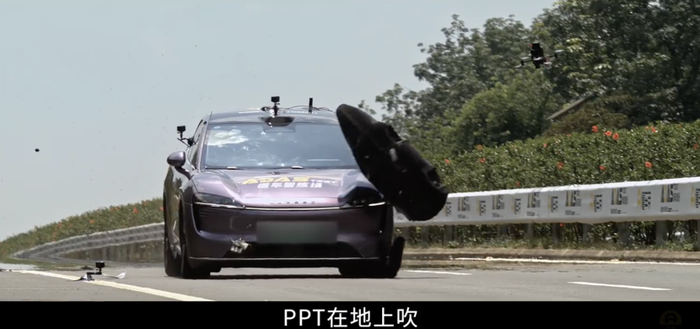
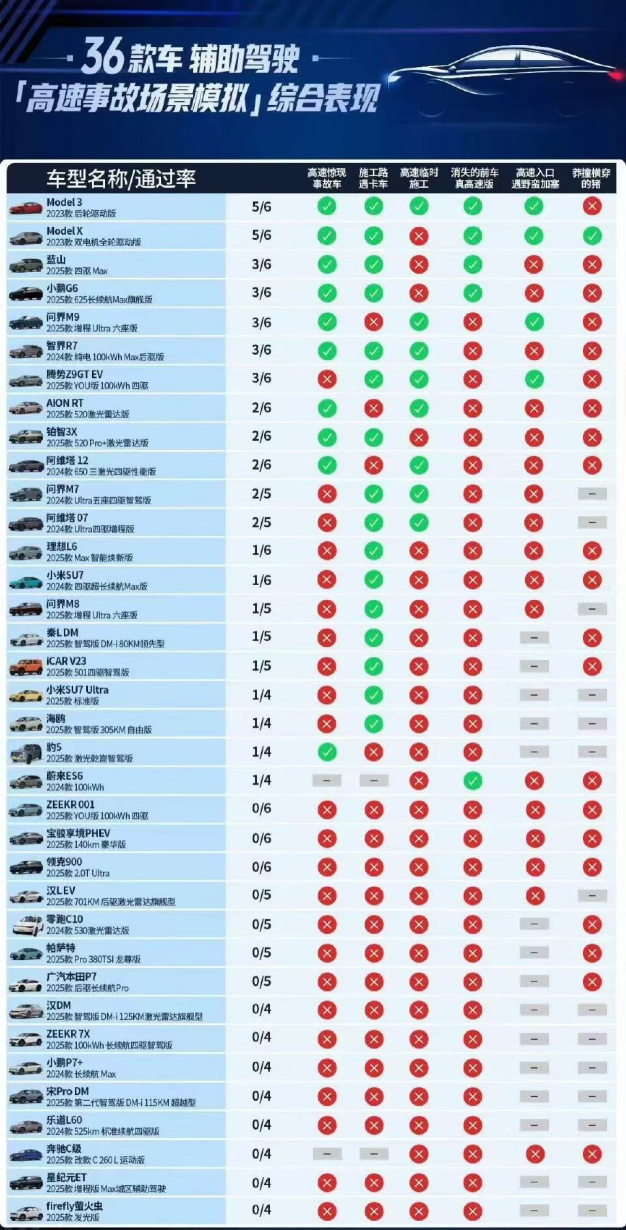
Core Insights - The joint testing by Dongchedi and CCTV revealed that Tesla's advanced driver-assistance systems (ADAS) rank in the "fourth tier," while Chinese automakers are leading in this technology [1][10] - The results of the tests have sparked significant attention and controversy, challenging previous claims made by various car manufacturers regarding their ADAS capabilities [4][10] Testing Overview - The testing involved real-world simulations on highways and urban roads, covering 15 subjects with nearly 40 vehicle models from over 20 brands, including high-risk scenarios [1][10] - A total of 216 collision simulations were conducted to validate the performance of the ADAS across different models [1] Performance Results - Tesla's 2023 Model 3 and Model X achieved a passing rate of 83.3% in highway accident simulations, outperforming competitors like Huawei's models, which did not exceed a 50% passing rate [2] - In urban accident simulations, the Model X excelled with an 88.9% passing rate, while other brands struggled to match its performance [2] Industry Reactions - Tesla CEO Elon Musk acknowledged the testing results and emphasized Tesla's commitment to data compliance in training their systems [1] - Chinese brands such as Huawei's Zhijie and Wanjie publicly dismissed the testing results, indicating a defensive stance against the findings [1] Historical Context - Previous claims by Huawei's executives suggested their ADAS was significantly superior to Tesla's, with assertions of higher obstacle recognition capabilities [6] - Similar overstatements were made by other brands, including Xiaomi and NIO, regarding their ADAS performance, which have been contradicted by recent incidents and the testing results [8][9] Implications for the Industry - The testing results serve as a corrective measure against the exaggerated claims made by car manufacturers regarding their ADAS technologies [10] - The lack of standardized definitions for "high-level" driving assistance has led to confusion and misrepresentation in the industry, as seen with various brands coining terms like "Level 0 tier" and "high-level driving assistance" [10]





马斯克转发,懂车帝回应
Zhong Guo Ji Jin Bao· 2025-07-25 10:22
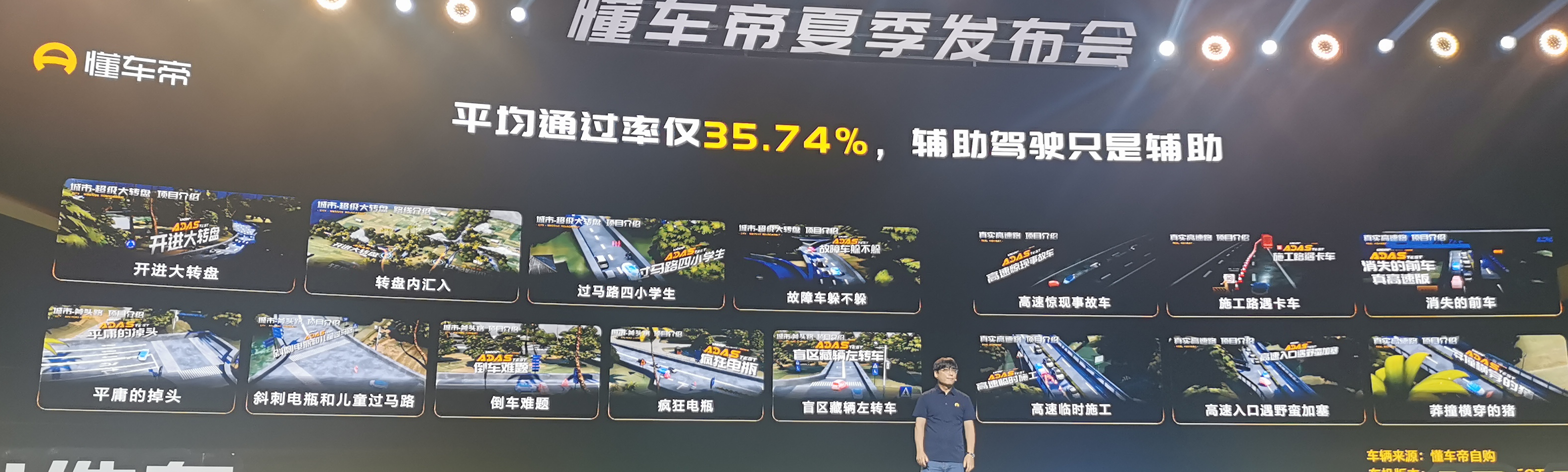
Core Viewpoint - The article discusses the controversy surrounding Tesla's performance in a driving assistance test conducted by Dongche Di, where Tesla CEO Elon Musk claimed the company achieved the highest score, which Dongche Di denied, stating no official ranking was made [1][4][5]. Group 1: Test Details - Dongche Di launched a program called "Dongche Zhilianchang," testing over 40 models from popular brands, including Tesla, in various driving assistance scenarios [2][7]. - The test included 15 high-risk accident scenarios, with an average pass rate of 35.74% across all tested vehicles [7]. - The test aimed to educate the public on the safety boundaries of driving assistance features rather than to create a ranking [5][10]. Group 2: Tesla's Financial Performance - Tesla reported a significant decline in its second-quarter earnings, with revenue of $22.496 billion, down 12% year-over-year, and a net profit of $1.172 billion, a decrease of 20.7% [13]. - The decline in revenue and profitability was attributed to a drop in sales and a reduction in carbon credit income, which fell over 50% from $889 million to $439 million year-over-year [13]. - Following the earnings report, Tesla's stock price dropped over 8%, closing at $305.3 per share, marking its lowest point in nearly a week [14].
马斯克转发,懂车帝回应!
中国基金报· 2025-07-25 09:59
Core Viewpoint - The article discusses the controversy surrounding Tesla's performance in a driving assistance test conducted by Dongche Di, where Tesla CEO Elon Musk claimed the company achieved the highest score, which Dongche Di denied, stating no official ranking was made [2][4][10]. Group 1: Test and Results - Dongche Di launched a program called "Dongche Zhilianchang," testing over 40 models from popular brands, including Tesla, in various driving assistance scenarios [4]. - The test included 15 high-risk accident scenarios, with an average pass rate of 35.74% across the tested vehicles [7]. - Dongche Di emphasized that the purpose of the test was to raise public awareness about the safety boundaries of driving assistance features, not to create rankings [4][10]. Group 2: Tesla's Financial Performance - Tesla reported a significant decline in its second-quarter earnings, with revenue of $22.496 billion, down 12% year-over-year, and a net profit of $1.172 billion, a decrease of 20.7% [15]. - The decline in revenue and profitability was attributed to a drop in sales and a reduction in carbon credit income, which fell over 50% from $889 million to $439 million year-over-year [15]. - Tesla's stock price dropped over 8% following the earnings report, reaching a low of $305.3 per share [15].
冲上热搜!鸿蒙智行14字回怼智驾测试结果;多家车企高层先后发声
第一财经· 2025-07-25 09:30
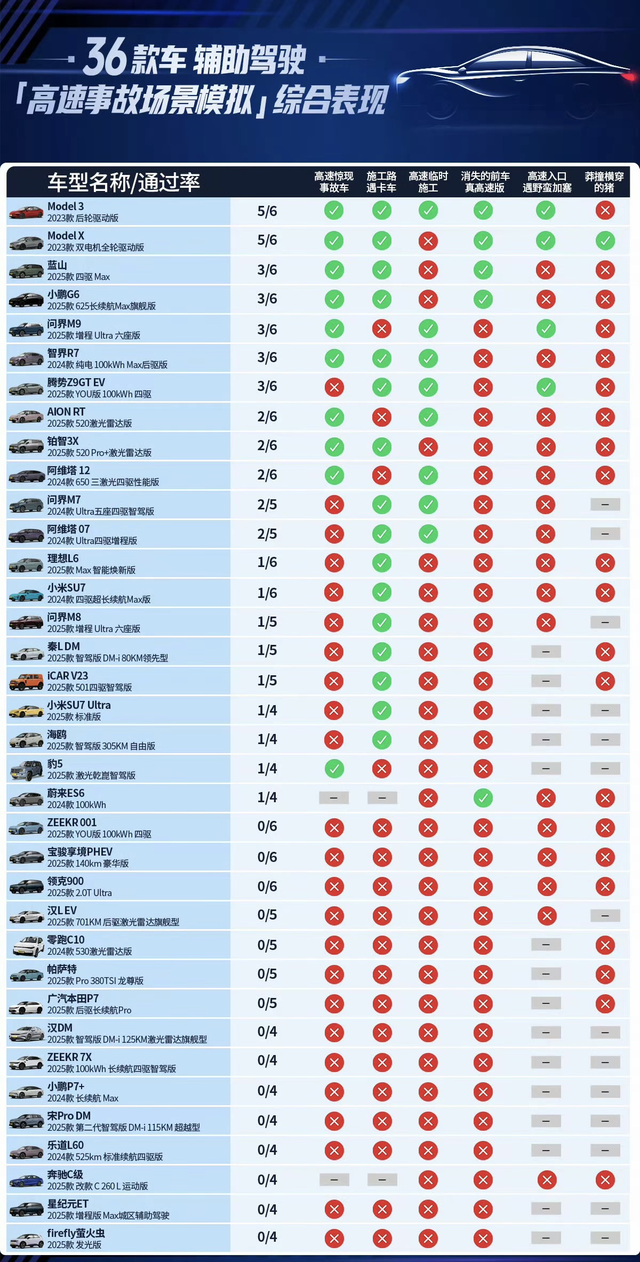
Core Viewpoint - The article discusses the recent controversy surrounding the performance of autonomous driving systems in various vehicles, particularly those from Hongmeng Zhixing, following a testing event by Dongche Di. The results highlighted significant shortcomings in the vehicles' ability to handle complex driving scenarios, prompting responses from various industry leaders. Group 1: Testing Results - Dongche Di conducted a large-scale test of 36 vehicles equipped with autonomous driving systems, including four models from Hongmeng Zhixing: Zhijie R7, Wenjie M8, Wenjie M9, and Wenjie M7. The results showed that these models had unsatisfactory pass rates in 15 different scenarios [2]. - In specific scenarios, only Wenjie M9 and Zhijie R7 successfully avoided obstacles when encountering an accident vehicle on the highway. Wenjie M9 failed to avoid obstacles in a construction scenario, while Wenjie M8 could not pass a temporary construction situation [2]. Group 2: Industry Reactions - The testing results sparked significant debate, with various automotive executives commenting. Tesla's CEO Elon Musk stated that Tesla achieved the highest results in China without local training data due to legal restrictions on data export. He emphasized that Tesla is working on adding training data to improve performance [3]. - Tesla's Vice President Tao Lin remarked that Tesla does not focus on rankings, as any test or ranking is relative and temporary, but the demand for safety is limitless [3]. - Lantu Automobile's CBO Shao Mingfeng, although not part of the test, suggested that the closed testing by Dongche Di reflects common technical bottlenecks in the industry, such as the need for improved capabilities in high-speed avoidance and recognition of non-standard obstacles. He proposed that "failure fallback capability" should be included in mandatory industry standards [4].
【财经早晚报】北京上调最低工资标准;A股回调半日缩量94.5亿;金饰克价2天跌去21元
Sou Hu Cai Jing· 2025-07-25 09:26
Group 1: Apple and Technology Updates - Apple has released the public beta version of iOS 26, featuring a new design language called "Liquid Glass," marking the largest interface overhaul since 2013 [6] - Intel plans to lay off 15% of its workforce and shift focus towards the AI chip market, canceling plans for new chip factories in Europe [6][7] Group 2: Market Movements - The ChiNext 50 Index rose over 2%, driven by a surge in chip stocks, with companies like Cambrian Technology increasing by over 10% [4] - Farmer Spring's stock price increased by over 5%, reaching a market capitalization of over 530 billion HKD [4] Group 3: Corporate Scandals - The former CEO of Ele.me was found to have hidden over 40 million yuan in bribes in rental properties, involving a scheme to help suppliers gain logistics qualifications [5]



马斯克转发,鸿蒙智行“不予置评”,懂车帝辅助驾驶测试“火”了!专家:当前的“智驾”均为辅助驾驶
Mei Ri Jing Ji Xin Wen· 2025-07-25 09:03
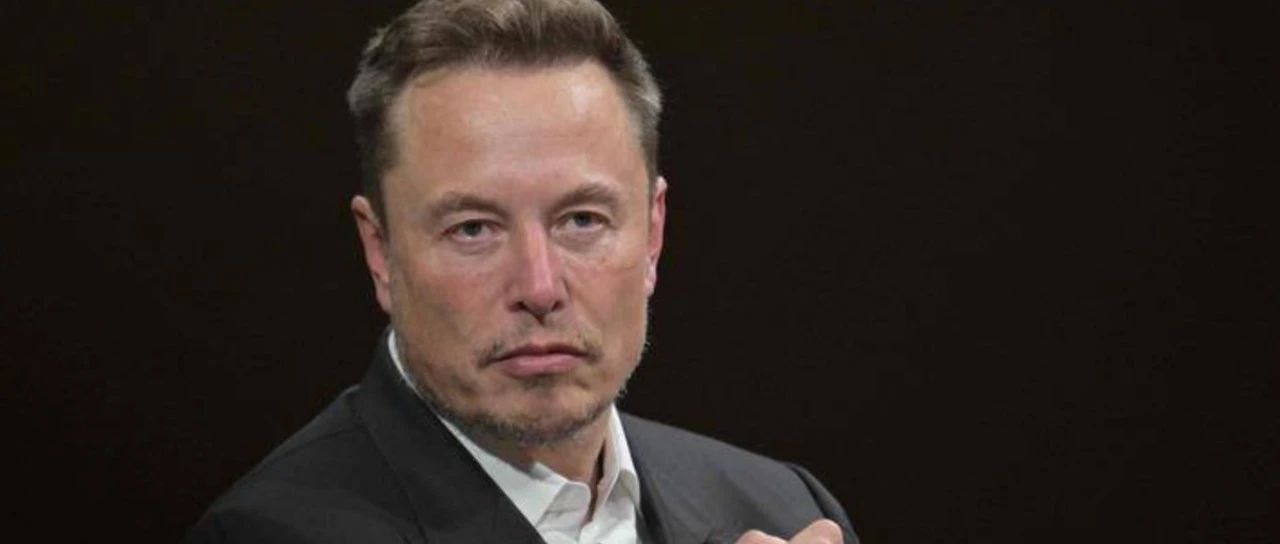
Core Viewpoint - Tesla's CEO Elon Musk's retweet of a driving assistance test video by Dongche Di sparked significant attention, highlighting the performance of various brands' driving assistance systems in China, where Tesla achieved the highest score without local training data [1][3]. Group 1: Test Results and Controversy - The driving assistance test conducted by Dongche Di involved nearly 40 models from over 20 brands, with an average pass rate of only 35.74% across 15 simulated high-risk driving scenarios [3][4]. - The test results raised questions about the testing methodology, with some industry professionals suggesting that the design and control of variables were inadequate [6]. - Dongche Di clarified that the test results only reflect the collision outcomes during the simulated scenarios and do not represent the overall performance of the vehicles in all driving assistance situations [6][4]. Group 2: Industry Standards and Regulations - Current driving assistance systems are not capable of handling certain complex and dangerous traffic scenarios, necessitating that users remain ready to take control of the vehicle [7][8]. - The Ministry of Science and Technology has emphasized the need for accurate and objective communication regarding the capabilities of driving automation systems, discouraging exaggerated claims [8][10]. - The China Automotive Industry Association has called for standardized marketing practices to prevent misleading representations of driving assistance features [10][12]. Group 3: Terminology and Consumer Awareness - Many automakers have been criticized for marketing L2 level driving assistance systems as "autonomous driving," leading to regulatory scrutiny [8][10]. - Recent adjustments in terminology by various companies, including Tesla, reflect a shift towards more accurate descriptions of their systems, moving away from terms like "autonomous driving" to "driving assistance" [10][12]. - Experts stress that all current market offerings are L2 level systems, requiring constant driver attention and responsibility in case of accidents [12].
冲上热搜!鸿蒙智行回怼智驾测试结果:已读不回
Di Yi Cai Jing· 2025-07-25 08:59
Group 1 - The core viewpoint of the article emphasizes that safety is the top priority in advanced driver-assistance systems (ADAS) [1] - The recent testing conducted by Dongche Di highlighted the performance of 36 smart vehicles equipped with ADAS, revealing that models from Hongmeng Zhixing had unsatisfactory pass rates in various scenarios [3][4] - Specific results showed that only the Wanjie M9 and Zhijie R7 successfully avoided obstacles in high-speed scenarios, while other models failed to perform adequately in critical situations [3] Group 2 - Tesla's response to the testing results was notably different, with CEO Elon Musk stating that the company achieved high performance in China despite legal restrictions on data export [3] - Tesla's Vice President, Tao Lin, emphasized that the company does not focus on rankings, as any test results are relative and temporary, but insists on the importance of safety [4] - Industry experts, including Lantu Auto's CBO, pointed out that the testing reflects common technical bottlenecks in the industry, suggesting the need for improved capabilities in high-speed obstacle avoidance and perception systems [4]
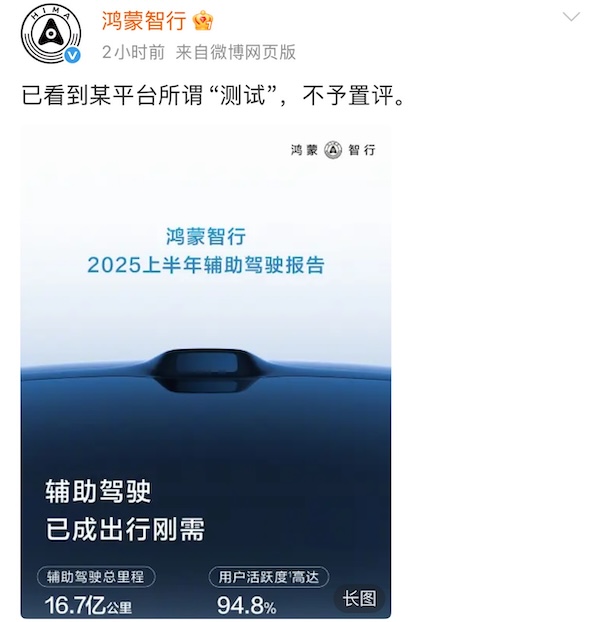
鸿蒙智行回应某平台测试:不予置评
news flash· 2025-07-25 07:22
Core Viewpoint - Harmony Smart Mobility has chosen not to comment on the recent testing conducted by a certain platform, which has sparked significant controversy regarding the evaluation of various models' assisted driving capabilities [1] Group 1 - Harmony Smart Mobility acknowledged the existence of the so-called "test" by a certain platform but opted not to provide any comments [1] - The testing results were part of a program called "Understanding Car Intelligence Arena," which evaluated 36 vehicle models, including the AITO M9, AITO M7, AITO M8, and Zhijie R7 [1] - The evaluation results have generated considerable debate within the industry [1]
马斯克:特斯拉在中国测试第一!懂车帝:没有排名
Jin Shi Shu Ju· 2025-07-25 06:49
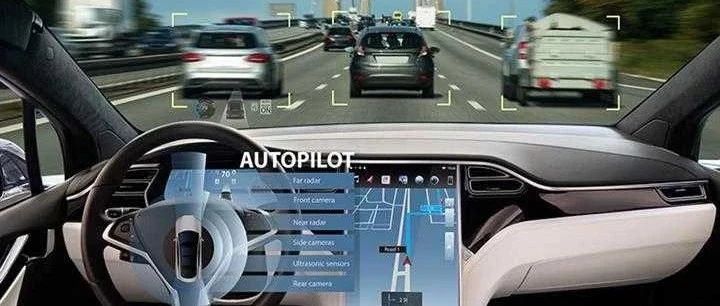
Core Insights - Tesla's CEO Elon Musk shared a video from Dongche Di highlighting Tesla's top performance in a driving assistance test conducted in China [1][2] - The test, part of a public awareness program, simulated high-risk accident scenarios and included nearly 40 vehicle models, revealing an average pass rate of only 35.74% [1][6] - The program aimed to educate the public on the capabilities of driving assistance features rather than providing an official ranking [1][6] Group 1: Test Results - The 2023 Tesla Model 3, utilizing a pure vision system with seven cameras, successfully passed five out of six tests, earning the "first place" [2] - Tesla Model 3 and Model X ranked as the top two vehicles, with no other brand surpassing three successful tests [2] - The test included 15 high-risk accident scenarios, both in urban and highway settings, assessing the vehicles' perception and decision-making abilities [1][2] Group 2: Industry Reactions - The release of the test results sparked significant discussion within the industry, with some critics questioning the validity and rigor of the testing process [6] - Dongche Di responded to criticisms, clarifying that the program's results reflect the vehicles' performance in specific simulated scenarios and not their overall driving assistance capabilities [6][7] - Experts noted that such tests are beneficial for consumers to better understand driving assistance features and prioritize their driving safety [7]
零跑汽车董事长朱江明:争取做“世界级电动车企” 目标年销量400万辆
Zhong Zheng Wang· 2025-07-25 05:53
零跑汽车高级副总裁曹力表示,零跑B01搭载高通8650高性能芯片和激光雷达端到端大模型,算力达 200TOPS,并配备27颗高精度感知硬件,支持高速领航辅助、通勤领航辅助、停车场记忆泊车等26项辅 助驾驶功能。 曹力认为,纯视觉方案在极端天气或复杂光线条件下存在局限性,而激光雷达的加入能够有效弥补这一 短板,提升辅助驾驶系统的安全冗余。 朱江明表示,公司第二季度的平均月销量稳定在4.5万辆左右,预计将带动毛利、净利润等显著提升。 今年上半年,零跑累计交付22.17万辆,全年目标50万辆,并希望"超预期达成"。 中证报中证网讯(记者李嫒嫒)7月24日晚,零跑汽车旗下B系列首款纯电轿车——零跑B01正式上市,定 位为"年轻人的高品质智能轿车",搭载零跑汽车最新LEAP3.5技术架构,瞄准A级轿车市场。新车推出 三种续航共六款版本,官方指导价为8.98万元-11.98万元。零跑汽车董事长朱江明在发布会后的媒体采 访中表示:"零跑争取做'世界级电动车企',目标年销量400万辆。" "年销百万辆是车企生存的基础,零跑正朝这一目标加速迈进。"朱江明说。 朱江明表示,零跑汽车争取成为"世界级电动车企",目标年销量400万辆 ...
