企业转型

Search documents
夏普再出售一座液晶面板厂!
WitsView睿智显示· 2025-08-01 10:26
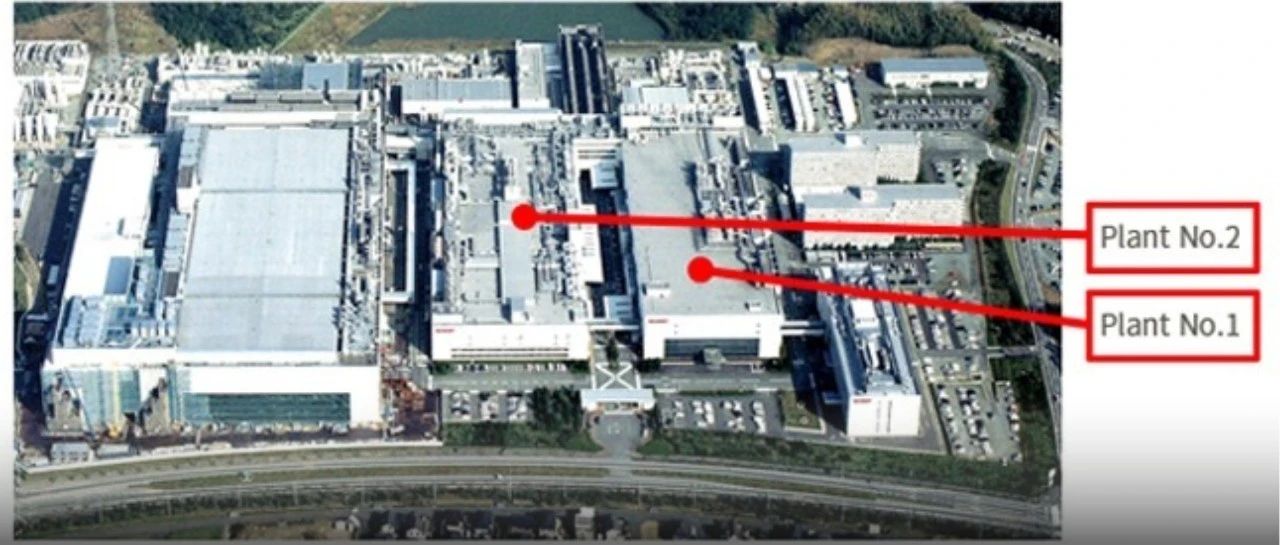
Core Viewpoint - Sharp has announced an asset transfer agreement with Aoi Electronics, selling its second factory in Mie Prefecture, previously used for producing small to medium-sized LCD panels, as part of its strategy to shift towards a brand-centric business model and optimize idle resources [1][4]. Group 1 - The agreement includes the sale of the second factory and part of the land in the Mie base, with Sharp assisting Aoi in establishing a semiconductor packaging production line [1][4]. - Sharp's Mie No. 2 factory was primarily used for producing small to medium-sized LCD panels for smartphones until it ceased operations after May 2024 [4]. - The Mie site consists of four factories, with the first and second factories already sold to Aoi, indicating a significant shift in Sharp's operational focus [4]. Group 2 - Aoi plans to enhance its advanced packaging business capabilities by leveraging the newly acquired second factory and the previously purchased first factory, aiming for full production by the fiscal year 2027 [4]. - Sharp will support Aoi through its subsidiary responsible for small to medium-sized panel business, facilitating the rapid establishment of the semiconductor packaging line [4].

衢州发展拟购先导电科转型高科技 标的公司估值200亿市占率全球居首
Chang Jiang Shang Bao· 2025-07-31 23:59
Core Viewpoint - The acquisition of Xian Dao Electronics Technology Co., Ltd. (Xian Dao Dian Ke) by Quzhou Development (600208.SH) is in the planning stage, following the termination of a previous acquisition attempt by Guangzhi Technology. This transaction could transform Quzhou Development from a traditional real estate company into a high-tech enterprise, while Xian Dao Dian Ke aims for a backdoor listing [1][2][10]. Group 1: Acquisition Details - Quzhou Development plans to acquire shares of Xian Dao Dian Ke held by Guangdong Xian Dao Rare Materials Co., Ltd. and other shareholders, along with raising matching funds [2][3]. - The stock of Quzhou Development has been suspended since July 30, 2025, due to the planning of this significant transaction [2][3]. - The previous acquisition attempt by Guangzhi Technology was labeled a "snake swallowing an elephant" deal, which significantly impacted Guangzhi's stock price [6][7]. Group 2: Company Background - Quzhou Development, previously known as Xinhuhongbao, primarily operates in the real estate sector and has undergone ownership changes, with Quzhou State-owned Assets Supervision and Administration Commission becoming the actual controller [9][10]. - As of July 30, 2025, Quzhou Development's market capitalization is approximately 35.06 billion yuan, with a reported revenue of 16.485 billion yuan and a net profit of 1.016 billion yuan for 2024 [9][10]. Group 3: Xian Dao Dian Ke Overview - Xian Dao Dian Ke, established in 2017, specializes in the research and manufacturing of sputtering targets and evaporation materials, with applications in various high-tech fields [10][11]. - The company holds a leading position in the ITO target market, achieving over 30% market share globally since 2022, despite the market being dominated by American and Japanese firms [10][11]. - Xian Dao Dian Ke has attracted significant investment from various capital entities, achieving a valuation of approximately 20.9 billion yuan as of June 2023 [10].

日产警告:转型与关税阻力下亏损将进一步扩大
Zhong Guo Qi Che Bao Wang· 2025-07-31 00:54
日产汽车公司预测,4月至9月期间的营业亏损将达1800亿日元,并暂未公布截至2026年3月的财年 业绩指引。该公司首席执行官伊万・埃斯皮诺萨表示,日产正处于转型计划的初期阶段,计划裁员2万 人,并将生产基地从17个缩减至10个。日产面临美国总统唐纳德・特朗普贸易战带来的阻力,预计关税 将造成3000亿日元的损失。行业研究高级汽车分析师吉田辰雄称,该公司缺乏足够的产品实力、品牌影 响力和销售能力。 ...

Worldline : announces a renewed management team to transform the company
Globenewswire· 2025-07-30 05:00
Core Viewpoint - Worldline is undergoing a significant transformation with a renewed Executive Committee aimed at driving growth and innovation in the payment services sector [1][3]. Group 1: Executive Changes - Madalena Cascais Tomé will become the Head of Financial Services effective 1 October, succeeding Alessandro Baroni [1][4]. - Anika Grant will join as the new Chief People Officer effective 1 September, succeeding Florence Gallois [4][8]. - Srikanth Seshadri will be the new Chief Financial Officer, effective 8 September, replacing Gregory Lambertie [2][10]. Group 2: Leadership Profiles - Madalena Cascais Tomé has extensive experience as CEO of SIBS, leading significant innovations and managing over 40 million transactions daily with high uptime and security [6][7]. - Anika Grant has over 30 years of experience in HR, having held senior roles at Ubisoft and Uber, and is known for her expertise in organizational transformation [8][9]. - Srikanth Seshadri has a strong background in finance and strategy, with experience at Alstom, where he played a key role in driving growth and profitability [10][11]. Group 3: Diversity and Transformation Goals - The new Executive Committee will consist of nine members from various nationalities, reflecting increased diversity [3][5]. - The management team is tasked with transforming Worldline to enhance growth and cash flow generation, aiming to position the company as the European partner of choice in payments [3][4].

奥迪上半年利润下滑超三成
Xin Hua She· 2025-07-29 08:54
新华社柏林7月28日电 德国汽车制造商奥迪公司28日发布的2025年上半年财报显示,受美国对从欧盟进 口汽车加征关税影响,公司税后利润同比下滑超过三成。 财报显示,奥迪上半年税后利润为13.46亿欧元,同比下降37.5%。 奥迪母公司大众集团日前发布财报说,受美国关税影响,集团上半年额外成本约为13亿欧元,营业利润 同比下滑33%。 奥迪首席财务官于尔根·里特斯贝格尔说,利润下滑的主要原因是美国关税及企业转型成本增加。他指 出,美国关税已导致公司损失约6亿欧元。 上半年,奥迪全球汽车交付量同比下降约6%。里特斯贝格尔表示,奥迪正加速推进"公司历史上最大规 模的转型",目标是在中期内每年节省10亿欧元成本。奥迪此前宣布,将于2029年底前在德国裁减约 7500个工作岗位以提升竞争力。 美国自4月3日起对从欧盟进口汽车加征25%关税,而德国作为全球主要汽车出口国,受到冲击尤为明 显。德国联邦统计局日前公布数据显示,4月和5月,德国对美汽车出口一共同比下降23.5%。(记者 车 云龙 张毅荣) 责编:李芳、穆瑀宸 ...
苏能股份陈创举上任总经理:5个月董事长、副董事长、总经理全换血,上半年净利预降89%
Xin Lang Zheng Quan· 2025-07-28 07:48
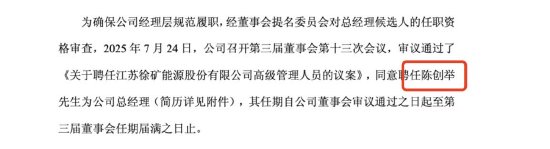
Core Viewpoint - SuNeng Co., Ltd. is undergoing significant changes in management and facing challenges in its coal and new energy business, with a notable decline in profits due to falling coal prices and rising costs in new energy expansion [2][4][10]. Management Changes - On July 24, SuNeng Co., Ltd. appointed Chen Chuangju as a non-independent director and general manager, bringing extensive management experience from various roles in the coal industry [2]. - The company has experienced a rapid turnover in its leadership, with the chairman, vice chairman, and general manager all replaced within five months, which is unusual for a provincial state-owned enterprise [8][10]. Financial Performance - The company projected a significant decline in net profit for the first half of 2025, estimating a drop of 89.11% to 90.93% year-on-year, with net profit expected to be between 85.7 million and 102.8 million yuan [3][4]. - The decline in performance is attributed to a decrease in coal sales prices, which poses substantial operational challenges [4]. Industry Context - SuNeng Co., Ltd. is positioned as a regional leader in coal and electricity but is facing pressure to transform its business model amid fluctuating coal prices and increasing costs associated with new energy projects [9][10]. - The company aims to achieve a total installed capacity of 2,200 MW in new energy by the end of the 14th Five-Year Plan, but current contributions from new energy remain minimal due to low base figures [11]. Future Outlook - The new management team is tasked with stabilizing the coal business while accelerating the implementation of solar projects to convert registered projects into actual capacity [11]. - The company has a financial advantage with a dividend capability exceeding 800 million yuan annually, which could support its new energy expansion [11].

谁垫底?部分葡萄酒上市公司半年业绩预告出炉
Sou Hu Cai Jing· 2025-07-28 06:02
Core Viewpoint - Several wine companies, including Mogaos, are forecasting significant losses for the first half of the year, with Mogaos expected to incur losses of 25 to 37 million yuan, marking a substantial increase in losses compared to the previous year [1][8]. Group 1: Financial Performance - Mogaos' wine business has seen a declining share of total revenue, with wine accounting for only 18.45% of revenue in 2024, down from 83.54% in 2017 [2]. - The company has reported continuous losses over the past four years, with losses of approximately 98.7 million yuan in 2021, 111 million yuan in 2022, 41.4 million yuan in 2023, and projected losses of 25 to 37 million yuan for the first half of 2025 [8]. Group 2: Business Diversification and Challenges - Mogaos has shifted its focus to biodegradable materials, which now dominate its revenue, but this segment has also shown signs of losses since 2022 [4]. - The pharmaceutical segment has experienced a decline in production and sales prices, contributing to reduced profitability [4]. Group 3: Market Dependency and Distribution - Mogaos relies heavily on the Gansu provincial market for wine sales, with provincial revenue being 1.5 times that of external markets in 2023 [5]. - The number of distributors for Mogaos' wine has decreased, with 50 distributors lost despite 48 new additions, indicating a shrinking market presence [6][7]. Group 4: Regulatory and Market Environment - The company faces potential delisting risks if it fails to achieve a revenue of 300 million yuan in 2024, with negative net profits [8]. - Mogaos' chairman has been implicated in insider trading, which has negatively impacted market confidence, although the company claims it does not affect operations [8].


爱婴室的隐忧与转身之困 存量博弈下的战略迷思
Xin Lang Zheng Quan· 2025-07-25 09:22
Core Insights - The mother-baby retail sector, once considered a "golden track" in consumer goods, is now facing significant challenges as market conditions shift, revealing underlying issues even in leading companies like Aiyingshi [1][2] Financial Performance - Aiyingshi has maintained a slight increase in revenue and profit, but the quality of operations and strategic decisions raise concerns, particularly regarding cash flow and profitability [1] - The company's net profit growth is heavily reliant on non-operating income, such as government subsidies and interest income, indicating a fragile profit structure that could be jeopardized by changes in policy or market conditions [2] Market Dynamics - The mother-baby industry has transitioned from a growth phase to a more competitive environment, with declining birth rates and shrinking demand impacting sales, particularly in key markets like East and Central China [2] - Aiyingshi has responded to these challenges by closing stores to reduce costs, but this strategy risks diminishing brand presence and customer reach, highlighting difficulties in tapping into existing market potential [2] Strategic Challenges - The company's online business remains underdeveloped, failing to effectively mitigate risks associated with offline operations, and its attempts at channel integration have not yielded competitive advantages [3] - Strategic acquisitions, such as the purchase of Beibeixiong, have not performed as expected, leading to operational challenges and further store closures, reflecting issues in strategic judgment and post-acquisition management [3] Future Outlook - To navigate current challenges, Aiyingshi must find a balance between cost-cutting and revenue generation, focusing on enhancing core business operations and cash flow resilience while exploring new transformation paths [3]

瑞康医药“少东家”韩春林辞任董事、副总裁 薪酬远超其他董监高
Xi Niu Cai Jing· 2025-07-23 08:20
Group 1 - The resignation of Han Chunlin, Vice President of Ruikang Pharmaceutical, is due to personal reasons and will not affect the board's operations or normal business activities [2][4] - Han Chunlin, born in 1993, has been with Ruikang Pharmaceutical since 2013, holding various positions and becoming Vice President in 2023 [3] - His departure adds uncertainty to the company, which is already facing operational pressures, with revenue declining from 27.2 billion in 2020 to 7.97 billion in 2024 [4] Group 2 - Han Chunlin's salary for 2024 was 904,400 yuan, significantly higher than the average of 467,300 yuan for other senior executives [3] - The company has been under pressure, with stock prices consistently below net asset value and previous attempts by the controlling shareholder to transfer shares failing [4] - Ruikang Pharmaceutical, established in 2004, is a leading player in the domestic pharmaceutical distribution sector, involved in drug distribution, medical devices, and digital healthcare [4]


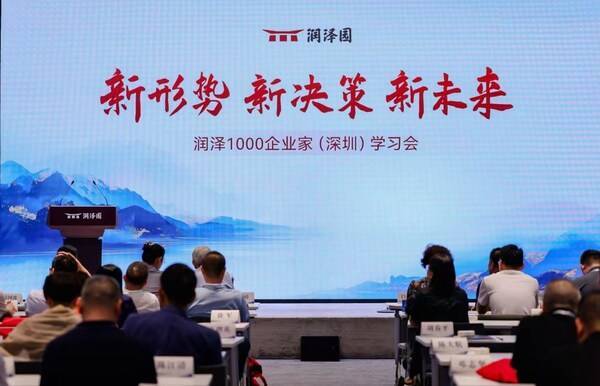
聚焦"稳"字破局,润泽园教育陪伴企业家探寻行稳致远之道
Sou Hu Cai Jing· 2025-07-22 05:12
Core Insights - The current transformation of the Chinese economy presents challenges such as market fluctuations and intensified competition for enterprises [1] - The "Runze 1000 Entrepreneurs Learning Conference" held in Shenzhen focused on the theme of "stability," emphasizing the importance of returning to one's original intentions for sustainable development [1][3] Group 1: Conference Highlights - Liu Pang, founder and chairman of Shenzhen Dashij Intelligent Co., shared insights on the application of IoT technology in the construction sector and introduced the "Dashij Culture and Strategic Development White Paper" [3] - Feng Lei, a core lecturer at Runze Education, emphasized that true stability comes from maintaining sincerity towards consumers during crises, using the example of the White Elephant Food trademark incident [5] - Bai Lixin from Runze Education highlighted the need for traditional enterprises to transform within a critical seven-year window, warning that 70% may face closure if they do not adapt [5] Group 2: Strategic Framework - The "4.0 Strategy" introduced by Runze Education focuses on leadership as the primary driver, linking strategy, team, and execution to awaken the original intentions of enterprises [5] - The 100-day course under the 4.0 Strategy is structured into four phases: personal strategy, team synchronization, enterprise renewal, and future-oriented enterprises, utilizing a lightweight learning model [5] Group 3: Case Studies and Practical Applications - The case of Kingdee Group was analyzed to illustrate successful strategic implementation, showcasing the company's four transformations and market capitalization growth [6] - Xu Shaochun, chairman of Kingdee, discussed the underlying logic of enterprise transformation, asserting that the current economy is not in decline but is preparing for new growth opportunities [6] Group 4: Cultural Integration and Future Outlook - The conference included visits to Dashij Intelligent and Kingdee Group, allowing participants to experience the integration of IoT technology with traditional culture and cloud services [9] - Chen Shuyuan, a core lecturer at Runze Education, concluded the conference by emphasizing the importance of belief, perseverance, and immediate action for enterprises undergoing transformation [11] - The conference highlighted the unique path of integrating traditional Chinese culture into modern enterprise management, with a focus on the "heart" as the core of Chinese culture [13]