
国企改革

Search documents
原财务负责人吴豪被破格提拔!华电新能这次高层大洗牌意味着什么?
Xin Lang Cai Jing· 2025-12-23 14:15
吴豪的晋升打破传统。这位1978年出生的财务专家,拥有21年电力行业财务管控经验,从集团总部到子公司,深谙资本运作与风险管控。五年财务负责人 任职后,他直接操盘公司整体经营。 预见能源认为,在强调专业与资历的央企体系内,选择把财务负责人吴豪直接擢升为总经理,这释放出了一个明确的信号:在新能源行业告别补贴、全面 参与市场竞争的当下,对企业领导者的财务敏锐度与风险把控能力提出更高要求。华电新能作为华电集团新能源的核心平台,其资产体量与融资复杂性, 或许使董事会认为,深谙财务脉络的专家比单纯技术背景领导者更能驾驭当前挑战。 类似逻辑已在其他能源央企显现。国家电投旗下 电投产融 曾由金融背景领导人主导转型;国家能源集团 龙源电力 也愈发注重资本运营的背景人才。行业 共识变得逐渐清晰:新能源竞争已从原来的资源获取进一步深化为资本效率的大比拼! 华电新能 核心管理层剧变。 据悉,12月22日,华电新能董事长卸任总经理,原财务负责人吴豪被提拔至总经理岗位并获董事提名;副总经理、董秘、财务负责人同步调整,两位董事 辞职。 此次集中变动在电力央企中并不多见。吴豪由财务负责人直接晋升为"一把手",更被视为一次"破格"任用。 这并 ...


珠免集团完成格力房产100%股权交割 交易价格55.18亿元
Zheng Quan Ri Bao Wang· 2025-12-23 12:14
通过此次资产出售,珠免集团成功厘清业务边界,将资源投向具有高消费频次、强现金流属性的免税主 业。此外,55.18亿元现金的逐步回笼,不仅能大幅增强公司的流动性与抗风险能力,更为未来产业扩 张提供了充沛的资金"弹药"。 此次交易的实质性落定,不仅是珠免集团发展史上一个重要分水岭,更是其迈向高质量发展的奠基石。 回顾这一年,从免税资产的注入到地产业务的剥离,珠免集团以极具前瞻性的战略定力和高效的执行 力,在资本市场书写了国企改革的"珠海样本"。 本报讯(记者王镜茹)12月23日,珠海珠免集团(600185)股份有限公司(以下简称"珠免集团")披露,随 着《重大资产出售暨关联交易实施情况报告书》正式发布,珠免集团去地产化进程迎来最具实质意义 的"落槌"时刻。公司以55.18亿元现金出售珠海格力房产有限公司(以下简称"格力房产")100%股权交 易,已完成"实质交割"。 至此,珠免集团已完成地产业务剥离的全部流程,正式以资产更纯净、主业更聚焦的免税运营商姿态, 开启高质量发展的新阶段。2024年底,珠免集团完成置入珠海免税集团51%股权的重大资产重组。彼 时,公司确立了以免税为主业的方向,并承诺在"5年内完成存量房地 ...

永安期货跌1.52%,成交额6127.46万元,近3日主力净流入-992.26万
Xin Lang Cai Jing· 2025-12-23 08:23
Core Viewpoint - The article discusses the recent performance and business operations of Yong'an Futures, highlighting its focus on digital transformation and financial technology innovation while also noting its financial metrics and market position. Group 1: Company Overview - Yong'an Futures is primarily engaged in commodity futures brokerage, financial futures brokerage, asset management, and futures investment consulting, with risk management services provided through its wholly-owned subsidiary, Yong'an Capital [2] - The company is a state-owned enterprise, ultimately controlled by the Zhejiang Provincial Finance Department [3] - As of September 30, the number of shareholders in Yong'an Futures reached 39,500, an increase of 6.87% from the previous period [7] Group 2: Financial Performance - For the period from January to September 2025, Yong'an Futures reported operating revenue of 8.355 billion yuan, a year-on-year decrease of 55.26%, while net profit attributable to shareholders increased by 13.31% to 475 million yuan [7] - The company has distributed a total of 1.035 billion yuan in dividends since its A-share listing, with 627 million yuan distributed over the past three years [8] Group 3: Market Activity - On December 23, Yong'an Futures experienced a decline of 1.52%, with a trading volume of 61.2746 million yuan and a turnover rate of 0.28%, resulting in a total market capitalization of 21.731 billion yuan [1] - The main net inflow of funds today was -7.8356 million yuan, accounting for 0.13%, indicating a lack of clear trends in major fund movements [4][5]

中红医疗跌1.84%,成交额4909.02万元,后市是否有机会?
Xin Lang Cai Jing· 2025-12-23 08:08
Core Viewpoint - Zhonghong Medical is focusing on the development of nuclear radiation protective gloves and has showcased its veterinary infusion pumps at the 12th Beijing Pet Expo, indicating a diversification into the pet economy and medical device sectors [2][9]. Group 1: Business Overview - Zhonghong Medical primarily engages in the research, production, and sales of high-quality disposable protective gloves, with a revenue composition of 89.48% from health protection products, 6.22% from safety infusion products, and 4.30% from innovative incubation products [9]. - The company operates mainly through ODM direct sales, producing for overseas medical device and consumable brand owners [3]. - As of September 30, 2025, Zhonghong Medical reported a revenue of 1.864 billion yuan, reflecting a year-on-year growth of 1.38%, while the net profit attributable to the parent company was -7.21 million yuan, a decrease of 114.13% year-on-year [10]. Group 2: Market Position and Financials - The company has a significant international presence, with overseas revenue accounting for 81.56%, benefiting from the depreciation of the RMB [4]. - Zhonghong Medical is a state-owned enterprise, ultimately controlled by the Xiamen Municipal Government State-owned Assets Supervision and Administration Commission [5]. - The company has distributed a total of 1.251 billion yuan in dividends since its A-share listing, with 501 million yuan distributed over the past three years [11]. Group 3: Recent Developments - Zhonghong Medical is collaborating with Guilin University of Technology to develop a multi-layer nuclear radiation protective glove, indicating a commitment to innovation in safety products [2]. - The company showcased its veterinary infusion pumps at a major pet expo, highlighting its entry into the pet healthcare market with products designed for safety and functionality [2].
中金公司跌1.50%,成交额9.86亿元,后市是否有机会?
Xin Lang Cai Jing· 2025-12-23 07:53
Core Viewpoint - The company, China International Capital Corporation (CICC), is experiencing a significant increase in expected profits for the first half of 2025, driven by its core business segments and the overall market environment [2][8]. Financial Performance - For the period from January 1, 2025, to June 30, 2025, the company expects a net profit attributable to shareholders of between RMB 3.453 billion and RMB 3.966 billion, representing a growth of 55% to 78% compared to the previous year's net profit of RMB 2.228 billion [2]. - As of September 30, 2025, CICC reported a revenue of RMB 20.761 billion, a year-on-year increase of 54.36%, and a net profit of RMB 6.567 billion, reflecting a 129.75% growth [8]. Company Overview - CICC, established on July 31, 1995, operates in various financial sectors, including investment banking, equity sales and trading, fixed income, wealth management, and investment management [7]. - The company's revenue composition includes wealth management (32.58%), equity business (25.78%), fixed income (13.38%), investment banking (11.26%), and other services [7]. Shareholder Information - As of September 30, 2025, the number of shareholders is 118,900, a decrease of 4.10% from the previous period, with an average of 24,662 shares held per shareholder, an increase of 4.28% [8]. - The company has distributed a total of RMB 5.358 billion in dividends since its A-share listing, with RMB 3.041 billion distributed over the last three years [9]. Market Position - CICC is classified as a state-owned enterprise, with its ultimate controller being the Central Huijin Investment Limited [2][3]. - The company is categorized under the non-bank financial sector, specifically in the securities industry, and is involved in various concept sectors such as state-owned enterprise reform and financial technology [7].

鲁中投资拟发行3.5亿中票“补血”
Sou Hu Cai Jing· 2025-12-23 00:44
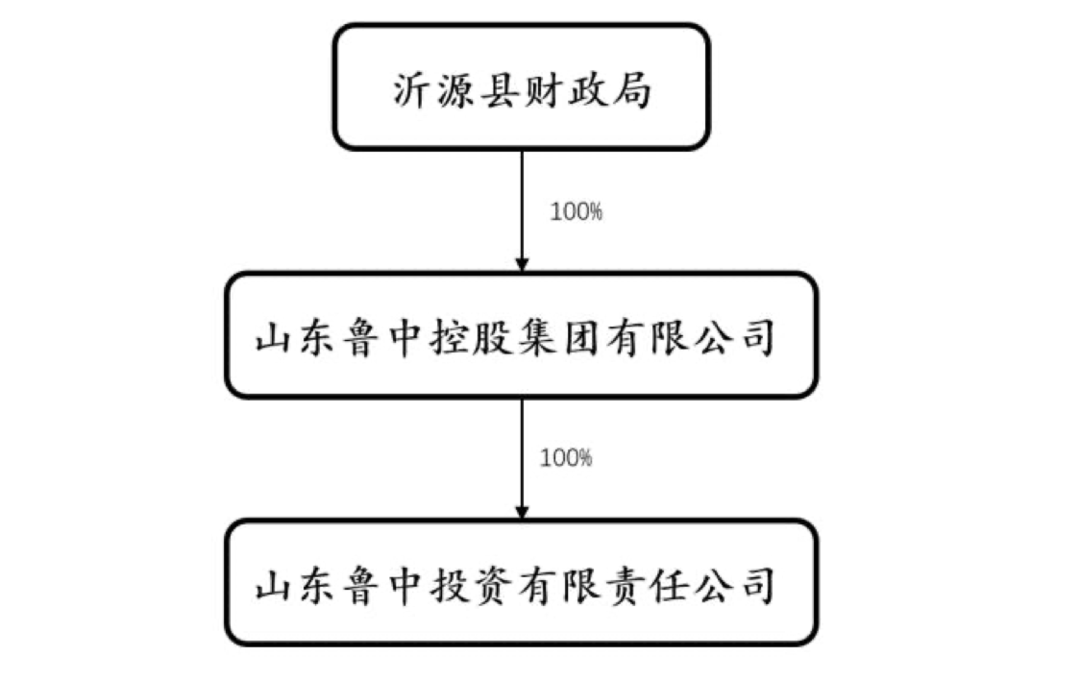
Group 1 - Shandong Luzhong Investment Co., Ltd. plans to issue a second phase of medium-term notes for 2025, with a dynamic adjustment mechanism for the issuance amount, a base amount of 0 billion, and a maximum issuance amount of 3.5 billion, with a term of 3 years [1] - The funds raised will be used entirely to repay financial institution borrowings, with a total outstanding direct debt of 4.265 billion as of the date of the prospectus, including 500 million in MTN bonds, 2.1 billion in PPN bonds, 1.48 billion in corporate bonds, and 185 million in overseas debt [1] - Luzhong Investment is a wholly-owned subsidiary of Shandong Luzhong Holding Group Co., Ltd., established in July 2016, with a registered capital of 300 million [2] Group 2 - In June 2023, China National Pharmaceutical Group Corporation and its subsidiaries signed an investment cooperation agreement with Luzhong Holding and Luzhong Investment, agreeing to jointly increase capital by 2.449 billion to acquire a 51% stake in Luzhong Investment, which will result in a change of controlling shareholder to China National Pharmaceutical Group [4][5] - The investment cooperation agreement has not yet taken effect, but has received necessary approvals from regulatory authorities [4] - Luzhong Investment's core business is pharmaceutical glass bottles, which accounted for 90.83% to 99.43% of its revenue from 2022 to the first nine months of 2025, while its energy business contributed a much smaller proportion [5][6] Group 3 - Luzhong Investment's other income has been decreasing over the years, with government subsidies significantly impacting net profit, indicating potential vulnerability to changes in government subsidy policies [6] - The company aims to expand its operational scale and enhance economic efficiency in the coming years, supported by local government initiatives, while diversifying its investment and development strategies [6]
A股史上最大并购草案出炉,中国神华靠什么保障股东收益?
Xin Lang Cai Jing· 2025-12-22 13:04
12月22日,中国神华(601088)早盘高开后震荡走低,截至收盘,股价报40.88元/股,当日上涨 0.71%,总市值达8122.25亿元。 中国神华日前披露,公司拟以发行股份及支付现金方式收购控股股东国家能源投资集团有限责任公司 (以下简称,"国家能源集团")旗下12家公司资产,交易总对价为1335.98亿元,创下A股历史最高交易 规模纪录。同时,拟向不超过35名特定投资者募集配套资金,配套募集资金不超过200亿元。 此次交易现金支付比例高达70%,对应金额约为935.19亿元,有效控制了股权稀释,保障了中小股东的 持股价值。另外,据公告,以中国神华与标的资产2024和2025年1-7月扣非净利润测算,交易完成后, 在不考虑配套募资的情况下,中国神华每股收益将分别增厚6.1%、4.4%。 中国神华预计,本次交易完成后公司不存在即期回报摊薄情况,但若标的公司未来业绩实现情况不佳, 公司的即期回报仍可能被摊薄。为降低上述风险,该公司强调,将加快完成对标的公司的整合,提升公 司盈利能力;积极完善利润分配政策,强化投资者回报机制。 中国神华是国内最大的煤炭上市公司,也是国家能源集团下属的A+H股上市公司,2004 ...

中国稀土涨1.33%,成交额9.98亿元,今日主力净流入2660.23万
Xin Lang Cai Jing· 2025-12-22 08:04
Core Viewpoint - The Chinese rare earth market has shown a positive trend with a 1.33% increase in prices, reaching a transaction volume of 998 million yuan and a total market capitalization of 48.551 billion yuan [1] Company Overview - The company primarily engages in the production and operation of rare earth oxides and provides technology research and consulting services [2][8] - The main products include high-purity rare earth oxides, with over 80% of products having a purity greater than 99.99%, and some reaching 99.9999% [2] - The company is controlled by the State-owned Assets Supervision and Administration Commission of the State Council, categorizing it as a state-owned enterprise [3][4] Financial Performance - For the period from January to September 2025, the company achieved a revenue of 2.494 billion yuan, representing a year-on-year growth of 27.73%, and a net profit attributable to shareholders of 192 million yuan, up 194.67% year-on-year [8] - Cumulative cash dividends since the company's A-share listing amount to 346 million yuan, with 124 million yuan distributed over the past three years [9] Shareholder Structure - As of September 30, 2025, the top ten circulating shareholders include Hong Kong Central Clearing Limited and Southern CSI 500 ETF, with notable changes in shareholding [10] - The number of shareholders has increased to 237,900, with an average of 4,460 circulating shares per person [8]

创纪录!A股最大收购案出炉,千亿煤炭龙头股价高开低走
2 1 Shi Ji Jing Ji Bao Dao· 2025-12-22 03:35
中国神华一贯的高分红政策也将延续。根据公司已审议通过的2025-2027年度股东回报规划,每年现金 分红比例不低于当年归母净利润的65%,并计划适时实施中期分红。历史数据显示,中国神华上市以来 累计分红已超过5000亿元,是A股市场知名的"现金奶牛"。 对于本次交易,国盛证券认为,本次千亿级资产并购,是中国神华迈向"能源航母"关键点,本次交易系 统解决国家能源集团与中国神华同业竞争问题,将集团核心煤炭、煤电、煤化工资产整合到同一上市平 台,在国企改革与央企专业化重组大背景下,中国神华此次并购有望助力公司持续抬升估值中枢。 此次交易完成后,中国神华的核心经营指标将实现跨越式增长。煤炭保有资源量将提升至684.9亿吨, 增长率达64.72%;煤炭可采储量增至345亿吨,增幅高达97.71%;年煤炭产量将突破5.12亿吨,较此前 增长56.57%。在产业链延伸方面,发电装机容量将达6088.1万千瓦,增长27.82%;聚烯烃产量更是从60 万吨飙升至188万吨,增幅达213.33%。 此次重组更深层的意义,在于历史性地解决了中国神华自2004年成立以来便存在的与控股股东之间的同 业竞争问题。自2005年起,国家能源 ...

海南自贸+免税概念+国企改革联动2连板!海汽集团9:31再度涨停,背后逻辑揭晓
Sou Hu Cai Jing· 2025-12-22 01:52
据交易所数据显示, 海汽集团连续两个交易日涨停,晋级2连板。该股今日于9时31分封涨停,成交额 3.40亿元,换手率4.11%。金融界App AI线索挖掘:海汽集团母公司海南旅投持有免税相关资产,在 国 企改革背景下存在资产整合预期,海南自贸港封关运作临近,相关政策催化引发市场关注。 风险提 示:连板股波动剧烈,注意追高风险,理性投资!(注:以上由AI基于交易所等公开数据生成,内容 不构成投资建议。) ...
