
战略性新兴产业

Search documents
96.3 亿!信阳 51GWh 电池基地开工
鑫椤锂电· 2026-01-13 07:38
Group 1 - The core viewpoint of the article highlights the commencement of key projects in the Yudongnan High-tech Zone, with a total investment of 12.725 billion yuan, focusing on strategic emerging industries such as new energy and advanced electronic information technology [1] - The Zhongchuang Innovation航 (03931.HK) is establishing a lithium-ion battery production line in the Yudongnan High-tech Zone, with a planned capacity of 51 GWh for power and energy storage batteries [1] - The total investment for the Zhongchuang Innovation's Xinyang base project is 9.63 billion yuan, which is expected to generate an annual output value of 12 billion yuan and create 3,000 jobs upon full production by January 2028 [1] Group 2 - The projects launched include the Xinyang base, electronic information industry park, energy storage innovation equipment manufacturing industry park, and several infrastructure projects, indicating a comprehensive development strategy in the region [1] - The Xinyang base project is set to begin production in October this year, with a focus on ensuring long-term iterative upgrade capabilities through reserved technical interfaces and production capacity [1]

新视野丨坚持创新驱动 加紧培育壮大新动能
Zhong Yang Ji Wei Guo Jia Jian Wei Wang Zhan· 2026-01-13 00:33
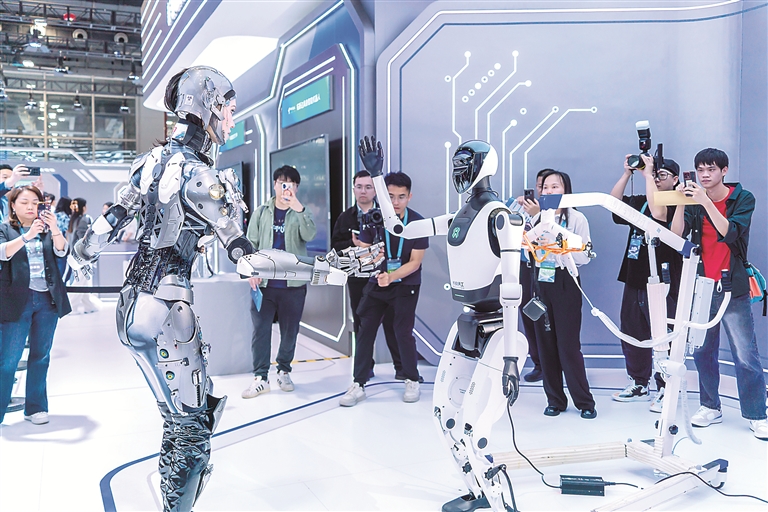
Group 1 - The core viewpoint emphasizes the importance of innovation-driven development as a strategic decision by the Chinese government to achieve high-quality economic growth and to foster new driving forces for modernization [3][4]. - The focus on cultivating new driving forces through technological innovation, institutional innovation, and model innovation is essential for transforming the economy from resource consumption to technological advancement [3][4][5]. - The current global technological competition necessitates a strong emphasis on self-innovation to maintain competitiveness in key core technologies [4][5]. Group 2 - Significant historical achievements in innovation have been made since the 18th National Congress, positioning China as an innovative nation with notable advancements in various high-tech fields [6][7]. - Breakthroughs in key core technologies, such as artificial intelligence and big data, have accelerated the application of emerging technologies, providing a robust engine for high-quality economic development [7][8]. - The establishment of a comprehensive innovation system has strengthened the foundation for development, with increased R&D investment and enhanced roles for enterprises in innovation [8][9]. Group 3 - The practical path to cultivating new driving forces involves a systematic approach to enhance technological self-reliance and support for foundational research [9][10]. - Developing a modern industrial system is crucial, focusing on strategic emerging industries and future industries to seize new opportunities in global industrial restructuring [10][11]. - Deepening reforms in key areas and creating a conducive environment for new driving forces is necessary to eliminate barriers to innovation and development [11][12].
向“新”而行 “质”胜未来--中国铁建“十四五”发展新质生产力培育壮大新动能
Zhong Guo Chan Ye Jing Ji Xin Xi Wang· 2026-01-12 22:07
Core Viewpoint - China Railway Construction Corporation (CRCC) is driving an industrial leap through innovation during the 14th Five-Year Plan period, focusing on strategic national needs and the characteristics of the construction industry [1] Group 1: Strategic Development - CRCC is actively developing new productive forces and constructing a system that aligns with these forces, aiming to break down barriers to new momentum development [2] - The "1256" mid-to-long-term development strategy outlines CRCC's path for the next 10 to 20 years, with the goal of becoming a world-class modern enterprise and focusing on upgrading traditional construction and nurturing strategic emerging industries [2] - The establishment of the CRCC Research Institute and various industry technology research institutes supports a systematic innovation framework, enhancing the development of strategic emerging industries and providing a robust support system for a "second growth curve" [2] Group 2: Technological Advancements - CRCC is committed to overcoming key technical challenges and has achieved significant breakthroughs, such as the independent development of a 8.61-meter main bearing for shield machines, positioning itself at a world-leading level in this area [4] - The company has made strides in green production, with significant orders for bamboo-wound pipelines, indicating a strong market potential in the new materials sector [4][5] - Innovations in other fields include the development of aerogels and new photocatalytic materials, which have entered the market for air purification and building materials [5] Group 3: Digital Transformation - Since the 14th Five-Year Plan, CRCC has been promoting transformation through six key areas: high-end, intelligent, green, digital, refined, and international [6] - The company has developed advanced machinery for railway construction, such as the world's first thousand-ton high-speed rail bridge erection machine, showcasing its technological leadership [6] - CRCC is advancing digital transformation by establishing a computing power center and integrating technologies like Beidou and laser radar to enhance efficiency in design and construction processes [7]

51GWh电池基地开工!
起点锂电· 2026-01-12 10:58
Group 1 - The core viewpoint of the article highlights the commencement of six key projects in the Yudongnan High-tech Zone, with a total investment of 12.725 billion yuan, focusing on strategic emerging industries such as new energy and advanced electronic information technology [2] - Among the projects, the Zhongchuang Xinhang Xinyang Base will establish a 51GWh production line for lithium-ion batteries, ensuring long-term upgrade capabilities through reserved technical interfaces and production capacity [2] - The Xinyang Base project has a total investment of 9.63 billion yuan, covering approximately 607 acres, and is expected to generate an annual output value of 12 billion yuan, create 4 billion yuan in tax revenue, and provide 3,000 jobs upon full production by January 2028 [2]
中国人寿:优化投资布局,服务国家发展大局
Zheng Quan Shi Bao Wang· 2026-01-12 10:14
Core Viewpoint - China Life Insurance Company has demonstrated significant growth in net profit and investment assets, reflecting its commitment to national development strategies and robust investment management practices [2][3]. Financial Performance - In the first three quarters of 2025, China Life achieved a net profit attributable to shareholders of over 167.8 billion yuan, a 60.5% increase year-on-year [2]. - Shareholder equity reached 625.83 billion yuan, up 22.8% from the previous year [2]. - Investment assets doubled from 3574.9 billion yuan at the end of 2019 to 7282.9 billion yuan by the end of Q3 2025 [3]. Investment Strategy - The company adheres to a long-term, value-oriented, and stable investment philosophy, focusing on asset-liability matching principles [3]. - Total investment income for the first three quarters of 2025 was 368.55 billion yuan, an increase of 107.13 billion yuan (over 40%) compared to the same period in 2024 [3]. - The total investment return rate was 6.42%, up 104 basis points year-on-year [3]. Innovative Investment Models - In 2024, China Life launched the Honghu Fund, a 50 billion yuan private equity fund aimed at long-term capital investment [4]. - The company became a pioneer in insurance capital investment in gold, completing its first gold inquiry transaction in March 2025 [5]. - China Life also initiated the first data center asset-backed securities (ABS) in the market, enhancing the investment landscape for insurance funds [5]. Support for the Real Economy - China Life has invested 11.8 billion yuan in the "China Life-Hu Fa No. 1 Equity Investment Plan" to support state-owned enterprises in Shanghai [6]. - The company has strategically invested in green energy projects, becoming a major investor in companies like China Nuclear Power and Huadian New Energy [7]. - Investments in regional development projects, such as the 17 billion yuan investment in Yunnan's state-owned enterprises, demonstrate the company's commitment to local economic growth [8]. Focus on Emerging Industries - China Life has established a 4 billion yuan technology innovation fund targeting sectors like semiconductors and healthcare [9][10]. - The company has increased its equity market presence, adding over 150 billion yuan in public market equity by mid-2025 [10]. Future Outlook - As the "14th Five-Year Plan" progresses, China Life aims to leverage its long-term capital advantages to enhance its operational capabilities and contribute to China's modernization efforts [11].

6个项目总投资超127亿元,豫东南高新区重大项目上新
He Nan Ri Bao· 2026-01-11 23:40
Core Viewpoint - The article highlights the commencement of key projects in the Yudongnan High-tech Industrial Development Zone, emphasizing the strategic importance of these developments in enhancing the local economy and attracting further investments in the renewable energy sector [3][4]. Group 1: Project Developments - Six major projects have been launched with a total investment of 12.725 billion yuan, covering strategic emerging industries such as new energy and advanced electronic information technology [3]. - The Zhongchuang Innovation Technology Group is establishing a 51GWh power and energy storage battery project in Xinyang, with a total investment of 9.63 billion yuan, expected to generate an annual output value of 12 billion yuan and create 3,000 jobs by 2028 [3][4]. Group 2: Economic Impact - The projects are anticipated to significantly contribute to the local economy, with the Zhongchuang Innovation project alone expected to generate 400 million yuan in tax revenue annually [3]. - The Yudongnan High-tech Zone aims to become a new growth pole for high-quality development in Xinyang, enhancing the regional economic transformation and upgrading [4]. Group 3: Infrastructure and Future Plans - The Yudongnan High-tech Zone has established a 38.5 km backbone road network and a basic framework for a 28 square kilometer industrial new city, with ongoing developments in various industrial parks [4]. - Future plans include focusing on green low-carbon development and building a modern industrial system, aligning with national high-tech zone standards and zero-carbon park initiatives [5].
6646亿!江苏省2026重大项目清单发布,新兴和未来产业占比达80%!(附清单)
DT新材料· 2026-01-11 23:28
Core Viewpoint - Jiangsu Province has officially released the major project list for 2026, which includes 670 major projects with a planned investment of 664.6 billion yuan, representing a year-on-year increase of 12 billion yuan. The focus is on quality improvement alongside quantity increase, with a significant emphasis on strategic emerging industries and future industries [2]. Group 1: Major Projects Overview - The list includes 670 major projects with a total planned investment of 664.6 billion yuan, an increase of 12 billion yuan compared to the previous year [2]. - Among these, 414 projects are in the industrial sector, accounting for over 75% of the total, with a planned investment of 295 billion yuan [2]. - Infrastructure projects number 118, with a planned investment of 323.6 billion yuan, while 18 projects focus on livelihood and environmental protection, with a planned investment of 46 billion yuan [2]. Group 2: Focus on Quality and Industry - The proportion of strategic emerging industries and future industries in manufacturing projects has increased from 74% to 80%, while high-energy-consuming industries like chemicals and metallurgy have seen a significant reduction [2]. - Strict controls are in place for projects in industries with overcapacity, such as power batteries and photovoltaics [2]. Group 3: Key Projects Listed - Notable projects include advanced silicon wafers, AI servers, and high-performance materials for various applications, such as robotics and aerospace [3][4][5]. - Specific projects highlighted include the development of new generation information technology, high-end equipment manufacturing, and new materials, with a focus on innovation and sustainability [6][7][8]. Group 4: Future Industries and Innovations - Future industries include advancements in aerospace technology, AI robotics, and energy storage solutions, with several projects aimed at enhancing capabilities in these areas [8][9][10]. - The list emphasizes the importance of integrating new technologies and materials to drive growth in strategic sectors [11][12]. Group 5: Investment Opportunities - The focus on strategic emerging industries presents significant investment opportunities, particularly in sectors such as new energy, advanced manufacturing, and green technologies [2][3][4]. - The planned investments in these areas indicate a strong commitment from the Jiangsu government to foster innovation and economic development [2][11].

奋力推进一季度开好局丨6个项目总投资超127亿元 豫东南高新区重大项目上新
He Nan Ri Bao· 2026-01-11 23:28
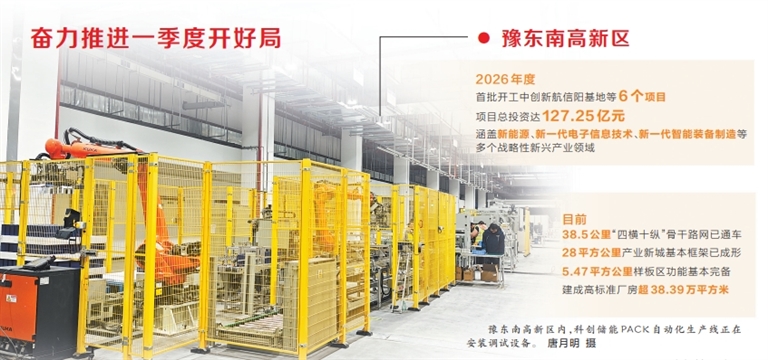
Group 1 - The core focus of the news is the commencement of six key projects in the Yudongnan High-tech Industrial Development Zone, with a total investment of 12.725 billion yuan, covering strategic emerging industries such as new energy and advanced electronic information technology [1][2] - The Zhongchuang Innovation Technology Group is establishing a lithium-ion battery production line in the Yudongnan High-tech Zone, with a planned capacity of 51GWh for power and energy storage batteries, ensuring long-term upgrade capabilities [1][2] - The Yudongnan High-tech Zone aims to become a new growth pole for high-quality development in Xinyang, serving as a demonstration area for innovation-driven and green development, and a testing ground for development zone reforms in Henan Province [2][3] Group 2 - Zhongchuang Innovation has a 5.4% market share in the global power battery market and is expected to generate an annual output value of 12 billion yuan and create 3,000 jobs upon full production by January 2028 [2] - The Yudongnan High-tech Zone has established a robust infrastructure, including a 38.5 km road network and a 28 square km industrial new city framework, with significant investments in various sectors totaling 19.736 billion yuan [3] - The zone's development strategy focuses on green low-carbon growth and aims to align with national high-tech zone standards, promoting a modern industrial system and supporting high-quality development [3]
浙商银行殷剑峰:2026年中国资产无须过于悲观
Zhong Guo Jing Ying Bao· 2026-01-11 11:23
Core Viewpoint - The chief economist of Zheshang Bank, Yin Jianfeng, expressed optimism about Chinese assets in 2026, suggesting that strategic emerging industries are maturing and traditional sectors are recovering from various shocks [1] Group 1: Historical Context - Historically, years of the horse in the Chinese zodiac have coincided with economic stabilization: 1978 marked the beginning of reform and opening up; 1990 was the lowest point after turmoil; 2002 was the first year after joining the WTO, leading to a decade of growth; and 2014 was on the eve of a new investment cycle [1] - The year 2026 is expected to follow this trend, indicating a potentially favorable economic environment [1] Group 2: Industry Insights - Traditional industries are gradually recovering from impacts, while cyclical industries may enter a new cycle [1] - Strategic emerging industries are transitioning from infancy to strength, with new growth drivers capable of revitalizing older sectors [1] Group 3: Investment Opportunities - Investment opportunities are identified in cyclical sectors, particularly in energy cycles, with oil, petrochemicals, and coal industries closely aligned with the London crude oil price index [1] - Additionally, the non-ferrous metals and chemical products sectors are noted for their strong correlation with the London copper price [1]


我国已发布“新三样”国家标准五十七项
Xin Lang Cai Jing· 2026-01-10 18:28
Core Insights - China has released a total of 57 national standards related to the new energy vehicle, lithium battery, and photovoltaic industries, with 13 standards for new energy vehicles, 2 for lithium batteries, and 42 for the photovoltaic sector [1] Group 1: National Standards Overview - The national standards released include guidelines for electric vehicle remote services, battery swap safety requirements, charging and discharging systems, lithium battery coding rules, green product evaluations, and ground-mounted photovoltaic modules [1] - The "new three samples" industries have been identified as strategic emerging industries, with clear development directions and goals set by the government [1] Group 2: Future Standards Development - By 2025, the State Administration for Market Regulation plans to implement 167 national standard projects for the "new three samples" industries, including 57 revised or newly established standards in the new energy vehicle sector focusing on safety, product quality, carbon footprint, battery recycling, and performance evaluation [2] - In the lithium battery sector, 30 new national standards will be developed, emphasizing product safety, classification, quality management, and green low-carbon initiatives [2] - The photovoltaic sector will see the establishment of 80 national standards, concentrating on product quality safety, energy consumption limits, new high-efficiency photovoltaic battery components, and intelligent operation and maintenance of photovoltaic systems [2] Group 3: Implementation and Promotion - The State Administration for Market Regulation will accelerate the development of national standards for the "new three samples" industries and enhance the promotion of existing standards through various means [2] - Collaboration with relevant departments will be initiated to ensure the industry accurately understands and implements the standards, aiming for effective application and rapid realization of the standards to drive high-quality development in these sectors [2]