新能源转型

Search documents
硫磺:向全球资源博弈下的新周期演进
Guotou Securities· 2025-11-30 10:04
Investment Rating - The report maintains an investment rating of "Outperform the Market-A" for the industry [4] Core Insights - The report highlights that sulfur prices have been on the rise since the second half of 2024, reaching a significant high of 3950 CNY/ton as of November 25, 2025, indicating a structural change in both supply and demand dynamics [1][26] - The report emphasizes that sulfur is primarily a byproduct of the petroleum and natural gas industries, and its pricing is heavily influenced by global supply and demand rather than domestic factors [1][27] - The ongoing geopolitical tensions, particularly the impact of the Russia-Ukraine conflict, have severely affected sulfur supply, with Russian exports plummeting from 3.9 million tons in 2019 to just 1.04 million tons in 2024 [2][37] - The demand for sulfur is expected to surge due to the rapid expansion of lithium iron phosphate production in China, which is projected to exceed 360,000 tons in 2025, significantly increasing sulfur consumption [3][39] Summary by Sections 1. Sulfur as an Industrial Byproduct - Sulfur is a crucial industrial raw material, primarily used in the production of sulfuric acid, which is a key indicator of industrial development [13][18] - The majority of sulfur is produced as a byproduct of oil refining, with 70.62% from petroleum and 25.53% from natural gas [14] 2. Sulfur Price Review - Historical price trends show three major price surges in 2008, 2022, and 2025, driven by global supply disruptions and increased demand [24][25] - As of November 22, 2025, sulfur prices reached 3985 CNY/ton, reflecting a year-on-year increase of 152.22% [26] 3. Supply Dynamics - Global refining capacity is expected to decline, limiting sulfur supply growth, with significant impacts from the ongoing conflict in Ukraine affecting Russian production [32][37] - The report forecasts a supply gap of -30/-513/-405 million tons for sulfur from 2025 to 2027, indicating a tightening market [49] 4. Demand Drivers - The demand for sulfur is projected to increase significantly due to the growth of the lithium iron phosphate sector, which is expected to account for 8% of sulfur demand by 2025 [39][42] - Indonesia's MHP production is anticipated to add 658,000 tons of sulfur demand, further straining global supply [42] 5. Related Companies - The report suggests focusing on companies involved in sulfur production and recovery, such as Sinopec and PetroChina, which are expected to benefit from rising sulfur prices [9]
报告派研读:2025-2026年有色金属行业年度策略
Sou Hu Cai Jing· 2025-11-30 01:18
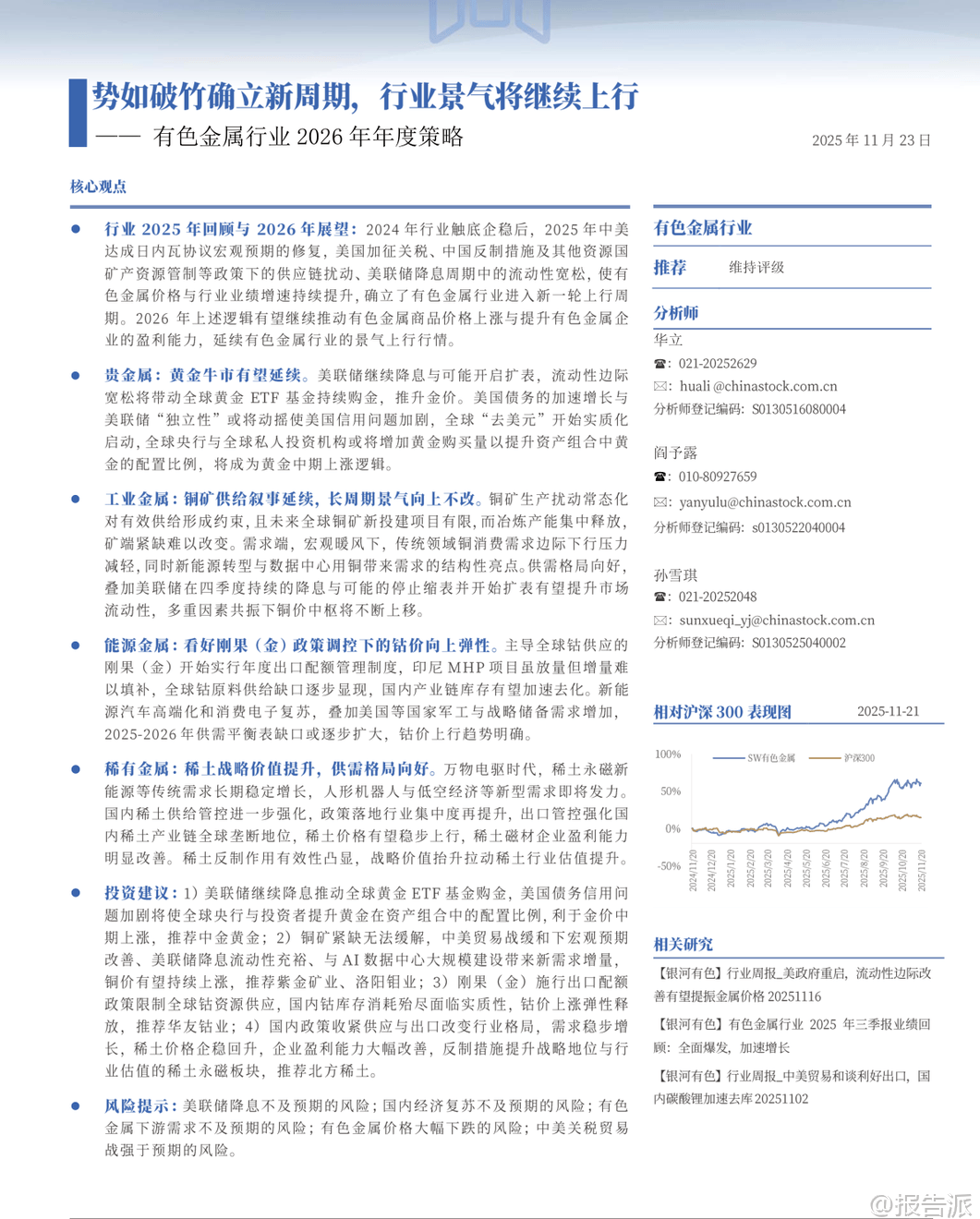
Group 1 - The non-ferrous metals industry is expected to experience a comprehensive explosion in 2025 after stabilizing at the bottom in 2024, marking the beginning of a new upward cycle driven by multiple macro and industrial factors [1][19] - The core drivers of this bullish trend include the restoration of macro expectations following the Geneva Agreement between China and the US, the initiation of a rate-cutting cycle by the Federal Reserve, ongoing disruptions in the global supply chain due to resource country policy regulations, and structural demand growth from the energy transition and AI data center construction [1][19] - The outlook for 2026 suggests that these dynamics will continue to elevate the price center of non-ferrous metals and improve overall industry profitability [2] Group 2 - In terms of sub-sectors, precious metals, industrial metals, energy metals, and rare metals all exhibit strong growth potential [3] - Gold is expected to maintain its bull market due to the Federal Reserve's ongoing rate cuts and increasing US debt issues [4] - Liquidity easing is likely to drive global gold ETF purchases, while the accelerating trend of "de-dollarization" will enhance central banks' willingness to buy gold, highlighting its strategic reserve value [5] Group 3 - In the industrial metals sector, copper is identified as a key representative of long-cycle prosperity, with limited new copper mine projects and frequent production disruptions leading to a persistent supply shortage [7] - The demand side shows resilience, with traditional sectors experiencing reduced downward pressure and rapid growth in copper demand from emerging fields such as new energy vehicles, photovoltaics, wind power, and AI data centers [7] - AI data center construction is projected to contribute an additional 50-72 thousand tons of copper demand by 2026, becoming a significant new growth engine [8] Group 4 - In the energy metals sector, cobalt prices are on an upward trend, driven by supply constraints from the Democratic Republic of the Congo (DRC) implementing export quota management starting in 2025, which will reduce quotas by 56% compared to 2024 production levels [10] - Despite capacity releases from Indonesia's MHP project, the incremental supply is insufficient to fill the gap, leading to a shift from surplus to shortage in global cobalt supply-demand balance, with a projected shortfall of 53 thousand tons by 2026 [11] Group 5 - The strategic value of rare metals, particularly rare earths, is significantly enhanced, with China's export controls on heavy and medium rare earths leading to a substantial price disparity in overseas markets [13] - Domestic policies are tightening, further increasing industry concentration, while demand from new applications such as humanoid robots and low-altitude economies is expected to drive growth [15][16] - A projected demand of 8,400 tons of neodymium oxide by 2030 indicates a compound annual growth rate of 169%, with a substantial supply gap expected to emerge from 2026 onwards [17] Group 6 - Investment recommendations include focusing on companies that will benefit from the rising gold prices, such as Zhongjin Gold, and those with rich copper resources like Zijin Mining and Luoyang Molybdenum [17] - Companies like Huayou Cobalt will benefit from the supply contraction in cobalt from the DRC, while Northern Rare Earths is recommended for its comprehensive rare earth industry chain layout [17]

力压黄金 “黑马”跑出历史新高!
Shang Hai Zheng Quan Bao· 2025-11-29 06:37
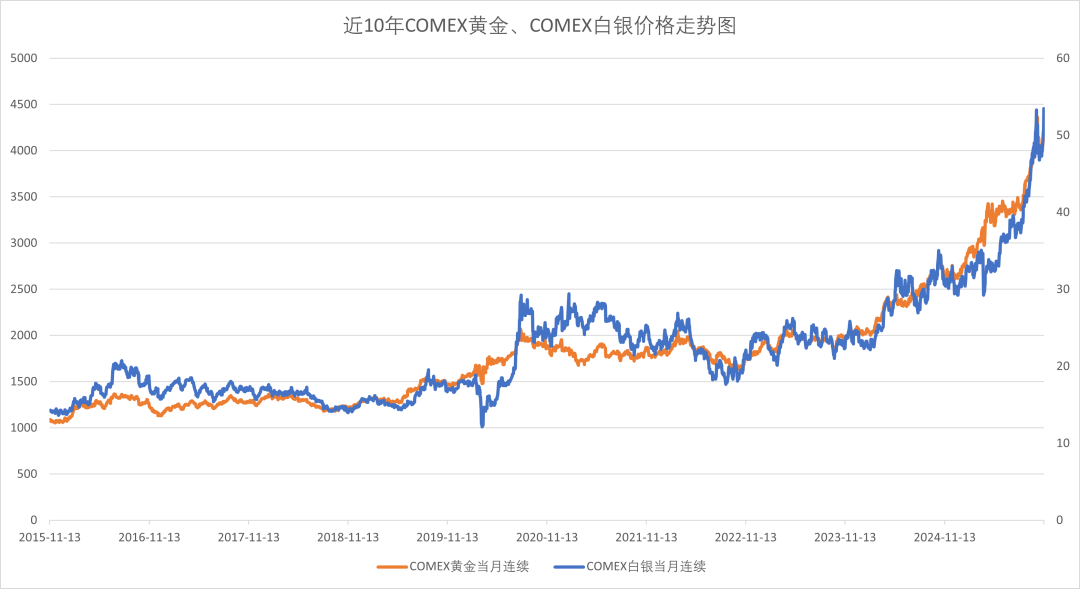
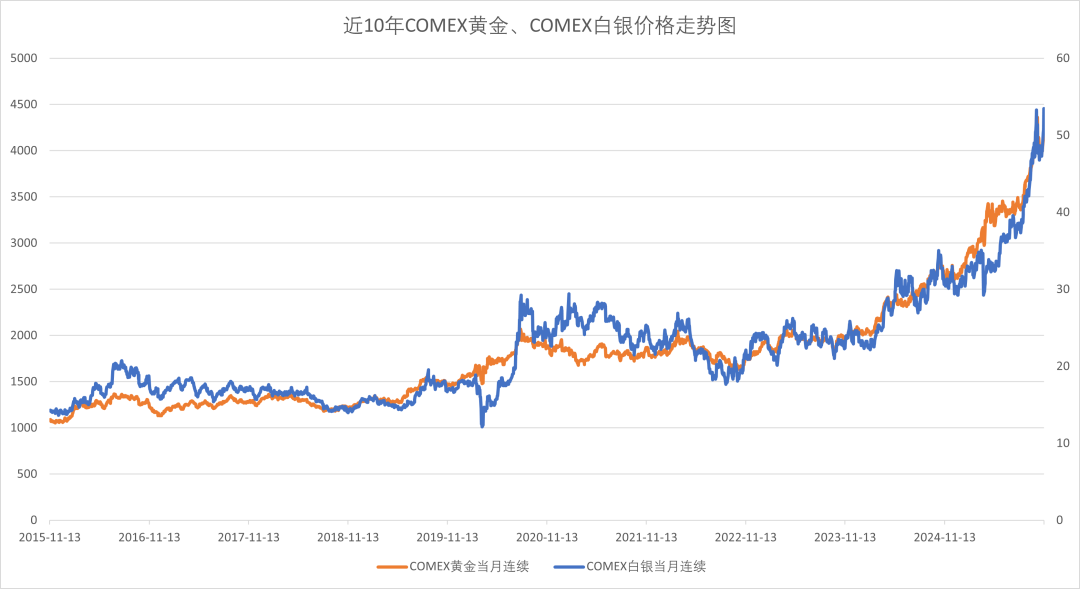
Core Viewpoint - Silver prices have surged to historical highs, driven by expectations of a Federal Reserve interest rate cut in December, with silver outperforming gold this year [1][3][4]. Group 1: Price Movements - COMEX silver futures reached a peak of $57.245 per ounce, marking a new high since the contract's inception, with an intraday increase of 6.79% [1]. - London spot silver also saw a significant rise, with a 5.74% increase, breaking historical records [1]. - In the domestic market, the Shanghai silver futures contract hit a maximum of 13,239 yuan per kilogram, reflecting a 5.55% increase and also reaching a historical high [1]. Group 2: Market Drivers - The surge in silver prices is attributed to an 85.4% probability of a 25 basis point rate cut by the Federal Reserve in December, as indicated by the CME Group's FedWatch tool [3]. - Federal Reserve Governor Waller reiterated support for the December rate cut, citing stable economic data since the last meeting [3]. Group 3: Supply and Demand Dynamics - The World Silver Association forecasts that global silver mining supply will remain flat at 813 million ounces in 2025, while recycling is expected to reach a 13-year high with only a 1% increase [4]. - Despite a projected decline in global silver demand to 1.12 billion ounces in 2025 (a 4% decrease), a supply deficit of 95 million ounces is anticipated for the fifth consecutive year [5][4]. - A resource company executive indicated that silver supply is expected to remain short in 2026, supporting price stability [5]. Group 4: Historical Context and Trends - Over the past decade, silver prices have increased by approximately 301.8%, with the gold-silver ratio fluctuating between 63 and 122 [7][10]. - Silver's dual nature as both an industrial and financial asset has led to varied price movements, with its industrial demand becoming a significant factor since 2022, particularly from the solar panel sector [9][11]. - The evolving dynamics of the gold-silver ratio illustrate silver's transition from a secondary role to a more independent market presence, with expectations for continued upward momentum in the context of global energy transitions [10][11].
力压黄金,白银跑出历史新高!
Shang Hai Zheng Quan Bao· 2025-11-29 06:30
Core Viewpoint - Silver prices have surged to historical highs, driven by expectations of a Federal Reserve interest rate cut in December, outperforming gold in recent performance [1][2]. Group 1: Price Movements - COMEX silver futures reached a peak of $57.245 per ounce, marking a new high since the contract's inception, with an intraday increase of 6.79% [1]. - London spot silver also saw significant gains, with a rise of 5.74%, while domestic futures in China hit 13,239 yuan per kilogram, up 5.55% [1]. - Over the past decade, silver prices have increased by over 300% [3]. Group 2: Market Expectations - The probability of a 25 basis point rate cut by the Federal Reserve in December is now at 85.4%, as indicated by the CME's FedWatch tool [2]. - Federal Reserve Governor Waller reiterated support for the rate cut, citing stable economic indicators since the last meeting [2]. Group 3: Supply and Demand Dynamics - The World Silver Association forecasts that global silver mining supply will remain flat at 813 million ounces in 2025, with a projected demand drop to 1.12 billion ounces, a 4% decrease year-on-year [2]. - Despite a slight increase in recycling rates, the supply deficit is expected to persist for the fifth consecutive year, estimated at 9.5 million ounces [2]. - A resource company executive indicated that silver supply shortages are likely to continue into 2026, supporting price stability [2]. Group 4: Historical Context and Trends - Silver has historically followed gold's trends but has exhibited more volatility, with a 301.8% price increase over the last decade [3][5]. - The gold-silver ratio has fluctuated between 63 and 122, reflecting silver's evolving role from a secondary asset to a more independent investment [5][6]. - The demand for silver in industrial applications, particularly in solar panels, has become a significant factor, although growth may peak in 2024 [2][6].
力压黄金,“黑马”跑出历史新高!
Shang Hai Zheng Quan Bao· 2025-11-29 06:29
Group 1 - Silver prices have surged, with COMEX silver reaching a record high of $57.245 per ounce, marking a maximum increase of 6.79% during trading [1] - The London spot silver also saw a significant rise, with a peak increase of 5.74%, while domestic futures in China hit a high of 13,239 yuan per kilogram, up 5.55% [1] - The driving force behind the rising silver prices is the increasing expectation of a Federal Reserve rate cut in December, with an 85.4% probability of a 25 basis point cut [2] Group 2 - The global silver supply is expected to remain flat at 813 million ounces in 2025, with a slight increase in recycling but a projected 4% decline in demand to 1.12 billion ounces [3] - Despite the stable industrial demand for silver, a significant supply deficit is anticipated for the fifth consecutive year in 2025, estimated at 95 million ounces [4] - The solar energy sector has emerged as a major variable in silver demand, although it is expected to peak in 2024 and experience a marginal decline in 2025 [4] Group 3 - Over the past decade, silver prices have increased by approximately 301.8%, with the gold-silver ratio fluctuating between 63 and 122 [5] - Silver's dual attributes of being both a financial and industrial metal have led to its price volatility, with periods of correlation and divergence from gold prices [7] - The past ten years have seen silver's industrial demand grow, particularly in sectors like photovoltaics, AI, and semiconductors, indicating potential for further price increases [8]
电车赢了油车,电池赢了石油,都是中国赢了
3 6 Ke· 2025-11-28 11:07
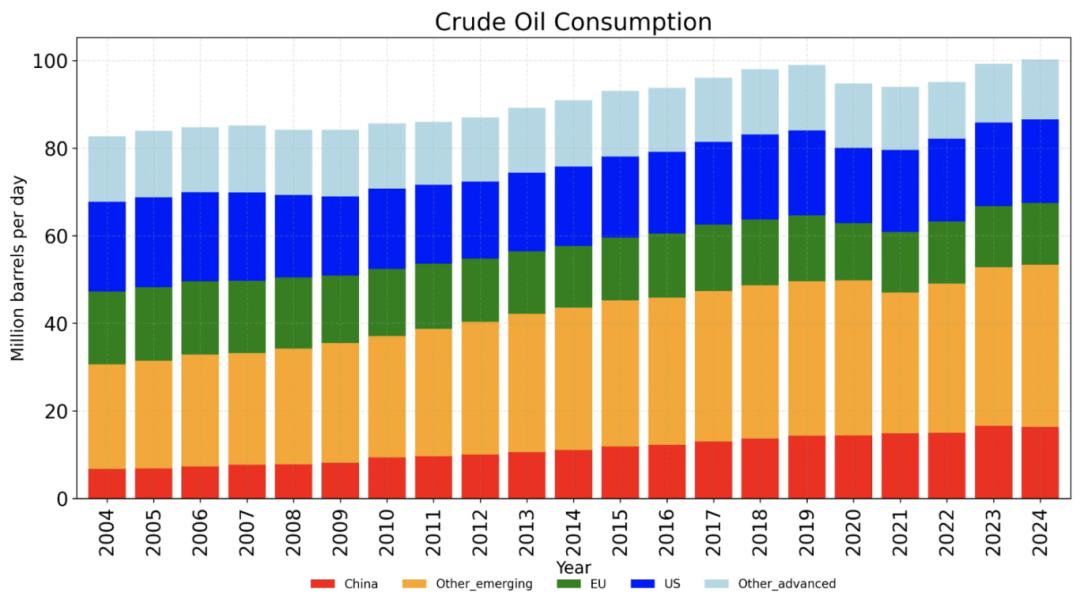
Core Insights - The rapid adoption of electric vehicles (EVs) in China is significantly reshaping the country's oil consumption patterns, with a notable decline in oil demand projected for 2024, marking the first decrease in two decades [1][5][20] - The strategic shift towards EVs not only reduces reliance on oil but also aligns with broader goals of enhancing energy security and technological self-sufficiency [5][8][20] Electric Vehicle Adoption - In 2024, electric vehicles accounted for 25% of new car sales in China, with a total of 3,143.6 million vehicles sold, representing a 4.5% year-on-year increase [10][21] - The penetration rate of new energy vehicles reached 40.9%, with battery electric vehicles making up 60% of new energy vehicle sales [10][11] Oil Consumption Trends - From 2005 to 2024, China's oil consumption more than doubled, becoming the largest crude oil importer and contributing to over half of the global oil demand growth [3][5] - In 2024, a structural change in oil consumption is expected, driven by the rapid proliferation of electric vehicles, leading to a projected reduction of approximately 430,000 barrels per day in gasoline consumption [2][16][20] Long-term Projections - If the transition to electric vehicles accelerates, the reduction in gasoline consumption could double by 2040, potentially reaching 860,000 barrels per day [2][20] - The research indicates that by 2040, the annual savings in gasoline consumption could contribute to a significant reduction in carbon dioxide emissions, estimated at around 267 million tons, which is about 2.3% of China's total emissions in 2023 [20] Strategic Implications - The shift towards electric vehicles is a cornerstone of China's geopolitical and economic strategy, influencing global value chains and competitive dynamics in the automotive industry [8][20] - The findings underscore the importance of strong EV adoption in reshaping China's oil consumption model and achieving substantial emissions reductions, with implications extending beyond China's borders [20]
东风股份混动技术获突破 将大幅提升轻型商用车节能减排
Yang Shi Wang· 2025-11-28 08:30
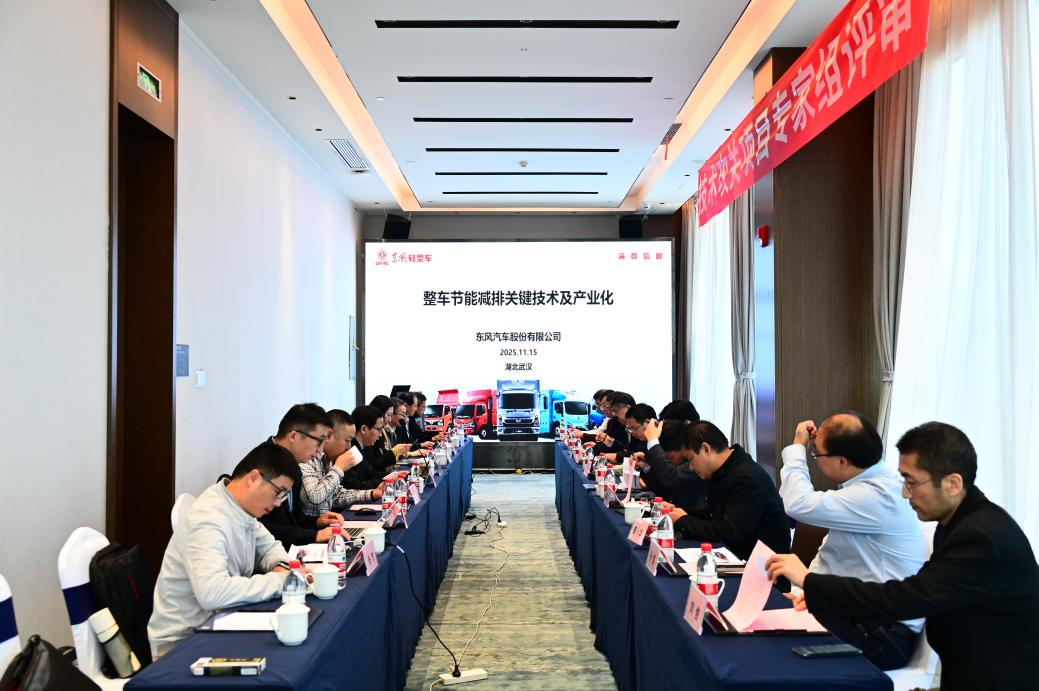
Core Insights - Dongfeng Motor's "Key Technologies and Industrialization for Vehicle Energy Saving and Emission Reduction" project has been recognized as reaching "international advanced" level by experts, showcasing a comprehensive technological breakthrough across the entire vehicle chain from power source to transmission efficiency and vehicle control [1] Group 1: Engine Technology - The M9T hybrid engine, with a displacement of 2.3 liters, has improved overall thermal efficiency from 41.3% to 46.2%, significantly enhancing energy utilization efficiency [3] - The M9T engine can reduce vehicle fuel consumption by 20%-30% per 100 kilometers when applied [3] Group 2: Transmission System - The planetary gear coupling assembly, developed independently by Dongfeng, achieves a transmission efficiency of 91.22%, effectively reducing transmission losses and operating costs [5] - The application of this system can lead to a 2% reduction in fuel consumption per 100 kilometers and a 1% increase in vehicle range [5] Group 3: Vehicle Control Innovations - Dongfeng's 4.5T hybrid light truck integrates fuel consumption simulation with real vehicle energy flow testing, achieving a low fuel consumption of 6.8L/100km under CHTC-LT conditions [5] - This innovation provides a solution for the integration of hybrid systems in the light commercial vehicle sector [5] Group 4: Production and Future Plans - The first hybrid light truck equipped with the M9T engine and planetary gear coupling has rolled off the production line at Dongfeng's Xiangyang factory, with plans to produce 500 units by the end of 2025 [7] - Dongfeng aims to enhance its R&D investment to support energy-saving and carbon reduction initiatives, contributing to the green transformation of the industry [8]


探访东风康明斯智能制造工厂,揭秘其新能源与全球化布局!
第一商用车网· 2025-11-28 06:57
Core Viewpoint - Dongfeng Cummins is transforming from a technology follower to an industry leader over nearly 40 years, with the launch of the high-end light truck brand "Dongfeng Qiankun" and the new D2.5/3.0 engine showcasing its technological advancements and smart manufacturing capabilities [3][14]. Group 1: Smart Manufacturing - Dongfeng Cummins has established a national-level smart manufacturing demonstration factory, featuring a dual factory collaboration system for medium and heavy-duty engines, with 12 machining lines and 2 engine assembly lines, enabling flexible production and efficient coordination [5]. - The factory has achieved 90% automation in production processes, utilizing advanced robotics and AI systems, moving towards a fully automated "black light factory" model [5]. - Full lifecycle digital management is implemented, enhancing production efficiency and product quality, with a product consistency qualification rate significantly exceeding industry averages [5]. Group 2: Technological Advancements - The intelligent thermal management system in Dongfeng Cummins engines improves fuel economy by 2%-3% through precise temperature control [7]. - The company is committed to R&D in cutting-edge technologies such as hydrogen internal combustion engines and fuel cells, aiming to create a diversified product matrix that includes both traditional and new energy solutions [10]. Group 3: Strategic Development - Dongfeng Cummins has set a new "312+" three-year business plan, targeting 300,000 units in sales and a 12% market share, while focusing on breakthroughs in new energy and overseas markets [9]. - Despite industry fluctuations, the company achieved a sales increase to 113,100 units in the first half of the year, reflecting a growth rate of 11.08% year-on-year, supporting its transition to new energy [10]. - The company plans to expand its global presence, particularly in Southeast Asia and South America, leveraging a comprehensive product portfolio that meets diverse emission standards across over 190 countries [12]. Group 4: Industry Transformation - The launch of the 4 millionth engine and the establishment of smart manufacturing facilities signify a profound industry transformation, with Dongfeng Cummins redefining traditional manufacturing and expanding its boundaries in power solutions [14]. - The company's approach to overseas markets emphasizes local ecosystem development and collaboration with foreign manufacturers to enhance product adaptability [12].

获封新能源重卡之星,乘龙翼威5定义干线物流新标杆
Zhong Guo Qi Che Bao Wang· 2025-11-28 06:36
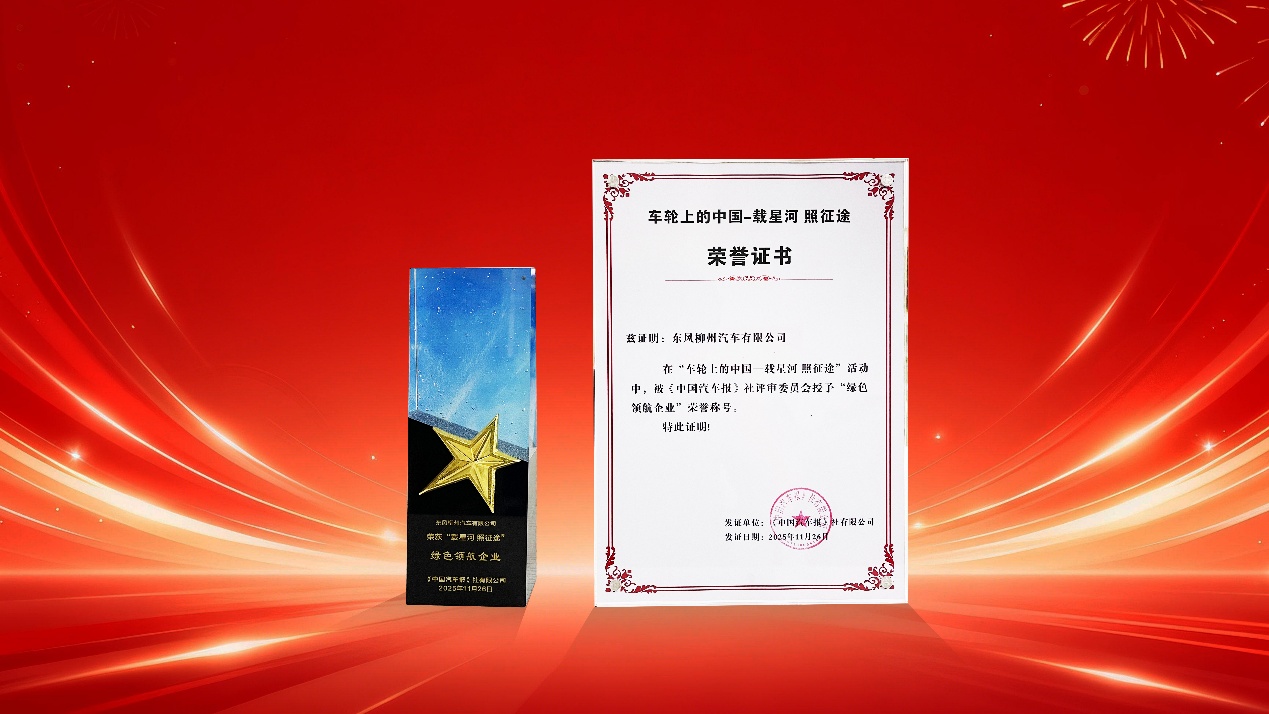
Core Insights - Dongfeng Liuzhou Motor (DFLZ) has been recognized as a "Green Pioneer Enterprise" and its product, the Chenglong Yiwai 5 pure electric tractor, has won the title of "New Energy Heavy Truck Star" at an event hosted by China Automotive News [1] Group 1: Company Development and Strategy - DFLZ has a long history, being one of the first industrial enterprises in China since 1954, and has continuously led the commercial vehicle industry [4] - The company is committed to a comprehensive transition to new energy, pledging that by 2030, 100% of its R&D investment will focus on new energy products [4] - The "Longxing Project" aims to invest 10 billion and achieve an output value of 80 billion, with a target of producing and selling 300,000 new energy vehicles by 2026 [4] Group 2: Technological and Market Advantages - DFLZ possesses four key advantages in its new energy transition: strong technical accumulation, comprehensive marketing network, state-owned enterprise demonstration, and brand service assurance [5] - The company has developed a diversified core product matrix for new energy commercial vehicles, covering various vehicle types and providing low-carbon logistics solutions for different scenarios [5] Group 3: Challenges and Responses - The industry faces three main challenges: high energy consumption and short range of new energy trucks, mismatch between standardized vehicles and diverse market demands, and weak ecosystem support for total cost of ownership [6] - DFLZ responds to these challenges with three commitments: self-reliance in core technology, collaborative industrial ecosystem, and comprehensive green development [6] Group 4: New Product Launch - The Chenglong Yiwai 5 is the first fully developed new energy heavy truck platform from DFLZ, featuring a spacious design and advanced technology [7] - The vehicle boasts a maximum power of 1,209 horsepower, with an efficiency of 95%, and supports super-fast charging, achieving 10% to 80% charge in just 30 minutes [7] - Safety features include high-strength steel construction, advanced braking systems, and intelligent driving assistance, enhancing overall vehicle safety and efficiency [9] Group 5: Future Outlook - DFLZ is leveraging technology to drive high-quality development in the commercial vehicle industry and aims to showcase the capabilities of Chinese brands on the global stage [9]

稀有金属概念股盘中大涨,稀有金属ETF基金(561800)最高涨超2%,成分股盛新锂能、天华新能等涨幅居前
Sou Hu Cai Jing· 2025-11-28 03:10
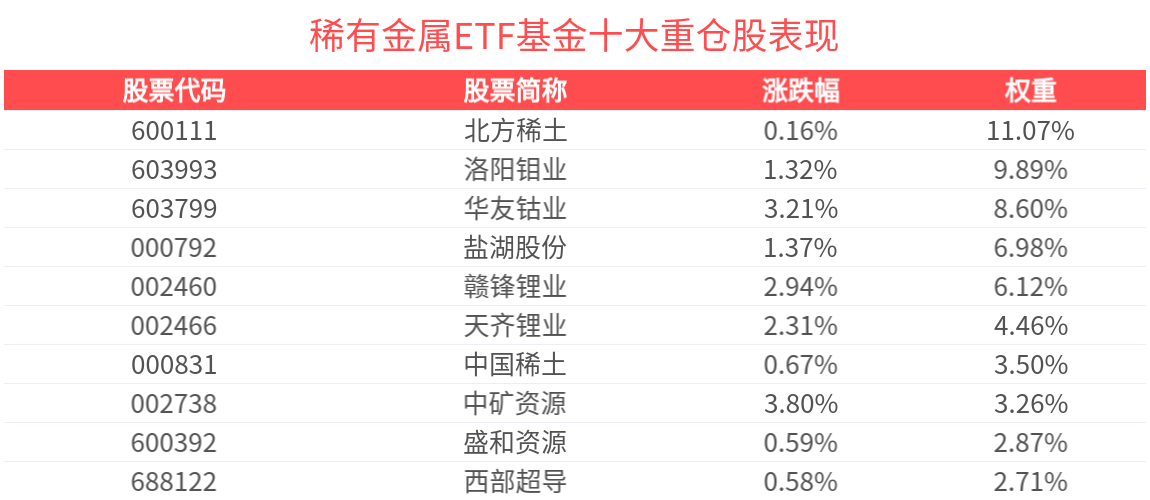
Group 1 - The core viewpoint highlights the significant rise in rare metal stocks driven by the dual forces of new energy transition and high-end manufacturing upgrades, with the rare metal theme index showing a strong performance [1][2] - As of November 27, 2025, the rare metal ETF fund has accumulated a 15.14% increase over the past three months, indicating strong investor interest and market momentum [1] - The liquidity of the rare metal ETF fund is notable, with a turnover rate of 5.29% and a total transaction volume of 975.95 million yuan, reflecting active trading [1] Group 2 - The strategic value of rare metals is emphasized, with traditional demand remaining stable while emerging fields like humanoid robots and low-altitude economy are becoming significant growth drivers [2] - The industry is experiencing increased concentration due to tighter domestic supply controls and enhanced export regulations, which are expected to support rising rare metal prices and improve corporate profitability [2] - The top ten weighted stocks in the rare metal theme index account for 60% of the index, with companies like Northern Rare Earth and Luoyang Molybdenum leading the way [2][4]