
科技自立自强

Search documents
国务院国资委:着力强化国有企业科技创新主体作用 培育科技领军企业
智通财经网· 2026-01-15 22:39
Core Viewpoint - The State-owned Assets Supervision and Administration Commission (SASAC) emphasizes the importance of enhancing the quality and efficiency of state-owned enterprises (SOEs) and ensuring the successful initiation of the 14th Five-Year Plan (2026) by focusing on innovation, structural adjustments, and risk management [2][5]. Group 1: Key Tasks for 2026 - The SASAC aims to improve quality and efficiency while stabilizing growth, enhancing market development, and exploring growth potential [5]. - There is a strong focus on reinforcing the role of SOEs in technological innovation, fostering leading tech enterprises, and accelerating the application of research outcomes [5]. - The optimization of the state-owned economy's layout and structural adjustments will be prioritized, particularly through the "three concentrations" of state capital [5]. Group 2: Achievements in 2025 - In 2025, the value added of SOEs reached 6.9 trillion yuan, with fixed asset investments totaling 5.3 trillion yuan, contributing positively to economic stability [3]. - The total assets of state-owned enterprises increased from 235 trillion yuan to 387 trillion yuan during the 14th Five-Year Plan period, reflecting an annual growth rate of 10.5% [3]. - The reform of SOEs has led to improved governance structures and market mechanisms, enhancing the vitality and competitiveness of these enterprises [3]. Group 3: Strategic Focus for the 15th Five-Year Plan - The SASAC plans to strengthen strategic missions, enhance technological self-reliance, and optimize enterprise layouts during the 15th Five-Year Plan [4]. - There will be an emphasis on improving the value creation capabilities of SOEs and focusing on long-term value and quality [4]. - The SASAC aims to enhance the capacity for industrial upgrades and deepen reforms to support high-quality development [4]. Group 4: Governance and Risk Management - The SASAC will implement a more specialized, systematic, and legal regulatory framework to strengthen the supervision of state-owned assets [5]. - There is a commitment to prevent and mitigate major risks, ensuring that systemic risks do not occur [5]. - The importance of high-quality party building to support high-quality development is highlighted, with a focus on political construction and grassroots party organization [6].
台湾的价值继续被掏空
Xin Lang Cai Jing· 2026-01-15 08:09
Group 1 - The U.S. plans to reduce tariffs on Taiwanese goods from 20% to 15%, contingent on TSMC investing in at least five semiconductor factories in the U.S. This move is perceived as a form of coercion rather than a genuine trade agreement [1] - The article highlights that the U.S. views Taiwan not as a democratic partner but as a tool for geopolitical strategy, military transactions, and semiconductor production [2] - TSMC's operations in the U.S. face significantly higher costs, with labor costs over twice that of Taiwan and depreciation expenses four times higher, leading to much lower profit margins compared to its Taiwanese facilities [2] Group 2 - The Taiwanese public is increasingly questioning the true nature of U.S. support, with growing concerns about the implications of military purchases and the loss of industrial capabilities [2] - The article argues that the Taiwanese government mistakenly believes that trading TSMC's capabilities for tariff reductions is a pragmatic approach, while the U.S. aims for complete control over Taiwan's semiconductor industry [2] - The narrative emphasizes that Taiwan's future should not be as a pawn in U.S. strategies against China, but rather as part of a unified national identity and collective progress towards national rejuvenation [2]

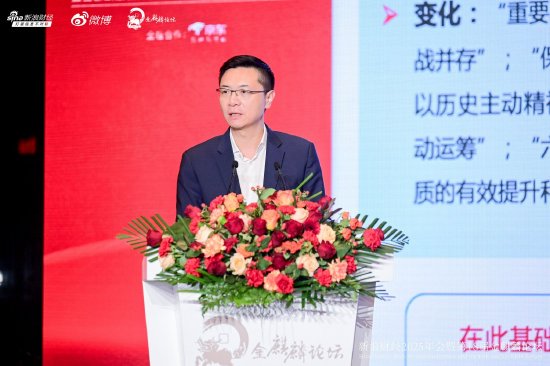
田轩:“十五五”资本市场“三支柱”:包容创投、稳健二级、完善法治
Xin Lang Cai Jing· 2026-01-15 07:13
Core Viewpoint - The forum emphasized the need for a capital market that adapts to the current complex landscape of opportunities and risks, highlighting the importance of supporting the real economy and technological self-reliance, particularly in the context of artificial intelligence [3][7]. Group 1: Current Market Challenges - The past five years have seen geopolitical changes, trade tensions, and the ongoing impact of the pandemic on supply chains, leading to increased uncertainty [3][7]. - The policy direction has shifted from passive responses focused on maintaining strategic stability to a more proactive approach aimed at overcoming challenges and risks [3][7]. Group 2: Development Goals - The focus has transitioned from "six stabilities" and "six guarantees" to promoting effective qualitative economic growth and reasonable quantitative improvement, placing greater emphasis on quality and structure [3][7]. Group 3: Proposed Market Adjustments - A more inclusive venture capital market is needed to provide sufficient early-stage financing for high-risk, long-cycle technology projects, especially in AI and other frontier fields [5][8]. - The secondary market should avoid excessive short-term speculation and volatility, shifting towards a more stable state that emphasizes long-term value and serves the real economy [5][8]. - There is a necessity to improve the legal environment, enhance investor protection, and combat illegal activities to establish a fair, transparent, and predictable market order [5][9].

芯片企业进迭时空获逾6亿元B轮融资 拟在全球范围内投资供应链
Xin Lang Cai Jing· 2026-01-15 05:02
Core Viewpoint - The Chinese chip company Jintieshikong has completed a new round of financing exceeding 600 million RMB to accelerate the commercialization of RISC-V chips [1] Group 1: Financing Details - The B-round financing includes investments from Huaxia Hengtian Capital Management, Beijing Artificial Intelligence Industry Investment Fund, Agricultural Bank of China, Lenovo, and Brizan Ventures [1] - The funds will be used to expand the engineering and R&D team and invest in the supply chain globally [1] Group 2: Government and Industry Context - The Chinese government aims to enhance technological self-reliance in response to risks posed by the U.S. in the chip technology sector [1] - In the second half of last year, the government released plans to accelerate the development of the RISC-V industry, which is an open-source code model for communication between software and semiconductors [1] - U.S. lawmakers urged the Biden administration in 2023 to impose export controls on RISC-V technology to China [1] Group 3: RISC-V Technology and Applications - RISC-V chips are customizable, cost-effective, and suitable for a wide range of applications from small smart devices to high-performance servers [1] - Current industry participants include Alibaba Damo Academy, Chipway Technology, and Chipone Microelectronics [1] - Jintieshikong's first-generation RISC-V AI computing chip, K1, has achieved mass production with over 150,000 units shipped, applied in industrial systems, robotics, and edge computing [1]
学习贯彻党的二十届四中全会精神 | 青春宣讲传党音 理论润心暖八桂
Guang Xi Ri Bao· 2026-01-15 02:20
Core Viewpoint - The article highlights the ongoing efforts in Guangxi to promote and implement the spirit of the 20th National Congress of the Communist Party of China, focusing on grassroots engagement and the integration of theoretical knowledge with practical applications [1][6]. Group 1: Youth Engagement and Technological Development - The宣讲团 (propaganda team) emphasizes high-quality development, technological self-reliance, and the construction of a beautiful China, using youth perspectives to convey these themes [2]. - Students from various universities shared achievements in fields like Beidou, high-speed rail, new energy, and aerospace, illustrating the pulse of technological self-reliance [2]. - The宣讲团 also highlighted local innovations, such as the development of AI digital doctors and the integration of AI in education, showcasing the potential of technology in various sectors [2][3]. Group 2: Practical Applications and Community Focus - The宣讲团 connects macro policies to grassroots realities, transforming theoretical concepts into relatable stories that resonate with the public [4]. - Examples from local agricultural transformations and rural revitalization efforts were shared, demonstrating the practical implications of the 20th National Congress's strategies [4]. - The宣讲团 addressed community concerns, such as food security and education reform, linking these issues to broader national policies [5]. Group 3: Interactive Learning and Community Involvement - The宣讲团 utilized interactive methods, such as knowledge quizzes and discussions, to engage audiences and enhance understanding of the Congress's spirit [6][7]. - Events included performances and discussions that fostered a lively atmosphere, encouraging active participation from attendees [7]. - Feedback from participants indicated that the宣讲团's approach effectively connected with youth and helped deepen their understanding of national development goals [7]. Group 4: Future Plans - The宣讲团 plans to continue its outreach with 30 additional sessions across various regions, aiming to further embed the spirit of the 20th National Congress into local communities [7].
深入学习贯彻习近平总书记关于科技创新的重要论述 坚持科技打头阵助力国家高水平科技自立自强
Ke Ji Ri Bao· 2026-01-15 00:36
Core Viewpoint - The article emphasizes the importance of technological modernization as a foundation for China's modernization, highlighting the strategic role of innovation in driving new productive forces and economic growth [2][4]. Group 1: Strategic Initiatives - The 20th Central Committee's Fourth Plenary Session outlines the acceleration of high-level technological self-reliance as a strategic task, with a focus on innovation-driven development [2][3]. - Anhui Province is committed to becoming a significant source of technological innovation, aligning with national strategies to enhance its role in the national strategic technology framework [3][4]. Group 2: Technological Achievements - Anhui has established 13 major scientific research facilities and is advancing in fields such as quantum information and deep space exploration, producing original technological achievements [3][4]. - Notable achievements include the "artificial sun" project and advancements in quantum computing, showcasing the province's capabilities in cutting-edge technology [3]. Group 3: Economic Performance - In the first 11 months of 2025, Anhui's industrial added value increased by 9.3%, outperforming the national average by 3.3 percentage points, ranking third in the country [6][7]. - The province ranks fifth in the number of technology-based SMEs and high-tech enterprises, indicating a robust innovation ecosystem [6][7]. Group 4: Innovation Ecosystem - The article stresses the need for a supportive innovation ecosystem, with a focus on reforming institutional mechanisms to enhance innovation capabilities [8][9]. - Anhui's R&D expenditure intensity increased from 2.28% to 2.76%, moving up to seventh place nationally, reflecting a commitment to enhancing research and development [8][9]. Group 5: Future Directions - The province aims to develop emerging industries such as intelligent connected vehicles and advanced manufacturing, while also nurturing future industries like quantum technology and biomanufacturing [7][8]. - A focus on collaborative innovation among enterprises, research institutions, and financial entities is essential for fostering a thriving innovation landscape [9].
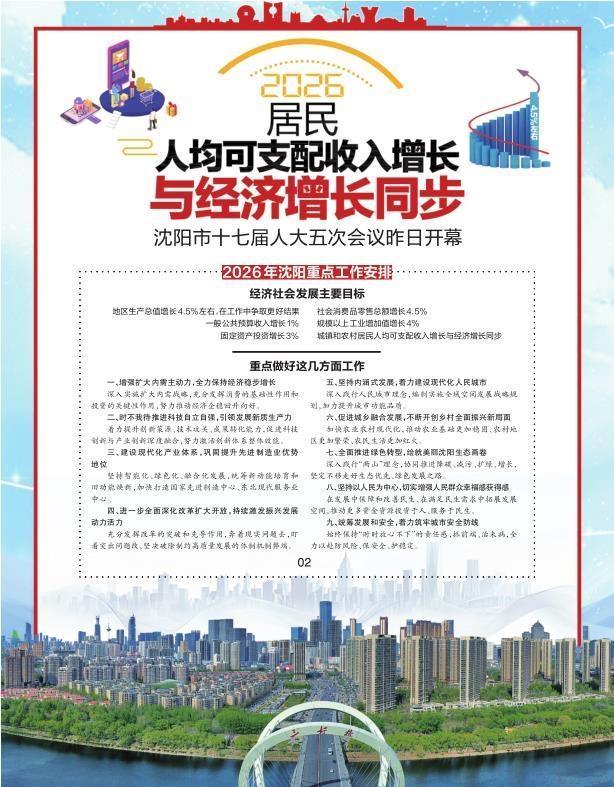
2026居民人均可支配收入增长与经济增长同步
Xin Lang Cai Jing· 2026-01-14 23:48
2026年沈阳重点工作安排 经济社会发展主要目标 地区生产总值增长4.5%左右,在工作中争取更好结果 一般公共预算收入增长1% 固定资产投资增长3% 社会消费品零售总额增长4.5% 规模以上工业增加值增长4% 城镇和农村居民人均可支配收入增长与经济增长同步 重点做好这几方面工作 一、增强扩大内需主动力,全力保持经济稳步增长 着力提升创新策源、技术攻关、成果转化能力,促进科技创新与产业创新深度融合,努力激活创新体系 整体效能。 三、建设现代化产业体系,巩固提升先进制造业优势地位 坚持智能化、绿色化、融合化发展,统筹新动能培育和旧动能焕新,加快打造国家先进制造中心、东北 现代服务业中心。 四、进一步全面深化改革扩大开放,持续激发振兴发展动力活力 充分发挥改革的突破和先导作用,奔着现实问题去,盯着突出问题改,坚决破除制约高质量发展的体制 机制弊端。 五、坚持内涵式发展,着力建设现代化人民城市 深入践行人民城市理念,编制实施全域空间发展战略规划,加力提升城市功能品质。 六、促进城乡融合发展,不断开创乡村全面振兴新局面 加快农业农村现代化,推动农业基础更加稳固、农村地区更加繁荣、农民生活更加红火。 深入实施扩大内需战略 ...
中银晨会聚焦-20260115-20260115
Bank of China Securities· 2026-01-14 23:47
Core Insights - The report emphasizes a multi-cycle resonance upward trend, suggesting that the index space may be further opened by profit recovery in 2026 [2][5] - It predicts that major economies will likely enter a destocking phase in 2026, following the current proactive restocking phase [5] - The report indicates that the overall profit recovery trend is expected to continue into 2026, with non-financial A-share companies' cumulative profit growth projected to be in the range of 2.4%-5.5% [5] Market Performance - The report highlights the performance of various indices, with the Computer index showing a rise of 3.42%, while the Banking index fell by 1.88% [4] - Other sectors such as Comprehensive and Communication also showed positive growth, while Real Estate and Non-bank Financials experienced declines [4] Investment Strategy - The recommended asset allocation for 2026 is A-shares > Chinese bonds, US bonds > US stocks, indicating a preference for A-shares due to stabilizing corporate earnings [5] - The report suggests that despite high valuations in A-shares, the market has not entered a bubble phase similar to 2007 or 2015, leaving ample room for growth in 2026 [5] Sector Focus - The report identifies AI as a key area of focus, noting that the current AI market does not exhibit significant bubble characteristics and that hardware demand remains strong [6] - It highlights investment opportunities in AI-related sectors, particularly in areas experiencing shortages such as optical communication and storage chips [6] - The report also emphasizes the potential for new consumption trends driven by policy support and a recovering CPI, focusing on emotional consumption, value-for-money consumption, and service-oriented consumption [6] Thematic Investment - The report anticipates a concentrated investment structure in 2026 around three main themes: AI, consumption, and pharmaceuticals, with AI infrastructure and digital economy being high-growth areas [7] - It suggests a systematic approach to technology investments, covering key technologies and advanced manufacturing, while also recommending attention to policy-driven sectors [7]
“十五五”新开局,我国科技工作的发力点在哪里?科技部部长阴和俊发声
Xin Hua She· 2026-01-14 23:19
坚持创新驱动 引领发展新质生产力——访科技部党组书记、部长阴和俊 我们将强化科技创新对教育和人才的牵引作用,促进科技自主创新和人才自主培养良性互动,创新人才 培养使用模式,依托重大科技任务,培养造就一流领军人才和创新团队。 一体推进教育科技人才发展 中国式现代化要靠科技现代化作支撑。"十五五"规划建议提出,加快高水平科技自立自强,引领发展新 质生产力。近期召开的中央经济工作会议将"坚持创新驱动,加紧培育壮大新动能"列为2026年经济工作 八项重点任务之一。 "十五五"新开局,我国科技工作的发力点在哪里?高水平建设国际科技创新中心如何推进?怎样形成科 技创新和产业创新互融共促新格局?新华社记者采访了科技部党组书记、部长阴和俊。 统筹布局推动"十五五"科技工作 问:2026年是"十五五"开局之年,科技部将从哪些方面推动科技创新引领高质量发展? 答:2025年,我国科技强国建设迈出坚实步伐,为培育新质生产力、推动高质量发展提供有力支撑。 2026年是深入推进科技强国建设的关键之年。科技部将坚持创新驱动,加强战略规划、政策措施、重大 任务、科研力量、资源平台、区域创新等方面统筹,发挥新型举国体制优势,提升国家创新体系 ...
凝聚创新力量 勇攀科技高峰
Xin Hua Ri Bao· 2026-01-14 21:15
Group 1 - The conference emphasized the importance of integrating technological innovation with industrial development, urging technology workers to contribute significantly to the modernization of Jiangsu province [1][2] - The provincial science and technology association aims to enhance innovation platforms, improve talent services, and promote scientific literacy among the public [2][3] - The "14th Five-Year Plan" period is seen as crucial for achieving modernization, with a focus on technology self-reliance and innovation [3] Group 2 - The conference recognized 60 young technology workers, encouraging them to tackle cutting-edge scientific issues and contribute to industrial upgrades [4] - Young researchers are encouraged to align their personal aspirations with national development goals, particularly in the marine cable technology sector [4][5] - The integration of scientific research with industry needs is highlighted as essential for advancing agricultural technology and promoting sustainable practices [5] Group 3 - The conference underscored the significance of scientific education and the cultivation of talent in driving innovation and modernization [6] - The spirit of scientists, characterized by patriotism, innovation, and collaboration, is deemed vital for inspiring future generations to engage in scientific endeavors [6] - The need for high-quality development in popular science is emphasized to enhance public scientific literacy and support for technological initiatives [6]