
6G

Search documents
Qualcomm Technologies to invest €125m in Cork facility
RTE.ie· 2026-01-16 11:19
Core Insights - Qualcomm Technologies announced a €125 million investment to transform its Cork site into a strategic AI hub over the next three years, with plans to increase headcount to over 1,000 people [1] Group 1: Investment and Expansion - The investment will establish a new R&D&I project in Cork, aligning with Qualcomm's diversification strategy into areas such as PC, XR/VR, IoT, automotive, and data centers [3] - This investment is supported by IDA Ireland and reflects Qualcomm's commitment to Ireland's innovation ecosystem [4][5] Group 2: Strategic Importance - Qualcomm's presence in Cork since 2013 has fostered strong relationships with local universities, supporting the next generation of engineers through internships and job opportunities [2] - The investment positions Qualcomm Ireland at the forefront of technological and product development in the AI era, highlighting Cork's role as a strategic global R&D hub [5][6] Group 3: Government and Industry Support - The investment is seen as a significant endorsement of Ireland's ambition to lead in advanced research and next-generation computing [6][7] - It strengthens Ireland's position as a hub of deep-tech innovation, creating hundreds of high-value jobs and supporting the National Semiconductor Strategy [7][8] Group 4: Company Background - Founded in 1985 and headquartered in San Diego, Qualcomm is a leading fabless semiconductor company, developing critical advanced semiconductor technology across various sectors including mobile, wearables, and automotive [9]


AI与具身智能如何重塑未来?“2025科技风云榜”聚焦科技新趋势
Zhong Guo Jin Rong Xin Xi Wang· 2026-01-16 08:11
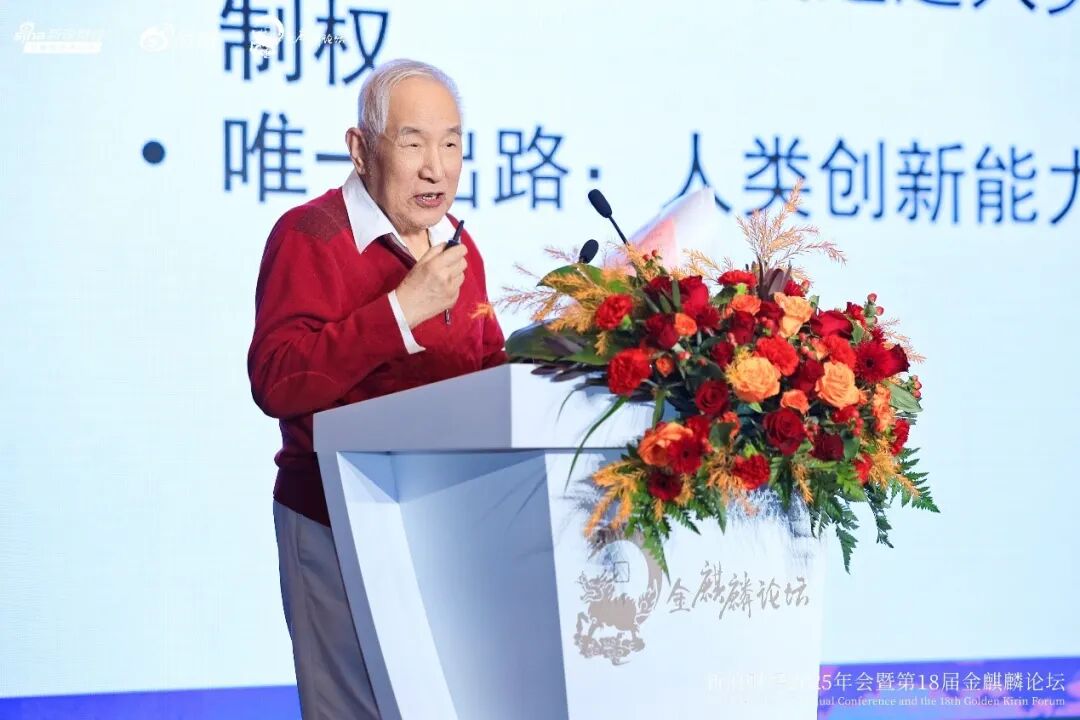
在备受关注的《具身智能跃迁时刻》特别对话环节,银河通用联合创始人张直政、众擎机器人CEO赵同阳、钛虎机器人CEO易港和商汤国香资本合伙人余 俊分享精彩观点。 "AI存在短板" 转自:新浪科技 "2025科技风云榜"年度盛典于2026年1月15日在北京举办,今年活动主题为"启新智,赴新程"。 中国工程院院士、清华大学化工科学与技术研究院院长金涌,欧洲科学院院士、西湖大学可信与通用人工智能学院创始人金耀初,GSMA大中华区总裁斯 寒,英特尔公司副总裁、英特尔中国研究院院长宋继强,百度集团副总裁、百度数字人&电商业务负责人平晓黎,愉悦资本创始及执行合伙人刘二海,钉 钉金融行业总经理李伟,鱼泡直聘创始人、CEO周峰出席论坛并发表主题演讲。 今年91岁的金涌,是坐拥180多万抖音粉丝的"网红院士"。他凭借通俗易懂的科普内容和前沿科技见解,打破年龄圈层壁垒,收获大批网友喜爱。 在现场,金涌发表《新智时代与科技创新》主题演讲,依旧带来了极具启发的观点。在演讲中,金涌深入分析了人工智能的优势与短板,并表示,AI凭 借知识占有、数据处理、强大算力和先进算法四大要素,在高维度抽象、复杂性问题解决等领域展现出超越人脑的能力,其通过 ...
Customers Rate T-Mobile as the Network Quality Leader in the Most U.S. Regions
Businesswire· 2026-01-15 14:05
Core Insights - T-Mobile has achieved a significant milestone by being rated highest for network quality in five out of six U.S. regions according to the J.D. Power 2026 U.S. Wireless Network Quality Study, marking a decisive shift in network leadership [1][2] Network Performance - T-Mobile's long-term network strategy has resulted in the highest ratings for network quality across more U.S. regions than ever before, surpassing its previous record of two regions and ending a streak of 35 consecutive reports dominated by a single carrier [2] - Independent testing has consistently shown that T-Mobile's substantial investments in its network are yielding tangible results, including faster speeds, lower latency, and improved voice performance [3] Customer Experience - The recognition from customers indicates that T-Mobile's network performance aligns with the data, confirming that it delivers superior service in real-world scenarios [3][4] - T-Mobile has been recognized as the best network in various independent reports, including winning 12 out of 16 categories in a recent Opensignal report and being named America's Best Network by Ookla based on over half a billion real-world tests [5][6] Industry Position - T-Mobile's network leadership is attributed to its strong spectrum portfolio for the 5G era, extensive tower infrastructure, and a highly skilled engineering team, which has led to improved customer perceptions of its network quality [4][7] - As competitors rely on outdated claims, T-Mobile continues to innovate with a nationwide standalone 5G network and is laying the groundwork for 6G, ensuring consistent and intelligent performance [7]


“有短板!”91岁网红院士给AI“泼冷水”,人类仍有优势? | 2025科技风云榜
Xin Lang Ke Ji· 2026-01-15 13:44
Group 1 - The "2025 Technology Wind and Cloud List" annual event will be held on January 15, 2026, in Beijing, with the theme "Inspiring New Intelligence, Embarking on a New Journey" [2] - Notable speakers include Jin Yong, a senior academician of the Chinese Academy of Engineering, and other leaders from various tech companies and institutions [2] - The event features a special dialogue on "Embodied Intelligence Leap Moment," discussing the current state and future of AI and robotics [2][3] Group 2 - Jin Yong's keynote speech highlighted AI's strengths in knowledge acquisition, data processing, and advanced algorithms, while also pointing out its limitations in creativity and problem discovery [3] - Jin Yaochu emphasized the need for more mechanisms that mimic human brain functions to advance embodied intelligence towards general AI [5] - GSMA's president, Si Han, discussed how mobile communication networks are being reshaped by AI, requiring them to be smarter and more efficient [7][8] Group 3 - Intel's VP, Song Jiqiang, noted the shift in AI capabilities from foundational models to intelligent agents, focusing on practical applications [10] - Baidu's VP, Ping Xiaoli, mentioned the upcoming evolution of digital humans, which will enhance productivity and enable personalized interactions [12][13] - Liu Erhai from Joy Capital discussed the significant market impact of AI, particularly among the "Seven Giants" in the tech industry, which collectively hold about one-third of the S&P 500's market value [15] Group 4 - DingTalk's financial industry manager, Li Wei, compared the current AI revolution to past industrial revolutions, suggesting it will fundamentally change organizational structures [17] - Zhou Feng, CEO of Yupaopin, highlighted the ongoing need for human involvement in certain job functions despite AI advancements [19] - The dialogue on embodied intelligence featured various leaders who disagreed with the notion that commercializing robotics will take another 20 years, arguing for the immediate applicability of these technologies [21][22] Group 5 - The roundtable on 6G innovation emphasized the importance of unified standards in the telecommunications industry to reduce costs and enhance collaboration [30][32] - Experts discussed the need for 6G to support emerging technologies like robotics, focusing on specific applications and industry needs [34] Group 6 - The "Agent Collaboration New Paradigm" roundtable identified key challenges in AI agent development, including adherence to business rules and cost-effectiveness [36][38] - The importance of identifying suitable application scenarios for AI agents across various sectors was emphasized, with a focus on enhancing efficiency [40][42]
高通柯诗亚:以技术标准化筑牢创新基石 引领全球科技生态协同发展
Huan Qiu Wang· 2026-01-15 06:01
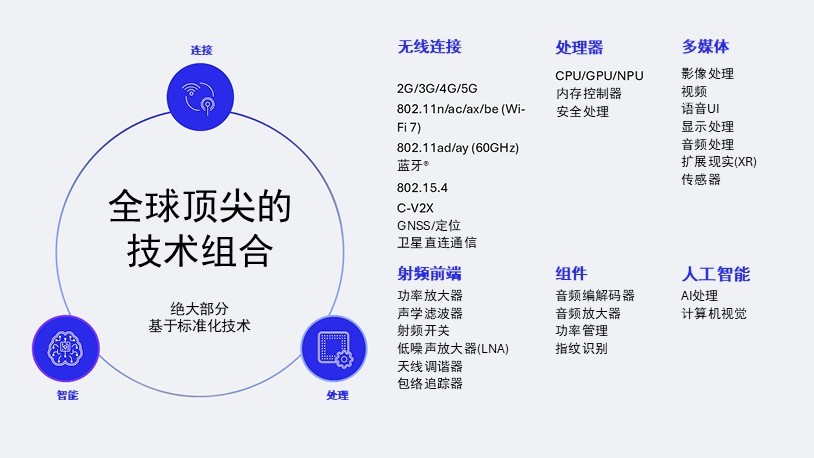
Core Viewpoint - The article emphasizes the critical role of technology standardization in driving innovation and scalable development within the tech industry, highlighting Qualcomm's leadership in various key areas such as cellular communication, Wi-Fi, audio-video coding, and storage [1][3]. Group 1: Importance of Technology Standards - Technology standards serve as the "universal language" of the modern digital ecosystem, enabling cross-device deployment of core functionalities like connectivity, computing, and intelligence [3]. - The four core values of technology standards include ensuring cross-platform scalability for different manufacturers, simplifying development and certification processes, providing a common technological foundation to reduce R&D costs, and fostering a fair competitive environment through open consensus [3]. Group 2: Qualcomm's Leadership in Key Technologies - Qualcomm has been deeply involved in the evolution of cellular technologies from CDMA and LTE to 5G, focusing on core technologies such as waveform design, channel coding, and MIMO, and is now extending its innovations to IoT and non-terrestrial networks (NTN) [5]. - The company is actively participating in the 6G research project initiated by 3GPP, concentrating on key areas like AI-native air interface and integrated sensing and communication (ISAC) [5]. - In the Wi-Fi domain, Qualcomm is enhancing features from Wi-Fi 5 to Wi-Fi 7, including MU-MIMO and uplink OFDMA, and is focusing on ultra-reliable and deterministic performance for Wi-Fi 8 to meet real-time application demands [5]. Group 3: Innovations in Video, Audio, and Storage Standards - Qualcomm has made significant contributions to video coding standards such as HEVC and VVC, achieving efficient compression that enhances visual quality while reducing bandwidth and power requirements [6]. - The company is advancing the development of next-generation codecs like H.267 and exploring AI-assisted compression tools [6]. - In the audio communication sector, Qualcomm has contributed to key codecs including QCELP, EVRC, and EVS, with recent innovations enabling AI-powered voice compression for satellite communications [6]. - In storage technology, Qualcomm is focusing on next-generation LPDDR/UFS standards and architectures that support high-speed imaging and real-time edge intelligence [6]. Group 4: Future Directions - Qualcomm plans to continue its foundational research efforts to contribute early to global standards, promoting the development of next-generation wireless, AI, and immersive technologies [7]. - The company aims to actively participate in organizations like 3GPP to pave the way for 6G and build a secure, efficient, and inclusive global tech ecosystem through standardization [7].
信科移动20260114
2026-01-15 01:06
信科移动 20260114 摘要 商业航天领域正经历快速发展,可复用火箭技术、手机智联星座建设和 大规模卫星生产是关键驱动力,头部商业火箭公司科创板 IPO 将进一步 推动产业发展。 商业航天是中美竞争的重要领域,竞争将扩展到战略、技术、商业及资 本市场层面,预计 2026 年二级市场商业航天板块仍具投资机会。 信科移动作为设备商被显著低估,在空间段有效载荷布局上种类最多、 性价比最高、验证进展最快,并全面布局卫星有效载荷、地面站及终端 测试设备。 信科移动通过战略投资蓝箭红擎,加深与整星平台合作,为未来向卫星 运营商发展奠定基础,同时具备较强的一体化设计和大规模制造能力, 有助于降低成本。 信科移动由中国信科集团控股,收入主要来自运营商口径,虽前三季度 收入同比减少 9.25%,但减亏趋势明显,毛利率提升至 23.31%,研发 费用率超过 25%。 Q&A 未来 6G 发展趋势是天地一体、星地融合,卫星互联网是重要组成部分。 全球低轨网络建设进入高峰期,SpaceX 的 Starlink 已形成闭环商业模 式。 预计信科移动 2025 年至 2027 年营收分别为 61.36 亿、62.27 亿和 80.1 ...

史无前例,我国20万颗卫星申报背后的“大棋局”
3 6 Ke· 2026-01-14 07:25
Core Viewpoint - China's recent application to the International Telecommunication Union (ITU) for over 200,000 satellite frequency resources marks a record-breaking action in both the number of applications and the total scale of satellites, indicating a strategic move to secure orbital and frequency resources for future development [1][3][10]. Group 1: Record-Breaking Application - The application includes over 190,000 satellites from a newly registered entity called the "Radio Spectrum Development and Technology Innovation Research Institute," which significantly exceeds previous applications and is several times larger than the current largest constellation, SpaceX's Starlink with 72,000 satellites [1][4]. - In 2025, China submitted 73 frequency coordination applications to the ITU, with a peak of 34 applications in December alone, showcasing unprecedented activity in satellite frequency coordination [4][10]. Group 2: Strategic Intent - The large-scale application is viewed as a "resource positioning" action, aimed at ensuring China has a sufficient "resource pool" of orbital and frequency resources for the next decade or longer [3][10]. - The initiative reflects China's strategic determination to secure more orbital positions and frequencies, which are critical for the development of commercial space and the goal of integrated "space-ground" communication systems, particularly for 6G [3][6][13]. Group 3: Role of Key Institutions - The Radio Spectrum Innovation Institute, established by several key organizations, is positioned as a core research and technical support entity for satellite communication standards and resource management, indicating a strong national strategic intent [6][11]. - The collaboration between the Radio Spectrum Innovation Institute and China SatNet highlights a dual approach where one focuses on demand integration and the other on technological innovation and resource reserve [6][10]. Group 4: Involvement of Telecom Operators - Major telecom operators, including China Telecom and China Mobile, are also involved in the satellite application process, marking a significant step in their satellite internet business and indicating a shift towards integrated communication services [11][12]. - China Telecom aims to complement its existing geostationary satellite capabilities with low Earth orbit satellites to enhance its service offerings, while China Mobile seeks to establish its own satellite constellation to maintain competitive advantages in future communication technologies [11][12][13].


李乐成接受央视《新闻联播》采访:锻造新动能新优势 扎实推进新型工业化
Yang Shi Xin Wen· 2026-01-14 01:27
Core Viewpoint - The Ministry of Industry and Information Technology aims to promote high-quality economic development and implement key initiatives for the "14th Five-Year Plan" period, focusing on technological and industrial innovation integration [1][2] Group 1: Industrial and Technological Development - The Ministry plans to enhance the safety and controllability of industrial and supply chains while maintaining a reasonable proportion of manufacturing [1] - Key emerging industries such as integrated circuits, new materials, and aerospace will be developed, with a focus on bio-manufacturing, embodied intelligence, and 6G as new economic growth points [1] - Traditional industries will undergo revitalization through targeted upgrades in sectors like metallurgy, chemicals, textiles, and machinery, with initiatives like "Artificial Intelligence +" to promote smart and green manufacturing [1] Group 2: Industrial Growth and Digital Transformation - Key industries and regions account for 80% of the total industrial output, forming the backbone of the industrial economy [2] - The Ministry has established over 7,000 advanced and 500 excellent smart factories, with industrial internet applications covering all 41 industrial categories and over 8,000 5G factories nationwide [2] - By 2025, the core industrial internet industry is expected to exceed 1.6 trillion yuan, driving an increase in industrial added value of approximately 2.5 trillion yuan, with leading 5G factories reducing average operating costs by 19% [2] - An "Industrial Data Foundation Action" will be launched to focus on data collection and utilization in key manufacturing sectors, aiming to build high-quality industry data sets and enhance digital transformation across enterprises [2]
六大经济部委释放2026关键信号 两大市场要稳,这些产业要飞
2 1 Shi Ji Jing Ji Bao Dao· 2026-01-13 23:16
Group 1: Economic Policy Signals - The Chinese government is focusing on four key policy signals for 2026: stabilizing growth, expanding domestic demand, supporting technological innovation, and stabilizing the real estate and stock markets [1][2] - Various ministries are actively promoting early policy implementation to ensure a smooth start to 2026, including the early issuance of project lists and investment plans [1][2] Group 2: Fiscal and Monetary Policy - The 2026 fiscal policy will continue to be proactive, with an expanded fiscal spending plan and optimized government bond tools to enhance effectiveness [2][3] - The People's Bank of China will maintain a moderately loose monetary policy, with expectations of a 25-50 basis point reduction in the reserve requirement ratio and a 10-20 basis point decrease in the 7-day reverse repo rate [3][4] Group 3: Consumption and Investment - Measures to boost consumption include optimizing the trade-in policy for consumer goods and expanding service consumption, while investment will be supported through various government funding initiatives [5][6] - The government plans to implement a consumption upgrade policy, providing subsidies for trade-ins of automobiles, home appliances, and digital products [6] Group 4: Real Estate Market Stability - The 2026 strategy includes stabilizing the real estate market through targeted policies, such as controlling new supply and utilizing existing housing stock for affordable housing [11][12] - Major cities are expected to further relax housing purchase restrictions and lower mortgage costs to stimulate housing demand [12] Group 5: Emerging Industries Development - The government aims to enhance technological innovation capabilities and support the growth of emerging industries such as integrated circuits, new materials, and biomedicine [8][9] - A new venture capital fund has been established to attract investment in high-tech sectors, with an expected total investment scale exceeding one trillion yuan [9] Group 6: Innovation-Driven Growth - The focus for 2026 will be on building an innovation-driven growth model, emphasizing the integration of short-term policies with long-term structural reforms [10]
六大经济部委释放2026关键信号
2 1 Shi Ji Jing Ji Bao Dao· 2026-01-13 23:16
Core Viewpoint - The Chinese government is focusing on stabilizing economic growth, expanding domestic demand, supporting technological innovation, and stabilizing the real estate and stock markets as it prepares for the economic goals of 2026, the first year of the 14th Five-Year Plan [1][2]. Economic Policy Initiatives - Various ministries are implementing proactive macroeconomic policies, including enhancing economic monitoring, improving policy tools, and ensuring effective fiscal and monetary policy coordination [2]. - The fiscal policy for 2026 will be more active, with an expanded fiscal spending plan and optimized government bond tools to enhance local financial capabilities [2][3]. - The People's Bank of China will maintain a moderately loose monetary policy, focusing on high-quality economic development and reasonable price recovery, with expectations of a 25-50 basis point reduction in the reserve requirement ratio [2][3]. GDP and Fiscal Projections - The GDP growth target for 2026 is expected to remain around 5%, with a fiscal deficit rate holding steady at 4% and an increase in special bonds to 4.8 trillion yuan [3][4]. - The broad deficit scale is projected to rise from 11.86 trillion yuan in 2025 to approximately 12.45 trillion yuan in 2026, corresponding to a broad deficit rate increase from 8.4% to 8.5% [3]. Consumer and Investment Stimulus - The government aims to boost consumption through practical measures, including optimizing the trade-in policy for consumer goods and expanding service consumption [5][6]. - Investment will be supported through various government funding initiatives, including the issuance of special bonds and increased central budget investments [5][6]. Real Estate and Stock Market Stability - Policies will focus on stabilizing the real estate market through targeted measures, including optimizing housing purchase policies and promoting the use of existing housing for social needs [12]. - The central bank will work on mitigating financial risks in key areas and enhancing market confidence through specific monetary policy tools [13]. Emerging Industry Development - There is a strong emphasis on fostering new and emerging industries, including integrated circuits, new materials, and artificial intelligence, with significant investments planned in these sectors [8][9]. - The establishment of the National Venture Capital Guiding Fund aims to attract substantial investment in high-tech fields, with an expected total investment scale exceeding one trillion yuan [9]. Innovation-Driven Growth - The focus for 2026 will be on building an innovation-driven growth model, enhancing the modern industrial system, and promoting technological self-reliance [10].