人民币汇率

Search documents
CMF展望2026年经济 多维度向好可期
Sou Hu Cai Jing· 2026-01-11 09:33
Economic Outlook for 2026 - The report anticipates a "gradual warming" of the Chinese economy in 2026, with GDP growth expected to rebound seasonally, and actual GDP growth projected to be in the range of 4.5% to 5% for the year, approaching the upper limit [1] - Nominal GDP growth is expected to show a more significant rebound, with the macro and micro "temperature difference" gradually disappearing [1] Price Trends - Consumer Price Index (CPI) is expected to gradually rise to a moderate range, while the decline in Producer Price Index (PPI) is expected to narrow, alleviating negative effects related to prices [1] Consumption Sector - The consumption market is projected to operate steadily in 2026, with a recovery in dining consumption, emergence of new consumption formats driven by AI and robotics, and growth in service consumption being the main drivers of consumption growth, with total retail sales of consumer goods expected to return to a growth rate of around 4% [2] Investment Sector - Investment is expected to stabilize, with infrastructure investment recovering first and a significant reduction in the decline of real estate investment; a notable structural optimization combining "investment in physical assets" and "investment in people" (such as education and healthcare) is anticipated [2] Foreign Trade and Employment - Foreign trade is expected to remain at a high level, with a moderate appreciation of the RMB exchange rate, overall employment stability, synchronized growth in residents' income, a "soft landing" in the real estate market, and an estimated annual stock market increase of about 10% [2] Expert Insights - Experts emphasize the importance of stabilizing prices as a core policy for 2026, aiming to bring CPI closer to a target of 2%, while controlling real estate supply and stabilizing housing prices to avoid negative impacts on consumption and investment [2] - The real estate market is currently experiencing a "decline in both volume and price," and further price adjustments are needed to convert potential demand into effective demand [3] - The long-term trend of RMB appreciation is seen as a necessary step for China to transition to a high-income country, with policies needing to accommodate this trend [3] - Balancing "technological self-reliance" with "improving livelihoods" is crucial, focusing on breakthroughs in AI and advanced manufacturing while enhancing social security for vulnerable groups [3]
人民币汇率会继续升值吗?邢自强:短期内有可能 长期仍存在不确定性
Di Yi Cai Jing· 2026-01-10 09:20
1月10日,在"2026年中国首席经济学家论坛"上,摩根士丹利中国首席经济学家邢自强表示,近期人民 币升值主要受美元贬值及春节前出口和消费季节性因素推动。人民币今年仍有升值空间,短期内一季 度、二季度可能在6.8左右,但年底仍存在不确定性。他强调,中国要解决经济内卷、地方政府激励及 财税体系问题,不可能仅依赖人民币升值实现经济平衡。 (文章来源:第一财经) ...

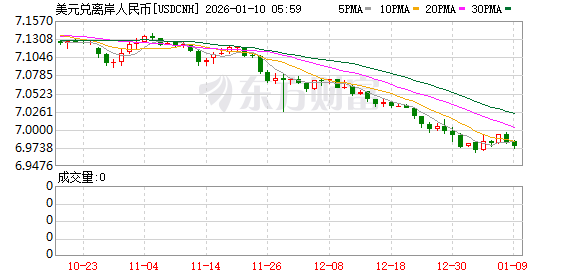
人民币汇率会继续升值吗?邢自强:短期内有可能,长期仍存在不确定性
Xin Lang Cai Jing· 2026-01-10 09:13
1月10日,在"2026年中国首席经济学家论坛"上,摩根士丹利中国首席经济学家邢自强表示,近期人民 币升值主要受美元贬值及春节前出口和消费季节性因素推动。人民币今年仍有升值空间,短期内一季 度、二季度可能在6.8左右,但年底仍存在不确定性。他强调,中国要解决经济内卷、地方政府激励及 财税体系问题,不可能仅依赖人民币升值实现经济平衡。(第一财经记者陈君君)(本文来自第一财 经) 1月10日,在"2026年中国首席经济学家论坛"上,摩根士丹利中国首席经济学家邢自强表示,近期人民 币升值主要受美元贬值及春节前出口和消费季节性因素推动。人民币今年仍有升值空间,短期内一季 度、二季度可能在6.8左右,但年底仍存在不确定性。他强调,中国要解决经济内卷、地方政府激励及 财税体系问题,不可能仅依赖人民币升值实现经济平衡。(第一财经记者陈君君)(本文来自第一财 经) 责任编辑:凌辰 责任编辑:凌辰 ...
每周推荐 | 人民币和港股,谁是谁的“影子”?(申万宏观·赵伟团队)
申万宏源宏观· 2026-01-10 05:17
Core Viewpoint - The article discusses the relationship between the Chinese yuan and Hong Kong stocks, highlighting their historical positive correlation and the recent divergence due to various market factors [2]. Group 1: Yuan and Hong Kong Stocks - Historical analysis shows a significant positive correlation between the yuan and Hong Kong stocks, influenced by stock earnings, asset revaluation effects, and foreign capital inflows [2]. - Recent rapid appreciation of the yuan has not led to an increase in Hong Kong stocks, attributed to weak performance in key sectors and a focus on profit-taking in the market [2]. - Future expectations suggest that as Hong Kong stock earnings improve and foreign capital allocation resumes, the negative correlation with the US dollar may return, with yuan appreciation potentially aiding in stock price increases [2]. Group 2: Investment Trends - Equipment investment has shown strong growth, reflecting either a phase of the Juglar cycle or a new stage of economic transformation, raising questions about sustainability in 2026 [8]. - The structure of equipment investment indicates that non-manufacturing sectors account for 35%, with significant contributions from services and construction [8]. Group 3: New Infrastructure Development - The article emphasizes the importance of "new infrastructure" as a core component of broader infrastructure initiatives, advocating for proactive development in technology and digital transformation [9]. - The "14th Five-Year Plan" and "15th Five-Year Plan" highlight the need for advanced infrastructure, including 5G networks and data centers, to enhance efficiency and support economic growth [9].

2026年,人民币汇率还会涨吗?
经济观察报· 2026-01-09 10:28
我们判断,"十五五"(2026年—2030年)的人民币不太可能 简单演化为"单边升值通道"或"单边贬值通道",更接近的形 态是:汇率弹性更高(双向波动常态化);管理框架仍强调稳 预期。 作者:欧阳晓红 封图:图虫创意 而随后一个交易日,硬资产中部分品种出现明显反弹与修复,提示"硬资产不会轻易崩盘"的概率 在抬升:市场在押注"再通胀尾部风险上升+供应约束增强"。在这种结构里,硬资产(尤其兼具工 业/货币属性的品种)可能被赋予更高风险溢价,但走势也会更"锯齿化"。 在这条链条里,人民币并非"配角",它会影响"大宗商品的中国需求叙事"。而央行对汇率的表态 也较清晰:坚持市场在汇率形成中的决定性作用、保持弹性、强化预期引导、防范超调,保持人民 币汇率在合理均衡水平上的基本稳定。这意味着,无论市场在"怕"还是"盼",人民币都不太可能 被允许成为"单边情绪放大器"。 如果把镜头拉长到"十四五"(2021年—2025年)五年,人民币对美元的形态可概括为:先升后 贬再修复的"N字型"总体画面。按年末美元/人民币粗略估算:2020年末约6.53,2025年末在7 附近,五年累计美元兑人民币上行约7%,对应人民币对美元累计温和走 ...
人民币市场汇价(1月9日)
Sou Hu Cai Jing· 2026-01-09 02:25
100美元 701.28人民币 100欧元 815.56人民币 100日元 4.4592人民币 100港元 89.973人民币 100英镑 939.61人民币 100澳元 468.25人民币 100新西兰元 401.63人民币 100新加坡元 544.56人民币 100瑞士法郎 875.37人民币 100加元 504.26人民币 100人民币114.41澳门元 100人民币58.002马来西亚林吉特 100人民币1149.63俄罗斯卢布 100人民币236.07南非兰特 100人民币20792韩元 100人民币52.534阿联酋迪拉姆 100人民币53.638沙特里亚尔 100人民币4722.24匈牙利福林 100人民币51.66波兰兹罗提 100人民币91.68丹麦克朗 100人民币131.84瑞典克朗 100人民币144.22挪威克朗 100人民币616.627土耳其里拉 100人民币256.78墨西哥比索 100人民币449.95泰铢(完) 新华社北京1月9日电 中国外汇交易中心1月9日受权公布人民币对美元、欧元、日元、港元、英镑、澳 元、新西兰元、新加坡元、瑞士法郎、加元、澳门元、林吉特、卢布、兰特、 ...
1月9日人民币兑美元中间价上调69个基点
Sou Hu Cai Jing· 2026-01-09 02:15
1月9日,人民币兑美元中间价上调69个基点,报7.0128。 中国人民银行授权中国外汇交易中心公布,2026年1月9日银行间外汇市场人民币汇率中间价为:1美元 对人民币7.0128元,1欧元对人民币8.1556元,100日元对人民币4.4592元,1港元对人民币0.89973元,1 英镑对人民币9.3961元,1澳大利亚元对人民币4.6825元,1新西兰元对人民币4.0163元,1新加坡元对人 民币5.4456元,1瑞士法郎对人民币8.7537元,1加拿大元对人民币5.0426元,人民币1元对1.1441澳门 元,人民币1元对0.58002马来西亚林吉特,人民币1元对11.4963俄罗斯卢布,人民币1元对2.3607南非兰 特,人民币1元对207.92韩元,人民币1元对0.52534阿联酋迪拉姆,人民币1元对0.53638沙特里亚尔,人 民币1元对47.2224匈牙利福林,人民币1元对0.51660波兰兹罗提,人民币1元对0.9168丹麦克朗,人民币 1元对1.3184瑞典克朗,人民币1元对1.4422挪威克朗,人民币1元对6.16627土耳其里拉,人民币1元对 2.5678墨西哥比索,人民币1元对4.499 ...
人民币对美元中间价报7.0128 调升69个基点
Zhong Guo Jing Ji Wang· 2026-01-09 01:31
中国经济网北京1月9日讯 来自中国外汇交易中心的数据显示,今日人民币对美元汇率中间价报 7.0128,较前一交易日调升69个基点。 中国人民银行授权中国外汇交易中心公布,2026年1月9日银行间外汇市场人民币汇率中间价为:1 美元对人民币7.0128元,1欧元对人民币8.1556元,100日元对人民币4.4592元,1港元对人民币0.89973 元,1英镑对人民币9.3961元,1澳大利亚元对人民币4.6825元,1新西兰元对人民币4.0163元,1新加坡 元对人民币5.4456元,1瑞士法郎对人民币8.7537元,1加拿大元对人民币5.0426元,人民币1元对1.1441 澳门元,人民币1元对0.58002马来西亚林吉特,人民币1元对11.4963俄罗斯卢布,人民币1元对2.3607南 非兰特,人民币1元对207.92韩元,人民币1元对0.52534阿联酋迪拉姆,人民币1元对0.53638沙特里亚 尔,人民币1元对47.2224匈牙利福林,人民币1元对0.51660波兰兹罗提,人民币1元对0.9168丹麦克朗, 人民币1元对1.3184瑞典克朗,人民币1元对1.4422挪威克朗,人民币1元对6.16627土 ...
人民币兑美元中间价报7.0128,上调69点
Mei Ri Jing Ji Xin Wen· 2026-01-09 01:31
(文章来源:每日经济新闻) 每经AI快讯,1月9日,人民币兑美元中间价报7.0128,上调69点。 ...
需要稳汇率吗
Sou Hu Cai Jing· 2026-01-08 17:18
Core Viewpoint - The article discusses the potential for the appreciation of the Renminbi (RMB) in 2024, emphasizing that while there is a long-term potential for appreciation based on purchasing power parity, the reliance on exports will likely limit the extent of this appreciation in the short term [1]. Economic Dependence on Exports - China's economy is highly dependent on exports, with the net export contribution to economic growth projected at 30.3% in 2024, an increase from 2023 [1]. - The trade surplus for goods in the first eleven months of 2025 is expected to exceed $1 trillion, although the current account surplus will be smaller due to a long-term service trade deficit [1]. Impact of Trade Surplus on Currency - A significant trade surplus does not necessarily lead to a direct increase in RMB value, as part of the surplus may remain in foreign currency accounts or be used for debt repayment and investments [3]. - The narrowing interest rate differential between China and the U.S. is a more direct factor influencing the exchange rate [3]. Export Structure and Currency Appreciation - The export structure shows that labor-intensive products, which account for about 15.1% of total exports, are vulnerable to RMB appreciation due to their reliance on price competitiveness [3]. - In contrast, high-tech products like integrated circuits and automobiles, which make up 60.9% of exports, are less affected by currency fluctuations and may benefit from lower import costs for core components [5]. Resilience of Exports - The resilience of China's exports is supported by a complete industrial cluster, a skilled workforce, and rapid product innovation capabilities, marking a transition from being the "world's factory" to a regional innovation center [6]. Commodity Pricing and Import Costs - Major commodities are priced in U.S. dollars, and RMB appreciation could help control import prices, which would otherwise increase costs for intermediate and consumer goods [8]. - The cancellation of export tax rebates is suggested as a means to support domestic populations affected by foreign trade dynamics, allowing for higher export prices and potentially benefiting domestic welfare [8]. Overall Assessment of RMB Appreciation - The article concludes that RMB appreciation is more beneficial than detrimental, with the negative impact on exports being overstated, suggesting that the government is unlikely to excessively intervene in the appreciation process [8].