设备投资

Search documents
日本国内机床订单额3年连续下滑,海外增12%
日经中文网· 2026-01-29 02:48
Core Viewpoint - Japan's machine tool orders are projected to grow by 8% year-on-year in 2025, primarily driven by overseas demand, while domestic orders continue to decline, particularly in the automotive sector, which accounts for 20% of domestic orders [2][4][5]. Group 1: Machine Tool Orders - The total value of machine tool orders in Japan for 2025 is estimated at 1.6043 trillion yen, marking a return to positive growth for the first time in three years [4]. - Overseas orders are expected to increase by 12%, while domestic orders are projected to decline by 0.2% to 440.8 billion yen, continuing a downward trend since 2023 [4][6]. Group 2: Automotive Sector Impact - The automotive sector is under significant pressure, with machine tool orders in this area expected to reach 87 billion yen in 2025, reflecting a 4.3% decline and marking three consecutive years of decrease [5]. - Uncertainties related to U.S. tariff policies and electric vehicle (EV) support measures are dampening investment willingness among companies in the automotive sector [6]. Group 3: Positive Signals in Other Sectors - There are positive developments in the aerospace and shipbuilding sectors, with machine tool orders expected to surge by 46% year-on-year to 35.3 billion yen, reaching a historical high [6]. - The Japanese government's support policies for the aerospace industry and the strengthening of domestic defense capabilities amid geopolitical risks are contributing to the growth in related machine tool orders [6]. Group 4: Future Projections - The Japan Machine Tool Builders' Association forecasts that total machine tool orders in 2026 will reach 1.7 trillion yen, with domestic orders expected to rise to 500 billion yen, representing an increase of over 10% [6].

每周推荐 | 设备投资,被忽视的新机遇?(申万宏观·赵伟团队)
赵伟宏观探索· 2026-01-17 16:04
Core Viewpoint - The article discusses the strong performance of equipment investment in 2024, attributing it to structural factors such as the growth of broad infrastructure and service sector investments rather than solely relying on the "Juglar cycle" and "two new" policies [2][3]. Group 1: Equipment Investment Insights - The strong growth in equipment investment is driven by the establishment of a modern industrial system, with significant contributions from the energy transition in central and western regions, which boosts public utility equipment investment [2][3]. - The increase in fiscal spending on research and the improvement in travel chain demand have led to a higher growth rate in service-related equipment investments [2][3]. Group 2: Sustainability of Equipment Investment - Equipment investment is expected to continue its high growth into 2026, supported by policies focused on modern industrial system construction, "dual carbon" initiatives, and investments in human capital [3]. - Digital infrastructure, hub-related investments, and carbon reduction equipment are anticipated to rebound, while resilient external demand is expected to sustain equipment investment related to exports [3].

每周推荐 | 设备投资,被忽视的新机遇?(申万宏观·赵伟团队)
申万宏源宏观· 2026-01-17 05:43
Core Insights - The article discusses the strong performance of equipment investment in 2024, attributing it to broad infrastructure and service sector investments rather than the "Juglar cycle" or "two new" policies [2][3] - It highlights the driving forces behind this investment growth, including the establishment of a modern industrial system and energy transition in central and western regions [2][3] - The sustainability of this high growth in equipment investment is projected to continue into 2026, supported by policies related to modernization, carbon reduction, and human investment [3] Group 1: Equipment Investment Insights - Equipment investment growth in 2024 is not primarily due to the "Juglar cycle" or "two new" policies, but rather strong performance in broad infrastructure and service sector investments [2] - The driving forces for this growth include the establishment of a modern industrial system and energy transition efforts in central and western regions, alongside increased fiscal spending on research and improvements in service sector demand [2][3] - The sustainability of high growth in equipment investment is expected to persist into 2026, with potential rebounds in digital infrastructure, carbon reduction equipment, and consumer-related infrastructure investments [3]

每周推荐 | 人民币和港股,谁是谁的“影子”?(申万宏观·赵伟团队)
赵伟宏观探索· 2026-01-10 16:03
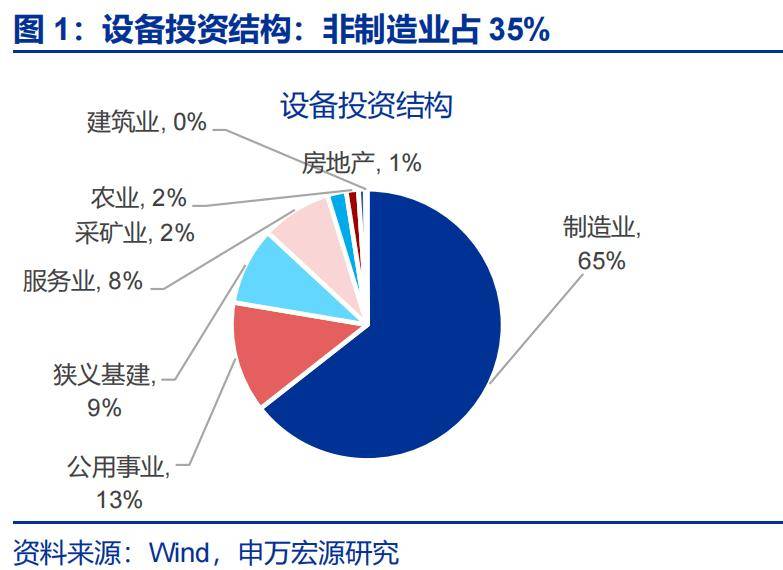
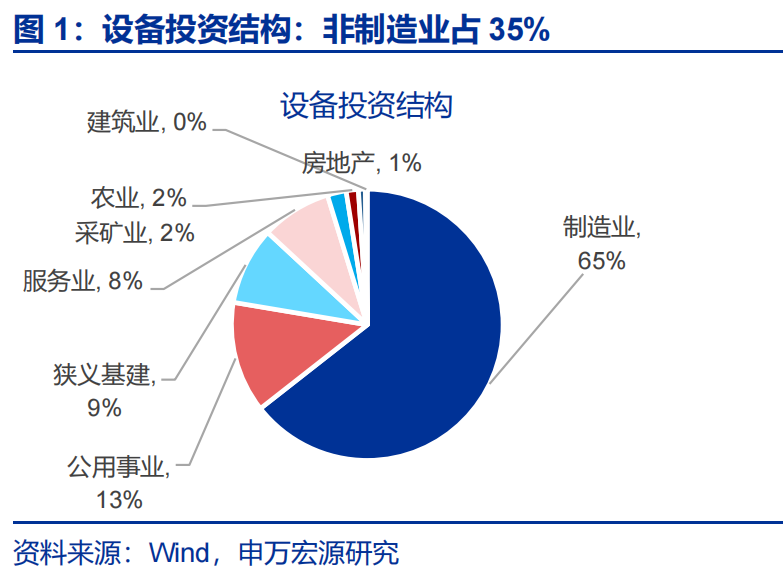
Core Viewpoint - The article discusses the relationship between the Chinese yuan and Hong Kong stocks, highlighting their historical positive correlation and the recent divergence due to various market factors [2]. Group 1: Yuan and Hong Kong Stocks - Historical analysis shows a significant positive correlation between the yuan and Hong Kong stocks, influenced by stock earnings, asset revaluation, and foreign capital inflow [2]. - Recent yuan appreciation has not led to an increase in Hong Kong stocks due to weak performance in key sectors and a focus on profit-taking, resulting in limited market responsiveness [2]. - Future projections suggest that as Hong Kong stock earnings improve and foreign capital allocation resumes, the negative correlation with the US dollar may return, with yuan appreciation potentially aiding stock price increases [2]. Group 2: Investment Trends - Equipment investment has shown strong growth, reflecting either a phase of the Juglar cycle or a new stage of economic transformation, raising questions about sustainability in 2026 [8]. - The structure of equipment investment indicates that non-manufacturing sectors account for 35%, with significant contributions from services and construction [8]. Group 3: New Infrastructure Development - The article emphasizes the importance of "new infrastructure" as a core component of broader infrastructure initiatives, advocating for proactive development in technology and digital transformation [9]. - The "14th Five-Year Plan" and "15th Five-Year Plan" highlight the need for advanced infrastructure, including 5G networks and data centers, to enhance efficiency and connectivity [9].

每周推荐 | 人民币和港股,谁是谁的“影子”?(申万宏观·赵伟团队)
申万宏源宏观· 2026-01-10 05:17
Core Viewpoint - The article discusses the relationship between the Chinese yuan and Hong Kong stocks, highlighting their historical positive correlation and the recent divergence due to various market factors [2]. Group 1: Yuan and Hong Kong Stocks - Historical analysis shows a significant positive correlation between the yuan and Hong Kong stocks, influenced by stock earnings, asset revaluation effects, and foreign capital inflows [2]. - Recent rapid appreciation of the yuan has not led to an increase in Hong Kong stocks, attributed to weak performance in key sectors and a focus on profit-taking in the market [2]. - Future expectations suggest that as Hong Kong stock earnings improve and foreign capital allocation resumes, the negative correlation with the US dollar may return, with yuan appreciation potentially aiding in stock price increases [2]. Group 2: Investment Trends - Equipment investment has shown strong growth, reflecting either a phase of the Juglar cycle or a new stage of economic transformation, raising questions about sustainability in 2026 [8]. - The structure of equipment investment indicates that non-manufacturing sectors account for 35%, with significant contributions from services and construction [8]. Group 3: New Infrastructure Development - The article emphasizes the importance of "new infrastructure" as a core component of broader infrastructure initiatives, advocating for proactive development in technology and digital transformation [9]. - The "14th Five-Year Plan" and "15th Five-Year Plan" highlight the need for advanced infrastructure, including 5G networks and data centers, to enhance efficiency and support economic growth [9].

热点思考 | 设备投资,能否“持续高增”?(申万宏观·赵伟团队)
申万宏源证券上海北京西路营业部· 2026-01-07 02:26
Core Viewpoint - The article discusses the sustainability of high growth in equipment investment, analyzing current trends and future prospects in the industry [2] Group 1: Current Trends - Equipment investment has shown a significant increase, with a year-on-year growth rate of X% in the last quarter [2] - The demand for advanced manufacturing technologies is driving investment, particularly in sectors such as automation and robotics [2] Group 2: Future Prospects - Analysts predict that equipment investment will continue to grow, but at a potentially slower pace, with estimates suggesting a growth rate of Y% over the next year [2] - Factors influencing future investment include technological advancements, government policies, and global economic conditions [2] Group 3: Sector Analysis - Specific sectors such as renewable energy and semiconductor manufacturing are expected to see the highest levels of investment, reflecting broader industry trends [2] - The article highlights the importance of innovation in maintaining competitive advantages within these sectors [2]

设备投资,能否“持续高增”?
Sou Hu Cai Jing· 2026-01-07 00:16
Group 1 - The core argument is that the high growth in equipment investment is not driven by the "Two New" policies or the Juglar cycle, but rather by strong investment in broad infrastructure and the service sector [1][8][70] - Equipment investment growth is significantly higher in sectors such as construction (65.5%), narrow infrastructure (46.1%), public utilities (16.5%), and services (13.9%) compared to manufacturing (6.5%), contributing an additional 8.1 percentage points to overall equipment investment [1][8][70] - In 2025, manufacturing investment growth is expected to decline to 1.9%, while equipment investment will maintain high growth at 12.2%, driven by digital and energy infrastructure [1][8][70] Group 2 - The strong growth in equipment investment is fueled by the establishment of a modern industrial system, which enhances digital infrastructure, alongside natural renewal cycles and recovering travel demand [3][25][70] - Key sectors such as software and computer services are experiencing growth rates of 53%, while aviation and road transport equipment investments are also high due to recovering travel demand [3][25][70] - Public utility equipment investment has been boosted by accelerated energy transition and infrastructure investment in the central and western regions since the implementation of the "dual carbon" policy [4][32][70] Group 3 - The sustainability of high equipment investment growth is anticipated to continue into 2026, supported by both domestic and external demand [5][60][70] - Narrow infrastructure investment is expected to rebound significantly, particularly in digital infrastructure and hub-related investments, with policies promoting new infrastructure and major engineering projects [5][60][70] - The "dual carbon" policy will further enhance investment in equipment for carbon reduction, including modifications in high-energy-consuming industries and investments in renewable energy [5][52][70]
申万宏源证券晨会报告-20260107
Shenwan Hongyuan Securities· 2026-01-07 00:12
Core Insights - The report highlights Century Huatong's (002602) strategic acquisitions and its position as the largest gaming company in A-shares, driven by successful IP operations and the growth of its SLG (Simulation Game) segment [11] - The projected net profits for Century Huatong from 2025 to 2027 are expected to be 5.4 billion, 8.2 billion, and 10.1 billion CNY, reflecting significant growth rates of 345%, 52%, and 23% respectively [11] - A relative valuation method assigns a target market value of 172.2 billion CNY for Century Huatong in 2026, with a "Buy" rating recommended [11] Company Analysis - Century Huatong has successfully integrated acquisitions of companies like Seven Cool, Tianyou, and Point Interactive, enhancing its revenue scale and market presence [11] - The report emphasizes the potential of Point Interactive's SLG and casual gaming segments, which are expected to drive future growth [11] - The success of Point Interactive is attributed to its innovative product development and effective user acquisition strategies, positioning it as a leader in the SLG 3.0 phase [11] Industry Insights - The report discusses the broader gaming industry trends, particularly the growth of casual gaming in Western markets, which is expected to create new revenue streams for companies like Century Huatong [11] - The gaming market is projected to see significant expansion, with the SLG market alone expected to reach approximately 8 billion USD by 2024, predominantly driven by Chinese game developers [11] - The report identifies key trends in the gaming industry, including the evolution of game mechanics and user engagement strategies that enhance monetization and user retention [11]

热点思考 | 设备投资,能否“持续高增”?(申万宏观·赵伟团队)
Xin Lang Cai Jing· 2026-01-06 16:25
Group 1 - The core argument is that the high growth in equipment investment is not primarily driven by the "Two New" policies or the manufacturing Juglar cycle, but rather by strong investment in broad infrastructure and the service sector [1][8][69] - Equipment investment growth is significantly higher in sectors such as construction (65.5%), narrow infrastructure (46.1%), public utilities (16.5%), and services (13.9%) compared to manufacturing (6.5%), contributing an additional 8.1 percentage points to overall equipment investment [1][8][69] - In 2025, manufacturing investment growth is expected to decline to 1.9%, while equipment investment is projected to maintain high growth at 12.2%, driven by digital infrastructure and energy infrastructure [1][8][69] Group 2 - The strong growth in equipment investment is fueled by the establishment of a modern industrial system, which enhances digital infrastructure, alongside natural renewal cycles and recovering travel demand, thus boosting narrow infrastructure and construction equipment investment [3][24][69] - Key sectors such as software and computer services are experiencing growth rates of 53%, while aviation and road transport equipment investments are also high, correlating with a 17.9% year-on-year increase in civil aviation passenger transport [3][24][69] - The acceleration of energy transition and infrastructure investment in central and western regions, particularly since the intensification of the "dual carbon" policy in 2021, has led to a significant increase in public utility equipment investment [3][31][69] Group 3 - Fiscal policies have increased research spending and improved travel chain demand, leading to a notable rise in service sector equipment investment, which has outpaced construction investment since 2023 [4][40][69] - The growth rate for service sector equipment investment reached 13.9% in 2024, while construction investment only grew by 2.8% [4][40][69] - The recovery gap in service sector investment is estimated to be around 2-3 trillion yuan, indicating a strong potential for future growth in this area [4][56][69] Group 4 - Equipment investment is expected to continue its high growth into 2026, supported by both domestic and external demand chains [5][69] - Narrow infrastructure investment is anticipated to rebound significantly, particularly in digital infrastructure and hub-related investments [5][46][69] - The "dual carbon" policy is expected to further drive investment in equipment for carbon reduction, including modifications in high-energy-consuming industries and investments in renewable energy [5][51][69]
热点思考 | 设备投资,能否“持续高增”?(申万宏观·赵伟团队)
赵伟宏观探索· 2026-01-06 16:03
Core Viewpoint - The article argues that the high growth in equipment investment is not primarily driven by the "Two New" policies or the manufacturing Juglar cycle, but rather by strong investment in broad infrastructure and the service sector [2][9][71]. Group 1: Misconceptions about Equipment Investment Growth - Misconception 1: The strong equipment investment is attributed to the "Juglar cycle"; however, it is actually driven by robust growth in broad infrastructure and service sector investments. In 2024, the growth rates for equipment purchases in construction (65.5%), narrow infrastructure (46.1%), public utilities (16.5%), and services (13.9%) significantly outpaced manufacturing (6.5%), contributing an additional 8.1 percentage points to overall equipment investment [2][9][71]. - Misconception 2: The strong equipment investment is influenced by the "Two New" policies; however, the investment rhythm and structure contradict this view. Special government bonds supporting the "Two New" policies will intensify in the second half of 2024, but by February 2024, manufacturing investment and equipment purchase investment had already surged significantly [2][9][71]. - Misconception 3: The strong manufacturing investment is a result of strong equipment investment; in reality, it stems from construction and installation investments (expansion investments). Since 2024, while manufacturing and equipment purchase investments have grown simultaneously, the growth in equipment investment is not solely derived from manufacturing [3][21][71]. Group 2: Drivers of High Equipment Investment Growth - Reason 1: The establishment of a modern industrial system has driven strong digital infrastructure growth, combined with natural renewal cycles and recovery in travel demand, boosting narrow infrastructure and construction equipment investments. In 2024, narrow infrastructure equipment purchases contributed 4.3 percentage points to total equipment investment, exceeding manufacturing's contribution [4][25][77]. - Reason 2: The acceleration of energy transition and thermal power renovation investments in the central and western regions has strengthened public utility equipment investments, particularly since the intensification of the "dual carbon" policy in 2021. Public utility equipment investment has consistently outpaced construction investment by nearly 10 percentage points since 2021 [4][32][77]. - Reason 3: Increased fiscal spending on research and improvement in travel chain demand have boosted service sector equipment investments. Since 2023, service sector equipment investments have shown a trend of being stronger than construction investments, with significant growth in sectors like leasing and scientific research [5][42][77]. Group 3: Sustainability of High Equipment Investment Growth - Main Line 1: Narrow infrastructure is expected to rebound significantly, especially in digital infrastructure and hub-type investment construction. Recent policy measures, including the issuance of special bonds and financial tools, are set to support new infrastructure investments [6][48][79]. - Main Line 2: The "dual carbon" policy is expected to enhance investments in equipment for carbon reduction, including renovations in high-energy-consuming industries and investments in renewable energy [6][53][79]. - Main Line 3: Policies related to "investment in people" are likely to be significantly intensified, with service sector equipment investments related to consumer infrastructure expected to recover actively [6][58][79]. - Main Line 4: Equipment investments related to external demand are expected to remain resilient, particularly in sectors supporting the industrialization of emerging economies [6][63][79].