
中美经贸合作

Search documents
以正确认知共寻相处之道——二〇二五中美经贸启示录②
Ren Min Ri Bao· 2025-12-29 03:32
Group 1 - The article highlights the impact of trade wars and tariffs on the U.S. market, leading to tight inventory and rising prices for Christmas goods, forcing consumers to adjust their holiday budgets [1] - It emphasizes that the zero-sum game mentality is detrimental to U.S.-China economic relations, causing ongoing tensions and trade frictions [1][2] - The article points out that the U.S. imposition of tariffs has not resolved trade deficits or improved industrial competitiveness, instead burdening American businesses and consumers [2] Group 2 - The piece illustrates the mutual benefits of U.S.-China trade cooperation, citing a viral TikTok video promoting a solar fan hat from China, which reflects the positive impact of trade on consumer welfare [2] - It notes that U.S.-China bilateral trade accounts for about one-fifth of global trade, highlighting the deep interdependence of the two economies [2] - The article argues that the "Thucydides Trap" is not an inevitable fate, and that both nations can find a new path for coexistence by abandoning the zero-sum mindset [3] Group 3 - The article stresses the importance of dialogue over confrontation, advocating for mutual cooperation instead of zero-sum competition to strengthen U.S.-China economic ties [3] - It mentions that recent discussions between the two countries' economic teams have clarified approaches to resolving mutual concerns, indicating a potential for improved relations [3] - The piece concludes that cooperation should be the cornerstone of U.S.-China relations, positioning economic collaboration as a stabilizing force rather than a source of conflict [3]
以稳定合作实现共同繁荣——2025中美经贸启示录④
Ren Min Ri Bao· 2025-12-29 03:32
Group 1 - The animated film "Zootopia 2" has achieved a box office of over 3.9 billion RMB in China, surpassing North America and ranking first globally, highlighting the deep integration of the Chinese and American film industries [1] - The thriving Chinese film market presents significant opportunities for the global film industry, showcasing China's openness and vitality [1] - Recent visits by Chinese business delegations to the U.S. indicate a commitment to deepening economic and trade cooperation between the two countries, following the positive outcomes of the Busan meeting [1] Group 2 - The essence of U.S.-China economic relations is mutual benefit, with trade growing from less than 2.5 billion USD at the time of diplomatic relations to nearly 688.3 billion USD in 2024, reflecting strong resilience and internal dynamics [2] - The deep interconnection of U.S. and Chinese interests has created a cooperative framework where both sides benefit, with significant advantages in natural endowments, markets, capital, and technology [2] - U.S. exports to China and Chinese investments in the U.S. have created approximately 1 million jobs, demonstrating the tangible benefits of trade and investment between the two nations [3] Group 3 - The strategic value of U.S.-China cooperation has increased, with both countries facing new development tasks and challenges that require mutual benefits [4] - Opportunities for collaboration exist in traditional sectors like agriculture and emerging fields such as climate change and artificial intelligence, emphasizing the limitless potential for joint success [4] - The principle of "mutual benefit" has been validated through practice, and both nations should focus on long-term cooperation to enhance prosperity for their peoples and the world [4]
以稳定合作实现共同繁荣——2025中美经贸启示录④(钟声·大国外交·2025年度回眸)
Ren Min Ri Bao· 2025-12-28 22:17
Group 1 - The core viewpoint emphasizes that dialogue and cooperation between China and the U.S. are preferable to confrontation, and that mutual prosperity is the right path forward [1][2][4] - The ongoing success of the Hollywood film "Zootopia 2" in China, with box office earnings exceeding 3.9 billion RMB, highlights the deep integration of the U.S. and Chinese industries [1] - The trade relationship between China and the U.S. has grown significantly, from less than 2.5 billion USD at the time of diplomatic relations to nearly 688.3 billion USD in 2024, demonstrating strong resilience and internal dynamics [2] Group 2 - The mutual benefits of U.S.-China trade are evident, with U.S. exports to China and Chinese investments in the U.S. supporting approximately 1 million jobs [3] - The U.S. has maintained its position as the largest exporter of agricultural products to China, indicating a robust trade relationship [3] - The strategic value of cooperation between the two nations has increased, with opportunities in traditional sectors like agriculture and emerging fields such as climate change and artificial intelligence [4]
不断巩固拓展经济稳中向好势头 ——对话财政部原副部长朱光耀
Jing Ji Ri Bao· 2025-12-27 22:11
Economic Growth and Resilience - China's economy is projected to reach approximately 140 trillion yuan, marking a significant achievement during the "14th Five-Year Plan" period, with a growth rate among the highest globally [1][2] - The economic growth from 2020 to 2025 represents an increase of 40 trillion yuan, equivalent to over 5 trillion USD, comparable to creating the world's third-largest economy [1] Contribution to Global Economy - China's economy accounts for about 17% of the global economy and contributes over 30% to global economic growth annually [2] - The International Monetary Fund has raised its 2025 growth forecast for China to 5%, indicating strong economic performance [2] Key Support Factors - The two major breakthroughs supporting the 140 trillion yuan economy are the rapid development of the digital economy and artificial intelligence, and the robust growth of the green economy [2][3] - China's digital economy has empowered traditional industries, while advancements in artificial intelligence and quantum information have positioned the country among the global leaders in these fields [2] Green Economy Development - From 2012 to 2024, China's energy consumption grew at an average rate of 3.4%, supporting an average economic growth of 6.1%, with a carbon emission intensity reduction of over 35% [3] - China leads globally in renewable energy capacity, with solar panel production at the top for over a decade and a significant share of lithium battery production [3] Future Economic Outlook - The expected actual growth rate for the "15th Five-Year Plan" period is between 4.5% and 5%, with contributions from capital and labor inputs, as well as total factor productivity [4] - The nominal growth rate could reach 7% if actual growth of 5% is combined with a 2% inflation rate [4] Macroeconomic Policy - The Central Economic Work Conference emphasized the need for proactive macroeconomic policies, including a fiscal deficit rate set at around 4% for 2025 and a local government special debt limit of 4.4 trillion yuan [5][6] - The focus is on stabilizing economic growth and ensuring reasonable price recovery, with monetary policy aimed at addressing the current negative producer price index [6] International Trade and Relations - Despite external challenges, China's foreign trade remains resilient, maintaining its position as the world's largest goods trader for eight consecutive years, with a projected trade volume of 6.16 trillion USD in 2024 [8] - The U.S. tariff policies pose risks to global trade, and China aims to navigate these challenges while promoting high-quality development and enhancing domestic and international economic circulation [7][8] Foreign Investment Environment - China is committed to creating a market-oriented, law-based, and internationalized business environment to attract foreign investment, with ongoing efforts to streamline regulations and enhance protections for foreign enterprises [9] - The focus is on ensuring that foreign companies can operate smoothly in open sectors, with initiatives to improve infrastructure and support services [9] Artificial Intelligence Sector - China is recognized for its potential in the artificial intelligence sector, with significant investment interest from international investors, particularly from Wall Street [11] - The country aims to leverage its advantages in application scenarios, data resources, and infrastructure to foster a competitive AI industry [13]
以务实行动勇担大国责任——二〇二五中美经贸启示录①
Ren Min Ri Bao· 2025-12-26 09:40
Group 1 - The core viewpoint emphasizes the importance of stable and cooperative Sino-U.S. relations amidst global economic fluctuations, highlighting the need for dialogue and collaboration rather than competition and confrontation [1][2][3] - The historical context of the Sino-U.S. relationship is underscored, noting their joint efforts during the World Anti-Fascist War and the potential for future cooperation to address global challenges [2][3] - The article discusses the strategic significance of Sino-U.S. economic interactions, which influence global economic dynamics and the livelihoods of people worldwide, indicating that changes in their trade relations can have widespread repercussions [2] Group 2 - The article stresses the responsibility of both nations to work together for global peace and development, with leaders from both countries expressing a commitment to addressing common challenges and enhancing cooperation [3] - China's "14th Five-Year Plan" is mentioned as a framework for expanding open trade and investment cooperation, which could create broader opportunities for collaboration with the U.S. and other global partners [3] - The narrative concludes with a call for both countries to prioritize the interests of their peoples and the long-term welfare of the world, advocating for increased openness and cooperation to foster stability and positive energy in addressing global challenges [3]
钟声|二〇二五中美经贸启示录:以务实行动勇担大国责任
Ren Min Ri Bao· 2025-12-26 07:30
Group 1 - The core viewpoint emphasizes the importance of cooperation between China and the United States for global stability and prosperity, highlighting that their relationship impacts the world significantly [1][2][3] - The historical context of the cooperation during World War II is referenced to illustrate the potential for joint efforts in addressing global challenges today [2] - The ongoing dialogue and negotiations between the two nations are seen as essential for resolving differences and fostering a cooperative environment, with five rounds of discussions leading to accumulated consensus [1][3] Group 2 - The article stresses that the economic interactions between China and the U.S. have far-reaching effects on global supply chains and economies, indicating that changes in their trade relations can create ripples worldwide [2] - It is suggested that the two countries must navigate their relationship carefully to avoid risks associated with confrontation and to promote dialogue and consensus [2][3] - The Chinese government’s commitment to expanding open trade and investment opportunities is highlighted as a means to enhance cooperation with the U.S. and other global partners [3]
以务实行动勇担大国责任——二〇二五中美经贸启示录①(钟声·大国外交·2025年度回眸)
Ren Min Ri Bao· 2025-12-25 22:27
Group 1 - The core viewpoint emphasizes the importance of stable and cooperative Sino-U.S. relations amidst global economic fluctuations, highlighting the need for dialogue and collaboration rather than competition and confrontation [1][2][3] - The historical context of Sino-U.S. cooperation during World War II is referenced, suggesting that both nations can work together for a common future and shared responsibilities [2] - The ongoing economic interactions between China and the U.S. are shown to have significant implications for global economic dynamics, affecting various regions and industries worldwide [2] Group 2 - The Chinese government is committed to expanding openness and promoting trade innovation, which will create broader opportunities for cooperation with the U.S. and other global partners [3] - The call for responsible decision-making by both nations is highlighted, with an emphasis on the potential for joint efforts to address global challenges and enhance international stability [3] - The narrative stresses that cooperation between China and the U.S. is essential for global peace and prosperity, while conflict would lead to global concerns [3]
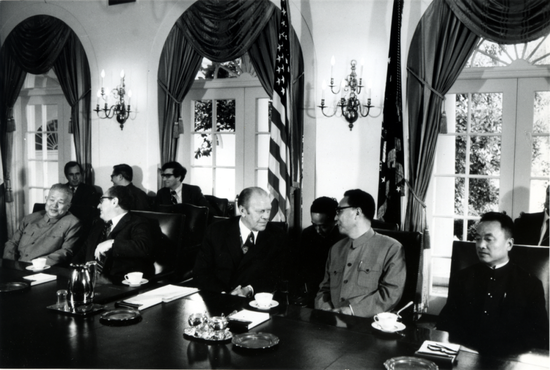
从破冰到融冰——跨越50年的两次访美之行
Xin Lang Cai Jing· 2025-12-24 03:46
Group 1 - The core message emphasizes the historical significance of the China-US trade relationship, highlighting the evolution from the initial trade discussions in 1975 to the current state in 2025, showcasing the resilience and growth of bilateral trade despite challenges [6][29][46] - The trade volume between China and the US has dramatically increased from less than $2.5 billion in 1979 to nearly $688.3 billion in 2024, with over 70,000 American companies operating in China [6][29] - The establishment of 286 pairs of friendly provinces and cities between the two countries, along with significant travel and trade exchanges, illustrates the deepening economic ties [6][29] Group 2 - The visit of the China Council for the Promotion of International Trade (CCPIT) delegation to the US in December 2025 marks a significant moment, being the first high-level business delegation following the summit between the Chinese and US presidents [30][46] - The delegation included representatives from 25 Chinese companies across various sectors, such as agriculture, machinery, finance, and logistics, indicating a broad interest in enhancing trade relations [40][45] - The participation of over 170 American companies and institutions in the delegation's activities underscores the mutual interest in fostering economic cooperation [40][45] Group 3 - Coca-Cola's historical engagement with China, dating back to its initial entry in 1927, reflects the long-standing interest of American companies in the Chinese market, which has evolved significantly over the decades [34][37] - In 2025, Coca-Cola's operations in China generated impressive revenue, with the company adapting its strategies to align with the changing market dynamics [40] - The success of Chinese brands like Pop Mart, which saw a revenue increase of 204.4% in the first half of 2025, highlights the growing influence of Chinese companies in the global market [40][39] Group 4 - The Fourth China International Supply Chain Promotion Expo, held in the US, attracted significant participation from American companies, including major multinational corporations, indicating a strong interest in supply chain collaboration [41][45] - The ongoing collaboration between Chinese and American businesses is seen as essential, with statements from industry leaders emphasizing the importance of maintaining and expanding trade ties [45][46] - The historical context of trade relations, marked by significant events and agreements, continues to shape the current economic landscape between China and the US [6][29][46]


【财经观察】中国企业家代表团访美,谈了哪些内容?
Huan Qiu Shi Bao· 2025-12-22 22:41
Group 1 - The recent warming trend in China-US relations has prompted a responsive reaction from the business community, with a delegation of Chinese entrepreneurs visiting the US to enhance economic and trade cooperation [1][2] - The delegation included 25 key Chinese enterprises and engaged in multiple business matching activities with over 170 American companies and organizations, establishing direct communication channels [2][4] - The atmosphere during the meetings was characterized by a strong willingness to cooperate, with participants expressing optimism about the potential for deepening economic ties [3][4] Group 2 - The visit has led to specific discussions on cooperation in various sectors, particularly in biopharmaceuticals, where Chinese companies are looking to leverage their manufacturing and supply chain capabilities [5][6] - American business leaders have reiterated their commitment to the Chinese market, with significant investments and partnerships expected to continue, countering narratives of withdrawal [7][8] - There is a growing expectation for sustainable cooperation mechanisms to be established, reflecting a desire for stable and predictable frameworks for future collaboration [9]



每经热评 | 多措并举应对美国财政收支风险带来的负面影响
Mei Ri Jing Ji Xin Wen· 2025-12-18 02:20
Core Viewpoint - The article discusses the imbalance in the U.S. fiscal structure exacerbated by the Trump administration's policies, highlighting the negative impacts on both the U.S. and global economies [1][3]. Fiscal Revenue and Expenditure - In FY2025, U.S. federal revenue is projected at $5.2 trillion, while expenditures are expected to reach $7.01 trillion, resulting in a budget deficit of approximately $1.8 trillion, marking the sixth consecutive year of deficits exceeding $1 trillion [1]. - Personal income tax remains the primary source of revenue at $2.66 trillion, with a year-on-year growth of 10%. Tariff revenues have surged significantly, indicating a shift towards reliance on tariffs rather than personal income taxes [1][2]. Expenditure Trends - Major expenditures are concentrated in mandatory spending areas such as Social Security, Medicare, and Medicaid, with debt interest payments surpassing $1 trillion [1]. - The U.S. Department of Education's budget is set to drastically decrease from $268 billion in FY2024 to $34 billion in FY2025, significantly impacting public schools and educational programs reliant on federal funding [3]. Economic Impacts - The high tariffs imposed by the U.S. are expected to increase costs for import-dependent businesses, contributing to inflation and potentially harming the international competitiveness of U.S. manufacturing [3]. - The fiscal strategy of using tariffs to cover budget deficits may lead to efficiency losses and worsen the economic situation for many American residents [3]. Global Trade and Supply Chain Effects - The implementation of the "America First" strategy and the "Big and Beautiful Act" is projected to increase the U.S. fiscal deficit by approximately $3.4 trillion over the next decade, leading to significant changes in the fiscal structure [4]. - The restructuring of global supply chains is anticipated, with a trend towards regionalization and localization, which may increase costs for businesses adapting to policy changes [4]. U.S.-China Trade Relations - The U.S. debt sustainability issue is becoming critical, with debt interest payments projected to account for about 3.4% of GDP in FY2025, raising concerns about potential debt defaults that could threaten Chinese holdings of U.S. dollar assets [5]. - Tariffs imposed by the U.S. are likely to increase costs for Chinese goods entering the U.S. market, resulting in a significant decline in trade, with Chinese exports to the U.S. dropping by 17% and imports by 12% in the first ten months of 2025 [5]. Strategic Recommendations - To mitigate negative impacts, it is suggested that China maintain stable global supply chains and engage in tax competition while enhancing economic cooperation with ASEAN countries [6]. - The establishment of an open economic system driven by domestic demand is recommended, alongside active government investment in strategic industries and infrastructure [7]. - Improving the fiscal structure and enhancing tax systems to attract high-income individuals while ensuring financial sustainability is also advised [7].