人工通用智能(AGI)

Search documents
GPT-5来了!免费用户也能用的“博士级”对话体验
Jin Shi Shu Ju· 2025-08-08 02:42
Core Insights - OpenAI has launched GPT-5, which shows significant improvements in intelligence, speed, and accuracy, although it has not yet achieved Artificial General Intelligence (AGI) [1][2] - The release includes two new variants: GPT-5-mini and GPT-5-nano, catering to different user groups [2][3] - GPT-5 has demonstrated superior performance in programming and health-related tasks compared to previous models [5][6] Model Variants and Access - GPT-5-mini is lightweight, while GPT-5-nano is faster and cheaper, available only through API [2] - Free users will have access to GPT-5 and GPT-5-mini, while Plus subscribers ($20/month) will have increased usage limits [2] - Pro users ($200/month) will have unlimited access to GPT-5 and enhanced versions like GPT-5-pro and GPT-5-thinking [2][3] Performance Enhancements - GPT-5 outperformed previous models in various programming benchmarks, achieving scores such as 74.9% in SWE-Bench Verified and 88% in Aider Polyglot [5] - The model can handle complex tasks and provide clear instructions, making it an effective programming partner [5] - In health-related benchmarks, GPT-5-thinking showed significant improvements, although specific scores were noted [6] Reduction of Misinformation - The new model has significantly reduced the tendency to generate false information, with a 26% decrease in hallucination rates compared to GPT-4o and a 65% reduction for GPT-5-thinking [7] - OpenAI has implemented safety measures to ensure the model fails gracefully when unable to complete tasks [7] User Experience - The overall experience of using GPT-5 is reported to be very positive, especially for users who may not focus on the technical details of the model [8]


万字长文聊具身智能“成长史”:具身智能跨越了哪些山海,又将奔向哪里
具身智能之心· 2025-08-08 00:08
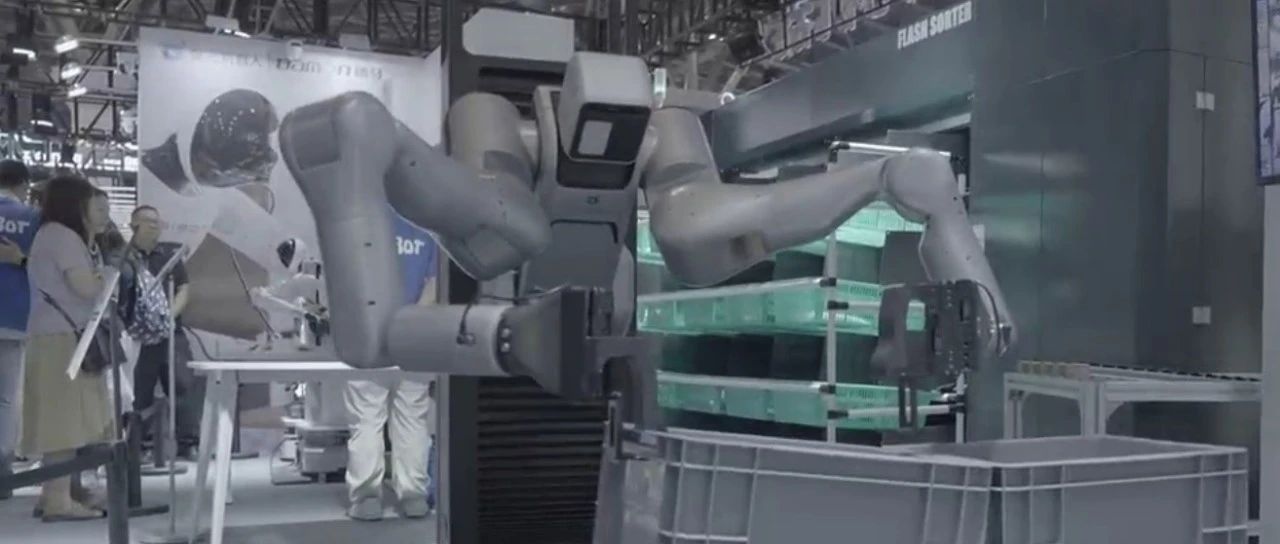
Core Viewpoint - The forum emphasizes the rapid advancements in embodied intelligence and robotics, highlighting the need for a unique computational brain that can translate computational power into physical capabilities, addressing the gap between AI's performance in games like Go and its struggles with simple physical tasks [4]. Group 1: Evolution of Embodied Intelligence - Over the past decade, embodied intelligence has evolved significantly, with robotics being a closed-loop system that integrates perception, action, and the physical world, emphasizing the importance of adhering to physical laws [5][6]. - The gap between research prototypes and practical applications is highlighted, with the Technology Readiness Level (TRL) being a key metric for assessing the maturity of robotic applications, where levels 8 to 9 are crucial for industry acceptance [6]. Group 2: Opportunities and Challenges in Robotics - The forum discusses the historical context of machine learning's impact on robotics, noting that advancements in sensors, algorithms, and deep learning have led to significant progress, but achieving high performance in the physical world remains a challenge [9][13]. - The importance of scalable learning systems is emphasized, with a shift from small-scale learning to large-scale applications being crucial for overcoming challenges in robotics [15]. Group 3: Specialized vs. General Intelligence - The discussion contrasts Artificial Specialized Intelligence (ASI) with Artificial General Intelligence (AGI), suggesting that while ASI focuses on high performance in specific tasks, AGI aims for broader capabilities [23][25]. - The advantages of specialized models include efficiency, robustness, and suitability for real-time applications, while general models offer greater flexibility but are more complex and resource-intensive [27][30]. Group 4: Future Directions in Robotics - The emergence of visual-language-action (VLA) models, such as RT-2, represents a significant step forward, allowing robots to execute tasks through internet-based API calls, indicating a trend towards more versatile robotic capabilities [39][40]. - The development of the second-generation VLA model, PI-Zero, showcases advancements in continuous action generation, enabling robots to perform complex tasks with higher efficiency [46][48]. Group 5: Data and Performance in Robotics - The forum highlights the necessity of large-scale data collection for training robotic models, with the RTX dataset being a pivotal resource for developing cross-embodied models that outperform specialized counterparts [42][43]. - The importance of performance metrics is underscored, with a focus on achieving high reliability and robustness in robotic systems to ensure practical deployment in real-world scenarios [58][65].
微软财报:AI与云计算推动利润增长
Guo Ji Jin Rong Bao· 2025-07-31 07:21
Core Insights - Microsoft's Q4 earnings report shows strong performance driven by AI demand, exceeding Wall Street expectations [1] - The company's stock price rose over 9% in after-hours trading, with market capitalization potentially surpassing $4 trillion [1] - CEO Satya Nadella emphasized that AI is leading a technological transformation, significantly impacting Microsoft's cloud and overall product portfolio [1] Financial Performance - Total revenue reached $76.4 billion, with Azure cloud services growing by 39% [1] - Operating income increased by 22% to $34.3 billion, while net income was $27.2 billion [1] - Diluted earnings per share were $3.65, all surpassing analyst expectations [1] AI and Cloud Strategy - Microsoft operates over 400 data centers across 70 regions globally, with AI applications enhancing its business portfolio [2] - Capital expenditures for the quarter were $24.2 billion, a 27% increase year-over-year, primarily for expanding AI infrastructure [2] - Future capital expenditures are expected to exceed $30 billion in Q1 of FY2024 [2] AI Integration and Partnerships - Microsoft is integrating its Copilot assistant into the Edge browser to enhance user experience [2] - The partnership with OpenAI allows Microsoft to utilize AI technology on its Azure platform, with ongoing negotiations to secure future access to OpenAI's resources [2] Workforce Adjustments - Microsoft has laid off approximately 15,000 employees this year, including software engineers, due to AI tool replacements [3] - CFO Amy Hood acknowledged the challenges of the transformation while committing to support employees in transitioning to new roles [3] - Nadella expressed confidence in the future, stating that AI is central to the company's growth strategy and innovation efforts [3]

读创财经晨汇|①深圳机场上半年旅客吞吐量达3257万人次②英特尔第二季度净利润亏损29.2亿美元
Sou Hu Cai Jing· 2025-07-25 00:17
Group 1: Shenzhen Airport Performance - Shenzhen Airport's passenger throughput reached 32.57 million in the first half of the year, a year-on-year increase of 10.9% [1] - Cargo and mail throughput reached 983,000 tons, with a year-on-year growth of 14.1% [1] - The number of flights reached 221,000, marking a year-on-year increase of approximately 7.2%, setting a new record for the airport [1] Group 2: Modular Construction Development - Shenzhen aims to implement modular construction projects with a cumulative area of no less than 3 million square meters by the end of 2028 [2] - The initiative is part of a broader action plan to promote the integration of three major industrial clusters in modular construction [2] - The goal is to create a comprehensive modular construction industry system [2] Group 3: BYD New SUV Launch - BYD launched its new mid-size SUV, the Sea Lion 06, with a price range starting from 139,800 yuan to 163,800 yuan [3] - The Sea Lion 06 is the first mid-size SUV from BYD's Ocean Network to offer both hybrid and pure electric versions [3] - The competitive pricing is expected to reshape the market landscape for new energy SUVs priced around 200,000 yuan [3] Group 4: New Energy Vehicle Market Insights - In July, the estimated retail sales of new energy vehicles are expected to reach 1.01 million units, with a penetration rate projected to rise to 54.6% [4] - The total retail market for narrow passenger vehicles is estimated to be around 1.85 million units, reflecting a year-on-year growth of 7.6% [4] - However, there is a month-on-month decline of approximately 11.2% in the retail market [4] Group 5: CICC Gold Mining Operations - China National Gold Group's Inner Mongolia Mining Company has ceased operations, and CICC is actively managing the aftermath [5] - The company is monitoring the situation and will fulfill its information disclosure obligations [5] Group 6: China Power Construction's Project Involvement - China Power Construction is involved in the research, testing, and construction of the Yarlung Tsangpo River downstream hydropower project [6] - The project is in its early stages, and its long construction cycle introduces uncertainty regarding its impact on the company's future performance [6] Group 7: JD's Acquisition Talks - JD Group is in deep negotiations to acquire German electronics retailer Ceconomy AG, with a valuation of approximately 2.2 billion euros (about 2.6 billion USD) [7] - JD is considering a cash offer of 4.60 euros per share, representing a 23% premium over Ceconomy's recent closing price [7] - No binding agreements have been signed yet, and it remains uncertain whether a formal acquisition offer will be made [7] Group 8: Dongguan Holdings' Equity Transfer - Dongguan Holdings plans to publicly transfer 20% of its stake in Songshan Lake Microfinance Company for a base price of 48.1215 million yuan [8] - This move aims to optimize the company's asset structure [8] - The transaction has been approved by the board of directors and does not require shareholder approval [8] Group 9: LVMH's Sales Decline - LVMH reported a 9% decline in organic sales for its fashion and leather goods segment in Q2, exceeding analyst expectations of a 7.82% drop [15] - The organic sales of wines and spirits fell by 4%, while the overall revenue for Q2 was 19.5 billion euros, slightly below analyst expectations [15][16] - The company plans to streamline its beverage (spirits) division in response to the declining sales [16]

Meta挖走三位OpenAI核心研究员,扎克伯格的“钞能力”奏效了
硬AI· 2025-06-26 14:49
Core Viewpoint - Meta has successfully recruited three core researchers from OpenAI's Zurich office, marking a significant step in Zuckerberg's plan to build a "Superintelligence" team, despite OpenAI CEO Sam Altman's public skepticism about Meta's high-salary recruitment strategy [1][2][3]. Group 1: Recruitment Strategy - Meta's recruitment strategy involves offering over $100 million compensation packages to attract top AI talent, with Zuckerberg personally contacting potential candidates via WhatsApp [3][4]. - The three researchers, Lucas Beyer, Alexander Kolesnikov, and Xiaohua Zhai, were instrumental in establishing OpenAI's Zurich office and joined Meta's Superintelligence team less than a year after their initial hiring [2][3]. - Altman has expressed confidence that OpenAI's top talent has not been swayed by Meta's financial offers, emphasizing a culture driven by mission rather than monetary incentives [3][4]. Group 2: Challenges and Setbacks - Despite the successful recruitment of some talent, Meta's broader recruitment efforts have had mixed results, with high-profile figures like OpenAI co-founders Ilya Sutskever and John Schulman remaining unattainable [4]. - Meta's recent AI product, Llama 4, has faced criticism and disappointment, with developers questioning its performance and the company's claims of superiority over competitors [6]. - The anticipated launch of Meta's large model "Behemoth" has been delayed, raising concerns within the leadership about its competitive edge compared to existing products from OpenAI, Anthropic, and Google [6].


微软与OpenAI矛盾的根源:AGI
Hua Er Jie Jian Wen· 2025-06-26 04:34
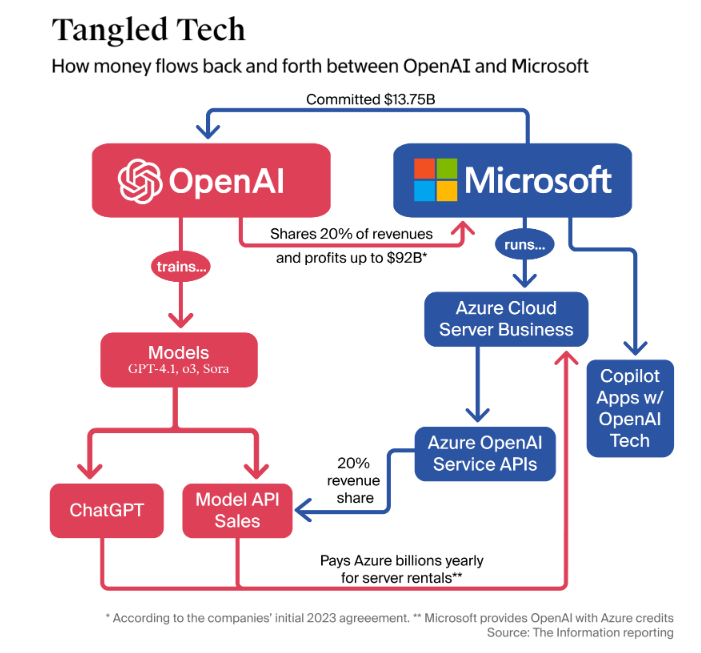
Core Viewpoint - The relationship between OpenAI and Microsoft is deteriorating over the definition of Artificial General Intelligence (AGI) and related contract terms, leading to significant disputes that could impact OpenAI's upcoming IPO [1][4]. Group 1: Contract Disputes - OpenAI and Microsoft signed a $10 billion cooperation agreement in 2023, which has triggered major disagreements over the AGI clause [1]. - Microsoft is demanding the removal of a key clause that allows OpenAI to terminate technology access upon achieving AGI, but negotiations remain stalled as of May 2025 [1][2]. - The original 2019 agreement allows OpenAI to cut off Microsoft's access to technology if AGI is reached, a concept that some Microsoft executives view as unrealistic [1][2]. Group 2: AGI Development and Perspectives - OpenAI's CEO Altman claims that AGI is "within reach" and has defined it as a system capable of solving complex human-level problems across multiple domains [2]. - In contrast, Microsoft CEO Nadella argues that a 10% annual growth in the global economy is a more realistic benchmark, suggesting that AGI will not be achieved before the contract expires in 2030 [2]. Group 3: Financial Implications and Negotiation Dynamics - OpenAI is projected to burn through $46 billion in R&D over the next four years, making IPO financing a critical necessity [4]. - If the restructuring fails, the unique equity structure of OpenAI could jeopardize its IPO prospects [4]. - Microsoft has rejected several concessions from OpenAI, including giving up a 20% revenue share and allowing customers to access OpenAI models through competing cloud providers [3]. Group 4: Alliance Fractures - The partnership has seen a shift in power dynamics since the unexpected success of ChatGPT in late 2022, leading to visible fractures in their collaboration [7]. - OpenAI has turned to Google Cloud for computing resources due to insufficient support from Microsoft and has also partnered with Oracle [7]. - Microsoft is accelerating the development of its own AI models and recruiting teams to create alternative solutions [7].
“多模态方法无法实现AGI”
AI前线· 2025-06-14 04:06
Core Viewpoint - The article argues that true Artificial General Intelligence (AGI) requires a physical understanding of the world, as many problems cannot be reduced to symbolic operations [2][4][21]. Group 1: Limitations of Current AI Models - Current large language models (LLMs) may give the illusion of understanding the world, but they primarily learn heuristic collections for predicting tokens rather than developing a genuine world model [4][5][7]. - The understanding of LLMs is superficial, leading to misconceptions about their intelligence levels, as they do not engage in physical simulations when processing language [8][12][20]. Group 2: The Need for Embodied Cognition - The pursuit of AGI should prioritize embodied intelligence and interaction with the environment rather than merely combining multiple modalities into a patchwork solution [1][15][23]. - A unified approach to processing different modalities, inspired by human cognition, is essential for developing AGI that can generalize across various tasks [19][23]. Group 3: Critique of Multimodal Approaches - Current multimodal models often artificially sever the connections between modalities, complicating the integration of concepts and hindering the development of a coherent understanding [17][18]. - The reliance on large-scale models to stitch together narrow-domain capabilities is unlikely to yield a fully cognitive AGI, as it does not address the fundamental nature of intelligence [21][22]. Group 4: Future Directions for AGI Development - The article suggests that future AGI development should focus on interactive and embodied processes, leveraging insights from human cognition and classical disciplines [23][24]. - The challenge lies in identifying the necessary functions for AGI and arranging them into a coherent whole, which is more of a conceptual issue than a mathematical one [23].

扎克伯格亲自招聘!Meta组建新“超级智能”AI团队,加速AGI布局
Hua Er Jie Jian Wen· 2025-06-10 08:15
Group 1 - Meta CEO Mark Zuckerberg is forming a secret AI team called "Superintelligence" to achieve Artificial General Intelligence (AGI) due to dissatisfaction with the performance of the Llama 4 model [1][2] - Zuckerberg is personally recruiting around 50 AI experts and has rearranged the office layout to facilitate collaboration with the new team [1] - Meta's AI strategy has faced setbacks, particularly with the disappointing performance of Llama 4, leading to internal and external criticism [2] Group 2 - Meta plans to invest up to several billion dollars in data service provider Scale AI, which could become the company's largest external investment [3] - The investment aims to enhance Meta's AI capabilities, with Zuckerberg emphasizing the company's strong advertising business as a stable funding source for R&D [3] - Meta has allocated hundreds of billions of dollars for AI projects this year, with future investments expected to reach "hundreds of billions" [3]
OpenAI全球扩展计划揭秘:表面推广“民主AI”,暗里为巩固自己地位
3 6 Ke· 2025-05-08 07:56
Core Insights - OpenAI announced a $500 billion investment plan named "Stargate" to build data centers in the U.S. and globally, aiming to establish AI infrastructure [2] - The "OpenAI for Countries" initiative focuses on promoting "democratic AI" that safeguards democratic principles and ensures fair competition in the market [2][3] - OpenAI's strategy aligns with U.S. government efforts to maintain leadership in AI technology amid global competition, particularly with China [3][4] Group 1 - The "OpenAI for Countries" plan includes building data centers overseas, localizing ChatGPT for different cultures, enhancing AI system security, and establishing national startup funds with local investments [3] - Analysts highlight that the U.S. recognizes the importance of AI technology in determining global economic leadership, emphasizing the need to win the AI and quantum technology race [3][4] - OpenAI's global expansion is seen as a way to reinforce U.S. influence in digital technology and ensure that countries prioritize U.S. partnerships in digital cooperation [4][5] Group 2 - OpenAI plans to release an open-source AI model to compete with Chinese models like DeepSeek and Qwen, allowing global developers to access and modify the core algorithms [5][6] - The "Stargate" initiative aims to solidify OpenAI's technological authority on the international stage while addressing its own research gaps in foundational AI [7][8] - Participation in the "Stargate" program may require countries to align with U.S. policies, raising concerns about data sovereignty and technological independence [7][8]
速递|黑箱倒计时:Anthropic目标在2027年构建AI透明化,呼吁AI巨头共建可解释性标准
Z Potentials· 2025-04-25 03:05
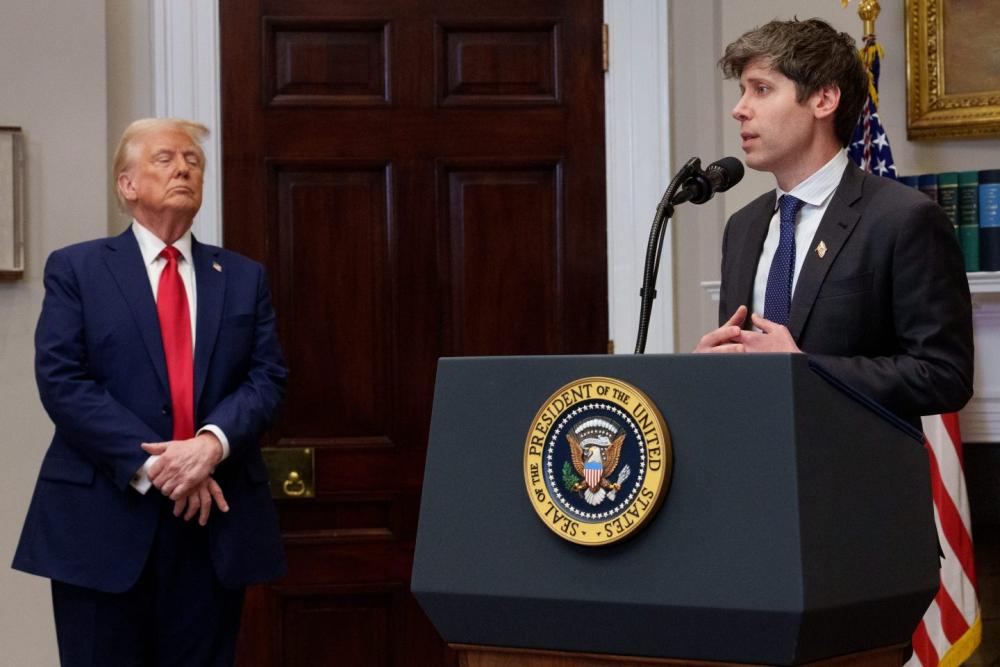
Core Viewpoint - Anthropic aims to achieve reliable detection of AI model issues by 2027, addressing the lack of understanding regarding the internal workings of advanced AI systems [1][2][3] Group 1: Challenges and Goals - CEO Dario Amodei acknowledges the challenges in understanding AI models and emphasizes the urgency for better interpretability methods [1][2] - The company has made initial breakthroughs in tracking how models arrive at their answers, but further research is needed as model capabilities increase [1][2] Group 2: Research and Development - Anthropic is pioneering in the field of mechanical interpretability, striving to unveil the "black box" of AI models and understand the reasoning behind their decisions [1][4] - The company has discovered methods to trace AI model thought processes through "circuits," identifying a circuit that helps models understand U.S. cities and their states [4] Group 3: Industry Collaboration and Regulation - Amodei calls for increased research investment from OpenAI and Google DeepMind in the field of AI interpretability [4] - The company supports regulatory measures that encourage transparency and safety practices in AI development, distinguishing itself from other tech firms [5]