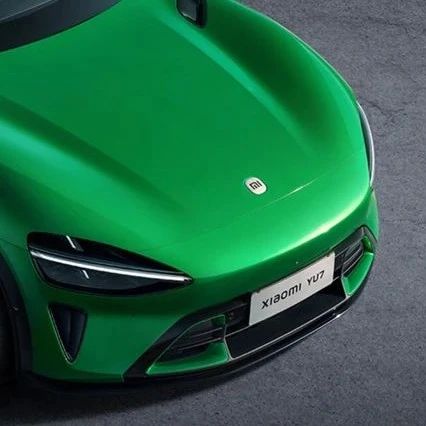
人车家生态

Search documents
海尔收购汽车之家,一个卖冰箱的买它干啥?
创业邦· 2025-09-06 01:09
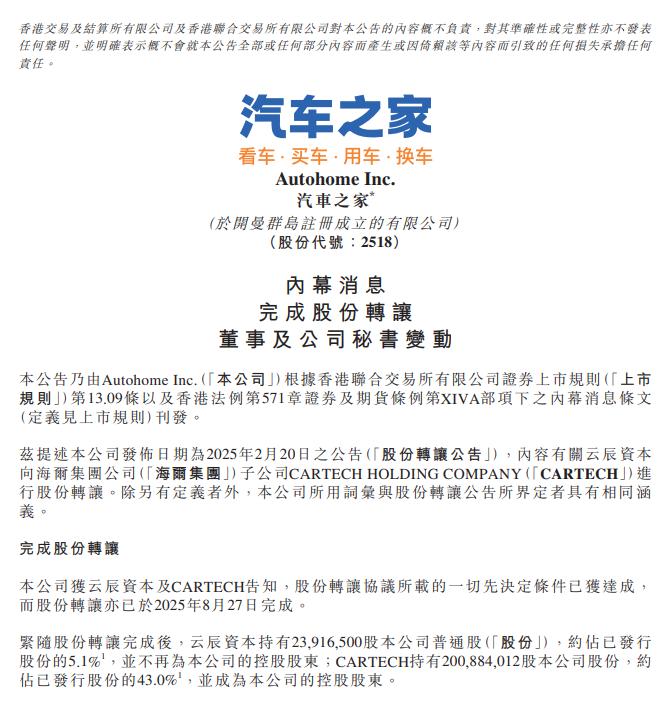
Core Viewpoint - Haier has completed the acquisition of a 43% stake in Autohome from Ping An for $1.8 billion, becoming the controlling shareholder, which raises questions about the future direction of Autohome and its business model [7][10]. Group 1: Acquisition Details - Haier's acquisition of Autohome took six months and cost approximately 18 billion USD (around 130 billion RMB) [7]. - Ping An retains a 5.1% stake and a board seat, but the CEO of Autohome has been replaced by someone from Haier's team [10]. Group 2: Autohome's Declining Performance - Autohome's financial performance has been declining, with revenue dropping from 8.66 billion RMB in 2020 to 7.04 billion RMB in 2024, and profit decreasing from 3.41 billion RMB to 1.68 billion RMB during the same period [12]. - The platform has faced a trust crisis due to issues like excessive advertising and low-quality content, leading to a decline in user engagement [14][31]. Group 3: Historical Context - Autohome started as a car enthusiast forum in 2005, focusing on objective content, but shifted towards commercialization after internal conflicts in 2008 [16][19]. - The introduction of lead sales in 2009 marked a turning point, prioritizing profit over user experience, which contributed to its current challenges [20][24]. Group 4: Competitive Landscape - The automotive portal industry is considered a sunset industry, with user engagement declining as consumers turn to platforms like Douyin and Xiaohongshu for car reviews [29][31]. - Competitors like Dongchedi have adopted short video formats and more effective lead generation models, further exacerbating Autohome's struggles [32][36]. Group 5: Future Outlook - Haier's acquisition may aim to integrate Autohome with its used car platform, Kataychi, but the fundamental issues facing Autohome may not be resolved simply through financial investment [40][41]. - The need for a transformative strategy to enhance user experience is critical for Autohome's survival, as financial backing alone is insufficient [44].



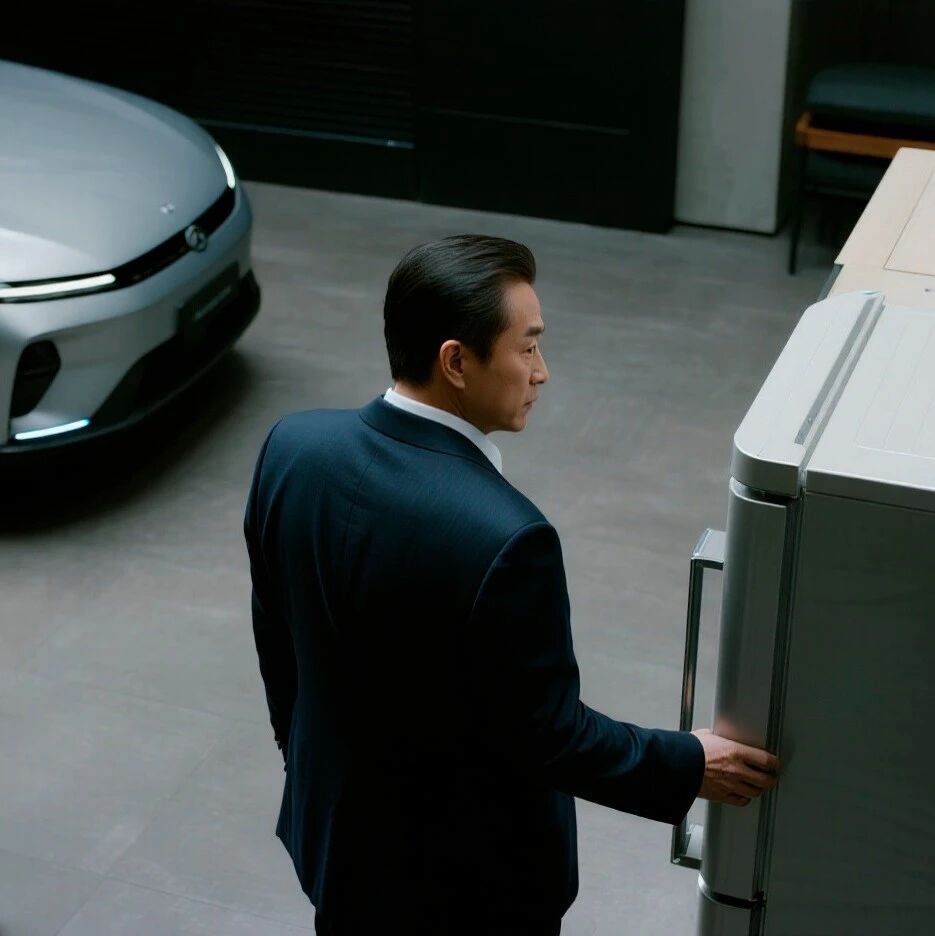
海尔收购汽车之家,一个卖冰箱的买它干啥?
3 6 Ke· 2025-09-04 00:01
Group 1 - Haier has completed the acquisition of a 43.0% stake in Autohome from Ping An for approximately $1.8 billion (around 13 billion RMB), becoming the controlling shareholder [2][4] - Despite Ping An's Yunchen Capital retaining a 5.1% stake and a board seat, the CEO of Autohome has been replaced with someone from Haier's network, indicating potential significant changes ahead [4][6] - Autohome's financial performance has been declining steadily, with revenue dropping from 8.66 billion RMB in 2020 to 7.04 billion RMB in 2024, and profit decreasing from 3.41 billion RMB to 1.68 billion RMB during the same period [6][19] Group 2 - The shift in ownership from a financial company to a home appliance company raises questions about the future direction of Autohome, especially given its current struggles [6][27] - Autohome has faced a trust crisis due to issues like excessive advertising and low-quality content, which have contributed to its declining reputation [9][19] - The automotive portal industry is considered a sunset industry, with user engagement decreasing as consumers turn to platforms like Douyin and Xiaohongshu for car reviews [20][22] Group 3 - Haier's acquisition may aim to integrate Autohome with its used car platform, Kataychi, and expand its presence in the automotive sector, but the fundamental issues facing Autohome may not be resolved by this change [27] - The competitive landscape has shifted, with competitors like Dongchedi adopting more effective content strategies, such as short videos, which have outperformed Autohome's traditional text and image-based approach [22][25] - Autohome's lead generation model has become outdated, leading to dissatisfaction among car manufacturers and dealers, further exacerbating its challenges in the market [25][27]
小米集团(1810.HK):全生态协同发力 盈利创历史新高
Ge Long Hui· 2025-08-23 02:40
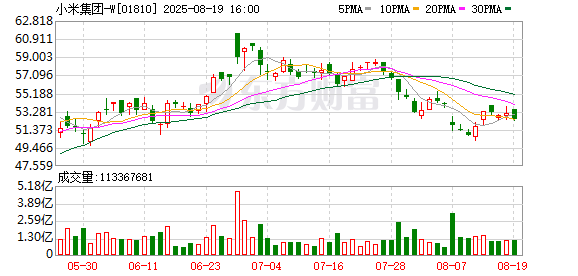
Core Viewpoint - Xiaomi Group reported strong financial results for Q2 2025, with revenue of 115.96 billion RMB, a year-on-year increase of 30.5%, and adjusted net profit of 10.83 billion RMB, up 75.4% year-on-year, exceeding Bloomberg consensus expectations and setting historical highs [1] Group 1: Smartphone Performance - Xiaomi's smartphone revenue decreased by 2.1% year-on-year to 45.52 billion RMB, primarily due to a 2.7% decline in average selling price (ASP) to 1,073.2 RMB, partially offset by a 0.6% increase in shipment volume to 42.4 million units [1] - Despite an increase in high-end smartphone shipments in mainland China, the launch of the REDMIA5 series in April 2025 led to a decline in ASP in overseas markets, contributing to a 0.6 percentage point drop in smartphone gross margin to 11.5% [1] Group 2: IoT and Internet Services - IoT and lifestyle consumer products achieved revenue of 38.71 billion RMB in Q2, a year-on-year growth of 44.7%, setting a historical high, with a gross margin of 22.5%, up 2.8 percentage points year-on-year [2] - Internet services revenue reached 9.1 billion RMB, growing 10.1% year-on-year, with a gross margin of 75.4%, slightly down year-on-year but still a core profit contributor [2] - Global monthly active users increased to 731.2 million, up 8.2% year-on-year, supporting revenue growth in services [2] Group 3: Automotive Business - The company delivered 81,302 new vehicles in Q2, a historical high, with the Xiaomi YU7 series SUV achieving over 240,000 orders within 18 hours of launch, indicating strong market interest [2] - The vehicle models feature high-end configurations such as an 800V silicon carbide high-voltage platform and laser radar, with an ASP of 253,700 RMB, up 10.9% year-on-year, contributing to improved profitability [2] Group 4: Investment Outlook - The company's effective execution of its "high-end + full ecosystem + globalization" strategy led to another quarter of unexpected growth in Q2 2025, with short-term growth driven by YU7 vehicle deliveries and AIoT product launches [3] - Long-term growth potential is anticipated from the implementation of large model technology and the synergy of the "people, vehicle, home" ecosystem [3] - The company is assigned a target price of 62.3 HKD per share, indicating an upside potential of 18.6% from the recent closing price, maintaining a "buy" rating [3]

小米集团-W(1810.HK):25Q2经营创新高 汽车规模效应加速释放
Ge Long Hui· 2025-08-21 10:40
Core Insights - The company reported a significant increase in total revenue and adjusted net profit for the first half of 2025, with total revenue reaching 227.2 billion yuan, up 38.2% year-on-year, and adjusted net profit at 21.5 billion yuan, up 69.8% [1] Automotive Sector - The automotive segment experienced accelerated growth, with revenue from smart electric and innovative businesses reaching 21.3 billion yuan, a year-on-year increase of 234% and a quarter-on-quarter increase of 14%, driven by continuous delivery growth and an increase in average selling price (ASP) [2] - The company delivered 81,000 vehicles in Q2, marking a year-on-year increase of 198% and a quarter-on-quarter increase of 7%, with an ASP of 254,000 yuan, up 11% year-on-year, primarily due to the increased delivery of the high-priced SU7 Ultra [2] - The automotive business gross margin improved to 26.4%, up 11 percentage points year-on-year and 3 percentage points quarter-on-quarter, benefiting from robust orders and capacity ramp-up [2] - The company anticipates that the launch of the YU7 model in June will further enhance quarterly deliveries and potentially lead to profitability within the year [2] Smartphone Sector - In Q2 2025, the smartphone business generated revenue of 45.5 billion yuan with a shipment volume of 42.4 million units, achieving year-on-year growth for eight consecutive quarters and maintaining a top-three position globally for five years [2] - The company achieved significant market share in the high-end segment, with a 24.7% market share in the 4,000-5,000 yuan price range, ranking first, and a 15.4% market share in the 5,000-6,000 yuan range, an increase of 6.5 percentage points year-on-year [2] - The successful launch and mass production of the self-developed 3nm flagship SoC, the Xuanjie O1, provide the company with a long-term competitive advantage [2] IoT Sector - The IoT and lifestyle consumer products segment achieved record revenue of 38.7 billion yuan in Q2, a year-on-year increase of 45%, with a gross margin of 22.5%, up 3 percentage points [3] - The smart home appliance category showed strong performance, with revenue growth of 66% year-on-year, air conditioner shipments exceeding 5.4 million units (up over 60% year-on-year), refrigerator shipments exceeding 790,000 units (up over 25% year-on-year), and washing machine shipments exceeding 600,000 units (up over 45% year-on-year) [3] - The company launched the Xiaomi AI glasses in June, featuring a 12-megapixel ultra-transparent optical lens, which is expected to further expand the IoT business space [3] Financial Forecast - The company projects revenues of 474.4 billion yuan, 588.7 billion yuan, and 696.4 billion yuan for 2025-2027, representing year-on-year growth rates of 30%, 24%, and 18% respectively; net profit attributable to shareholders is expected to be 43.7 billion yuan, 56.7 billion yuan, and 71.4 billion yuan, with corresponding year-on-year growth rates of 85%, 30%, and 26% [3]
欧洲市场反超苹果,万亿小米风起
2 1 Shi Ji Jing Ji Bao Dao· 2025-08-20 00:09
Core Insights - Xiaomi Group reported a total revenue of 1159.56 billion yuan for Q2 2025, a year-on-year increase of 30.5%, and a net profit of 108.31 billion yuan, up 75.4% year-on-year [2][3] Business Performance - Despite a challenging global smartphone market, Xiaomi's smartphone business achieved significant growth, with Q2 smartphone shipments reaching 42.4 million units, a 1.5% increase quarter-on-quarter [5][6] - Xiaomi's smartphone revenue for Q2 was 455.2 billion yuan, a decrease of approximately 10% from Q1 due to a decline in average selling price (ASP), which fell from 1210.6 yuan to 1073.2 yuan [5][6] - The company aims to enter the "200 million club" for annual smartphone sales, positioning itself alongside Apple and Samsung [3][10] Market Position - In the Southeast Asian market, Xiaomi's market share rose to 18.9%, ranking first, while in Europe, it regained the second position with a market share of 23.4%, surpassing Apple for the first time [6][7] - In the domestic market, Xiaomi's smartphone activation volume reached 11.5 million units, securing a market share of 16.8% [6][9] Revenue Breakdown - Xiaomi's smartphone and AIoT businesses remain the main revenue drivers, contributing 946.93 billion yuan in Q2, a year-on-year increase of 14.8%, accounting for 81.7% of total revenue [5][11] - IoT and lifestyle products revenue reached 387 billion yuan, up 44.7% year-on-year, while smart electric vehicles and AI-related businesses generated 213 billion yuan, a staggering 234% increase [12][13] Strategic Focus - The company is shifting its strategy from scale expansion to a focus on quality and profitability, emphasizing high-end products and ecosystem synergy for new growth opportunities [8][10] - Xiaomi's high-end smartphone sales accounted for 27.6% of total smartphone sales in Q2, an increase of 5.5 percentage points year-on-year [9][11] Future Outlook - Xiaomi is confident in achieving its annual revenue growth target of approximately 30%, driven by smartphone scale and high-end user growth, alongside steady growth in internet services and smart vehicles [13]
空调业新冷年价格竞争将加剧,AI节能、渠道提效也是焦点|如数家珍
Di Yi Cai Jing· 2025-08-07 09:20
Core Viewpoint - The competition in China's air conditioning industry for the 2025-2026 cooling year has intensified, with a focus on technology integration, price competition, and channel efficiency as key trends [2][3]. Group 1: Market Dynamics - The air conditioning market is experiencing a slowdown in growth, with domestic retail sales of household air conditioners reaching CNY 126.3 billion, a year-on-year increase of 12.4%, and retail volume at 38.45 million units, up 15.6% in the first half of 2025 [3]. - The export volume of air conditioners is expected to exceed 90 million units for the year, driven by extreme high temperatures [3]. - The competitive landscape is shifting, with Xiaomi gaining market share through low pricing, while Midea and Gree are countering with sub-brands targeting the mid-to-low price segment [3]. Group 2: Technological Advancements - AI technology is becoming a focal point, with companies like Gree and Midea launching AI energy-saving air conditioners and integrating advanced AI models into their products [2][3]. - The demand for energy-efficient and comfortable air conditioning solutions is driving innovation in AI features such as AI energy-saving and AI voice control [2]. Group 3: Supply Chain and Retail Strategies - Companies are focusing on improving supply chain efficiency to cope with profit growth pressures, with Midea and Gree implementing direct-to-consumer (DTC) and new retail strategies [4]. - Retail capabilities are becoming a competitive edge, with various platforms and channels being utilized to enhance consumer engagement and streamline distribution [5]. Group 4: Long-term Strategic Initiatives - Companies are exploring the development of smart home ecosystems, with partnerships aimed at integrating air conditioning with automotive technology [5]. - There is a push for breakthroughs in upstream core components and new materials, with Gree and Midea investing in research for innovative magnetic materials and energy-efficient technologies [5]. Group 5: Competitive Positioning - Despite Xiaomi's close market share to Gree in June, there remains a 9.32 percentage point gap in the online air conditioning market as of August 3, 2025, indicating ongoing competitive pressures [6].


空调在东北卖爆,小米偷家格力美的
3 6 Ke· 2025-07-28 09:43
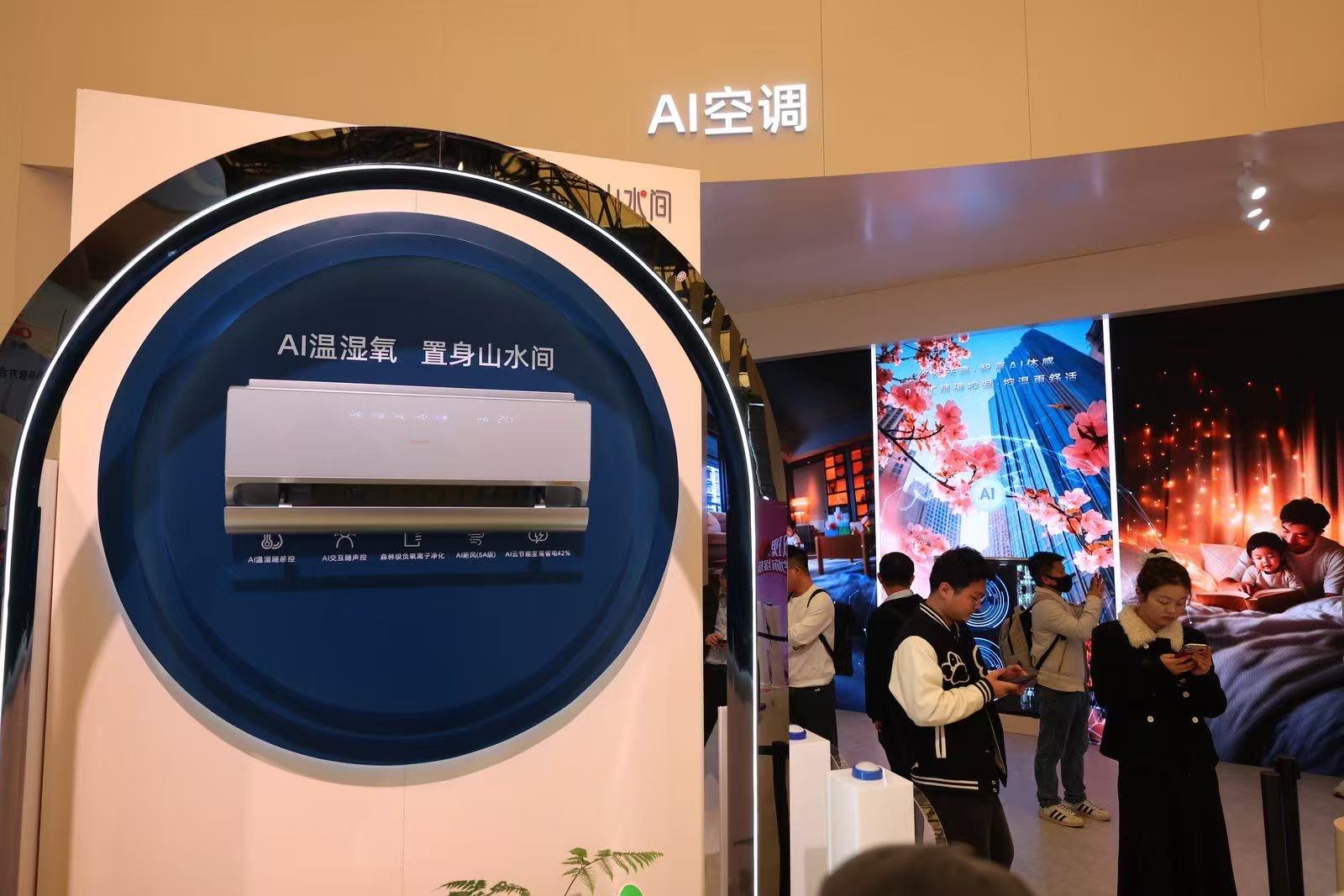
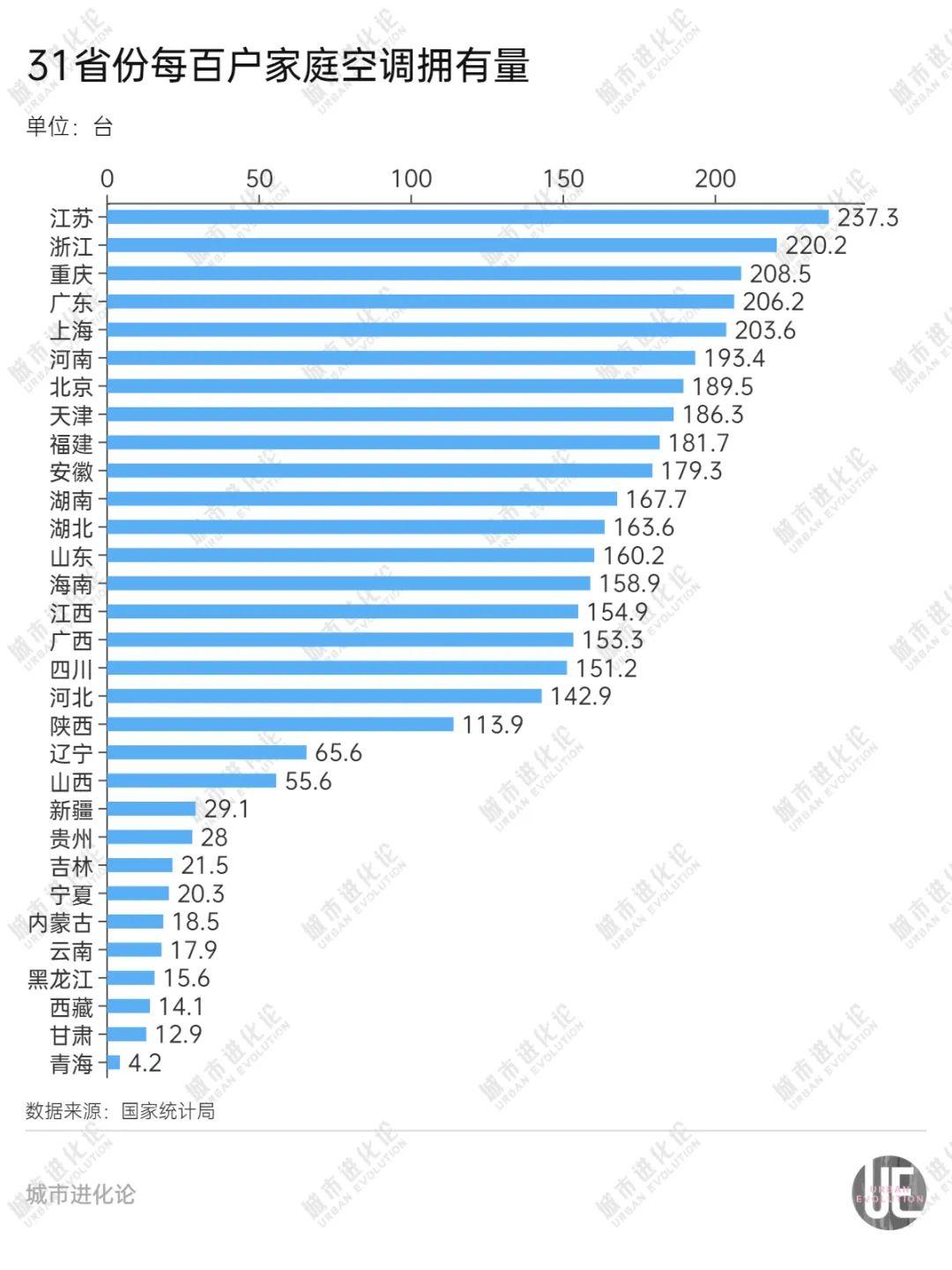
Core Insights - The competition in the air conditioning market in Northeast China has intensified, with significant sales growth due to rising temperatures, leading to a surge in demand for installation services [1][2] - Xiaomi is emerging as a strong competitor in the air conditioning sector, aiming to disrupt the market dynamics by leveraging its brand and distribution channels [2][34] Market Dynamics - The air conditioning ownership in Northeast China is significantly lower than the national average, indicating substantial growth potential [3][6] - The installation of air conditioning units in Northeast China is more complex due to the construction standards, which affects the overall market dynamics [7][8] Importance of Distributors - Distributors play a crucial role in the air conditioning industry, as they manage local sales, installation, and after-sales services, which are essential for market penetration [10][11] - The relationship between manufacturers and distributors is critical, as misalignment can lead to market challenges [12][13] Strategies of Leading Companies - Gree's success in the air conditioning market is attributed to its effective management of distributor relationships and innovative sales strategies, such as "payment before delivery" and seasonal rebates [14][17][21] - Midea has successfully reformed its distribution system over the years, focusing on logistics and direct sales to enhance efficiency and reduce costs [25][31] Xiaomi's Approach - Xiaomi is leveraging its automotive business to enhance its air conditioning sales channels, opening numerous stores and integrating product offerings [35][36][42] - The brand's strategy includes utilizing high traffic from automotive stores to boost air conditioning sales and improve brand perception [43][44] Market Potential - The demand for air conditioning in China is still far from being fully met, with significant growth potential in urban and rural areas [46][47] - The ideal ownership rates for air conditioning units suggest a potential increase of 33% in urban areas and 45% in rural areas, indicating a robust market opportunity for companies like Xiaomi [48][49]
雷军到底抢了谁的生意?YU7主力用户为何都用苹果手机?
Sou Hu Cai Jing· 2025-07-09 23:22
Core Insights - Xiaomi's Yu7 model has attracted a significant user base, with 52.4% of its users being iPhone owners, indicating a shift in target demographics compared to its previous model, Su7, which had a 40% female user base [1][4][21] - The Yu7 has achieved remarkable pre-sale success, with over 240,000 units locked in within 18 hours of launch, creating a notable impact on Xiaomi's stock price, which saw a 69% increase in 2025 [4][6][8] - The competitive landscape is shifting, with Xiaomi now ranking third among top internet companies by market capitalization, while traditional players like Baidu have fallen out of the top ten [6][8] User Demographics - The average age of Yu7 users is 33, with a predominant male user base, suggesting potential for further expansion into the female market [1][23] - The top three cities for Yu7 sales are Shanghai, Hangzhou, and Beijing, all of which have high GDP per capita, correlating with the high percentage of iPhone users in these areas [21][23] Sales Performance - The Yu7 model recorded impressive pre-order numbers, with 200,000 units reserved in just 3 minutes and 289,000 in one hour, showcasing strong market demand [4][10] - The vehicle's pricing ranges from 253,500 to 329,900 yuan, aligning with the purchasing power of its target demographic [10][23] Market Positioning - Xiaomi's strategy includes optimizing compatibility with the iOS ecosystem, which has successfully attracted a significant number of Apple users, highlighting a shift from its previous focus on Xiaomi phone users [4][21][24] - The company aims to enhance user experience for iPhone owners by integrating features like CarPlay and improving Bluetooth connectivity, which may contribute to its competitive edge [21][23] Production and Delivery Challenges - The Yu7 has a long delivery timeline, with estimates ranging from 10 to 15 months, raising concerns among pre-order customers about potential delays and associated costs [16][17][20] - Xiaomi's production capacity is under pressure as it balances orders for both the Yu7 and the previously popular Su7, with a projected annual capacity of 300,000 vehicles across its two factories [20][21]

抖音新规:未满16周岁禁止出镜直播|首席资讯日报
首席商业评论· 2025-07-06 03:40
Group 1 - Meizu's recent social media account name change does not affect the company's name or entity, focusing on the Meizu and Flyme brands for more efficient communication [1] - In the first half of 2025, Chinese electric vehicles dominated the Israeli market, with 21,252 units sold, accounting for 81.2% of total electric vehicle sales in Israel [2][1] - The top-selling electric vehicle in Israel was the XPeng G6, with 3,164 units sold, followed by BYD's ATTO 3 and Chery's Omoda 5 [1] Group 2 - The China Football Association reported over 25,487 registrations for the "China Football Association Player Self-Recommendation System," with 6813 submitting personal information [3] - Musk's proposal to establish a third political party in the U.S. faces significant legal and logistical challenges, according to election experts [4] - The latest version of WeChat for HarmonyOS aims to align with and potentially surpass Android and iOS functionalities [5][6] Group 3 - Shunde Rural Commercial Bank has withdrawn its IPO application, leading to the termination of its listing review by the Shenzhen Stock Exchange [8] - SF Holding completed the placement of 70 million new H-shares, raising approximately HKD 29.33 billion, increasing its total issued H-shares to 240 million [9] - CATL and Geely have signed a comprehensive strategic cooperation agreement to deepen collaboration in battery technology and supply chain development [10][11] Group 4 - ST Huike is under investigation by the China Securities Regulatory Commission for suspected violations of information disclosure laws [12] - Jinan has established a Robot Industry Empowerment Alliance, releasing a list of 87 application scenarios for robots across 12 sectors, with an annual investment of 142.6 billion yuan [13][14] - Tencent's stake in Zhong An Online has decreased from 8.09% to 7.99% after selling approximately 1.48 million shares [15] Group 5 - Douyin has implemented new regulations prohibiting minors under 16 from live streaming, requiring parental consent for those aged 16 to 18 [16]






YU7锁单破24万,雷军的麻烦来了
36氪· 2025-06-30 13:46
Core Viewpoint - Xiaomi's YU7 electric vehicle launch has generated significant market interest, challenging Tesla's Model Y and setting new benchmarks for pre-sale speed and order volume in the electric vehicle sector [5][8][62]. Group 1: Launch and Market Response - Xiaomi's YU7 received overwhelming pre-orders, with 20,000 units booked in 3 minutes and over 289,000 units in 18 hours, showcasing a new standard for electric vehicle pre-sales [5][26]. - The launch event was compared to major sales events like Double 11, indicating a strong consumer response and market excitement [4][62]. - The CEO expressed pride in witnessing a "miracle" in the Chinese automotive industry, highlighting the significance of this launch [6][62]. Group 2: Competitive Positioning - YU7 is priced lower than Tesla's Model Y, with the standard version costing 253,500 CNY, which is 10,000 CNY less than the Model Y rear-wheel drive version [11][12]. - The vehicle offers superior specifications, including an 800V silicon carbide high-voltage platform and advanced features like laser radar and NVIDIA Thor chip, positioning it competitively against Tesla [14][16]. - Performance metrics are impressive, with the Max version achieving 0-100 km/h in just 3.23 seconds and a range of 835 km, setting a high bar for vehicles in its price range [18][20]. Group 3: Production and Capacity Challenges - The surge in orders has raised concerns about Xiaomi's production capacity, which is currently limited to 150,000 units annually, with the second factory expected to increase capacity to 300,000 units but still facing ramp-up challenges [30][32][33]. - The company has implemented a "transfer order mechanism" allowing customers of the SU7 to switch to the YU7, aiming to manage production and customer expectations [35][38]. - Xiaomi's commitment to expanding production is evident, with plans for future factory developments to potentially increase capacity beyond 600,000 units by 2026 [39][40]. Group 4: Safety and Technology Focus - Safety has been emphasized as a core selling point for the YU7, featuring high-strength steel and advanced safety systems, aiming to build consumer trust [45][46]. - The vehicle includes a comprehensive driver assistance system, with over 10 million training clips, indicating a focus on enhancing autonomous driving capabilities [49][57]. - Xiaomi aims to address previous criticisms by ensuring that the YU7 meets high safety and quality standards, reflecting a shift in strategy from merely competing on price to establishing a reliable brand reputation [60][65].