内存超级周期

Search documents
内存价格,失控狂飙
猿大侠· 2025-10-30 04:40
Core Viewpoint - The article discusses the impact of the "super cycle" in memory prices, particularly DRAM and NAND Flash, on the Chinese smartphone supply chain, highlighting significant cost pressures and potential delays in product delivery [1]. Group 1: Memory Price Trends - DRAM and NAND Flash prices are continuously rising, affecting the supply chain of Chinese smartphones [1]. - The delivery period for key memory types like LPDDR5X has extended to 26-39 weeks, with potential delays in order fulfillment until mid-2026 [1]. - Major memory suppliers, including Samsung, SK Hynix, and Micron, plan to increase prices further in Q4, with potential hikes of up to 30% [5]. Group 2: Impact on Smartphone Manufacturers - Media reports indicate that companies like Xiaomi are directly adjusting product pricing due to soaring memory costs, with the Redmi K90 series seeing price increases of 300 to 600 yuan compared to previous models [2][5]. - Xiaomi's founder, Lei Jun, acknowledged the "outrageous" rise in memory prices, which has forced the company to raise prices beyond its control [3]. - Other domestic brands, such as vivo and OPPO, have also raised prices for their models in response to increased memory costs [5]. Group 3: Financial Performance of MediaTek - MediaTek's financial performance shows a slight decline in gross margin and operating profit margin in Q4 2024, with expectations of profit pressure from rising memory and wafer foundry costs starting in Q4 2025 [2]. - The gross margin for MediaTek is projected to be 48.54% in Q4 2024, down from 48.82% in Q3 2024 [2].


英伟达GTC大会公布多项进展,电子ETF(159997),芯片ETF天弘(159310)集体上攻
2 1 Shi Ji Jing Ji Bao Dao· 2025-10-29 02:36
Group 1 - The A-share market indices opened strongly on October 29, with the electronic sector showing robust performance, particularly in chip ETFs and electronic ETFs [1] - The electronic ETF (159997) has seen a year-to-date increase of 42.51%, with a net inflow of 960 million yuan recently [1] - The chip ETF Tianhong (159310) tracks the CSI Chip Industry Index, which is projected to see a 37.62% year-on-year growth in net profit attributable to shareholders in the first half of 2025 [1] Group 2 - The electronic ETF (159997) is the only ETF tracking the CSI Electronic Index, which includes companies involved in semiconductor production, electronic manufacturing, and consumer electronics [2] - Nvidia's GTC conference highlighted advancements in AI, including rapid chip shipments and collaborations with companies like Nokia and Oracle [2] - Microsoft and OpenAI have signed a new agreement, with Microsoft committing to a $250 billion order for Azure cloud services and acquiring approximately 27% equity in OpenAI [2] Group 3 - The global memory chip market is entering a "super cycle," with multiple manufacturers raising prices, driven by internal innovation and the need for self-sufficiency in key technology areas [3] - The AI-driven memory "super cycle" is accelerating, prompting major global suppliers to significantly increase prices and customers to secure long-term supply agreements to mitigate shortages [3]


内存“超级周期”已至!AI需求爆表,SK海力士Q3利润创新高、明年全系列芯片订单已满
Zhi Tong Cai Jing· 2025-10-29 02:25
Group 1 - SK Hynix reported a 62% increase in profits, with record operating profit of 11.4 trillion KRW (approximately 8 billion USD) in Q3, exceeding analyst expectations [1] - The company has sold out its entire range of memory chip orders for next year, indicating a significant increase in demand driven by global AI infrastructure development [1][4] - SK Hynix plans to invest more in capacity expansion to meet unprecedented demand from industry leaders like OpenAI and Meta Platforms [1][4] Group 2 - Analysts predict that the demand for high-performance computing chips will continue into next year, influenced by major projects like OpenAI's "Star Gate" [2] - Concerns about market valuations being too high due to a lack of mainstream AI applications are being challenged by the ongoing demand for AI infrastructure [2] - NVIDIA's CEO stated that the industry is not in an AI bubble, emphasizing the willingness to pay for various AI models and services [2] Group 3 - SK Hynix executives indicated that HBM chips have been sold out since 2023 and will remain in short supply until 2027, marking the memory market's entry into a super cycle [4] - The emergence of AI is expected to drive structural changes in memory demand, particularly for HBM chips used in AI accelerators and services like ChatGPT [4] - New applications in autonomous driving and robotics are anticipated to further boost demand for high-end memory chips [4] Group 4 - OpenAI has secured agreements for data center and chip collaborations, with potential amounts exceeding 1 trillion USD, indicating significant storage capacity needs [5] - SK Hynix's sales and profits are expected to rise significantly by 2026 due to increased demand for DRAM and NAND chips, with DRAM demand projected to grow over 20% [5] - The semiconductor market is expected to experience double-digit percentage growth for three consecutive years, a trend not seen in the past 30 years [5] Group 5 - SK Hynix and Samsung Electronics have raised traditional storage chip prices by up to 30% in Q4, impacting the entire industry [6] - The stock prices of several older storage chip manufacturers have doubled since the beginning of the year, reflecting the rising costs of storage chips [6] - The increase in storage chip costs has contributed to rising smartphone prices [6]
美股异动 | 存储概念股走强 SanDisk Corp(SNDK.US)股价创历史新高
智通财经网· 2025-10-23 15:10
Core Viewpoint - The memory storage sector in the U.S. stock market is experiencing a significant surge, driven by an "AI-induced memory supercycle" that is leading to substantial price increases and long-term supply agreements among major suppliers [1] Group 1: Stock Performance - SanDisk Corp (SNDK.US) saw a rise of over 12.5%, reaching an all-time high [1] - Seagate Technology (STX.US) increased by more than 4.4% [1] - Western Digital (WDC.US) rose nearly 4.8% [1] - Micron Technology (MU.US) experienced an increase of over 2.8% [1] Group 2: Market Dynamics - The AI-driven demand is causing a "super cycle" in memory products, prompting major suppliers to raise prices significantly [1] - Samsung Electronics and SK Hynix have increased their DRAM and NAND flash prices by up to 30% in the fourth quarter [1] - This price adjustment reflects a direct response to the current supply-demand imbalance in the memory market [1]


存储芯片 “超级周期” 加速:三星、SK海力士双双涨价30%,有客户锁定2-3年长协
Hua Er Jie Jian Wen· 2025-10-23 10:14
Core Insights - The memory "super cycle" driven by artificial intelligence (AI) is accelerating, leading major global suppliers to significantly raise prices and prompting customers to secure long-term supply contracts to mitigate increasing shortage risks [1][2] Group 1: Price Increases and Supply Contracts - Samsung Electronics and SK Hynix have raised prices for DRAM and NAND flash by up to 30% in Q4, reflecting a direct response to the current supply-demand imbalance [1] - Major clients, including U.S. electronics companies and data center operators, are negotiating long-term supply contracts of 2 to 3 years with Samsung and SK Hynix to ensure supply stability amid growing concerns over shortages [2] Group 2: Supply Shortages and Market Dynamics - The AI-driven supply shortage is expected to last longer and be more intense than previous cycles, with analysts predicting a duration of three to four years due to factors such as significant new investments in AI servers and ongoing memory upgrades in general servers [1][3] - The shift in procurement strategies is evident as companies are moving from flexible quarterly or annual DRAM contracts to securing additional supply in advance due to anticipated shortages [2] Group 3: Demand Drivers - The current memory super cycle is characterized by broad-based demand growth, driven by substantial investments in AI servers, memory upgrades for general servers to support AI applications, and the proliferation of "edge AI" features in smartphones and PCs [3] - As AI investment shifts focus from large-scale data training to inference applications, the demand for general DRAM is rising, exacerbating the supply-demand imbalance in the DRAM market [3]
AI大语言模型如何带来内存超级周期?
傅里叶的猫· 2025-10-14 15:51
Core Viewpoint - The article discusses the impact of AI large language models, particularly GPT-5, on the demand for memory components such as HBM, DRAM, and NAND, suggesting a potential memory supercycle driven by AI inference workloads [4][8]. Memory Demand Analysis - The demand for HBM and DRAM is primarily driven by the inference phase of AI models, with GPT-5 estimated to require approximately 26.8 PB of HBM and 9.1 EB of DRAM if a 50% cache hit rate is assumed [8][10]. - NAND demand is significantly influenced by retrieval-augmented generation (RAG) processes, with an estimated requirement of 200 EB by 2025, considering data center capacity adjustments [8][11]. Supply and Demand Dynamics - The global supply forecast for DRAM and NAND indicates that by 2025, the supply will be 36.5 EB and 925 EB respectively, with GPT-5's demand accounting for 25% and 22% of the total supply [9]. - The article highlights a shift from oversupply to a shortage in the NAND market due to increased orders from cloud service providers, leading to price increases expected in late 2025 and early 2026 [11][12]. Beneficiary Companies - Companies such as KIOXIA and SanDisk are identified as key beneficiaries of the NAND price increases, with KIOXIA having the highest price elasticity but facing debt risks, while SanDisk is expanding its enterprise segment [12]. - Major manufacturers like Samsung and SK Hynix are positioned to benefit from both HBM and NAND markets, although their valuations may already reflect some of the positive outlook [12]. Market Outlook - Analysts predict that the current cycle is in its early stages, with profitability expected to begin in Q4 2025 and a potential explosion in demand in 2026, particularly for companies like SanDisk [13]. - The article notes several risk factors that could impact the sustainability of this cycle, including potential overestimation of cloud orders and the possibility of increased NAND production leading to oversupply by 2027 [13].
美股鲍威尔一句话“吓坏”华尔街,美光财报释放重磅信号
3 6 Ke· 2025-09-24 01:30
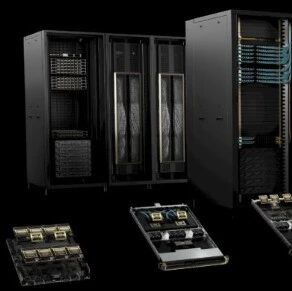
Market Overview - The initial value of the September Markit manufacturing and services PMI in the U.S. showed a decline but remained in the expansion zone, with easing price pressures, leading to a muted market reaction [1] - Following comments from Federal Reserve Chairman Jerome Powell regarding high equity valuations, major U.S. stock indices experienced a decline, with the S&P 500 down 0.6%, the Dow Jones down 0.2%, and the Nasdaq down 1% [3][6] Federal Reserve Commentary - Powell's remarks served as a public warning about current market valuations, impacting investor sentiment and shifting it from exuberance to tension [4] - He emphasized the need to monitor inflation and employment data without making any clear commitments regarding policy actions for October, indicating a cautious approach [4] Technology Sector Impact - Interest-sensitive technology stocks were hit hardest, with the index of the seven major tech companies declining; Amazon fell by 3.04%, Nvidia by 2.82%, and Tesla by 1.93% [5] Semiconductor Industry Insights - Micron Technology reported strong earnings, with Q4 revenue reaching $11.3 billion, exceeding market expectations of $11.2 billion, and earnings per share of $3.03, surpassing analyst predictions of $2.84 [8][10] - The demand for memory chips, driven by AI, is expected to keep supply tight into next year, with Micron's CEO highlighting the company's competitive product portfolio and unique position as the only domestic memory manufacturer [9] - Micron is also leading in HBM (High Bandwidth Memory) chips, with significant agreements in place for HBM3e chips and plans to introduce HBM4 chips, addressing market concerns about profit margins [12] Pricing Trends in Semiconductor Industry - The semiconductor industry is experiencing a price surge, with Micron's performance reflecting broader trends across the supply chain, driven by AI demand [13] - Advanced chip prices are rising, with TSMC indicating a 50% increase in 2nm process pricing compared to 3nm, and Apple securing a 50% share of TSMC's 2nm capacity [15] - Major competitors like Samsung and SK Hynix have also raised prices for memory and flash products, with DRAM prices increasing by up to 30% [15]