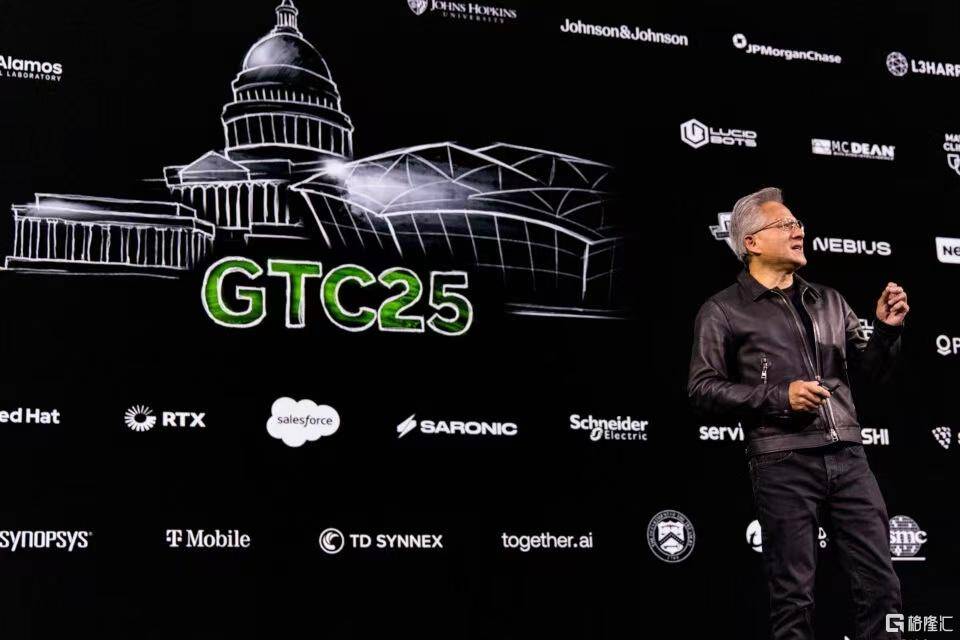
NVQLink技术

Search documents
2026 全球量子计算产业发展展望
光子盒研究院· 2026-03-13 01:22
Group 1: Quantum Computing Industry Overview - 2025 is identified as a pivotal year for quantum computing, marking the transition from theoretical exploration to industrial application, with significant breakthroughs in superconducting quantum computing recognized by the Nobel Prize[3] - The global quantum computing industry is projected to reach $6.61 billion in 2025, with expectations to grow to $10.54 billion by 2027 and potentially $68.17 billion by 2035[54] - The capital investment in quantum computing reached a record high of $5.395 billion in 2025, with the majority concentrated in the US ($4.463 billion) and a notable presence in Israel ($505 million) and Canada ($400 million)[45] Group 2: Technological Advancements - The focus of quantum computing has shifted from merely increasing the number of physical qubits to enhancing the quality of logical qubits and system decoupling, with over 10 leading companies achieving key technological breakthroughs[27] - IBM's Nighthawk processor, featuring 120 qubits, and Google's Willow chip, with 105 qubits, represent significant advancements in quantum architecture and error correction capabilities[31] - The semiconductor quantum computing route has made notable progress, with a new architecture demonstrating the ability to maintain high fidelity while increasing qubit numbers[30] Group 3: Application Development - The transition in quantum computing applications is moving from exploratory validation to operational pilot projects, particularly in materials and chemistry, where quantum systems can provide measurable incremental value[33] - Middleware and workflow orchestration capabilities are becoming increasingly important, enabling unified scheduling and observability across diverse hardware platforms[34] Group 4: Global Policy and Strategic Environment - The US continues to lead in quantum technology, reinforcing its dominant position through strategic initiatives and funding, while China emphasizes self-innovation and comprehensive capability building in quantum computing[58] - The competitive landscape is characterized by a collaborative approach among European nations and other countries, aiming to address future challenges in quantum technology[58]
英伟达的“非典型”市场战法:画饼、结盟与培育嫡系
半导体芯闻· 2026-01-22 10:39
Core Viewpoint - Nvidia has become the first publicly traded company to surpass a market capitalization of $5 trillion, driven by a surge in global AI computing demand, with projected revenues of $130 billion for FY2025, reflecting a 113% year-over-year growth [1] Group 1: Market Strategy - Nvidia's revenue growth is attributed to its effective market expansion strategy, which includes early positioning in emerging sectors, promoting innovative ideas from key clients, and establishing a comprehensive sales network [1][2] - The company has identified and targeted major emerging markets such as autonomous driving, robotics, edge AI, 6G, digital twins, and quantum computing, allowing it to capture significant market share [2] - Nvidia's collaboration with partners like Nokia in 6G and Uber in autonomous driving exemplifies its proactive approach to market penetration [2] Group 2: Downstream Development Vision - Nvidia's "AI factory" concept envisions data centers evolving into production hubs for AI models and smart applications, guiding clients towards intelligent transformation [3] - The company aims to position itself as a supplier of AI infrastructure, providing a complete solution from hardware to software for various industries [3][4] Group 3: Sales System - Nvidia has developed a robust sales system comprising three main channels: partner networks, direct sales, and distribution retail channels, ensuring comprehensive market coverage [6] - The partner network includes cloud service providers, hardware manufacturers, and software solution providers, facilitating rapid market entry and customer engagement [6][7] Group 4: Strategic Alliances - Nvidia has adopted a strategy of forming alliances with competitors to enhance customer resources and market access, exemplified by its $5 billion strategic investment in Intel [9][10] - This partnership allows Nvidia to leverage Intel's extensive x86 CPU ecosystem, facilitating entry into enterprise markets and creating significant new market opportunities [10] Group 5: Nurturing Startups - To counter competition from large clients, Nvidia invests in and supports startups, fostering their growth to secure its market position and mitigate risks from major customers [11][12] - Nvidia's financial and technical support for startups like CoreWeave and Lambda demonstrates its strategy of creating a "fishing effect" in the market, compelling larger clients to engage with Nvidia's offerings [11][12]


英伟达在下一盘很大的“棋”
Shen Zhen Shang Bao· 2025-11-02 00:40
Core Insights - Nvidia announced a $1 billion investment in Nokia, acquiring 2.9% of the company, to support the transition from 5G to 6G networks and enhance its position in the next-generation network standards competition [2][6] - The integration of AI with 6G, quantum computing, and robotics reflects a trend towards deeper technological convergence and multi-domain collaboration in the AI industry [1][6] - Nvidia's ambition to transform into a full-stack AI infrastructure provider is evident, as it aims to integrate various technologies into a cohesive ecosystem [6][7] Investment and Partnership - Nvidia will purchase 166.4 million new shares of Nokia at $6.01 per share, making it Nokia's second-largest shareholder [2] - The collaboration will focus on launching the ARC platform, which combines Grace CPU, Blackwell GPU, and ConnectX networking to create a programmable computer capable of wireless communication and AI processing [2] Technological Developments - Nvidia showcased its next-generation Vera Rubin super GPU, which is expected to achieve 100 Petaflops of performance, significantly outperforming previous models [3] - The company introduced NVQLink, a new interconnect architecture designed to link quantum processors with Nvidia GPUs, addressing challenges in quantum computing [4] Autonomous Driving Initiative - Nvidia plans to deploy 100,000 Robotaxis in partnership with Uber and Stellantis starting in 2027, highlighting its focus on autonomous driving as a key AI application [6] - The integration of AI with various technologies, including 6G and quantum computing, is seen as a strategic move to solidify Nvidia's role in the AI infrastructure market [6] Market Perspective - Nvidia's CEO refuted concerns about an AI bubble, asserting that the strength of current AI models and customer willingness to pay validate the investments in infrastructure [7]

算力需求持续高景气,人工智能AIETF(515070)布局AI基础设施核心环节
Mei Ri Jing Ji Xin Wen· 2025-10-31 02:20
Group 1 - The A-share market opened slightly lower, with the Shanghai Composite Index down 0.05%, the Shenzhen Component down 0.11%, and the ChiNext Index down 0.08% [1] - The AI ETF (515070) fell by 1.89%, with its holdings such as Stone Technology, Lanke Technology, New Yisheng, Inspur Information, and Zhongji Xuchuang experiencing significant declines [1] - Nvidia announced a partnership with Nokia to develop a 6G network platform and introduced NVQLink technology to connect quantum processors with GPU supercomputers, further solidifying its global leadership in AI infrastructure [1] Group 2 - Nvidia's CEO Huang Renxun refuted claims of an "AI bubble," emphasizing the practicality of AI models and the willingness of customers to pay, indicating strong demand for AI infrastructure [1] - According to CITIC Construction Investment Securities, Nvidia is strategically positioned as an AI infrastructure platform provider, with a broad market space expected for ASIC (Application-Specific Integrated Circuit) and sustained high prosperity in the computing power industry chain [1] - The AI ETF (515070) tracks the CS AI Theme Index (930713), focusing on companies providing technology, basic resources, and applications in the AI industry chain, with top-weighted stocks including Zhongji Xuchuang, New Yisheng, and others [2]
英伟达市值破5万亿美元,携“财富风暴”助美国领跑6G
Sou Hu Cai Jing· 2025-10-30 05:59
Core Insights - Nvidia's stock price has surged over 1300% since the end of 2022, with analysts optimistic about its future prospects [1][4] - The company's market capitalization has reached a historic milestone of over $5 trillion, making it the first publicly traded company to achieve this [1][4] - Nvidia's CEO, Jensen Huang, refuted claims of an AI bubble, asserting that the demand for AI models justifies the investment in expensive computing infrastructure [2][8] Market Performance - Nvidia's stock opened with a 3.4% increase on October 29, 2023, and closed up 2.99%, with a market cap of $5.09 trillion [1] - The company’s market cap increased from $4 trillion to $5 trillion in just 113 days, compared to 410 days for the previous $1 trillion increase [1] - The stock has rebounded over 135% from its April low, with a year-to-date increase of 54% [3][4] Analyst Ratings - Over 90% of the 80 analysts tracked by Bloomberg rated Nvidia's stock as "buy" or equivalent, with an average target price of $225.48, indicating a potential upside of about 7% [3][4] - The stock's expected price-to-earnings ratio is currently below 34, lower than its five-year historical average of approximately 39 [4] Strategic Partnerships and Innovations - Nvidia has announced significant collaborations, including a $1 billion investment in Nokia, becoming its largest shareholder, and plans to develop a 6G telecom computing platform [6][7] - The company is also working on integrating quantum computing with AI through its NVQLink technology, which has garnered support from 17 quantum computing firms [7][8] - Nvidia's partnerships with Uber and Stellantis aim to deploy 100,000 Robotaxi vehicles based on Nvidia technology starting in 2027 [7] Future Outlook - Nvidia anticipates securing $500 billion in AI chip orders, significantly exceeding Wall Street's expectations [4] - The company is set to build seven new supercomputers for the U.S. Department of Energy, further solidifying its position in the AI infrastructure market [4][6] - Huang emphasized that the latest generation of Nvidia chips is expected to generate up to $500 billion in revenue over the coming quarters [8]

利好频传机构重估英伟达(NVDA.US):美银喊到235美元!高盛和花旗的目标价刚公布就到了
智通财经网· 2025-10-29 22:26
Core Consensus: $500 Billion Revenue Anchor - The three institutions agree on Nvidia's disclosure of the "Blackwell + Rubin platform" cumulative sales reaching $500 billion, significantly exceeding market consensus [2] - Citigroup estimates this figure implies a potential upside of over $25 billion in data center sales by January 2027, with Nvidia planning to ship 14 million GPUs over the next five quarters, adding to the already shipped 6 million, totaling 20 million GPUs to validate future demand [2] - Goldman Sachs notes this figure is 10% higher than its previous estimate of $453 billion and 12% above the market consensus of $447 billion from Visible Alpha [2] - Bank of America calculates this scale is $50 billion above current industry consensus, equivalent to five times the revenue of the Hopper platform lifecycle (excluding the Chinese market) [2] AI Infrastructure and Quantum Computing Multi-line Expansion - All three institutions highlight Nvidia's deep collaboration with the U.S. Department of Energy in supercomputing, with varying focuses [3] - Citigroup details the collaboration covering seven systems, including the Solstice supercomputer at Argonne Laboratory, which is equipped with 100,000 Blackwell GPUs [3] - Goldman Sachs emphasizes the deployment of specific laboratory platforms, including the Solstice system and the Rubin platform at Los Alamos Laboratory [3] - Bank of America contrasts Nvidia's collaboration with Oracle on the OCI Zettascale10 system against AMD's recent $1 billion investment in two supercomputing projects, showcasing Nvidia's leading position [3] Valuation and Performance Core Differences - Despite all three institutions giving a "buy" rating, there are notable differences in target prices and valuation logic [5] - Citigroup sets a 12-month target price of $210 based on a projected earnings capability of approximately $7 in 2026, using a 30x P/E ratio, aligning with Nvidia's 35-year historical average [6] - Goldman Sachs also sets a target price of $210, but uses a 35x P/E ratio multiplied by a projected $6 earnings per share in 2026 [6] - Bank of America's target price is significantly higher at $235, using a 37x P/E ratio after excluding cash, reflecting a higher recognition of Nvidia's long-term value [6] Performance Forecast Core Divergence - Citigroup's performance forecast focuses on "demand landing rhythm," emphasizing Nvidia's "14 million GPU shipment plan" as a rare clear signal in the industry [7] - Goldman Sachs projects an EPS of $6.75 in 2026, rising to $8.26 in 2028, attributing growth to three main drivers: OpenAI's Blackwell GPU deployment, sustained government orders, and the market advantages from the Rubin platform launch [7] - Bank of America highlights "revenue-EPS transmission efficiency," estimating that an excess revenue of $50 billion could increase 2026 EPS by approximately $1.15, leading to an expected EPS of $8 for the year [7] Vera Rubin Platform Interpretation Differences - The three institutions have different interpretations of Nvidia's Vera Rubin platform [8] - Citigroup does not analyze it separately but considers it within the overall demand framework of the Rubin platform [8] - Goldman Sachs defines it as the core platform for next-generation supercomputing, emphasizing its technological leadership [8] - Bank of America provides specific performance improvement data, noting a 100-fold increase in token generation efficiency compared to the Blackwell platform [8]
美股盘前要点 | 美联储凌晨或再降息25个基点!英伟达市值迈向5万亿美元
Sou Hu Cai Jing· 2025-10-29 12:43
Market Overview - US stock index futures are all up, with Nasdaq futures rising by 0.45%, S&P 500 futures up by 0.28%, and Dow futures increasing by 0.23% [1] - Major European stock indices are collectively rising, with Germany's DAX index up by 0.13%, UK's FTSE 100 up by 0.9%, France's CAC index up by 0.06%, and the Euro Stoxx 50 index up by 0.48% [1] - The Federal Reserve is expected to announce a 25 basis point rate cut, lowering the federal funds rate target range to 3.75%-4% [1] Company Insights - Wells Fargo predicts a comprehensive rally in US stocks by year-end, setting a target of 7100 points for the S&P 500 [2] - Nvidia's CEO Jensen Huang refuted AI bubble claims, stating that the Blackwell and Rubin chips will generate $500 billion in revenue; he also announced the launch of NVQLink technology and a partnership with the US Department of Energy to build the largest AI supercomputer in the US [2] - US President Trump indicated a potential discussion with China regarding Nvidia's Blackwell chip [3] - Tesla's chairman stated that if the compensation plan is not approved leading to Musk's resignation, the company is prepared to appoint a new CEO from within [4] - US RF chip manufacturers Skyworks and Qorvo have reached a merger agreement, with the new company valued at $22 billion [5] - Uber plans to expand its fleet of self-driving taxis supported by Nvidia technology to 100,000 vehicles starting in 2027 [6] - GlobalFoundries plans to invest €1.1 billion to expand its factory capacity in Germany, aiming to produce over 1 million wafers annually [7] - NASA and Lockheed Martin's experimental quiet supersonic aircraft X-59 has completed its first flight [8] Financial Performance - Glencore reported a 17% decline in copper production for the first three quarters of the year and tightened its guidance for 2025 [9] - Boeing's Q3 revenue reached $23.27 billion, with adjusted free cash flow of $238 million, both exceeding expectations; the launch of the 777X jet has been delayed to 2027 [9] - UBS reported Q3 revenue of $12.76 billion and a pre-tax profit of $2.82 billion, both surpassing expectations; the company plans to repurchase $3 billion in stock this year [9] - Caterpillar's Q3 revenue increased by 10% year-on-year to $16.7 billion, with adjusted earnings per share of $4.95 exceeding expectations [10] - Visa's Q4 revenue was $10.7 billion, with adjusted earnings per share of $2.98, both exceeding expectations [11] - Deutsche Bank reported Q3 total revenue of €8.04 billion and a net profit of €1.56 billion, both exceeding expectations [12] - GlaxoSmithKline turned a profit in Q3, recording a net profit of £2.01 billion and raising its full-year revenue growth guidance [13] - Electronic Arts reported Q2 revenue of $1.84 billion, which was below expectations, with net profit halving to $137 million [14]
英伟达GTC重磅消息不断,机械ETF(516960)盘中涨2.2%
Mei Ri Jing Ji Xin Wen· 2025-10-29 03:10
Group 1 - Nvidia announced a strategic partnership with Nokia to invest $1 billion in acquiring shares and jointly advance an AI-native 6G network platform [1] - Nvidia introduced NVQLink technology, which integrates AI supercomputing with quantum computing, connecting quantum processors with GPU supercomputers, supported by 17 quantum computing companies [1] - Nvidia is collaborating with the U.S. Department of Energy to build the largest AI supercomputer for the department [1] Group 2 - Nvidia will launch the Bluefield-4 processor to support operations in AI factories [1] - The Mechanical ETF (516960) tracks a specialized mechanical index (000812) that selects listed companies involved in industrial automation and specialized equipment manufacturing [1] - The components of the specialized mechanical index exhibit high growth potential and technological leadership, reflecting the overall development trend of the mechanical equipment industry [1]
英伟达GTC官宣多项重磅合作,通信ETF(515880)再创新高,年内涨幅居两市第一
Mei Ri Jing Ji Xin Wen· 2025-10-29 03:03
Core Insights - The communication ETF (515880) has seen a year-to-date market increase of over 117%, ranking first among all ETFs in the market [1] Group 1: NVIDIA Developments - NVIDIA CEO Jensen Huang delivered a keynote at the GTC conference, focusing on breakthroughs in 6G, AI, quantum computing, and robotics [1] - NVIDIA announced a strategic partnership with Nokia, investing $1 billion to acquire shares and jointly advance an AI-native 6G network platform [1] - The company introduced NVQLink technology, integrating AI supercomputing with quantum computing, which has gained support from 17 quantum computing firms [1] - NVIDIA is collaborating with the U.S. Department of Energy to build the largest AI supercomputer for the department [1] - The launch of the Bluefield-4 processor will support AI factory operations [1] Group 2: Market Outlook - Continuous investment in domestic and international computing infrastructure is expected to maintain high demand in the optical module market [1] - As of October 24, the communication ETF (515880) is the largest in its category, with "optical modules + servers + copper connections + optical fibers" accounting for over 80% of its composition [1] - Optical modules represent over 50% of the ETF, indicating potential investment opportunities in related sectors [1]
炸翻全球科技圈!黄仁勋“AI春晚”引爆英伟达,反驳AI泡沫、抛GPU核弹…
Sou Hu Cai Jing· 2025-10-29 02:46
Core Insights - Huang Renxun's keynote at the GTC conference highlighted significant advancements in AI and technology, marking the beginning of "Computing Revolution 2.0" for NVIDIA, which saw its market value approach $5 trillion after a 5% increase in stock price [2][3][12]. Group 1: Strategic Partnerships and Collaborations - NVIDIA announced a $1 billion equity investment in collaboration with Nokia to develop a 6G AI platform, alongside partnerships with T-Mobile and Cisco for the first 6G AI-native wireless stack in the U.S. [5][6]. - The company is working with the U.S. Department of Energy to build seven supercomputers, including the largest AI supercomputer for the department, equipped with 100,000 NVIDIA Blackwell GPUs [9][10]. Group 2: Technological Innovations - NVIDIA introduced NVQLink technology to connect quantum processors with GPU supercomputers, gaining support from 17 quantum processor manufacturers and 5 controller manufacturers [7][8]. - The company unveiled the BlueField-4 data processing chip and the industrial-grade edge AI platform IGX Thor, significantly enhancing processing capabilities [11]. Group 3: AI Market Outlook - Huang Renxun refuted claims of an AI bubble, asserting that the demand for NVIDIA GPUs remains strong, with 6 million Blackwell architecture GPUs shipped in the past four quarters [12][14]. - The anticipated sales for Blackwell and the upcoming Rubin chip are projected to reach $500 billion [15]. Group 4: Future Developments - NVIDIA's roadmap includes the production of the fastest AI chip, Blackwell, in Arizona, marking a significant milestone in U.S. manufacturing [18][19]. - The next-generation Vera Rubin super GPU has completed lab testing and is expected to enter mass production soon, designed for both AI and scientific tasks [20].