
劳动力短缺

Search documents
Universal Health Services (NYSE:UHS) 2025 Conference Transcript
2025-09-10 14:07
Summary of Universal Health Services Conference Call Company Overview - **Company**: Universal Health Services (NYSE: UHS) - **Industry**: Healthcare, specifically acute care hospitals and behavioral health facilities Key Points and Arguments Policy Impact on Revenue - The company is focused on the impact of Medicaid disenrollment and work requirements, which could affect revenue, particularly in the acute care segment where Medicaid constitutes about 15% of revenue [6][7][9] - The CFO noted that the potential impact of Medicaid disenrollment is speculative, with estimates of affected individuals ranging from 7 to 13 million, but these individuals are not expected to significantly utilize hospital services [7][8] - The company is legally and morally obligated to treat uninsured patients, which contributes to higher uncompensated care in acute care compared to behavioral health [9] Financial Projections and Cuts - The anticipated reduction in supplemental payments is estimated to be between $360 million to $400 million by 2032, with cuts beginning in 2028 [12][14] - The CFO indicated that the cuts are expected to be meaningful, especially for rural and smaller hospitals, and that there may be opportunities for Congress to modify these cuts in the future [14][15] - The company is preparing for these cuts by exploring shifting revenue sources and cost-cutting initiatives, although it is too early to determine if these will fully offset the projected losses [16][17] Volume and Growth Expectations - The company expects mid-single-digit revenue growth (5%-7%) in the acute care segment, with a 3% adjusted admission growth rate being sustainable [34][35] - Behavioral health volumes have been slower than anticipated, with a revised expectation of exiting the year closer to the original target of 2.5%-3% growth [35][36] - Labor scarcity remains a challenge, with ongoing efforts to improve staffing and retention rates, particularly in behavioral health settings [36][40] Outpatient Care Expansion - The company plans to open 10 to 15 new freestanding outpatient facilities annually, focusing on intensive outpatient care [46][47] - The primary challenge in expanding outpatient services is not capital expenditure but rather finding qualified therapists to staff these facilities [47][48] - Established referral sources and relationships with payers are seen as advantages in expanding outpatient services [48] State Budget Pressures - The company is engaged in discussions with state governments regarding budget pressures and potential relief for hospitals affected by Medicaid cuts [20][22] - States are currently taking a wait-and-see approach regarding the implementation of new policies and their impact on hospital funding [23] Specific Programs and Initiatives - The approval of the Directed Payment Programs (DPP) in Washington, DC, is expected to provide a benefit of approximately $85 million, effective October 2024 [24][26] - Proposition 35 in California, which aims to provide funding for behavioral hospitals, is still in discussions with no definitive developments expected in the near term [31] Additional Important Insights - The company is focusing on improving retention rates for staff, particularly nurses, by enhancing orientation and mentorship programs [42][44] - There is a recognition that turnover rates are high but have improved since the pandemic, with efforts now directed towards retaining staff beyond their first year [40][42] This summary encapsulates the key discussions and insights from the Universal Health Services conference call, highlighting the company's strategic focus on policy impacts, financial projections, volume growth, and expansion into outpatient care.

ADP首席经济学家Nela Richardson:美国企业招聘放缓可能有多种原因
Xin Hua Cai Jing· 2025-09-04 13:43
Core Insights - The slowdown in hiring by U.S. companies may be attributed to various factors such as labor shortages, lack of consumer confidence, and supply chain disruptions [1] Group 1 - U.S. companies are experiencing a slowdown in recruitment activities [1] - Factors contributing to this slowdown include labor shortages, which indicate a tight labor market [1] - Consumer confidence is reportedly low, which may affect hiring decisions [1] - Supply chain disruptions are also impacting the ability of companies to hire effectively [1]

美国人未来六个月可能面对什么?
财富FORTUNE· 2025-09-03 13:03
Core Viewpoint - The article discusses the significant rise in food prices, particularly dairy and fruits, due to labor shortages and tariffs, predicting that consumers will face these challenges in the coming months [1][3]. Group 1: Price Increases - Milk prices have surged from $7 to $14, and strawberries have become luxury items, forcing consumers to buy processed foods [1]. - Predictions indicate that agricultural prices may rise by 50% to 100% by early next year as inventory depletes and new contracts take effect [3]. Group 2: Labor Shortages - The labor shortage is exacerbated by the lack of willingness among American workers to perform manual labor at wages comparable to other jobs, with undocumented workers earning around $18 per hour [4]. - The H-2A visa program, which provides foreign agricultural labor, is insufficient to meet the demand, as it only accounts for a small portion of farm labor [4][5]. Group 3: Tariffs Impact - Tariffs imposed on everyday food items like tomatoes and orange juice have increased import costs, limiting affordable alternatives for consumers [1][10]. - Consumers are expected to feel at least a 50% impact from tariffs, particularly on fruits, vegetables, and dairy products, leading many to opt for cheaper processed foods [12]. Group 4: Policy Recommendations - Economists suggest that the only viable policy response is to encourage the reduction of tariffs and increase the influx of legal agricultural workers to improve consumer conditions [14]. - Historical patterns indicate that once prices rise significantly, voters will pressure lawmakers to take action, potentially leading to a shift in immigration policies as elections approach [14].


多国央行行长及经济学家警告称劳动力短缺可能引发通货膨胀
Shang Wu Bu Wang Zhan· 2025-08-27 15:39
Core Viewpoint - Central banks from multiple countries warn that without attracting more foreign labor, major global economies will face severe labor shortages in the coming decades due to aging populations [1] Group 1: Japan - The Bank of Japan (BoJ) Governor Ueda Kazuo states that Japan's rapid aging society makes labor shortages one of the country's "most urgent" economic issues [1] - Foreign workers account for only 3% of Japan's total labor force but contribute to half of the recent labor growth [1] Group 2: Eurozone - European Central Bank (ECB) President Christine Lagarde emphasizes that without the influx of foreign workers, the Eurozone's labor force will decrease by 3.4 million by 2040 [1] - Foreign workers have contributed to 50% of the Eurozone's labor growth over the past three years, playing a crucial role in offsetting the negative impacts of demographic changes on economic growth [1] Group 3: United Kingdom - Bank of England (BoE) Governor Andrew Bailey warns that declining productivity and lower labor participation rates are exacerbating economic challenges in the UK [1] - It is predicted that by 2040, 40% of the UK population will be aging, which may worsen labor market shortages [1] Group 4: Economic Implications - Economists indicate that labor shortages could lead to decreased production capacity and may trigger inflationary pressures [1]
杰克逊霍尔央行年会焦点:发达国家老龄化
Hua Er Jie Jian Wen· 2025-08-24 01:17
Group 1 - Central bank leaders from major economies warn that aging populations pose significant challenges to economic growth and price stability [1][2] - The rapid aging of populations in developed countries is leading to severe labor shortages, which could hinder economic growth unless more foreign workers are attracted [1][2] - In Japan, foreign workers account for only 3% of the labor force but contribute to 50% of recent labor growth, highlighting their importance [3] Group 2 - The dual impact of historically low birth rates and increased life expectancy is raising the dependency ratio, fundamentally challenging traditional economic growth models [2] - Aging populations not only risk slowing growth but may also increase inflationary pressures as labor shortages give workers stronger bargaining power for higher wages [2] - Attracting foreign workers is crucial to filling labor gaps, but rising populism and negative public sentiment towards immigration complicate policy-making [2] Group 3 - ECB President Lagarde noted that foreign workers contributed to half of the labor growth in the Eurozone over the past three years, despite making up only about 9% of the total labor force in 2022 [3] - The UK faces additional challenges with declining labor participation rates, driven by an increase in long-term illness and a significant drop in youth employment [3][4] - The Bank of England is increasingly concerned about inactivity rather than unemployment, as mental health issues are a common reason for non-participation in the labor force [4]
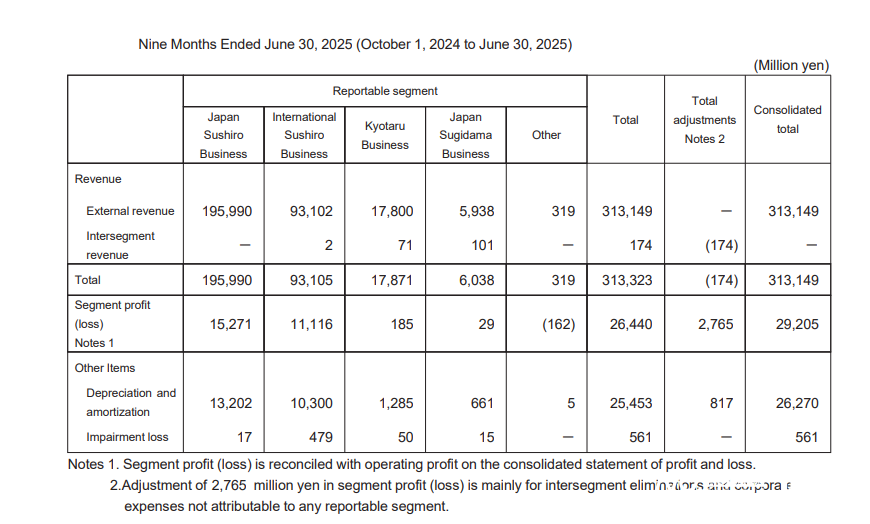
日本市场业绩增速不如国际市场 寿司郎母公司:积极拓展新店
Nan Fang Du Shi Bao· 2025-08-19 16:42
Core Insights - FOOD&LIFE COMPANIES (F&LC) reported a revenue increase of 18.3% year-on-year to 313.149 billion yen for the fiscal year 2025 third quarter, with a net profit growth of 74.3% to 18.072 billion yen [1] - The company operates multiple restaurant brands, including Sushiro, Sugidama, Kyotaru, and Misaki, with a total of 1,180 stores, an increase of 25 stores year-on-year [1] - Sushiro remains the primary revenue driver, with a significant performance difference between domestic and international markets [2] Financial Performance - For the first three quarters of fiscal year 2025, Sushiro's net sales in Japan grew by 11.6% to 195.99 billion yen, while international sales surged by 41.2% to 93.105 billion yen [2][3] - Segment profit for Sushiro in Japan was 15.271 billion yen, while international segment profit reached 11.116 billion yen, reflecting a strong international performance [3] Market Expansion - Sushiro has expanded its international presence, with 212 stores outside Japan, a 38-store increase year-on-year, while the domestic market saw a decrease of 12 stores to 960 [1] - F&LC plans to continue expanding its international footprint while carefully evaluating the business environment in various regions [4] Economic Context - The recovery of Japan's economy is attributed to rising personal consumption and increased demand from overseas tourists, although challenges remain due to global political instability and prolonged yen depreciation [3] - The restaurant industry faces ongoing challenges, including rising prices of raw materials and energy, as well as a long-term labor shortage [3]
25 亿预算引怒特朗普!美联储翻新超支 30%,鲍威尔饱受争议!
Sou Hu Cai Jing· 2025-07-31 11:52
Core Points - The renovation of the Federal Reserve's Washington headquarters, initially budgeted at $1.9 billion, has escalated to $2.5 billion, reflecting a cost increase of over 30% [3][6] - The project aims to modernize two historic buildings, the Eccles Building and the East Building, which have not undergone significant renovations in nearly a century [3][6] - The rising costs are attributed to various hidden expenses, including labor, materials, maintenance, and environmental factors, leading to criticism of Federal Reserve Chairman Jerome Powell [1][6] Cost Factors - The initial budget underestimated key factors such as inflation during the pandemic, rising construction material prices, and unforeseen infrastructure issues [6][8] - Between 2021 and 2022, the prices of construction materials like steel surged due to global supply chain constraints and increased demand in the construction industry [6][8] - Environmental challenges, including the discovery of asbestos and unique soil and groundwater issues in Washington D.C., complicated the excavation work and increased costs [6][7] Aesthetic and Regulatory Requirements - The aesthetic demands of the renovation project have also significantly contributed to the cost increase, with a shift towards using high-end materials like white marble, as mandated by the Trump administration [7][8] - The Federal Reserve's requirement for all materials to be sourced domestically further escalated costs, as specialized craftsmanship was needed to match the historical architecture [7][8] Public Perception and Response - Critics, including Trump and his supporters, have labeled the project as a waste of funds, citing unnecessary luxury features like a rooftop garden and VIP elevators [8] - In response, the Federal Reserve has denied these claims, clarifying that many of the alleged luxury features do not exist and emphasizing the project's necessity [8] - The ongoing budget increases reflect broader economic challenges faced by the Federal Reserve, including inflation, labor shortages, and global supply chain disruptions [8]

美国或面临数百万劳动力流失
Guo Ji Jin Rong Bao· 2025-07-30 12:40
Core Points - The Trump administration's immigration policies are causing significant pressure across various industries in the U.S., particularly those reliant on immigrant labor [1][3][4] - Over 1 million immigrants have lost their legal status due to the administration's actions, leading to labor shortages and production bottlenecks in factories [1][3] - Economists warn that large-scale deportations could result in the loss of millions of jobs held by both immigrants and native workers [4] Labor Shortage - Factories in states like Michigan and Kentucky are experiencing direct impacts from immigration policies, with specific examples such as the General Electric appliance factory in Louisville losing over 125 workers [3] - The loss of immigrant workers is causing production delays and operational challenges, as highlighted by union leaders [3][4] Economic Impact - The American Economic Policy Institute estimates that deporting 4 million immigrants could lead to the loss of 3.3 million jobs held by immigrants and 2.6 million jobs held by native workers, particularly in critical sectors like construction and healthcare [4] - The American Enterprise Institute suggests that these immigration policies may lead to a negative net migration rate in the U.S., potentially resulting in an annual economic output loss of $70.5 billion to $94 billion [4] Impact on Workers and Families - The immigration policies are not only affecting factory production but also have a direct impact on the families of immigrant workers, creating additional burdens on their colleagues [6] - Labor unions are expressing solidarity with immigrant workers, emphasizing the broader implications of these policies on worker communities [6][7]
日本经济再生大臣赤泽亮正:劳动力短缺将成为日本经济供应瓶颈的最大因素。
news flash· 2025-07-29 08:31
Core Viewpoint - Japan's Minister of Economic Revitalization, Akizawa Ryozo, stated that labor shortages will become the biggest bottleneck for Japan's economic supply [1] Group 1 - The labor shortage issue is expected to significantly impact Japan's economic growth and productivity [1] - The government is likely to face challenges in addressing this labor shortage, which could hinder economic recovery efforts [1] - The statement highlights the urgency for policy measures to attract and retain workers in various sectors [1]
日本企业同意34年来最大幅度加薪 应对劳动力短缺
Xin Hua Cai Jing· 2025-07-03 13:36
Group 1 - Japanese companies have agreed to an average salary increase of 5.25% this year, marking the largest increase in 34 years and achieving strong growth for the third consecutive year [1] - The average bonus payment for major companies this summer increased by 4.37% compared to the previous year, reaching a record 990,848 yen [1] - A significant labor shortage in Japan, particularly in non-manufacturing sectors and small businesses, has reached historical levels, leading to some companies going bankrupt [1] Group 2 - Two-thirds of Japanese companies believe that labor shortages are severely impacting their business [2] - There is a growing consensus among companies that salary increases must exceed inflation, which is currently around 3.7% for core consumer price index [2] - Stable wage growth is crucial for maintaining a consumption-driven economic recovery, which is also a prerequisite for the Bank of Japan to resume interest rate hikes [2] Group 3 - Mizuho Research & Technologies forecasts a 4.7% wage growth next year, assuming a decline in oil prices to mitigate the impact of U.S. tariffs on corporate profits [2] - Daiwa Securities anticipates average wage growth between 4.5% and 4.9% next year, emphasizing the need for non-manufacturers to take the lead in salary increases [2] - Current trade negotiations between the U.S. and Japan are stalled, with threats of tariffs on Japanese imports potentially rising to 35% [2]