
地缘政治扰动

Search documents
聚丙烯:现货供应紧俏支撑下 华南区域涨势持续性几何
Xin Lang Cai Jing· 2026-01-05 02:28
Core Viewpoint - Since late December, the PP market in South China has shown relative strength due to tight spot resource circulation and stable demand, with expectations of rising upstream raw material prices driven by geopolitical fluctuations [2][10][14] Group 1: Market Performance - The PP market in South China has experienced a slight rebound since late December, primarily due to the continuous inventory control by upstream enterprises, resulting in no significant pressure on spot supply [2][10] - As of January 4, 2026, the average price of PP in South China was 6265 yuan/ton, an increase of 40-60 yuan/ton compared to mid-December [2][10] - The market is expected to maintain a warm operating trend in the short term, although the support from supply and demand fundamentals may weaken in the latter half of the month [6][14] Group 2: Supply and Demand Dynamics - The South China region has seen several facilities, including Huizhou Litop and Guangzhou Petrochemical, undergoing maintenance, leading to a relatively high level of repair loss [4][12] - The weekly production in South China for the week of December 26 to January 1 was 189,800 tons, a decrease of 2.03% compared to the previous week [4][12] - Despite the tight supply of spot resources, downstream factories are primarily maintaining low-level demand without significant replenishment intentions, which limits the upward price movement of the PP market [4][12] Group 3: Geopolitical Influences - Geopolitical disturbances, particularly restrictions on oil exports from certain Latin American countries, have significantly impacted crude oil prices, leading to expectations of cost increases that support PP prices [4][12] - The market price has seen a slight increase of 10-40 yuan/ton due to these cost expectations, although downstream buyers remain cautious and are primarily making minimal purchases based on immediate needs [4][12]


大越期货沪铜早报-20260105
Da Yue Qi Huo· 2026-01-05 02:23
Report Industry Investment Rating - Not provided Core View of the Report - The supply side of copper has disturbances, with smelting enterprises reducing production and the scrap copper policy being relaxed. The December manufacturing PMI rose to the expansion range. The copper price hit a new high again and fluctuated significantly at a high level, and attention should be paid to position control [3]. - The global policy is loose and the mine end is in short supply, while the risks include natural disasters [4]. - There are geopolitical disturbances in Russia-Ukraine and Iran-Israel, the Fed may cut interest rates, and the mine end production increase is slow with a production reduction event in the Freeport Indonesia mining area. On the other hand, the US comprehensive tariff may exceed expectations, and the global economy is not optimistic, and high copper prices will suppress downstream consumption [5]. - The copper market will have a slight surplus in 2024 and a tight balance in 2025 [20]. Summary by Relevant Catalogs Daily View - Fundamentals: Supply side has disturbances, smelting enterprises cut production, scrap copper policy is relaxed, and December manufacturing PMI rose to the expansion range; neutral [3]. - Basis: Spot price is 99,280, basis is 1,190, at a premium to futures; bullish [3]. - Inventory: On December 31, copper inventory decreased by 2,100 to 145,325 tons, and SHFE copper inventory increased by 33,639 tons to 145,342 tons compared with last week; neutral [3]. - Disk: Closing price is above the 20-day moving average, and the 20-day moving average is upward; bullish [3]. - Main position: Main net short position decreased; bearish [3]. - Expectation: Geopolitical disturbances still exist, the Grasberg Block Cave mine event in Indonesia has fermented, the copper price hit a new high again and fluctuated significantly at a high level, and attention should be paid to position control [3]. Recent利多利空Analysis - Bullish factors: Global policy is loose and the mine end is in short supply [4]. - Bearish factors: US comprehensive tariff may exceed expectations, and the global economy is not optimistic, and high copper prices will suppress downstream consumption [5]. Inventory - Bonded area inventory: Bonded area inventory has rebounded from a low level [14]. Processing Fee - Processing fee: Processing fee has declined [16]. Supply and Demand Balance - 2024 will have a slight surplus, and 2025 will be in a tight balance [20]. - China's annual supply and demand balance table shows the production, import, export, apparent consumption, actual consumption, and supply and demand balance of copper from 2018 to 2024 [22].
大越期货沪铜早报-20251224
Da Yue Qi Huo· 2025-12-24 01:30
Report Summary 1. Report Industry Investment Rating No specific industry investment rating is provided in the report. 2. Core View - The supply side of copper has disturbances, with smelting enterprises reducing production and the scrap copper policy being relaxed. The November China Manufacturing Purchasing Managers Index (PMI) was 49.2%, up 0.2 percentage points from the previous month, still in the contraction range but showing marginal improvement. The overall situation is neutral. - The spot price is 93,540, with a basis of -490, indicating a discount to the futures, which is bearish. - On December 23, copper inventories increased by 825 to 158,575 tons, and the Shanghai Futures Exchange (SHFE) copper inventories increased by 6,416 tons from the previous week to 95,805 tons, which is neutral. - The closing price is above the 20 - day moving average, and the 20 - day moving average is moving upward, which is bullish. - The main net position is short, changing from long to short, which is bearish. - Geopolitical disturbances persist, and the incident at the Grasberg Block Cave mine in Indonesia has fermented. Copper prices have reached a new historical high and are expected to remain at a high level in the short term. [2] 3. Summary by Relevant Catalogs Daily View - **Fundamentals**: Supply - side disturbances, smelting production cuts, relaxed scrap copper policy, and marginal improvement in PMI but still in contraction range [2] - **Basis**: Spot price at 93,540, basis - 490, discount to futures [2] - **Inventory**: December 23 copper inventory increase of 825 to 158,575 tons, SHFE copper inventory increase of 6,416 tons from last week to 95,805 tons [2] - **Disk**: Closing price above 20 - day moving average, 20 - day moving average moving upward [2] - **Main Position**: Main net position short, changing from long to short [2] - **Expectation**: Geopolitical disturbances, new historical high in copper prices, short - term high - level operation [2] Recent利多利空Analysis - **Likely Influencing Factors**: Global policy easing and trade - war escalation are mentioned as logical factors, but specific classification of bullish and bearish factors is not clearly elaborated [3] Spot - Information about spot includes place, mid - price, change, and inventory details such as type, total amount, and change, but specific numerical values are not filled in the provided table [6] 期现价差 - No specific content is provided in the report regarding the analysis of the futures - spot price difference [7] Exchange Inventory - No specific content is provided in the report regarding exchange inventory analysis [11] Bonded Area Inventory - Bonded area inventory has rebounded from a low level [13] Processing Fee - Processing fee has declined [15] CFTC - No specific content is provided in the report regarding CFTC analysis [17] Supply - Demand Balance - In 2024, there is a slight surplus, and in 2025, it is in a tight - balance state. A detailed Chinese annual supply - demand balance table for copper is provided, showing production, import, export, apparent consumption, actual consumption, and supply - demand balance from 2018 to 2024 [19][21]
热门品种又涨停!交易所已出手!什么信号?
Sou Hu Cai Jing· 2025-12-24 01:25
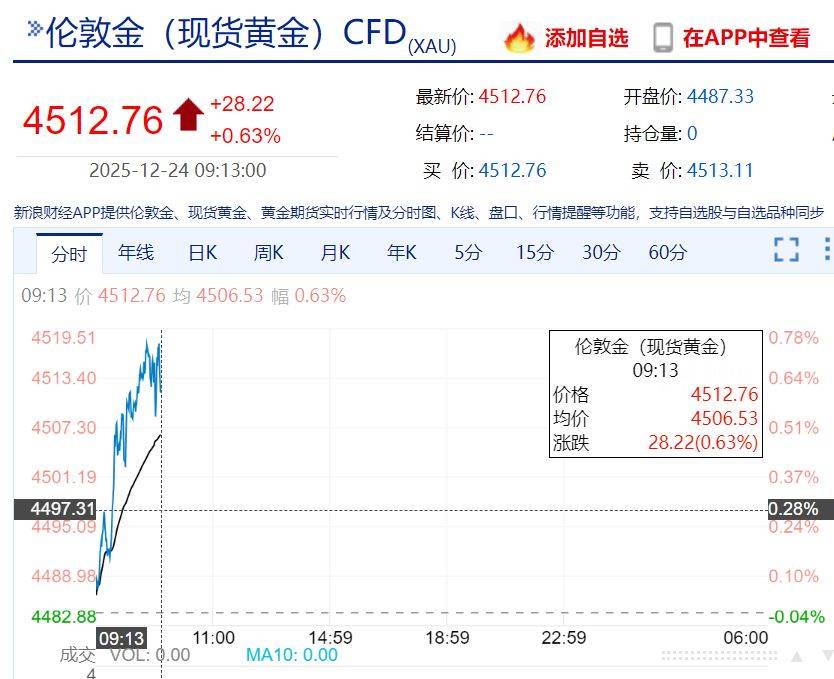
Group 1 - Gold and silver prices have surged, with silver closing up 3.42% to surpass $70 per ounce for the first time, while gold rose 0.92%, marking its largest single-day increase in over a month [1] - Year-to-date, gold prices have increased by over 70%, and silver prices have risen approximately 140%, driven by geopolitical tensions, a weakening dollar, and expectations of further interest rate cuts by the Federal Reserve [1] - As of December 24, gold prices reached $4500 per ounce, and silver peaked at $71.869 per ounce [1] Group 2 - Palladium futures rose by 5.58%, currently priced at 570.40 yuan per gram, while silver futures increased by over 6%, reaching 17250 yuan per kilogram, setting a new historical high [4] - The Dalian Commodity Exchange announced multiple risk control measures affecting platinum, palladium, lithium carbonate, and polysilicon, including adjustments to transaction fees, margin requirements, and trading limits [4] - Starting December 25, 2025, transaction fees for platinum and palladium futures will be adjusted to 0.025% of the transaction amount, with daily price limits set at 10% and margin requirements at 12% [4] Group 3 - The Dalian Commodity Exchange emphasized the need for market participants to strengthen risk prevention and investor education due to increased market volatility [5] - As of December 24, platinum futures hit the daily limit with a 7% increase, priced at 657.65 yuan per gram, marking the third consecutive trading day of limit-up [5] - Lithium carbonate futures surged by 2.75%, surpassing 120,000 yuan per ton, currently priced at 121,000 yuan per ton [5]
大越期货沪铜早报-20251222
Da Yue Qi Huo· 2025-12-22 02:14
Group 1: Report Core View - Copper supply is disturbed with smelting enterprises reducing production and scrap copper policy being liberalized. The November China Manufacturing PMI is 49.2%, up 0.2 percentage points from last month, still in the contraction range but showing marginal improvement. The basis indicates a premium of futures over spot, copper inventory has risen, the price is at a high level, and the main net position is short with an increase in short positions [2]. - The copper market is expected to have a slight surplus in 2024 and a tight balance in 2025. The China annual supply - demand balance shows different situations from 2018 - 2024 [19][21]. Group 2: Industry Analysis Details Fundamental Analysis - The supply side of copper has disturbances, and the manufacturing PMI shows marginal improvement but is still in the contraction range, which is neutral [2]. Basis Analysis - The spot price is 92480 with a basis of - 700, indicating a premium of futures over spot, which is bearish [2]. Inventory Analysis - On December 19, copper inventory decreased by 3875 to 160400 tons, and the SHFE copper inventory increased by 6416 tons to 95805 tons compared to last week, which is neutral. The bonded - area inventory has rebounded from a low level [2][13]. Disk Analysis - The closing price is above the 20 - day moving average, and the 20 - day moving average is upward, which is bullish [2]. Main Position Analysis - The main net position is short, and the short position has increased, which is bearish [2]. Supply - Demand Balance Analysis - In 2024, there is a slight surplus in the copper market, and in 2025, it will be in a tight - balance state. The China annual supply - demand balance table shows different production, import, export, consumption, and balance data from 2018 - 2024 [19][21]. Other Analysis - The processing fee has declined, and the factors affecting the market include global policy easing and trade - war escalation [3][15].
李鑫恒:黄金上周总结和周初行情分析 策略建议
Xin Lang Cai Jing· 2025-12-15 05:26
Core Viewpoint - The gold market is experiencing fluctuations, with prices stabilizing around the $4300 mark, following a notable increase last week, driven by various global financial and geopolitical factors [1][6]. Group 1: Market Performance - On December 12, gold prices rose by 0.48%, closing near $4300 per ounce, with an intraday high of $4353, marking the highest level since October 21 [1][6]. - Despite the strong performance, gold prices faced a significant drop of nearly $100 after reaching the peak, indicating volatility in market sentiment [1][6]. - The overall trend for gold last week was characterized by a series of gains, culminating in a weekly bullish candle, with four consecutive days of increases from Tuesday to Friday [1][6]. Group 2: Influencing Factors - The global financial landscape is currently influenced by five main themes: the shift in Federal Reserve policy, the surge in precious metals, the divergence in central bank policies, geopolitical disturbances, and technological industry changes [1][6]. - This week, the market is anticipating critical events, including interest rate decisions from major central banks in the UK, Europe, and Japan, as well as key economic data releases such as non-farm payrolls and CPI, which are expected to create uncertainty in asset movements [1][7]. Group 3: Technical Analysis - The daily structure of gold indicates that it has managed to stay above key moving averages, suggesting a bullish trend, although the breach of the 4280 trendline was unexpected, reflecting heightened market enthusiasm [3][8]. - The price action on Friday left some concerns, as the strong bullish momentum may not be sustainable, particularly with the upcoming non-farm data potentially influencing market direction [3][8]. - Short-term trading strategies should focus on the 4330 resistance level; if gold can maintain above this level, it may continue its upward trajectory, while failure to do so could lead to a period of consolidation around the 4290-80 support zone [4][9].
财经随笔记:黄金走势推演与后市机会分析(12.14)
Sou Hu Cai Jing· 2025-12-14 08:19
Group 1: Market Overview - This week, gold exhibited a volatile upward trend, with a significant increase from Tuesday to Friday, ultimately closing the week with a bullish candlestick [1] - Global financial and industrial markets are focused on five main themes: the shift in Federal Reserve policy, the surge in precious metals, the divergence in central bank policies, geopolitical disturbances, and technological industry transformations [2] Group 2: Central Bank Dynamics - The Federal Reserve continues to show hawkish sentiments, with multiple officials scheduled to speak, indicating a contentious debate over interest rate cuts [3] - The Bank of England is expected to announce its interest rate decision, with a 90% probability of a rate cut anticipated by the market [3] - The European Central Bank is also expected to maintain its current interest rates, with market expectations of a 36% probability of a rate hike by the end of next year [3] - The Bank of Japan is projected to have a 75% probability of raising interest rates, although a single rate hike may not significantly strengthen the yen [4] Group 3: Key Economic Data - Important economic data releases include the U.S. unemployment rate, non-farm payrolls, and CPI data, which are expected to influence market movements significantly [5] Group 4: Technical Analysis - International gold prices showed a strong upward trend, facing resistance around the 4353/4354 area, leading to a significant pullback [6] - The wave structure analysis indicates that the market is currently in a B-wave rebound phase, with critical resistance at the previous high of 4381/4382 [7][9] - The support level around 4255-4265 is crucial for determining whether the market will continue its upward momentum or initiate a C-wave decline [12][13]
原油月报:“和平方案”陷入拉锯,盘面延续宽幅震荡-20251128
Zhong Hang Qi Huo· 2025-11-28 11:25
Report Industry Investment Rating - Not provided Core Viewpoints of the Report - OPEC+ suspending the production increase plan in Q1 2026 will relieve supply - side pressure to some extent, but supply surplus will remain the main trading logic as demand enters the off - season. Geopolitical factors will cause fluctuations in the oil price. The market is expected to remain in a wide - range oscillation, and it is recommended to focus on the WTI crude oil price range of $55 - $65 per barrel [51] Summary by Directory 1. Market Review - In November, the crude oil market showed a weak and oscillating pattern under the game of long and short factors. At the beginning of the month, the suspension of the production increase plan in Q1 2026 by OPEC+ and sanctions on Russian oil companies supported the oil price. However, in the middle and late of the month, the weakening global crude oil outlook in the OPEC+ monthly report and the rising expectation of geopolitical easing suppressed the market, and the supply surplus expectation was the main trading logic [7] 2. Macroeconomic Analysis - **OPEC+ Production Policy**: OPEC+ will increase production in December and suspend production increase in Q1 2026. Eight countries will increase the production quota by 137,000 barrels per day in December. The suspension of production increase can relieve supply pressure in the short - term, but OPEC+ still aims to compete for market share through production increase in the long - term [11][12] - **OPEC Monthly Report**: OPEC's expectation for the global crude oil market has shifted from balance to surplus, with a surplus of 500,000 barrels per day currently compared to a previous shortage expectation of 400,000 barrels per day. The supply growth expectation of non - OPEC countries in 2025 has been raised by 110,000 barrels per day, and the demand for OPEC crude oil in 2026 has been lowered [12][15] - **Fed's Interest Rate Expectation**: Fed officials have made dovish statements, and the market's expectation of a 25 - basis - point interest rate cut in December has risen to 85%. The labor market shows a "split" situation, and the Fed's latest "Beige Book" indicates that consumer spending decline is the main drag on the US economy [13] - **Geopolitical Factors**: A 28 - point peace plan to end the Russia - Ukraine conflict was proposed, then reduced to 19 points. Trump said the peace agreement was "very close to being reached", but Russia believes the 19 - point plan does not meet its interests. Short - term geopolitical easing expectation has risen, but there are still large differences between the two sides [14] 3. Supply - Demand Analysis - **Supply Side** - **OPEC Production**: In October, OPEC's crude oil production was 28.46 million barrels per day, a month - on - month increase of 33,000 barrels per day. OPEC+ production in October was 43.02 million barrels per day, a month - on - month decrease of 73,000 barrels per day. The supply - side pressure has increased significantly as demand enters the off - season [17] - **US Crude Oil Production**: As of November 21, the US weekly EIA crude oil production was 13.814 million barrels per day, an increase of 170,000 barrels per day compared to the same period last month. Supported by technological progress and policy, US crude oil production is expected to remain stable, but the growth rate will slow down [20] - **US Oil Drilling Rigs**: As of November 21, the total number of US oil drilling rigs was 419, an increase of 2 compared to the previous statistical period and the same as the same period last month. It is expected to remain at a low level [22] - **Demand Side** - **US Manufacturing**: In October, the US ISM manufacturing PMI decreased to 48.7, while the Chicago PMI rebounded. The contraction of the manufacturing industry has restricted crude oil demand to some extent [24] - **US Refinery Utilization Rate**: As of November 21, the US refinery utilization rate was 92.3%, a month - on - month increase of 5.7 percentage points. It is expected to boost crude oil consumption seasonally [28] - **China's Manufacturing**: In October, China's manufacturing PMI decreased and remained below the boom - bust line, with weak demand and significant differentiation between supply and demand. Small and medium - sized enterprises face greater pressure [36] - **China's Refinery Utilization Rate**: As of November 20, the utilization rate of domestic major refineries was 75.69%, a decrease of 5.2 percentage points compared to the same period last month. The utilization rate of local independent refineries was 62.97%, an increase of 1.62 percentage points. Overall, domestic crude oil consumption faces short - term weakening pressure [40] - **Inventory** - **US EIA Crude Oil Inventory**: As of November 21, the US weekly EIA crude oil inventory was 2.774 million barrels, and the strategic petroleum reserve inventory was 498,000 barrels. With the increase in refinery utilization rate and the slowdown in production growth, the inventory is expected to decline seasonally [45] - **Cushing Crude Oil Inventory and Gasoline Inventory**: As of November 21, the EIA crude oil inventory in Cushing, Oklahoma was - 68,000 barrels, and the gasoline inventory was 2.099 million barrels. The Cushing inventory has remained stable at a low level in recent years, and the oil inventory has entered the accumulation stage [49]
原油周度报告-20251121
Zhong Hang Qi Huo· 2025-11-21 10:35
Report Summary - The report is a weekly analysis of the crude oil market, covering macro - analysis, multi - empty focus, supply - demand analysis, and future market judgment [8]. - This week, the oil price first rose and then fell, showing an overall weak and volatile trend. The influencing factors of crude oil are mixed. Geopolitical disturbances provided support for the oil price at the beginning of the week, while the progress of the Russia - Ukraine cease - fire agreement and the expectation of supply surplus put pressure on the oil price [8]. - It is recommended to focus on the WTI crude oil price range of $56 - 61 per barrel [9]. Multi - empty Focus - **Bullish Factors**: Geopolitical disturbances [11]. - **Bearish Factors**: Progress of the Russia - Ukraine cease - fire agreement and refined oil entering the off - season of demand [11]. Macro Analysis - The US and Russia are discussing a framework plan to end the conflict. The plan requires Ukraine to make major territorial concessions to Russia, but the Russian side says it has not received relevant information through official channels. Ukrainian President Zelensky has received a peace plan draft from the US [12]. - The discussion of the framework plan for ending the conflict between the US and Russia makes the market expect the US to relax sanctions on the Russian energy sector, which drives the oil price down. However, considering the repeatability of geopolitics, the sustainability of the geopolitical easing drive is not strong [12]. Supply - Demand Analysis Supply - As of the week ending November 14, US domestic crude oil production decreased by 28,000 barrels per day to 13.834 million barrels per day. Since August, US crude oil production has rebounded month - on - month, and there is still a probability of further increase [13]. - As of the week ending November 14, the total number of US oil rigs was 417, the same as the previous value. It is expected to remain at a low level this year due to factors such as the contraction of US oil capital expenditure, the decline of resource grade, and policy adjustment [15]. Demand - As of the week ending November 14, the operating rate of US refineries was 90%, a 0.6 - percentage - point increase from the previous period, indicating that US refineries have ended the seasonal maintenance phase and are expected to drive the recovery of crude oil consumption [17]. - As of the week ending October 31, US crude oil implied demand decreased by 843,000 barrels per day month - on - month, while the implied demand for motor gasoline production increased by 189,000 barrels per day [24]. - In October, the operating rate of 16 European refineries was 80.74%, a 3 - percentage - point decrease month - on - month, and it is expected to recover by the end of the fourth quarter [25]. - As of November 20, the operating rate of domestic major refineries was 75.69%, a 2.62 - percentage - point decrease from the previous statistical period, entering the seasonal maintenance phase. The operating rate of domestic independent refineries was 62.97%, a 2 - percentage - point increase from the previous period [30]. - As of November 21, the comprehensive refining profit of domestic major refineries was 854.72 yuan per ton, a 150.6 - yuan increase from the previous statistical period. The comprehensive refining profit of domestic independent refineries was 183.13 yuan per ton, a 6.54 - yuan increase from the previous period [35]. Inventory - As of the week ending November 14, the US EIA crude oil inventory decreased by 3.426 million barrels, and the EIA strategic petroleum reserve inventory was 533,000 barrels. The decrease in US crude oil production and the increase in refinery operating rate led to a month - on - month decrease in EIA crude oil inventory [42]. - As of the week ending November 14, the EIA crude oil inventory in Cushing, Oklahoma decreased by 698,000 barrels, and the EIA gasoline inventory increased by 2.327 million barrels [46]. Crack Spread - As of November 19, the crack spread of low - sulfur crude oil in Louisiana, US Gulf, was $24.47 per barrel, showing a month - on - month decline. Downstream consumer demand is still relatively strong, which supports the crack spread to some extent [47]. Future Market Judgment - The expectation of crude oil supply surplus remains the main pressure source in the market. In the short term, the oil price may continue to be under pressure. Although the oil price is expected to show an overall weak and volatile pattern, considering the repeatability of geopolitics, the sustainability of the geopolitical easing drive is not strong [51].
原油周度报告-20251114
Zhong Hang Qi Huo· 2025-11-14 10:22
Report Summary - The report is a weekly crude oil report from AVIC Futures dated November 14, 2025 [2] - This week, oil prices first rose and then fell, showing an overall volatile and weak trend. The influencing factors of crude oil are mixed. Geopolitical disturbances provided support for oil prices at the beginning of the week, but the OPEC monthly report's shift in market expectations from tight to surplus intensified concerns about oversupply, causing sharp price fluctuations. In the short term, the expectation of oversupply is the main pressure on the market, but OPEC+'s suspension of the production increase plan for the first quarter of next year, strong demand, and geopolitical uncertainties provide support. The report expects crude oil to maintain a wide - range volatile trend [7] - The trading strategy suggests paying attention to the WTI crude oil price range of $57 - 62 per barrel [8] Multi - Empty Focus - Bullish factors include geopolitical disturbances [10] - Bearish factors include the shift in OPEC market expectations and EIA inventory accumulation [10] Macroeconomic Analysis OPEC Report - OPEC's latest monthly report on November 12 shows that the global crude oil market expectation has shifted from a shortage of 400,000 barrels per day to a surplus of 500,000 barrels per day. Non - OPEC supply growth expectations for this year are raised by 110,000 barrels per day, and the demand for OPEC crude in 2026 is lowered, indicating a pessimistic view on next year's demand [11] - In October, OPEC's crude oil production was 28.46 million barrels per day, a month - on - month increase of 33,000 barrels per day, and OPEC+'s production was 43.02 million barrels per day, a decrease of 73,000 barrels per day from September, showing a slowdown in the pace of OPEC+ production increase [11] - The global crude oil demand growth rate forecast for 2025 is 1.3 million barrels per day, and for 2026 is 1.38 million barrels per day. From January to September this year, global oil inventories increased by 304 million barrels, with about 156 million barrels being marine crude oil [11] Geopolitical Situation - The Russia - Ukraine conflict continues, with large - scale attacks on Ukrainian military and energy facilities. Short - term negotiations are unlikely as Russia is ready for talks but Ukraine has stopped relevant dialogues until the end of this year [12] - The US - Venezuela relationship remains uncertain, with the Trump administration not planning to launch an attack in Venezuela currently [12] - The global geopolitical situation is complex and uncertain. Although it has not caused substantial losses to global crude oil supply in the short term, it affects market sentiment and increases oil price volatility [12] Data Analysis Supply Side - As of the week ending November 7, US domestic crude oil production reached a record high of 13.862 million barrels per day, a week - on - week increase of 211,000 barrels. There is a probability of further increase in production, and supply pressure will gradually emerge as the peak consumption season for refined oil ends [13] - As of the week ending November 7, the total number of US oil drilling rigs was 414, the same as the previous value. Due to factors such as capital expenditure contraction, resource grade decline, and policy adjustment, it is expected to remain at a low level this year [15] Demand Side - As of the week ending October 31, the US refinery utilization rate was 86%, a month - on - month decrease of 0.6 percentage points. The decline rate has slowed down, and it may reach a seasonal inflection point [18] - As of the week ending October 31, US crude oil demand decreased by 843,000 barrels per day week - on - week, while gasoline demand increased by 189,000 barrels per day [22] - In September, the refinery utilization rate of 16 European countries was 82.44%, a month - on - month decrease of 4.48 percentage points, and it is expected to face downward pressure at the beginning of the fourth quarter [24] - As of November 13, the operating rate of domestic state - owned refineries was 78.31%, a decrease of 0.33 percentage points from the previous period, entering the seasonal maintenance stage. The operating rate of local independent refineries was 61.97%, a decrease of 0.97 percentage points. The operating rate of state - owned refineries is expected to decline, while local refineries are expected to operate stably [30] - As of November 14, the comprehensive refining profit of domestic state - owned refineries was 704.12 yuan/ton, a recovery of 175.13 yuan/ton from the previous period, ending the continuous decline. The comprehensive refining profit of local independent refineries was 176.59 yuan/ton, a recovery of 41.64 yuan/ton [34] Inventory - As of the week ending November 7, the US EIA crude oil inventory was 6.413 million barrels, far exceeding the expected 1.96 million barrels and the previous value of 5.202 million barrels. The strategic petroleum reserve inventory was 798,000 barrels, compared with the previous value of 498,000 barrels. EIA crude oil inventory may reach a phased inflection point [41] - As of the week ending November 7, the EIA crude oil inventory in Cushing, Oklahoma was - 346,000 barrels, and the gasoline inventory was 205 million barrels, a decrease of 9.4 million barrels from the previous period [46] Crack Spread - As of November 12, the crack spread of low - sulfur crude oil in Louisiana, US Gulf was $24.76 per barrel, showing a continuous increase. It indicates that although the refinery utilization rate has decreased, downstream consumption demand is still strong, which supports the crack spread. Attention should be paid to whether refineries will increase the utilization rate due to profit incentives [47] Market Outlook - The factors influencing crude oil remain mixed. OPEC+'s suspension of the production increase plan, geopolitical factors, and shale oil costs support the market, but OPEC's market expectation shift intensifies concerns about oversupply. The market lacks a clear driving force and is expected to continue a wide - range volatile trend. It is recommended to pay attention to the WTI crude oil price range of $57 - 62 per barrel [51]