
差异化创新

Search documents
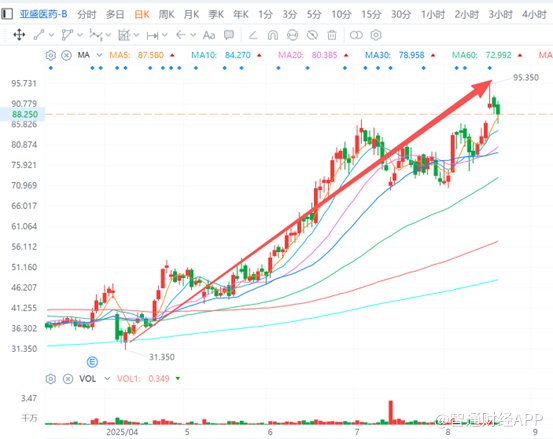
亚盛医药-B中报观:年内股价翻倍上市新高不断刷新,双“十亿美元分子”打开估值天花板
Zhi Tong Cai Jing· 2025-08-21 01:40
Core Viewpoint - The stock price of Ascentage Pharma-B (06855) has reached a new high of HKD 95.35, marking a year-to-date increase of 100.88% [1][3] Group 1: Stock Performance and Market Context - Ascentage Pharma's stock performance reflects the current bull market for innovative drugs in Hong Kong, with significant room for further growth despite recent technical fluctuations [3] - The current bull market is driven more by the companies' fundamentals rather than policy changes, emphasizing "hardcore innovation, global monetization, and performance validation" as key investment criteria [3][4] Group 2: Financial Performance and Product Pipeline - Ascentage Pharma reported a revenue of RMB 234 million for the first half of 2025, with its core product, Olverembatinib (耐立克), generating sales of RMB 217 million, a year-on-year increase of approximately 93% [4] - The company has over RMB 3 billion in cash reserves, indicating strong cash flow and financial health [4] - The successful commercialization of Olverembatinib and the recent approval of the new drug, Lisatoclax (利生妥), are expected to replicate the success of Olverembatinib [4][5] Group 3: Clinical Development and Market Potential - Lisatoclax is the first domestically approved Bcl-2 inhibitor in China and has shown promising clinical data, indicating its potential in treating various hematological malignancies [5][6] - The global market for blood malignancy treatment drugs is projected to reach USD 40 billion by 2024, with a CAGR of 6% from 2024 to 2029, highlighting the unmet demand for Bcl-2 inhibitors [6] - Lisatoclax is expected to achieve sales exceeding USD 2 billion after global commercialization, alongside Olverembatinib, contributing significantly to Ascentage Pharma's revenue [6] Group 4: R&D and Innovation Strategy - Ascentage Pharma's R&D investment reached RMB 529 million in the first half of the year, supporting its innovative pipeline [7] - The company is advancing its research on Olverembatinib and Lisatoclax, with both drugs included in the 2025 Chinese Clinical Oncology Society guidelines [8] - Recent clinical trials for both drugs have shown promising results, further validating their therapeutic potential and safety [8] Group 5: Corporate Strategy and Management - The appointment of experienced executives is expected to enhance Ascentage Pharma's global commercialization efforts and financial management [9] - The company plans to raise approximately HKD 1.509 billion through a share placement to support commercialization and global clinical development [9] - The overall market sentiment is positive, with expectations of increased capital inflow into the pharmaceutical innovation sector due to favorable macroeconomic conditions [10]

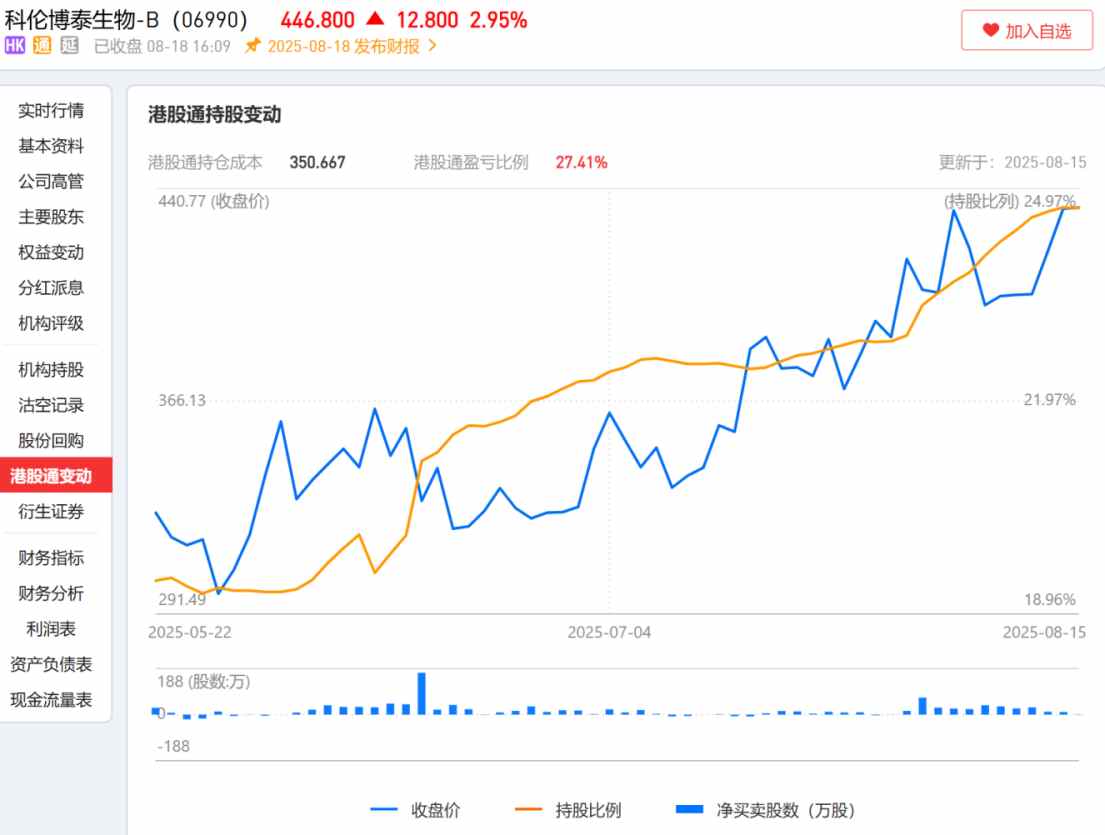
科伦博泰生物-B中报观:商业化确定性拉升,全球创新价值再上台阶
Zhi Tong Cai Jing· 2025-08-18 11:26
Core Viewpoint - The Hong Kong stock market's innovative pharmaceutical sector has seen a significant rebound this year, with net inflows of over 120 billion yuan into the pharmaceutical and biotechnology industry, highlighting a shift towards more reliable quality stocks [1] Group 1: Company Performance - Kelun-Biotech (06990) has emerged as a key target for market investment, achieving a historical high in stock price in August, with a market capitalization exceeding 100 billion HKD and a year-to-date increase of 192.40%, entering the "100 billion club" of Hong Kong's innovative pharmaceuticals [1] - The company's mid-2025 performance report indicates a transition from Biotech to Biopharma, with revenue driven by both business development (BD) collaborations and self-commercialization [3][4] - In the first half of 2025, Kelun-Biotech reported revenues of 950 million yuan, with cash reserves of 4.528 billion yuan, indicating strong cash flow and a shift in revenue structure from BD-driven to self-commercialization [4] Group 2: Commercialization Strategy - The company's core product, TROP2 ADC (Jiatailai), has shown strong commercial potential, generating sales of 51.698 million yuan in its first month post-launch and expanding its indications, which enhances market opportunities [5] - Kelun-Biotech has established a comprehensive commercialization capability, with a professional marketing team of 350 and a wide distribution network covering over 1,000 hospitals and partnerships with more than 60 distributors [8][9] - The company has successfully navigated market access, achieving broad coverage for its products across multiple provinces and actively pursuing inclusion in national insurance schemes to enhance drug accessibility [9] Group 3: Research and Development - Kelun-Biotech has increased its R&D investment, reaching 612 million yuan in the first half of 2025, and has developed three major technology platforms, ensuring a robust pipeline of over 30 candidate drugs [10][11] - The company's international collaborations with major pharmaceutical firms validate its technological capabilities and support the transformation of global innovative results into commercial value [11] - The dual strategy of BD collaborations and self-commercialization aligns with the trend of "true innovation + self-control" in the domestic pharmaceutical industry, positioning Kelun-Biotech as a key player in the Hong Kong pharmaceutical investment landscape [12]
“医保双目录”申报药品首次亮相 高价创新药冲刺商保目录
Di Yi Cai Jing· 2025-08-12 16:37
Core Points - The adjustment of the medical insurance catalog this year marks the 8th since the establishment of the National Medical Insurance Administration and introduces a commercial health insurance (commercial insurance) innovative drug catalog for the first time [1][6] - A total of 534 drugs passed the formal review for the basic medical insurance catalog, while 121 drug generic names were approved for the commercial insurance innovative drug catalog, including high-priced innovative drugs like CAR-T [1][3] - The establishment of the commercial insurance innovative drug catalog indicates a significant shift in China's pharmaceutical industry, introducing a second major buyer beyond the basic medical insurance fund [3][6] Summary by Sections Medical Insurance Catalog Adjustment - The National Medical Insurance Administration announced the preliminary review results for the 2025 medical insurance drug catalog, with 534 drugs approved for the basic insurance catalog and 121 for the commercial insurance innovative drug catalog [1][3] - The commercial insurance innovative drug catalog provides a separate application channel for high-priced innovative drugs, which have historically faced challenges in entering the basic insurance catalog [3][4] Market Dynamics and Opportunities - Participation in the commercial insurance innovative drug catalog is voluntary for pharmaceutical companies and commercial insurance firms, presenting both risks and potential first-mover advantages [2][5] - The commercial insurance catalog aims to support high-priced innovative drugs that exceed the basic insurance scope, such as CAR-T therapies and rare disease medications [3][4] Policy Support and Industry Impact - The National Medical Insurance Administration has implemented measures to support the high-quality development of innovative drugs, with a focus on integrating commercial insurance and medical insurance to create a multi-tiered payment system for innovative drugs [6][7] - The introduction of the commercial insurance innovative drug catalog is expected to enhance the market potential for innovative drugs, providing a pathway for companies to transition from commercial insurance to basic insurance as market conditions evolve [5][7] Innovation and Competition - The pharmaceutical industry is experiencing increased competition and a trend of homogenization among innovative drugs, leading to price competition and the need for differentiation in innovation [8][9] - The National Medical Insurance Administration emphasizes the importance of supporting true innovation that offers additional clinical benefits and addressing unmet medical needs [9][10]
不拼价格拼场景 中国智造新范式 龙岗好物“特种出海”
Shen Zhen Shang Bao· 2025-08-04 16:57
Core Insights - The article highlights the significant growth of companies in Longgang, particularly in the smart manufacturing sector, with overseas revenue increasing by nearly 40% as they move away from low-cost competition and dependency on OEM [1] Company Summaries Gracis Eyewear - Gracis has transformed from a small OEM factory to a leading smart wearable company, producing 5 million pairs of smart glasses annually, with a focus on innovation and brand development [2][5] - The company emphasizes the integration of advanced optical technology and AI, achieving a product defect rate of over 99% and holding numerous patents [3] - Gracis is developing a smart eyewear product that incorporates features like voice-activated virtual assistants, high-definition video recording, and AI photography capabilities [2] Yuanren Technology - Yuanren Technology has successfully pivoted from projectors to specialized cameras, leveraging AI to penetrate overseas markets, particularly in North America [4] - The company reported revenue of 1.1 billion yuan last year, with a target of 1.5 billion yuan for the current year, focusing on eco-friendly materials and high design standards [4] - Yuanren's products, such as hunting cameras and action cameras, are designed to meet specific user needs in various vertical markets, showcasing a strong understanding of consumer demands [5] Industry Trends - The success of Gracis and Yuanren reflects a broader trend of manufacturing upgrade in Longgang, characterized by technological accumulation and innovative product development [5] - Longgang's supportive policies, including R&D funding and innovation subsidies, have played a crucial role in fostering a vibrant ecosystem for high-tech enterprises [5] - The emergence of over 3,000 national high-tech enterprises in Longgang indicates a significant shift towards high-quality development in Chinese manufacturing [5]
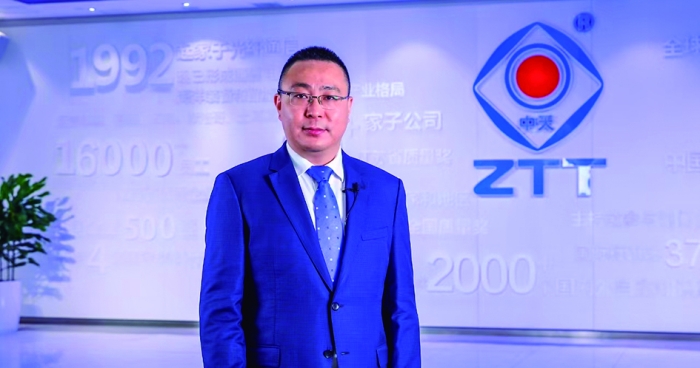
中天科技薛驰:向新向海向外 提升企业全球竞争力
Shang Hai Zheng Quan Bao· 2025-07-30 18:03
Core Viewpoint - Zhongtian Technology has achieved significant growth over the past 30 years, especially since its listing in 2002, with over 100 times revenue growth and a market value increase of more than 40 times [2] Group 1: Business Strategy and Innovation - The company emphasizes differentiated innovation as its core strategy, focusing on new energy, marine economy, smart grid, and digital communication as key areas for development [3][5] - Zhongtian Technology has established a culture of innovation, with annual operational guidelines centered around innovation for the years 2023 to 2025 [3][4] - The company aims to tackle major projects such as hollow core fiber and ultra-high voltage composite insulators while enhancing industry cluster upgrades through technology empowerment [4] Group 2: Industry Focus and Diversification - The company is focusing on two main areas: "light" and "electricity," while expanding its core and emerging businesses [5] - The digital communication sector is extending into computing services, green products, and terminal interconnectivity, while the smart grid sector is advancing in ultra-high voltage and intelligent distribution [5] - The marine economy is becoming a significant growth driver, with the company actively engaging in offshore wind energy transmission and deep-sea technology [5] Group 3: Internationalization Strategy - Since 2002, Zhongtian Technology has established five overseas factories and is recognized in high-end international markets [6] - The company plans to accelerate its internationalization efforts under the "three global" strategy, focusing on global thinking, layout, and service [6] - To mitigate risks associated with international operations, the company aims to develop a diversified supply chain and enhance local market integration [6][7]

2025系列研究框架培训 - 创新药行业框架
2025-07-25 00:52
Summary of Conference Call on the Innovative Drug Industry Industry Overview - The conference call focuses on the **innovative drug industry** in China, highlighting its growth potential and market dynamics [1][3][4]. Key Points and Arguments 1. **Market Sentiment and Stock Performance**: The market's anticipation of domestic innovative drug data has increased, with stock price corrections observed during the ASCO conference, indicating a demand for exceeding expectations [1][4]. 2. **Valuation Influences**: The macroeconomic environment significantly impacts the valuation of the innovative drug sector. High interest rates restrict valuations, while low rates enhance performance. Government policies in China support the sector, but overseas markets are crucial for growth [1][5][6]. 3. **Company Classification**: Innovative companies are categorized into **Big Pharma/Hybrid** and **Biopharma/Biotech**. Big Pharma has stable income and lower risk, while Biopharma/Biotech focuses on innovation and faces higher initial risks but has improved success rates in later clinical stages [1][7]. 4. **Impact of Policy Changes**: The collection policy in China has prompted traditional pharmaceutical companies to transform, with firms like HengRui and Hansoh achieving success in innovation, leading to valuation increases [1][8]. 5. **Investment Focus**: Investors should prioritize "differentiated innovation" and "true innovation" that significantly address unmet needs and open future market opportunities, rather than merely seeking first-in-class products [3][19]. 6. **Clinical Development Stages**: The drug development process involves five critical stages, each capable of significantly enhancing company valuation as products progress from preliminary data validation to market sales [3][10][11]. 7. **Macroeconomic Trends**: Historical data shows that the performance of innovative drug indices correlates with macroeconomic conditions, with a notable trend of increasing valuations during low-interest periods [5][6]. 8. **Emerging Technologies**: Future directions in tumor treatment include **dual antibodies** and **ADC (antibody-drug conjugates)**, with China holding a significant share of global R&D pipelines in these areas [25][41]. Additional Important Insights 1. **International Market Potential**: The potential for innovative products to enter international markets is a key driver for valuation increases, particularly as companies achieve clinical trial success abroad [9][39]. 2. **R&D Efficiency**: Chinese pharmaceutical companies exhibit higher R&D efficiency and lower costs, allowing them to attract multinational companies for pipeline acquisitions [24]. 3. **Commercialization Factors**: Despite a current focus on R&D, commercialization remains critical, with companies needing to differentiate their products to capture market share effectively [26][27]. 4. **Investment Considerations**: When selecting emerging pharmaceutical companies for investment, factors such as product capability, speed of advancement, competitive landscape, and international collaboration should be evaluated [20][21]. 5. **Profitability Trends**: Chinese innovative companies are beginning to show improved profitability, with some achieving net profit margins exceeding 40%, indicating a maturation of their business models [31]. This summary encapsulates the essential insights from the conference call regarding the innovative drug industry, emphasizing its growth potential, market dynamics, and investment considerations.

盛美上海总经理王坚:以差异化创新铸就“芯”高度
Zhong Guo Zheng Quan Bao· 2025-07-21 20:16
Core Viewpoint - Shengmei Shanghai has evolved into a platform company in the semiconductor equipment industry, aiming to become a leading global player by leveraging its innovative technologies and expanding its product offerings [1][3]. Group 1: Company Development and Achievements - Shengmei Shanghai was founded in 2005 and developed the world's first SAPS technology in 2008, achieving profitability since 2013 and experiencing exponential growth in equipment sales since 2017 [1]. - The company has successfully maintained a profitable status and has seen rapid growth in financial metrics since its listing on the Sci-Tech Innovation Board [1][2]. - As of 2024, Shengmei Shanghai's cleaning equipment covers 95% of cleaning process steps, ranking fourth globally with an 8% market share [2]. Group 2: Technological Innovations - The company has developed proprietary technologies such as SAPS and TEBO, addressing global challenges in the application of megasonic technology in semiconductor cleaning equipment [2]. - Shengmei Shanghai has filed a total of 1,526 patents by the end of 2024, with 470 granted patents, showcasing its commitment to original innovation [4]. - The Tahoe cleaning equipment, developed by the company, reduces sulfuric acid consumption by up to 75%, aligning with national energy-saving policies [5]. Group 3: Strategic Expansion - The company aims to expand its product portfolio beyond cleaning equipment to include electroplating, advanced packaging, and other semiconductor manufacturing equipment [3]. - Shengmei Shanghai is actively pursuing a global market strategy, targeting a balanced order volume from domestic and international clients [6]. - The company has established a local presence in South Korea to enhance service and support for its clients in that market [7]. Group 4: Future Outlook - The company is focused on continuing its path of differentiation and innovation, aiming to transition from an industry innovator to a standard setter in the semiconductor equipment sector [7]. - Shengmei Shanghai plans to leverage its dual capital market presence to enhance its competitive advantage and expand its global footprint [6].

我国创新药获批上市呈井喷效应(大健康观察)
Ren Min Ri Bao· 2025-07-02 23:02
Core Viewpoint - The National Healthcare Security Administration (NHSA) has introduced measures to support the high-quality development of innovative drugs, focusing on enhancing research support, facilitating access to insurance, and encouraging clinical application [1][2]. Summary by Relevant Sections Support for Innovative Drug Development - The NHSA has outlined 16 measures across five key areas to bolster innovative drug development, including support for research, inclusion in insurance directories, and enhancing payment capabilities [1][2]. - Approximately 80% of innovative drugs can be included in the insurance payment scope within two years of market launch [2]. Dynamic Adjustment Mechanism - A dynamic adjustment mechanism for the insurance directory has been established, reducing the adjustment cycle from a maximum of 8 years to 1 year, allowing for a more responsive inclusion of new drugs [2]. - The proportion of new drugs approved within five years that are included in the insurance directory has increased from 32% in 2019 to an expected 98% in 2024 [2]. Negotiation and Renewal Rules - The NHSA has improved negotiation and renewal rules for innovative drugs, focusing on patient clinical benefits to determine pricing [3]. - The number of first-class innovative drugs approved has significantly increased, with 48 new approvals expected in 2024, marking a fivefold increase since 2018 [3]. Encouragement of True Innovation - The measures emphasize the importance of supporting genuine and differentiated innovation in the pharmaceutical industry, addressing challenges such as homogenization and unclear clinical value [4][5]. - Since 2018, 149 innovative drugs have been included in the insurance directory, with total fund expenditures reaching 4.1 trillion yuan, driving significant sales growth [4]. Global Market Development - The NHSA aims to facilitate the global market expansion of innovative drugs, with over 90 overseas licensing transactions completed by Chinese pharmaceutical companies in 2024, totaling over $50 billion [7]. - The measures include building platforms for overseas market access and encouraging commercial health insurance to invest in innovative drugs [7][8]. Clinical Application and Usage - The NHSA encourages timely access to innovative drugs in designated medical institutions and supports the establishment of green channels for procurement [9]. - Measures have been introduced to enhance the capacity of medical institutions to use innovative drugs effectively, including optimizing payment standards and supporting special case applications [10].
冰箱行业稳增长添动能
Zhong Guo Jing Ji Wang· 2025-05-26 05:44
Core Insights - The refrigerator market in China experienced growth in both volume and revenue in Q1 2025, with retail volume reaching 9.96 million units, a year-on-year increase of 2.7%, and retail revenue at 32 billion yuan, up 3.8% [1] - The growth is attributed to strong support from central government subsidy policies and companies' efforts in technology innovation and service optimization [1] - The market shows resilience despite concerns of demand depletion after a significant growth rate of over 20% in Q4 2024, indicating a stable overall development [1] Market Trends - Online retail sales of refrigerators priced between 6,000 to 8,000 yuan and 8,000 to 10,000 yuan saw increases of 37.4% and 89.6% respectively, while offline sales in the 8,000 to 10,000 yuan and 10,000 to 15,000 yuan segments grew by 16% and 21% [2] - The high-end market is driving industry growth, with consumer preferences shifting towards innovative products, particularly embedded refrigerators [2] Innovation and Technology - The China Household Electrical Appliances Association released a report on differentiated innovation strategies for refrigerators, emphasizing the importance of understanding young consumer needs and continuous innovation for sustainable growth [3] - AI technology is becoming a key area for innovation in the refrigerator industry, with companies focusing on enhancing user experience through smart features and personalized food management solutions [4][5] - The future of the refrigerator industry is seen as a combination of technological revolution and user value enhancement, with companies needing to root innovation in real consumer demands to achieve sustainable high-quality development [5]
